

A virtual chromoendoscopy artificial intelligence system to detect endoscopic and histologic activity/remission and predict clinical outcomes in ulcerative colitis
Open accessThe DOI matches its Crossref record; 27 of the 27 references it cites were found in a registry or an index.
Abstract
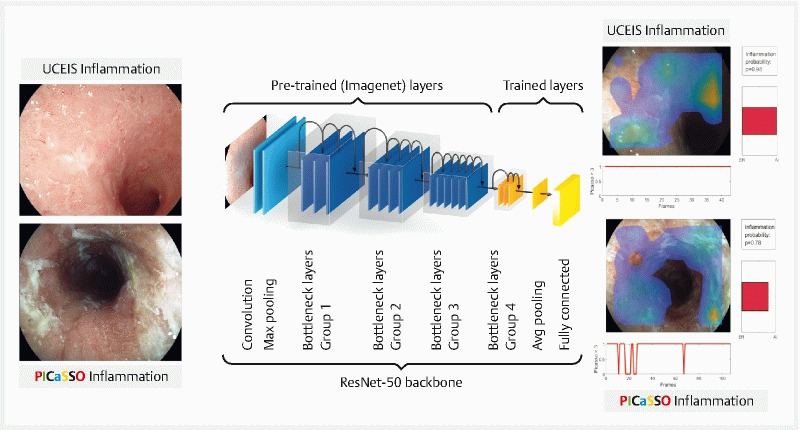
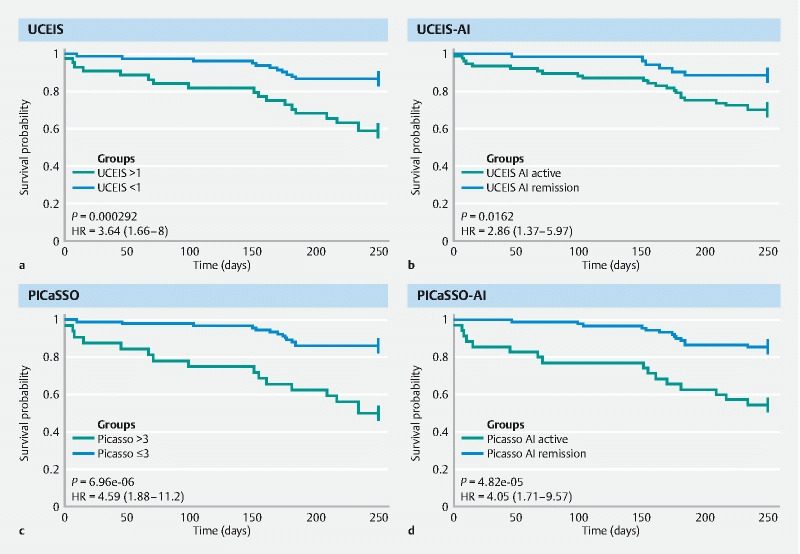
Background Endoscopic and histological remission (ER, HR) are therapeutic targets in ulcerative colitis (UC). Virtual chromoendoscopy (VCE) improves endoscopic assessment and the prediction of histology; however, interobserver variability limits standardized endoscopic assessment. We aimed to develop an artificial intelligence (AI) tool to distinguish ER/activity, and predict histology and risk of flare from white-light endoscopy (WLE) and VCE videos. Methods 1090 endoscopic videos (67 280 frames) from 283 patients were used to develop a convolutional neural network (CNN). UC endoscopic activity was graded by experts using the Ulcerative Colitis Endoscopic Index of Severity (UCEIS) and Paddington International virtual ChromoendoScopy ScOre (PICaSSO). The CNN was trained to distinguish ER/activity on endoscopy videos, and retrained to predict HR/activity, defined according to multiple indices, and predict outcome; CNN and human agreement was measured. Results The AI system detected ER (UCEIS ≤ 1) in WLE videos with 72 % sensitivity, 87 % specificity, and an area under the receiver operating characteristic curve (AUROC) of 0.85; for detection of ER in VCE videos (PICaSSO ≤ 3), the sensitivity was 79 %, specificity 95 %, and the AUROC 0.94. The prediction of HR was similar between WLE and VCE videos (accuracies ranging from 80 % to 85 %). The model’s stratification of risk of flare was similar to that of physician-assessed endoscopy scores. Conclusions Our system accurately distinguished ER/activity and predicted HR and clinical outcome from colonoscopy videos. This is the first computer model developed to detect inflammation/healing on VCE using the PICaSSO and the first computer tool to provide endoscopic, histologic, and clinical assessment.
Overview
The claims and statistics of this paper haven’t been checked yet.
Free: it reads the open-access text and checks the first 5 claims that cite a source we can check. Create a free account to check every claim.
Integrity signals
Registry
Cites
Statistics
Figures

Verification
Claims the paper makes
The claims and statistics of this paper haven’t been checked yet.
Free: it reads the open-access text and checks the first 5 claims that cite a source we can check. Create a free account to check every claim.
Claims other papers make about this one
Each is checked against this paper’s own text: does it say what the citing paper says it does?
The source backs part of the claim, not all of it — or backs it for a different population, condition or comparison.
In the citing paper
“Recently, several AI algorithms have been developed to accurately grade disease activity across various endoscopic scoring systems in ulcerative colitis (UC) to overcome these limitations, showing excellent diagnostic performance and strong concordance with experts.13-23”
From Artificial intelligence and endo-histo-omics: new dimensions of precision endoscopy and histology in inflammatory bowel disease (2024) · cites this paper as [21]
Experimental — accuracy not yet measured
Self-check
Percentages, sums and reported differences re-computed from the paper’s own numbers.
The self-check needs the paper’s full text.
Citations
Cites
DeLong, E. R., DeLong, D. M., & Clarke-Pearson, D. L. (1988) · Biometrics · doi:10.2307/2531595 · Cited by 22,649
THE USE OF CONFIDENCE OR FIDUCIAL LIMITS ILLUSTRATED IN THE CASE OF THE BINOMIAL
CLOPPER, C. J., & PEARSON, E. S. (1934) · Biometrika · doi:10.1093/biomet/26.4.404 · Cited by 5,003 · cited 2×
“Confidence intervals were calculated according to Clopper–Pearson [20] for sensitivity, specificity, and accuracy; according to Mercaldo et al. for PPV and NPV [21], and by bootstrapping the data 1000 times and computing the 5th and 95th percentile of the bootstrapped sample for the AUROCs.”
MethodUngaro, R., Mehandru, S., Allen, P. B., Peyrin-Biroulet, L., & Colombel, J.-F. (2017) · The Lancet · doi:10.1016/s0140-6736(16)32126-2 · Cited by 3,531
Coated Oral 5-Aminosalicylic Acid Therapy for Mildly to Moderately Active Ulcerative Colitis
Schroeder, K. W., Tremaine, W. J., & Ilstrup, D. M. (1987) · New England Journal of Medicine · doi:10.1056/nejm198712243172603 · Cited by 3,026 · cited 1×
“The Mayo Endoscopic Subscore (MES), the first to be introduced, defined ER as a MES ≤1 [4].”
BackgroundTurner, D., Ricciuto, A., Lewis, A., D’Amico, F., Dhaliwal, J., Griffiths, A. M., Bettenworth, D., Sandborn, W. J., Sands, B. E., Reinisch, W., et al. (2021) · Gastroenterology · doi:10.1053/j.gastro.2020.12.031 · Cited by 2,911 · cited 1×
“The first STRIDE consensus [2] established the importance of endoscopic remission (ER) for the maintenance of long-term clinical remission, and the updated STRIDE II [2] introduced the concept of histological remission (HR) as a useful adjunctive measure.”
BackgroundTravis, S. P. L., Schnell, D., Krzeski, P., Abreu, M. T., Altman, D. G., Colombel, J.-F., Feagan, B. G., Hanauer, S. B., Lémann, M., Lichtenstein, G. R., et al. (2012) · Gut · doi:10.1136/gutjnl-2011-300486 · Cited by 632 · cited 2×
“Since then, other scores such as the Ulcerative Colitis Endoscopic Index of Severity (UCEIS) have been developed and validated to improve the reliability and reproducibility [5]; however, discrepancy persists between ER and HR, largely owing to minimal inflammatory activity being misclassified [3, 6].”
BackgroundMethodDevelopment and validation of the Nancy histological index for UC
Marchal-Bressenot, A., Salleron, J., Boulagnon-Rombi, C., Bastien, C., Cahn, V., Cadiot, G., Diebold, M.-D., Danese, S., Reinisch, W., Schreiber, S., et al. (2017) · Gut · doi:10.1136/gutjnl-2015-310187 · Cited by 479 · cited 8×
“HR was defined as an RHI ≤3 without neutrophils in the epithelium or lamina propria, NHI ≤1, and PHRI = 0.”
MethodInfluentialBryant, R. V., Burger, D. C., Delo, J., Walsh, A. J., Thomas, S., von Herbay, A., Buchel, O. C., White, L., Brain, O., Keshav, S., et al. (2016) · Gut · doi:10.1136/gutjnl-2015-309598 · Cited by 443 · cited 3×
“Different survival curves and hazard ratios (HRs) were computed for the groups obtained by the PICaSSO and UCEIS scoring of endoscopists, and the VCE and WLE scoring of the AI system.”
BackgroundMethodThe Use of Confidence or Fiducial Limits Illustrated in the Case of the Binomial
Clopper, C. J., & Pearson, E. S. (1934) · Biometrika · doi:10.2307/2331986 · Cited by 438
Confidence intervals for predictive values with an emphasis to case–control studies
Mercaldo, N. D., Lau, K. F., & Zhou, X. H. (2007) · Statistics in Medicine · doi:10.1002/sim.2677 · Cited by 411 · cited 8×
“Confidence intervals were calculated according to Clopper–Pearson [20] for sensitivity, specificity, and accuracy; according to Mercaldo et al. for PPV and NPV [21], and by bootstrapping the data 1000 times and computing the 5th and 95th percentile of the bootstrapped sample for the AUROCs.”
MethodInfluential
Cited by
Iacucci, M., Santacroce, G., Majumder, S., Morael, J., Zammarchi, I., Maeda, Y., Ryan, D., Sabatino, A. D., Rescigno, M., Aburto, M. R., et al. (2024) · Gut · doi:10.1136/gutjnl-2023-331579 · Cited by 116
Self-citationArtificial intelligence and inflammatory bowel disease: Where are we going?
Rio, L. D., Spadaccini, M., Parigi, T. L., Gabbiadini, R., Buono, A. D., Busacca, A., Maselli, R., Fugazza, A., Colombo, M., Carrara, S., et al. (2023) · World Journal of Gastroenterology · doi:10.3748/wjg.v29.i3.508 · Cited by 94
Self-citationIacucci, M., Santacroce, G., Zammarchi, I., Maeda, Y., Del Amor, R., Meseguer, P., Kolawole, B. B., Chaudhari, U., Di Sabatino, A., Danese, S., et al. (2024) · The Lancet Gastroenterology & Hepatology · doi:10.1016/s2468-1253(24)00053-0 · Cited by 73
Self-citationArtificial intelligence to revolutionize IBD clinical trials: a comprehensive review
Sedaño, R., Solitano, V., Vuyyuru, S. K., Yuan, Y., Hanžel, J., Ma, C., Nardone, O. M., & Jairath, V. (2025) · Therapeutic Advances in Gastroenterology · doi:10.1177/17562848251321915 · Cited by 68
“41 Finally, the high heterogeneity persisted even in sensitivity analyses separating studies based on still image versus video assessment and based on the numbers of images evaluated.”
InfluentialSelf-citationCannarozzi, A. L., Latiano, A., Massimino, L., Bossa, F., Giuliani, F., Riva, M., Ungaro, F., Guerra, M., Brina, A. L. D., Biscaglia, G., et al. (2024) · United European Gastroenterology Journal · doi:10.1002/ueg2.12655 · Cited by 66
Iacucci, M., Santacroce, G., Maeda, Y., & Ghosh, S. (2025) · Gastroenterology · doi:10.1053/j.gastro.2025.03.005 · Cited by 56
Self-citationShen, B., Abreu, M. T., Cohen, E. R., Farraye, F. A., Fischer, M., Feuerstadt, P., Kapur, S., Ko, H. M., Kochhar, G. S., Liu, X., et al. (2024) · Gastrointestinal Endoscopy · doi:10.1016/j.gie.2024.08.034 · Cited by 54
Rimondi, A., Gottlieb, K. T., Despott, E. J., Iacucci, M., Murino, A., & Tontini, G. E. (2023) · Digestive and Liver Disease · doi:10.1016/j.dld.2023.11.005 · Cited by 53
Self-citationPinton, P. (2023) · Annals of Medicine · doi:10.1080/07853890.2023.2300670 · Cited by 48
“The prediction of histological remission was found to be similar between white-light endoscopy and virtual chromoendoscopy videos, with accuracy ranging between 80% and 85% [22].”
BackgroundPresent and future of endoscopy precision for inflammatory bowel disease
Santacroce, G., Zammarchi, I., Tan, C. K., Coppola, G., Varley, R., Ghosh, S., & Iacucci, M. (2024) · Digestive Endoscopy · doi:10.1111/den.14672 · Cited by 40
Self-citationOgata, N., Maeda, Y., Misawa, M., Takenaka, K., Takabayashi, K., Iacucci, M., Kuroki, T., Takishima, K., Sasabe, K., Niimura, Y., et al. (2024) · Journal of Crohn s and Colitis · doi:10.1093/ecco-jcc/jjae080 · Cited by 38
“21 Several previous studies have used similar algorithms to automatically exclude low-quality images from pre-recorded, video-based analysis.”
Self-citationFurlanello, C., Bussola, N., Merzi, N., Trapletti, G. P., Cadei, M., SORDO, R. D., Sidoni, A., Ricci, C., Lanzarotto, F., Parigi, T. L., et al. (2024) · Digestive and Liver Disease · doi:10.1016/j.dld.2024.05.033 · Cited by 33
Self-citationSilverman, A. L., Shung, D. L., Stidham, R. W., Kochhar, G. S., & Iacucci, M. (2024) · Clinical Gastroenterology and Hepatology · doi:10.1016/j.cgh.2024.05.048 · Cited by 33
Self-citationKuroki, T., Maeda, Y., Kudo, S., Ogata, N., Iacucci, M., Takishima, K., Ide, Y., Shibuya, T., Semba, S., Kawashima, J., et al. (2024) · Gastrointestinal Endoscopy · doi:10.1016/j.gie.2024.01.010 · Cited by 32
Self-citationNext-generation endoscopy in inflammatory bowel disease
Zammarchi, I., Santacroce, G., & Iacucci, M. (2023) · Diagnostics · doi:10.3390/diagnostics13152547 · Cited by 28
Self-citationJucan, A. E., Gavrilescu, O., Dranga, M., Popa, I. V., Mihai, I.-R., Mihai, V.-C., Ștefănescu, G., Drug, V. L., Prelipcean, C. C., Vulpoi, R. A., et al. (2023) · Biomedicines · doi:10.3390/biomedicines11113090 · Cited by 27
“More recently, a study conducted by Iaccuci et al. [67] developed the first computer model based on am artificial intelligence (AI) system to evaluate endoscopic remission or activity and predict the histological remission and risk of acute flare in UC from white-light endoscopy (WLE) and VCE videos.”
BackgroundMethodArtificial intelligence in endoscopy related to inflammatory bowel disease: A systematic review
Pal, P., Pooja, K., Nabi, Z., Gupta, R., Tandan, M., Rao, G. V., & Reddy, D. N. (2024) · Indian Journal of Gastroenterology · doi:10.1007/s12664-024-01531-3 · Cited by 26
Deo, D. D., Buono, A. D., Gabbiadini, R., Nardone, O. M., Ferreiro‐Iglesias, R., Privitera, G., Bonifacio, C., Acosta, M. B.-D., Bezzio, C., & Armuzzi, A. (2025) · Frontiers in Immunology · doi:10.3389/fimmu.2025.1637159 · Cited by 24
Self-citationParigi, T. L., Solitano, V., Armuzzi, A., Acosta, M. B., Begun, J., Ben‐Horin, S., Biedermann, L., Colombel, J., Dignass, A. U., Fuméry, M., et al. (2024) · United European Gastroenterology Journal · doi:10.1002/ueg2.12671 · Cited by 24
Self-citationAdvancing Therapeutic Targets in IBD: Emerging Goals and Precision Medicine Approaches
Centanni, L., Cicerone, C., Fanizzi, F., D’Amico, F., Furfaro, F., Zilli, A., Parigi, T. L., Peyrin‐Biroulet, L., Danese, S., & Allocca, M. (2025) · Pharmaceuticals · doi:10.3390/ph18010078 · Cited by 23
“When combined with chromoendoscopy, AI offers real-time analysis, enabling the identification of subtle mucosal abnormalities that might otherwise be missed [68].”
Self-citationNew endoscopic tools in inflammatory bowel disease
Nardone, O. M., Cannatelli, R., Ghosh, S., & Iacucci, M. (2022) · United European Gastroenterology Journal · doi:10.1002/ueg2.12316 · Cited by 21
“It is worthy to note that it also predicted histologic activity/remission and the occurrence of adverse clinical outcomes.(54) Finally, a recent study using a set of 614 biopsies from 307 patients with UC enrolled on a prospective multicentre study used a”
ResultSelf-citationLiu, X., Reigle, J. K., Prasath, V. B. S., & Dhaliwal, J. (2024) · Computers in Biology and Medicine · doi:10.1016/j.compbiomed.2024.108093 · Cited by 21
Endoscopy in IBD: when and how?
Daperno, M. (2023) · Diagnostics · doi:10.3390/diagnostics13223423 · Cited by 20
Bencardino, S., Lodola, I., Centanni, L., Mandarino, F. V., Fanizza, J., Furfaro, F., D’Amico, F., Fuccio, L., Bruni, A., Facciorusso, A., et al. (2026) · Frontiers in Medicine · doi:10.3389/fmed.2025.1719145 · Cited by 20
Machine and deep learning in inflammatory bowel disease
Zulqarnain, F., Rhoads, S. F., & Syed, S. (2023) · Current Opinion in Gastroenterology · doi:10.1097/mog.0000000000000945 · Cited by 21
Iacucci, M., Santacroce, G., Meseguer, P., Diéguez, A., del Amor, R., Kolawole, B. B., Chaudhari, U., Zammarchi, I., Hayes, B. D., Crotty, R. K., et al. (2025) · Journal of Crohn s and Colitis · doi:10.1093/ecco-jcc/jjaf108 · Cited by 19
“10 Nonetheless, the integration of AI to combine features from endoscopic videos and histologic slides for a more comprehensive mucosal assessment remains unexplored.”
Self-citationArtificial intelligence and machine learning technologies in ulcerative colitis
Kulkarni, C. V., Liu, D., Fardeen, T., Dickson, E. R., Jang, H., Sinha, S. R., & Gubatan, J. M. B. (2024) · Therapeutic Advances in Gastroenterology · doi:10.1177/17562848241272001 · Cited by 19
The role of artificial intelligence in colonoscopy
Kim, H. J., Parsa, N., & Byrne, M. F. (2024) · Seminars in Colon and Rectal Surgery · doi:10.1016/j.scrs.2024.101007 · Cited by 17
Maeda, Y., Kudo, S.-E., Santacroce, G., Ogata, N., Misawa, M., & Iacucci, M. (2024) · Digestive and Liver Disease · doi:10.1016/j.dld.2024.04.005 · Cited by 17
Self-citationArtificial Intelligence in Inflammatory Bowel Disease Endoscopy
Testoni, S. G. G., Petroni, G. A., Annunziata, M. L., Dell’Anna, G., Puricelli, M., Delogu, C., & Annese, V. (2025) · Diagnostics · doi:10.3390/diagnostics15070905 · Cited by 17
“The prediction of histologic remission was similar for the two scoring systems (80% and 85%), while the prediction of the risk of flare was similar to that based on the endoscopic scores provided by endoscopists [73].”
Artificial Intelligence in Advancing Inflammatory Bowel Disease Management: Setting New Standards
Labarile, N., Vitello, A., Sinagra, E., Nardone, O. M., Calabrese, G., Bonomo, F., Maida, M. F., & Iacucci, M. (2025) · Cancers · doi:10.3390/cancers17142337 · Cited by 17
“[31] a CNN was developed to assess mucosal activity using MES and UCEIS [30].”
Self-citationLodola, I., D’Amico, F., Danese, S., & Parigi, T. L. (2025) · Therapeutic Advances in Gastroenterology · doi:10.1177/17562848251350896 · Cited by 16
“14 While most early models focused on binary classification (remission vs active disease), recent work has aimed at building multiclass models to distinguish between degrees of severity, a task that remains clinically challenging.”
Self-citationNew Technologies in Digestive Endoscopy for Ulcerative Colitis Patients
Biamonte, P., D’Amico, F., Fasulo, E., Barà, R., Bernardi, F., Allocca, M., Zilli, A., Danese, S., & Furfaro, F. (2023) · Biomedicines · doi:10.3390/biomedicines11082139 · Cited by 15
“(2023) [39] Prospective ER prediction in”
The Role of Artificial Intelligence in the Diagnosis and Treatment of Ulcerative Colitis
Uchikov, P. A., Khalid, U., Vankov, N., Kraeva, M. I., Kraev, K. I., Hristov, B. K., Sandeva, M., Dragusheva, S., Chakarov, D., Petrov, P. G., et al. (2024) · Diagnostics · doi:10.3390/diagnostics14101004 · Cited by 15
“By incorporating PICaSSO, the CNN could provide a thorough histologic, clinical, and endoscopic assessment [27].”
MethodMaeda, Y., Ditonno, I., Puga‐Tejada, M., Zammarchi, I., Santacroce, G., Ghosh, S., & Iacucci, M. (2024) · eGastroenterology · doi:10.1136/egastro-2024-100090 · Cited by 15
Self-citationCurrent status of image-enhanced endoscopy in inflammatory bowel disease
Yang, Y. J. (2023) · Clinical Endoscopy · doi:10.5946/ce.2023.070 · Cited by 14
“25 The PICaSSO multicenter study used 1,090 endoscopic videos of 283 patients with UC for training, validation, and testing.”
Iacucci, M., Zammarchi, I., Santacroce, G., Kolawole, B. B., Chaudhari, U., del Amor, R., Meseguer, P., Naranjo, V., Puga‐Tejada, M., Capobianco, I., et al. (2025) · Digestive Endoscopy · doi:10.1111/den.15067 · Cited by 13
“Several AI systems have been developed to predict UC activity using WLE [22–24], and VCE-based scores [15].”
InfluentialSelf-citationPersonalize, participate, predict, and prevent: 4Ps in inflammatory bowel disease
Lenti, M. V., Scribano, M. L., Biancone, L., Ciccocioppo, R., Pugliese, D., Pastorelli, L., Fiorino, G., Savarino, E. V., Caprioli, F., Ardizzone, S., et al. (2023) · Frontiers in Medicine · doi:10.3389/fmed.2023.1031998 · Cited by 13
Self-citationGregorio, V., Maeda, Y., Kudo, S., Kawabata, Y., Kuroki, T., Santacroce, G., Puga‐Tejada, M., Takenaka, K., Takabayashi, K., Ohara, J., et al. (2025) · Digestive Endoscopy · doi:10.1111/den.15081 · Cited by 10
Self-citationMookhoek, A., Sinonquel, P., Allocca, M., Carter, D., Ensarı, A., Iacucci, M., Kopylov, U., Verstockt, B., Baumgart, D. C., Noor, N. M., et al. (2025) · Journal of Crohn s and Colitis · doi:10.1093/ecco-jcc/jjaf133 · Cited by 10
Self-citationTechnological advances in inflammatory bowel disease endoscopy and histology
Alfarone, L., Parigi, T. L., Gabbiadini, R., Buono, A. D., Spinelli, A., Hassan, C., Iacucci, M., Repici, A., & Armuzzi, A. (2022) · Frontiers in Medicine · doi:10.3389/fmed.2022.1058875 · Cited by 10
“Additionally, the CAD system predicted HR (defined as Robarts Histologic index ≤3 and no neutrophils in lamina propria) with sensitivity, specificity and accuracy of 67, 86, and 81% respectively, using WL, and 73, 86, and 83% respectively, in VCE videos (16).”
BackgroundMethodSelf-citationManaging Ulcerative Colitis and Crohn’s Disease: Should the Target Be Endoscopy, Histology, or Both?
Magro, F., Estevinho, M. M., & Valois, A. (2023) · Journal of the Canadian Association of Gastroenterology · doi:10.1093/jcag/gwad034 · Cited by 10
“Indeed, several deep learning algorithms have been described to be able to predict UC severity (graded using the MES, UCEIS or, more recently, PICaSSO 82,83 ) from full-length colonoscopy videos.”
BackgroundLee, M. C. M., Farahvash, A., & Zezos, P. (2025) · Inflammatory Bowel Diseases · doi:10.1093/ibd/izaf050 · Cited by 9
Artificial intelligence in inflammatory bowel disease: Current applications and future directions
Minea, H. O., Sîngeap, A.-M., Minea, M., Chiriac, S. A., Stanciu, C., & Trifan, A. V. (2025) · World Journal of Gastroenterology · doi:10.3748/wjg.v31.i39.111353 · Cited by 8
Automated Endoscopic Diagnosis in IBD
Maeda, Y., Kudo, S., Kuroki, T., & Iacucci, M. (2024) · Gastrointestinal Endoscopy Clinics of North America · doi:10.1016/j.giec.2024.04.012 · Cited by 8
Self-citationEndoscopic healing in IBD: Still the target to achieve?
Buda, A., Pessarelli, T., Aldinio, G., Bona, M. D., Iacucci, M., & Tontini, G. E. (2025) · Digestive and Liver Disease · doi:10.1016/j.dld.2025.02.009 · Cited by 8
Self-citationChang, Y., Yang, H.-P., Chen, Y.-Y., & Yen, H.-H. (2026) · Digital Health · doi:10.1177/20552076251412694 · Cited by 7
Attaining sustainability in inflammatory bowel disease
Nardone, O. M., Gros, B., Parigi, T. L., Farooq, A., Kunovský, L., & Sebastian, S. (2025) · Journal of Crohn s and Colitis · doi:10.1093/ecco-jcc/jjaf189 · Cited by 7
Self-citationReview Article: Green Management of IBD —New Paradigms for an Eco‐Friendly Approach
Cammarota, G., Laterza, L., Bibbò, S., Fusco, W. G., Rozera, T., Brino, E. D., Porcari, S., Scaldaferri, F., Ianiro, G., Gasbarrini, A., et al. (2024) · Alimentary Pharmacology & Therapeutics · doi:10.1111/apt.18399 · Cited by 6
“For instance, chromoendoscopy has demonstrated a good correlation with histological activity [49], especially when combined with artificial intelligence [50].”
Arges: Spatio-Temporal Transformer for Ulcerative Colitis Severity Assessment in Endoscopy Videos
Chaitanya, K., Damasceno, P. F., Fadnavis, S., Mobadersany, P., Parmar, C., Scherer, E., Zemlianskaia, N., Surace, L., Ghanem, L. R., Cula, O. G., et al. (2024) · Lecture notes in computer science · doi:10.1007/978-3-031-73290-4_20 · Cited by 6
“ArgesFM utilizes a vision transformer (ViT-Base[5 KoLeo regularization, as proposed in [7].”
BackgroundMethodPessarelli, T., Tontini, G. E., & Neumann, H. (2024) · Gastrointestinal Endoscopy Clinics of North America · doi:10.1016/j.giec.2024.04.008 · Cited by 5
Self-citationRen, S.-Q., Chen, J., & Cai, C. (2025) · World Journal of Gastroenterology · doi:10.3748/wjg.v31.i36.110742 · Cited by 5
Iacucci, M., Santacroce, G., Maeda, Y., Majumder, S., Hassan, C., Shung, D. L., Stidham, R. W., Bisschops, R., Naranjo, V., Grisan, E., et al. (2026) · Nature Reviews Gastroenterology & Hepatology · doi:10.1038/s41575-026-01190-z · Cited by 5
“AI-enhanced VCE outperformed WLE in observational studies, including prospective multicentre evaluations such as the PICaSSO study 12,32 , and also accurately predicted histological remission.”
Self-citationAI and endoscopy/histology in UC: the rise of machine
Nardone, O. M., Maeda, Y., & Iacucci, M. (2024) · Therapeutic Advances in Gastroenterology · doi:10.1177/17562848241275294 · Cited by 6
Self-citationMartínez, M., Bartel, M. J., Chua, T. Y., Dakhoul, L., Fatima, H., Jensen, D., Lara, L. F., Tadros, M., Villa, E. C., Yang, D. J., et al. (2024) · Gastrointestinal Endoscopy · doi:10.1016/j.gie.2024.05.002 · Cited by 5
Mitigating catastrophic forgetting in medical imaging via incremental learning
Leonard, V. E., & Hidayaturrahman, H. (2025) · Procedia Computer Science · doi:10.1016/j.procs.2025.08.286 · Cited by 4
Clinical validation of artificial intelligence for gastrointestinal diseases
Talebi, M., Bozorgchami, N., Mishra, G., Mishra, G., & Ghale, R. A. (2026) · Informatics in Medicine Unlocked · doi:10.1016/j.imu.2026.101736 · Cited by 4
A new Simple Endoscopic Score for Ulcerative Colitis – the SES-UC
Bergqvist, V., Gedeon, P., Hertervig, E., & Marsal, J. (2024) · Frontiers in Gastroenterology · doi:10.3389/fgstr.2024.1468394 · Cited by 4
Prognostic Prediction Models for Ulcerative Colitis: Systematic Review and Meta-Analysis
Bu, Z., Sun, Y., Shi, Z., Hu, L., Ju, C., Liu, Y., An, J., Sun, H., Liu, J., & Liu, Z. (2025) · Journal of Medical Internet Research · doi:10.2196/71944 · Cited by 3
Liu, J., Zhao, P., Jiang, D., Li, S. B., Jin, C., Xu, D., Wang, X. M., Chen, Y., Tang, B., & Qu, X. (2026) · Gut Microbes · doi:10.1080/19490976.2026.2672791 · Cited by 3
“94,95 Recurrent neural networks (RNNs) and their variants (long short-term memory (LSTM), gated recurrent unit (GRU)) specialize in sequential data processing, capturing temporal dynamics in microbiota evolution.”
Alizade, R., Safarian, S., Geramifar, P., Parouhan, A., & Mirhosseini, F. (2025) · InfoScience Trends · doi:10.61882/ist.202502.09.02 · Cited by 3
Xue, P., Guo, J., Che, Z., Liu, G., Ji, R., Ma, T., Chen, X., Zhao, Y., Ma, M., Shi, D., et al. (2025) · Scientific Reports · doi:10.1038/s41598-025-21968-6 · Cited by 2
Maeda, Y., Kudo, S., Kuroki, T., Kawabata, Y., Ohara, J., Ichimasa, K., Ogata, N., Ohtsuka, K., & Misawa, M. (2025) · Clinical Endoscopy · doi:10.5946/ce.2025.186 · Cited by 2
“61 Iacucci et al. 62 developed an AI-driven system to generate the PICaSSO using short video segments captured via the iSCAN platform.”
Salvi, D., Zani, C., Spada, C., Piccirelli, S., Verme, L. Z. D., Tripodi, G., Gualtieri, L., Cesaro, P., & Ferrari, C. (2026) · Applied Sciences · doi:10.3390/app16021134 · Cited by 2
“Machine learning models can predict biologic treatment response, estimate relapse or complication risk, and integrate multimodal clinical data to support personalized care [15,16].”
Sinonquel, P., Lenfant, M., Eelbode, T., Callaerts, B., Watanabe, H., Sabino, J., Verstockt, B., Maes, F., Hertogh, G. D., Vermeire, S., et al. (2025) · Endoscopy · doi:10.1055/a-2541-0103 · Cited by 2
Self-citationNardone, O. M., Ghosh, S. K., & Iacucci, M. (2022) · United European Gastroenterology Journal · doi:10.1002/ueg2.12214 · Cited by 2
Self-citationDanese, S. (2023) · Endoscopy · doi:10.1055/a-1986-7532 · Cited by 2
“In the current issue of Endoscopy, Iacucci and the PICaSSO group present the “new kid on the block” of artificial intelligence (AI) systems for the evaluation of inflammatory activity in ulcerative colitis (UC) [1].”
BackgroundDeep Learning Strategies for Overcoming Diagnosis Challenges with Limited Annotations
Amor, M. R. D. (2023) · RiuNet (Universitat Politècnica de València) · doi:10.4995/thesis/10251/200227 · Cited by 2
Popovic, D. D., Dragovic, M., Panic, N., Marjanovic-Haljilji, M., Glišić, T., Lukić, S., Mijac, D. D., Bogdanović, J. M., Bogdanovic, L. M., Djoković, A., et al. (2026) · World Journal of Gastrointestinal Endoscopy · doi:10.4253/wjge.v18.i2.113912 · Cited by 1
New Technologies for IBD Endoscopy
Bezzio, C., Farinola, V., Privitera, G., Buono, A. D., Gabbiadini, R., Loy, L., Franchellucci, G., Bartolotta, E., Migliorisi, G., & Armuzzi, A. (2026) · Journal of Clinical Medicine · doi:10.3390/jcm15072539 · Cited by 1
Yang, Z., Yao, J., Xinxian, Z., Yan, X., Chen, Y., Chen, T., Jian, Y., & Li, M. (2026) · Interdisciplinary medicine · doi:10.1002/inmd.70143 · Cited by 1
Hughes, R., Bello, A. L., Liang, R. F.-H., Pugliano, C. L., Zammarchi, I., Ghosh, S., & Iacucci, M. (2026) · Chinese Medical Journal · doi:10.1097/cm9.0000000000004170 · Cited by 1
“To overcome these limitations, Iacucci et al [33] moved beyond diagnostic accuracy by developing a CNN-based computer-aided diagnosis (CAD) system capable of predicting outcomes, including endoscopic and histological remission and 12-month disease relapse.”
Self-citationVrdoljak, J., Vilović, M., Šantić, R., Kumrić, M., Pavlović, N., Maleš, I., & Božić, J. (2026) · Machine Learning and Knowledge Extraction · doi:10.3390/make8080232 · Cited by 1
Rawat, A., & Srivastava, R. (2024) · Infectious Disorders - Drug Targets · doi:10.2174/0118715265315472241029110236 · Cited by 1
Standardizing Endoscopic Reporting in Patients with IBD: JEDII™ to the Rescue?
Massironi, S., Laffusa, A., Parigi, T. L., & Danese, S. (2023) · Digestive Diseases and Sciences · doi:10.1007/s10620-023-08121-x · Cited by 1
Self-citationIacucci, M., Santacroce, G., Zammarchi, I., Chaudhari, U., Bode, K. B., del Amor, R., Meseguer, P., Naranjo, V., Buda, A., Bisschops, R., et al. (2024) · Endoscopy · doi:10.1055/s-0044-1782901
Self-citationTontini, G. E., & Räth, T. (2025) · Journal of Crohn s and Colitis · doi:10.1093/ecco-jcc/jjaf046
Self-citationDisplasia na Doença Inflamatória Intestinal: a propósito de um caso clínico
Alves, A. L. M. (2024) · Portuguese National Funding Agency for Science, Research and Technology (RCAAP Project by FCT) · doi:10.34626/83ye-0b90
Het implementeren van Artificiële Intelligentie voor colonoscopische diagnose
Sinonquel, P. (2023) · Lirias
Artificial intelligence in inflammatory bowel disease
Iacucci, M., Zammarchi, I., & Santacroce, G. (2025) · Elsevier eBooks · doi:10.1016/b978-0-443-29172-2.00049-1
Self-citationBeyond conventional endoscopy: Image-enhanced techniques in quiescent ulcerative colitis assessment
Tomašić, V., Čačić, P., Baršić, N., & Bišćanin, A. (2026) · World Journal of Gastrointestinal Endoscopy · doi:10.4253/wjge.v18.i1.113749
Loktionov, A. S. (2026) · World Journal of Gastrointestinal Pharmacology and Therapeutics · doi:10.4292/wjgpt.v17.i2.116608
Taabzadeh, Z., Pourshamsi, M., & Vahed, F. M. (2026) · InfoScience Trends · doi:10.66224/ist.202603.12.05
Liu, J., Zhang, J., Li, X., Abedin, M. Z., Chen, H., Zhu, M., & Wang, W. (2026) · Biomedical Signal Processing and Control · doi:10.1016/j.bspc.2026.111430
Viewpoint: Toward Sustainable Green Inflammatory Bowel Disease Care
Liefferinckx, C., & Duijvestein, M. (2026) · JCC Plus · doi:10.1002/jcc5.70085
Bogush, A., Toskas, A., Ralli, G. P., Windell, D., Aljabar, P., DeLegge, M. H., Walsh, A., Thomas, J. P., Wakefield, P., Langford, C., et al. (2026) · medRxiv · doi:10.64898/2026.09.16.26363201
Gros, B., Nardone, O. M., Siddhi, S., & Sebastian, S. (2026) · Gastrointestinal Endoscopy Clinics of North America · doi:10.1016/j.giec.2026.08.008
Self-citationChoi, Y. J., Kong, S. G., & Choi, S. Y. (2026) · Kosin Medical Journal · doi:10.7180/kmj.26.197
Dharmalingam, L., Dhandapani, L., Kumar, R., & Vijayakumar, S. (2026) · Research Square · doi:10.21203/rs.3.rs-10895476/v1
Bogdanova, N. G., Serebrova, S. Y., Климов, В. И., Esakova, E. Y., & Zhuravleva, M. V. (2026) · Meditsinskiy sovet = Medical Council · doi:10.21518/ms2026-418
Metadata
- Authors
- Cannatelli, R., Parigi, T. L., Iacucci, M., Nardone, O. M., Tontini, G. E., Labarile, N., Buda, A., Rimondi, A., Bazarova, A., Bisschops, R., del Amor, R., Meseguer, P., Naranjo, V., Ghosh, S., Grisan, E., & on behalf of the PICaSSO group
- Affiliations
- University Hospitals Birmingham NHS Foundation Trust (GB)
- University of Milan (IT)
- Gastroenterology Hospital "Saverio de Bellis" (IT)
- Hospital of Prato (IT)
- Universitair Ziekenhuis Leuven (BE)
- Instituto de Investigación e Innovación en Bioingeniería, Universitat Politècnica de València, València, Spain
- Universitat Politècnica de València (ES)
- University of Padua (IT)
- Corresponding author
- Iacucci, Marietta
- ORCID
- Venue
- Endoscopy
- Publisher
- Georg Thieme Verlag KG
- Published
- 2022-10-13
- Volume
- 55
- Issue
- 04
- Pages
- 332-341
- ISSN
- 0013-726X (ISSN-L)
- 1438-8812
- PMC
- PMC10060056
- OpenAlex
- W4306146983
- Cited by
- 80
- References
- 26
- Citations by year
- 2026: 18 · 2025: 20 · 2024: 25 · 2023: 14 · 2022: 3
- FWCI
- 9.34
- Type
- journal article
- Language
- en
- Open access
- hybrid
- doi.org
- Licence
- Locations
- Endoscopy (publishedVersion, cc-by-nc-nd)
- PubMed Central (publishedVersion, cc-by-nc-nd)
- PubMed (publishedVersion)
- University of Birmingham Research Portal (University of Birmingham) (publishedVersion, cc-by-nc-nd)
- Research Open (London South Bank University) (acceptedVersion, cc-by)
- Archivio Istituzionale della Ricerca (Universita Degli Studi Di Milano) (submittedVersion, other-oa)
- Lirias (KU Leuven) (submittedVersion, other-oa)
- RiuNet (Universitat Politècnica de València) (submittedVersion, cc-by-nc-nd)
- Funders
- University Hospitals Birmingham NHS Foundation Trust
- National Institute for Health and Care Research
- University of Birmingham
- Birmingham Biomedical Research Centre
- Topics
- Health Sciences › Medicine › Gastroenterology › Inflammatory Bowel Disease
- Physical Sciences › Computer Science › Artificial Intelligence › AI in cancer detection
- Health Sciences › Medicine › Oncology › Colorectal Cancer Screening and Detection
- Keywords
- ulcerative colitis, virtual chromoendoscopy, artificial intelligence, convolutional neural networks, endoscopic remission, histological remission, endoscopic activity, white light endoscopy, Pablo Picasso, UCEIS, interobserver variability
- MeSH terms
- Artificial Intelligence, Colitis, Ulcerative, Colonoscopy, Humans, ROC Curve, Severity of Illness Index
About these checks
Registry, retraction, Cites and statistics results are computed, not judged, with one exception: a printed reference that no index lists is read once by a model before it counts as a citation error. Claims are extracted by a model and kept only when their quote appears verbatim in the text; each cited source is then checked, with a model’s help, for whether it says what the claim relies on. Those verdicts can be wrong — read the claim’s quote and the cited source before relying on one.
Statistics and arithmetic are recomputed, not judged.
Confidence bands are shown only for fields calibrated on our annotated test set. None is calibrated yet, so no band is shown.
What counts as a claim ›How we measure confidence ›How we check this ›
Are you an author, or do you see a problem with this page? Request a review
Data sources
Bibliographic data: Semantic Scholar, OpenAlex, Crossref.
Contains information from the Semantic Scholar Academic Graph Datasets, made available under the ODC Attribution License (ODC-BY 1.0).
Semantic Scholar’s data is described in: Kinney, R., et al. (2023). The Semantic Scholar Open Data Platform. arXiv:2301.10140.
