

The DOI matches its Crossref record; 76 of the 80 references it cites were found in a registry or an index.
Iterative random forests to discover predictive and stable high-order interactions
Open accessPublished version of a preprint
Abstract
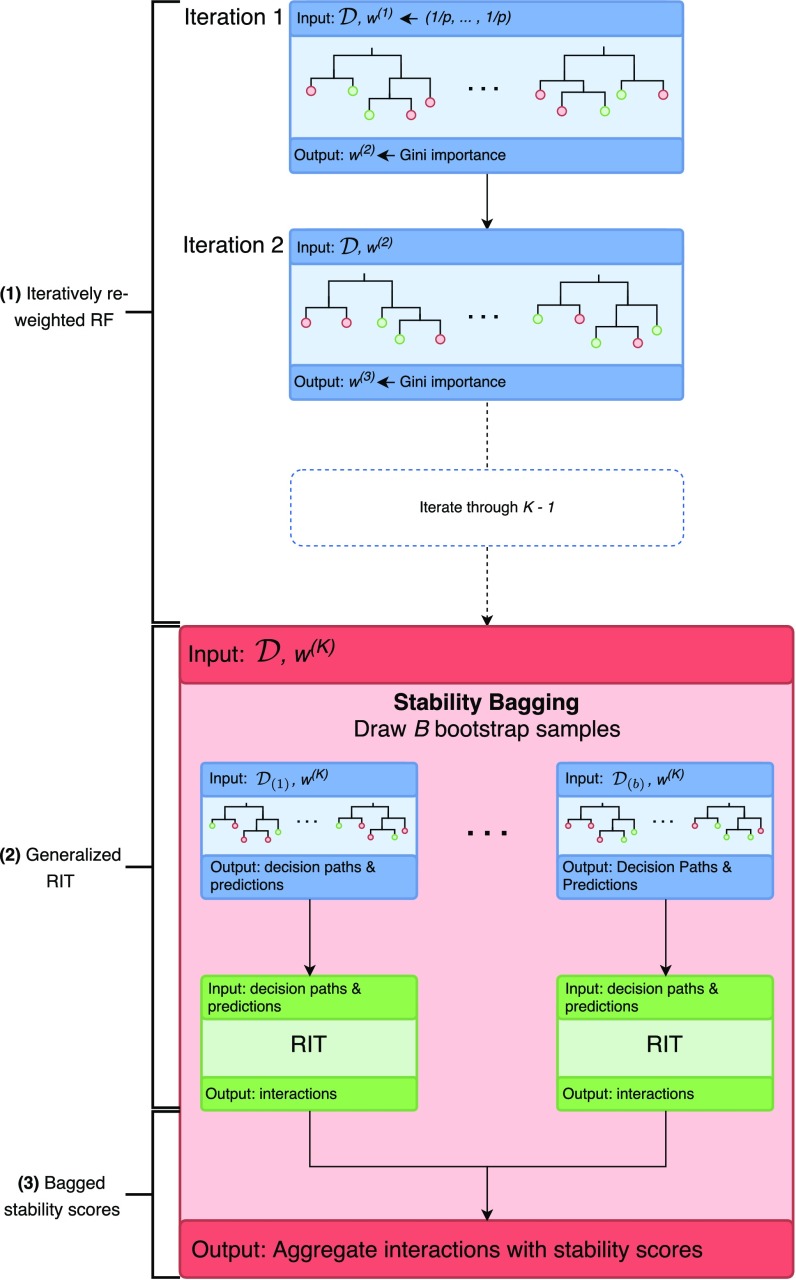
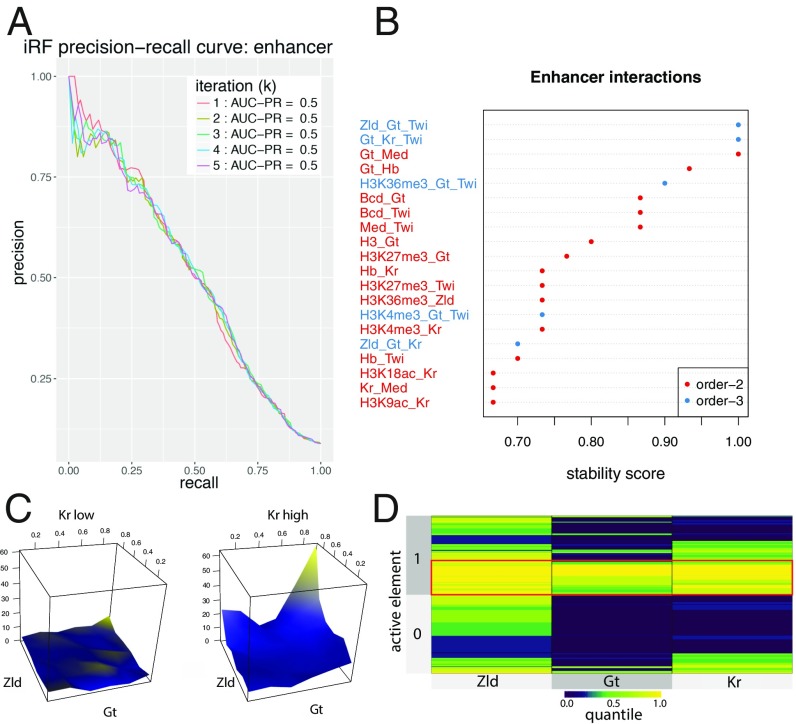
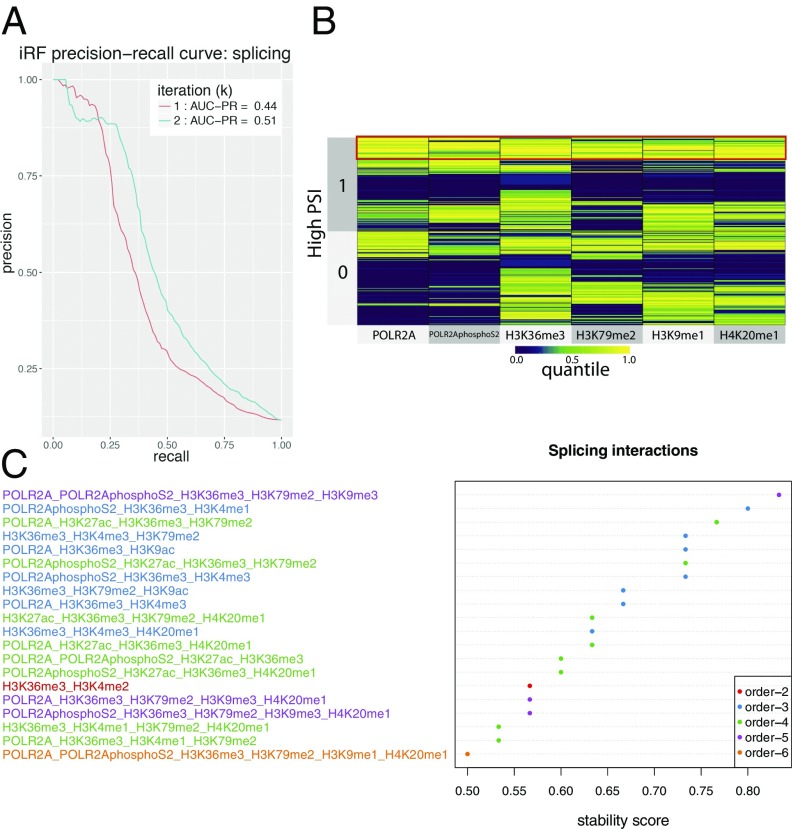
Significance: We developed a predictive, stable, and interpretable tool: the iterative random forest algorithm (iRF). iRF discovers high-order interactions among biomolecules with the same order of computational cost as random forests. We demonstrate the efficacy of iRF by finding known and promising interactions among biomolecules, of up to fifth and sixth order, in two data examples in transcriptional regulation and alternative splicing.
Overview
The claims and statistics of this paper haven’t been checked yet.
Run the check — free, no account needed. It reads the open-access text and checks the sources it cites.
Integrity signals
Registry
Cites
Statistics
Figures
Verification
Claims the paper makes
The claims and statistics of this paper haven’t been checked yet.
Run the check — free, no account needed. It reads the open-access text and checks the sources it cites.
Claims other papers make about this one
Each is checked against this paper’s own text: does it say what the citing paper says it does?
The cited source says what the claim attributes to it.
In the citing paper
“As stated in [165, 166, 167], stability is a must-have when drawing interpretations from a certain model.”
From Explainable Artificial Intelligence (XAI): Concepts, taxonomies, opportunities and challenges toward responsible AI (2020) · cites this paper as [166]
The cited source says what the claim attributes to it.
In the citing paper
“Trustworthy interpretations should not be produced by models that are not stable.”
From Explainable Artificial Intelligence (XAI): Concepts, taxonomies, opportunities and challenges toward responsible AI (2020) · cites this paper as [166]
Self-check
Percentages, sums and reported differences re-computed from the paper’s own numbers.
The self-check needs the paper’s full text.
Citations
Cites
Breiman, L. (2001) · Machine Learning · doi:10.1023/a:1010933404324 · Cited by 133,538
A decision-theoretic generalization of on-line learning and an application to boosting
Freund, Y., & Schapire, R. (1997) · European Conference on Computational Learning Theory · doi:10.1007/3-540-59119-2_166 · Cited by 23,988
Classification and Regression Trees.
Gordon, A. D., Breiman, L., Friedman, J. H., Olshen, R. A., & Stone, C. J. (1984) · Biometrics · doi:10.2307/2530946 · Cited by 23,867
Classification and Regression by randomForest
Liaw, A. I., & Wiener, M. C. (2007) · Cited by 18,594
An integrated encyclopedia of DNA elements in the human genome
The ENCODE Project Consortium (2012) · Nature · doi:10.1038/nature11247 · Cited by 18,072
Breiman, L. (1996) · Machine Learning · doi:10.1007/bf00058655 · Cited by 16,325
Classification And Regression Trees
Breiman, L., Friedman, J. H., Olshen, R. A., & Stone, C. J. (2017) · doi:10.1201/9781315139470 · Cited by 11,417
Mutations affecting segment number and polarity in Drosophila
Nüsslein‐Volhard, C., & Wieschaus, E. F. (1980) · Nature · doi:10.1038/287795a0 · Cited by 4,370
Tautz, D., & Pfeifle, C. (1989) · Chromosoma · doi:10.1007/bf00291041 · Cited by 2,518
ChIP-seq guidelines and practices of the ENCODE and modENCODE consortia
Landt, S. G., Marinov, G. K., Kundaje, A., Kheradpour, P., Pauli, F., Batzoglou, S., Bernstein, B. E., Bickel, P., Brown, J. B., Cayting, P., et al. (2012) · Genome Research · doi:10.1101/gr.136184.111 · Cited by 2,033
Self-citation
Research works printed but not linked: 1
- RS Hallmann, LG Schneeweiss, E Correa, J Zamora, Fine needle aspiration biopsy of thymic carcinoid tumor: A case with immunocytochemical correlation. Acta Cytol 42, 1042–1043 (1998).
Cited by
Sorted by citations
Barredo Arrieta, A., Díaz-Rodríguez, N., Del Ser, J., Bennetot, A., Tabik, S., Barbado, A., Garcia, S., Gil-Lopez, S., Molina, D., Benjamins, R., et al. (2020) · Information Fusion · doi:10.1016/j.inffus.2019.12.012 · Cited by 10,423
Artificial intelligence and statistics
Yu, B., & Kumbier, K. (2018) · Frontiers of Information Technology & Electronic Engineering · doi:10.1631/fitee.1700813 · Cited by 2,367
Self-citationDefinitions, methods, and applications in interpretable machine learning
Murdoch, W. J., Singh, C., Kumbier, K., Abbasi-Asl, R., & Yu, B. (2019) · Proceedings of the National Academy of Sciences · doi:10.1073/pnas.1900654116 · Cited by 2,167
“For instance, in one example discussed above (20), the authors evaluated a new interpretation method (iterative random forests) by demonstrating that it could be used to identify meaningful biological Boolean interactions for use in experiments.”
BackgroundMethodInfluentialSelf-citationThe role of multiple global change factors in driving soil functions and microbial biodiversity
Rillig, M. C., Ryo, M., Lehmann, A., Aguilar‐Trigueros, C. A., Buchert, S., Wulf, A., Iwasaki, A., Roy, J., & Yang, G. (2019) · Science · doi:10.1126/science.aay2832 · Cited by 932
Tyralis, H., Papacharalampous, G., & Langousis, A. (2019) · Water · doi:10.3390/w11050910 · Cited by 828
Estimating Treatment Effects with Causal Forests: An Application
Athey, S. C., & Wager, S. (2019) · Observational Studies · doi:10.1353/obs.2019.0001 · Cited by 576
Farbehi, N., Patrick, R., Dorison, A., Xaymardan, M., Janbandhu, V. C., Wystub-Lis, K., Ho, J. W. K., Nordon, R. E., & Harvey, R. P. (2019) · eLife · doi:10.7554/elife.43882 · Cited by 570
Opening the black box: interpretable machine learning for geneticists
Azodi, C. B., Tang, J., & Shiu, S.-H. (2020) · Trends in Genetics · doi:10.1016/j.tig.2020.03.005 · Cited by 473
Random forests for global sensitivity analysis: A selective review
Antoniadis, A., Lambert‐Lacroix, S., & Poggi, J. (2020) · Reliability Engineering & System Safety · doi:10.1016/j.ress.2020.107312 · Cited by 388
Machine learning for metabolic engineering: A review
Lawson, C. E., Martí, J. M., Radivojević, T., Jonnalagadda, S. V. R., Gentz, R., Hillson, N. J., Peisert, S., Kim, J., Simmons, B. A., Petzold, C. J., et al. (2020) · Metabolic Engineering · doi:10.1016/j.ymben.2020.10.005 · Cited by 335
Accelerating Climate Resilient Plant Breeding by Applying Next-Generation Artificial Intelligence
Harfouche, A. L., Jacobson, D., Kainer, D., Romero, J., Harfouche, A. H., Mugnozza, G. S., Moshelion, M., Tuskan, G. A., Keurentjes, J. J. B., & Altman, A. (2019) · Trends in biotechnology · doi:10.1016/j.tibtech.2019.05.007 · Cited by 302
Classification and interaction in random forests
Denisko, D., & Hoffman, M. M. (2018) · Proceedings of the National Academy of Sciences · doi:10.1073/pnas.1800256115 · Cited by 279
Statistically reinforced machine learning for nonlinear patterns and variable interactions
Ryo, M., & Rillig, M. C. (2017) · Ecosphere · doi:10.1002/ecs2.1976 · Cited by 223
Artificial intelligence for precision oncology: beyond patient stratification
Azuaje, F. J. (2019) · npj Precision Oncology · doi:10.1038/s41698-019-0078-1 · Cited by 207
Using Machine Learning to Predict ICU Transfer in Hospitalized COVID-19 Patients
Cheng, F.-Y., Joshi, H. N., Tandon, P., Freeman, R., Reich, D. L., Mazumdar, M., Kohli-Seth, R. D., Levin, M. A., Timsina, P., & Kia, A. (2020) · Journal of Clinical Medicine · doi:10.3390/jcm9061668 · Cited by 197
Yu, F., Wei, C., Deng, P., Peng, T., & Hu, X. (2021) · Science Advances · doi:10.1126/sciadv.abf4130 · Cited by 187
Yu, B., & Kumbier, K. (2019) · Proceedings of the National Academy of Sciences of the United States of America · doi:10.1073/pnas.1901326117 · Cited by 240
Self-citationMachine learning in bioprocess development: from promise to practice
Helleckes, L. M., Hemmerich, J., Wiechert, W., von Lieres, E., & Grünberger, A. (2022) · Trends in biotechnology · doi:10.1016/j.tibtech.2022.10.010 · Cited by 181
A translucent box: interpretable machine learning in ecology
Lucas, T. C. D. (2020) · Ecological Monographs · doi:10.1002/ecm.1422 · Cited by 161
Black Box Attacks on Explainable Artificial Intelligence(XAI) methods in Cyber Security
Kuppa, A., & Le-Khac, N.-A. (2020) · 2020 International Joint Conference on Neural Networks (IJCNN) · doi:10.1109/ijcnn48605.2020.9206780 · Cited by 123
Interpretable Anomaly Detection with DIFFI: Depth-based feature importance of Isolation Forest
Carletti, M., Terzi, M., & Susto, G. A. (2023) · Engineering Applications of Artificial Intelligence · doi:10.1016/j.engappai.2022.105730 · Cited by 118
Dysbiosis of Oral Microbiota During Oral Squamous Cell Carcinoma Development
Sarkar, P., Malik, S., Laha, S., Das, S., Bunk, S., Ray, J. G., Chatterjee, R., & Saha, A. (2021) · Frontiers in Oncology · doi:10.3389/fonc.2021.614448 · Cited by 121
Friedberg, R., Tibshirani, J., Athey, S. C., & Wager, S. (2020) · Journal of Computational and Graphical Statistics · doi:10.1080/10618600.2020.1831930 · Cited by 112
Liu, S., Liu, L., Fan, Y., Zhang, L., Huang, Y., Zhang, T., Cheng, J., Wang, L., Zhang, M., Shi, R., et al. (2020) · IEEE Transactions on Smart Grid · doi:10.1109/tsg.2020.2991335 · Cited by 95
Stell, E., Warner, D. L., Jian, J., Bond‐Lamberty, B., & Vargas, R. (2021) · Global Change Biology · doi:10.1111/gcb.15666 · Cited by 95
A mechanism-aware and multiomic machine-learning pipeline characterizes yeast cell growth
Culley, C., Vijayakumar, S., Zampieri, G., & Angione, C. (2020) · Proceedings of the National Academy of Sciences · doi:10.1073/pnas.2002959117 · Cited by 94
Explainable artificial intelligence in finance: A bibliometric review
Chen, X.-Q., Ma, C., Ren, Y., Lei, Y.-T., Huynh, N. Q. A., & Narayan, S. (2023) · Finance research letters · doi:10.1016/j.frl.2023.104145 · Cited by 110
Investigating higher-order interactions in single-cell data with scHOT
Ghazanfar, S., Lin, Y., Su, X., Lin, D. M., Patrick, E., Han, Z., Marioni, J. C., & Yang, J. Y. H. (2020) · Nature Methods · doi:10.1038/s41592-020-0885-x · Cited by 74
A Debiased MDI Feature Importance Measure for Random ForestsPreprint
Li, X., Wang, Y., Basu, S., Kumbier, K., & Yu, B. (2019) · arXiv (Cornell University) · doi:10.48550/arxiv.1906.10845 · Cited by 88
Self-citationLanz, L., Briker, R., & Gerpott, F. H. (2023) · Journal of Business Ethics · doi:10.1007/s10551-023-05393-1 · Cited by 70
King, D., Hong, C. K., Shepherdson, J. L., Granas, D. M., Maricque, B. B., & Cohen, B. A. (2020) · eLife · doi:10.7554/elife.41279 · Cited by 76
Stevens, R. L., USDOE, Taylor, V., Nichols, J., Maccabe, A. B. ‘., Yelick, K., & Brown, D. (2020) · OSTI OAI (U.S. Department of Energy Office of Scientific and Technical Information) · doi:10.2172/1604756 · Cited by 90
Interpretable Machine Learning for Discovery: Statistical Challenges and Opportunities
Allen, G. I., Gan, L., & Zheng, L. (2023) · Annual Review of Statistics and Its Application · doi:10.1146/annurev-statistics-040120-030919 · Cited by 84
Najafi, M. N., Baleghi, Y., Gholamian, S. A., & Mirimani, S. M. (2020) · Iranian Conference on Signal Processing and Intelligent Systems (ICSPIS) · doi:10.1109/icspis51611.2020.9349599 · Cited by 62
The Effect of Information Disclosure on Industry Payments to Physicians
Guo, T., Sriram, S., & Manchanda, P. (2020) · Journal of Marketing Research · doi:10.1177/0022243720972106 · Cited by 60
Streich, J., Romero, J., Gazolla, J. G. F. M., Kainer, D., Cliff, A. M., Prates, E. T., Brown, J. B., Khoury, S., Tuskan, G. A., Garvin, M. R., et al. (2020) · Current Opinion in Biotechnology · doi:10.1016/j.copbio.2020.01.010 · Cited by 58
Self-citationSupervised machine learning for theory building and testing: Opportunities in operations management
Chou, Y., Chuang, H. H., Chou, P., & Oliva, R. (2023) · Journal of Operations Management · doi:10.1002/joom.1228 · Cited by 66
Towards convergence rate analysis of random forests for classification
Gao, W. G., Xu, F., & Zhou, Z.-H. (2022) · Artificial Intelligence · doi:10.1016/j.artint.2022.103788 · Cited by 62
Parchure, P., Joshi, H. N., Dharmarajan, K. V., Freeman, R., Reich, D. L., Mazumdar, M., Timsina, P., & Kia, A. (2020) · BMJ Supportive & Palliative Care · doi:10.1136/bmjspcare-2020-002602 · Cited by 54
Harfouche, A. L., Nakhle, F., Harfouche, A., Sardella, O. G., Dart, E., & Jacobson, D. (2022) · Trends in Plant Science · doi:10.1016/j.tplants.2022.08.021 · Cited by 56
Machine learning and related approaches in transcriptomics
Cheng, Y., Xu, S.-M., Santucci, K., Lindner, G., & Janitz, M. (2024) · Biochemical and Biophysical Research Communications · doi:10.1016/j.bbrc.2024.150225 · Cited by 55
Mehrzad, A., Darmiani, M., Mousavi, Y., Shafie‐khah, M., & Aghamohammadi, M. R. (2023) · IEEE Access · doi:10.1109/access.2023.3299208 · Cited by 53
Hornung, R., & Boulesteix, A. (2022) · Computational Statistics & Data Analysis · doi:10.1016/j.csda.2022.107460 · Cited by 52
The genetic basis of spatial cognitive variation in a food-caching bird
Branch, C. L., Semenov, G. А., Wagner, D. N., Sonnenberg, B. R., Pitera, A. M., Bridge, E. S., Taylor, S. A., & Витальевич, П. В. (2021) · Current Biology · doi:10.1016/j.cub.2021.10.036 · Cited by 58
Walker, A. M., Cliff, A. M., Romero, J., Shah, M. B., Jones, P. C., Gazolla, J. G. F. M., Jacobson, D., & Kainer, D. (2022) · Computational and Structural Biotechnology Journal · doi:10.1016/j.csbj.2022.06.037 · Cited by 54
Chang-Brahim, I., Koppensteiner, L. J., Beltrame, L., Bodner, G., Saranti, A., Salzinger, J., Fanta‐Jende, P., Sulzbachner, C., Bruckmüller, F., Trognitz, F., et al. (2024) · Frontiers in Plant Science · doi:10.3389/fpls.2024.1319938 · Cited by 58
Yu, B. (2020) · ACM International Conference on Web Search and Data Mining (WSDM) · doi:10.1145/3336191.3372191 · Cited by 50
Self-citationEstimating near‐surface air temperature across Israel using a machine learning based hybrid approach
Zhou, B., Erell, E., Hough, I., Rosenblatt, J. D., Just, A. C., Novack, V., & Kloog, I. (2020) · International Journal of Climatology · doi:10.1002/joc.6570 · Cited by 49
A Review of Air Quality Modeling
Karroum, K., Lin, Y., Chiang, Y., Maissa, Y. B., Haziti, M. E., Sokolov, A. A., & Delbarre, H. (2020) · MAPAN · doi:10.1007/s12647-020-00371-8 · Cited by 48
Cliff, A. M., Romero, J., Kainer, D., Walker, A. M., Furches, A., & Jacobson, D. (2019) · Genes · doi:10.3390/genes10120996 · Cited by 47
Machine Learning Techniques for Soybean Charcoal Rot Disease Prediction
Khalili, E., Kouchaki, S., Ramazi, S., & Ghanati, F. (2020) · Frontiers in Plant Science · doi:10.3389/fpls.2020.590529 · Cited by 50
Sparse and Low-Rank Tensor Estimation via Cubic Sketchings
Hao, B., Zhang, A. R., & Cheng, G. (2020) · IEEE Transactions on Information Theory · doi:10.1109/tit.2020.2982499 · Cited by 44
Joubert, W. D., Weighill, D. A., Kainer, D., Climer, S., Justice, A. C., Fagnan, K., & Jacobson, D. (2018) · International Conference for High Performance Computing, Networking, Storage and Analysis (SC) · doi:10.1109/sc.2018.00060 · Cited by 47
Characteristics of Microbial Distribution in Different Oral Niches of Oral Squamous Cell Carcinoma
Nie, F., Wang, L., Huang, Y., Yang, P., Gong, P., Feng, Q., & Yang, C. (2022) · Frontiers in Cellular and Infection Microbiology · doi:10.3389/fcimb.2022.905653 · Cited by 45
A blood-based metabolomic signature predictive of risk for pancreatic cancer
Irajizad, E., Kenney, A., Tang, T. M., Vykoukal, J., Wu, R., Murage, E. N., Dennison, J. B., Sans, M., Long, J. P., Loftus, M., et al. (2023) · Cell Reports Medicine · doi:10.1016/j.xcrm.2023.101194 · Cited by 46
Self-citationAn experimental manipulation of the value of effort
Lin, H., Westbrook, A., Fan, F., & Inzlicht, M. (2024) · Nature Human Behaviour · doi:10.1038/s41562-024-01842-7 · Cited by 60
Liu, D., Zhang, X., Zheng, T., Shi, Q., Cui, Y., Wang, Y., & Liu, L. (2021) · Archives of Gynecology and Obstetrics · doi:10.1007/s00404-020-05908-5 · Cited by 40
The interactive natural drivers of global geogenic arsenic contamination of groundwater
Cao, H., Xie, X., Wang, Y., & Deng, Y. (2021) · Journal of Hydrology · doi:10.1016/j.jhydrol.2021.126214 · Cited by 39
Learning stable and predictive structures in kinetic systems
Pfister, N., Bauer, S., & Peters, J. (2019) · Proceedings of the National Academy of Sciences · doi:10.1073/pnas.1905688116 · Cited by 35
Machine Learning algorithm unveils glutamatergic alterations in the post-mortem schizophrenia brain
Rosa, A. D., Fontana, A., Nuzzo, T., Garofalo, M., Maio, A. D., Punzo, D., Copetti, M., Bertolino, A., Errico, F., Rampino, A., et al. (2022) · Schizophrenia · doi:10.1038/s41537-022-00231-1 · Cited by 38
Deshpande, S., Shuttleworth, J., Yang, J., Taramonli, S., & England, M. (2019) · Computers in Biology and Medicine · doi:10.1016/j.compbiomed.2018.12.014 · Cited by 37
Dai, Q., & Gao, Y. (2023) · Artificial intelligence: foundations, theory, and algorithms/Artificial intelligence: Foundations, theory, and algorithms · doi:10.1007/978-981-99-0185-2 · Cited by 40
Explainable artificial intelligence of DNA methylation-based brain tumor diagnostics
Benfatto, S., Sill, M., Jones, D., Pfister, S. M., Sahm, F., von Deimling, A., Capper, D., & Hovestadt, V. (2025) · Nature Communications · doi:10.1038/s41467-025-57078-0 · Cited by 39
Liu, S., Shi, R., Huang, Y., Li, X., Li, Z., Wang, L., Mao, D., Liu, L., Liao, S., Zhang, M., et al. (2021) · Energies · doi:10.3390/en14030715 · Cited by 36
Sievering, A. W., Wohlmuth, P., Geßler, N., Gunawardene, M., Herrlinger, K. R., Bein, B., Arnold, D., Bergmann, M., Nowak, L., Gloeckner, C., et al. (2022) · BMC Medical Informatics and Decision Making · doi:10.1186/s12911-022-02057-4 · Cited by 37
Hu, Q., Greene, C. S., & Heller, E. A. (2020) · Nucleic Acids Research · doi:10.1093/nar/gkaa248 · Cited by 36
Are OpenStreetMap building data useful for flood vulnerability modelling?
Cerri, M., Steinhausen, M., Kreibich, H., & Schröter, K. (2021) · Natural hazards and earth system sciences · doi:10.5194/nhess-21-643-2021 · Cited by 36
You, X., Dadwal, U. C., Lenburg, M. E., Kacena, M. A., & Charles, J. F. (2022) · mSystems · doi:10.1128/msystems.01248-21 · Cited by 36
Dynamic pricing and revenues of Airbnb listings: Estimating heterogeneous causal effects
Leoni, V., & Nilsson, W. (2021) · International Journal of Hospitality Management · doi:10.1016/j.ijhm.2021.102914 · Cited by 36
Effects of random forest modeling decisions on biogeochemical time series predictions
Regier, P., Duggan, M. B., Myers‐Pigg, A., & Ward, N. (2022) · Limnology and Oceanography Methods · doi:10.1002/lom3.10523 · Cited by 33
Cheng, Y., Bhoot, V. N., Kumbier, K., Sison-Mangus, M. P., Brown, J. B., Kudela, R. M., & Newcomer, M. (2021) · Scientific Reports · doi:10.1038/s41598-021-98110-9 · Cited by 32
Self-citationWang, Z., Niu, Y., Vashisth, T., Li, J., Madden, R., Livingston, T., & Wang, Y. (2022) · Horticulture Research · doi:10.1093/hr/uhac145 · Cited by 31
Keyser, S. R., Fink, D., Gudex‐Cross, D., Radeloff, V. C., Pauli, J. N., & Zuckerberg, B. (2022) · Ecography · doi:10.1111/ecog.06378 · Cited by 31
How Do Applied Researchers Use the Causal Forest? A Methodological Review
Rehill, P. (2025) · International Statistical Review · doi:10.1111/insr.12610 · Cited by 30
Predictive modelling of hypoxic ischaemic encephalopathy risk following perinatal asphyxia
Mooney, C., O’Boyle, D., Finder, M., Hallberg, B., Walsh, B. H., Henshall, D. C., Boylan, G. B., & Murray, D. M. (2021) · Heliyon · doi:10.1016/j.heliyon.2021.e07411 · Cited by 30
Midya, V., Alcala, C. S., Rechtman, E., Gregory, J. K., Kannan, K., Hertz‐Picciotto, I., Teitelbaum, S. L., Gennings, C., Rosa, M. J., & Valvi, D. (2023) · Environmental Science & Technology · doi:10.1021/acs.est.3c00848 · Cited by 32
Desai, T. A., Hedman, Å. K., Dimitriou, M., Koprulu, M., Figiel, S., Yin, W., Johansson, M., Watts, E. L., Atkins, J. R., Sokolov, A. V., et al. (2024) · EBioMedicine · doi:10.1016/j.ebiom.2024.105168 · Cited by 31
Villani, A., Fontana, A., Panebianco, C., Ferro, C. P., Copetti, M., Pavlović, R., Drago, D., Fiorentini, C., Terracciano, F., Bazzocchi, F., et al. (2024) · Gut Microbes · doi:10.1080/19490976.2024.2375483 · Cited by 27
Yang, Z. M., Zhu, Q., Cao, J., Jin, Y., Zhao, N., Xu, W., Liu, H., Tang, H., Qiao, Y., & Chen, X. (2021) · The Science of The Total Environment · doi:10.1016/j.scitotenv.2021.147618 · Cited by 27
Sadique, Z., Grieve, R., Diaz‐Ordaz, K., Mouncey, P., Lamontagne, F., & O’Neill, S. (2022) · Medical Decision Making · doi:10.1177/0272989x221100717 · Cited by 28
Midya, V., Lane, J. M., Gennings, C., Torres-Olascoaga, L. A., Gregory, J. K., Wright, R. O., Arora, M., Téllez‐Rojo, M. M., & Eggers, S. I. (2023) · Environmental Science & Technology · doi:10.1021/acs.est.3c04346 · Cited by 28
Hybrid model for efficient prediction of poly(A) signals in human genomic DNA
Albalawi, F., Chahid, A., Guo, X., Albaradei, S., Magana-Mora, A., Janković, B. R., Uludağ, M., Neste, C. V., Essack, M., Laleg‐Kirati, T., et al. (2019) · Methods · doi:10.1016/j.ymeth.2019.04.001 · Cited by 26
Neurotransmitter networks in mouse prefrontal cortex are reconfigured by isoflurane anesthesia
Zhang, X., Baer, A. G., Price, J. M., Jones, P. C., Garcia, B. J., Romero, J., Cliff, A. M., Mi, W., Brown, J. B., Jacobson, D., et al. (2020) · Journal of Neurophysiology · doi:10.1152/jn.00092.2020 · Cited by 27
Self-citationStable Discovery of Interpretable Subgroups via Calibration in Causal Studies
Dwivedi, R., Yan, T., Park, B., Wei, M., Horgan, K., Madigan, D., & Yu, B. (2020) · International Statistical Review · doi:10.1111/insr.12427 · Cited by 31
Self-citationHDSI: High dimensional selection with interactions algorithm on feature selection and testing
Jain, R., & Xu, W. (2021) · PLoS ONE · doi:10.1371/journal.pone.0246159 · Cited by 25
Machine learning model to predict oncologic outcomes for drugs in randomized clinical trials
Schperberg, A. V., Boichard, A., Tsigelny, I. F., Richard, S. B., & Kurzrock, R. (2020) · International Journal of Cancer · doi:10.1002/ijc.33240 · Cited by 24
Wang, H., Sham, P. C., Tong, T., & Pang, H. (2019) · IEEE Journal of Biomedical and Health Informatics · doi:10.1109/jbhi.2019.2944865 · Cited by 25
Kundu, A., Fu, R., Grace, D., Logie, C. H., Abramovich, A., Baskerville, N. B., Yager, C., Schwartz, R. M., Mitsakakis, N., Planinac, L. C., et al. (2022) · Journal of Psychiatric Research · doi:10.1016/j.jpsychires.2022.06.013 · Cited by 24
Scornet, E., & Hooker, G. (2026) · Annual Review of Statistics and Its Application · doi:10.1146/annurev-statistics-112723-034707 · Cited by 33
Desai, R. I., Kangas, B. D., Luc, O. T., Solakidou, E., Smith, E. C., Dawes, M. H., Ma, X., Makriyannis, A., Chatterjee, S., Dayeh, M. A., et al. (2023) · Nature Communications · doi:10.1038/s41467-023-42173-x · Cited by 23
An Oral Microbial Biomarker for Early Detection of Recurrence of Oral Squamous Cell Carcinoma
Lyu, W.-N., Lin, M., Shen, C., Chen, L., Lee, Y.-H., Chen, S.-K., Lai, L., Chuang, E. Y.-Y., Lou, P., & Mong-Hsun, T. (2023) · ACS Infectious Diseases · doi:10.1021/acsinfecdis.3c00269 · Cited by 22
Kainer, D., Templeton, A. R., Prates, E. T., Jacboson, D., Allan, E. R. O., Climer, S., & Garvin, M. R. (2022) · Human Genetics and Genomics Advances · doi:10.1016/j.xhgg.2022.100150 · Cited by 22
The Holdout Randomization Test for Feature Selection in Black Box Models
Tansey, W., Veitch, V., Zhang, H., Rabadán, R., & Blei, D. M. (2021) · Journal of Computational and Graphical Statistics · doi:10.1080/10618600.2021.1923520 · Cited by 22
Cooling the mortgage loan market: The effect of borrower-based limits on new mortgage lending
Hodula, M., Melecký, M., Pfeifer, L., & Szabo, M. (2023) · Journal of International Money and Finance · doi:10.1016/j.jimonfin.2023.102808 · Cited by 21
Allen, B. (2023) · PLoS ONE · doi:10.1371/journal.pone.0292341 · Cited by 21
Singer, E., Vogel, J. P., Northen, T. R., Mungall, C., & Juenger, T. (2021) · Phytobiomes Journal · doi:10.1094/pbiomes-05-20-0042-rvw · Cited by 22
Noshay, J. M., Walker, T., Alexander, W. G., Klingeman, D. M., Romero, J., Walker, A. M., Prates, E. T., Eckert, C. A., Irle, S., Kainer, D., et al. (2023) · Nucleic Acids Research · doi:10.1093/nar/gkad736 · Cited by 20
An empirical investigation into intelligent cost analysis in purchasing
Bodendorf, F., Lutz, M., Michelberger, S., & Franke, J. E. (2021) · Supply Chain Management An International Journal · doi:10.1108/scm-11-2020-0563 · Cited by 22
Qi, C., Wu, M., Xu, X., & Chen, Q. (2022) · Journal of Cleaner Production · doi:10.1016/j.jclepro.2022.133020 · Cited by 19
Selection of Optimal Cell Lines for High-Content Phenotypic Screening
Heinrich, L. E., Kumbier, K., Li, L., Altschuler, S. J., & Wu, L. F. (2023) · ACS Chemical Biology · doi:10.1021/acschembio.2c00878 · Cited by 19
Self-citation
Metadata
- Authors
- Basu, S., Kumbier, K., Brown, J. B., & Yu, B.
- Affiliations
- Cornell University (US)
- University of California, Berkeley (US)
- Lawrence Berkeley National Laboratory (US)
- Corresponding author
- Brown, James B.
- Yu, Bin
- Venue
- Proceedings of the National Academy of Sciences
- Publisher
- National Academy of Sciences
- Published
- 2018-01-19
- Volume
- 115
- Issue
- 8
- Pages
- 1943-1948
- ISSN
- 0027-8424 (ISSN-L)
- 1091-6490
- PMC
- PMC5828575
- OpenAlex
- W2731142262
- Cited by
- 317
- References
- 80
- Citations by year
- 2026: 24 · 2025: 32 · 2024: 39 · 2023: 51 · 2022: 48 · 2021: 42 · 2020: 46 · 2019: 20 · 2018: 12
- FWCI
- 10.76
- Type
- journal article
- Language
- en
- Open access
- hybrid
- doi.org
- Licence
- Locations
- Proceedings of the National Academy of Sciences (publishedVersion, cc-by-nc-nd)
- bioRxiv (Cold Spring Harbor Laboratory) (acceptedVersion, cc-by)
- PubMed Central (publishedVersion, cc-by-nc-nd)
- PubMed (publishedVersion)
- arXiv (Cornell University) (submittedVersion)
- eScholarship (California Digital Library) (submittedVersion)
- OSTI OAI (U.S. Department of Energy Office of Scientific and Technical Information) (submittedVersion)
- arXiv (Cornell University)
- Funders
- HHS | NIH | National Human Genome Research Institute (U01HG007031, R00 HG006698)
- DOD | United States Army | RDECOM | Army Research Office (W911NF1710005)
- DOD | United States Navy | Office of Naval Research (N00014-16-1- 2664)
- U.S. Department of Energy (DOE DE-AC02-05CH11231, DE-SC0017069)
- National Science Foundation (CCF-0939370)
- HHS | NIH |U.S. National Library of Medicine (T32LM012417)
- Topics
- Life Sciences › Biochemistry, Genetics and Molecular Biology › Molecular Biology › Genomics and Chromatin Dynamics
- Life Sciences › Biochemistry, Genetics and Molecular Biology › Molecular Biology › RNA Research and Splicing
- Life Sciences › Biochemistry, Genetics and Molecular Biology › Molecular Biology › Bioinformatics and Genomic Networks
- Keywords
- higher-order interactions, epistasis, H3K36me3, epigenetic interactions
- MeSH terms
- Algorithms, Animals, Drosophila, Models, Genetic, Alternative Splicing, Gene Expression Regulation, Developmental, Computational Biology, Gene Regulatory Networks, Genome-Wide Association Study
About these checks
Registry, retraction, Cites and statistics results are computed, not judged, with one exception: a printed reference that no index lists is read once by a model before it counts as a citation error. Claims are extracted by a model and kept only when their quote appears verbatim in the text; each cited source is then checked, with a model’s help, for whether it says what the claim relies on. Those verdicts can be wrong — read the claim’s quote and the cited source before relying on one.
Statistics and arithmetic are recomputed, not judged.
Confidence bands are shown only for fields calibrated on our annotated test set. None is calibrated yet, so no band is shown.
What counts as a claim ›How we measure confidence ›How we check this ›
Are you an author, or do you see a problem with this page? Request a review
