

The DOI matches its Crossref record; 44 of the 45 references it cites were found in a registry or an index.
Thymic involution and rising disease incidence with age
Open accessAbstract
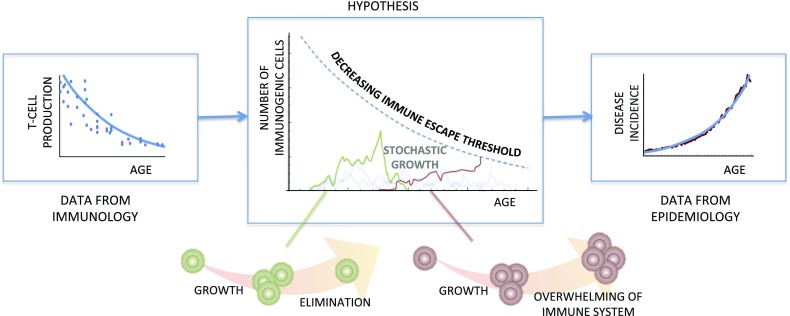
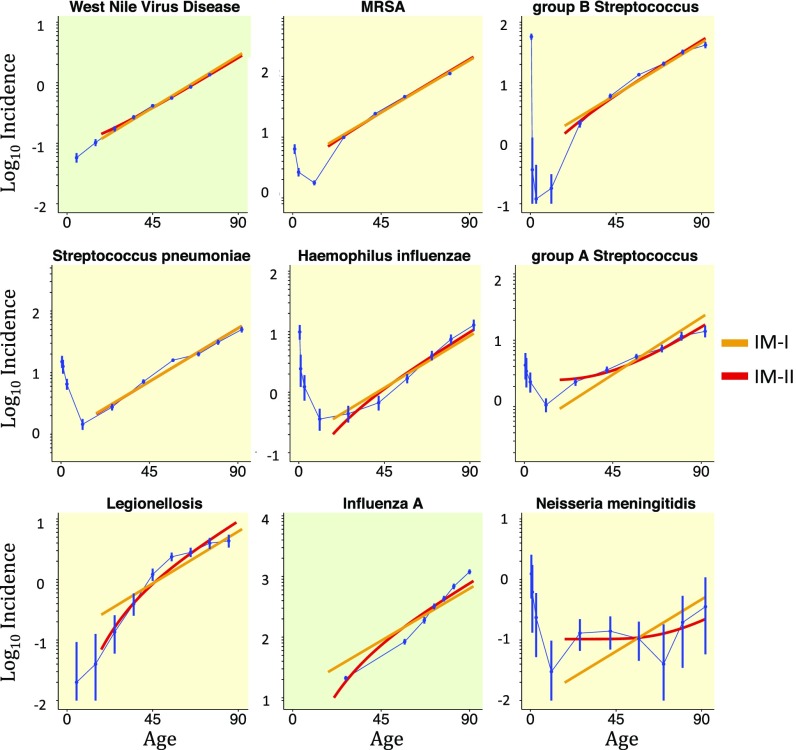
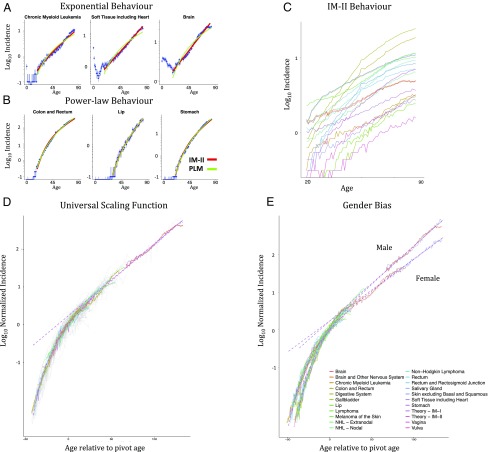
Significance: Understanding the risk factors of carcinogenesis is a major goal of biomedical research. Historically, the focus has been on the role of somatic mutations, and the reason for cancer typically occurring late in life is predominantly attributed to a gradual accumulation of such mutations. We challenge that view and propose that the decline of the immune system is the primary reason why cancer is an age-related disease. The immunological model featured here captures risk profiles for many cancer types and infectious diseases, suggesting that therapies reversing T cell exhaustion or restoring T cell production will be promising avenues of treatment.
Overview
The claims and statistics of this paper haven’t been checked yet.
Run the check — free, no account needed. It reads the open-access text and checks the sources it cites.
Integrity signals
Registry
Cites
Statistics
Figures
Verification
Claims the paper makes
The claims and statistics of this paper haven’t been checked yet.
Run the check — free, no account needed. It reads the open-access text and checks the sources it cites.
Claims other papers make about this one
Each is checked against this paper’s own text: does it say what the citing paper says it does?
In the citing paper
“T cell–output decline is an important feature of immunosenescence as well as the production of senescence-associated secretory phenotype, increased glycolysis, and reactive oxygen species.”
From Immunosenescence: a key player in cancer development (2020) · cites this paper as [24]
In the citing paper
“By analyzing the age distributions of 100 different tumors, Palmer et al. [24] concluded that the immune system may play an important role in tumor development.”
From Immunosenescence: a key player in cancer development (2020) · cites this paper as [24]
Self-check
Percentages, sums and reported differences re-computed from the paper’s own numbers.
The self-check needs the paper’s full text.
Citations
Cites
A new look at the statistical model identification
Akaike, H. (1974) · IEEE Transactions on Automatic Control · doi:10.1109/tac.1974.1100705 · Cited by 51,879
The serial cultivation of human diploid cell strains
Hayflick, L., & Moorhead, P. S. (1961) · Experimental Cell Research · doi:10.1016/0014-4827(61)90192-6 · Cited by 8,508
Vogelstein, B., Papadopoulos, N., Velculescu, V. E., Zhou, S., Diaz, L. A., & Kinzler, K. W. (2013) · Science · doi:10.1126/science.1235122 · Cited by 7,863
Druker, B. J., Talpaz, M., Resta, D. J., Peng, B., Buchdunger, E., Ford, J., Lydon, N., Kantarjian, H. M., Capdeville, R., Ohno-Jones, S., et al. (2001) · New England Journal of Medicine · doi:10.1056/nejm200104053441401 · Cited by 5,237
Variation in cancer risk among tissues can be explained by the number of stem cell divisions
Tomasetti, C., & Vogelstein, B. (2015) · Science · doi:10.1126/science.1260825 · Cited by 1,927
Changes in thymic function with age and during the treatment of HIV infection
Douek, D. C., McFarland, R. D., Keiser, P. H., Gage, E. A., Massey, J. M., Haynes, B. F., Polis, M. A., Haase, A. T., Feinberg, M. B., Sullivan#, J. L., et al. (1998) · Nature · doi:10.1038/25374 · Cited by 1,893
The Age Distribution of Cancer and a Multi-stage Theory of Carcinogenesis
Armitage, P., & Doll, R. (1954) · British Journal of Cancer · doi:10.1038/bjc.1954.1 · Cited by 1,549
The age distribution of cancer and a multi-stage theory of carcinogenesis
Armitage, P., & Doll, R. (2004) · British Journal of Cancer · doi:10.1038/sj.bjc.6602297 · Cited by 1,292
Moskophidis, D., Lechner, F., Pircher, H., & Zinkernagel, R. M. (1993) · Nature · doi:10.1038/362758a0 · Cited by 1,240
T-cell exhaustion in the tumor microenvironment
Jiang, Y., Li, Y., & Zhu, B. (2015) · Cell Death and Disease · doi:10.1038/cddis.2015.162 · Cited by 1,197
Cited by
Sorted by citations
A single-cell transcriptomic atlas characterizes ageing tissues in the mouse
The Tabula Muris Consortium, Almanzar, N., Antony, J., Baghel, A. S., Bakerman, I., Bansal, I., Barres, B. A., Beachy, P. A., Berdnik, D., Bilen, B., et al. (2020) · Nature · doi:10.1038/s41586-020-2496-1 · Cited by 1,247
Immunosenescence: molecular mechanisms and diseases
Liu, Z., Liang, Q., Ren, Y., Guo, C., Ge, X., Wang, L., Cheng, Q., Luo, P., Zhang, Y., & Han, X. (2023) · Signal Transduction and Targeted Therapy · doi:10.1038/s41392-023-01451-2 · Cited by 1,082
A cell atlas of human thymic development defines T cell repertoire formation
Park, J.-E., Botting, R. A., Conde, C. D., Popescu, D.-M., Lavaert, M., Kunz, D. J., Goh, I., Stephenson, E., Ragazzini, R., Tuck, E. J., et al. (2020) · Science · doi:10.1126/science.aay3224 · Cited by 758
Mittelbrunn, M., & Kroemer, G. (2021) · Nature Immunology · doi:10.1038/s41590-021-00927-z · Cited by 702
Immunosenescence: a key player in cancer development
Lian, J., Yue, Y., Yu, W., & Zhang, Y. (2020) · Journal of Hematology & Oncology · doi:10.1186/s13045-020-00986-z · Cited by 510
Metadata
- Authors
- Palmer, S., Albergante, L., Blackburn, C. C., & Newman, T. J.
- Affiliations
- University of Dundee (GB)
- Inserm (FR)
- MRC Centre for Regenerative Medicine (GB)
- Corresponding author
- Palmer, Sam
- Newman, T. J.
- Venue
- Proceedings of the National Academy of Sciences
- Publisher
- National Academy of Sciences
- Published
- 2018-02-05
- Volume
- 115
- Issue
- 8
- Pages
- 1883-1888
- ISSN
- 0027-8424 (ISSN-L)
- 1091-6490
- PMC
- PMC5828591
- OpenAlex
- W2788857602
- Cited by
- 364
- References
- 45
- Citations by year
- 2026: 51 · 2025: 53 · 2024: 45 · 2023: 43 · 2022: 37 · 2021: 36 · 2020: 56 · 2019: 26 · 2018: 17
- FWCI
- 15.04
- Type
- journal article
- Language
- en
- Open access
- hybrid
- doi.org
- Licence
- Locations
- Proceedings of the National Academy of Sciences (publishedVersion, cc-by-nc-nd)
- PubMed Central (publishedVersion, cc-by-nc-nd)
- PubMed (publishedVersion)
- Discovery Research Portal (University of Dundee) (submittedVersion, cc-by-nc-nd)
- Edinburgh Research Explorer (University of Edinburgh) (submittedVersion, cc-by-nc-nd)
- Funders
- SULSA (U54 CA143682)
- EC | Seventh Framework Programme (602587)
- Topics
- Life Sciences › Immunology and Microbiology › Immunology › T-cell and B-cell Immunology
- Life Sciences › Biochemistry, Genetics and Molecular Biology › Aging › Genetics, Aging, and Longevity in Model Organisms
- Physical Sciences › Computer Science › Artificial Intelligence › Artificial Immune Systems Applications
- Keywords
- thymic involution, immunosenescence, cancer incidence, infectious disease incidence, power law model, mutation accumulation, aging
- MeSH terms
- Aging, Female, Humans, Male, Models, Biological, Mutation, Neoplasms, Thymus Gland, Genetic Predisposition to Disease
About these checks
Registry, retraction, Cites and statistics results are computed, not judged, with one exception: a printed reference that no index lists is read once by a model before it counts as a citation error. Claims are extracted by a model and kept only when their quote appears verbatim in the text; each cited source is then checked, with a model’s help, for whether it says what the claim relies on. Those verdicts can be wrong — read the claim’s quote and the cited source before relying on one.
Statistics and arithmetic are recomputed, not judged.
Confidence bands are shown only for fields calibrated on our annotated test set. None is calibrated yet, so no band is shown.
What counts as a claim ›How we measure confidence ›How we check this ›
Are you an author, or do you see a problem with this page? Request a review
