

Damaging de novo mutations diminish motor skills in children on the autism spectrum
Open accessPublished version of a preprint
The DOI matches its Crossref record; 53 of the 53 references it cites were found in a registry or an index.
Abstract
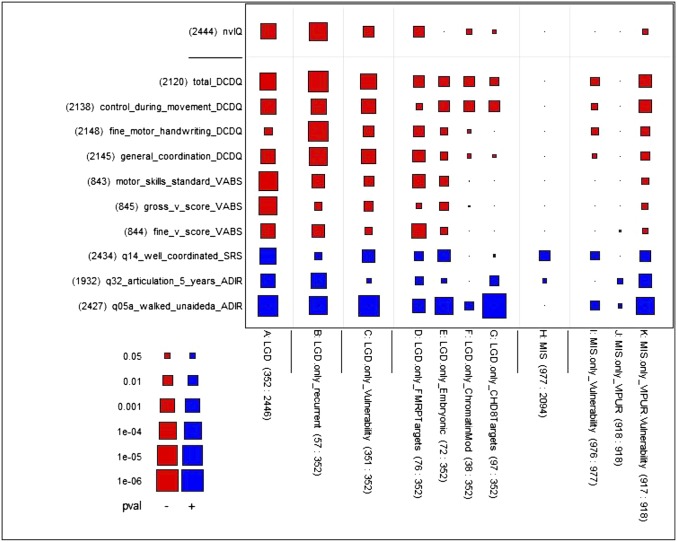
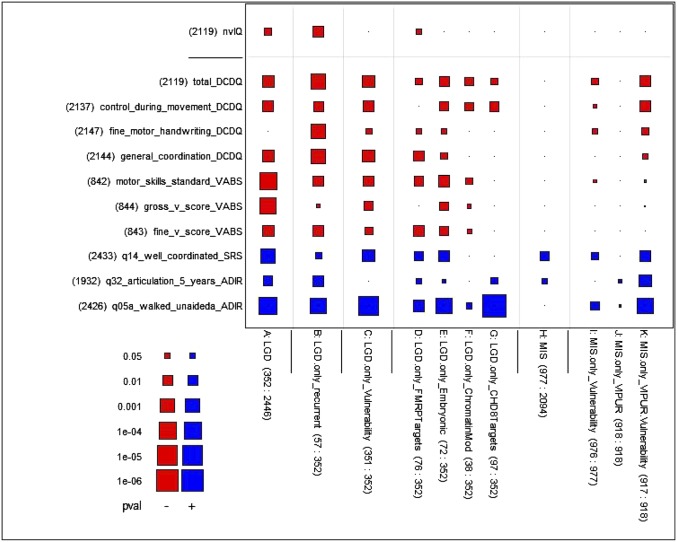
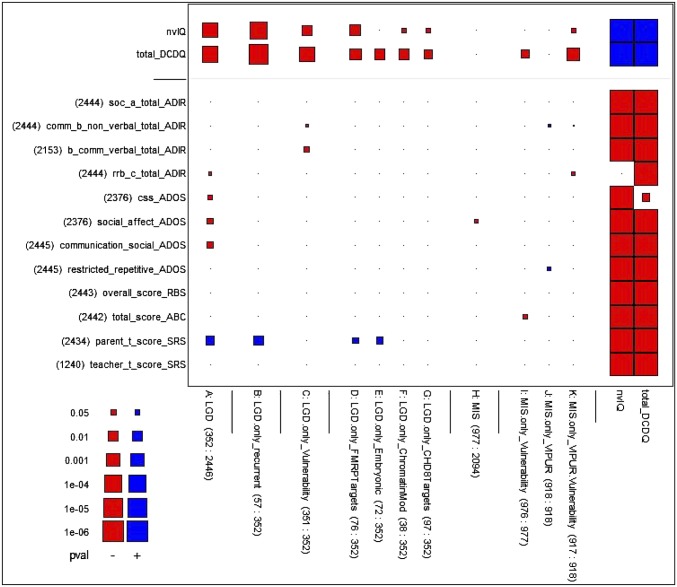
Significance: Genetics is a major determining factor in autism spectrum disorder (ASD). To date, only the most severe class of de novo mutation, likely gene disruptive (LGD), has been correlated with IQ, a phenotypic characteristic associated with ASD, but not a core feature. A less severe class of de novo mutation, missense, while enriched in individuals with ASD, has been refractory to correlation with any ASD phenotypic feature. In this report, we demonstrate that de novo LGD and missense mutations scored by target gene vulnerability both show significant associations with diminished motor skills.
Overview
The claims and statistics of this paper haven’t been checked yet.
Free: it reads the open-access text and checks the first 5 claims that cite a source we can check. Create a free account to check every claim.
Integrity signals
Registry
Cites
Statistics
Figures
Verification
Claims the paper makes
The claims and statistics of this paper haven’t been checked yet.
Free: it reads the open-access text and checks the first 5 claims that cite a source we can check. Create a free account to check every claim.
Claims other papers make about this one
Each is checked against this paper’s own text: does it say what the citing paper says it does?
The source backs part of the claim, not all of it — or backs it for a different population, condition or comparison.
In the citing paper
“First, existing studies investigating genotype–phenotype associations have been limited to summed scores of core autism features in smaller sample sizes19–21 rather than the underlying latent dimensions.”
From Genetic correlates of phenotypic heterogeneity in autism (2022) · cites this paper as [20]
Experimental — accuracy not yet measuredThe source backs part of the claim, not all of it — or backs it for a different population, condition or comparison.
In the citing paper
“Most of these mutations also decrease IQ and ID is an important comorbidity of ASD (Buja et al., 2018; Iossifov et al., 2014), which is consistent with previous work identifying dozens of known severe, rare medical genetic syndromes associated with ASD (reviewed in (Abrahams and Geschwind, 2008; Geschwind, 2009)).”
From Defining the genetic, genomic, cellular, and diagnostic architectures of psychiatric disorders (2019) · cites this paper as Buja et al., 2018
Experimental — accuracy not yet measured
Self-check
Percentages, sums and reported differences re-computed from the paper’s own numbers.
The self-check needs the paper’s full text.
Citations
Cites
Diagnostic and Statistical Manual of Mental Disorders
American Psychiatric Association (2013) · doi:10.1176/appi.books.9780890425596 · Cited by 116,369
Diagnostic and Statistical Manual of Mental Disorders(DSM)
(2008) · Encyclopedia of Counseling · doi:10.4135/9781412963978.n182 · Cited by 10,830
Strong association of de novo copy number mutations with autism
Sebat, J., Lakshmi, B., Malhotra, D., Troge, J., Lese-Martin, C., Walsh, T., Yamrom, B., Yoon, S., Krasnitz, A., Kendall, J., et al. (2007) · Science · doi:10.1126/science.1138659 · Cited by 2,795
Self-citationSynaptic, transcriptional and chromatin genes disrupted in autism
Study, T. D., De Rubeis, S., Autism, H. M. C. F., UK10K Consortium, The Autism Sequencing Consortium, He, X., Goldberg, A. P., Poultney, C. S., Samocha, K., Ercument Cicek, A., et al. (2014) · Nature · doi:10.1038/nature13772 · Cited by 2,746
The contribution of de novo coding mutations to autism spectrum disorder
Iossifov, I., O’Roak, B. J., Sanders, S. J., Ronemus, M., Krumm, N., Levy, D., Stessman, H. A., Witherspoon, K. T., Vives, L., Patterson, K. E., et al. (2014) · Nature · doi:10.1038/nature13908 · Cited by 2,585 · cited 10×
“We consider here dn LGD mutations in three sets of genes, enriched as targets of disruptive mutation in children with ASD and earlier examined by us (2): FMRP (fragile X mental retardation protein) target genes, whose transcripts interact with the fragile X protein (Fig.”
BackgroundResultInfluentialSelf-citationSporadic autism exomes reveal a highly interconnected protein network of de novo mutations
O’Roak, B. J., Vives, L., Girirajan, S., Karakoc, E., Krumm, N., Coe, B. P., Levy, R., Ko, A., Lee, C., Smith, J. D., et al. (2012) · Nature · doi:10.1038/nature10989 · Cited by 2,165 · cited 1×
“In an earlier effort, we and others have shown that ASD individuals with low nonverbal IQ (nvIQ) have a significantly increased incidence of damaging de novo mutations (2, 13).”
BackgroundSpatio-temporal transcriptome of the human brain
Kang, H. J., Kawasawa, Y. I., Cheng, F., Zhu, Y., Xu, X., Li, M., Sousa, A. M. M., Pletikos, M., Meyer, K. A., Sedmak, G., et al. (2011) · Nature · doi:10.1038/nature10523 · Cited by 2,084 · cited 1×
“1E) (2, 26, 27); and chromatin-modulating genes (Fig.”
FMRP Stalls Ribosomal Translocation on mRNAs Linked to Synaptic Function and Autism
Darnell, J. C., Van Driesche, S. J., Zhang, C., Hung, K. Y. S., Mele, A., Fraser, C. E., Stone, E. F., Chen, C., Fak, J. J., Chi, S. W., et al. (2011) · Cell · doi:10.1016/j.cell.2011.06.013 · Cited by 2,072
Transcriptomic Analysis of Autistic Brain Reveals Convergent Molecular Pathology
Voineagu, I., Wang, X., Johnston, P., Lowe, J. K., Tian, Y., Horvath, S., Mill, J., Cantor, R. M., Blencowe, B. J., & Geschwind, D. H. (2011) · Nature · doi:10.1038/nature10110 · Cited by 1,874 · cited 1×
“1E) (2, 26, 27); and chromatin-modulating genes (Fig.”
De Novo Gene Disruptions in Children on the Autistic Spectrum
Iossifov, I., Ronemus, M., Levy, D., Wang, Z., Hakker, I., Rosenbaum, J., Yamrom, B., Lee, Y.-H., Narzisi, G., Leotta, A., et al. (2012) · Neuron · doi:10.1016/j.neuron.2012.04.009 · Cited by 1,446
Self-citation
Cited by
Defining the genetic, genomic, cellular, and diagnostic architectures of psychiatric disorders
Sullivan, P. F., & Geschwind, D. H. (2019) · Cell · doi:10.1016/j.cell.2019.01.015 · Cited by 452
“Most of these mutations also decrease IQ, and ID is an important comorbidity of ASD (Buja et al., 2018; Iossifov et al., 2014), which is consistent with previous work identifying dozens of known severe, rare medical genetic syndromes associated with ASD (reviewed in Abrahams and Geschwind, 2008; Geschwind, 2009).”
ResultZhang, Y., Lu, Q., Ye, Y., Huang, K., Liu, W., Wu, Y., Zhong, X., Li, B., Yu, Z., Travers, B. G., et al. (2021) · Genome Biology · doi:10.1186/s13059-021-02478-w · Cited by 201
Antaki, D., Guevara, J., Maihofer, A. X., Klein, M., Gujral, M., Grove, J., Carey, C. E., Hong, O., Arranz, M. J., Hervas, A., et al. (2022) · Nature Genetics · doi:10.1038/s41588-022-01064-5 · Cited by 206
Genetic correlates of phenotypic heterogeneity in autism
Warrier, V., Zhang, X., Reed, P., Havdahl, A., Moore, T. M., Cliquet, F., Leblond, C. S., Rolland, T., Rosengren, A., LEAP, E.-A., et al. (2022) · Nature Genetics · doi:10.1038/s41588-022-01072-5 · Cited by 152
Cerebrospinal fluid and the early brain development of autism
Shen, M. D. (2018) · Journal of Neurodevelopmental Disorders · doi:10.1186/s11689-018-9256-7 · Cited by 98
Decoding disease: from genomes to networks to phenotypes
Wong, A. K., Sealfon, R. S. G., Theesfeld, C. L., & Troyanskaya, O. G. (2021) · Nature Reviews Genetics · doi:10.1038/s41576-021-00389-x · Cited by 97
Genome interpretation using in silico predictors of variant impact
Katsonis, P., Wilhelm, K. O., Williams, A. M., & Lichtarge, O. (2022) · Human Genetics · doi:10.1007/s00439-022-02457-6 · Cited by 100
“Variant impact prediction methods, such as MutPred2 (Pejaver et al. 2020) and VIPUR (Buja et al. 2018), have shown that de novo variants in ASD cases have a higher fraction of predicted pathogenic variants compared to healthy siblings.”
MethodEffect Sizes of Deletions and Duplications on Autism Risk Across the Genome
Douard, E., Zeribi, A., Schramm, C., Tamer, P., Loum, M. A., Nowak, S., Saci, Z., Lord, M.-P., Rodríguez-Herreros, B., Jean-Louis, M., et al. (2021) · American Journal of Psychiatry · doi:10.1176/appi.ajp.2020.19080834 · Cited by 72
Pathogenic Yield of Genetic Testing in Autism Spectrum Disorder
Harris, H. K., Sideridis, G. D., Barbaresi, W. J., & Harstad, E. B. (2020) · PEDIATRICS · doi:10.1542/peds.2019-3211 · Cited by 69
“This raises the question of the role of motor delays in suggesting a potential underlying genetic etiology, an area of recent investigation.(30) However, although this difference was statistically significant in our sample, scores in both groups remained in the “low adequate” to “moderately low” range on the Vineland…”
BackgroundSuliman-Lavie, R., Title, B., Cohen, Y., Hamada, N., Tal, M., Tal, N., Monderer‐Rothkoff, G., Gudmundsdottir, B., Gudmundsson, K. O., Keller, J. R., et al. (2020) · Nature Communications · doi:10.1038/s41467-020-19577-0 · Cited by 62
Editorial: Secondary vs. Idiopathic Autism
Casanova, M. F., Casanova, E. L., Frye, R. E., Baeza-Velasco, C., LaSalle, J. M., Hagerman, R. J., Scherer, S. W., & Natowicz, M. R. (2020) · Frontiers in Psychiatry · doi:10.3389/fpsyt.2020.00297 · Cited by 40
“Clinical study design benefits from the selection of homogeneous populations, those without prognostically distinct subgroups, as it makes it easier to assess treatment efficacy (vide infra, (9)].”
BackgroundLarge-scale metagenomic analysis of oral microbiomes reveals markers for autism spectrum disorders
Manghi, P., Filosi, M., Zolfo, M., Casten, L. G., García-Valiente, A., Mattevi, S., Heidrich, V., Golzato, D., Perini, S., Thomas, A. M., et al. (2024) · Nature Communications · doi:10.1038/s41467-024-53934-7 · Cited by 52
Self-citationTartaglione, A. M., Cipriani, C., Chiarotti, F., Perrone, B., Balestrieri, E., Matteucci, C., Vallebona, P. S., Calamandrei, G., & Ricceri, L. (2018) · Molecular Neurobiology · doi:10.1007/s12035-018-1328-x · Cited by 42
Reindal, L., Nærland, T., Weidle, B., Lydersen, S., Andreassen, O. A., & Sund, A. M. (2019) · Journal of Autism and Developmental Disorders · doi:10.1007/s10803-019-04112-y · Cited by 42
Yu, T., Lien, Y.-J., Liang, F., & Kuo, P. (2020) · American Journal of Epidemiology · doi:10.1093/aje/kwaa241 · Cited by 42
Kim, S.-W., Lee, H., Song, D. Y., Lee, G., Ji, J., Park, J. W., Han, J. H., Lee, J., Byun, H. J., Son, J. H., et al. (2024) · Genome Medicine · doi:10.1186/s13073-024-01385-6 · Cited by 43
Zhao, G., Walsh, K., Long, J., Gui, W., & Denisova, K. (2018) · PLoS ONE · doi:10.1371/journal.pone.0196964 · Cited by 37
Wickstrom, J., Farmer, C., Snyder, L. G., Mitz, A. R., Sanders, S., Bishop, S. L., & Thurm, A. E. (2021) · Journal of Child Psychology and Psychiatry · doi:10.1111/jcpp.13492 · Cited by 31
Accelerating Motor Skill Acquisition for Bicycle Riding in Children with ASD: A Pilot Study
Hawks, Z., Constantino, J. N., Weichselbaum, C. T., & Marrus, N. M. (2019) · Journal of Autism and Developmental Disorders · doi:10.1007/s10803-019-04224-5 · Cited by 31
Davis, J. M., Heft, I., Scherer, S. W., & Sikela, J. M. (2019) · American Journal of Psychiatry · doi:10.1176/appi.ajp.2018.18080993 · Cited by 27
“Rather, such simplex studies are preferentially finding genes important to motor functions (41).”
BackgroundWill, E., Bishop, S. L., & Roberts, J. E. (2019) · Journal of Neurodevelopmental Disorders · doi:10.1186/s11689-019-9281-1 · Cited by 27
A method to delineate de novo missense variants across pathways prioritizes genes linked to autism
Koire, A. M., Buchovecky, C., Katsonis, P., Kim, Y. W., Wilson, S. J., & Lichtarge, O. (2021) · Science Translational Medicine · doi:10.1126/scitranslmed.abc1739 · Cited by 22
Sensory–movement underpinnings of lifelong neurodivergence: getting a grip on autism
Kapp, S. K. (2025) · Frontiers in Integrative Neuroscience · doi:10.3389/fnint.2025.1489322 · Cited by 24
“However, these motor differences transcend intellectual challenges (Buja et al., 2018), which may suggest that others may underestimate their cognitive capacities because of their movement-related behavioral or performance difficulties.”
Genome-Wide Changes in Protein Translation Efficiency Are Associated with Autism
Rogozin, I. B., Gertz, E. M., Baranov, P. V., Poliakov, E., & Schäffer, A. A. (2018) · Genome Biology and Evolution · doi:10.1093/gbe/evy146 · Cited by 29
Khoury, E., Carment, L., Lindberg, P. G., Gaillard, R., Krebs, M., & Amado, I. (2020) · L Encéphale · doi:10.1016/j.encep.2019.11.005 · Cited by 25
Carias, K. V., & Wevrick, R. (2019) · Journal of Psychiatric Research · doi:10.1016/j.jpsychires.2019.01.023 · Cited by 19
Shohat, S., Amelan, A., & Shifman, S. (2020) · Biological Psychiatry · doi:10.1016/j.biopsych.2020.05.019 · Cited by 23
Balint, Z. K., Raper, J., Michopoulos, V., Howell, L. H., Gunter, C., Bachevalier, J., & Sánchez, M. M. (2021) · PLoS ONE · doi:10.1371/journal.pone.0235946 · Cited by 20
“Impaired motor coordination, postural control and balance has been reported in children with ASD (41-43), as well as staring off into space (47, 48).”
BackgroundResultAdvances in Genetics and Epigenetics of Developmental Coordination Disorder in Children
You, H., Shi, J., Huang, F., Wei, Z., Jones, G., Du, W., & Hua, J. (2023) · Brain Sciences · doi:10.3390/brainsci13060940 · Cited by 17
“conducted a study revealing that IQ and motor skills displayed distinct associations with detrimental mutations, with motor skills proving to be a more sensitive indicator of mutational severity in comparison with IQ, based on the type of mutation and target gene involved [56].”
BackgroundQuantitative Gait Analysis in Duplication 15q Syndrome and Nonsyndromic ASD
Wilson, R. B., Elashoff, D. A., Gouelle, A., Smith, B. A., Wilson, A. M., Dickinson, A. H., Safari, T., Hyde, C., & Jeste, S. (2020) · Autism Research · doi:10.1002/aur.2298 · Cited by 14
“Within syndromic forms of ASD, impaired motor skills are a more sensitive indicator of genetic mutation severity than intellectual quotient [Buja et al., 2018].”
BackgroundGenetic correlates of phenotypic heterogeneity in autism
(2020) · doi:10.1101/2020.07.21.20159228 · Cited by 14
“in these phenotypes may be attributed to this class of genetic variants in these individuals 142 (35,37).”
BackgroundHavdahl, A., Farmer, C., Schjølberg, S., Øyen, A., Surén, P., Reichborn‐Kjennerud, T., Magnus, P. M., Bresnahan, M. A., Hornig, M., Susser, E., et al. (2020) · Journal of Child Psychology and Psychiatry · doi:10.1111/jcpp.13369 · Cited by 14
“It is also true that among individuals diagnosed with ASD, those with rare genetic mutations are more likely to exhibit both motor delays (e.g., late walking) and ID (Bishop et al., 2017; Buja et al., 2018; Weiner et al., 2017).”
BackgroundSelf-citationEnhanced motor noise in an autism subtype with poor motor skills
Mandelli, V., Landi, I., Ceccarelli, S. B., Molteni, M., Nobile, M., D’Ausilio, A., Fadiga, L., Crippa, A., & Lombardo, M. V. (2024) · Molecular Autism · doi:10.1186/s13229-024-00618-0 · Cited by 13
Exons as units of phenotypic impact for truncating mutations in autism
Chiang, A. H., Chang, J., Wang, J., & Vitkup, D. (2020) · Molecular Psychiatry · doi:10.1038/s41380-020-00876-3 · Cited by 11
Ustinova, N. V., & Namazova-Baranova, L. S. (2021) · Вопросы современной педиатрии · doi:10.15690/vsp.v20i2.2255 · Cited by 11
Frostig, T., Alonim, H. A., Scheingesicht, G., Benjamini, Y., & Golani, I. (2020) · Frontiers in Behavioral Neuroscience · doi:10.3389/fnbeh.2020.580972 · Cited by 10
Clinical and genetic findings in autism spectrum disorders analyzed using exome sequencing
Blázquez, A., Rodríguez‐Revenga, L., Álvarez‐Mora, M. I., & Calvo, R. M. (2025) · Frontiers in Psychiatry · doi:10.3389/fpsyt.2025.1515793 · Cited by 9
“A previous study concluded that diminished motor skills, like ID, also correlate signi fi cantly with de novo mutations in ASD, and are an even more sensitive indicator of the damage of a de novo mutation than is ID (40).”
Cohenour, T., Gulsrud, A. C., & Kasari, C. L. (2023) · Autism Research · doi:10.1002/aur.2973 · Cited by 9
“…increased rate of co-occurring intellectual disability (Iossifov et al., 2014; Robinson et al., 2014), seizures (Sanders et al., 2015), and atypical neuromotor development (Buja et al., 2018), possibly reflecting the functional impact of mutations on neurobiological pathways (Chang et al., 2015).”
Sensorimotor variability distinguishes early features of cognition in toddlers with autism
Denisova, K., & Wolpert, D. M. (2024) · iScience · doi:10.1016/j.isci.2024.110685 · Cited by 10
Ayoub, M., Anderson, J. T., Russell, B. E., & Wilson, R. B. (2023) · Frontiers in Neuroscience · doi:10.3389/fnins.2023.1244176 · Cited by 8
“Motor impairments are highly prevalent and pervasive in individuals with ASD with a known genetic syndrome, and have been related to severity of genetic mutations (Fournier et al., 2010; Bishop et al., 2017; Buja et al., 2018; Wilson et al., 2020).”
BackgroundStratifying the autisms by a type I versus type II distinction in early development
Lombardo, M. V., Severino, I., & Mandelli, V. (2026) · Nature Mental Health · doi:10.1038/s44220-026-00603-x · Cited by 9
García-Alcón, A., González‐Peñas, J., Weckx, E., Penzol, M. J., Gurriarán, X., Costas, J., Díaz‐Caneja, C. M., Moreno, C., Hernandez, P. A., Arango, C., et al. (2022) · Journal of Autism and Developmental Disorders · doi:10.1007/s10803-021-05409-7 · Cited by 7
“, 2014) and neurological comorbidities (Buja et al., 2018; Xiong et al., 2019), common predisposing variation is more prevalent in high functioning ASD patients; in addition, these factors do predict better cognitive performance and educational attainment (EA) in the general population (Bulik-Sullivan et al.”
BackgroundInnan, H., Veitia, R. A., & Govindaraju, D. R. (2019) · Human Genetics · doi:10.1007/s00439-019-02067-9 · Cited by 8
“Excellent examples of these processes are provided by several investigators on cognitive disorders (Poduri et al. 2013; Jamuar et al. 2014; Morelli et al. 2017; Buja et al. 2018), Alzheimer’s disease (Park et al.”
BackgroundSupriyadi, S. (2021) · Jurnal Pendidikan Teori Penelitian dan Pengembangan · doi:10.17977/jptpp.v6i4.14707 · Cited by 7
“While fine motoric skills are movements that use fine muscles or certain parts of the body, which are influenced by opportunities to learn and practice (Buja et al., 2018).”
BackgroundBroad Autism Phenotype and Gait in Parents of Children With and Without Autism Spectrum Disorder
Ganai, U. J., Bhushan, B., & Venkatesh, K. S. (2024) · Annals of Neurosciences · doi:10.1177/09727531241249533 · Cited by 4
“33 Insights into endophenotypes, which are heritable traits observed in relatives in a particular diagnostic condition, may enhance the understanding of underlying factors contributing to ASD.”
Shan, L., Bai, M., Dong, H.-Y., Feng, J., Wang, T., Mohamed, Z. A., Miao, C., & Jia, F. (2025) · Pediatric Research · doi:10.1038/s41390-025-04085-y · Cited by 3
“Longitudinal studies that follow children over time would provide more comprehensive insights into the developmental trajectories of genetically positive and negative children with GDD.”
NASP gene contributes to autism by epigenetic dysregulation of neural and immune pathways
Zhang, S., Yang, J., Ji, D., Meng, X., Zhu, C., Zheng, G., Glessner, J., Qu, H., Cui, Y., Liu, Y., et al. (2024) · Journal of Medical Genetics · doi:10.1136/jmg-2023-109385 · Cited by 3
Jutla, A., Shuffrey, L. C., Guter, S. J., Anderson, G. M., O’Reilly, K. C., Montgomery, A. K., Sutcliffe, J. S., Cook, E. H., & Veenstra-VanderWeele, J. M. (2024) · JAACAP Open · doi:10.1016/j.jaacop.2024.09.005 · Cited by 3
Motor Impairment in Children with 16p11.2-Deletion and -Duplication Syndromes
Soliman, P., Goin‐Kochel, R. P., & Alexander, G. (2025) · Journal of Autism and Developmental Disorders · doi:10.1007/s10803-025-06874-0 · Cited by 3
“2 have often utilized informant-report measures or developmental scales nonspecific to motor functioning (Arnett et al., 2020; Berg et al., 2007; Buja et al., 2018; Wickstrom et al., 2021).”
Chorbadjiev, L., Cokol, M., Weinstein, Z., Shi, K. Y., Fleisch, C., Dimitrov, N., Mladenov, S., Todorov, I., Ivanov, I., Xu, S., et al. (2025) · Genome Research · doi:10.1101/gr.280356.124 · Cited by 3
“For instance, we showed that children with autism who harbor detrimental de novo mutations tend to display lower IQ levels (O ’ Roak et al. 2012b; Iossifov et al. 2014) and impaired motor skills in comparison to their coun-terpartswithoutsuchvariants(Bishopet al. 2017; Buja et al.2018).”
Self-citationRodgers, C. C. (2020) · Medical Hypotheses · doi:10.1016/j.mehy.2020.110339 · Cited by 2
Early motor trajectories in infants at increased genetic likelihood for autism
Wong, S., Abdullahi, S. M., Vangala, S., McDonald, N. M., & Wilson, R. B. (2026) · Frontiers in Developmental Psychology · doi:10.3389/fdpys.2026.1779127 · Cited by 1
“Also, infants with rare de novo or inherited genetic mutations will likely demonstrate more visible developmental motor delays compared to infants with a familial history of ASD (Buja et al., 2018).”
Korkmaz, S., Agathe, J. D. S., Cliquet, F., Martin, L. C., Barthome, E., Fleury, M., Segers, J., Bonnot-Briey, S., de Puget, V. G., Zhou, Y., et al. (2026) · Biological Psychiatry · doi:10.1016/j.biopsych.2026.10.003 · Cited by 1
Wang, X., Ling, Z., Luo, T., Zhou, Q., Zhao, G., Li, B., Xia, K., & Li, J. (2022) · Journal of Autism and Developmental Disorders · doi:10.1007/s10803-022-05824-4 · Cited by 1
“Few studies have reported that DNVs lead to decreased adaptive skills and increased autism-related social communication impairment (Douard et al., 2021), diminished motor skills (Buja et al., 2018), and increased incidence of seizures in ASD (O'Roak et al., 2014).”
InfluentialThe Genotype and Phenotypes in Families (GPF) platform manages the large and complex data at SFARIPreprint
Chorbadjiev, L., Cokol, M., Weinstein, Z., Shi, K. Y., Fleisch, C., Dimitrov, N., Mladenov, S., Xu, S., Hall, J., Ford, S., et al. (2024) · bioRxiv (Cold Spring Harbor Laboratory) · doi:10.1101/2024.02.08.579330 · Cited by 1
“For instance, we showed that children with autism who harbor detrimental de novo mutations tend to display lower IQ levels [21, 25] and impaired motor skills in comparison to their counterparts without such variants [38, 39].”
BackgroundSelf-citationGovindaraju, D. R., & Innan, H. (2021) · Springer eBooks · doi:10.1007/978-3-030-22009-9_733
Govindaraju, D. R., & Innan, H. (2019) · Springer eBooks · doi:10.1007/978-3-319-69892-2_733-1
Pedram, M., Eftekhar, M., Panahi, Y., & Eskandari, M. R. (2022) · Nöro Psikiyatri Arşivi · doi:10.29399/npa.28020
Zhang, Y., Lu, Q., Ye, Y., Huang, K., Liu, W., Wu, Y., Zhong, X., Li, B., Yu, Z., Travers, B. G., et al. (2021) · Figshare · doi:10.6084/m9.figshare.16584360
Kim, S.-W., Lee, H., Song, D. Y., Lee, G. Q., Ji, J., Park, J. W., Han, J. H., Lee, J. W., Byun, H. J., Son, J. H., et al. (2024) · Figshare · doi:10.6084/m9.figshare.27124237
Zhang, Y., Lu, Q., Ye, Y., Huang, K., Liu, W., Wu, Y., Zhong, X., Li, B., Yu, Z., Travers, B. G., et al. (2021) · Figshare · doi:10.6084/m9.figshare.16584354
Additional file 1 of Enhanced motor noise in an autism subtype with poor motor skills
Mandelli, V., Landi, I., Ceccarelli, S. B., Molteni, M., Nobile, M., D’Ausilio, A., Fadiga, L., Crippa, A., & Lombardo, M. V. (2024) · Figshare · doi:10.6084/m9.figshare.26945532
Zhang, Y., Lu, Q., Ye, Y., Huang, K., Liu, W., Wu, Y., Zhong, X., Li, B., Yu, Z., Travers, B. G., et al. (2021) · Figshare · doi:10.6084/m9.figshare.16584363
Kim, S.-W., Lee, H., Song, D. Y., Lee, G. Q., Ji, J., Park, J. W., Han, J. H., Lee, J. W., Byun, H. J., Son, J. H., et al. (2024) · Figshare · doi:10.6084/m9.figshare.27124240
Kim, S.-W., Lee, H., Song, D. Y., Lee, G. Q., Ji, J., Park, J. W., Han, J. H., Lee, J. W., Byun, H. J., Son, J. H., et al. (2024) · Figshare · doi:10.6084/m9.figshare.27124216
Kim, S.-W., Lee, H., Song, D. Y., Lee, G. Q., Ji, J., Park, J. W., Han, J. H., Lee, J. W., Byun, H. J., Son, J. H., et al. (2024) · Figshare · doi:10.6084/m9.figshare.27124213
Kim, S.-W., Lee, H., Song, D. Y., Lee, G. Q., Ji, J., Park, J. W., Han, J. H., Lee, J. W., Byun, H. J., Son, J. H., et al. (2024) · Figshare · doi:10.6084/m9.figshare.27124228
Kim, S.-W., Lee, H., Song, D. Y., Lee, G. Q., Ji, J., Park, J. W., Han, J. H., Lee, J. W., Byun, H. J., Son, J. H., et al. (2024) · Figshare · doi:10.6084/m9.figshare.27124234
Kim, S.-W., Lee, H., Song, D. Y., Lee, G. Q., Ji, J., Park, J. W., Han, J. H., Lee, J. W., Byun, H. J., Son, J. H., et al. (2024) · Figshare · doi:10.6084/m9.figshare.27124219
Zhang, Y., Lu, Q., Ye, Y., Huang, K., Liu, W., Wu, Y., Zhong, X., Li, B., Yu, Z., Travers, B. G., et al. (2021) · Figshare · doi:10.6084/m9.figshare.16584357
Kim, S.-W., Lee, H., Song, D. Y., Lee, G. Q., Ji, J., Park, J. W., Han, J. H., Lee, J. W., Byun, H. J., Son, J. H., et al. (2024) · Figshare · doi:10.6084/m9.figshare.27124231
Kim, S.-W., Lee, H., Song, D. Y., Lee, G. Q., Ji, J., Park, J. W., Han, J. H., Lee, J. W., Byun, H. J., Son, J. H., et al. (2024) · Figshare · doi:10.6084/m9.figshare.27124222
Metadata
- Authors
- Buja, A., Volfovsky, N., Krieger, A. M., Lord, C., Lash, A. E., Wigler, M., & Iossifov, I.
- Affiliations
- University of Pennsylvania (US)
- Simons Foundation (US)
- Statistics Department, The Wharton School, University of Pennsylvania, Philadelphia, PA 19104;
- Weill Cornell Medicine (US)
- Cold Spring Harbor Laboratory (US)
- Corresponding author
- Wigler, Michael
- Venue
- Proceedings of the National Academy of Sciences
- Publisher
- National Academy of Sciences
- Published
- 2018-02-06
- Volume
- 115
- Issue
- 8
- Pages
- E1859-E1866
- ISSN
- 0027-8424 (ISSN-L)
- 1091-6490
- PMC
- PMC5828599
- OpenAlex
- W2793693180
- Cited by
- 64
- References
- 53
- Citations by year
- 2026: 3 · 2025: 5 · 2024: 9 · 2023: 3 · 2022: 6 · 2021: 12 · 2020: 13 · 2019: 8 · 2018: 5
- FWCI
- 5.81
- Type
- journal article
- Language
- en
- Open access
- hybrid
- doi.org
- Licence
- Locations
- Proceedings of the National Academy of Sciences (publishedVersion, cc-by-nc-nd)
- bioRxiv (Cold Spring Harbor Laboratory) (acceptedVersion, cc-by-nc)
- PubMed Central (publishedVersion, cc-by-nc-nd)
- PubMed (publishedVersion)
- Cold Spring Harbor Laboratory Institutional Repository (Cold Spring Harbor Laboratory) (acceptedVersion)
- Funders
- Simons Foundation (SF235988, SF236988, SF362665, SF448357, SF230333)
- Topics
- Life Sciences › Neuroscience › Cognitive Neuroscience › Autism Spectrum Disorder Research
- Life Sciences › Biochemistry, Genetics and Molecular Biology › Genetics › Genetics and Neurodevelopmental Disorders
- Life Sciences › Biochemistry, Genetics and Molecular Biology › Genetics › Genomic variations and chromosomal abnormalities
- Keywords
- autism spectrum disorder, de novo mutations, motor skills, motor impairment, IQ, Simons Simplex Collection
- MeSH terms
- Autism Spectrum Disorder, Child, Female, Genotype, Humans, Male, Motor Skills, Mutation
About these checks
Registry, retraction, Cites and statistics results are computed, not judged, with one exception: a printed reference that no index lists is read once by a model before it counts as a citation error. Claims are extracted by a model and kept only when their quote appears verbatim in the text; each cited source is then checked, with a model’s help, for whether it says what the claim relies on. Those verdicts can be wrong — read the claim’s quote and the cited source before relying on one.
Statistics and arithmetic are recomputed, not judged.
Confidence bands are shown only for fields calibrated on our annotated test set. None is calibrated yet, so no band is shown.
What counts as a claim ›How we measure confidence ›How we check this ›
Are you an author, or do you see a problem with this page? Request a review
Data sources
Bibliographic data: Semantic Scholar, OpenAlex, Crossref.
Contains information from the Semantic Scholar Academic Graph Datasets, made available under the ODC Attribution License (ODC-BY 1.0).
Semantic Scholar’s data is described in: Kinney, R., et al. (2023). The Semantic Scholar Open Data Platform. arXiv:2301.10140.
