

Stalls in Africa’s fertility decline partly result from disruptions in female education
Open accessThe DOI matches its Crossref record; 33 of the 33 references it cites were found in a registry or an index.
Abstract
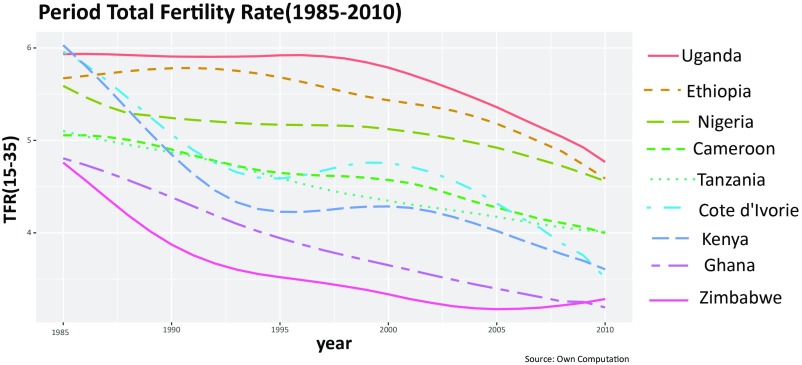
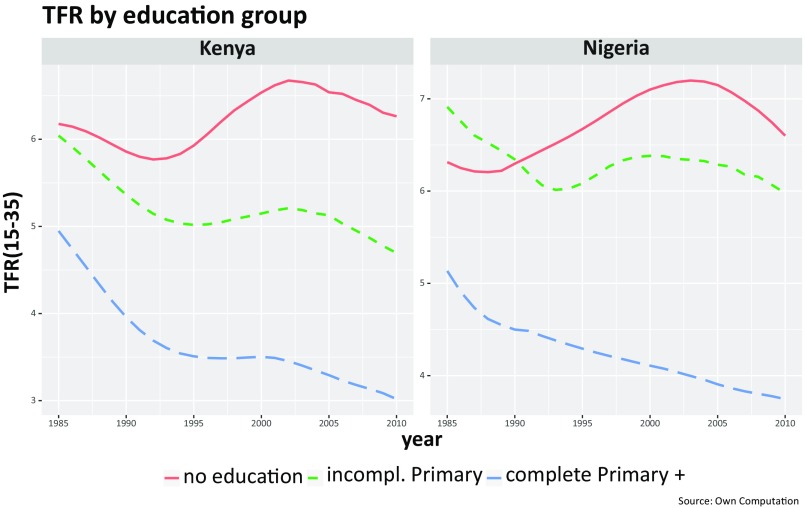
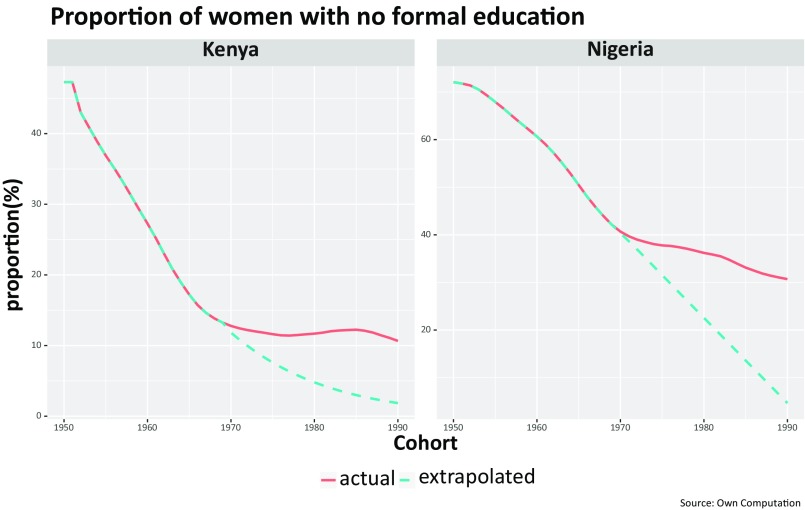
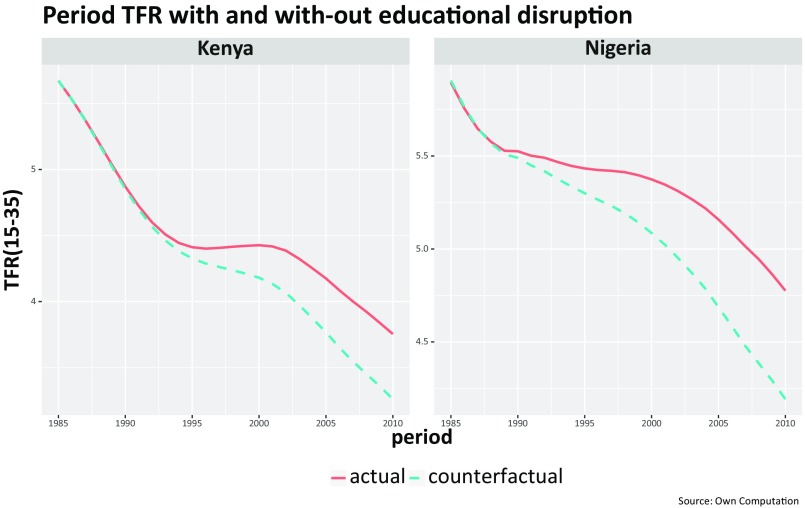
Significance: The future pace of fertility decline in sub-Saharan Africa is the main determinant of future world population growth and will have massive implications for Africa and the rest of the world, not least through international migration pressure and difficulties in meeting the sustainable development goals. In this context, there have been concerns about recent stalls in the fertility decline in some African countries. Our findings suggest that these stalls are in part explained by earlier stalls in female education and that less-educated women are more vulnerable to adverse period conditions. This has important implications for setting policy priorities.
Overview
The claims and statistics of this paper haven’t been checked yet.
Free: it reads the open-access text and checks the first 5 claims that cite a source we can check. Create a free account to check every claim.
Integrity signals
Registry
Cites
Statistics
Figures
Verification
Claims the paper makes
The claims and statistics of this paper haven’t been checked yet.
Free: it reads the open-access text and checks the first 5 claims that cite a source we can check. Create a free account to check every claim.
Claims other papers make about this one
Each is checked against this paper’s own text: does it say what the citing paper says it does?
The source backs part of the claim, not all of it — or backs it for a different population, condition or comparison.
In the citing paper
“Limitations in contraceptive use, family planning programs [11, 12] and education [13] may be involved in the stall, impeding efforts to reduce population growth.”
From Human fertility in relation to education, economy, religion, contraception, and family planning programs (2020) · cites this paper as [13]
Experimental — accuracy not yet measured
Self-check
Percentages, sums and reported differences re-computed from the paper’s own numbers.
The self-check needs the paper’s full text.
Citations
Cites
Improving primary education in developing countries
(1992) · Choice Reviews Online · doi:10.5860/choice.30-0432 · Cited by 725
The effect of IMF programs on economic growth
Przeworski, A., & Vreeland, J. R. (2000) · Journal of Development Economics · doi:10.1016/s0304-3878(00)00090-0 · Cited by 601
Fertility Transition: Is sub‐Saharan Africa Different?
Bongaarts, J., & Casterline, J. (2013) · Population and Development Review · doi:10.1111/j.1728-4457.2013.00557.x · Cited by 483 · cited 1×
“Much has been written and speculated about this so-called stalled African fertility transition (1).”
BackgroundWomen's Education and Fertility: Results from 26 Demographic and Health Surveys
Martin, T. C. (1995) · Studies in Family Planning · doi:10.2307/2137845 · Cited by 480
Fertility and Education. What Do We Really Know?
T., A. M. T., & Cochrane, S. H. (1980) · Population (French Edition) · doi:10.2307/1532377 · Cited by 464
World Population and Human Capital in the Twenty-First Century
(2014) · Oxford University Press eBooks · doi:10.1093/acprof:oso/9780198703167.001.0001 · Cited by 248
Götmark, F., & Andersson, M. (2020) · BMC Public Health · doi:10.1186/s12889-020-8331-7 · Cited by 230
Ameyaw, E. K., Budu, E., Sambah, F., Baatiema, L., Appiah, F., Seidu, A.-A., & Ahinkorah, B. O. (2019) · PLOS ONE · doi:10.1371/journal.pone.0220970 · Cited by 224
Fertility Transition in Sub-Saharan Africa: Falling and Stalling
Shapiro, D., & Gebreselassie, T. (2013) · African Population Studies · doi:10.11564/23-1-310 · Cited by 155 · cited 1×
“Most of the existing studies try to link the fertility stalls to some specific period factors such as the slower trends in socioeconomic development prevalent in the stalling countries (3), the low priority assigned to family planning programs at the beginning of the 21st century (4, 5), the impact of HIV/AIDS mainly…”
BackgroundMeeting the Sustainable Development Goals leads to lower world population growth
Abel, G. J., Barakat, B., KC, S., & Lutz, W. (2016) · Proceedings of the National Academy of Sciences · doi:10.1073/pnas.1611386113 · Cited by 152 · cited 1×
“Whether it will “only” increase to two billion as shown by optimistic scenarios that assume successful implementation of the sustainable development goals (27, 28), or by more-pessimistic scenarios assuming slow or stalled development and thus resulting in four to five billion Africans by the end of the century, Afric…”
BackgroundSelf-citation
Research works printed but not linked: 1
- Agyei-Mensah S 2007 New Times, New Families: The Stall in Ghanaian Fertility Union for African Studies Arusha, Tanzania 24
Cited by
Ameyaw, E. K., Budu, E., Sambah, F., Baatiema, L., Appiah, F., Seidu, A.-A., & Ahinkorah, B. O. (2019) · PLOS ONE · doi:10.1371/journal.pone.0220970 · Cited by 224
Götmark, F., & Andersson, M. (2020) · BMC Public Health · doi:10.1186/s12889-020-8331-7 · Cited by 230
Educational Gender Inequality in Sub‐Saharan Africa: A Long‐Term Perspective
Baten, J., de Haas, M., Kempter, E., & zu Selhausen, F. M. (2021) · Population and Development Review · doi:10.1111/padr.12430 · Cited by 128
“2015; Boahen and Yamauchi 2018; Kebede et al. 2019), reduced child mortality (Makate and Makate 2016; Keats 2018; Andriano and Monden 2019), improved family well-being (Abuya et al. 2012; Pratley 2016), and economic growth (Klasen 2002; Baliamoune-Lutz and McGillivray 2009; Klasen and Lamanna 2009).”
BackgroundUrbanization Is No Longer Driven by Migration in Low‐ and Middle‐Income Countries (1985–2015)
Menashe‐Oren, A., & Bocquier, P. (2021) · Population and Development Review · doi:10.1111/padr.12407 · Cited by 109
Kebede, E. B., Striessnig, E., & Goujon, A. (2021) · Population Studies · doi:10.1080/00324728.2021.1892170 · Cited by 92
“In contrast, sub-Saharan Africa (SSA) showed little to no sign of fertility decline until the 1980s, and ongoing fertility declines are happening at a much slower pace compared with other regions, and sometimes even stalling (Bongaarts 2008; Ezeh et al. 2009; Kebede et al. 2019).”
BackgroundSelf-citationStalls in fertility transitions in sub-Saharan Africa: revisiting the evidence
Schoumaker, B. (2019) · Studies in Family Planning · doi:10.1111/sifp.12098 · Cited by 77
“More recently, Kebede, Goujon, and Lutz (2019) found that stalls in fertility decline in sub-Saharan Africa could partly be explained by disruptions in the increase of female education.”
BackgroundResultInfluentialEarly systems change necessary for catalyzing long-term sustainability in a post-2030 agenda
Moallemi, E. A., Eker, S., Gao, L., Hadjikakou, M., Liu, Q., Kwakkel, J. H., Reed, P. M., Obersteiner, M. H., Guo, Z., & Bryan, B. A. (2022) · One Earth · doi:10.1016/j.oneear.2022.06.003 · Cited by 88
“41 In-vestment in effective healthcare and newborn health services are other rising opportunities for enhancing prosperity.”
Projections of human kinship for all countries
Alburez‐Gutierrez, D., Williams, I., & Caswell, H. (2023) · Proceedings of the National Academy of Sciences · doi:10.1073/pnas.2315722120 · Cited by 87
Population and food systems: what does the future hold?
Becker, S., & Fanzo, J. (2023) · Population and Environment · doi:10.1007/s11111-023-00431-6 · Cited by 65
“Stalls in educational improvement in SSA in the period around 2000 help explain the stall in the fertility transition in multiple countries (Kebede et al., 2019).”
BackgroundGrand Transitions: How the Modern World Was Made
Smil, V. (2021) · doi:10.1093/oso/9780190060664.001.0001 · Cited by 87
Feyissa, G. T., Tolu, L. B., Soboka, M., & Ezeh, A. (2023) · Frontiers in Reproductive Health · doi:10.3389/frph.2023.1105390 · Cited by 55
“The population growth of SSA is driven largely by high fertility and child onset of childbearing (3, 4).”
BackgroundFertility transition powered by women’s access to electricity and modern cooking fuels
Belmin, C., Hoffmann, R., Pichler, P., & Weisz, H. (2021) · Nature Sustainability · doi:10.1038/s41893-021-00830-3 · Cited by 54
Maternal cumulative prevalence measures of child mortality show heavy burden in sub-Saharan Africa
Smith‐Greenaway, E., & Trinitapoli, J. A. (2020) · Proceedings of the National Academy of Sciences · doi:10.1073/pnas.1907343117 · Cited by 43
Urban Family Planning in Low- and Middle-Income Countries: A Critical Scoping Review
Duminy, J., Cleland, J., Harpham, T., Montgomery, M. R., Parnell, S. M., & Speizer, I. S. (2021) · Frontiers in Global Women s Health · doi:10.3389/fgwh.2021.749636 · Cited by 42
“Researchers have variously pointed to contemporaneous trends in socioeconomic development (27), declining national and international support for FP programmes leading to greater unmet need and lower contraceptive use (28), high levels of desired fertility related to socioeconomic uncertainty (29, 30), as well as disru…”
BackgroundContraceptive use and fertility transitions: The distinctive experience of sub-Saharan Africa
Dasgupta, A., Wheldon, M. C., Kantorová, V., & Ueffing, P. (2022) · Demographic Research · doi:10.4054/demres.2022.46.4 · Cited by 42
The accelerated infectious disease risk in the Anthropocene: more outbreaks and wider global spreadPreprint
Morand, S., & Walther, B. A. (2020) · bioRxiv (Cold Spring Harbor Laboratory) · doi:10.1101/2020.04.20.049866 · Cited by 36
“…Department of the Treasury and the resulting the structural adjustment programs dramatically decreased the public health and education capabilities of developing countries (e.g., Oliver, 2006; Abul Hossen and Westhues, 2012; Kebede et al., 2019) which should also have affected reporting rates.”
BackgroundCovering Migration—in Africa and Europe: Results from a Comparative Analysis of 11 Countries
Fengler, S., Bastian, M., Brinkmann, J., Zappe, A.-C., Tatah, V., Andindilile, M., Assefa, E., Chibita, M., Mbaine, A., Obonyo, L., et al. (2020) · Journalism Practice · doi:10.1080/17512786.2020.1792333 · Cited by 35
“Emigration from Africa is frequently ascribed to a lack of perspectives (Gimenez-Gomez, Walle, and Zewdu 2017) and a sharp rise of the population of the African continent expected to continue until 2050 (Kebede, Goujon, and Lutz 2019).”
BackgroundModeling Social Self-Organization and Historical Dynamics: Africa’s Futures
Korotayev, A., Shulgin, S. G., Ustyuzhanin, V., Zinkina, J. V., & Grinin, L. E. (2023) · World-systems evolution and global futures · doi:10.1007/978-3-031-34999-7_20 · Cited by 32
Demography: Toward Optimization of Demographic Processes
Korotayev, A., Malkov, S., & Musieva, J. (2023) · World-systems evolution and global futures · doi:10.1007/978-3-031-34999-7_6 · Cited by 31
Forecasting Africa’s fertility decline by female education groups
Adhikari, S., Lutz, W., & Kebede, E. B. (2024) · Proceedings of the National Academy of Sciences · doi:10.1073/pnas.2320247121 · Cited by 26
Self-citationSimon, D. J., Paul, B., Kiragu, A., Olorunsaiye, C. Z., Joseph, F., Joseph, G., & N’Gou, D. H. M. (2023) · BMC Women s Health · doi:10.1186/s12905-023-02295-2 · Cited by 25
“This finding is in line with previous studies [64, 65] but contradicts the findings of these studies [55, 66].”
ResultDo housing booms reduce fertility intentions? Evidence from the new two-child policy in China
Meng, L., Lü, P., & Zhou, Y. (2023) · Regional Science and Urban Economics · doi:10.1016/j.regsciurbeco.2023.103920 · Cited by 29
Gietel‐Basten, S., & Sobotka, T. (2020) · SocArXiv (OSF Preprints) · doi:10.31235/osf.io/5syef · Cited by 24
Garbett, A., Perelli‐Harris, B., & Neal, S. (2021) · Population and Development Review · doi:10.1111/padr.12384 · Cited by 22
Life After Loss: A Prospective Analysis of Mortality Exposure and Unintended Fertility
Smith‐Greenaway, E., Yeatman, S. E., & Chilungo, A. (2022) · Demography · doi:10.1215/00703370-9807961 · Cited by 21
“As demographers continue to contemplate what drives fertility change in sub-Saharan Africa, socioeconomic development, governance, and health services are seen as preeminent forces (Bongaarts 2017; Kebede et al. 2019; Tsui et al. 2017).”
BackgroundDimbuene, Z. T., Tessema, Z. T., & Sonne, S. E. W. (2023) · PLoS ONE · doi:10.1371/journal.pone.0283236 · Cited by 19
Okoye, D., & Pongou, R. (2023) · Journal of Economic Growth · doi:10.1007/s10887-023-09231-x · Cited by 27
Adhikari, S., Lutz, W., & Samir, K. C. (2024) · Asian Population Studies · doi:10.1080/17441730.2024.2430035 · Cited by 24
“This pattern is reflective of what the literature has called the ‘stalled African fertility decline’ (Kebede et al., 2019).”
Self-citationSchoumaker, B. D., & Sánchez‐Páez, D. A. (2024) · Population and Development Review · doi:10.1111/padr.12610 · Cited by 18
Kaombe, T. M. (2024) · BMC Women s Health · doi:10.1186/s12905-024-02891-w · Cited by 15
Lutz, W. (2020) · Vienna Yearbook of Population Research · doi:10.1553/populationyearbook2020.deb06 · Cited by 15
“This pattern of explanation has recently been confirmed by two highly comprehensive studies (Kebede 2019; Kebede et al. 2019) that pooled all the individuallevel data from all African countries and for all years that are available from the DHS (Demographic and Health Survey), which enabled the authors to study more th…”
BackgroundResultInfluentialSelf-citationCorker, J., Rossier, C., & Zan, M. L. (2022) · Demographic Research · doi:10.4054/demres.2022.46.29 · Cited by 15
Socioeconomic development predicts a weaker contraceptive effect of breastfeeding
Todd, N., & Lerch, M. (2021) · Proceedings of the National Academy of Sciences · doi:10.1073/pnas.2025348118 · Cited by 15
“While the slower pace of the African fertility decline has had other causes (45, 46), our results assuredly call for a continued diffusion of contraception.”
Projections of climate change vulnerability along the Shared Socioeconomic Pathways 2020–2100
Huisman, J., Martyr, R., Rott, R., & Smits, J. P. J. M. (2025) · Scientific Data · doi:10.1038/s41597-025-05732-z · Cited by 13
Durowaa-Boateng, A., Yıldız, D., & Goujon, A. (2023) · Demographic Research · doi:10.4054/demres.2023.49.31 · Cited by 11
“The analysis of the stalls in fertility decline show that they could be in part linked to the stalls in education progress (Goujon, Lutz, and KC 2015; Kebede, Goujon, and Lutz 2019).”
BackgroundSelf-citationOrwa, J., Gatimu, S. M., Ariho, P., Temmerman, M., & Luchters, S. M. F. (2023) · BMC Public Health · doi:10.1186/s12889-023-15620-z · Cited by 13
Ethnic Variation in Fertility Preferences in Sub-Saharan Africa
Wildeman, J., Smits, J. P. J. M., & Schrijner, S. (2023) · Population Research and Policy Review · doi:10.1007/s11113-023-09804-z · Cited by 12
“Other individual and household characteristics that are expected to be important are their partners’ education and occupation, household wealth, place of residence, age, religion, and whether they practice polygamy (Matovu et al., 2017; Tomkinson, 2019; Lerch, 2019; Atake & Ali 2019; Kebede et al., 2019; Bongaarts, 20…”
BackgroundInfluentialDou, Y., Chen, C., Cui, A., Ning, X., Wang, X., & Li, J. (2024) · International Journal of Biological Macromolecules · doi:10.1016/j.ijbiomac.2024.135932 · Cited by 10
An investigation of Jordan’s fertility stall and resumed decline: The role of proximate determinants
Krafft, C., Kula, E., & Sieverding, M. (2021) · Demographic Research · doi:10.4054/demres.2021.45.19 · Cited by 11
“…that socioeconomic conditions have led to fertility stalls, including stagnation in women’s educational attainment (Goujon, Lutz, and Samir 2015; Kebede, Goujon, and Lutz 2019; Shapiro and Gebreselassie 2013) and employment opportunities (Al Zalak and Goujon 2017; Krafft 2020), as well as…”
BackgroundInfluentialYeboah, I., Kwankye, S. O., & Frempong-Ainguah, F. (2021) · Genus · doi:10.1186/s41118-021-00137-3 · Cited by 11
Slow-downs of fertility decline: When should we call it a 'fertility stall'?
Grimm, M., Günther, I., Harttgen, K., & Klasen, S. (2022) · Demographic Research · doi:10.4054/demres.2022.46.26 · Cited by 13
“…and Emina 2009; Garenne 2008; Garenne et al. 2015; Gerland, Biddlecom, and Kantorová 2017; Goujon, Lutz, and KC 2015; Guengant 2017; Howse 2015; Kebede, Goujon, and Lutz 2019; Machiyama 2010; Moultrie et al. 2008; Schoumaker 2009, 2019; Shapiro and Gebreselassie 2008; Shapiro and Hinde 2017).”
BackgroundResultMkwashapi, D. M., Renju, J., Mahande, M. J., Changalucha, J. M., Urassa, M., & Todd, J. (2023) · PLoS ONE · doi:10.1371/journal.pone.0281914 · Cited by 9
Improving Access to Jobs for the Poor and Vulnerable in Somalia
Karamba, W. (2021) · World Bank, Washington, DC eBooks · doi:10.1596/34983 · Cited by 8
Temesgen, Y., Ketema, M., & Ademe, A. (2022) · Heliyon · doi:10.1016/j.heliyon.2022.e10968 · Cited by 7
“This highlights the significance of education; a finding is consistent with the finding of Abrham and Bauer (2012), Birhan and Tesfahun (2017), Teka et al. (2019) and Kebede et al. (2019).”
ResultTaye, B. A., Yirsaw, B. G., Belete, A. K., & Weldearegay, B. Y. (2024) · Journal of Health Population and Nutrition · doi:10.1186/s41043-024-00659-4 · Cited by 8
“Fertility rates in Ethiopia have persistently fallen over the previous few decades, although the underlying causes of this trend remain unknown [10].”
BackgroundThe Future Society and the Transition to It
Sadovnichy, V. A., Akaev, A. A., Ilyin, I. V., Malkov, S., Grinin, L. E., Andreev, A. I., & Korotayev, A. (2023) · World-systems evolution and global futures · doi:10.1007/978-3-031-34999-7_3 · Cited by 5
Demand for family planning satisfied by modern methods in Ghana: trends and inequalities (2013–2022)
Obeng, A. A., Blumenberg, C., Afagbedzi, S. K., Wado, Y. D., & Nilsen, K. (2025) · BMC Public Health · doi:10.1186/s12889-025-22022-w · Cited by 6
“A recent study relied on Demographic and Health Survey (DHS) data only up to 2014, leaving the trends over the past decade unexplored [16].”
Choice of desired family size among young women in Zambia: what matters?
Phiri, M., Shasha, L., Musonda, E., Muhanga, M. I., & Lemba, M. (2023) · Journal of Population Research · doi:10.1007/s12546-023-09311-0 · Cited by 8
Pregnancies and contraceptive use in four African countries during the COVID-19 pandemic
Backhaus, A. (2022) · Vienna Yearbook of Population Research · doi:10.1553/populationyearbook2022.dat.4 · Cited by 5
“…fertility has been deemed essential for advancing education and economic development in these countries, while a stalling of fertility declines had already been observed in some sub-Saharan African countries prior to the pandemic (Kebede et al., 2019; Schoumaker, 2019; Tabutin et al., 2020).”
Background'Empty Planet: the Shock of Global Population Decline' by Darell Bricker and John Ibbitson.
Samways, D. (2019) · The Journal of Population and Sustainability · doi:10.3197/jps.2019.3.2.87 · Cited by 5
“However, changes in government policy and the priorities of NGOs have already been shown as a cause of stalling fertility decline (see Sinding, 2009; Kebede et al. 2019).”
A new look at contraceptive prevalence plateaus in sub-Saharan Africa: A probabilistic approach
Wheldon, M. C., Kantorová, V., Molitoris, J., & Dasgupta, A. (2024) · Demographic Research · doi:10.4054/demres.2024.50.31 · Cited by 5
“…weak government commitment, slower economic development, disruptions in investments in education of women and girls, higher infant and child mortality, and higher desired family sizes (Bongaarts and Casterline 2013; Goujon, Lutz, and KC 2015; Kebede, Goujon, and Lutz 2019; Liu and Raftery 2020).”
BackgroundIs there still evolution in the human population?
Kun, Á. (2022) · Biologia Futura · doi:10.1007/s42977-022-00146-z · Cited by 4
Crombach, L., & Smits, J. P. J. M. (2024) · Population Space and Place · doi:10.1002/psp.2801 · Cited by 6
“…lack of access to contraceptives (John & Adjiwanou, 2021; Hertrich, 2017); low levels of female education (Bongaarts, 2020; Channon & Harper, 2019; Kebede et al., 2019); a weak position of women (Bras & Smits, 2021; Longwe & Smits, 2012); slow economic growth (Bongaarts, 2017; Caldwell, 2004);…”
Religiously inspired baby boom: evidence from Georgia
Chung, S., Deopa, N., Saxena, K., & Stone, L. (2025) · Journal of Population Economics · doi:10.1007/s00148-025-01092-5 · Cited by 5
“Following the previous literature (Macunovich 1996; Basu 2002; Sato and Yamamoto 2005; Kebede et al. 2019) the following variables are utilized to derive a synthetic control unit for Georgia: total fertility rate (or Crude Birth Rate when used Figure4 shows the total fertility rate (TFR) for…”
Introduction: the relevance of studying fertility across time and space
Sobotka, T. (2020) · Vienna Yearbook of Population Research · doi:10.1553/populationyearbook2020.int01 · Cited by 6
“In line with these expectations, Goujon et al. (2015) and Kebede et al. (2019) linked the stalling of the fertility transition in some countries of Sub-Saharan Africa to the setbacks in education in the 1980s and 1990s, when the share of women without formal education stagnated or declined only…”
BackgroundGlobal pathways to sustainable development to 2030 and beyondPreprint
Ea, M., Eker, S., Gao, L., Hadjikakou, M., Kwakkel, J. H., Pm, R., Obersteiner, M. H., & Ba, B. (2020) · arXiv (Cornell University) · Cited by 9
Fertility and the Education of African Parents and Children
Vogl, T. (2022) · National Bureau of Economic Research · doi:10.3386/w30474 · Cited by 5
A FLEXIBLE MODEL TO RECONSTRUCT EDUCATION-SPECIFIC FERTILITY RATES: SUB-SAHARAN AFRICA CASE
Yıldız, D., Wiśniowski, A., Brzozowska, Z., & Durowaa-Boateng, A. (2023) · doi:10.1553/0x003e65e0 · Cited by 4
Smil, V. (2021) · Oxford University Press eBooks · doi:10.1093/oso/9780190060664.003.0001 · Cited by 3
Demography, geopolitics and great power: A lesson from the past
Terranova, G. (2023) · AIMS Geosciences · doi:10.3934/geosci.2023043 · Cited by 3
Vienna Yearbook of Population Research 2020
Sobotka, T., Jasilioniene, A., Zeman, K., & Fariñas, D. R. (2020) · Vienna Yearbook of Population Research · doi:10.1553/populationyearbook2020 · Cited by 3
Individual and community effects and adolescent reproductive health transitions in West Africa
Avogo, W. A. (2025) · Discover Public Health · doi:10.1186/s12982-025-00902-1 · Cited by 2
Aran, N., Sharma, A., Bratu, A., Closson, K., Gislason, M., Kennedy, A. M., Logie, C. H., Barkin, J. L., Hogg, R. S., & Card, K. G. (2025) · Frontiers in Public Health · doi:10.3389/fpubh.2025.1642689 · Cited by 2
“Over the last few decades, global fertility rates have declined in response to social and economic changes that have improved the status of women and children (20).”
Geruso, M., & Spears, D. (2025) · Oxford University Press eBooks · doi:10.1093/9780191979972.003.0024 · Cited by 2
Education and Literacy in Ghana: Trends, Disparities, and Implications for Sustainable Development
Kyei, P. S., & Annim, S. K. (2025) · Springer eBooks · doi:10.1007/978-3-032-00582-3_11 · Cited by 2
Fertility Decline and Educational Progress Among African Women and Children
Vogl, T. (2025) · Demography · doi:10.1215/00703370-12250354 · Cited by 5
“Kebede et al. (2019) argue that slowdowns in the growth of women’s education across cohorts explain “stalls” in fertility decline in several countries.”
Yıldız, D., Wiśniowski, A., Brzozowska, Z., & Durowaa-Boateng, A. (2026) · Demographic Research · doi:10.4054/demres.2026.54.12 · Cited by 2
“However, as evidenced by Kebede, Goujon, and Lutz (2019), many of these stalls are seen among women with less than higher education.”
Klu, D., & Agyekum, P. (2023) · SN Social Sciences · doi:10.1007/s43545-023-00702-x · Cited by 3
A Demographic Case for a Global South Focus in Development Studies
Fischer, A. M. (2025) · European Journal of Development Research · doi:10.1057/s41287-024-00684-3 · Cited by 2
Boissonneault, M., & de Jong, P. (2022) · Frontiers in Human Dynamics · doi:10.3389/fhumd.2022.897562 · Cited by 2
“Considering the stalls in fertility decline observed recently in several sub-Saharan countries (Kebede et al., 2019), the number of people intending to migrate from those countries to Europe could increase strongly, particularly in countries with already large populations such as Nigeria or the Democratic Republic of…”
BackgroundGoujon, A. (2022) · International handbooks of population · doi:10.1007/978-3-031-02040-7_30 · Cited by 2
Self-citationContinent Wise Intersectional Analysis on Ageing
Lama, P. (2023) · Springer eBooks · doi:10.1007/978-981-99-5772-9_1 · Cited by 2
Globale Bevölkerungsentwicklung. Fakten und Trends
Loichinger, E., Swiaczny, F., Genoni, A., Sander, N., & Westerman, R. (2021) · doi:10.12765/bro-2021-01 · Cited by 4
Somefun, O. D., Banougnin, B. H., Stoebenau, K., & Smith‐Greenaway, E. (2025) · Edward Elgar Publishing eBooks · doi:10.4337/9781803923383.00036 · Cited by 2
How Is Fertility Behavior in Africa Different?
Pörtner, C. C. (2025) · Demography · doi:10.1215/00703370-12191344 · Cited by 1
Jejaw, M., Negash, W. D., Demissie, K. A., Belachew, T. B., Tiruneh, M. G., Bitew, D. A., Asmamaw, D. B., Fentie, E. A., Baffa, L. D., Anteneh, R. M., et al. (2026) · Reproduction and Fertility · doi:10.1530/raf-25-0193 · Cited by 1
“Previous studies revealed that higher fertility rates and early childbearing greatly contributed to maternal mortality in SSA (Onagoruwa & Wodon 2018, Kebede et al. 2019).”
Quak, E.-J., & Tull, K. I. (2020) · Figshare · Cited by 4
Enfants hors l'école en Afrique : quelles données pour quels indicateurs ?
Delaunay, V., Ravélo, A., Boly, S., Boly, D., Rakotomanana, F., Golaz, V., Marcoux, R., & Kakuba, C. (2021) · HAL AMU · Cited by 1
Trends in Female Education in Low- and Middle-Income Countries: Coherence across Data Sources
Jeffers, K., & Esteve, A. (2022) · Comparative Population Studies · doi:10.12765/cpos-2022-14 · Cited by 2
“While gender gaps in education have reversed in most high- and middle-income countries, women trail men in school enrolment and completion in many developing countries, particularly in sub-Saharan Africa and South Asia (Ilie/Rose 2016; Kebede et al. 2019).”
BackgroundTowards the sustainable well-being of communities: Africa, the modern empire and Christianity
van Niekerk, A. S. (2024) · doi:10.4102/aosis.2024.bk284 · Cited by 2
Banyár, J., & Németh, G. (2020) · Európai Tükör · doi:10.32559/et.2020.1.6
Mohammed, H. T.-Y., & Ullah, Z. (2020) · Journal of Health Technology Assessment in Midwifery · doi:10.31101/jhtam.1515
Smil, V. (2021) · Oxford University Press eBooks · doi:10.1093/oso/9780190060664.003.0003
Smil, V. (2021) · Oxford University Press eBooks · doi:10.1093/oso/9780190060664.003.0007
ECONOMY AND SOCIOLOGY 2020 NO. 1
(2020) · Economie şi Sociologie · doi:10.36004/nier.es.2020.1
PREDICTORS OF UNDER–FIVE CHILD MORTALITY IN ZIMBABWE
Muza, C., & Mangombe, K. (2020) · Economie şi Sociologie · doi:10.36004/nier.es.2020.1-08
How Low Will It Go? Projecting Future Fertility
Skirbekk, V. (2022) · Springer eBooks · doi:10.1007/978-3-030-91611-4_17
Smil, V. (2021) · Oxford University Press eBooks · doi:10.1093/oso/9780190060664.003.0006
Smil, V. (2021) · Oxford University Press eBooks · doi:10.1093/oso/9780190060664.003.0002
Smil, V. (2021) · Oxford University Press eBooks · doi:10.1093/oso/9780190060664.003.0004
Pink, S., Ebert, T., Berkessel, J. B., Gebauer, J. E., & Jónsson, Þ. (2021) · SocArXiv (OSF Preprints) · doi:10.31235/osf.io/n3dyw
Smil, V. (2021) · Oxford University Press eBooks · doi:10.1093/oso/9780190060664.003.0005
Duvendack, M., & Palmer‐Jones, R. (2022) · European Journal of Development Research · doi:10.1057/s41287-022-00557-7
“Part of the stalling might be attributed to failure to invest in education some years previously following structural adjustment (Kebede et al. 2019), but it is evident that among the least educated fertility actually increased during the “stalling”.”
BackgroundHow Is Fertility Behavior in Africa Different?Preprint
Pörtner, C. C. (2023) · SocArXiv (OSF Preprints) · doi:10.31235/osf.io/jf9um
Scientific Units and Their Multiples and Submultiples
Smil, V. (2021) · Oxford University Press eBooks · doi:10.1093/oso/9780190060664.005.0001
Smil, V. (2021) · Oxford University Press eBooks · doi:10.1093/oso/9780190060664.002.0003
Smil, V. (2021) · Oxford University Press eBooks · doi:10.1093/oso/9780190060664.002.0005
Huang, Z., Huang, X., Xu, T., Weng, L., Cai, J., & Ge, H. (2024) · Research Square · doi:10.21203/rs.3.rs-4567121/v1
PARTIE 1 Comparabilité des indicateurs et confrontation des sources
Masquelier, B., Pilon, M., Rossier, C., Soura, A. B., Pambè, M. W., Marcoux, R., Duthé, G., Dasre, A., & Dieme, B. N. (2024) · Presses de l'Université du Québec eBooks · doi:10.1515/9782760560550-005
Metadata
- Authors
- Kebede, E., Goujon, A., & Lutz, W.
- Affiliations
- International Institute for Applied Systems Analysis (AT)
- Corresponding author
- Lutz, Wolfgang
- Venue
- Proceedings of the National Academy of Sciences
- Publisher
- National Academy of Sciences
- Published
- 2019-02-04
- Volume
- 116
- Issue
- 8
- Pages
- 2891-2896
- ISSN
- 0027-8424 (ISSN-L)
- 1091-6490
- PMC
- PMC6386713
- OpenAlex
- W2913969751
- Cited by
- 104
- References
- 33
- Citations by year
- 2026: 7 · 2025: 12 · 2024: 12 · 2023: 21 · 2022: 13 · 2021: 23 · 2020: 13 · 2019: 3
- FWCI
- 22.71
- Type
- journal article
- Language
- en
- Open access
- hybrid
- doi.org
- Licence
- Locations
- Proceedings of the National Academy of Sciences (publishedVersion, cc-by)
- Europe PMC (PubMed Central) (publishedVersion, cc-by)
- PubMed Central (publishedVersion, cc-by)
- PubMed (publishedVersion)
- IIASA PURE (International Institute of Applied Systems Analysis) (acceptedVersion)
- ePubWU Institutional Repository (Vienna University of Economics and Business) (submittedVersion, cc-by)
- RePEc: Research Papers in Economics (submittedVersion)
- WU Research (submittedVersion, cc-by)
- Topics
- Social Sciences › Gender Studies › Demographic Trends and Gender Preferences
- Health Sciences › Medicine › Public Health, Environmental and Occupational Health › Reproductive Health and Contraception
- Social Sciences › Demography › Family Dynamics and Relationships
- Keywords
- fertility decline, women's education, educational attainment, cohort trends, period effects, sub-Saharan Africa, population projections, childbearing age women
- MeSH terms
- Adult, Birth Rate, Demography, Developing Countries, Family Planning Services, Female, Fertility, Humans, Male, Population Dynamics, Socioeconomic Factors, Africa South of the Sahara
About these checks
Registry, retraction, Cites and statistics results are computed, not judged, with one exception: a printed reference that no index lists is read once by a model before it counts as a citation error. Claims are extracted by a model and kept only when their quote appears verbatim in the text; each cited source is then checked, with a model’s help, for whether it says what the claim relies on. Those verdicts can be wrong — read the claim’s quote and the cited source before relying on one.
Statistics and arithmetic are recomputed, not judged.
Confidence bands are shown only for fields calibrated on our annotated test set. None is calibrated yet, so no band is shown.
What counts as a claim ›How we measure confidence ›How we check this ›
Are you an author, or do you see a problem with this page? Request a review
Data sources
Bibliographic data: Semantic Scholar, OpenAlex, Crossref.
Contains information from the Semantic Scholar Academic Graph Datasets, made available under the ODC Attribution License (ODC-BY 1.0).
Semantic Scholar’s data is described in: Kinney, R., et al. (2023). The Semantic Scholar Open Data Platform. arXiv:2301.10140.
