

Metals from spacecraft reentry in stratospheric aerosol particles
Open accessThe DOI matches its Crossref record; 35 of the 35 references it cites were found in a registry or an index; 15 of the 29 sources its claims cite were checked for support.
Abstract
, 1002-1025 (2021)] with perhaps 50,000 additional satellites in orbit by 2030 [GAO, Large constellations of satellites: Mitigating environmental and other effects (2022)]. When spent rocket bodies and defunct satellites reenter the atmosphere, they produce metal vapors that condense into aerosol particles that descend into the stratosphere. So far, models of spacecraft reentry have focused on understanding the hazard presented by objects that survive to the surface rather than on the fate of the metals that vaporize. Here, we show that metals that vaporized during spacecraft reentries can be clearly measured in stratospheric sulfuric acid particles. Over 20 elements from reentry were detected and were present in ratios consistent with alloys used in spacecraft. The mass of lithium, aluminum, copper, and lead from the reentry of spacecraft was found to exceed the cosmic dust influx of those metals. About 10% of stratospheric sulfuric acid particles larger than 120 nm in diameter contain aluminum and other elements from spacecraft reentry. Planned increases in the number of low earth orbit satellites within the next few decades could cause up to half of stratospheric sulfuric acid particles to contain metals from reentry. The influence of this level of metallic content on the properties of stratospheric aerosol is unknown.
Overview
CoChat Summary
TL;DR
Single-particle mass spectra from high-altitude aircraft show that about 10% of stratospheric sulfuric acid aerosol particles contain aluminum and other metals from spacecraft reentry. The authors argue this is a growing anthropogenic perturbation to the stratospheric aerosol layer, though direct ground-level health or environmental impacts are unlikely.
Key findings
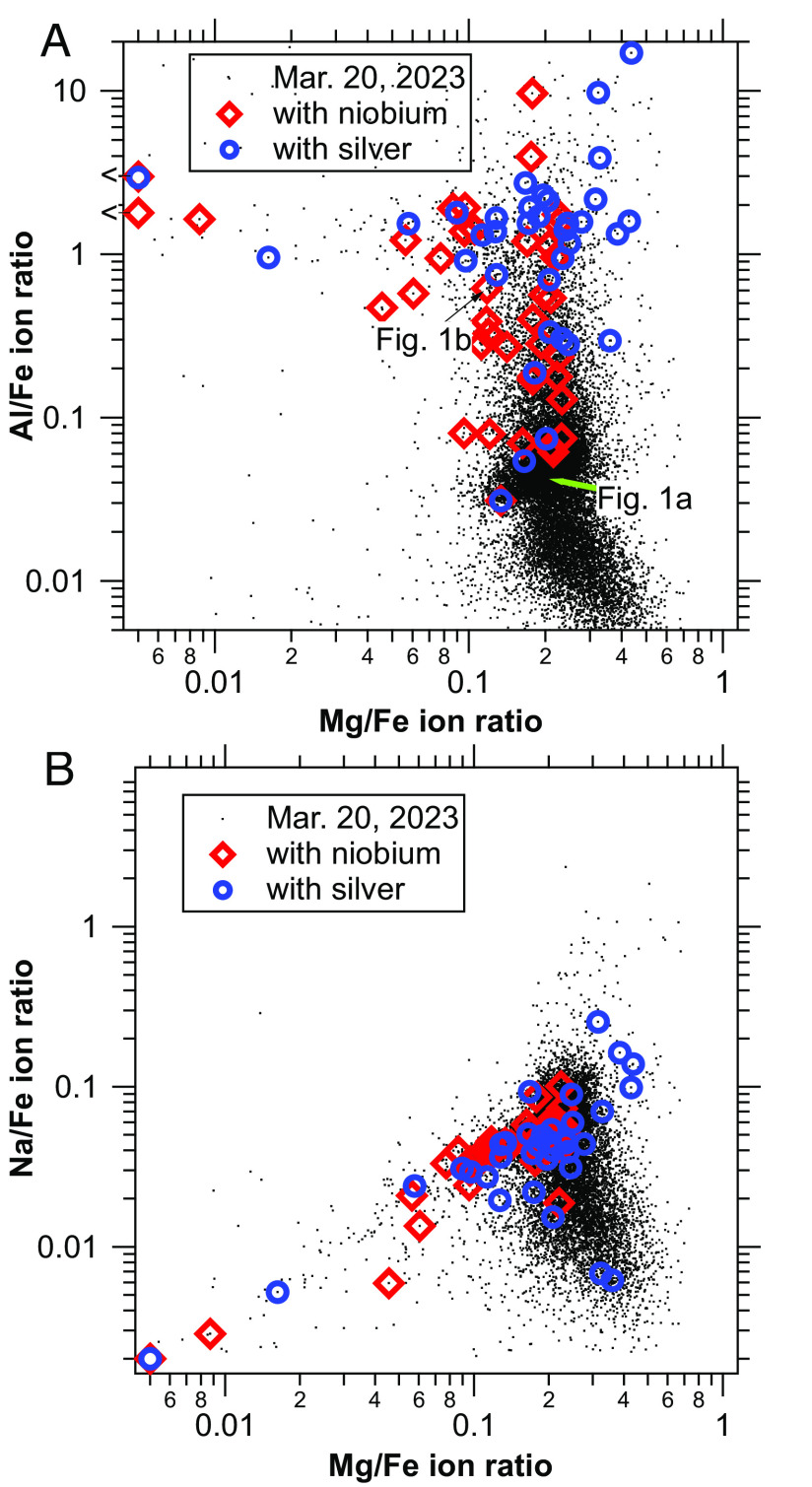
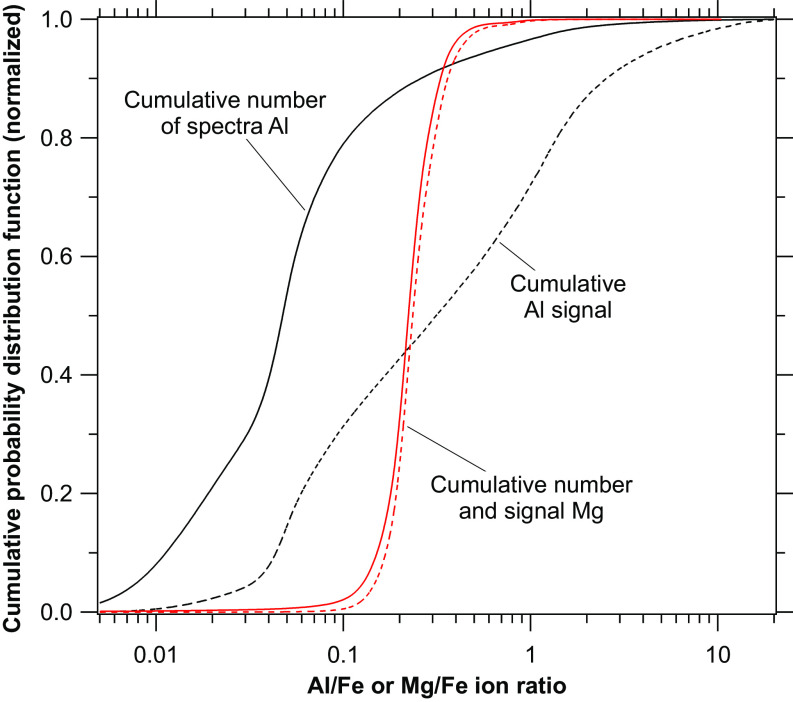
- Spacecraft reentry metals are present in 10 ± 7% of stratospheric sulfuric acid particles larger than about 120 nm, based on SABRE 2023 data where about 20% of meteoric-iron-containing particles had enhanced aluminum.
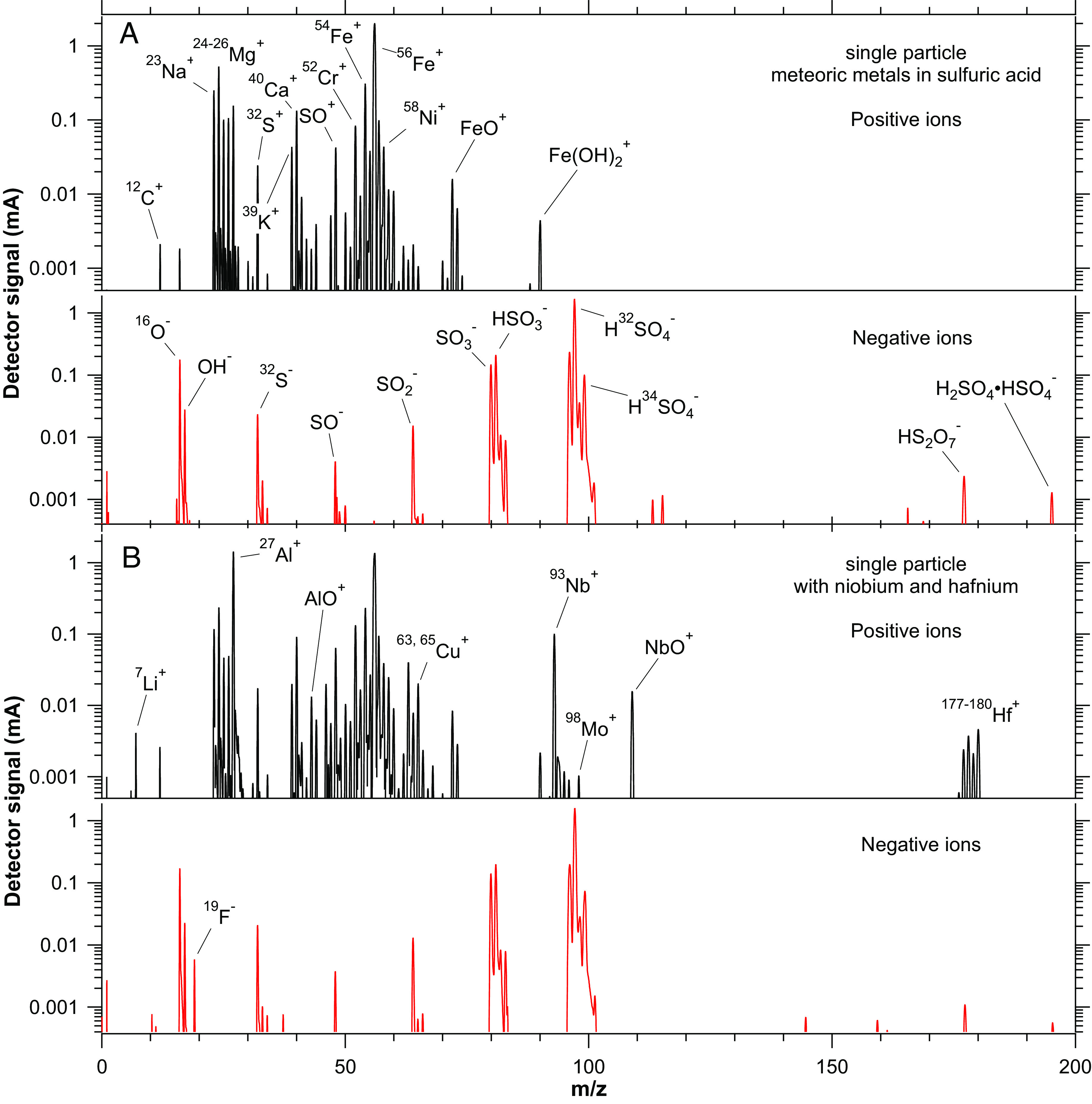
- Over 200 stratospheric particles with clear niobium signals were sampled during SABRE (about 0.1% of particles); their Nb/Hf ratio matches the C-103 alloy used in some rocket nozzle extensions.
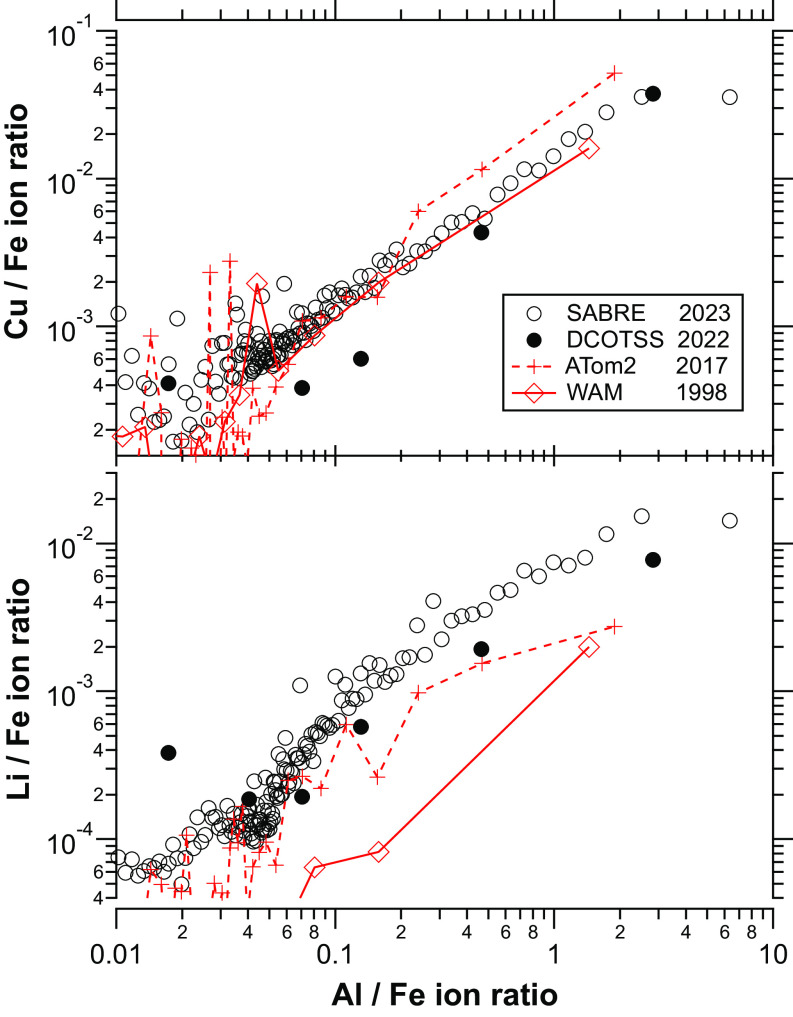
- Calibrated mass ratios in reentry-influenced particles include Cu/Al = 0.12 ± 0.06 (compared with about 0.1 in an inventory of reentering material), Li/Al = 0.004 ± 0.002, and Pb/Al = 0.009 ± 0.005.
- Particles with enhanced aluminum from spacecraft contain at least 70% of total detected stratospheric aluminum; more than 90% of lithium, copper, and lead are in particles with spacecraft-reentry signatures. About 210 tons y−1 of aluminum ablates from reentering spacecraft versus about 20 tons y−1 from meteoroids.
Methods
- The Particle Analysis by Laser Mass Spectrometer (PALMS) measured single-particle composition on NASA WB-57 flights from Fairbanks, Alaska, during the SABRE mission in February–March 2023, sampling up to 19 km; over 500,000 particles were analyzed, with earlier data from WAM 1998, ATom 2017, and DCOTSS 2022.
- Laboratory calibrations nebulized metals in 65 wt% sulfuric acid to derive relative sensitivities; analyses used ion ratios, restricted many comparisons to particles <500 nm, and required sufficient total signal for small peaks such as Li and Cu.
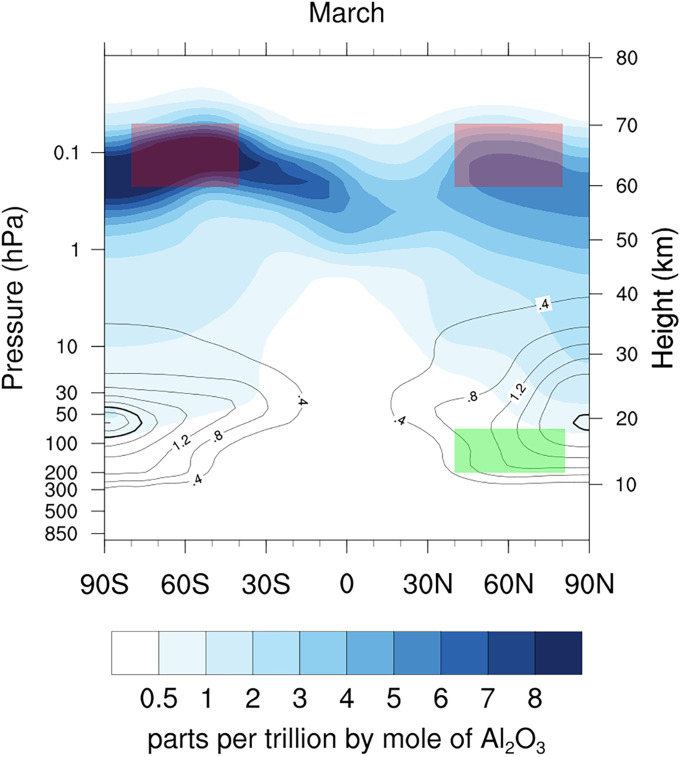
- A 15-year WACCM6/CARMA simulation tracked a hypothetical reentry aerosol using 0.4 Gg y−1 Al2O3 emissions, assumed ablation between 60 and 70 km in 40°S–80°S and 40°N–80°N bands, and simulated coagulation and sulfuric acid accumulation.
Limitations
- The paper states that no definite implications of these metals were identified, that possible effects on ice nucleation, particle size, chemistry, or optics are uncertain, and that calibration uncertainties are estimated as a factor of 1.5 to 2.
- The paper notes that iron cannot currently be quantified on top of the larger meteoric contribution, titanium is hard to quantify because 48Ti is obscured by SO+, and incomplete vaporization or a possible second meteoric population could affect ion ratios.
- Evident from the text: the 10 ± 7% estimate depends on the threshold for enhanced aluminum and particle-size variability; the WACCM/CARMA result is a hypothetical simulation with assumed emissions and ablation regions, and SABRE sampled high-latitude descending air rather than the full global stratosphere.
Model-written summary. Check it against the paper before relying on it.
Integrity signals
Registry
Cites
Statistics
Figures
Verification
Claims the paper makes
11 Valid · 3 Not valid · 8 Not checked · 55 Own results and interpretations
The cited sources support only part of this claim — read each source’s verdict below.
In the paper
“However, the amount of material from the reentry of upper-stage rockets and satellites is projected to increase dramatically in the next 10 to 30 y (13, 26, 27).”
§ Metals from spacecraft reentry in stratospheric aerosol particles > Discussion
What the sources say
- Partly supportedcites [13] L. Schulz, K.-H. Glassmeier, On the anthropogenic and natural injection of matter into Earth’s atmosphere. Adv. Space Res. 67, 1002– 1025 (2021). sourceExperimental — accuracy not yet measured
Sections 3.2.1 and 3.2.2 (p. 9) project a large increase in reentering satellite and rocket-stage mass. Their scenarios are framed around five years, however; the paper does not give the claimed 10-to-30-year projection. (LLM, conf=0.86)
- Not matchedcites [26] GAO, “ Large constellations of satellites: Mitigating environmental and other effects”, Ed. (U. S. G. A. Office, 2022).
Its entry has no title and year that we can search by.
- Not checked — no full text of the sourcecites [27] C. Pardini, L. Anselmo, Environmental sustainability of large satellite constellations in low earth orbit. Acta Astronautica 170, 27– 36 (2020). source
plainstates a cause- Asserted: passes — The authors put it forward as true.
- Checkable: passes — It can be checked against evidence.
- Load-bearing: passes — The paper’s conclusions depend on it.
- Based: passes — The paper gives a reason why it holds.
- Partly supported
The cited sources support only part of this claim — read each source’s verdict below.
In the paper
“About 210 tons y−1 of aluminum ablates from reentering spacecraft (13).”
§ Metals from spacecraft reentry in stratospheric aerosol particles > Results > Prevalence in the Stratosphere.
What the sources say
- Partly supportedcites [13] L. Schulz, K.-H. Glassmeier, On the anthropogenic and natural injection of matter into Earth’s atmosphere. Adv. Space Res. 67, 1002– 1025 (2021). sourceExperimental — accuracy not yet measured
Section 3.5.1 (p. 11) estimates that 211 tons of aluminum from reentering anthropogenic material are injected into the atmosphere each year, supporting the approximate amount. But the estimate covers spacecraft and rocket bodies together, not spacecraft alone, as the paper distinguishes in Section 3.3 (p. 9). (LLM, conf=0.86)
plainstates a cause- Asserted: passes — The authors put it forward as true.
- Checkable: passes — It can be checked against evidence.
- Load-bearing: passes — The paper’s conclusions depend on it.
- Based: passes — The paper gives a reason why it holds.
- Partly supported
Every source the paper cites for this claim was checked and supports it.
In the paper
“By applying laboratory calibrations (Materials and Methods) to Fig. 3, we find a copper to aluminum mass ratio of 0.12±0.06 compared to a ratio of about 0.1 in an inventory of reentering material (13).”
§ Metals from spacecraft reentry in stratospheric aerosol particles > Results
What the sources say
- Supportedcites [13] L. Schulz, K.-H. Glassmeier, On the anthropogenic and natural injection of matter into Earth’s atmosphere. Adv. Space Res. 67, 1002– 1025 (2021). source
The citation supports the comparison to an inventory ratio of about 0.1, not the 0.12 ± 0.06 laboratory estimate, which the citing authors say they calculated themselves. Section 3.5.1 (p. 11) lists 15 t of copper and 211 t of aluminum injected annually from anthropogenic material, giving a copper-to-aluminum mass ratio of approximately 0.07—broadly consistent with ‘about 0.1.’ (LLM, conf=0.87)
plain- Asserted: passes — The authors put it forward as true.
- Checkable: passes — It can be checked against evidence.
- Load-bearing: passes — The paper’s conclusions depend on it.
- Based: passes — The paper gives a reason why it holds.
- Supported
A result the paper reports from its own data — it cites no other source for it, so there is none to check. The quote shows it is in the paper.
In the paper
“Almost all of the stratospheric particles with spacecraft metals also contain meteoric metals (Fig. 2A).”
§ Metals from spacecraft reentry in stratospheric aerosol particles > Results > The Formation of Particles from Spacecraft Reentry.
plainstates an association- Asserted: passes — The authors put it forward as true.
- Checkable: passes — It can be checked against evidence.
- Load-bearing: passes — The paper’s conclusions depend on it.
- Based: passes — The paper gives a reason why it holds.
A result the paper reports from its own data — it cites no other source for it, so there is none to check. The quote shows it is in the paper.
In the paper
“Over 200 stratospheric particles with clear niobium signals were sampled during the SABRE flights (about 0.1% of the particles).”
§ Metals from spacecraft reentry in stratospheric aerosol particles > Results
plain- Asserted: passes — The authors put it forward as true.
- Checkable: passes — It can be checked against evidence.
- Load-bearing: passes — The paper’s conclusions depend on it.
- Based: passes — The paper gives a reason why it holds.
31 more claims
Create a free account to see all 77 claims and every source verdict.
- Probably not a substantial claim. 16
- It may state two separate claims as one. 30
Citations
Cites
The Whole Atmosphere Community Climate Model Version 6 (WACCM6)
Gettelman, A., Mills, M. J., Kinnison, D. E., Garcia, R. R., Smith, A. K., Marsh, D. R., Tilmes, S., Vitt, F., Bardeen, C. G., McInerny, J., et al. (2019) · Journal of Geophysical Research: Atmospheres · doi:10.1029/2019jd030943 · Cited by 786 · cited 1×
“Aerosol number and mass in CARMA were tracked in 21 individual size bins starting at 0.01 µ m diameter.”
InfluentialStratospheric aerosol-Observations, processes, and impact on climate
Kremser, S., Thomason, L. W., von Hobe, M., Hermann, M., Deshler, T., Timmreck, C., Toohey, M., Stenke, A., Schwarz, J. P., Weigel, R., et al. (2016) · Reviews of Geophysics · doi:10.1002/2015rg000511 · Cited by 578
Self-citationMurphy, D. M., Thomson, D. S., & Mahoney, M. J. (1998) · Science · doi:10.1126/science.282.5394.1664 · Cited by 571
Self-citationSnowfall in high southern latitudes
Bromwich, D. H. (1988) · Reviews of Geophysics · doi:10.1029/rg026i001p00149 · Cited by 437 · cited 1×
“If 10% of the copper vaporized in a future reentry scenario (13) were to be deposited on Antarctica, it could possibly double the concentration of copper in Antarctic snow as roughly estimated from total snowfall (24) and copper in recent snow (25).”
A Multidimensional Model for Aerosols: Description of Computational Analogs
Toon, O. B., Turco, R. P., Westphal, D., Malone, R., & Liu, M. (1988) · Journal of the Atmospheric Sciences · doi:10.1175/1520-0469(1988)045<2123:ammfad>2.0.co;2 · Cited by 377
Satellite mega-constellations create risks in Low Earth Orbit, the atmosphere and on Earth
Boley, A. C., & Byers, M. (2021) · Scientific Reports · doi:10.1038/s41598-021-89909-7 · Cited by 245
On the abundance of metal ions in the lower ionosphere
Kopp, E. (1997) · Journal of Geophysical Research: Space Physics · doi:10.1029/97ja00384 · Cited by 225
Bardeen, C. G., Toon, O. B., Jensen, E. J., Marsh, D. R., & Harvey, V. L. (2008) · Journal of Geophysical Research: Atmospheres · doi:10.1029/2007jd009515 · Cited by 217 · cited 1×
“Ablation was assumed to occur between 60 km and 70 km in the 40 S to 80 S and 40 N to 80 N latitude bands where many satellites now reenter.”
Ablation, Flux, and Atmospheric Implications of Meteors Inferred from Stratospheric Aerosol
Cziczo, D. J., Thomson, D. S., & Murphy, D. M. (2001) · Science · doi:10.1126/science.1057737 · Cited by 176
Self-citationVoigt, C., Schlager, H., Luo, B. P., Dörnbrack, A., Roiger, A., Stock, P., Curtius, J., Vössing, H., Borrmann, S., Davies, S., et al. (2005) · Atmospheric Chemistry and Physics · doi:10.5194/acp-5-1371-2005 · Cited by 161
Cited by
Potential effects of climate change and solar radiation modification on renewable energy resources
Kumler, A., Kravitz, B., Draxl, C., Vimmerstedt, L. J., Benton, B., Lundquist, J. K., Martin, M., Buck, H. J., Wang, H., Lennard, C., et al. (2024) · Renewable and Sustainable Energy Reviews · doi:10.1016/j.rser.2024.114934 · Cited by 93
Ferreira, J. P., Huang, Z., Nomura, K., & Wang, J. (2024) · Geophysical Research Letters · doi:10.1029/2024gl109280 · Cited by 82
“It is theorized that the planned increase in LEO satellites can contaminate up to half of stratospheric sulfuric acid particles with metals from reentry (Murphy et al., 2023).”
BackgroundMethodOpinion: Stratospheric ozone – depletion, recovery and new challenges
Chipperfield, M. P., & Bekki, S. (2024) · Atmospheric chemistry and physics · doi:10.5194/acp-24-2783-2024 · Cited by 66
Dynamics, chemistry, and modeling studies in the aviation and aerospace transition zone
Sheng, Z., He, Y., Wang, S., Chang, S., Leng, H., Ju, W., Zhang, J., Wang, Y., Zhang, H., Sui, H. Y., et al. (2025) · The Innovation · doi:10.1016/j.xinn.2025.101012 · Cited by 49
“321 These metals exist as atomic layers at altitudes ranging from approximately 80 to 105 km.”
Barker, C. R., Marais, E. A., & McDowell, J. C. (2024) · Scientific Data · doi:10.1038/s41597-024-03910-z · Cited by 48
“Rockets deviate from the launch site by 350 km from above an altitude of ~120 km 81 and anthropogenic re-entering objects travel ~300 km horizontally during re-entry ablation 8 .”
BackgroundMaloney, C., Portmann, R. W., Ross, M. N., & Rosenlof, K. H. (2025) · Journal of Geophysical Research Atmospheres · doi:10.1029/2024jd042442 · Cited by 36
“Other metals and metal oxides including, but not limited to Ti, Li, Fe, and Cu have already been observed to be mixed with present‐day stratospheric sulfate (Murphy et al., 2023).”
InfluentialSelf-citationThe Imminent Data Desert: The Future of Stratospheric Monitoring in a Rapidly Changing World
Salawitch, R. J., Smith, J. B., Selkirk, H. B., Wargan, K., Chipperfield, M. P., Hossaini, R., Levelt, P. F., Livesey, N. J., McBride, L. A., Millan, L. F., et al. (2025) · Bulletin of the American Meteorological Society · doi:10.1175/bams-d-23-0281.1 · Cited by 36
“…an expected order-of-magnitude increase in space debris in the stratosphere from the burn-up of satellites and rocket stages during reentry will increase the metallic content of stratospheric aerosols (Murphy et al. , 2023) and has the potential to cause ozone depletion (Ferreira et al. , 2024).”
Perspective on Theoretical and Experimental Advances in Atmospheric Photochemistry
Curchod, B. F. E., & Orr‐Ewing, A. J. (2024) · The Journal of Physical Chemistry A · doi:10.1021/acs.jpca.4c03481 · Cited by 19
Scheuer, S., Munk, A., Strotkamp, M., et al. (2024) · Optics Express · doi:10.1364/oe.513731 · Cited by 14
Pollution Effects and Management of Orbital Space Debris
Shareefdeen, Z. M., & Al-Najjar, H. (2024) · ACS Omega · doi:10.1021/acsomega.3c06887 · Cited by 13
Worldwide Rocket Launch Emissions 2019: An Inventory for Use in Global Models
Brown, T. F. M., Revell, L. E., Bannister, M. T., Sukhodolov, T., & Rozanov, E. (2024) · Earth and Space Science · doi:10.1029/2024ea003668 · Cited by 23
“…of re‐entering rocket parts, space debris and deorbiting satellite constellations will provide another source of sub‐micron alumina, as well as other exotic metals; these yet‐to‐be‐understood effects should also be examined (Boley & Byers, 2021; Murphy et al., 2023; S.‐H. Park et al., 2021).”
Long, J., & Huang, C. (2024) · Acta Astronautica · doi:10.1016/j.actaastro.2024.06.036 · Cited by 12
Machine learning for renewable energy advancements: Prospects and emerging techniques
Khan, S., Mim, J. J., Shorna, J. F., Hasan, A. M., Tarek, H. R., Islam, M. A., & Hossain, N. (2026) · Energy Reports · doi:10.1016/j.egyr.2025.109008 · Cited by 21
Conceptualizing space environmental sustainability
Mo, W., Kinsey, B. L., Vickers, J., et al. (2024) · npj Advanced Manufacturing · doi:10.1038/s44334-024-00002-z · Cited by 11
“Forinstance,metalaerosolsgeneratedduringthe reentry of space debris have been detected in the Earth ’ s stratosphere, prompting concerns about their potential impact on climate change and stratosphericozonedepletion 9 .”
Heavy Molecular and Metallic Ions in the Magnetosphere
Yamauchi, M., Christon, S., Dandouras, I., Haaland, S. E., Kastinen, D., Kistler, L. M., Mann, I. B., Nozawa, S., Plane, J. M. C., Saito, Y., et al. (2024) · Space Science Reviews · doi:10.1007/s11214-024-01114-w · Cited by 16
Self-citationSpace exposure test of hardwood specimens in the International Space Station
Murata, K., Nakamura, M., Kariya, K., et al. (2024) · Journal of Wood Science · doi:10.1186/s10086-024-02165-x · Cited by 10
Near-future rocket launches could slow ozone recovery
Revell, L. E., Bannister, M. T., Brown, T. F. M., Sukhodolov, T., Vattioni, S., Dykema, J. A., Frame, D. J., Cater, J. E., Chiodo, G., & Rozanov, E. (2025) · npj Climate and Atmospheric Science · doi:10.1038/s41612-025-01098-6 · Cited by 21
Juhany, K. A., Renganathan, A., Varma, R. S., et al. (2024) · Results in Engineering · doi:10.1016/j.rineng.2024.103080 · Cited by 8
Unveiling the resource potential of space debris: A forecast of valuable metals to 2050
Hayashi, F., Kioka, A., Ishii, T., & Nakamura, T. (2024) · Waste Management · doi:10.1016/j.wasman.2024.12.019 · Cited by 10
Sustainable skies and the Earth–space environment
Williams, A., Boley, A. C., Rotola, G., & Green, R. (2024) · Nature Sustainability · doi:10.1038/s41893-024-01308-8 · Cited by 13
Haqq-Misra, J. D., Profitiliotis, G., & Kopparapu, R. (2025) · Technological Forecasting and Social Change · doi:10.1016/j.techfore.2025.124194 · Cited by 12
“Prospecting of resources in the Kuiper belt occurs in S5, S6, S9, and S10.”
Flamm, P., Lambach, D., Schaefer-Rolffs, U., Stolle, C., & Braun, V. (2024) · The Anthropocene Review · doi:10.1177/20530196241255088 · Cited by 11
“Recently, a study by Murphy et al. (2023) revealed that ‘[a]bout 10% of stratospheric sulfuric acid particles larger than 120 nm in diameter contain aluminium and other elements from spacecraft reentry’.”
Pardini, C., & Anselmo, L. (2025) · Journal of Space Safety Engineering · doi:10.1016/j.jsse.2025.04.009 · Cited by 8
Key Gaps in Models' Physical Representation of Climate Intervention and Its Impacts
Eastham, S. D., Butler, A. H., Doherty, S. J., Gasparini, B., Tilmes, S., Bednarz, E., Burkhardt, U., Chiodo, G., Cziczo, D. J., Diamond, M., et al. (2025) · Journal of Advances in Modeling Earth Systems · doi:10.1029/2024ms004872 · Cited by 15
Self-citationReentry and disintegration dynamics of space debris tracked using seismic data
Fernando, B. A., & Charalambous, C. (2026) · Science · doi:10.1126/science.adz4676 · Cited by 7
A Multidisciplinary Optimization Framework for Ecodesign of Reusable Microsatellite Launchers
Musso, G., Figueiras, I., Goubel, H., et al. (2024) · Aerospace · doi:10.3390/aerospace11020126 · Cited by 7
Rahman, M. A., Ndiaye, M., Weclawski, B., & Farrell, P. (2025) · Engineering Reports · doi:10.1002/eng2.70270 · Cited by 9
“Murphy et al. [115] reported that approximately 10% of the metal particles present in stratospheric sulfuric acid aerosols likely originate from spacecraft that disintegrate during atmospheric re-entry.”
Global Climate Effect from Space Debris Reentry: Engineering and Policy Implications
Jain, A. K., & Hastings, D. E. (2024) · Journal of Spacecraft and Rockets · doi:10.2514/1.a36069 · Cited by 10
Klimburg-Witjes, N., Strycker, K., & Braun, V. (2025) · Science and Engineering Ethics · doi:10.1007/s11948-025-00550-3 · Cited by 6
“Increased use of space will likely come with an increased deposit of metals as more and more satellites burn up on reentry, endangering the ozone layer (Ferreira et al., 2024) and potentially changing the atmosphere’s reflec - tive properties (Murphy et al., 2023).”
Measurement of a lithium plume from the uncontrolled re-entry of a Falcon 9 rocket
Wing, R., Gerding, M., Plane, J. M. C., Avalos, Y. A. M., Urco, J. M., Yamazaki, Y., Schulz, L., Höffner, J., Mielich, J., Renkwitz, T., et al. (2026) · Communications Earth & Environment · doi:10.1038/s43247-025-03154-8 · Cited by 9
“Recent aircraft-based measurements have already detected signatures of space-debris-derived material in the stratosphere,withapproximately10%ofsulphuric-acidparticleslargerthan 120nmcontainingmetalsinratiosconsistentwithspacecraftalloys 8 .”
Self-citationAsher, E., Baron, A., Yu, P., Todt, M. A., Smale, P., Liley, B., Querel, R., Sakai, T., Morino, I., Jin, Y., et al. (2024) · Journal of Geophysical Research Atmospheres · doi:10.1029/2024jd041581 · Cited by 8
“…as well as following volcanic eruptions, large wildfires, rocket emissions (e.g., Katich et al., 2023), particles from satellite reentry (e.g., Murphy et al., 2023), and potentially future intentional climate intervention activities, the B 2 SAP project supports latitudinally distributed…”
InfluentialSatellite megaconstellations and collective casualty risks
Wright, E., Boley, A. C., & Byers, M. (2026) · Space Policy · doi:10.1016/j.spacepol.2026.101749 · Cited by 4
Kim, D., Campuzano‐Jost, P., Guo, H., Day, D. A., Yang, D., Dhaniyala, S., Williams, L. R., Croteau, P., Jayne, J. T., Worsnop, D. R., et al. (2025) · Aerosol Research · doi:10.5194/ar-3-371-2025 · Cited by 6
Global Model of Atmospheric Chlorate on Earth
Chan, Y., Jaeglé, L., Campuzano‐Jost, P., Catling, D. C., Furdui, V. I., Jackson, W. A., Jimenez, J. L., Kim, D., & Alexander, B. (2025) · Journal of Geophysical Research Atmospheres · doi:10.1029/2024jd042162 · Cited by 4
“Iron‐rich particles, likely originated from meteoroids and aerospace activities, have been observed in the lower stratosphere (Ebert et al., 2024; Froyd et al., 2019; Murphy et al., 2023).”
The Need for Better Monitoring of Climate Change in the Middle and Upper Atmosphere
Añel, J. A., Cnossen, I., Antuña, J. C., Beig, G., Brown, M. K., Doornbos, E. N., Osprey, S., Mutschler, S., Pérez-Souto, C., Šácha, P., et al. (2025) · AGU Advances · doi:10.1029/2024av001465 · Cited by 10
“Further, Murphy et al. (2023) recently estimated that about 10% of the aerosol particles in the stratosphere currently contain aluminum and other metals that originated from the burn‐up of satellites and rocket stages during reentry.”
Swarms of satellites are harming astronomy. Here’s how researchers are fighting back
Witze, A. (2025) · Nature · doi:10.1038/d41586-025-00792-y · Cited by 4
Förste, S., Yousfi, L., Fischer, J., Turco, F., Traub, C., & Fasoulas, S. (2025) · Acta Astronautica · doi:10.1016/j.actaastro.2025.01.068 · Cited by 3
Organics in the stratosphere: new insights from weather balloon flights conducted in France
Benoit, R., Vernier, H., Vernier, J., Joly, L., Dumelié, N., Krysztofiak, G., Vieille, L., Delpeux, S., Crévoisier, C., Dagaut, P., et al. (2025) · npj Climate and Atmospheric Science · doi:10.1038/s41612-025-01106-9 · Cited by 3
“These metals appear to accumulate at altitudes between 15 and 30 km, consistent with our sampling 66 .”
Atmospheric re-entry of orbital objects – can “Design For Non-Demise” be the optimal solution?
Ott, A., & Bonnal, C. (2025) · Acta Astronautica · doi:10.1016/j.actaastro.2025.08.002 · Cited by 5
Resource and material efficiency in the circular space economy
Yang, Z., Liu, L., Xing, L., Amara, A., & Xuan, J. (2025) · Chem Circularity · doi:10.1016/j.checir.2025.100001 · Cited by 11
Fasoulas, S., Pagan, A. S., Traub, C., Annighöfer, B., Barz, S., Beck, A., Cunis, T., Dekorsy, T., Essig, S., Fichter, W., et al. (2025) · CEAS Space Journal · doi:10.1007/s12567-025-00687-8 · Cited by 11
Aubry, T. J., Toohey, M., Khanal, S., Chim, M. M., Verkerk, M., Johnson, B., Schmidt, A., Kovilakam, M., Sigl, M., Nicholls, Z., et al. (2026) · Geoscientific model development · doi:10.5194/gmd-19-3725-2026 · Cited by 8
“Stratospheric aerosols originating from spacecraft have recently been measured in-situ and their contribution to strato-spheric aerosol loading is expected to increase in the future (Murphy et al., 2023).”
Kolláth, Z., Hajdu, T., Degen, T., Jechow, A., & Sztakovics, J. (2025) · Journal of Quantitative Spectroscopy and Radiative Transfer · doi:10.1016/j.jqsrt.2025.109636 · Cited by 4
The Electronic Structure of Boron, Aluminum, and Scandium Monoxides: BO, AlO, and ScO
Romeu, J. G. F., Gole, J. L., & Dixon, D. A. (2025) · The Journal of Physical Chemistry A · doi:10.1021/acs.jpca.5c05513 · Cited by 3
New Li Lidar Observations and Model Simulations: A Window to Anthropogenic Signatures
Gerding, M., Wing, R., Feng, W., Plane, J. M. C., & Baumgarten, G. (2025) · Geophysical Research Letters · doi:10.1029/2025gl118710 · Cited by 3
“However, Murphy et al. (2023) recently observed the contamination of sulfuric acid droplets in the lower stratospheric Junge layer by metals that are not abundant in cosmic dust.”
Self-citationDivisive Sun-dimming study at Harvard cancelled: what’s next?
Tollefson, J. (2024) · Nature · doi:10.1038/d41586-024-00876-1 · Cited by 3
A holistic systems thinking approach to space sustainability via space debris management
Perks, M. E., Lewis, H. G., & Vaidya, N. (2024) · Journal of Space Safety Engineering · doi:10.1016/j.jsse.2024.05.007 · Cited by 3
Dissipation Rates of Mesospheric Stratified Turbulence From Multistatic Meteor‐Radar Observations
Vierinen, J. P., Poblet, F. L., Chau, J. L., et al. (2024) · Geophysical Research Letters · doi:10.1029/2023gl105751 · Cited by 2
“…process that determines how atmospheric tracers such as meteoric dust (Megner et al., 2008), materials deposited by deorbiting satellite debris (Murphy et al., 2023), or reactive trace gases such as HOx and NOx species produced by energetic auroral precipitation (Funke et al., 2005; Rozanov et…”
BackgroundThe Composition and Stratospheric Fate of Aerosol Particles Originating in the Polar Vortex
Lawler, M. J., Schill, G. P., Murphy, D. M., Abou‐Ghanem, M., Brock, C. A., Lyu, M., Ahern, A. T., Taylor, S. J., Hintsa, E. J., Moore, F. L., et al. (2025) · Journal of Geophysical Research Atmospheres · doi:10.1029/2025jd043530 · Cited by 7
“In addition, humans are already engaged in modifying the stratospheric aerosol composition on a smaller scale by using the atmosphere to dispose of satellites and rocket engines, with unknown effects (Murphy et al., 2023).”
InfluentialSelf-citationChemical imaging of individual stratospheric particles sampled over North America
Sharpe, S., Li, Y., Benjemia, S., Rivera-Adorno, F. A., Olayemi, T. E., Ese, J. I., Shen, X., Fraund, M., Moffet, R. C., Lata, N. N., et al. (2025) · Environmental Science Atmospheres · doi:10.1039/d5ea00127g · Cited by 5
Self-citationOsoro, B., Oughton, E. J., Wilson, A. R., & Rao, A. (2025) · Advances in Space Research · doi:10.1016/j.asr.2025.11.036 · Cited by 18
Rahman, M. A., Ndiaye, M., Weclawski, B., & Farrell, P. (2026) · Journal of Natural Fibers · doi:10.1080/15440478.2026.2651987 · Cited by 3
An unrecognized mode of small particles in the lower stratosphere
Lyu, M., Ahern, A. T., Schill, G. P., Lawler, M. J., Murphy, D. M., Taylor, S. J., Fodel, A., Abou‐Ghanem, M., Gurganus, C. W., Zhu, Y., et al. (2026) · Science · doi:10.1126/science.adw8939 · Cited by 6
Self-citationProliferating Satellite Constellations Pose Astronomical and Environmental Challenges
Palmer, C. (2024) · Engineering · doi:10.1016/j.eng.2024.04.006 · Cited by 2
Fraire, J. A., Henn, S. M., Stock, G. F., Ohs, R., Hermanns, H., Walter, F., Broock, L. V., Ruffini, G., Machado, F., Serratti, P., et al. (2024) · Computer Networks · doi:10.1016/j.comnet.2024.110874 · Cited by 3
Cirkovic, E., & Wood, D. R. (2024) · Acta Astronautica · doi:10.1016/j.actaastro.2024.12.037 · Cited by 8
Tuck, A. F. (2025) · Atmosphere · doi:10.3390/atmos16010056 · Cited by 2
“Another example is the aerosol composition introduced by meteorite impacts in Earth’s upper atmosphere [30,39].”
Mani, G., Nair, P. R., & Mathew, S. (2025) · Next research. · doi:10.1016/j.nexres.2025.100203 · Cited by 2
Lockwood, M. (2025) · Astronomy & Geophysics · doi:10.1093/astrogeo/ataf023 · Cited by 2
Anthropogenic Impacts in the Lower Stratosphere: Scale Invariant Analysis
Tuck, A. F. (2024) · Atmosphere · doi:10.3390/atmos15040465 · Cited by 1
Space Pollution metals contributing to Ozone Hole, South Atlantic Anomaly, and Radiation Belt
Lutz, K. (2024) · Aeronautics and Aerospace Open Access Journal · doi:10.15406/aaoaj.2024.08.00202 · Cited by 1
Modeling the Optical Impact of the Second-generation Starlink Satellite Constellation
Muirhead, I., Crisp, N. H., McGrath, C., & Roberts, P. C. E. (2025) · The Astronomical Journal · doi:10.3847/1538-3881/adfbef · Cited by 1
Experimental assessment of wood as a lightweight proton-radiation shield for spacecraft structures
Cho, W.-M., & Oh, H.-U. (2025) · Advances in Space Research · doi:10.1016/j.asr.2025.12.021 · Cited by 1
The Electronic Structure and Properties of First-Row Transition Metal Oxides
Romeu, J. G. F., Joyner, N. A., & Dixon, D. A. (2026) · Journal of Chemical Theory and Computation · doi:10.1021/acs.jctc.5c02029 · Cited by 1
Hader, J. D., Fairén, A. G., Ågerstrand, M., MacLeod, M., & Nowack, B. (2026) · Environmental Science & Technology · doi:10.1021/acs.est.5c15572 · Cited by 1
Debris Selection and Delivery Logistics for Lunar-Based Aluminum Recycling
Palmer, R., Lightsey, E. G., & Ho, K. (2025) · AIAA SciTech Forum · doi:10.2514/6.2025-1102 · Cited by 1
Towards sustainable space research in France
Santerne, A., Méheut, H., Barret, D., Berné, O., Berthier, É., Ducharne, A., Knödlseder, J., Marchaudon, A., Pellarin, T., Spiga, A., et al. (2025) · Nature Astronomy · doi:10.1038/s41550-025-02506-w · Cited by 1
Cirkovic, E., & Braun, V. (2025) · Global Policy · doi:10.1111/1758-5899.70020 · Cited by 2
Maloney, C., Portmann, R. W., Rosenlof, K. H., & Bardeen, C. (2024) · AIAA SciTech Forum · doi:10.2514/6.2024-2169 · Cited by 5
Self-citationExploring the photochemistry of OAlOH: Photodissociation pathways and electronic spectra
Trabelsi, T., & Francisco, J. S. (2024) · The Journal of Chemical Physics · doi:10.1063/5.0207398
Trabelsi, T., & Francisco, J. S. (2024) · The Astrophysical Journal · doi:10.3847/1538-4357/ad6603
Use of Wood in Space─The Impact of Outer Space on Wood
Murata, K. (2024) · JAPAN TAPPI JOURNAL · doi:10.2524/jtappij.78.930
Ionospheric Perturbations from Satellite Dust
Solter, S. (2025) · doi:10.1002/9781394204847.ch24
Evaluating the Potential of Space-Based Energy: New Insights into Feasibility and Impact
Ulyana, S., Igbal, G., & Anastasiia, R. (2025) · E3S Web of Conferences · doi:10.1051/e3sconf/202563501003
“Despite a $30 million investment, launches with the novel improved propulsion technology, NanoSail-D, failed without even reaching the orbit, sparking uncertainty in future solar sail exploration [10].”
Study on the dynamics of an origami space plane during Earth atmospheric entry
Berthet, M., & Suzuki, K. (2025) · Acta Astronautica · doi:10.1016/j.actaastro.2025.06.052
Factors Triggering Increased Volatility and Risk in Space CommercePreprint
Frieden, R. (2025) · SSRN Electronic Journal · doi:10.2139/ssrn.5369113
Solar System/Sun, Atmospheres, Evolution of Atmospheres | Meteors
Jenniskens, P. M. (2025) · Elsevier eBooks · doi:10.1016/b978-0-323-96026-7.00198-3
Lawler, S., Rein, H., & Boley, A. C. (2024) · doi:10.64628/aam.exawmvxx3
SpaceX space junk crashed onto Saskatchewan farmland, highlighting a potential impending disaster
Boley, A. C., & Lawler, S. (2024) · doi:10.64628/aam.xkhphr36u
Expósito, C. D. (2025) · Anuario Mexicano de Derecho Internacional · doi:10.22201/iij.24487872e.2026.26.20112 · Cited by 1
Research opportunities at the geospace facilities exemplified by a large meteor echo
Hysell, D. L., Kirchman, A., Vega, G., et al. (2026) · Frontiers in Astronomy and Space Sciences · doi:10.3389/fspas.2026.1743512
Space Pollution, North Atlantic Anomaly (NAA), Rocket Launches, Re-Entries Melting Polar Ice Caps
Lutz, K. (2026) · AIAA SciTech Forum · doi:10.2514/6.2026-0930
Space circular economy: planned experimental approaches for spacecraft solar arrays
Clauss, M., Schefthaler, V., Bursachi, N., Herdrich, G., Laufer, R., & Rönnbäck, A. Ö. (2026) · CEAS Space Journal · doi:10.1007/s12567-026-00761-9
Space waste: An update of the anthropogenic matter injection into Earth’s atmosphere
Schulz, L., Glaßmeier, K., Herberhold, M., Mitchell, A., Murphy, D. M., Plane, J. M. C., & Plaschke, F. (2026) · Advances in Space Research · doi:10.1016/j.asr.2026.03.026 · Cited by 9
“Theelements suspected of being space waste remnants in Murphy et al. (2023) are also predicted in our study, namely Li, Al, Cu, Nb, Ag, Hf, Pb, Be, Mg, Ti, Cr, Fe, Ni, Zr, Ga, Mo, In, Sn, Ba, Ce, Ta and W. Elements not present in significant amounts here, but detected in their study are Sb and Bi,…”
InfluentialSelf-citationFoundations and current status of space safety
Sgobba, T. (2026) · Journal of Space Safety Engineering · doi:10.1016/j.jsse.2026.04.001
Observation, sources, formation, and climate effects of stratospheric aerosols: A review
Ding, H., Li, J., Zhang, X., Xu, L., Tsona, N. T., & Du, L. (2026) · Space habitation. · doi:10.1016/j.spaceh.2026.100067
Petropavlovskikh, I. V., Maziere, M. M. D., Thompson, A. M., Wild, J., Hannigan, J. W., Selkirk, H. B., Hannun, R. A., Steinbrecht, W., Lambert, J., Malderen, R. V., et al. (2026) · Atmospheric chemistry and physics · doi:10.5194/acp-26-8637-2026
The space-biodiversity nexus beyond territory
Zhao, P., Li, T. T., Shang, Y., Shi, J., Xie, D., & Li, S. (2026) · Nexus · doi:10.1016/j.ynexs.2026.100159
Scaling turbulence drives the general circulation
Tuck, A. F. (2026) · Quarterly Journal of the Royal Meteorological Society · doi:10.1002/qj.70235
Life cycle and re-entry assessment of CNC-manufactured AlSi aerospace freeform mirrors
Ibrahim, H. A., Harrison, N., Flanagan, T., et al. (2026) · Cleaner Manufacturing · doi:10.1016/j.clman.2026.100008
Riaz, M. Z. B., Iqbal, U., Zain, H., Anjum, M. N., & Hussain, S. (2026) · GeoHazards · doi:10.3390/geohazards7040106
Preventing the transboundary harm created by spacecraft re-entry in Earth’s upper atmospherePreprint
Picard, M., Christensen, I., Smith, R. C., Djojosugito, R., Kim, M., Theagaragan, E., & Wessels, H. (2026) · SSRN Electronic Journal · doi:10.2139/ssrn.7467924
Griffin, C., Varughese, C., Provost, S., & Bice, S. (2026) · Earth System Governance · doi:10.1016/j.esg.2026.100361 · Cited by 1
Strotkamp, M., Munk, A., Scheuer, S., et al. (2026) · CEAS Space Journal · doi:10.1007/s12567-026-00773-5
Qie, K., Shao, M., Peng, Y., Wang, X., Chen, W., Pan, L. L., Schill, G. P., Rosenlof, K. H., Toon, O. B., Bian, J., et al. (2026) · Nature Geoscience · doi:10.1038/s41561-026-02115-w
Self-citationSpace sustainability beyond ‘zero debris’: from orbital safety to circular materials
Solt-Rindler, A., Billich, E., Sperl, J., Engel, W., Seifert, B., & Hansmann, C. (2026) · Communications Engineer · doi:10.1038/s44172-026-00797-z
“During high ‑ enthalpy re ‑ entry, spacecraft materials undergo ablation, fragmentation and oxidation, producing metal and nitrogen oxides and carbonaceous particles that are injected into the middle and upper atmosphere 5 .”
Metadata
- Authors
- Murphy, D. M., Abou-Ghanem, M., Cziczo, D. J., Froyd, K. D., Jacquot, J., Lawler, M. J., Maloney, C., Plane, J. M. C., Ross, M. N., Schill, G. P., & Shen, X.
- Affiliations
- National Oceanic and Atmospheric Administration (US)
- Chemical Sciences Laboratory, National Oceanic and Atmospheric Administration, Boulder, CO 80305
- Purdue University West Lafayette (US)
- University of Leeds (GB)
- The Aerospace Corporation (US)
- Corresponding author
- Murphy, Daniel M.
- ORCID
- Venue
- Proceedings of the National Academy of Sciences
- Publisher
- National Academy of Sciences
- Published
- 2023-10-16
- Volume
- 120
- Issue
- 43
- Pages
- e2313374120-e2313374120
- ISSN
- 0027-8424 (ISSN-L)
- 1091-6490
- PMC
- PMC10614211
- OpenAlex
- W4387665123
- Cited by
- 107
- References
- 31
- Citations by year
- 2026: 30 · 2025: 42 · 2024: 35
- FWCI
- 11.79
- Type
- journal article
- Language
- en
- Open access
- hybrid
- doi.org
- Licence
- Locations
- Proceedings of the National Academy of Sciences (publishedVersion, cc-by)
- PubMed Central (publishedVersion, cc-by)
- PubMed (publishedVersion)
- White Rose Research Online (University of Leeds, The University of Sheffield, University of York) (submittedVersion)
- NOAA Institutional Repository (submittedVersion, cc-by)
- Funders
- DOC | National Oceanic and Atmospheric Administration (none)
- National Aeronautics and Space Administration (80NSSC19K1058)
- UK Natural Environment Research Council (NE/R011222/1)
- Topics
- Physical Sciences › Earth and Planetary Sciences › Atmospheric Science › Atmospheric chemistry and aerosols
- Physical Sciences › Environmental Science › Global and Planetary Change › Atmospheric aerosols and clouds
- Physical Sciences › Earth and Planetary Sciences › Atmospheric Science › Atmospheric Ozone and Climate
- Keywords
- spacecraft reentry, stratospheric aerosols, metal vapor condensation, sulfuric acid particles, spent rocket bodies, defunct satellites, satellite constellations, lithium, aluminum, copper, lead, cosmic dust, aerosol chemical composition, low Earth orbit satellites
About these checks
Registry, retraction, Cites and statistics results are computed, not judged, with one exception: a printed reference that no index lists is read once by a model before it counts as a citation error. Claims are extracted by a model and kept only when their quote appears verbatim in the text; each cited source is then checked, with a model’s help, for whether it says what the claim relies on. Those verdicts can be wrong — read the claim’s quote and the cited source before relying on one.
The claim verdicts this report counts are experimental: their accuracy is not yet measured.
A language model drew the claims from the paper on 2026-10-10, under version 3 of the claim definition (model deepseek-v4.1-flash, prompt extract-v3).
A second model labelled each claim on 2026-10-10 (model jev-1.13-20260917, definition revision gold-guideline-v0.2).
Cited sources are checked with a language model’s help (gpt-6-sol).
Statistics and arithmetic are recomputed, not judged.
Confidence bands are shown only for fields calibrated on our annotated test set. None is calibrated yet, so no band is shown.
What counts as a claim ›How we measure confidence ›How we check this ›
Are you an author, or do you see a problem with this page? Request a review
Data sources
Bibliographic data: Semantic Scholar, OpenAlex, Crossref.
Contains information from the Semantic Scholar Academic Graph Datasets, made available under the ODC Attribution License (ODC-BY 1.0).
Semantic Scholar’s data is described in: Kinney, R., et al. (2023). The Semantic Scholar Open Data Platform. arXiv:2301.10140.
