

The DOI matches its Crossref record; 40 of the 40 references it cites were found in a registry or an index.
Evaluating the persuasive influence of political microtargeting with large language models
Open accessAbstract
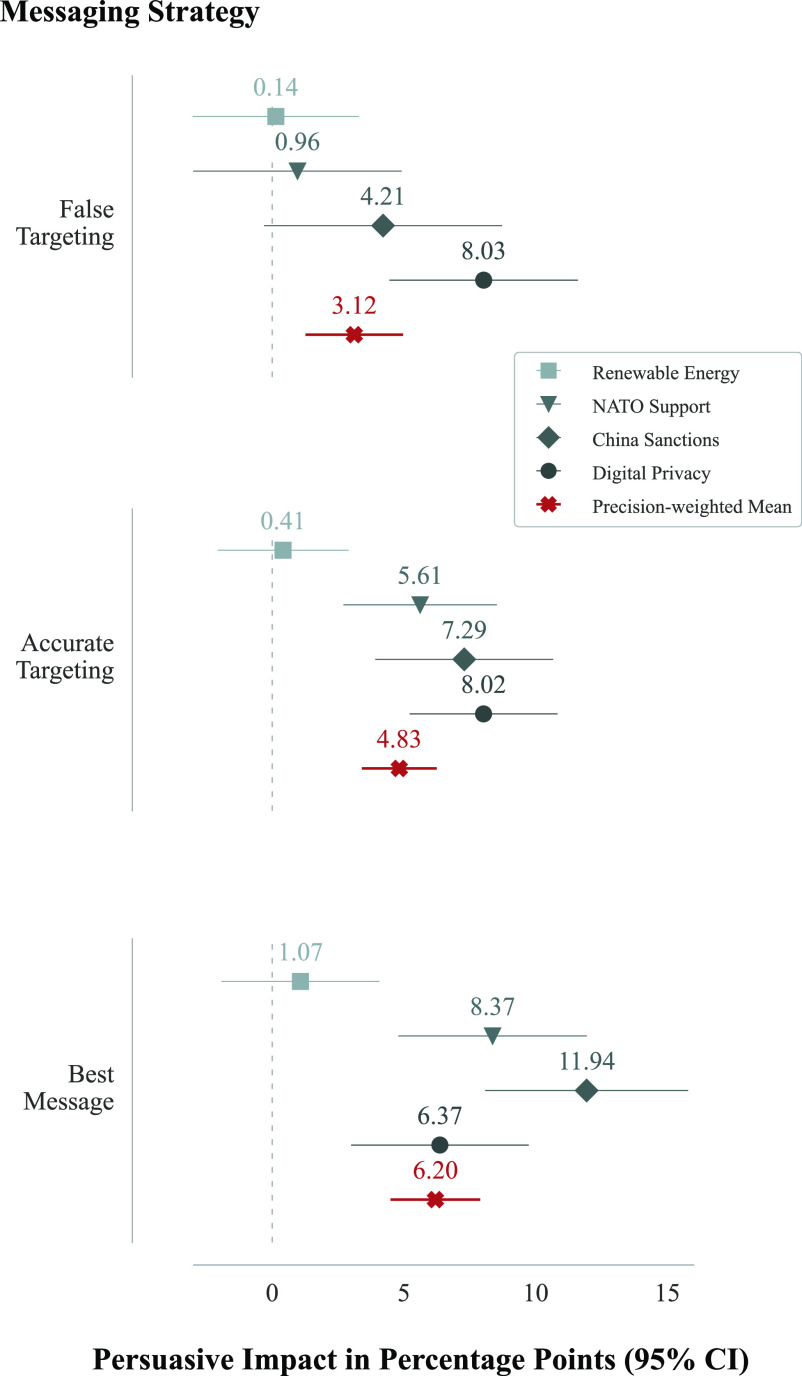
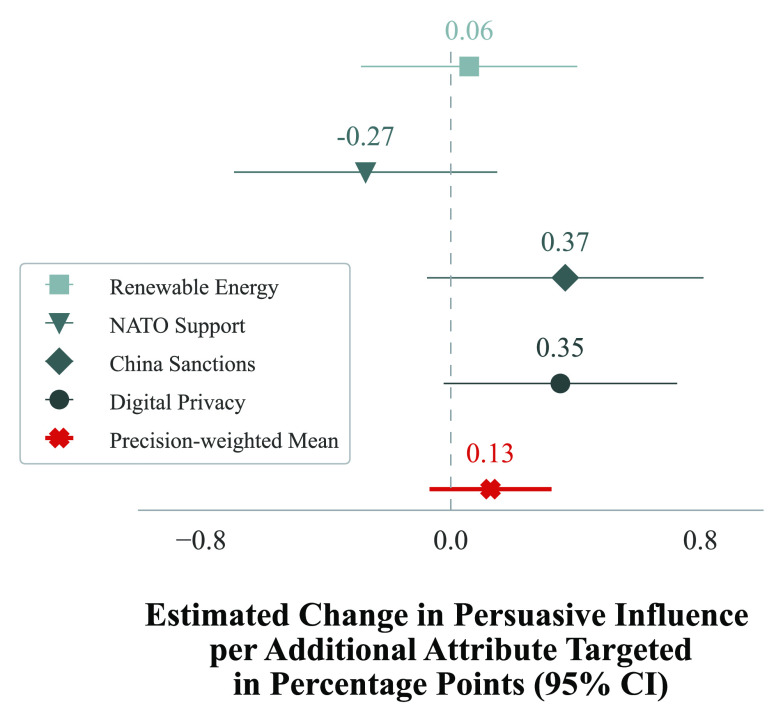
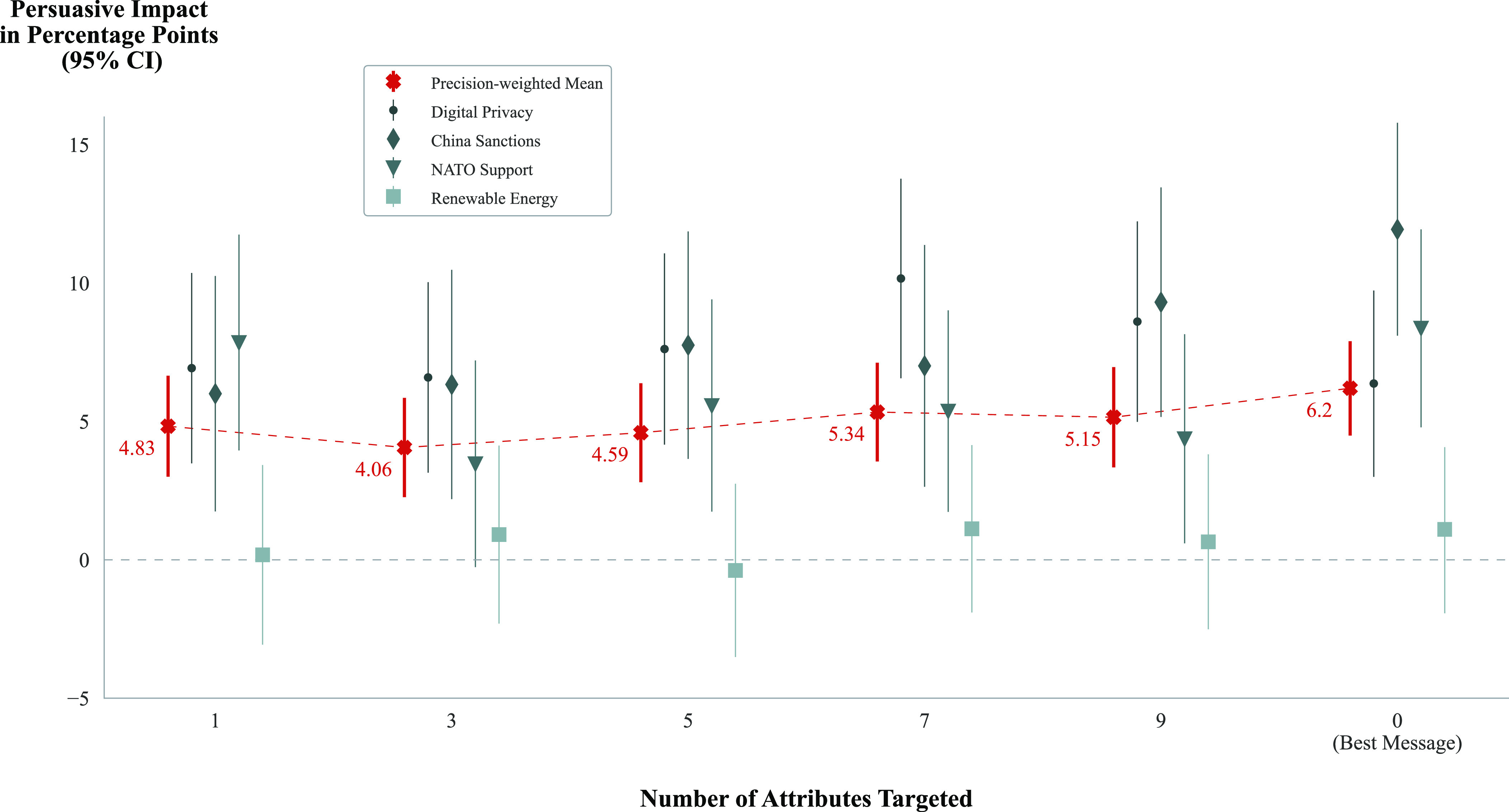
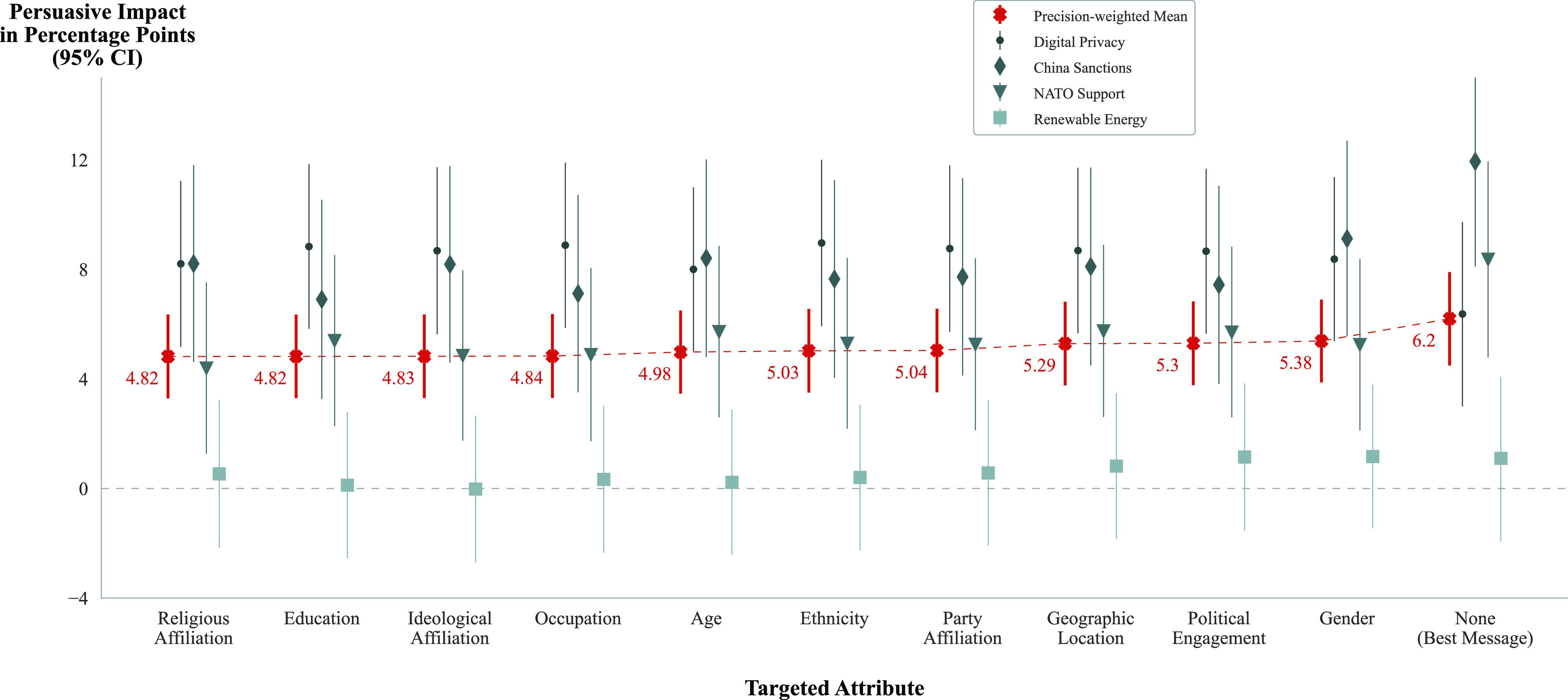
Recent advancements in large language models (LLMs) have raised the prospect of scalable, automated, and fine-grained political microtargeting on a scale previously unseen; however, the persuasive influence of microtargeting with LLMs remains unclear. Here, we build a custom web application capable of integrating self-reported demographic and political data into GPT-4 prompts in real-time, facilitating the live creation of unique messages tailored to persuade individual users on four political issues. We then deploy this application in a preregistered randomized control experiment ( n = 8,587) to investigate the extent to which access to individual-level data increases the persuasive influence of GPT-4. Our approach yields two key findings. First, messages generated by GPT-4 were broadly persuasive, in some cases increasing support for an issue stance by up to 12 percentage points. Second, in aggregate, the persuasive impact of microtargeted messages was not statistically different from that of non-microtargeted messages (4.83 vs. 6.20 percentage points, respectively, P = 0.226). These trends hold even when manipulating the type and number of attributes used to tailor the message. These findings suggest—contrary to widespread speculation—that the influence of current LLMs may reside not in their ability to tailor messages to individuals but rather in the persuasiveness of their generic, nontargeted messages. We release our experimental dataset, GPTarget2024 , as an empirical baseline for future research.
Overview
The claims and statistics of this paper haven’t been checked yet.
Run the check — free, no account needed. It reads the open-access text and checks the sources it cites.
Integrity signals
Registry
Cites
Statistics
Figures
Verification
Claims the paper makes
The claims and statistics of this paper haven’t been checked yet.
Run the check — free, no account needed. It reads the open-access text and checks the sources it cites.
Claims other papers make about this one
Each is checked against this paper’s own text: does it say what the citing paper says it does?
The source backs part of the claim, not all of it — or backs it for a different population, condition or comparison.
In the citing paper
“At the very least, they support dissenting voices on the persuasive impact of either customization or elaboration (11, 28, 74, 76, 77).”
From Testing theories of political persuasion using AI (2025) · cites this paper as [28]
Experimental — accuracy not yet measured
Self-check
Percentages, sums and reported differences re-computed from the paper’s own numbers.
The self-check needs the paper’s full text.
Citations
Cites
Proceedings of the 25th international conference on Machine learning
Cohen, W. W., McCallum, A., & Roweis, S. T. (2008) · Cited by 5,691
Age of Surveillance Capitalism – The Fight for a Human Future at the New Frontier of Power.
Kendell, D. (2020) · Brock Education Journal · doi:10.26522/brocked.v29i2.849 · Cited by 2,164
Psychological targeting as an effective approach to digital mass persuasion
Matz, S. C., Kosinski, M., Nave, G., & Stillwell, D. J. (2017) · Proceedings of the National Academy of Sciences · doi:10.1073/pnas.1710966114 · Cited by 892 · cited 1×
“This finding builds on prior work suggesting that political advertisements have increased persuasive power when tailored to an individual's position on the introversion–extroversion spectrum (29) or other psychological characteristics (30).”
BackgroundOut of One, Many: Using Language Models to Simulate Human Samples
Argyle, L. P., Busby, E. C., Fulda, N., Gubler, J. R., Rytting, C., & Wingate, D. (2023) · Political Analysis · doi:10.1017/pan.2023.2 · Cited by 783 · cited 4×
“Participants were screened such that all were located in the United States, spoke English as their first language, and were over the age of 18.”
BackgroundInfluentialTaxonomy of Risks posed by Language Models
Weidinger, L., Uesato, J., Rauh, M., Griffin, C., Huang, P.-S., Mellor, J., Glaese, A., Cheng, M., Balle, B., Kasirzadeh, A., et al. (2022) · 2022 ACM Conference on Fairness Accountability and Transparency · doi:10.1145/3531146.3533088 · Cited by 764 · cited 1×
“This raises a clear worry: When integrated with existing databases of personal data, LLMs could tailor their messages to appeal to the vulnerabilities and values of specific individuals, potentially reinforcing their existing beliefs, or persuading them to adopt new ones (13–16).”
BackgroundHow is ChatGPT's behavior changing over time?
Chen, L., Zaharia, M., & Zou, J. (2023) · arXiv · doi:10.48550/arxiv.2307.09009 · Cited by 507 · cited 1×
“Finally, some work has suggested that OpenAI made changes to the GPT - 4 model which degraded it’s performance on some tasks during the time this experiment was being conducted (35).”
ResultAll the News That’s Fit to Fabricate: AI-Generated Text as a Tool of Media Misinformation
Kreps, S., McCain, R. M., & Brundage, M. (2022) · Journal of Experimental Political Science · doi:10.1017/xps.2020.37 · Cited by 360 · cited 1×
“These rules were motivated by an attempt to capture the strongest possible persuasive effects: voters are broadly disapproving of microtargeting practices (40–42) and skeptical of AI - authored texts (43).”
BackgroundHuman heuristics for AI-generated language are flawed
Jakesch, M., Hancock, J. T., & Naaman, M. (2023) · Proceedings of the National Academy of Sciences · doi:10.1073/pnas.2208839120 · Cited by 342 · cited 1×
“Across these domains, humans are no longer able to consistently distinguish human and LLM - generated texts (8, 10).”
BackgroundOnline Political Microtargeting: Promises and Threats for Democracy
Zuiderveen Borgesius, F. J., Möller, J., Kruikemeier, S., Ó Fathaigh, R., Irion, K., Dobber, T., Bodo, B., & De Vreese, C. (2018) · Utrecht Law Review · doi:10.18352/ulr.420 · Cited by 340
Zarouali, B., Dobber, T., Pauw, G. D., & de Vreese, C. H. (2020) · Communication Research · doi:10.1177/0093650220961965 · Cited by 249
Research works printed but not linked: 5
- M. Harrison Dupré, Sam Altman warns that AI is learning ‘Superhuman Persuasion’. Futurism (2023), https://futurism.com/sam-altman-ai-superhuman-persuasion. Accessed 10 February 2024.
- J. Goldstein, G. Sastry, The coming age of AI-powered propaganda. Foreign Affairs (2023).
- BBC, Vote Leave’s Targeted Brexit Ads Released by Facebook (BBC News, 2018). Accessed 13 January 2024.
- M. Scott, Cambridge Analytica helped ‘cheat’ Brexit vote and US election, claims whistleblower. POLITICO, 27 March 2018.
- Open Rights Group, Public are kept in the dark over data driven political campaigning, poll finds. Open Rights Group, 10 January 2020. https://www.openrightsgroup.org/press-releases/public-are-kept-in-the-dark-over-data-driven-political-campaigning-poll-finds/. Accessed 23 January 2024.
Cited by
Sorted by citations
Items 101–116 of 116
Zhang, Z. W., Morgan, A. J., Armstrong, G., & Reavley, N. J. (2026) · Human Behavior and Emerging Technologies · doi:10.1155/hbe2/9069016
Evolution of Digital Communication, AI, and Algorithmic Neo-slacktivism
Kassen, M. (2026) · Information Technology and Global Governance · doi:10.1007/978-3-032-20770-8_2
Five Myths About Influence Operations: What 25 Million Tweets Across Seven State Campaigns Reveal
Ferrara, E. (2026) · Systems · doi:10.3390/systems14080970
“…classifier across nineteen state operations attributes their detectability to shared, templated tactics [22], field experiments find no measurable persuasive effect from IRA contact [32], and even large-language-model microtargeting does not reliably outperform untargeted messaging [34,35].”
Papanicolaou, D., Perdikeas, S., & Jones, G. B. (2026) · Frontiers in Digital Health · doi:10.3389/fdgth.2026.1880641
“Such methods have been deployed with some success in commercial advertising and marketing strategies (73, 74), in recent election campaigns (75, 76), and through use of new AI technologies such as the large language model GPT-4 (77).”
Smolinski, R. (2026) · Current Opinion in Psychology · doi:10.1016/j.copsyc.2026.102414
Angelis, C. D. (2026) · Revista de ciencias sociales. · doi:10.61303/0718-3631.v35i57.605
Del diagnóstico VUCA al sujeto: agency sostenible y diseño de políticas públicas en la era de la IA
Covarrubias, M. (2026) · Reforma y democracia. · doi:10.69733/clad.ryd.n95.a952
How Artificial Intelligence Shapes Human Narratives
Priniski, J. H. (2026) · Journal of Language and Social Psychology · doi:10.1177/0261927x261493082
Haque, M. N. (2025) · Research journal in business and economics. · doi:10.61424/rjbe.v3i4.1082
“Political microtargeting suggests that the language of the message can be enhanced by adding profile data in ways that increase persuasiveness, but the magnitude and direction of this effect depend on the specific issue and audience (Hackenburg & Margetts, 2024).”
Perceived political bias in large language models reduces persuasive abilities
DiGiuseppe, M. R., & Robison, J. (2026) · PNAS Nexus · doi:10.1093/pnasnexus/pgag324 · Cited by 2
A modular review of the evidence for harmful manipulation by large language models
Bonnefon, J., & Prunkl, C. (2026) · Current Opinion in Psychology · doi:10.1016/j.copsyc.2026.102478
Velez, Y. R. (2026) · Political Psychology · doi:10.1111/pops.70206
Large language models for computational social science
Xu, F., Shao, C., Chen, L., Zeng, Q., Chen, Z., Sukiennik, N., Wang, J., Gao, C., Wang, H., Lian, J., et al. (2026) · Nature Human Behaviour · doi:10.1038/s41562-026-02539-9 · Cited by 1
From observation to generation: A complex-systems perspective on generative Human–AI social systems
Ma, Y., Peng, M., Hu, S., Zhu, B., Wang, Y., Chen, Y., Liu, S., & Cheong, K. H. (2026) · Chaos Solitons & Fractals · doi:10.1016/j.chaos.2026.119312
Mapping public attitudes toward the regulation of data-driven campaigning across five democracies
Kefford, G., Barclay, A., & Kruschinski, S. (2026) · Frontiers in Political Science · doi:10.3389/fpos.2026.1919560
Metadata
- Authors
- Hackenburg, K., & Margetts, H.
- Affiliations
- University of Oxford (GB)
- Corresponding author
- Hackenburg, Kobi
- Venue
- Proceedings of the National Academy of Sciences
- Publisher
- National Academy of Sciences
- Published
- 2024-06-07
- Volume
- 121
- Issue
- 24
- Pages
- e2403116121-e2403116121
- ISSN
- 0027-8424 (ISSN-L)
- 1091-6490
- PMC
- PMC11181035
- OpenAlex
- W4399426804
- Cited by
- 114
- References
- 33
- Citations by year
- 2026: 47 · 2025: 54 · 2024: 12
- FWCI
- 94.38
- Type
- journal article
- Language
- en
- Open access
- hybrid
- doi.org
- Licence
- Locations
- Proceedings of the National Academy of Sciences (publishedVersion, cc-by)
- PubMed Central (publishedVersion, cc-by)
- PubMed (publishedVersion)
- OSF Preprints (OSF Preprints) (submittedVersion)
- OSF Preprints (OSF Preprints) (submittedVersion, cc-by)
- Topics
- Social Sciences › Communication › Social Media and Politics
- Social Sciences › Sociology and Political Science › Media Influence and Politics
- Social Sciences › Political Science and International Relations › Electoral Systems and Political Participation
- Keywords
- political microtargeting, large language models, GPT-4, persuasion, microdata, message tailoring, political communication
- MeSH terms
- Humans, Language, Persuasive Communication, Politics
About these checks
Registry, retraction, Cites and statistics results are computed, not judged, with one exception: a printed reference that no index lists is read once by a model before it counts as a citation error. Claims are extracted by a model and kept only when their quote appears verbatim in the text; each cited source is then checked, with a model’s help, for whether it says what the claim relies on. Those verdicts can be wrong — read the claim’s quote and the cited source before relying on one.
Statistics and arithmetic are recomputed, not judged.
Confidence bands are shown only for fields calibrated on our annotated test set. None is calibrated yet, so no band is shown.
What counts as a claim ›How we measure confidence ›How we check this ›
Are you an author, or do you see a problem with this page? Request a review
