

The DOI matches its Crossref record; 2 of the 2 references it cites were found in a registry or an index.
Complex landscape biographies: palimpsests of Fort-Liberté, Haiti
Overview
The claims and statistics of this paper haven’t been checked yet.
Run the check — free, no account needed. It reads the open-access text and checks the sources it cites.
Integrity signals
Registry
Cites
Statistics
Figures


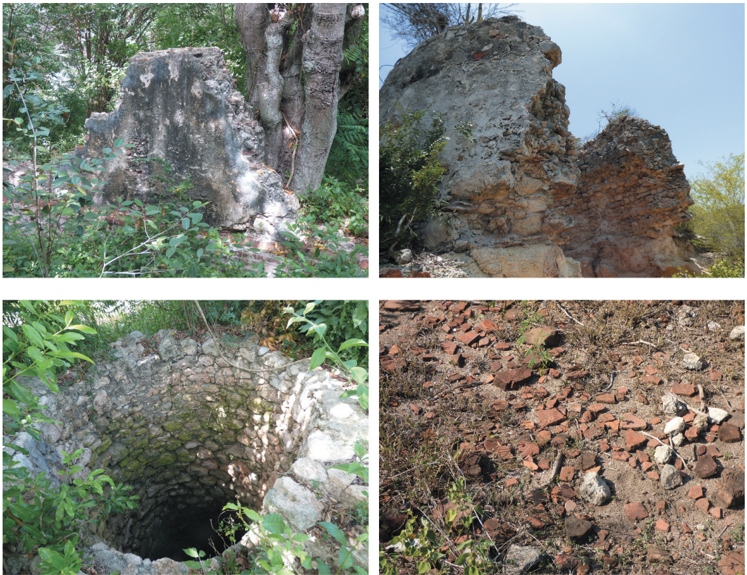
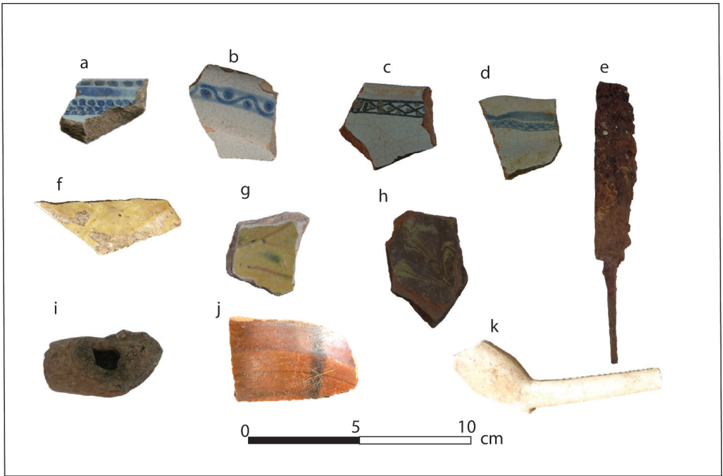

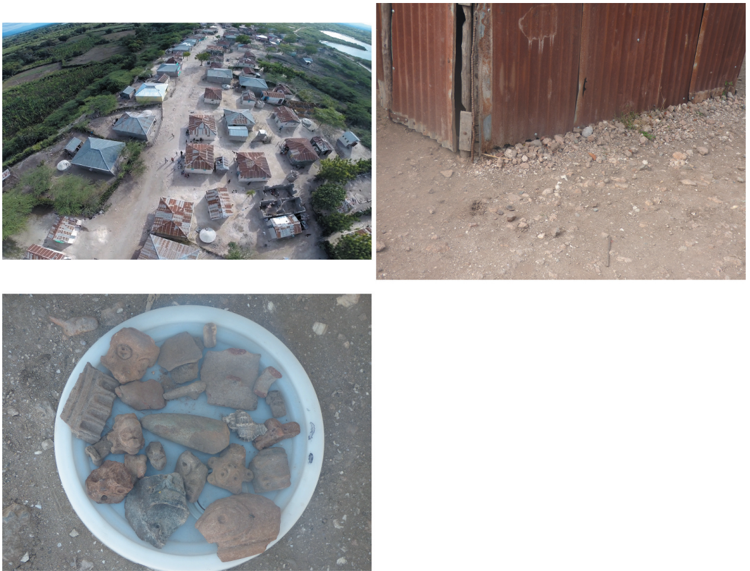
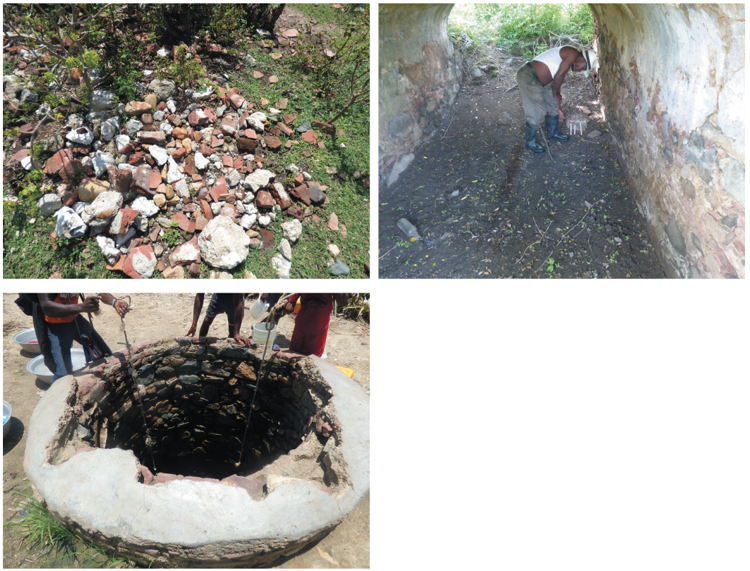
Verification
Claims the paper makes
The claims and statistics of this paper haven’t been checked yet.
Run the check — free, no account needed. It reads the open-access text and checks the sources it cites.
Claims other papers make about this one
Each is checked against this paper’s own text: does it say what the citing paper says it does?
The cited source says what the claim attributes to it.
In the citing paper
“This also echoes Jean et al.'s (2021) point of view on remains that have been reused and reappropriated by individuals in Fort-Liberté (Jean 2019: 143-146, 179-183).”
From Exploring Archaeological Sites and the Transformative Power of Local Practices of Heritage in the Caribbean: A Haitian Case (2024) · cites this paper as Jean et al. 2021
Self-check
Percentages, sums and reported differences re-computed from the paper’s own numbers.
The self-check needs the paper’s full text.
Citations
Cites
Sweetness and power : the place of sugar in modern history
Roxborough, I., & Mintz, S. W. (1986) · Man · doi:10.2307/2803144 · Cited by 1,769
The Plantation Machine: Atlantic Capitalism in French Saint-Domingue and British Jamaica
Burnard, T., & Garrigus, J. (2016) · doi:10.9783/9780812293012 · Cited by 304
Research works printed but not linked: 87
- 10.1016/j.jaa.2006.08.002 · DOI
- 10.1080/14614103.2017.1345115 · DOI
- 10.1023/A:1023973623247 · DOI
- Bellande, A. (2009). Impact Socioeconomique de la dégradation des terres en Haïti et interventions pour la réhabilitation du milieu cultivé. Comisión Económica para América Latina y el Caribe (CEPAL). (pp. 1–73). https://repositorio.cepal.org/bitstream/handle/11362/3740/S2009235_fr.pdf?sequence=1&isAllowed=y
- 10.5117/9789089641557 · DOI
- Bradley R., 2002, The past in prehistoric societies
- Casid J. H., 2005, Sowing empire: Landscape and colonization
- Casimir J., 2020, The Haitians: A decolonial history, 10.5149/northcarolina/9781469660486.001.0001 · DOI · Paper page
- 10.1016/j.quascirev.2020.106407 · DOI
- 10.1016/j.ancene.2018.05.003 · DOI · Paper page
- Cauna J., 2003, Au temps des isles à sucre: Histoire d’une plantation de Saint-Domingue au XVIIIe siècle
- Cauna, J. D. (2013). Patrimoine et mémoire de l’esclavage en Haïti: Les vestiges de la société d’habitation coloniale. In Situ, (20). https://doi.org/10.4000/insitu.10107 · DOI
- 10.1016/j.jag.2014.01.020 · DOI
- D’Ans A. M., 1987, Haiti: Paysage et société
- Deagan K. A., 1987, Proceedings of the First San Salvador Conference, 341
- Deagan K. A., 1995, Puerto Real: The archaeology of a sixteenth-century Spanish town in Hispaniola
- Deive C. E., 1989, Los guerrilleros negros: Esclavos fugitivos y cimarrones en Santo Domingo
- Dolisca F., 2007, Journal of Economics, 13, 277
- Dubois L., 2004, Avengers of the new world, 10.4159/9780674034365 · DOI
- Dunn O., 1989, The diario of Christopher Columbus’ first voyage to America 1492-93
- Ewen C., 1992, From Spaniard to Creole: The archaeology of culture formation at Puerto Real. Haiti
- Fick C. E., 1990, The making of Haiti: The Saint Domingue revolution from below
- Funes M. R., 2008, From rainforest to cane field in Cuba: An environmental history since 1492
- 10.2307/1007140 · DOI
- 10.1080/01440399908575276 · DOI
- Geggus D. P., 2012, Haitian history, 82
- Hamilton J. M., 1995, Puerto real. The archaeology of a sixteenth-century Spanish town in Hispaniola, 377
- Herrera Malatesta E. N., 2018, Una Isla, dos mundos: Estudio arqueológico sobre el paisaje indígena de Haytí y su transformación al paisaje colonial de La Española (1200-1550)
- 10.1006/qres.1999.2062 · DOI
- 10.2307/j.ctv105bb41.7 · DOI
- Hofman C. L., 2019, Early settlers of the insular Caribbean: Dearchaizing the Archaic
- 10.1080/15564894.2020.1748770 · DOI · Paper page
- 10.1163/9789004273689 · DOI
- 10.15184/aqy.2017.247 · DOI
- 10.1017/CCO9781139167321.013 · DOI
- Hurbon L., 2000, L’insurrection des esclaves de Saint-Domingue, 22-23 août 1791: Actes de la table ronde internationale de Port-au-Prince, 8 au 10 décembre 1997
- 10.4324/9780203466025 · DOI · Paper page
- Jean J. S., 2019, La biographie d’un paysage. Etude sur les transformations de longue durée du paysage culturel de la région de Fort-Liberté, Haïti
- 10.3390/heritage3030041 · DOI · Paper page
- 10.19182/bft2014.321.a31213 · DOI
- Keegan W. F., 2001, Proceedings of the XVIII International Congress for Caribbean Archaeology, 233
- Keegan W. F., 2006, Caribbean Journal of Science, 42, 1
- Kimber C. T., 1988, Martinique revisited: The changing plant geographies of a West Indian island
- 10.5117/9789089644725 · DOI
- 10.5117/9789089644725 · DOI
- Koski-Karell, D. A. (2002).Prehistoric northern Haiti: Settlement in diachronic ecological context. [Unpublished doctoral dissertation]. Catholic University of America
- LeFebvre, M. J. (2015).Animals, food, and social life among the pre-Columbian taíno of En Bas Saline, Hispaniola[Unpublished Doctoral dissertation]. University of Florida.
- Lindskog P., 1998, Caribbean Geography, 9, 71
- Ménanteau L., 1997, Atlas côtier du Nord-Est d’Haïti: Environnement et patrimoine culturel de la Région de Fort-Liberté
- Moore, C. (1992). Les ateliers lithiques en Haiti. Bulletin du Bureau National d'Ethnologie, Numéro Spécial (1987–1992), (pp. 13–30).
- Moore C., 1997, Settlement patterns in pre-Columbian Haiti: An inventory of archaeological sites
- Moreau de Saint-mery M. D. R. L. E., 1797, Description topographique, physique, civile, politique et historique de la partie francaise de l’isle Saint-Domingue (Tome. 1)
- 10.2307/1005582 · DOI
- Newsom L. A., 1995, Proceedings of the Sixteenth International Congress for Caribbean Archaeology, 52
- Oexmelin A.-O., 1688, Histoire des aventuriers flibustiers qui se sont signalés dans les Indes avec la vie, les mœurs, les coutumes des habitants de Saint-Domingue
- 10.3917/lgh.050.0309 · DOI
- Ortiz F., 1970, Cuban counterpoint: Tobacco and sugar
- Pagan-Jimenez J. R., 2011, Communities in contact: Essays in archaeology, ethnohistory of the Amerindian circum-Caribbean, 87
- 10.1093/oxfordhb/9780195392302.013.0112 · DOI
- Pagan-Jimenez, J. R., Ali, Z., Santiago-Marrero, C. G. & Hofman, C. L. (2020). Plantscapes of dwelling: Precolonial household mounds, phytocultural dynamics and the ensuing human ecosystems at El Flaco and El Carril (cal. AD 990–1450), northern Dominican Republic.Review of Palaeobotany and Palynology,274(2020), 104–160. https://doi.org/10.1016/j.revpalbo.2020.104160 · DOI
- 10.1016/j.futures.2010.04.007 · DOI
- 10.1016/j.landurbplan.2011.01.012 · DOI
- Papmehl-Dufay L., 2015, Landscape biographies: geographical, historical and archaeological perspectives, 143
- Pollard J., 2002, Avebury: The biography of a landscape
- Rainey F. G., 1941, Excavations in the Ft. Liberté Region, Haiti (No. 23-24)
- 10.4324/9781351169202 · DOI
- 10.1179/jfa.1986.13.3.317 · DOI
- 10.1177/0959683615588373 · DOI
- 10.1080/14614103.2017.1342397 · DOI
- Rouse I., 1939, Prehistory in Haiti: A study in method
- Rouse I., 1941, Culture of the Ft. Liberté Region, Haiti
- Rouse I., 1992, Tainos: Rise and decline of the people who greeted Columbus
- 10.1080/01426390802381185 · DOI
- Saint-Louis V., 2004, Haïti: Matière premières, 6, 20
- 10.1163/22134360-08901054 · DOI
- Smith G., 1995, Puerto real: The archaeology of a sixteenth century town in Hispaniola, 335
- 10.4324/9780203602263 · DOI · Paper page
- Smith L., 2009, Heritage, communities and archaeology
- 10.3368/er.34.4.306 · DOI
- Sullivan S., 2012, Archaeological sites: Conservation and management
- 10.1596/25764 · DOI
- Torres J. M., 2010, Tibes: People, power, and ritual at the center of the cosmos, 231
- Trouillot M. R., 1994, Race, 146
- Ulloa Hung J., 2014, Arqueologia en la linea noroeste de La Espanola: Paisajes, ceramicas e interacciones
- 10.1080/10106040902977584 · DOI
- 10.3390/land2030493 · DOI
- 10.1179/jfa.1986.13.3.283 · DOI
Cited by
Sorted by citations
Jean, J. S. (2024) · International Journal of Historical Archaeology · doi:10.1007/s10761-023-00719-1 · Cited by 5
Self-citation
Metadata
- Authors
- Jean, J. S., Sonnemann, T., & Hofman, C. L.
- Venue
- Landscape Research
- Publisher
- Informa UK Limited
- Published
- 2021-01-19
- Volume
- 46
- Issue
- 5
- Pages
- 618-637
- ISSN
- 0142-6397
- 1469-9710
- Cited by
- 4
- References
- 2
- Language
- en
- Funders
- ERC-Synergy project NEXUS1492 (319309, Spinoza prize awarded to Prof. dr. Corinne L. Hofm)
About these checks
Registry, retraction, Cites and statistics results are computed, not judged, with one exception: a printed reference that no index lists is read once by a model before it counts as a citation error. Claims are extracted by a model and kept only when their quote appears verbatim in the text; each cited source is then checked, with a model’s help, for whether it says what the claim relies on. Those verdicts can be wrong — read the claim’s quote and the cited source before relying on one.
Statistics and arithmetic are recomputed, not judged.
Confidence bands are shown only for fields calibrated on our annotated test set. None is calibrated yet, so no band is shown.
What counts as a claim ›How we measure confidence ›How we check this ›
Are you an author, or do you see a problem with this page? Request a review
