

The Southern Man People as a Political and Fiscal Problem in Han Times
Open accessThe DOI matches its Crossref record; 32 of the 32 references it cites were found in a registry or an index; none of the 15 sources its claims cite is checked for support yet.
Abstract
Starting from what the Hou Hanshu says about the Southern Man in Later Han times, this article aims to measure the prescriptive importance of Fan Ye’s text, through a comparison with other types of documents, mostly unearthed documents from the Middle Yangzi area. Beyond the stereotypical image of benevolent officials educating savage barbarians, it suggests that the “Man problem” was not an ethnic issue, but rather a political and fiscal one. Indeed, most Man rebellions occurred not only because of the gradual imperial colonization of the southern part of the realm, but also because the officials holding office in the Middle Yangzi regularly questioned the Man’s fiscal status.
Overview
CoChat Summary
TL;DR
Lycas argues that the Southern Man problem in Han times was not primarily ethnic but political and fiscal, centered on taxation, administrative control, and local officials’ conduct. Using the *Hou Hanshu* alongside excavated Middle Yangzi documents, he shows that Man rebellions often followed changes to or abuses of their special fiscal status.
Key findings
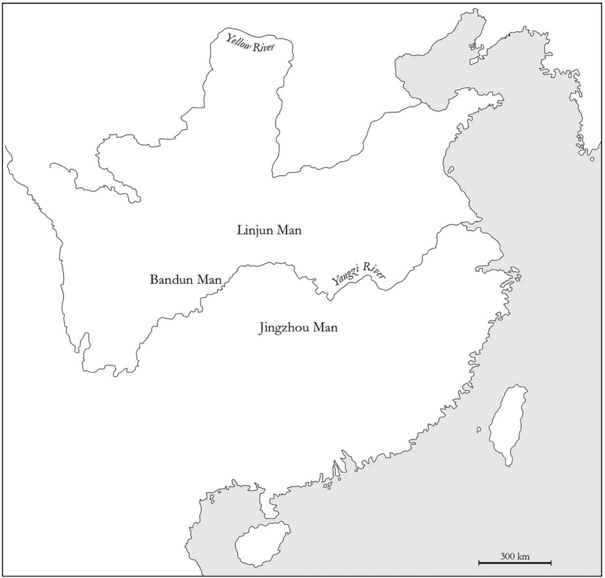
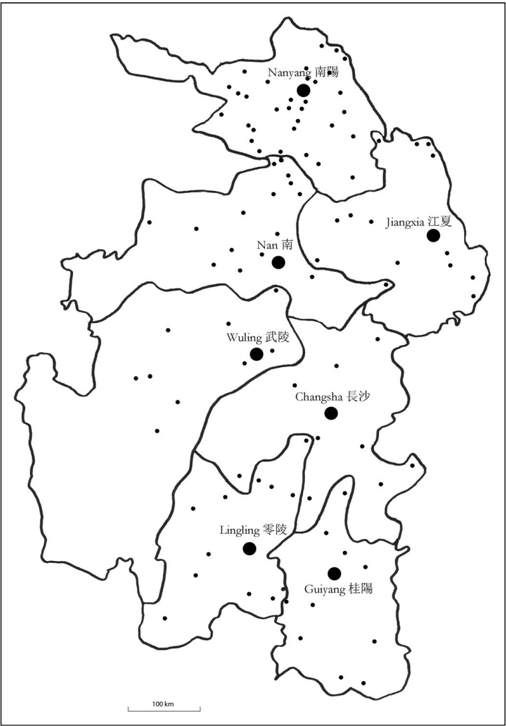
- The *Hou Hanshu* distinguishes “inner Man” within the empire from “outer Man” beyond its borders; inner Man are divided into Jingzhou/Wuling-Changsha, Linjun, and Bandun groups. Most Later Han Man rebellions in the second half of the second century occurred in Jing province’s four southernmost commanderies: Wuling (151, 160, 186), Lingling (160), Guiyang (160), and Changsha (157, 160). Wuling’s rebellions are listed for 47–48, 76, 78, 80, 92, 115, 116, 136, 137, 151, 160, and 186, and the paper says Wuling was never really under official control for more than 150 years.
- The Man had a specific fiscal status and tax, called *cong* or *jia*. A Liye document from 213 BC requires “a four *zhang* and seven *chi* [long piece of] *jia*”; a Zhangjiashan case from 196 BC records a Man adult male paying 56 cash annually as corvée service and refers to a “Statutes on the Manyi.” The *Hou Hanshu* says each adult paid one piece of cloth and each child a piece two *zhang* long, called *congbu*. Paying *cong* or *jia* allowed the Man to cover farming taxes and avoid the army draft, though not always successfully.
- Rebellions often followed fiscal changes. In 136, the governor of Wuling proposed increasing Man taxation, saying they had long submitted and were as obedient as commoners; Emperor Shun accepted despite Yu Xu’s warning. When winter came, the Man refused to pay tax, rebelled, and killed several local officials; it took a stern official and hundreds of beheadings to end the uprising. A Dongpailou document from the 180s links unrest in Changsha to tax nonpayment, noting granaries were empty of rice and storehouses empty of cash and cloth.
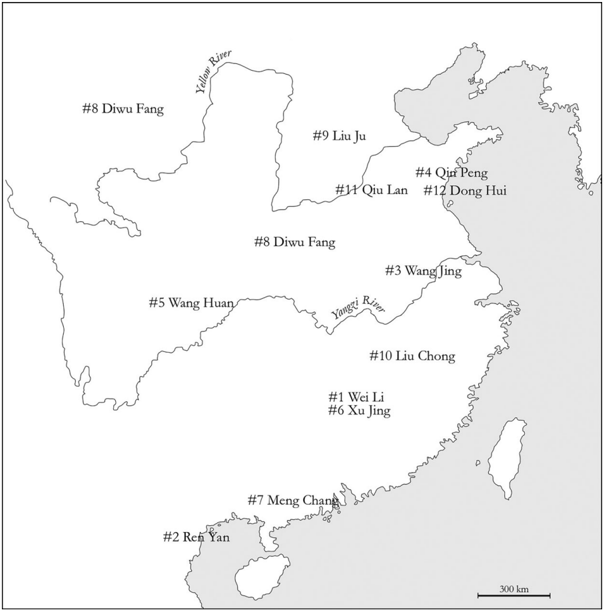
- In the *Hou Hanshu*’s chapter on benevolent officials, 7 of 12 officials were sent south of the Huai River in areas traditionally inhabited by Man. Biographies of Wei Li, Xu Jing, and Liu Chong show administrative measures—roads, inns, tax collection, custom reform, reducing corrupt or harsh official behavior—rather than simple ethnic assimilation.
Methods
- Comparative historical-textual analysis of Fan Ye’s *Hou Hanshu*, especially the “Nan Man liezhuan” (*juan* 86) and the “benevolent officials” section (*juan* 76), alongside excavated administrative and legal documents from Liye (Hunan), Zhangjiashan (Hubei), and Dongpailou (Hunan).
- The article focuses on the “inner Man,” their topography and rebellions, their fiscal status, and biographical accounts of officials sent to Man-populated areas. It includes a table of 12 benevolent officials and maps of inner Man groups, Jing province commanderies, and officials’ spatial distribution.
Limitations
- Stated: the exact meanings of the Liye fragments are still debated because of a lack of ample contextual evidence; the paper also notes a taxonomy problem, since the Man were not always called “Man,” and *min* can mean commoners, “people,” or Man.
- Stated: the Dongpailou document does not explain why the Man rebelled; the *Hou Hanshu* records only major Man uprisings, leaving aside the permanent threat they embodied.
- Evident from the text: the argument relies on a limited set of transmitted and excavated sources, and some translations or interpretations differ among scholars, such as the reading of *daoli* and Liye board K27.
Model-written summary. Check it against the paper before relying on it.
Integrity signals
Registry
Cites
Statistics
Figures

Verification
Claims the paper makes
0 Valid · 4 Not valid · 19 Not checked · 64 Own results and interpretations
The paper states this without a source or data behind it here, so there is nothing to check it against. The quote shows it is in the paper.
In the paper
“However, and contrary to modern common assumptions, 1 standard histories did not portray them as ' barbarians, ' ethnically different from the other subjects of the empire.”
plain- Asserted: passes — The authors put it forward as true.
- Checkable: passes — It can be checked against evidence.
- Load-bearing: passes — The paper’s conclusions depend on it.
- Based: unclear — It is unclear why the paper says it holds.
A result the paper reports from its own data — it cites no other source for it, so there is none to check. The quote shows it is in the paper.
In the paper
“Second, they also had to pay a kind of fee or tax, the cong (here in cash, qian 錢 ).”
plainSingle case- Asserted: passes — The authors put it forward as true.
- Checkable: passes — It can be checked against evidence.
- Load-bearing: passes — The paper’s conclusions depend on it.
- Based: passes — The paper gives a reason why it holds.
A result the paper reports from its own data — it cites no other source for it, so there is none to check. The quote shows it is in the paper.
In the paper
“Although Man uprisings occurred throughout the Eastern Han dynasty, a geography of conflicts in Jing 荊 province shows that during the second half of the second century, most Man rebellions happened in the province ' s four southernmost commanderies, the ' Jingnan ' 荊 南 , 8 comprising Wuling (in 151, 160, 186), Lingling (160), Guiyang (160), and Changsha (157, 160).”
plain- Asserted: passes — The authors put it forward as true.
- Checkable: passes — It can be checked against evidence.
- Load-bearing: unclear — It is unclear whether the paper’s conclusions depend on it.
- Based: passes — The paper gives a reason why it holds.
None of the sources cited for this claim have been checked yet.
In the paper
“As early as 213 BC (and thus probably earlier as well), the Man were required to pay ' a four zhang and seven chi [long piece of] jia , ' 13 the jia referring to the name of a tax made of cloth.”
hedged- Asserted: passes — The authors put it forward as true.
- Checkable: passes — It can be checked against evidence.
- Load-bearing: passes — The paper’s conclusions depend on it.
- Based: passes — The paper gives a reason why it holds.
A result the paper reports from its own data — it cites no other source for it, so there is none to check. The quote shows it is in the paper.
In the paper
“Yet, there are in fact several examples, taken from manuscripts written as early as the late third and early second centuries BC, showing that the Man had to pay a specific form of tax, called cong 賨 , or jia 幏 .”
plain- Asserted: passes — The authors put it forward as true.
- Checkable: passes — It can be checked against evidence.
- Load-bearing: passes — The paper’s conclusions depend on it.
- Based: passes — The paper gives a reason why it holds.
19 more claims
Create a free account to see all 87 claims and every source verdict.
- It may state two separate claims as one. 42
- Probably not a substantial claim. 33
Self-check
Percentages, sums and reported differences re-computed from the paper’s own numbers.
Each contradiction between two passages listed here was confirmed by an independent check.
Rated minor: it would not touch a result — a value no result rests on, a p-value that stays on the same side of the significance level, or a conflict that is clerical, resolved elsewhere in the paper, or outside its own findings.
In the paper
§ CONCLUSION · p. 16
“(Pines 2018, p. 5).”
§ Secondary Sources · p. 18
“- Qian Zhongshu 錢鍾 書 . 1979. Guanzhui bian 管 錐 編 . Beijing: Zhonghua shuju. - ---. 2018. ' Chu Identity as Seen from Its Manuscripts: A Reevaluation. ' Journal of Chinese History 2 (2018), pp. 1 -26.”
Citations
Cites
Trade and Expansion in Han China
Yü, Y.-S. (1967) · University of California Press eBooks · doi:10.1525/9780520327962 · Cited by 160
Critical Han Studies: The History, Representation, and Identity of China's Majority
Mullaney, T. S., Leibold, J., Gros, S., & Bussche, E. V. (2012) · HAL · Cited by 151
On the ‘Raw’ and the ‘Cooked’ Barbarians of Imperial China
Fiskesjö, M. (1999) · Inner Asia · doi:10.1163/146481799793648004 · Cited by 137
The Origins of the Chinese Nation: Song China and the Forging of an East Asian World Order
Tackett, N. (2017) · Cambridge University Press eBooks · doi:10.1017/9781108164917 · Cited by 124
(2008) · Choice Reviews Online · doi:10.5860/choice.46-1049 · Cited by 95
Barbieri-Low, A. J., & Yates, R. D. S. (2015) · doi:10.1163/9789004300538 · Cited by 92
Beasts or Humans: Pre-Imperial Origins of the “Sino-Barbarian” Dichotomy
Pines, Y. (2005) · Mongols, Turks, and Others · doi:10.1163/9789047406334_009 · Cited by 91
Abramson, M. S. (2008) · University of Pennsylvania Press eBooks · doi:10.9783/9780812201017 · Cited by 90
Trade and Expansion in Han China: A Study in the Structure of Sino-Barbarian Economic Relations
Hsü, C.-Y., & Yü, Y.-S. (1968) · Harvard Journal of Asiatic Studies · doi:10.2307/2718606 · Cited by 64
Ancient China and the Yue: Perceptions and Identities on the Southern Frontier, c.400 BCE–50 CE
Brindley, E. F. (2015) · doi:10.1017/cbo9781316026991 · Cited by 40
Ancient China and the Yue: Perceptions and Identities on the Southern Frontier, c.400 BCE–50 CE
Brindley, E. F., Meacham, W., & Independent researcher based in Kowloon, H. K. S. (2017) · Journal of Social Issues in Southeast Asia · doi:10.1355/sj32-1l · Cited by 40
The Origins of the Chinese Nation: Song China and the Forging of an East Asian World Order
Tackett, N. (2017) · Cited by 31
Schafer, E. H. (1954) · Cited by 30
Talk about "Barbarians" in Antiquity
Nylan, M. (2012) · Philosophy East and West · doi:10.1353/pew.2012.0063 · Cited by 30
Arguing about Law: Interrogation Procedure under the Qin and Former Han dynasties
Korolkov, M. (2011) · Études chinoises · doi:10.3406/etchi.2011.956 · Cited by 27
Schafer, E. H. (1954) · doi:10.2307/595963 · Cited by 26
Trade and Expansion in Han China: A Study in the Structure of Sino-Barbarian Economic Relations
Dull, J. L., & Yu, Y.-S. (1968) · The American Historical Review · doi:10.2307/1857794 · Cited by 24
Trade and Expansion in Han China: A Study in the Structure of Sino-Barbarian Economic Relations
Dull, J. L., & Yu, Y.-S. (1968) · The American Historical Review · doi:10.1086/ahr/74.1.248 · Cited by 24
Generals of the South: The Foundation and Early History of the Three Kingdoms State of Wu
Waley‐Cohen, J. (1992) · Pacific Affairs · doi:10.2307/2760227 · Cited by 23
The Sinitic Encounter in Southeast China through the First Millennium CE
Clark, H. R. (2015) · doi:10.21313/hawaii/9780824851606.001.0001 · Cited by 22
Political Strategies of Identity Building in Non-Han Empires in China
Fiaschetti, F., & Schneider, J. C. (2014) · Cited by 12
CHU IDENTITY AS SEEN FROM ITS MANUSCRIPTS: A REEVALUATION
Pines, Y. (2017) · Journal of Chinese History · doi:10.1017/jch.2017.17 · Cited by 8
The Dog-Ancestor Story of the Aboriginal Tribes of Southern China.
(1932) · doi:10.2307/2843963 · Cited by 7
Patronage and Community in Medieval China
Chittick, A. (2010) · State University of New York Press eBooks · doi:10.2307/jj.18255474 · Cited by 5
5. Managing Locality in Early Medieval China
Lu, Y. (2014) · Columbia University Press eBooks · doi:10.7312/swar15986-011 · Cited by 3
Caractères interdits et vocabulaire officiel sous les Qin
(2011) · Cited by 2
Early Imperial China’s Deep South: The Viet Regions through Tang Times
Holcombe, C. (1997) · Tang Studies · doi:10.1353/tan.1997.0003
Research works printed but not linked: 23
- Bai Cuiqin 白 翠 琴 . 1996. Wei Jin Nanbeichao minzu shi 魏 晋 南北 朝 民 族 史 . Chengdu: Sichuan minzu chubanshe.
- Churchman, Catherine. 2016. The People between the Rivers: The Rise and Fall of the Bronze Drum Culture 200 -750 CE . Lanham: Rowman and Littlefield.
- Di Cosmo, Nicola. 2010. ' Ethnography of the Nomads and ' Barbarian ' History in Han China. ' In: Lin Foxhall (ed.), Intentional History: Spinning Time in Ancient Greece . Stuttgart: Steiner, pp. 299 -325.
- He Guangyue 何 光 岳 . 1988 (1992). Nan Man yuanliu shi 南 蛮 源 流 史 . Nanchang: Jiangxi jiaoyu chubanshe.
- Jin Baoxiang 金 寶 祥 . 1936. ' Han mo zhi Nanbeichao nanfang Manyi de qianxi ' 漢 末 至 南北 朝 南 方 蠻 夷 的 遷 徙 . Yu gong 禹 貢 5 (1936) 12, pp. 19 -20.
- Li Wai-yee. 2017. ' Anecdotal Barbarians in Early China. ' In: Paul van Els -Sarah A. Queen (eds.), Between History and Philosophy: Anecdotes in Early China . Albany: SUNY Press, pp. 113 -144.
- Lu Jialiang 鲁 家 亮 . 2013. ' Liye chutu Qin ' buniao qiuyu ' jian chutan ' 里 耶 出 土 秦 ' 捕 鸟 求 羽 ' 简 初 探 . In: Wei Bin 魏 斌 (ed.), Gudai Changjiang zhongyou shehui yanjiu 古 代 长 江 中 游 社 会 研 究 . Shanghai: Shanghai guji chubanshe, pp. 91 -111.
- Lombard-Salmon, Claudine. 1972. UnExemple d ' acculturation chinoise: La province du Gui Zhou au XVIIIe siècle . Paris: École française d ' Extrême-Orient.
- Lu Xiqi 魯 西 奇 . 2008. ' Shi Man ' 釋 蠻 . Wenshi 文 史 84 (2008) 3, pp. 55 -75.
- Maspero, Henri. 1927. La Chine antique . Paris: De Boccard.
- Miyakawa, Hisayuki. 1960. ' The Confucianization of South China. ' In: Arthur F. Wright (ed.), The Confucian Persuasion . Stanford: Stanford University Press, pp. 21 -46.
- Qian Zhongshu 錢鍾 書 . 1979. Guanzhui bian 管 錐 編 . Beijing: Zhonghua shuju.
- Selbitschka, Armin. 2015. ' Early Chinese Diplomacy: Realpolitik vs. the so-called Tributary System. ' AM 28 (2015) 1, pp. 61 -114.
- Tan Qixiang 谭 其 骧 . 1987. Changshui ji, shang 长 水 集 上 . Beijing: Renmin chubanshe.
- Wang Gungwu. 1973. ' The Middle Yangtze in Tang Politics. ' In: Arthur F. Wright -Denis Twitchett (eds.), Perspectives on the T ' ang . New Haven: Yale University Press, pp. 193 -235.
- Wang Su 王 素 . 2005. ' Changsha Dongpailou Dong Han jiandu xuanshi ' 长 沙 东 牌 楼 东 汉 简 牍 选 释 . Wenwu 文 物 2005/12, pp. 69 -75.
- Wang Wan-chun (Wanjun) 王 萬 雋 . 2009. ' Qin-Han Wei-Jin shidai de ' cong '' 秦 漢 魏 晉時 代 的 ' 賨 ' . Zaoqi Zhongguo shi yanjiu 早 期 中 國 史 研 究 1 (2009), pp. 125 -156.
- Wang Zhongqian 王 仲 牽 . 2003. Wei Jin Nanbeichao shi 魏 晋 南北 朝 史 . Shanghai: Shanghai renmin chubanshe.
- Wei Dongchao 韦 东 超 . 2003. ' Yimin yu zuji chongtu: Dong Han shiqi Wuling Changsha Lingling sanjun ' Manbian ' dongyin qianlun ' 移 民 与 族 际 冲 突 --东 汉 时 期 武 陵 、 长 沙 、 零陵 三 郡 ' 蛮 变 ' 动 因 浅 论 . Zhongnan minzu daxue xuebao 中 南 民 族 大 学学 报 23 (2003) 1, pp. 62 -65.
- White, David Gordon. 1991. Myths of the Dog-Man . Chicago: University of Chicago Press. Wylie, Alexander. 1882. ' History of the Southern and South-Western Barbarians: Translated from the How Han Shoo , Book CXVI. ' Revue de l ' Extrême-Orient 1 (1882), pp. 200 -246. Yan Gengwang 嚴 耕 望 . 2007. Liang Han taishou cishi biao 兩 漢 太 守 刺 史 表 . Shanghai:
- Gengwang Yan, 2007, Liang Han taishou cishi biao 兩漢太守刺史表
- Yang Shao-yun. (Forthcoming). The Way of the Barbarians: Reinterpreting Chineseness and Barbarism in Tang and Song China, 800 -1140. Seattle: University of Washington Press.
- Zeng Daiwei 曾 代 伟 -Wang Pingyuan 王 平 原 . 2004. ' Manyi lü kaolüe ' 蛮 夷 律 考 略 . Minzu yanjiu 民 族 研 究 2004/3, pp. 75 -84.
Cited by
Designing Boundaries in Early China
Olberding, G. P. (2021) · Cambridge University Press eBooks · doi:10.1017/9781009075862 · Cited by 3
Paolillo, M. (2024) · Studi e saggi · doi:10.36253/979-12-215-0598-6.04
The Southern Man People in Western Han China: Manuscript Evidence from Zoumalou and Hujia Caochang
Lycas, A. (2024) · Bamboo and Silk · doi:10.1163/24689246-20240012
Self-citation
Metadata
- Authors
- Lycas, A.
- Corresponding author
- Lycas, Alexis
- ORCID
- Lycas, Alexis
- Venue
- Monumenta Serica
- Publisher
- Informa UK Limited
- Published
- 2019-01-02
- Volume
- 67
- Issue
- 1
- Pages
- 145-164
- ISSN
- 0254-9948 (ISSN-L)
- 2057-1690
- OpenAlex
- W2952482308
- Cited by
- 3
- References
- 26
- Citations by year
- 2024: 2 · 2021: 1
- FWCI
- 3.46
- Type
- journal article
- Language
- en
- Open access
- hybrid
- doi.org
- Licence
- Locations
- Monumenta Serica (publishedVersion, cc-by)
- HAL (submittedVersion, other-oa)
- MPG.PuRe (Max Planck Society) (submittedVersion, cc-by-nc-nd)
- Topics
- Social Sciences › Arts and Humanities › History › Chinese history and philosophy
- Social Sciences › Sociology and Political Science › China's Ethnic Minorities and Relations
- Social Sciences › Sociology and Political Science › Korean Peninsula Historical and Political Studies
- Keywords
- Later Han dynasty, Fan Ye, Hou Hanshu, ethnic policy
About these checks
Registry, retraction, Cites and statistics results are computed, not judged, with one exception: a printed reference that no index lists is read once by a model before it counts as a citation error. Claims are extracted by a model and kept only when their quote appears verbatim in the text; each cited source is then checked, with a model’s help, for whether it says what the claim relies on. Those verdicts can be wrong — read the claim’s quote and the cited source before relying on one.
A language model drew the claims from the paper on 2026-10-05, under version 3 of the claim definition (model deepseek-v4.1-flash, prompt extract-v3).
A second model labelled each claim on 2026-10-05 (model jev-1.13-20260917, definition revision gold-guideline-v0.2).
Statistics and arithmetic are recomputed, not judged.
Confidence bands are shown only for fields calibrated on our annotated test set. None is calibrated yet, so no band is shown.
What counts as a claim ›How we measure confidence ›How we check this ›
Are you an author, or do you see a problem with this page? Request a review
Data sources
Bibliographic data: Semantic Scholar, OpenAlex, Crossref.
Contains information from the Semantic Scholar Academic Graph Datasets, made available under the ODC Attribution License (ODC-BY 1.0).
Semantic Scholar’s data is described in: Kinney, R., et al. (2023). The Semantic Scholar Open Data Platform. arXiv:2301.10140.
