

Exploring the factors causing the poor performance of most irrigation schemes in post-independence sub-Saharan Africa
Open accessThe DOI matches its Crossref record; 173 of the 175 references it cites were found in a registry or an index.
Abstract
This article explores the factors causing the current poor performance of most government irrigation schemes in sub-Saharan Africa. The literature review finds that the poor performance is not primarily caused by socioeconomic and biophysical conditions inherent to sub-Saharan Africa. African farmers have adapted to diverse biophysical conditions and expanded or contracted their area under agricultural water management in response to market signals. Rather, this poor performance is predominantly linked to the production systems introduced during colonialism and developments since independence, such as agricultural policies restraining rural economic development, unsuitable irrigation technologies and agricultural practices, and international lending practices and trade arrangements.
Overview
The claims and statistics of this paper haven’t been checked yet.
Free: it reads the open-access text and checks the first 5 claims that cite a source we can check. Create a free account to check every claim.
Integrity signals
Registry
Cites
Statistics
Figures



Verification
Claims the paper makes
The claims and statistics of this paper haven’t been checked yet.
Free: it reads the open-access text and checks the first 5 claims that cite a source we can check. Create a free account to check every claim.
Claims other papers make about this one
Each is checked against this paper’s own text: does it say what the citing paper says it does?
The cited source says what the claim attributes to it.
In the citing paper
“Inadequate Adaptation to Local Conditions: Imposing external production systems or technologies without considering local needs and knowledge results in poor outcomes, particularly in irrigation schemes and agricultural reforms [87].”
From How Has South Africa's Land Reform Policy Performed from 1994 to 2024? Insights from a Review of Literature (2025) · cites this paper as [87]
Self-check
Percentages, sums and reported differences re-computed from the paper’s own numbers.
The self-check needs the paper’s full text.
Citations
Cites
Awais, A. (2015) · Data Archiving and Networked Services (DANS) · doi:10.17632/zcvgc6m58h.1 · Cited by 6,707
(1996) · Institutional Research Information System University of Turin (University of Turin) · doi:10.1111/j · Cited by 5,486
Markets and States in Tropical Africa: The Political Basis of Agricultural Policies
Rimmer, D., & Bates, R. H. (1982) · African Economic History · doi:10.2307/3601228 · Cited by 1,731
Anthropogenic land use estimates for the Holocene – HYDE 3.2
Klein Goldewijk, K., Beusen, A., Doelman, J., & Stehfest, E. (2017) · Earth System Science Data · doi:10.5194/essd-9-927-2017 · Cited by 1,204
Higher Education and Economic Development in Africa
Bloom, D. M., Canning, D., & Chan, K. (2006) · Cited by 614
The International Journal of African Historical Studies
Wick, A. (2008) · Lusotopie · doi:10.1163/176830808785327412 · Cited by 605
Indigenous Agricultural Revolution: Ecology and Food Production in West Africa
Innis, D. Q., & Richards, P. (1986) · Geographical Review · doi:10.2307/214923 · Cited by 464
What is the irrigation potential for Africa? A combined biophysical and socioeconomic approach
You, L., Ringler, C., Wood-Sichra, U., Robertson, R., Wood, S., Zhu, T., Nelson, G., Guo, Z., & Sun, Y. (2011) · Food Policy · doi:10.1016/j.foodpol.2011.09.001 · Cited by 387 · cited 4×
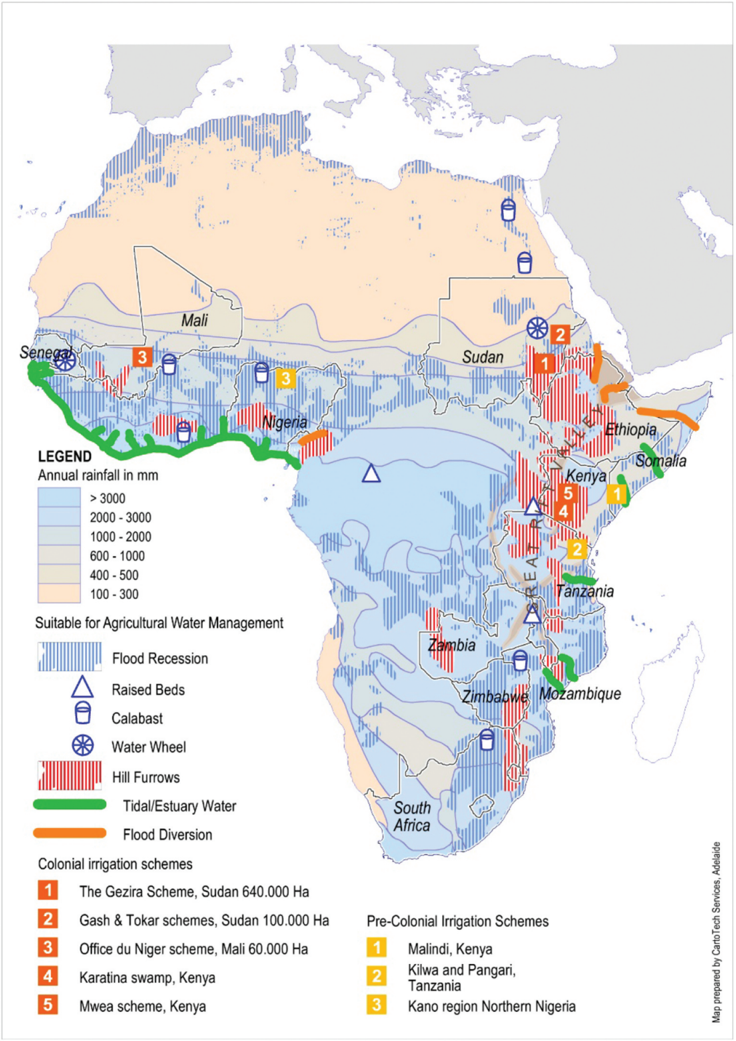
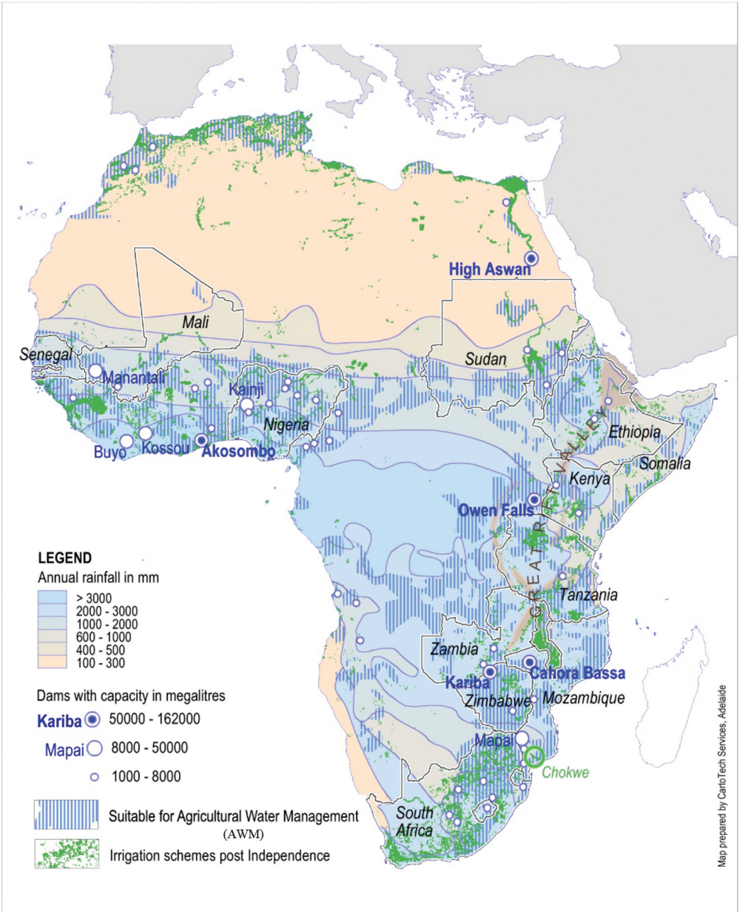
“…major dams and irrigation schemes and area suitable for agricultural water management (map compiled by the authors from Appendix 6 and You et al. (2011)). farmers in Ghana using small-scale motor pumps to irrigate can generate two to three times higher returns on family labour, which…”
BackgroundInfluentialAfrican rice (Oryza glaberrima): History and future potential
Linares, O. F. (2002) · Proceedings of the National Academy of Sciences · doi:10.1073/pnas.252604599 · Cited by 369 · cited 1×
“In the low-rainfall region, saltwater could reach up to 70 km inland (Linares, 1981, 2002; Marzouk-Schmitz, 1984).”
BackgroundInternational Journal of Water Resources Development
Biswas, A. K. (2009) · Cited by 356
Research works printed but not linked: 52
- Abubakar, S. (1975, January). A survey of the economy of the eastern Emirates of the Sokoto Caliphate in the nineteenth century [Paper presentation]. Sokoto Seminar Studies in the History of the Sokoto Caliphate. Sokoto, Nigeria.
- Adams, W. M., & Grove, A. T. (Eds.). (1984). Irrigation in tropical Africa: Problems and problem solving (Cambridge African Monographs No. 3). African Studies Centre.
- Apoare, H. (1882). Exploração agronómica em Cabo Verde e Guiné. Boletim da Sociedade de Geografia de Lisboa. 3ª série , 6 , 362-369.
- Austin, G. (1984). Rural capitalism and the growth of cocoa-farming in South Ashanti, to 1914 [Unpublished doctoral dissertation]. University of Birmingham.
- Ayers, A. (1989). Indigenous soil and water conservation in Sub-Saharan Africa: the circle of Djenné, Central Mali [Unpublished master's thesis]. University of Reading.
- Babatunde, R. O., Fakayode, S. B., & Obafemi, A. A. (2008). Fadama maize production in Nigeria: Case study from Kwara State. Research Journal of Agriculture and Biology , 4 (5), 340-345.
- Bos, D., Grigoras, I., & Ndiaye, A. (2006). Land cover and avian biodiversity in rice fields and mangroves of West Africa . Wetlands International.
- Calhoun, R.-D. (2012). Seeds of destruction: The globalization of cotton as a result of the American Civil War [Doctoral dissertation]. Kansas State University. https://krex.k-state.edu/dspace/handle/ 2097/14956?show=full
- Clarence-Smith, W. G. (2004, January). Colonial industrialisation, 1840s-1960s [Paper presentation]. Global Economic History Network Conference, Irvine, CA.
- Daly, M. W. (1991). Imperial Sudan . Cambridge University Press.
- Dorward, A., Kydd, J., Poulton, C., & Stockbridge, M. (2004). Agricultural Liberalization in sub Saharan Africa (Report prepared for EC-PREP). Centre for Development and Poverty Reduction, Department of Agricultural Sciences, Imperial College London.
- Dtmzthe, G. (1997). An economic analysis of the competitiveness of alternative rice production systems: the case of bas-fond rice production in Mali-Sud [Unpublished doctoral dissertation]. Department of Agricultural Economics, Michigan State University.
- Eicher, C., & Staatz, J. (1985). Food security policy in Sub-Saharan Africa . Invited paper prepared for the 19th Conference of the International Association of Agricultural Economists, Malaga, Spain.
- Food and Agriculture Organization & New Partnership for Africa's Development. (2005). Support to NEPAD-CAADP implementation. Volume 3 of 4: District irrigation and water harvesting support (Mainland) .
- Food and Agriculture Organization & United Nations Development Programme. (1987). Spate irrigation. Proceedings of the subregional expert consultation on wadi development for agriculture in the Natural Yemen .
- Friis, C. & Reenberg, A. (2010). Land grab in Africa: Emerging land system drivers in a teleconnected world. GLP Report No. 1. GLP-IPO: Copenhagen. https://www.researchgate.net/publication/282847606_Land_grab_in_Africa_Emerging_land_system_drivers_in_a_teleconnected_world
- Heilbrunn, J. R. (2004). Anti-corruption commissions: Panacea or real medicine to fight corruption? World Bank.
- Hekstra, P. (1983). Prospects for small scale irrigation development in east Africa (An inventory made in Burundi, Kenya, Malawi, Tanzania, Uganda) . Land and Water Development Division, FAO.
- Inikori, J. (2013). The development of commercial agriculture in pre-colonial west Africa (African Economic History Working Paper Series No. 9). Lund University.
- International Cotton Advisory Committee. (2001). Survey of the cost of production of raw cotton . ICAS. Isaacman, A., & Roberts, R. (Eds.). (1995). Cotton, colonialism, and social history in Sub- Saharan Africa: Introduction . Heinemann.
- Isaacman A., 1995, Cotton, colonialism, and social history in Sub- Saharan Africa: Introduction
- Jones, W. I. (1995). The World Bank and irrigation (English). A World Bank operations evaluation study . World Bank.
- Lovejoy, P. E. (1980b). Caravans of Kola: Hausa trade with Asante, I700 -1900 . Ahmadu Bello University Press.
- Marcus, R. R. (2007). Where community-based water resource management has gone too far: Poverty and disempowerment in Southern Madagascar. Conservation and Society , 5 (2), 202-231. http:// www.conservationandsociety.org/text.asp?2007/5/2/202/49230
- Marzouk-Schmitz, Y. (1984). Instruments aratoires, systhemes de cultures et differentation intraethnique. Cahiers O.R.S.T.O.M. Série Sciences Humaines , XX (3-4), 399-425.
- Mercoiret, M.-R., Pesche, D., & Bosc, P.-M. (2007, October). Rural producers' organizations for pro-poor sustainable agricultural development . Conference conducted for contribution to the writing of World Development Report 2008: Agriculture for Development . World Bank.
- Mussa, K. R., & Mwakaje, A. G. (2013). The impact of equitable payment for watershed services scheme on livelihoods in Tanzania: The case of Uluguru Mountains. International Journal of Development and Sustainability , 2 (2), 1031-1051. https://isdsnet.com/ijds-v2n2-44.pdf
- National Research Council. (1996). Lost crops of Africa, Volume 1: Grains . The National Academies Press.
- Ngigi, K. J. (2004). An economic analysis of rice production in Mwea irrigation scheme [Unpublished Masters' thesis]. University of Nairobi.
- Nicholls, C. S. (1971). The Swahili coast . Allen & Unwin.
- Obara, D. A., (1984). Irrigation schemes in arid environments of Kenya with special reference to Perkerra Irrigation Scheme. In M. J. Blackie (Ed.), African regional symposium on smallholder irrigation (pp. 201-207). Hydraulics Research Unit.
- Office of the Auditor-General for the Federation. (2015). Environmental audit on the drying up of the Lake Chad: A focus on water resources quantity management by the Nigerian Government: 2008 -2013 . Deutsche Gesellschaft für Internationale Zusammenarbeit (GIZ). https://oaugf.ng/images/ Reports/National\_Audit\_Report\_of\_Nigeria\_on\_Environmental\_Audit\_of\_the\_Drying\_up\_of\_ Lake\_Chad.pdf
- Pillai, A. C. (1921). Report of Senior Agricultural Instructor to Director of Agriculture, Njala, for half year ending December 1921. In Correspondence and report on irrigation for and cultivation of rice in Sierra Leone . Government Printer.
- Raunet, M. (1985). Les bas-fonds en Afrique eta Madagascar: Geomorphologie, geochemie, pedo logie, hydrologie. Zeitschrift fur Geomorphologie , 52 , 25-62.
- Richards, P. (1986). Coping with hunger: hazards in a West African rice-farming system . Allan and Unwin.
- Rosegrant, M. W., & Perez, N. D. (1997). Water resources development in Africa: A review and synthesis of issues, potentials and strategies for the future (EPTD Discussion Paper No. 28). IFPRI. https:// www.ifpri.org/publication/water-resources-development-africa
- Sally, H., & Abernethy, C. L. (Eds.). (2002). Private irrigation in sub-Saharan Africa . International Water Management Institute. https://publications.iwmi.org/pdf/H041080.pdf
- Sandbrook, R. (1982). The politics of basic need: Urban aspects of assaulting poverty in Africa . Heinemann.
- Shaaeldin, E. (1986). The role of the agricultural sector in the economy. In A. B. Zahlan (Ed.), The agricultural sector of Sudan: Policy and system studies . Ithaca Press.
- Shaw, D. J. (1966). The development and contribution of irrigated agriculture in the Sudan. In D. J. Shaw (Ed.), Agricultural development in the Sudan (pp. 174-224). Philosophical Society of the Sudan.
- Sirven, P., Gotnegre, J. F., & Prioul, C. (1974). Geographie du Rwanda . Bruxelles: A. de Boeck.
- Spalding, M. D., Blasco, F., & Field, C. D. (Eds.). (1997). World mangrove atlas . International Society for Mangrove Ecosystems.
- Stockdale, F. A. (1936). Sessional Paper No. 2 of 1936 (Report by Mr F.A Stockdale CMC, CBE, Agricultural Adviser to the Secretary of State for the Colonies on his visit to Sierra Leone in January 1936). Government Press.
- Thèbaud, B. (1990). L'èvolution rècente des politiques d'hydraulique pastorale et la gestion de l'espace au Sahel, in Sociètès Pastorales et Dèveloppement. Cahiers des sciences humaines , 26 (1-2), 97-117.
- Turner, B. (1984). Changing land use patterns in the fadama of northern Nigeria. In E. P. Scott (Ed.), Life before the drought (pp. 140-170). Allen and Unwin.
- Underhill, H. W. (1990). Small-scale irrigation in the context of rural development . Cranfield Press.
- United Kingdom Parliament, Accts. & Papers. (1879). Statistical abstract for the colonies and other possessions of the United Kingdom (ca. 2093) (pp. 12-13, LXXVIII).
- Van Beusekom, M. M. (1989). Colonial rural development: French policy and African response at the Office du Niger, Soudan Francais (Mali) [Unpublished doctoral dissertation]. Johns Hopkins University.
- Vos, J. (2008). The economics of the Kwango rubber trade, ca. 1900. In B. Heintze & A. Von Oppen (Eds.), Angola on the move: Transport routes, communication and history (pp. 85-98). Otto Lembeck.
- Waalewijn, P., Trier, R., Denison, J., Schulte, M., Siddigi, Y., Vos, J., & Amjad, E. (2020). Governance in irrigation and drainage: Concept, cases, and action-oriented approaches. A practitioner's Resource . World Bank.
- Wanyande, P. (2001). Management politics in Kenya's sugar industry: Towards an effective frame work. African Journal of Political Science / Revue Africaine De Science Politique , 6 (1), 123-140. https://www.ajol.info/index.php/ajps/article/view/27307
- Woodward, A. R. (2007). The impact of U.S. subsidies on West African cotton production (Case Study No. 10-5). In P. Pinstrup-Andersen & F. Cheng (Eds.), Food policy for developing countries: The role of government in the global food system . Cornell University.
Cited by
Why food insecurity persists in sub-Saharan Africa: A review of existing evidence
Bjornlund, V., Bjornlund, H., & van Rooyen, A. (2022) · Food Security · doi:10.1007/s12571-022-01256-1 · Cited by 196
Self-citationRivers: Linking nature, life, and civilization
Wang, H. E., & He, G. (2022) · River · doi:10.1002/rvr2.7 · Cited by 124
An African perspective on the Water-Energy-Food nexus
Simpson, G. B., Jewitt, G. P. W., Mabhaudhi, T., Taguta, C., & Badenhorst, J. (2023) · Scientific Reports · doi:10.1038/s41598-023-43606-9 · Cited by 61
Berhe, G. T., Baartman, J. E. M., Veldwisch, G. J., Grum, B., & Ritsema, C. J. (2022) · Agricultural Water Management · doi:10.1016/j.agwat.2022.107959 · Cited by 43
Transforming failing smallholder irrigation schemes in Africa: a theory of change
Pittock, J., Bjørnlund, H., & van Rooyen, A. (2020) · International Journal of Water Resources Development · doi:10.1080/07900627.2020.1819776 · Cited by 46
“…underestimate a range of farmer-led irrigation, using water diverted from mountain streams, shallow groundwater in valley bottoms, pumped irrigation from local water bodies, and peri-urban agriculture using waste water (Bjornlund et al., 2020b; Veldwisch et al., 2019; Woodhouse et al., 2017).”
BackgroundWater Infrastructure Development in Nigeria: Trend, Size, and Purpose
Adeniran, A., Daniell, K. A., & Pittock, J. (2021) · Water · doi:10.3390/w13172416 · Cited by 41
Building Climate-Resilient Food Systems Through the Water–Energy–Food–Environment Nexus
Dhar, A. R. (2025) · Environments · doi:10.3390/environments12050167 · Cited by 48
“Conversely, implementations in parts of Sub-Saharan Africa have highlighted the risks of inadequate coordination between agriculture and energy ministries [209].”
Maru, H., Haileslassie, A., & Zeleke, T. (2023) · Heliyon · doi:10.1016/j.heliyon.2023.e16354 · Cited by 42
Research and innovation in agricultural water management for a water‐secure world
Smith, D. M., Sikka, A. K., Dirwai, T. L., & Mabhaudhi, T. (2023) · Irrigation and Drainage · doi:10.1002/ird.2872 · Cited by 41
“…while total government control over production in major large collective irrigation schemes (e.g. Gezira scheme in Sudan and the Office du Niger scheme in Mali) have resulted in trade-offs, including a decline in farmer participation and productivity, among other things (Bjornlund et al., 2020).”
BackgroundThe Political Economy of Food System Transformation: Pathways to Progress in a Polarized World
Resnick, D., & Swinnen, D. R. J. (2023) · doi:10.1093/oso/9780198882121.001.0001 · Cited by 45
Hornum, S. T., & Bolwig, S. (2021) · Agricultural Systems · doi:10.1016/j.agsy.2021.103219 · Cited by 36
Magidi, J., van Koppen, B., Nhamo, L., Mpandeli, S., Slotow, R., & Mabhaudhi, T. (2021) · Water · doi:10.3390/w13243627 · Cited by 22
Oyadeyi, O. O., & Oyadeyi, O. A. (2025) · Scientific African · doi:10.1016/j.sciaf.2025.e02792 · Cited by 27
Bhave, A., Conway, D., Dessai, S., Dougill, A. J., & Mkwambisi, D. D. (2022) · Philosophical Transactions of the Royal Society A Mathematical Physical and Engineering Sciences · doi:10.1098/rsta.2021.0134 · Cited by 23
Nzeyimana, L., Danielsson, Å., Andersson, L., & Gyberg, V. B. (2021) · International Journal of Water Resources Development · doi:10.1080/07900627.2021.1991285 · Cited by 18
“In many cases, policies are indirectly influenced by global trade framework arrangements dating back to the era, which have then been kept in place by post-independence governments (Bjornlund et al., 2020a).”
Ahmed, Z., Dongwei, G. U. I., Qi, Z., & Liu, Y. (2022) · Irrigation and Drainage · doi:10.1002/ird.2680 · Cited by 23
Synthesising evidence on irrigation scheme performance in West Africa
Redicker, S., Dimova, R. D., & Foster, T. (2022) · Journal of Hydrology · doi:10.1016/j.jhydrol.2022.127919 · Cited by 16
Farmer‐led irrigation development in sub‐Saharan Africa
Harmon, G., Jepson, W. E., & Lefore, N. (2023) · Wiley Interdisciplinary Reviews Water · doi:10.1002/wat2.1631 · Cited by 15
“Arguably, structural problems with these irrigation schemes tie to colonial legacies of trade and production, post-colonial investment in urban needs versus rural supply-chain infrastructure, and the dominance of export-oriented model of development (Bjornlund et al., 2020).”
BackgroundGao, Y., Wang, L., & Yue, Y. (2024) · Frontiers in Sustainable Food Systems · doi:10.3389/fsufs.2023.1291866 · Cited by 20
Why Do Farmers Not Irrigate All the Areas Equipped for Irrigation? Lessons from Southern Africa
Nhamo, L., Mpandeli, S., Liphadzi, S., Dirwai, T. L., Mugiyo, H., Senzanje, A., Lankford, B. A., & Mabhaudhi, T. (2024) · Agriculture · doi:10.3390/agriculture14081218 · Cited by 20
“Provide training to smallholder farmers.”
Moyo, M., Dube, T., van Rooyen, A., Bjørnlund, H., Parry, K., Wellington, M. J., Ramshaw, P., & Pittock, J. (2024) · International Journal of Water Resources Development · doi:10.1080/07900627.2024.2423733 · Cited by 13
“A persistent government focus on low-value staple crops rather than more profitable crops ensures a continuing failure of farmers to make sufficient profits to pay for the schemes’ maintenance and development demands (Bjornlund et al., 2020; Mwadzingeni et al., 2022a).”
Comparative performance assessment of pilot irrigation schemes in Uganda
Wanyama, J., Bwambale, E., & Nakawuka, P. (2024) · Heliyon · doi:10.1016/j.heliyon.2024.e31600 · Cited by 12
“The success of irrigation schemes is critical to achieve the sustainable development goals, particularly food security, poverty reduction and economic growth [14,15].”
BackgroundReviewing the Green Revolution strategy in view of lessons from Mexico and India – Africa
Bjornlund, V., & Bjørnlund, H. (2024) · International Journal of Water Resources Development · doi:10.1080/07900627.2024.2363954 · Cited by 19
“Low productivity is an outcome of dysfunctional domestic markets, lack of infrastructure, and global economic and political trade barriers (V. Bjornlund et al., 2020a, 2022, 2023).”
InfluentialSelf-citationBjørnlund, H., Parry, K., van Rooyen, A., & Pittock, J. (2025) · Agricultural Water Management · doi:10.1016/j.agwat.2025.109330 · Cited by 15
van Rooyen, A., Bjørnlund, H., Moyo, M., Pittock, J., Parry, K., & Mujeyi, A. C. (2025) · International Journal of Water Resources Development · doi:10.1080/07900627.2024.2449224 · Cited by 15
“The transition resulted from socio-technical improvements (soil moisture and nutrient monitoring tools and agricultural innovation platforms) and support and investments from other actors in information services, infrastructure development and market participation (H. Bjornlund et al., 2020).”
Bjørnlund, H., van Rooyen, A., Pittock, J., & Bjornlund, V. (2021) · Water International · doi:10.1080/02508060.2021.1981579 · Cited by 12
Self-citationHigginbottom, T. P., Adhikari, R., & Foster, T. (2022) · Environmental Research Letters · doi:10.1088/1748-9326/acaa46 · Cited by 12
“Published by IOP Publishing Ltd of proposed production areas, despite higher investment costs than South Asia (Bjornlund et al 2020, Higginbottom et al 2021).”
BackgroundA framework for researching African food systems
May, J. D., Swanepoel, F., Quinn, C. H., Mentz-Coetzee, M., Mkandawire, E., & Dougill, A. J. (2025) · Frontiers in Sustainable Food Systems · doi:10.3389/fsufs.2025.1504312 · Cited by 10
Bjørnlund, H., van Rooyen, A., Pittock, J., & Bjornlund, V. (2023) · Irrigation and Drainage · doi:10.1002/ird.2821 · Cited by 11
“2.2 | Farming and irrigation are part of complex food production systems Most irrigation developments have underperformed, failed or are underutilized (Bjornlund et al., 2017; Bjornlund et al., 2020a; Bjornlund et al., 2020b).”
BackgroundInfluentialSelf-citationSedimentation in small-scale irrigation schemes in Ethiopia: Its sources and management
Gurmu, Z. A., Ritzema, H. P., de Fraiture, C., & Ayana, M. (2022) · International Journal of Sediment Research · doi:10.1016/j.ijsrc.2022.02.006 · Cited by 9
Hornum, S. T., Bolwig, S., & Trærup, S. L. M. (2023) · Climate and Development · doi:10.1080/17565529.2023.2229268 · Cited by 8
“Because of the failures of many drip-irrigation projects (V. Bjornlund et al., 2020; Kulecho & Weatherhead, 2005), donor organizations have been encouraged to broaden the scope of their interventions; while previous interventions have focused on technical infrastructure, technology provision, and…”
BackgroundMulugeta, T., & Ayele, W. T. (2022) · Water Conservation Science and Engineering · doi:10.1007/s41101-022-00155-y · Cited by 8
“Lack of farmer organization, inadequate construction, and materials used as well as unfeasible large-scale irrigation projects and a lack of necessary insights into stakeholders’ socio-economic drivers prior to the start of the development project [4, 10].”
BackgroundShiba, W., Lungwana, M., Abutaleb, K., Mamabolo, M., Mboweni, T. J., Zantsi, S., Matli, M. W., Mdwebi, P., Madyo, S., & Kubeka, P. (2025) · Land · doi:10.3390/land14122443 · Cited by 7
“Inadequate Adaptation to Local Conditions: Imposing external production systems or technologies without considering local needs and knowledge results in poor outcomes, particularly in irrigation schemes and agricultural reforms [87].”
Zewdie, M. C., Cools, J., & Passel, S. V. (2025) · Agricultural Water Management · doi:10.1016/j.agwat.2025.109328 · Cited by 10
Abdi, A. H., Mohamed, F. H., Halane, D. R., & Omar, O. M. (2025) · Cogent Food & Agriculture · doi:10.1080/23311932.2025.2559984 · Cited by 9
“There are various components of the relation between agricultural productivity and rural development, including infrastructure, employment opportunities, technological advancement, climate factors, and regulatory frameworks (Bjornlund et al., 2020; larson et al., 2020).”
Rehabilitation of canal irrigation schemes in India: a qualitative analysis
Chauhan, M. K., & Ram, S. (2022) · Water Policy · doi:10.2166/wp.2022.237 · Cited by 7
Teferi, E. T., Assefa, T. T., Tilahun, S. A., Wassie, S. B., Minh, T. T., & Béné, C. (2024) · Agricultural Water Management · doi:10.1016/j.agwat.2024.109004 · Cited by 7
Bashe, T., Alamirew, T., & Dejen, Z. A. (2023) · Water Conservation Science and Engineering · doi:10.1007/s41101-023-00222-y · Cited by 8
“Many community-managed schemes, particularly in developing countries, face similar problems in water resource management and environmental sustainability [14].”
The political economy of reforming agricultural support policies
Vos, R., Martin, W. J., & Resnick, D. (2023) · CGSPace A Repository of Agricultural Research Outputs (Consultative Group for International Agricultural Research) · doi:10.2499/p15738coll2.136545 · Cited by 12
Learning from farmers' knowledge on participatory irrigation management using Q‐methodology
Kimbowa, G., Wanyama, J., Mukaya, M., Otim, D., Awio, T., & Mugisha, M. (2024) · Irrigation and Drainage · doi:10.1002/ird.2991 · Cited by 7
“This finding is similar to that of Bjornlund et al. ( 2020), who also reported that farmers lack the financial ability to pay for irrigation services.”
InfluentialThe Political Economy of Reforming Agricultural Support Policies
Vos, R., Martin, W. J., & Resnick, D. (2023) · doi:10.1093/oso/9780198882121.003.0003 · Cited by 5
Water management for rice production: a key component of food security in East Africa
Bwire, D., Saito, H., Sidle, R. C., & Mugisha, M. (2025) · Discover Water · doi:10.1007/s43832-025-00196-z · Cited by 6
“…development of water resources, rice production, and water management is still low in EA due to several factors, including poor land consolidation, limited technical skills, high initial costs, weak institutional infrastructure, poor government policies, and poor access to profitable markets [16].”
A Systematic Review of Irrigation Development and Agricultural Water Management in Mali
Mabhaudhi, T., Dirwai, T. L., Taguta, C., Kanda, E. K., Nhamo, L., & Cofie, O. (2025) · Springer eBooks · doi:10.1007/978-981-96-1848-4_14 · Cited by 5
Humanitarian management of drought needs better water security data
Veness, W., Balfour, N., O’Keeffe, J., & Buytaert, W. (2025) · Disasters · doi:10.1111/disa.12687 · Cited by 6
“…independent republics of Puntland and Somaliland, and eastern Ethiopia; Kenya and northeastern Uganda were also spotlighted, as the cross-border-connected region shares similarities in climates and livelihoods (Hughes, 2019; Bjornlund, Bjornlund, and van Rooyen, 2020; Thomas et al., 2020).”
Nyantakyi‐Frimpong, H., LaVanchy, G. T., & Kelley, M. M. (2022) · The Professional Geographer · doi:10.1080/00330124.2022.2134150 · Cited by 5
“…and resulting policy recommendations to promote irrigation by small-scale farmers in Africa, various barriers exist to adoption and implementation, producing increased vulnerability to poverty and food insecurity (Bjornlund et al. 2020; Food and Agriculture Organization 2021; Von Grebmer 2021).”
BackgroundDjagba, J. F., Dossou‐Yovo, E. R., Sintondji, L. O., Vissin, E. W., & Zwart, S. J. (2024) · Modeling Earth Systems and Environment · doi:10.1007/s40808-024-02047-7 · Cited by 5
“…and maintenance associated with irrigation, external technical support and access to equipment and spare parts, land ten-ure arrangements, access to agricultural credits, and ineffective farmer organizations could explain such disappointing results (Bjornlund et al. 2020; Higginbottom et al. 2021).”
A GIS-based study on groundwater level fluctuation and delineation of potential zones
Singh, K., Sharma, A., Tiwary, A. K., Kaushal, M., Nautiyal, A., Gupta, S. K., Sahoo, S., Salem, A., El-Hendawy, S., Mattar, M. A., et al. (2025) · Environmental Earth Sciences · doi:10.1007/s12665-025-12197-1 · Cited by 4
“There is a real risk to the sustainable use of groundwater serving as a source of clean water for drinking in the future due to the contamination and groundwater depletion that are currently happening worldwide (Zhao et al. 2021; Wang et al. 2023; Amanullah et al. 2020; Bjornlund et al. 2020).”
An evaluation of small-scale irrigation schemes infrastructure
Bowan, P. A., Anzagira, L. F., Issahaku, Z. A., & Bang-Era, F. A. (2023) · Journal of the Ghana Institution of Engineering (JGhIE) · doi:10.56049/jghie.v23i3.74 · Cited by 4
“…technologies and agricultural practices, as well as poor assessment of the cost and the profitability of small -scale irrigation schemes are some of the reasons for the failure of many small-scale irrigation schemes in developing countries (Bjornlund et al, 2020; Higginbottom et al, 2021).”
Moyo, M., Akinseye, F. M., van Rooyen, A., Bjørnlund, H., Parry, K., Pittock, J., Ramshaw, P., Mujeyi, A. C., Dube, T., & Dube, F. (2026) · Agricultural Water Management · doi:10.1016/j.agwat.2026.110272 · Cited by 3
Boamah, E. F., & Nyamekye, A. B. (2021) · Society & Natural Resources · doi:10.1080/08941920.2021.1897720 · Cited by 5
Ayella, P., Ishii, A., & Satoh, M. (2022) · Water · doi:10.3390/w14101611 · Cited by 3
Impact of water crisis on food production in Pakistan: a time-series analysis
Soharwardi, M. A., Firdous, A., & Sajjad, A. (2021) · International Journal of Agricultural Extension · doi:10.33687/ijae.009.03.3651 · Cited by 3
“Improper irrigation techniques and agricultural practices are regarded as driving forces behind water use inefficiency (Bjornlund et al., 2020).”
BackgroundWater management and irrigation systems in vegetable production in West Africa
Francisco, A. R., Yarou, B. B., Souna, D. A., de Troij, A., Toure, F. F., Togbé, D. R., Ognakossan, K. E., Belmin, R., Martin, T., & Bellec, F. L. (2025) · Acta Horticulturae · doi:10.17660/actahortic.2025.1422.28 · Cited by 2
An IoT-Based Robotic Irrigation System for Optimal Water Management
Murdan, A. P., & Lang, B. M. W. H. (2025) · Emerging Technologies for Intelligent Systems (ETIS) · doi:10.1109/etis64005.2025.10961321 · Cited by 2
Agriculture and Irrigation in India—Trends and Turning Points
Palanisami, K., & Nagothu, U. S. (2024) · Advances in geographical and environmental sciences · doi:10.1007/978-981-97-1785-9_1 · Cited by 2
Tapsoba, A., & Gérard, F. (2025) · Agricultural Systems · doi:10.1016/j.agsy.2024.104252 · Cited by 3
Melsse, D. W., Tegegne, M. A., & Ayele, T. M. (2025) · Applied Water Science · doi:10.1007/s13201-025-02659-z · Cited by 1
“Various researchers, for instance, Wanyama et al. (2024) and Bjornlund et al. (2020), (Tan et al. 2022) explained that most irrigation projects in numerous parts of the world are underperforming due to several hydrological and hydraulic factors, including seepage, evaporation, canal roughness, and…”
Environmental Governance in Africa: The Challenge of Food Security
Abourabi, Y. (2025) · Springer eBooks · doi:10.1007/978-3-032-04431-0_5 · Cited by 1
Small-scale irrigation adoption among farmers in Gambella region, Ethiopia
Bor, C., Dol, P. B., Gurmessa, A., BULLO, M. S., & Majiok, B. N. (2026) · Discover Sustainability · doi:10.1007/s43621-026-02675-2 · Cited by 1
“Meta-analyses across Kenya, and Tanzania show that traditional irrigation remains because it requires little investment and is resistant to institutional and infrastructural limitations, despite being inefficient and very labor intensive [47–49].”
A Gendered Critical Physical Geography of Water Security and Soil Fertility
Dinko, D. H., & Nyantakyi‐Frimpong, H. (2026) · Antipode · doi:10.1111/anti.70148 · Cited by 1
Tshitende, E. K., Kabuya, P. M., Kamba, P. M., & Wellens, J. (2026) · Agricultural Water Management · doi:10.1016/j.agwat.2026.110286 · Cited by 1
Iraoya, A., & Balana, B. (2026) · Agricultural Systems · doi:10.1016/j.agsy.2026.104742 · Cited by 1
Singh, R., Oguge, N. O., & Odote, C. (2024) · Environmental Research Food Systems · doi:10.1088/2976-601x/ad93db · Cited by 4
Food insecurity and economic dependency in Nigeria
Abdullahi, B., Pindiga, I. I., & Musa, A. (2023) · Journal of administrative and business studies · doi:10.20474/jabs-9.1.3 · Cited by 1
Water sustainability of sub-Saharan African cotton industry: evidence from Mali
Sacko, D., & Cheng, H. (2023) · Industria Textila · doi:10.35530/it.074.06.2022112
Weitkamp, T. (2024) · doi:10.18174/641428 · Cited by 1
Zewdie, M. (2024) · Irrigation and Drainage · doi:10.1002/ird.2943
“It is highly important that more attention be given to studying and evaluating the performance and operation of the existing schemes in sub-Saharan Africa rather than solely focusing on developing new schemes (Bjornlund et al., 2020).”
Abilov, R. (2024) · Polityka Energetyczna – Energy Policy Journal · doi:10.33223/epj/175283
“An example of this is the fact that the use of modern cleaning and disinfection systems allows removing pollution from industrial and household emissions and controlling the concentration of chemicals in water (Bjornlund et al. 2019).”
BackgroundMuyambo, T. M. (2024) · Sustainable development goals series · doi:10.1007/978-3-031-50392-4_11
Andersen, M. N., Danso, E. O., Akortey, W., Mensah, B. K. B., Dietzen, C., Obour, P. B., Nyasapoh, J. B. A., Ayayi, E. G., Osei‐Bonsu, N. O., Adu, M. O., et al. (2024) · SSRN Electronic Journal · doi:10.2139/ssrn.4780932
Exploring available water resources in Bahraich district of Uttar Pradesh: A comprehensive study
CHAUDHARI, S. S., Sudhishri, S., Dass, A., Khanna, M., Kumar, P., Sehgal, V. K., PADARIA, R. N., Blessy, V. A., & KUMAR, L. (2024) · The Indian Journal of Agricultural Sciences · doi:10.56093/ijas.v94i5.143427
“The monsoon climate has significantly impacted India's canal irrigation, leading to a rapid decrease in water distribution due to poor performance of surface irrigation systems (Bjornlund et al .”
BackgroundWind-powered irrigation in Ghana: A review
Djangba, R. M., Dzebre, D. E. K., & Adaramola, M. S. (2024) · Wind Engineering · doi:10.1177/0309524x241250055
“Colonialists introduced Formal irrigation systems into Sub-Saharan Africa (SSA) (Bjornlund et al., 2020a).”
InfluentialMasona, S., Ulfah, N., Nasution, A. S., Rosadi, H., Sari, D. R., & Ripandi, I. (2024) · Indonesian Journal of Multidisciplinary Science · doi:10.55324/ijoms.v3i10.920
“Poverty is more rampant in rural areas, especially in former colonies (Bjornlund et al., 2020; Bundy, 2020; Hallegatte et al., 2020; Mihyo, 2005; Sachs, 2011; Sullivan & Hickel, 2023).”
BackgroundBarajei, C., Adinyira, E., Boakye, E., Aigbavboa, C. O., & Abdul, I. W. (2024) · Springer eBooks · doi:10.1007/978-3-031-69606-0_37
Computational Intelligence and IoT in Transforming Agricultural Environmental Control
Roy, S., Das, D. C., Sinha, N., Shukla, R. D., Kumhar, R., Kumar, K., Brahmaiah, V. S., & Shaw, A. K. (2025) · doi:10.1002/9781394320905.ch14
Iraoya, A., & Balana, B. (2026) · SSRN Electronic Journal · doi:10.2139/ssrn.6043955
Gamal, Y. A. S., Assaf, K. A., Khallaf, A. H., & Abu-Zaid, T. S. (2026) · Journal of Infrastructure Preservation and Resilience · doi:10.1186/s43065-025-00156-w
“Rehabilitation efforts aim to restore functionality, but they must also address risks such as groundwater depletion, economic inefficiencies, and social inequities [6–8].”
Wassihun, A. N., Zhu, Y., Zeng, X., Getnet, A., Mekie, T. M., & Samarasinghe, B. (2026) · Agricultural Water Management · doi:10.1016/j.agwat.2026.110522
Ebrahimi, P., & Kolahi, M. (2026) · Agricultural Water Management · doi:10.1016/j.agwat.2026.110641
Dlamini, N. R., Skepu, A., Kwezi, L., Manoto, S. L., Lugongolo, M. Y., Tshiluka, N. R., Nkomzwayo, T., Radebe, B., Nxumalo, N., Ramarumo, L. J., et al. (2026) · IntechOpen eBooks · doi:10.5772/intechopen.1017226
Kadigi, I. L. (2026) · Irrigation and Drainage · doi:10.1002/ird.70215
Kissoly, L., Mdemu, M., Chilundo, M., de Sousa, W., Bjørnlund, H., van Rooyen, A., & Pittock, J. (2026) · Water International · doi:10.1080/02508060.2026.2716461
Do global food system trends reflect local realities? Perceptions of stakeholders
Tapkigen, J., Kaduka, L. U., Mbuka, S., Pulkki, J., Harding, S., & Koivusalo, M. T. (2026) · PLOS Sustainability and Transformation · doi:10.1371/journal.pstr.0000287
“Nairobi’s infrastructural challenges are longstanding, rooted in a lack of transformation shaped by historical factors including resource prioritisation [33].”
Metadata
- Authors
- Bjornlund, V., Bjornlund, H., & van Rooyen, A. F.
- Affiliations
- University of South Australia (AU)
- UniSA Business School, University of South Australia, Adelaide
- International Crops Research Institute for the Semi-arid Tropics, Matopos Research Station, Bulawayo, Zimbabwe
- ORCID
- Bjornlund, Vibeke
- Venue
- International Journal of Water Resources Development
- Publisher
- Informa UK Limited
- Published
- 2020-09-17
- Volume
- 36
- Issue
- sup1
- Pages
- S54-S101
- ISSN
- 0790-0627 (ISSN-L)
- 1360-0648
- OpenAlex
- W3087350487
- Cited by
- 84
- References
- 175
- Citations by year
- 2026: 13 · 2025: 18 · 2024: 19 · 2023: 13 · 2022: 13 · 2021: 7 · 2020: 1
- FWCI
- 29.34
- Type
- journal article
- Language
- en
- Open access
- hybrid
- doi.org
- Licence
- Locations
- International Journal of Water Resources Development (publishedVersion, cc-by-nc-nd)
- Open Access Repository of ICRISAT (International Crops Research Institute for the Semi-Arid Tropics) (acceptedVersion)
- UniSA Research Outputs Repository (University of South Australia) (submittedVersion, other-oa)
- RePEc: Research Papers in Economics (submittedVersion)
- Adelaide Research & Scholarship (AR&S) (University of Adelaide) (submittedVersion, cc-by-nc-nd)
- ANU Open Research (Australian National University) (submittedVersion)
- Funders
- Australian Centre for International Agricultural Research (LWR/2016/137)
- Topics
- Social Sciences › Political Science and International Relations › Water Governance and Infrastructure
- Life Sciences › Agricultural and Biological Sciences › Soil Science › Irrigation Practices and Water Management
- Social Sciences › Development › Agriculture, Land Use, Rural Development
- Keywords
- irrigation projects, irrigation system performance, agricultural water management, agricultural policy, rural economic development, irrigation technology, international lending, farmer adaptation
About these checks
Registry, retraction, Cites and statistics results are computed, not judged, with one exception: a printed reference that no index lists is read once by a model before it counts as a citation error. Claims are extracted by a model and kept only when their quote appears verbatim in the text; each cited source is then checked, with a model’s help, for whether it says what the claim relies on. Those verdicts can be wrong — read the claim’s quote and the cited source before relying on one.
Statistics and arithmetic are recomputed, not judged.
Confidence bands are shown only for fields calibrated on our annotated test set. None is calibrated yet, so no band is shown.
What counts as a claim ›How we measure confidence ›How we check this ›
Are you an author, or do you see a problem with this page? Request a review
Data sources
Bibliographic data: Semantic Scholar, OpenAlex, Crossref.
Contains information from the Semantic Scholar Academic Graph Datasets, made available under the ODC Attribution License (ODC-BY 1.0).
Semantic Scholar’s data is described in: Kinney, R., et al. (2023). The Semantic Scholar Open Data Platform. arXiv:2301.10140.
