

Analyzing Operator States and the Impact of AI-Enhanced Decision Support in Control Rooms: A Human-in-the-Loop Specialized Reinforcement Learning Framework for Intervention Strategies
Open accessThe DOI matches its Crossref record; 42 of the 42 references it cites were found in a registry or an index.
Abstract
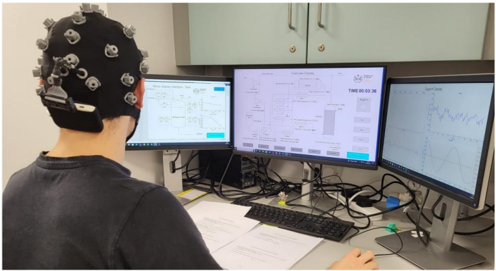
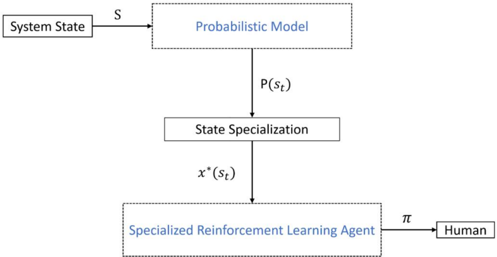
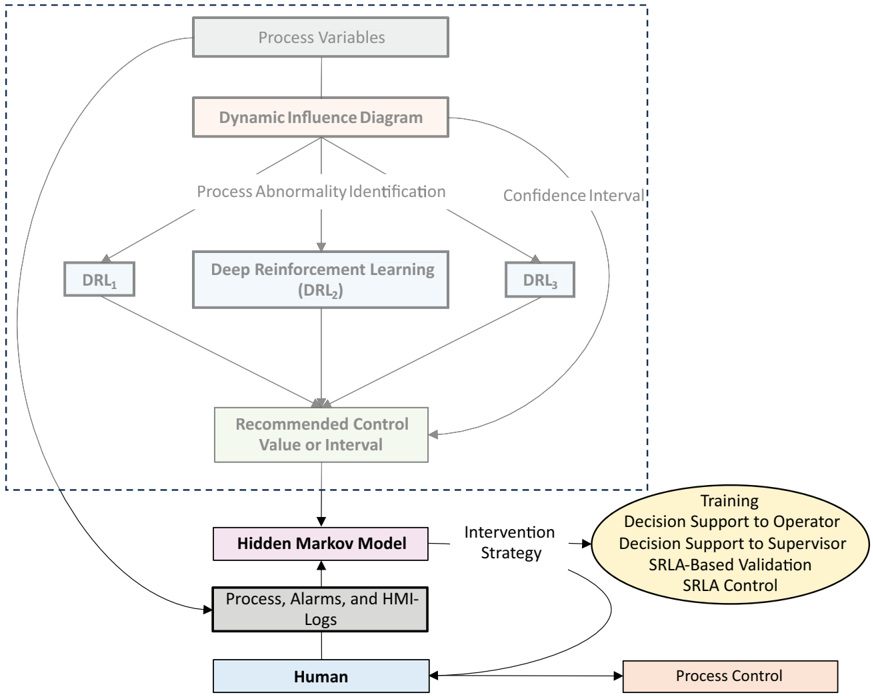
In complex industrial and chemical process control rooms, effective decision-making is crucial for safety and efficiency. The experiments in this paper evaluate the impact and applications of an AI-based decision support system integrated into an improved human-machine interface, using dynamic influence diagrams, a hidden Markov model, and deep reinforcement learning. The enhanced support system aims to reduce operator workload, improve situational awareness, and provide different intervention strategies to the operator adapted to the current state of both the system and human performance. Such a system can be particularly useful in cases of information overload when many alarms and inputs are presented all within the same time window, or for junior operators during training. A comprehensive cross-data analysis was conducted, involving 47 participants and a diverse range of data sources such as smartwatch metrics, eye-tracking data, process logs, and responses from questionnaires. The results indicate interesting insights regarding the effectiveness of the approach in aiding decision-making, decreasing perceived workload, and increasing situational awareness for the scenarios considered. Additionally, the results provide insights to compare differences between styles of information gathering when using the system by individual participants. These findings are particularly relevant when predicting the overall performance of the individual participant and their capacity to successfully handle a plant upset and the alarms connected to it using process and human-machine interaction logs in real-time which resulted in a 95.8% prediction accuracy using hidden Markov model. These predictions enable the development of more effective intervention strategies.
Overview
The claims and statistics of this paper haven’t been checked yet.
Free: it reads the open-access text and checks the first 5 claims that cite a source we can check. Create a free account to check every claim.
Integrity signals
Registry
Cites
Statistics
Figures



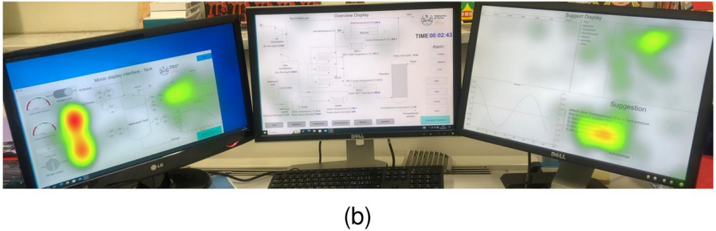
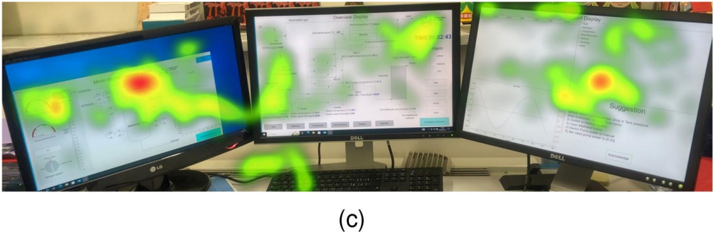
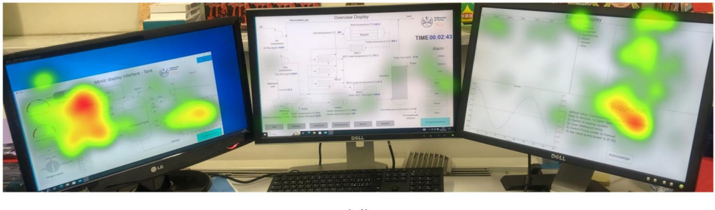
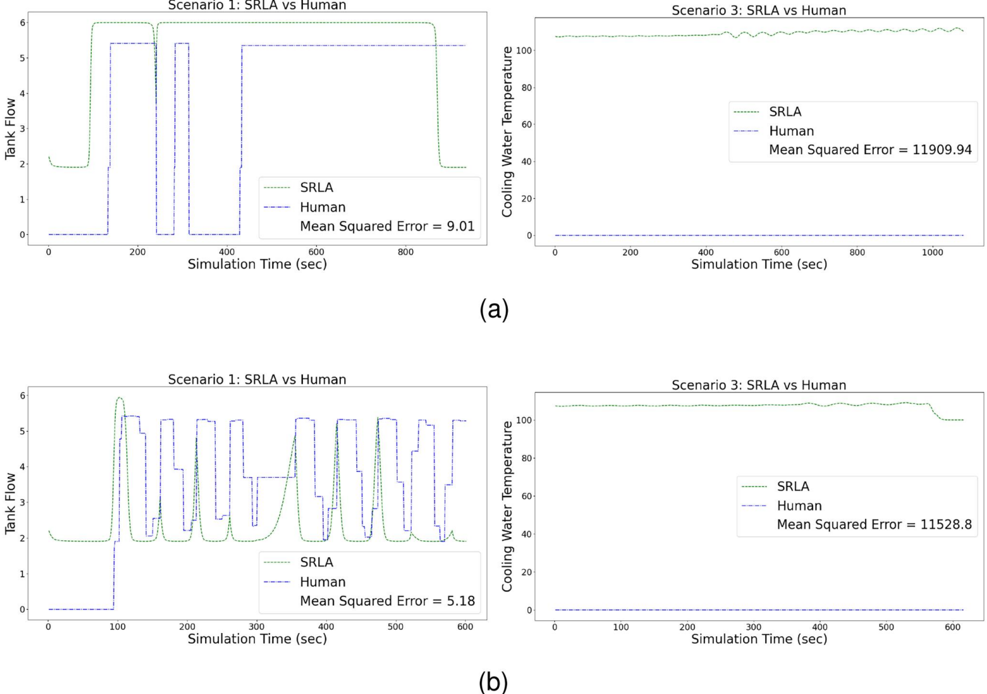
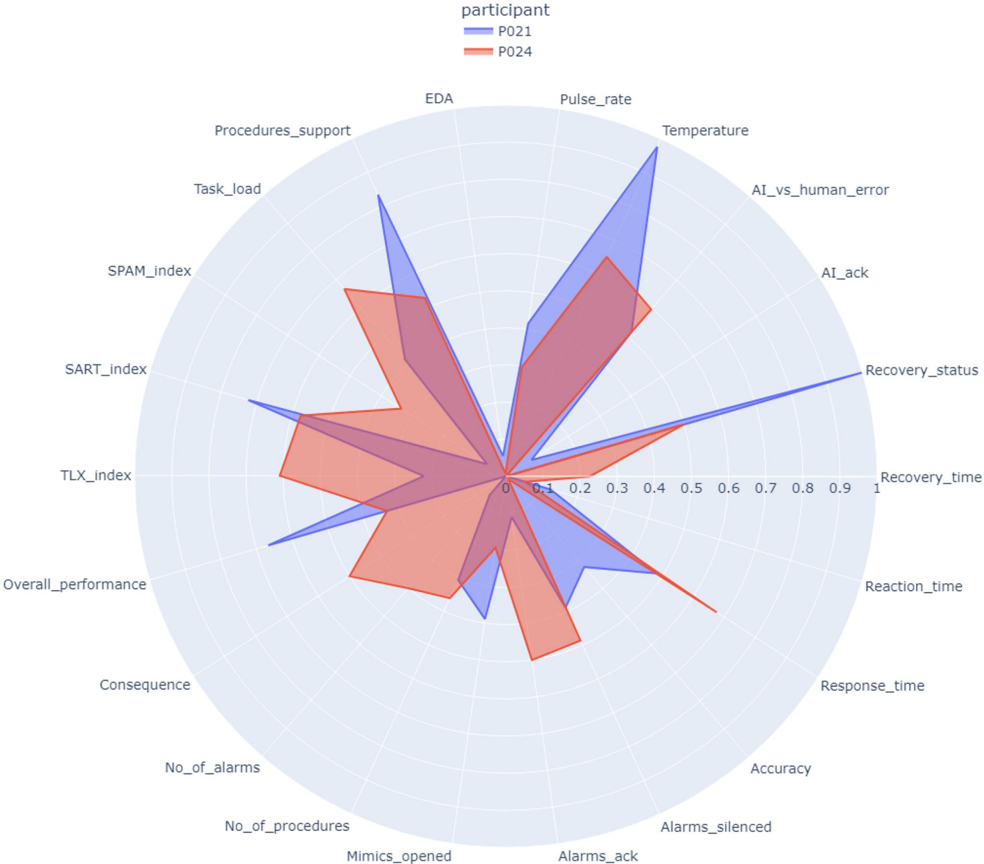
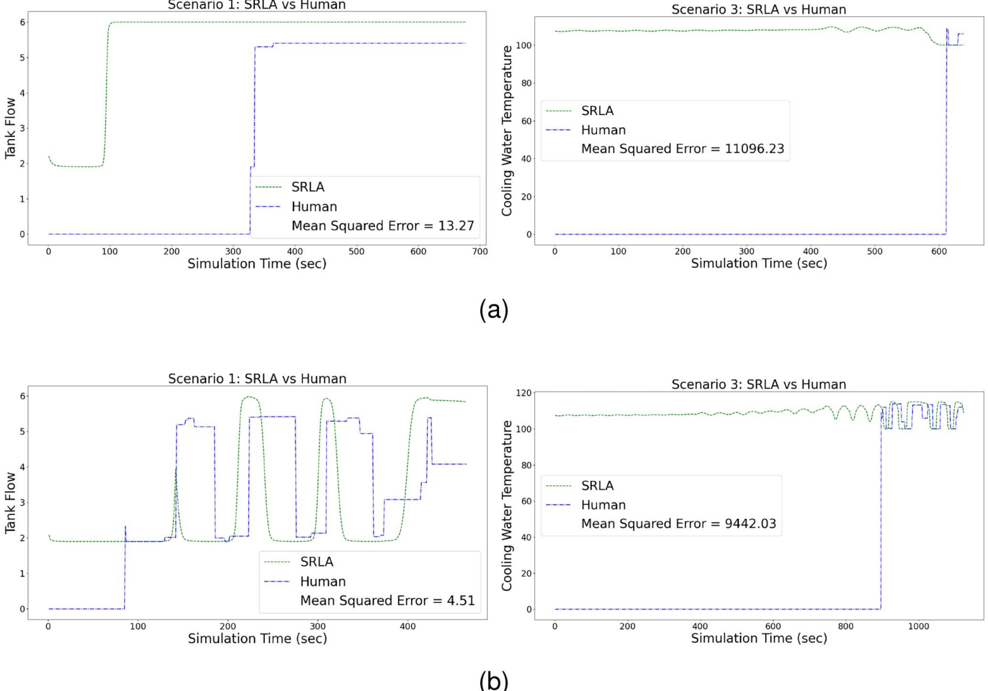
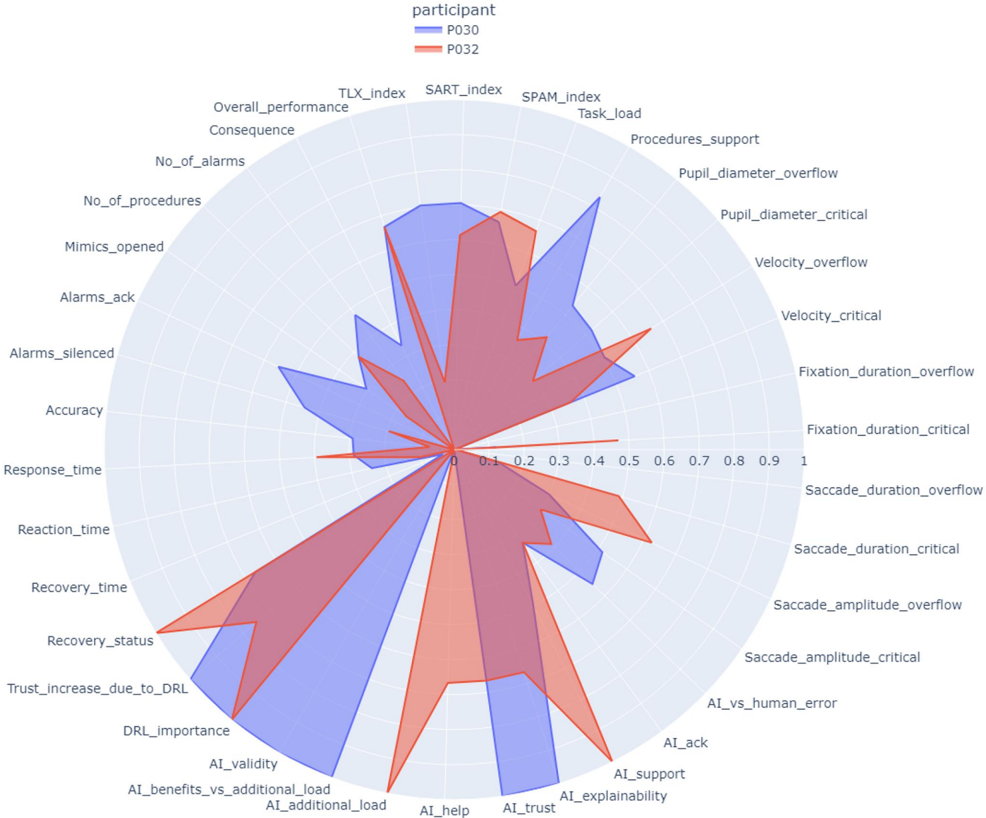
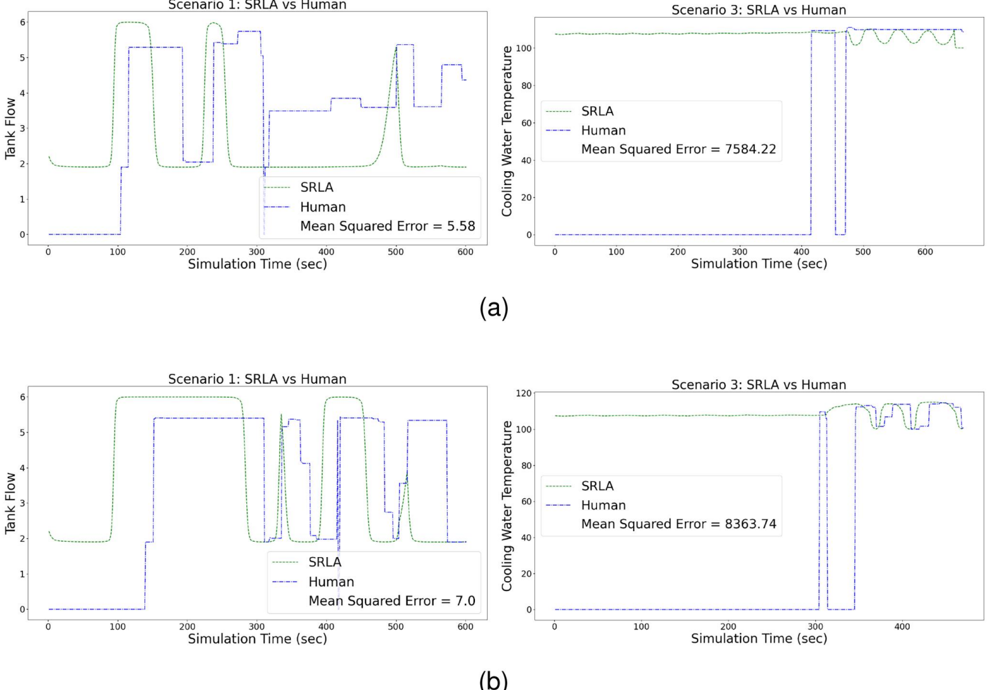

Verification
Claims the paper makes
The claims and statistics of this paper haven’t been checked yet.
Free: it reads the open-access text and checks the first 5 claims that cite a source we can check. Create a free account to check every claim.
Claims other papers make about this one
Each is checked against this paper’s own text: does it say what the citing paper says it does?
The source backs part of the claim, not all of it — or backs it for a different population, condition or comparison.
In the citing paper
“Operators in process control environments must manage complex systems with multiple interacting variables, competing objectives, and significant consequences for errors [40].”
From Human-in-the-Loop Artificial Intelligence: A Systematic Review of Concepts, Methods, and Applications (2026) · cites this paper as [40]
Experimental — accuracy not yet measured
Self-check
Percentages, sums and reported differences re-computed from the paper’s own numbers.
The self-check needs the paper’s full text.
Citations
Cites
A tutorial on hidden Markov models and selected applications in speech recognition
Rabiner, L. R. (1989) · Proceedings of the IEEE · doi:10.1109/5.18626 · Cited by 22,743 · cited 1×
“Hidden Markov Models (HMMs) [18] are probabilistic models widely used for modeling sequential data in diverse fields.”
Larian Studios Dev Team (2024) · doi:10.1145/3292500.3330701 · Cited by 8,618
Addressing Function Approximation Error in Actor-Critic Methods
Fujimoto, S., van Hoof, H., & Meger, D. (2018) · arXiv · doi:10.48550/arxiv.1802.09477 · Cited by 3,650 · cited 2×
“Authors in [14] have delved into the application of DRL in the process control environment. a) Twin Delayed Deep Deterministic Policy Gradient (TD3) Architecture: Twin Delayed DDPG (TD3) architecture [15], proposed to tackle challenges like overestimation bias.”
T test as a parametric statistic
Kim, T. K. (2015) · Korean Journal of Anesthesiology · doi:10.4097/kjae.2015.68.6.540 · Cited by 1,436
An Introduction to Deep Reinforcement Learning
Vincent, F.-L., Peter, H., Riashat, I., Marc, G. B., & Joelle, P. (2018) · Foundations and Trends® in Machine Learning · doi:10.1561/2200000071 · Cited by 1,286
Pearson's correlation coefficient
Sedgwick, P. (2012) · BMJ · doi:10.1136/bmj.e4483 · Cited by 1,026
Howard, R. A., & Matheson, J. E. (2005) · Decision Analysis · doi:10.1287/deca.1050.0020 · Cited by 819 · cited 1×
“A dynamic influence diagram (DID) [7], [8] is a graphical decision analysis tool that extends traditional influence diagrams by incorporating a time dimension.”
The Option-Critic Architecture
Bacon, P.-L., Harb, J., & Precup, D. (2017) · Proceedings of the AAAI Conference on Artificial Intelligence · doi:10.1609/aaai.v31i1.10916 · Cited by 687 · cited 1×
“It focused on areas directly related to the disturbance and employed a proactive monitoring strategy using the trend of the process variables.”
Bayesian Networks and Influence Diagrams: A Guide to Construction and Analysis
Kjærulff, U. B., & Madsen, A. L. (2013) · Information Science and Statistics · doi:10.1007/978-1-4614-5104-4 · Cited by 599 · cited 1×
“Discrete Limited Memory Influence Diagram [11] Given an influence diagram denoted as N = ( X, G, P, U ) , it comprises the following components: represents the set of nodes and E is the set of directed edges, indicating dependency relations and information flow.”
Hierarchical Reinforcement Learning: A Comprehensive Survey
Pateria, S., Subagdja, B., Tan, A.-H., & Quek, C. (2022) · ACM Computing Surveys · doi:10.1145/3453160 · Cited by 461
Safe and sensible preprocessing and baseline correction of pupil-size data
Mathôt, S., Fabius, J., Van Heusden, E., & Van der Stigchel, S. (2018) · Behavior Research Methods · doi:10.3758/s13428-017-1007-2 · Cited by 450
Unema, P. J. A., Pannasch, S., Joos, M., & Velichkovsky, B. M. (2005) · Visual Cognition · doi:10.1080/13506280444000409 · Cited by 381 · cited 1×
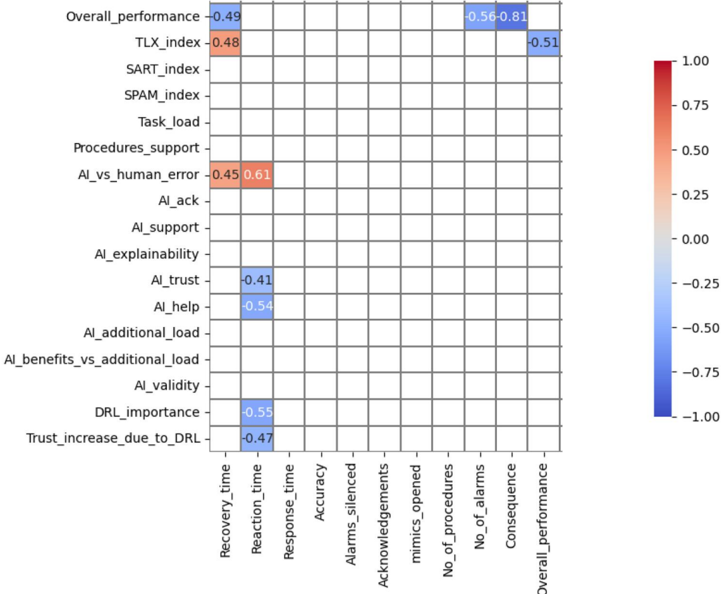
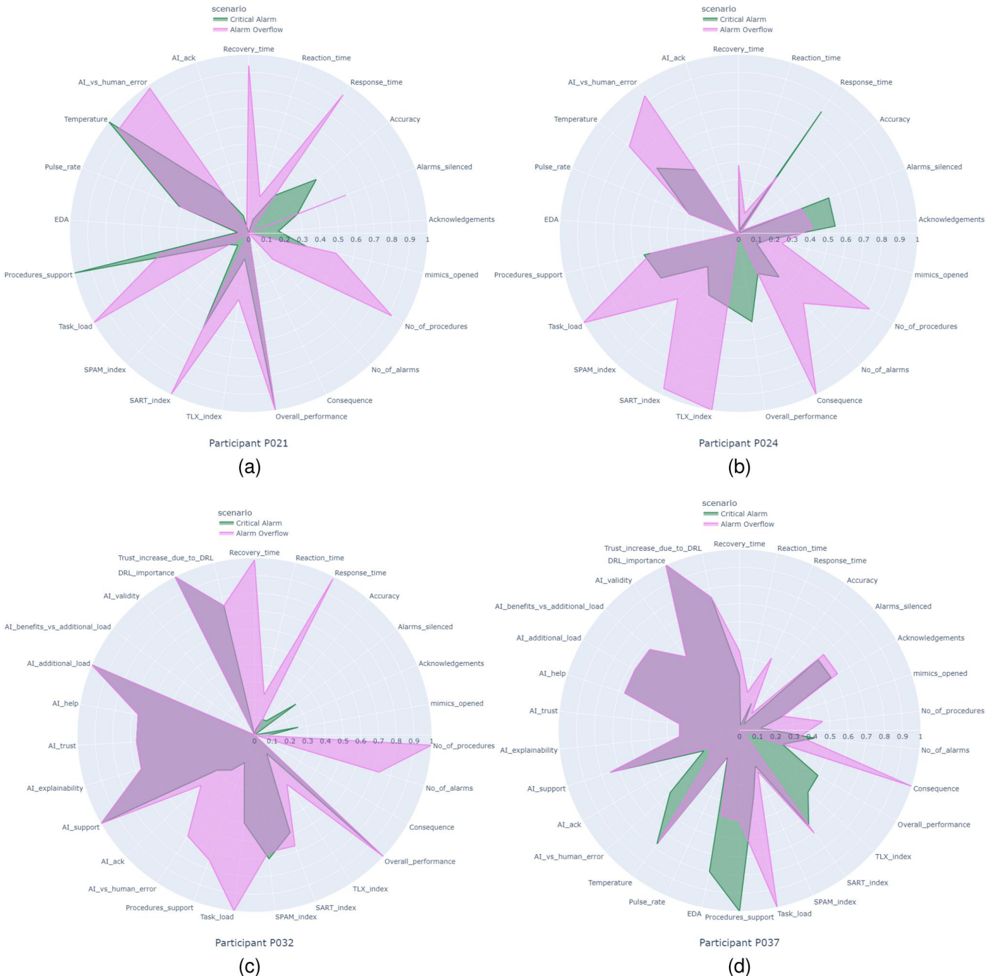
“…may indicate increased cognitive load or visual search difficulty, while prolonged fixations suggest in-depth processing, interest, or confusion [32]–[35]. m) DRL Importance: We observed a positive correlation between the importance of DRL as a response by participants to SART, AI trust, and AI…”
Eye Movement and Pupil Measures: A Review
Mahanama, B., Jayawardana, Y., Rengarajan, S., Jayawardena, G., Chukoskie, L., Snider, J., & Jayarathna, S. (2022) · Frontiers in Computer Science · doi:10.3389/fcomp.2021.733531 · Cited by 307
Dynamic programming and influence diagrams
Tatman, J. A., & Shachter, R. D. (1990) · IEEE Transactions on Systems, Man, and Cybernetics · doi:10.1109/21.52548 · Cited by 266 · cited 1×
“A dynamic influence diagram (DID) [7], [8] is a graphical decision analysis tool that extends traditional influence diagrams by incorporating a time dimension.”
Learning Options in Reinforcement Learning
Stolle, M., & Precup, D. (2002) · Lecture Notes in Computer Science · doi:10.1007/3-540-45622-8_16 · Cited by 261 · cited 1×
“It focused on areas directly related to the disturbance and employed a proactive monitoring strategy using the trend of the process variables.”
Hierarchical reinforcement learning and decision making
Botvinick, M. M. (2012) · Current Opinion in Neurobiology · doi:10.1016/j.conb.2012.05.008 · Cited by 236 · cited 1×
“It focused on areas directly related to the disturbance and employed a proactive monitoring strategy using the trend of the process variables.”
The Differences and Similarities Between Two-Sample T-Test and Paired T-Test.
Xu, M., Fralick, D., Zheng, J. Z., Wang, B., Tu, X. M., & Feng, C. (2017) · PubMed · doi:10.11919/j.issn.1002-0829.217070 · Cited by 228
Toward self‐driving processes: A deep reinforcement learning approach to control
Spielberg, S., Tulsyan, A., Lawrence, N. P., Loewen, P. D., & Bhushan Gopaluni, R. (2019) · AIChE Journal · doi:10.1002/aic.16689 · Cited by 163 · cited 1×
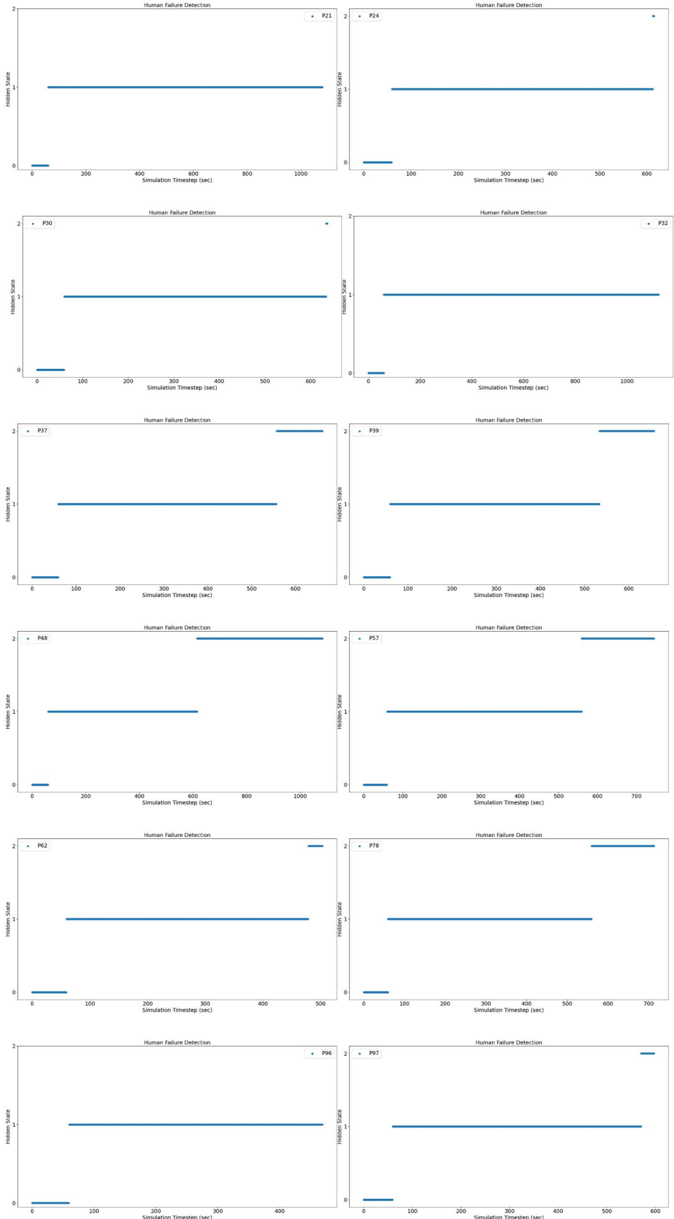
“HMMs are characterized by their ability to capture temporal dependencies.”
Ghiasi, S., Greco, A., Barbieri, R., Scilingo, E. P., & Valenza, G. (2020) · Scientific Reports · doi:10.1038/s41598-020-62225-2 · Cited by 153 · cited 1×
“The autonomic nervous system (ANS) is responsible for regulating various physiological responses [31], including heart rate and electrodermal activity.”
The effect of cognitive load on saccadic eye movements
Stuyven, E., Van der Goten, K., Vandierendonck, A., Claeys, K., & Crevits, L. (2000) · Acta Psychologica · doi:10.1016/s0001-6918(99)00054-2 · Cited by 106 · cited 1×
“…indicate increased cognitive load or visual search difficulty, while prolonged fixations suggest in-depth processing, interest, or confusion [32]–[35]. m) DRL Importance: We observed a positive correlation between the importance of DRL as a response by participants to SART, AI trust, and AI as…”
Sethu, M., Kotla, B. R., Russell, D., Madadi, M., Titu, N. A., Coble, J. B., Boring, R. L., Blache, K., Agarwal, V., Yadav, V., et al. (2022) · Nuclear Technology · doi:10.1080/00295450.2022.2067461 · Cited by 75 · cited 1×
“The review article by [2] emphasizes AI’s potential to assist operators in making precise and swift decisions, thereby enhancing the safety of nuclear energy production.”
A decision support system for identifying abnormal operating procedures in a nuclear power plant
Hsieh, M.-H., Hwang, S., Liu, K.-H., Liang, S. M., & Chuang, C.-F. (2012) · Nuclear Engineering and Design · doi:10.1016/j.nucengdes.2012.04.009 · Cited by 43 · cited 2×
“The experiments presented in [5] focus on a decision support system designed for identifying abnormal operating procedures in nuclear power plants.”
ACT-R based human digital twin to enhance operators’ performance in process industries
Balaji, B., Shahab, M. A., Srinivasan, B., & Srinivasan, R. (2023) · Frontiers in Human Neuroscience · doi:10.3389/fnhum.2023.1038060 · Cited by 42 · cited 1×
“An experimental study was performed in [6], where the authors discussed the challenges faced by human operators in process industries and explored the potential of using a digital twin to enhance their performance.”
Abbas, A. N., Chasparis, G. C., & Kelleher, J. D. (2023) · Data & Knowledge Engineering · doi:10.1016/j.datak.2023.102240 · Cited by 35 · cited 3×
“2, proposed in [16].”
Self-citationKang, J. S., & Lee, S. J. (2022) · Nuclear Engineering and Technology · doi:10.1016/j.net.2022.02.010 · Cited by 33 · cited 1×
“The authors in [4] propose a framework, designed to improve initial emergency responses in nuclear power plants.”
Fadardi, M. S., Fadardi, J. S., Mahjoob, M., & Doosti, H. (2022) · Journal of Ophthalmic and Vision Research · doi:10.18502/jovr.v17i3.11578 · Cited by 27
Enhancing Control Room Operator Decision Making
Mietkiewicz, J., Abbas, A. N., Amazu, C. W., Baldissone, G., Madsen, A. L., Demichela, M., & Leva, M. C. (2024) · Processes · doi:10.3390/pr12020328 · Cited by 26 · cited 2×
“The use of a dynamic influence diagram within this framework and ex-periment is described in detail by authors in [9], [10].”
Self-citationProcess Systems Engineering and the Human-in-The-Loop: The Smart Control Room
Ghosh, S., & Bequette, B. W. (2019) · Industrial & Engineering Chemistry Research · doi:10.1021/acs.iecr.9b04739 · Cited by 25 · cited 1×
“It focused on areas directly related to the disturbance and employed a proactive monitoring strategy using the trend of the process variables.”
A Review of Alarm System Design for Advanced Control Rooms of Nuclear Power Plants
Wu, X., & Li, Z. (2017) · International Journal of Human-Computer Interaction · doi:10.1080/10447318.2017.1371950 · Cited by 24
Demichela, M., Baldissone, G., & Camuncoli, G. (2017) · Industrial & Engineering Chemistry Research · doi:10.1021/acs.iecr.7b03059 · Cited by 20 · cited 1×
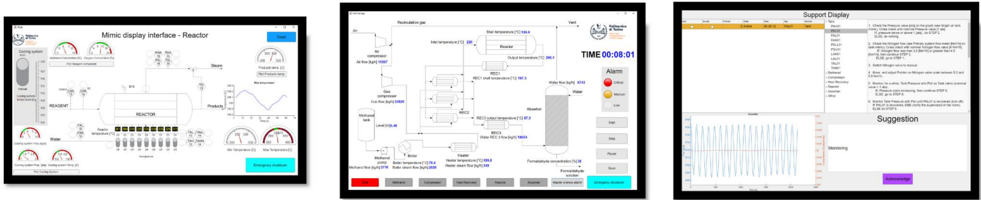
“Our experiment is based on a simulator created for formaldehyde production [21], which simulates a control room environment.”
Self-citationAbbas, A. N., Chasparis, G. C., & Kelleher, J. D. (2022) · Lecture notes in computer science · doi:10.1007/978-3-031-12670-3_12 · Cited by 20
Self-citationAmazu, C. W., Mietkiewicz, J., Abbas, A. N., Briwa, H., Perez, A. A., Baldissone, G., Fissore, D., Demichela, M., & Leva, M. C. (2024) · International Journal of Human-Computer Interaction · doi:10.1080/10447318.2024.2376354 · Cited by 19
Self-citationSedgwick, P. M. (2014) · BMJ · doi:10.1136/bmj.g4550 · Cited by 17
Lee, S. J., Mo, K., & Seong, P. H. (2007) · IEEE Symposium on Computational Intelligence in Multi-Criteria Decision-Making (MCDM) · doi:10.1109/mcdm.2007.369429 · Cited by 17
Experiment data: Human-in-the-loop decision support in process control rooms
Amazu, C. W., Mietkiewicz, J., Abbas, A. N., Briwa, H., Perez, A. A., Baldissone, G., Demichela, M., Fissore, D., Madsen, A. L., & Leva, M. C. (2024) · Data in Brief · doi:10.1016/j.dib.2024.110170 · Cited by 12 · cited 1×
“A detailed explanation of the dataset is provided in this data article [23] and the dataset is available in this repository [24].”
Self-citationMietkiewicz, J., Abbas, A. N., Amazu, C. W., Madsen, A. L., & Baldissone, G. (2023) · European Safety and Reliability Conference (ESREL) · doi:10.3850/978-981-18-8071-1_p531-cd · Cited by 5 · cited 4×
“The use of a dynamic influence diagram within this framework and ex-periment is described in detail by authors in [9], [10].”
InfluentialSelf-citationAbbas, A. N., Chasparis, G. C., & Kelleher, J. D. (2024) · Research Square · doi:10.21203/rs.3.rs-3918353/v1 · Cited by 5
Self-citationAbbas, A. N., Chasparis, G. C., & Kelleher, J. D. (2022) · European Safety and Reliability Conference (ESREL) · doi:10.3850/978-981-18-5183-4_s33-07-668 · Cited by 3
Self-citationAmazu, C. W., Abbas, A. N., Demichela, M., & Fissore, D. (2023) · Chemical engineering transactions · doi:10.3303/cet2399046 · Cited by 3
Self-citationCISC-LIVE-LAB-3/dataset: Human-in-the-Loop Decision Support in Process Control Room Dataset
Abbas, A. N., & Winniewelsh (2024) · Zenodo (CERN European Organization for Nuclear Research) · doi:10.5281/zenodo.10569181 · Cited by 3
Self-citationAbbas, A. N., Chasparis, G. C., & Kelleher, J. D. (2023) · arXiv (Cornell University) · doi:10.48550/arxiv.2310.14788 · Cited by 1 · cited 2×
“A similar hybrid approach of combining HMM with DRL was used by authors in [19] and [17], where the sole purpose of HMM was to provide separate the state space into normal and abnormal states as well as to provide interpretations for the root cause of failure.”
Self-citationammar-n-abbas/drl-based-decision-support: v1.0.0
Abbas, A. N. (2024) · Zenodo (CERN European Organization for Nuclear Research) · doi:10.5281/zenodo.10641060 · Cited by 1
Self-citation
Research works printed but not linked: 4
- Abbas, A. N., & Winniewelsh. (2024). Human-in-the-Loop Decision Support in Process Control Room Dataset (v1.1.0) [Data set]. Zenodo. https://doi.org/10.5281/zenodo.10695810 · doi:10.5281/zenodo.10695810
- Amazu, C. W., Mietkiewicz, J., Abbas, A. N., Briwa, H., Perez, A. A., Baldissone, G., Demichela, M., Fissore, D., Madsen, A. L., & Leva, M. C. (2024). Experiment data: Human-in-the-loop decision support in process control rooms. Data in Brief , 53 , 110170. https://doi.org/ 10.1016/j.dib.2024.110170 · DOI
- Lee, A. (2023). hmmlearn: Hidden Markov models in python with Scikit-learn like API . Python Package Index.
- Spielberg, S., Tulsyan, A., Lawrence, N. P., Loewen, P. D., & Gopaluni, R. B. (2020). Deep reinforcement learning for process control: A pri mer for beginners. arXiv preprint arXiv:2004.05490 . https://doi.org/ 10.48550/arXiv.2004.05490 · arXiv · doi:10.48550/arxiv.2004.05490
Cited by
Lazaros, K., Vrahatis, A. G., & Kotsiantis, S. (2026) · Entropy · doi:10.3390/e28040377 · Cited by 50
Alginahi, Y. M., Sabri, O., & Said, W. (2025) · Machines · doi:10.3390/machines13121140 · Cited by 42
“Finally, designing scalable communication architectures that prevent bottlenecks is essential for large-scale deployments [15–17].”
InfluentialApata, O., Munda, J. L., & Migabo, E. (2026) · Energies · doi:10.3390/en19020536 · Cited by 39
Fanfani, M., Palesi, L. A. I., & Nesi, P. (2026) · Big Data and Cognitive Computing · doi:10.3390/bdcc10060186 · Cited by 19
“Graph-based or structured models paired with XAI techniques to make them explainable have been proposed in [27], while in [42] and in [46], policy-learning and reinforcement-learning solutions have been used to adapt recommendations or autonomy levels based on interaction outcomes.”
InfluentialA Quantum Probability Approach to Improving Human–AI Decision Making
Humr, S. A., Canan, M., & Demir, M. (2025) · Entropy · doi:10.3390/e27020152 · Cited by 12
“Specifically, AI DSS is on the ascent in the medical field [72], industrial control [73], strategic decision making [74], and the military on a number of different fronts [75,76].”
Metadata
- Authors
- Abbas, A. N., Amazu, C. W., Mietkiewicz, J., Briwa, H., Perez, A. A., Baldissone, G., Demichela, M., Chasparis, G. C., Kelleher, J. D., & Leva, M. C.
- Affiliations
- Technological University Dublin (IE)
- Politecnico di Torino (IT)
- Software Competence Center Hagenberg (Austria) (AT)
- Trinity College Dublin (IE)
- Corresponding author
- Abbas, Ammar N.
- ORCID
- Venue
- International Journal of Human–Computer Interaction
- Publisher
- Informa UK Limited
- Published
- 2024-09-04
- Volume
- 41
- Issue
- 12
- Pages
- 7218-7252
- ISSN
- 1044-7318 (ISSN-L)
- 1532-7590
- OpenAlex
- W4402234944
- Cited by
- 34
- References
- 41
- Citations by year
- 2026: 23 · 2025: 10 · 2024: 1
- FWCI
- 16.13
- Type
- journal article
- Language
- en
- Open access
- hybrid
- doi.org
- Licence
- Locations
- International Journal of Human-Computer Interaction (publishedVersion, cc-by)
- arXiv (Cornell University) (submittedVersion)
- PORTO@Iris (submittedVersion, cc-by)
- Arrow - TU Dublin (Technological University Dublin) (submittedVersion, cc-by)
- arXiv (Cornell University)
- Funders
- Canadian Institute of Steel Construction (955901)
- European Commission (955901)
- Topics
- Social Sciences › Human Factors and Ergonomics › Human-Automation Interaction and Safety
- Physical Sciences › Engineering › Safety, Risk, Reliability and Quality › Risk and Safety Analysis
- Physical Sciences › Computer Science › Human-Computer Interaction › Usability and User Interface Design
- Keywords
- AI decision support systems, human-machine interaction, control room, human-in-the-loop reinforcement learning, hidden Markov models, operator workload, situational awareness, operator performance prediction, eye tracking, industrial process control, intervention strategies
About these checks
Registry, retraction, Cites and statistics results are computed, not judged, with one exception: a printed reference that no index lists is read once by a model before it counts as a citation error. Claims are extracted by a model and kept only when their quote appears verbatim in the text; each cited source is then checked, with a model’s help, for whether it says what the claim relies on. Those verdicts can be wrong — read the claim’s quote and the cited source before relying on one.
Statistics and arithmetic are recomputed, not judged.
Confidence bands are shown only for fields calibrated on our annotated test set. None is calibrated yet, so no band is shown.
What counts as a claim ›How we measure confidence ›How we check this ›
Are you an author, or do you see a problem with this page? Request a review
Data sources
Bibliographic data: Semantic Scholar, OpenAlex, Crossref.
Contains information from the Semantic Scholar Academic Graph Datasets, made available under the ODC Attribution License (ODC-BY 1.0).
Semantic Scholar’s data is described in: Kinney, R., et al. (2023). The Semantic Scholar Open Data Platform. arXiv:2301.10140.
