

Kings, Queens, Monsters, and Things: Digital Drag Performance and Queer Moves in Artificial Intelligence (AI)
Open accessThe DOI matches its Crossref record.
Abstract
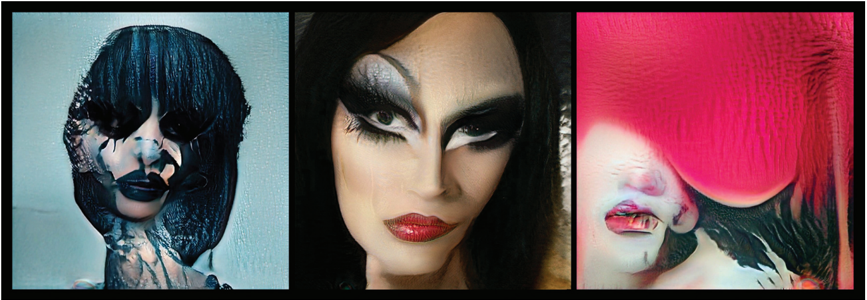
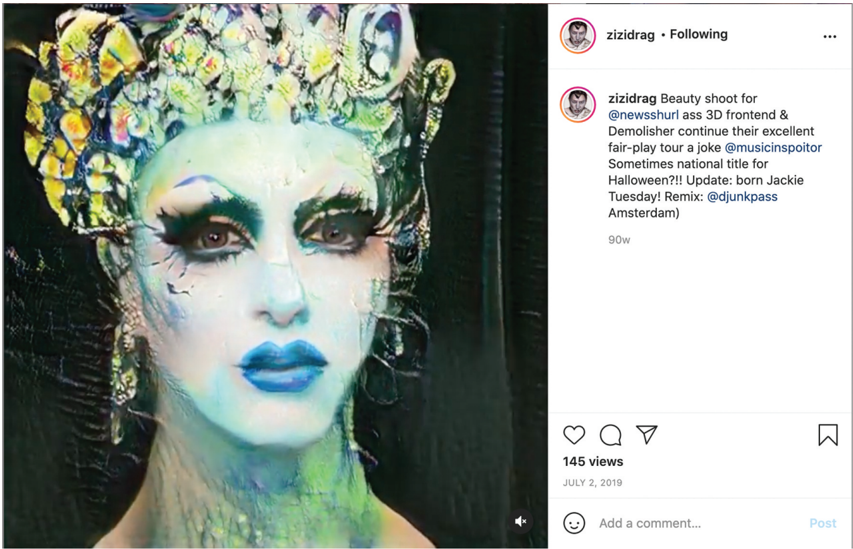
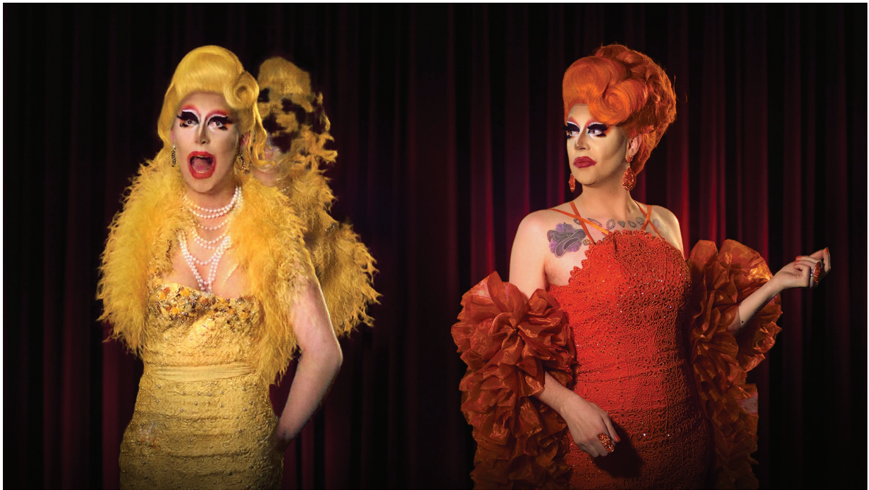
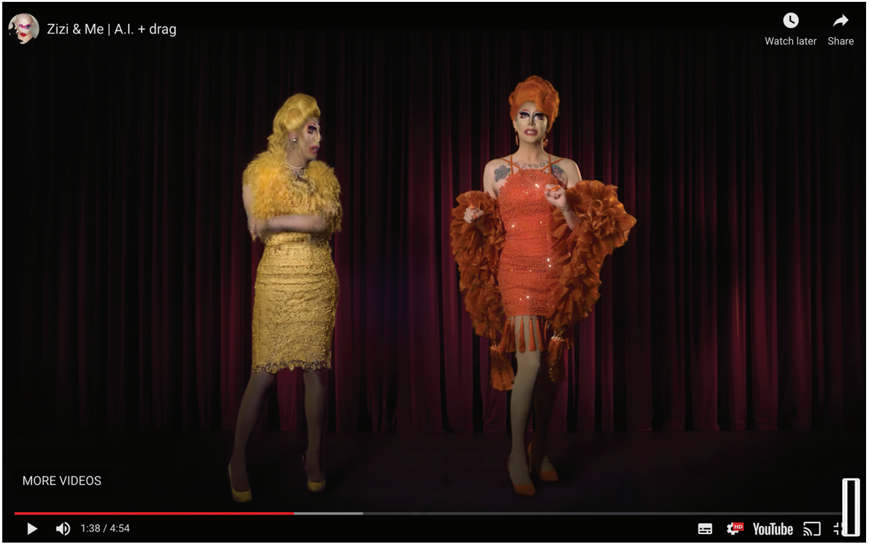
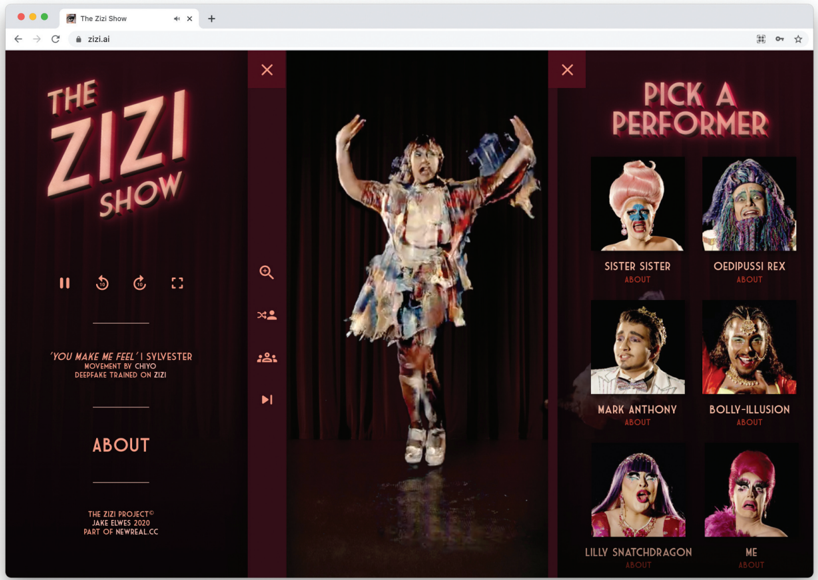
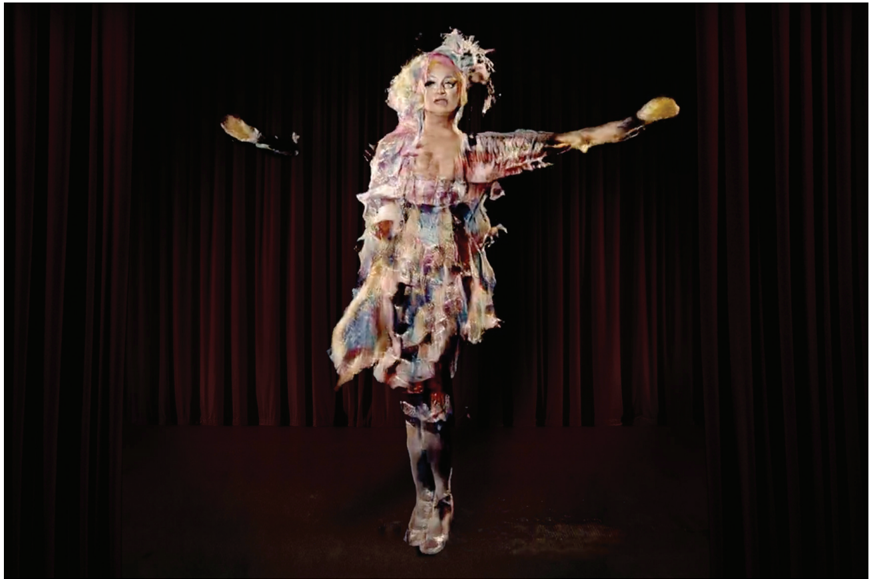
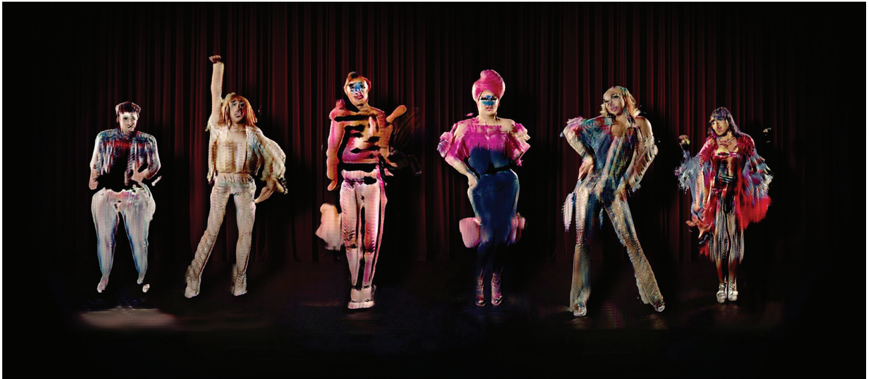
The Zizi Project is a series of connected art and performance pieces created by artist Jake Elwes in collaboration with Me The Drag Queen and members of London's drag performance scene.The works -currently Zizi: Queering the Dataset (2019), Zizi & Me (2020; ongoing), and The Zizi Show (2020) -sit at the intersection of drag performance and Artificial Intelligence (AI), playing with and queering facial recognition software, deepfake technologies, and Machine Learning algorithms.I consider The Zizi Project as an example of work at the vanguard of an emergent field of queer AI performance.The project intervenes in complex conversations surrounding AI and Machine Learning, including the lack of representation of diverse identities and communities in datasets used to train these systems and the complexity of creating datasets which include queer and trans bodies and identities.However, in aiming to use drag performance to expose and demystify these complex technological systems to audiences, I propose that queerer forms of art making and performance emerge that push at the boundaries of both drag and the technologies used.Ultimately, The Zizi Project articulates drag and queer futures where the digital and the actual interact in increasingly complex ways to explore notions of diversity, inclusion, and access that speak to fundamental questions of what counts as drag, what counts as queer, and, indeed, what count as human.
Overview
The claims and statistics of this paper haven’t been checked yet.
Free: it reads the open-access text and checks the first 5 claims that cite a source we can check. Create a free account to check every claim.
Integrity signals
Registry
Cites
Statistics
Figures


Verification
Claims the paper makes
The claims and statistics of this paper haven’t been checked yet.
Free: it reads the open-access text and checks the first 5 claims that cite a source we can check. Create a free account to check every claim.
Claims other papers make about this one
Each is checked against this paper’s own text: does it say what the citing paper says it does?
The cited source says what the claim attributes to it.
In the citing paper
“One publication reported on the use of deepfake technology in queer drag performances as a tool to better understand generative AI and work toward its more inclusive design and use [138].”
From The Impact of Artificial Intelligence on Human Sexuality: A Five-Year Literature Review 2020–2024 (2024) · cites this paper as [138]
Self-check
Percentages, sums and reported differences re-computed from the paper’s own numbers.
The self-check needs the paper’s full text.
Citations
Cites
Still being checked.
Cited by
The Impact of Artificial Intelligence on Human Sexuality: A Five-Year Literature Review 2020–2024
Döring, N., Le, T. D., Vowels, L. M., Vowels, M. J., & Marcantonio, T. L. (2024) · Current Sexual Health Reports · doi:10.1007/s11930-024-00397-y · Cited by 65
When non-consensual intimate deepfakes go viral: The insufficiency of the UK Online Safety Act
Kira, B. (2024) · Computer law & security review · doi:10.1016/j.clsr.2024.106024 · Cited by 64
Li, Y. V. (2024) · Feminist Media Studies · doi:10.1080/14680777.2024.2434639 · Cited by 10
Jędrusiak, D. (2024) · ACM Conference on Hypertext and Social Media (HT) · doi:10.1145/3648188.3675157 · Cited by 7
Imploding between the facts and concerns: analysing human–AI musical interaction
Cotton, K., Kaila, A.-K., Jääskeläinen, P., Holzapfel, A., & Tatar, K. (2025) · Humanities and Social Sciences Communications · doi:10.1057/s41599-025-04533-4 · Cited by 3
Metadata
- Authors
- Parslow, J.
- Corresponding author
- Parslow, Joe
- ORCID
- Parslow, Joe
- Venue
- Contemporary Theatre Review
- Publisher
- Informa UK Limited
- Published
- 2023-04-03
- Volume
- 33
- Issue
- 1-2
- Pages
- 128-148
- ISSN
- 1048-6801 (ISSN-L)
- 1477-2264
- OpenAlex
- W4385558674
- Cited by
- 8
- References
- 0
- Citations by year
- 2026: 1 · 2025: 2 · 2024: 5
- FWCI
- 22.97
- Type
- journal article
- Language
- en
- Open access
- hybrid
- doi.org
- Licence
- Locations
- Contemporary Theatre Review (publishedVersion, cc-by-nc-nd)
- Central Research and Creativity Online (The Royal Central School of Speech and Drama) (acceptedVersion)
- Central Research and Creativity Online (The Royal Central School of Speech and Drama) (submittedVersion, public-domain)
- Topics
- Social Sciences › Arts and Humanities › Visual Arts and Performing Arts › Art, Technology, and Culture
- Social Sciences › Arts and Humanities › Visual Arts and Performing Arts › Theatre and Performance Studies
- Social Sciences › Arts and Humanities › Visual Arts and Performing Arts › Arts and Performance Studies
- Keywords
- drag performance, artificial intelligence, face recognition, deepfakes, machine learning, trans representation, diversity and inclusion
About these checks
Registry, retraction, Cites and statistics results are computed, not judged, with one exception: a printed reference that no index lists is read once by a model before it counts as a citation error. Claims are extracted by a model and kept only when their quote appears verbatim in the text; each cited source is then checked, with a model’s help, for whether it says what the claim relies on. Those verdicts can be wrong — read the claim’s quote and the cited source before relying on one.
Statistics and arithmetic are recomputed, not judged.
Confidence bands are shown only for fields calibrated on our annotated test set. None is calibrated yet, so no band is shown.
What counts as a claim ›How we measure confidence ›How we check this ›
Are you an author, or do you see a problem with this page? Request a review
How to cite
Cite CoChat for the checks on this page, and the paper for its own findings.
- This page
- CoChat. (2026). Citation check: Kings, Queens, Monsters, and Things: Digital Drag Performance and Queer Moves in Artificial Intelligence (AI). https://app.cochat.ai/papers/10.1080/10486801.2023.2173592
- The paper
- Parslow, J. (2023). Kings, Queens, Monsters, and Things: Digital Drag Performance and Queer Moves in Artificial Intelligence (AI). Contemporary Theatre Review. https://doi.org/10.1080/10486801.2023.2173592
Data sources
Bibliographic data: Semantic Scholar, OpenAlex, Crossref.
Contains information from the Semantic Scholar Academic Graph Datasets, made available under the ODC Attribution License (ODC-BY 1.0).
Semantic Scholar’s data is described in: Kinney, R., et al. (2023). The Semantic Scholar Open Data Platform. arXiv:2301.10140.
