

Effectively suppressed angiogenesis-mediated retinoblastoma growth using celastrol nanomicelles
Open accessThe DOI matches its Crossref record; 30 of the 30 references it cites were found in a registry or an index.
Abstract
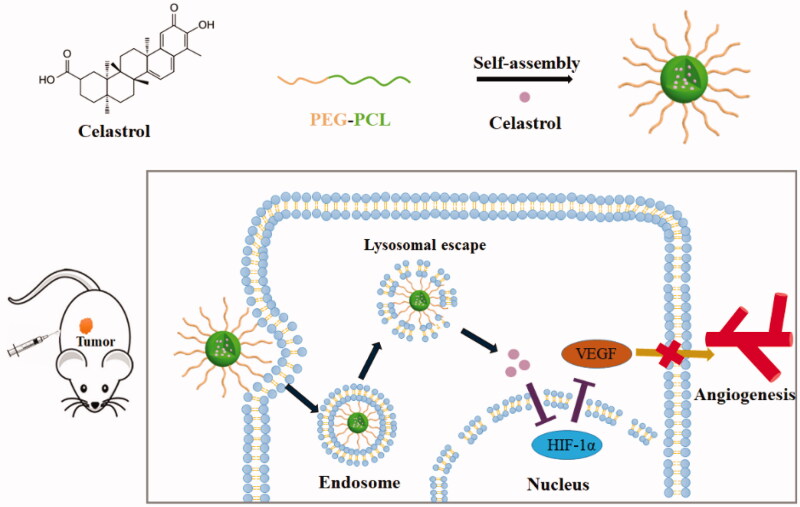
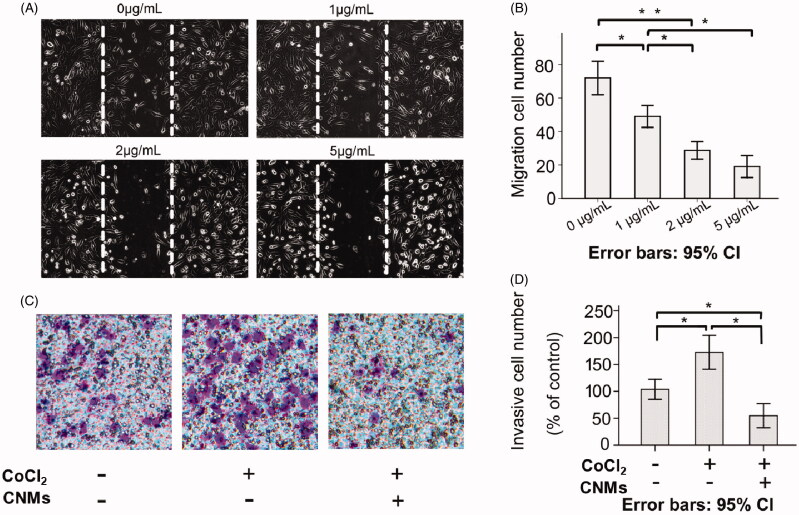
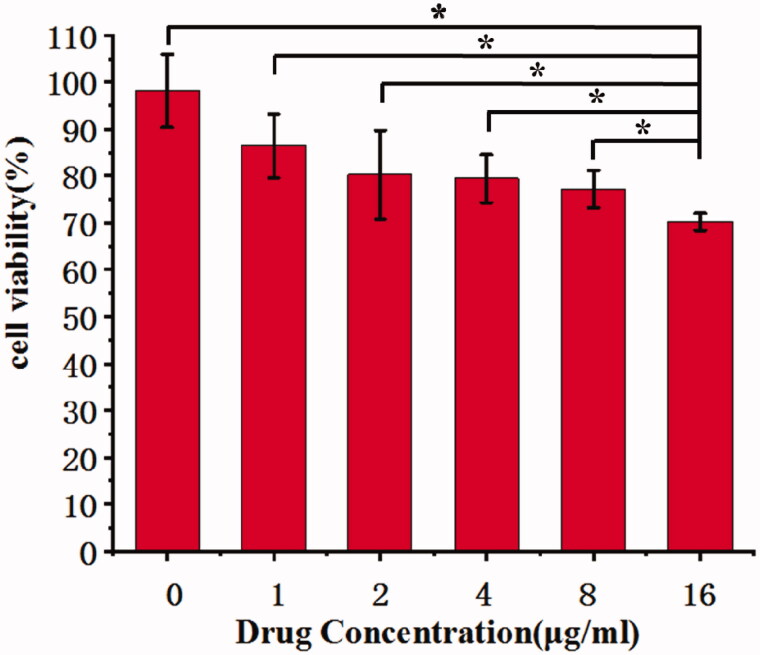
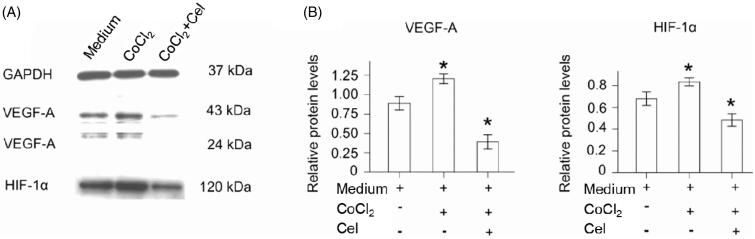
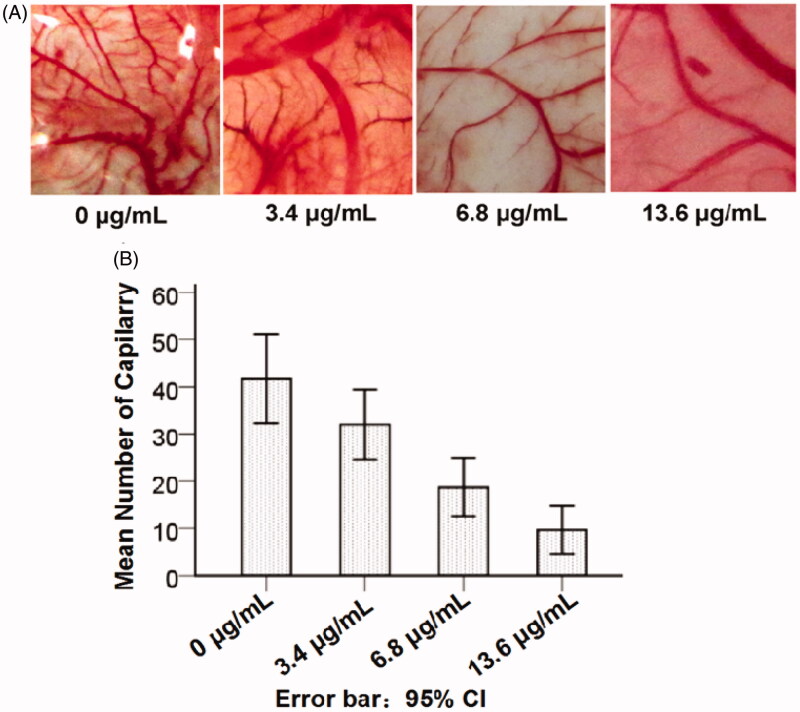
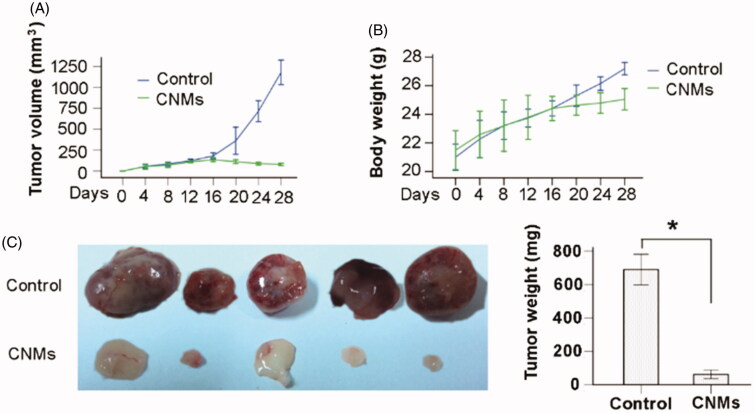
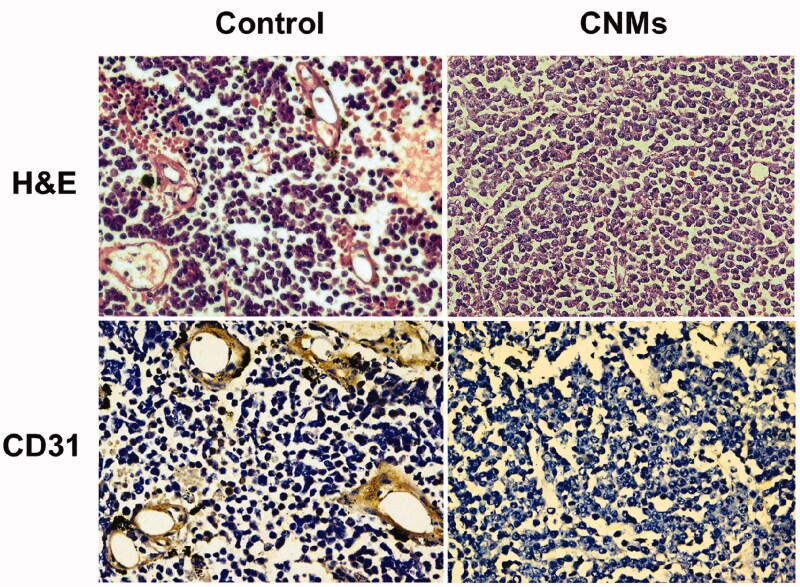
Celastrol, a Chinese herbal medicine, has already shown an inhibition effect on retinoblastoma growth activity in our previous research, but its mechanism is not well understood. Angiogenesis is a main driving force in many tumors. Here, we studied whether celastrol could inhibit angiogenesis-mediated retinoblastoma growth, if so, through what mechanism. In this work, we developed celastrol-loaded polymeric nanomicelles to improve the poor water solubility of celastrol. When given an intraperitoneal injection to mice bearing human retinoblastoma xenografts, celastrol nanomicelles (CNMs, 27.2 mg/kg/2 days) significantly reduced the weight and the volume of tumors and decreased tumor angiogenesis. We found that CNMs suppressed hypoxia-induced proliferation, migration, and invasion by human umbilical vascular endothelial cells (EA.hy 926) in a dose-dependent manner. Furthermore, CNMs inhibited SO-Rb 50 cells-induced sprouting of the vessels and vascular formation in chick embryo chorioallantoic membrane assay in vitro. To understand the molecular mechanism of these activities, we assessed the signaling pathways in CoCl2 treated EA.hy 926. CNMs inhibited the hypoxia-induced HIF-1α and VEGF. In conclusion, our results reveal that CNMs target the HIF-1α/VEGF pathway, which may be an important reason for the suppression of retinoblastoma growth and angiogenesis.
Overview
The claims and statistics of this paper haven’t been checked yet.
Free: it reads the open-access text and checks the first 5 claims that cite a source we can check. Create a free account to check every claim.
Integrity signals
Registry
Cites
Statistics
Figures
Verification
Claims the paper makes
The claims and statistics of this paper haven’t been checked yet.
Free: it reads the open-access text and checks the first 5 claims that cite a source we can check. Create a free account to check every claim.
Claims other papers make about this one
Each is checked against this paper’s own text: does it say what the citing paper says it does?
The cited source says what the claim attributes to it.
In the citing paper
“These nanocarriers inhibit retinoblastoma growth in a mouse xenograft model by inducing apoptosis of SO-Rb 50 cells and suppressed hypoxia-induced HIF-1α and VEGF expression [179].”
From From design to Deployment: The innovative role of nanomicelles in targeted ophthalmic therapeutics (2025) · cites this paper as [179]
Self-check
Percentages, sums and reported differences re-computed from the paper’s own numbers.
The self-check needs the paper’s full text.
Citations
Cites
Hallmarks of Cancer: The Next Generation
Hanahan, D., & Weinberg, R. A. (2011) · Cell · doi:10.1016/j.cell.2011.02.013 · Cited by 66,590
Hypoxia and the extracellular matrix: drivers of tumour metastasis
Gilkes, D. M., Semenza, G. L., & Wirtz, D. (2014) · Nature Reviews Cancer · doi:10.1038/nrc3726 · Cited by 1,520 · cited 1×
“Celastrol, a component of traditional Chinese medicine, has been demonstrated that exhibit potent anti-tumor (Nanjundaiah et al., 2012), anti-inflammation, anti-angiogenesis activity (Hanahan & Weinberg, 2011).”
BackgroundVEGF and Notch in Tip and Stalk Cell Selection
Blanco, R., & Gerhardt, H. (2013) · Cold Spring Harbor Perspectives in Medicine · doi:10.1101/cshperspect.a006569 · Cited by 620
Endogenous Inhibitors of Angiogenesis
Nyberg, P., Xie, L., & Kalluri, R. (2005) · Cancer Research · doi:10.1158/0008-5472.can-04-2427 · Cited by 553
Dimaras, H., Corson, T. W., Cobrinik, D., White, A., Zhao, J., Munier, F. L., Abramson, D. H., Shields, C. L., Chantada, G. L., Njuguna, F., et al. (2015) · Nature Reviews Disease Primers · doi:10.1038/nrdp.2015.21 · Cited by 553
The gelatin sponge–chorioallantoic membrane assay
Ribatti, D., Nico, B., Vacca, A., & Presta, M. (2006) · Nature Protocols · doi:10.1038/nprot.2006.13 · Cited by 280
Treatment of Retinoblastoma in 2015: Agreement and Disagreement
Abramson, D. H., Shields, C. L., Munier, F. L., & Chantada, G. L. (2015) · JAMA Ophthalmology · doi:10.1001/jamaophthalmol.2015.3108 · Cited by 238
Hypoxia signaling pathways: modulators of oxygen-related organelles
Schönenberger, M. J. (2015) · Frontiers in Cell and Developmental Biology · doi:10.3389/fcell.2015.00042 · Cited by 201
Superselective Ophthalmic Artery Chemotherapy as Primary Treatment for Retinoblastoma (Chemosurgery)
Abramson, D. H., Dunkel, I. J., Brodie, S. E., Marr, B., & Gobin, Y. P. (2010) · Ophthalmology · doi:10.1016/j.ophtha.2009.12.030 · Cited by 200
Shields, C. L., Manjandavida, F. P., Arepalli, S., Kaliki, S., Lally, S. E., & Shields, J. A. (2014) · JAMA Ophthalmology · doi:10.1001/jamaophthalmol.2013.7666 · Cited by 170
IL1R1 is required for celastrol’s leptin-sensitization and antiobesity effects
Feng, X., Guan, D., Auen, T., Choi, J. W., Salazar Hernández, M. A., Lee, J., Chun, H., Faruk, F., Kaplun, E., Herbert, Z., et al. (2019) · Nature Medicine · doi:10.1038/s41591-019-0358-x · Cited by 132
Nanjundaiah, S. M., Venkatesha, S. H., Yu, H., Tong, L., Stains, J. P., & Moudgil, K. D. (2012) · Journal of Biological Chemistry · doi:10.1074/jbc.m112.356816 · Cited by 94
Positively charged micelles based on a triblock copolymer demonstrate enhanced corneal penetration
Li, J., Li, Z., Zhou, T., Zhang, J., Xia, H., Li, H., He, J., He, S., & Wang, L. (2015) · International Journal of Nanomedicine · doi:10.2147/ijn.s90347 · Cited by 87
Self-citationAntitumor activity of celastrol nanoparticles in a xenograft retinoblastoma tumor model
Li, Y., Li, Z., Wu, Li, J., Yao, Y., Zhang, Zhang, W., Sun, Shi, S., & Liang, D. (2012) · International Journal of Nanomedicine · doi:10.2147/ijn.s29945 · Cited by 65
Self-citationLi, Z., Li, J., Zhu, L., Zhang, Y., Zhang, J., Lin, Y., Liang, D., & Wang, L. (2016) · International Journal of Nanomedicine · doi:10.2147/ijn.s117425 · Cited by 62
Self-citationWu (2011) · International Journal of Molecular Medicine · doi:10.3892/ijmm.2011.600 · Cited by 59 · cited 1×
“A previous study has reported that retinoblastoma tumor samples have a large amount of heterogeneous vasculature containing neovascularization and pericyte-committed mature vasculature measured by immunohistochemical analysis (Jockovich et al., 2008).”
BackgroundCelastrol nanoparticles inhibit corneal neovascularization induced by suturing in rats
Liang, D., Li, Z., Lin, Y., Li, J., Zhang, Wu, X., Liu, Y., Lin, M., Su, W., Li, Y., et al. (2012) · International Journal of Nanomedicine · doi:10.2147/ijn.s27860 · Cited by 57
Self-citationKuchta, K., Xiang, Y., Huang, S., Tang, Y., Peng, X., Wang, X., Zhu, Y., Li, J., Xu, J., Lin, Z., et al. (2017) · Prostate Cancer and Prostatic Diseases · doi:10.1038/pcan.2016.61 · Cited by 53
Self-citationBi, S., Liu, J., Li, Y., Wang, Q., Liu, H.-K., Yan, Y., Chen, B.-Q., & Sun, W. (2010) · Toxicology · doi:10.1016/j.tox.2010.05.002 · Cited by 50
Sinnberg, T. W., Noor, S., Venturelli, S., Berger, A., Schüler, P., Garbe, C., & Busch, C. (2013) · Journal of Cellular and Molecular Medicine · doi:10.1111/jcmm.12207 · Cited by 48
Ni, H., Zhao, W., Kong, X.-T., Li, H., & Ouyang, J. (2013) · Acta Haematologica · doi:10.1159/000354770 · Cited by 44
Fabrication and Biocompatibility of Core–Shell Structured Magnetic Fibrous Scaffold
Li, J., Li, Z., Chu, D., Jin, L., & Zhang, X. (2019) · Journal of Biomedical Nanotechnology · doi:10.1166/jbn.2019.2701 · Cited by 39
Self-citationLi, Z., Li, J., Huang, J., Zhang, J., Cheng, D., & Shuai, X. (2015) · Macromolecular Bioscience · doi:10.1002/mabi.201500161 · Cited by 35
Self-citationLi, J., Zhang, L., Lin, Y., Xiao, H. P., Zuo, M., Cheng, D., & Shuai, X. (2016) · RSC Advances · doi:10.1039/c5ra27293a · Cited by 34
Self-citationHIF1-alpha expressing cells induce a hypoxic-like response in neighbouring cancer cells
Harrison, H., Pegg, H. J., Thompson, J. L., Bates, C., & Shore, P. (2018) · BMC Cancer · doi:10.1186/s12885-018-4577-1 · Cited by 34
Retinoblastoma: might photodynamic therapy be an option?
Teixo, R. J., Laranjo, M., Abrantes, A. M., Brites, G. S., Serra, A. C., Proença, R. D., & Botelho, M. F. (2015) · Cancer and Metastasis Reviews · doi:10.1007/s10555-014-9544-y · Cited by 25
Li, Z., Li, Q., Wang, G., Huang, Y., Mao, X., Zhang, Y., & Wang, X. (2017) · PubMed Central · Cited by 25
Self-citationHETEROGENEOUS TUMOR VASCULATURE IN RETINOBLASTOMA
Jockovich, M. E., Piña, Y., Alegret, A., Cebulla, C. M., Feuer, W. J., & Murray, T. G. (2008) · Retina · doi:10.1097/iae.0b013e318150d6f0 · Cited by 21
Sato, A., Virgona, N., Ando, A., Ota, M., & Yano, T. (2014) · Biological and Pharmaceutical Bulletin · doi:10.1248/bpb.b13-00846 · Cited by 11
Retinoblastoma: Treatment Options
Kim, J. W., Murphree, A. L., & Singh, A. D. (2019) · Springer eBooks · doi:10.1007/978-3-030-11123-6_10 · Cited by 3
Cited by
Celastrol: A Review of Useful Strategies Overcoming its Limitation in Anticancer Application
Shi, J., Li, J., Xu, Z., Chen, L., Luo, R., Zhang, C., Gao, F., Zhang, J., & Fu, C. (2020) · Frontiers in Pharmacology · doi:10.3389/fphar.2020.558741 · Cited by 199
Self-citationAn, L., Li, Z., Shi, L., Wang, L., Wang, Y., Jin, L., Shuai, X., & Li, J. (2020) · Nano Letters · doi:10.1021/acs.nanolett.0c03279 · Cited by 199
Self-citationCelastrol in cancer therapy: Recent developments, challenges and prospects
Lim, H. Y., Ong, P. S., Wang, L., Goel, A., Ding, L., Li-Ann Wong, A., Ho, P. C.-L., Sethi, G., Xiang, X., & Goh, B. C. (2021) · Cancer Letters · doi:10.1016/j.canlet.2021.08.030 · Cited by 118
Natural compounds-based nanomedicines for cancer treatment: Future directions and challenges
Andreani, T., Cheng, R., Elbadri, K., Ferro, C., de Menezes, T. I., Santos, M. R. D., Pereira, C. M. D. M., & Santos, H. A. (2024) · Drug Delivery and Translational Research · doi:10.1007/s13346-024-01649-z · Cited by 126
Lü, Y., Liu, Y., Zhou, J., Li, D., & Gao, W. (2020) · Medicinal Research Reviews · doi:10.1002/med.21751 · Cited by 89
Metadata
- Authors
- Li, Z., Guo, Z., Chu, D., Feng, H., Zhang, J., Zhu, L., & Li, J.
- Affiliations
- Zhengzhou University (CN)
- Corresponding author
- Zhang, Junjie
- Li, Jingguo
- Venue
- Drug Delivery
- Publisher
- Informa UK Limited
- Published
- 2020-01
- Volume
- 27
- Issue
- 1
- Pages
- 358-366
- ISSN
- 1071-7544 (ISSN-L)
- 1521-0464
- PMC
- PMC7054910
- OpenAlex
- W3008717396
- Cited by
- 62
- References
- 30
- Citations by year
- 2026: 1 · 2025: 10 · 2024: 14 · 2023: 9 · 2022: 12 · 2021: 10 · 2020: 6
- FWCI
- 3.00
- Type
- journal article
- Language
- en
- Open access
- gold
- doi.org
- Licence
- Locations
- Drug Delivery (publishedVersion, cc-by)
- PubMed Central (publishedVersion, cc-by)
- PubMed (publishedVersion)
- DOAJ (DOAJ: Directory of Open Access Journals) (submittedVersion, cc-by-sa)
- Funders
- the National Natural Science Foundation of China (81600775, 21504082)
- National Key R&D Program of China (2016YFE0117100)
- Medical Science and Technology Program of Henan Province (2018020398, SB201902026)
- Topics
- Life Sciences › Biochemistry, Genetics and Molecular Biology › Molecular Biology › Angiogenesis and VEGF in Cancer
- Physical Sciences › Materials Science › Biomaterials › Nanoparticle-Based Drug Delivery
- Health Sciences › Medicine › Ophthalmology › Ocular Oncology and Treatments
- Keywords
- celastrol, retinoblastoma, tumor angiogenesis, nanomicelles, polymeric nanoparticles, HIF-1α, vascular endothelial growth factor, hypoxia, human umbilical vein endothelial cells, tumor growth inhibition, chorioallantoic membrane assay, water-soluble drug delivery
- MeSH terms
- Animals, Chick Embryo, Dose-Response Relationship, Drug, Female, Humans, Micelles, Neovascularization, Pathologic, Retinoblastoma, Solubility, Triterpenes, Mice, SCID, Mice, Inbred NOD, Retinal Neoplasms, Angiogenesis Inhibitors, Xenograft Model Antitumor Assays, Chorioallantoic Membrane, Mice, Nanoparticles, Pentacyclic Triterpenes, Human Umbilical Vein Endothelial Cells
About these checks
Registry, retraction, Cites and statistics results are computed, not judged, with one exception: a printed reference that no index lists is read once by a model before it counts as a citation error. Claims are extracted by a model and kept only when their quote appears verbatim in the text; each cited source is then checked, with a model’s help, for whether it says what the claim relies on. Those verdicts can be wrong — read the claim’s quote and the cited source before relying on one.
Statistics and arithmetic are recomputed, not judged.
Confidence bands are shown only for fields calibrated on our annotated test set. None is calibrated yet, so no band is shown.
What counts as a claim ›How we measure confidence ›How we check this ›
Are you an author, or do you see a problem with this page? Request a review
Data sources
Bibliographic data: Semantic Scholar, OpenAlex, Crossref.
Contains information from the Semantic Scholar Academic Graph Datasets, made available under the ODC Attribution License (ODC-BY 1.0).
Semantic Scholar’s data is described in: Kinney, R., et al. (2023). The Semantic Scholar Open Data Platform. arXiv:2301.10140.
