

Human serum albumin-based nanoparticles alter raloxifene administration and improve bioavailability
Open accessThe DOI matches its Crossref record; 41 of the 41 references it cites were found in a registry or an index.
Abstract
Osteoporosis is a disease that reduces bone mass and microarchitecture, which makes bones fragile. Postmenopausal osteoporosis occurs due to estrogen deficiency. Raloxifene is a selective estrogen receptor modulator used to treat postmenopausal osteoporosis. However, it has a low bioavailability, which requires long-term, high-dose raloxifene administration to be effective and causes several side effects. Herein, raloxifene was encapsulated in human serum albumin (HSA)-based nanoparticles (Ral/HSA/PSS NPs) as an intravenous-injection pharmaceutical formulation to increase its bioavailability and reduce the treatment dosage and time. In vitro results indicated that raloxifene molecules were well distributed in HSA-based nanoparticles as an amorphous state, and the resulting raloxifene formulation was stabile during long-term storage duration. The Ral/HSA/PSS NPs were both biocompatible and hemocompatible with a decreased cytotoxicity of high-dose raloxifene. Moreover, the intravenous administration of the prepared Ral/HSA/PSS NPs to rats improved raloxifene bioavailability and improved its half-life in plasma. These raloxifene-loaded nanoparticles may be a potential nanomedicine candidate for treating postmenopausal osteoporosis with lower raloxifene dosages.
Overview
The claims and statistics of this paper haven’t been checked yet.
Free: it reads the open-access text and checks the first 5 claims that cite a source we can check. Create a free account to check every claim.
Integrity signals
Registry
Cites
Statistics
Figures
Verification
Claims the paper makes
The claims and statistics of this paper haven’t been checked yet.
Free: it reads the open-access text and checks the first 5 claims that cite a source we can check. Create a free account to check every claim.
Claims other papers make about this one
Each is checked against this paper’s own text: does it say what the citing paper says it does?
In the citing paper
“On the other hand, there are two groups of pharmacological osteoporosis treatments: antiresorptive and anabolic agents [223].”
From Emerging role of liver-bone axis in osteoporosis (2024) · cites this paper as [223]
Self-check
Percentages, sums and reported differences re-computed from the paper’s own numbers.
The self-check needs the paper’s full text.
Citations
Cites
Peters, T. (1985) · Advances in Protein Chemistry · doi:10.1016/s0065-3233(08)60065-0 · Cited by 2,181
Selective Estrogen-Receptor Modulators — Mechanisms of Action and Application to Clinical Practice
Riggs, B. L., & Hartmann, L. C. (2003) · New England Journal of Medicine · doi:10.1056/nejmra022219 · Cited by 968 · cited 2×
“Raloxifene hydrochloride is a popular second-generation SERM that was approved by the US Food and Drug Administration in 1997 for the treatment and prevention of bone absorption caused by postmenopausal osteoporosis (Riggs & Hartmann, 2003; Saini et al., 2015).”
BackgroundDelmas, P. D., Ensrud, K. E., Adachi, J. D., Harper, K. D., Sarkar, S., Gennari, C., Reginster, J., Pols, H. A. P., Recker, R. R., Harris, S. T., et al. (2002) · The Journal of Clinical Endocrinology & Metabolism · doi:10.1210/jc.87.8.3609 · Cited by 563 · cited 1×
“Furthermore, preclinical data show that raloxifene also can display as an estrogen antagonist to reduce the risk of breast cancer incidence in postmenopausal women (Delmas et al., 2002; Waters et al., 2012).”
BackgroundThe mechanisms of estrogen regulation of bone resorption
Riggs, B. L. (2000) · Journal of Clinical Investigation · doi:10.1172/jci11468 · Cited by 446 · cited 1×
“Postmenopausal women have an estrogen deficiency that leads to increased bone absorption and accelerated bone loss by increasing osteoclast number and activity (Riggs, 2000), which increases the risk of bone fractures, especially in the spine, hip, and wrists.”
BackgroundCollison, C. J., Rothberg, L. J., Treemaneekarn, V., & Li, Y. (2001) · Macromolecules · doi:10.1021/ma001354d · Cited by 250 · cited 1×
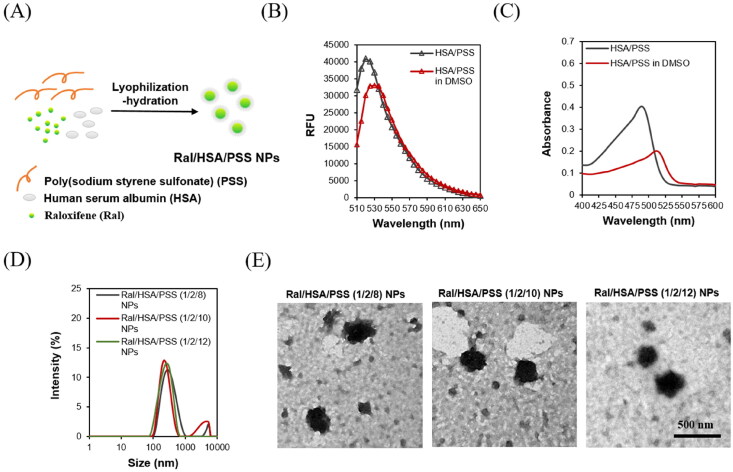
“The FITC-HSA/PSS mixture might be well-dispersed in ddH2O but aggregate in 89% (w/w) DMSO, as indicated by a redshift peak in absorption spectra (Collison et al., 2001; Traiphol & Charoenthai, 2008).”
BackgroundDrug delivery in biotechnology: present and future
Orive, G., Hernández, R. M., Gascón, A. R., Domı́nguez-Gil, A., & Pedraz, J. L. (2003) · Current Opinion in Biotechnology · doi:10.1016/j.copbio.2003.10.007 · Cited by 223 · cited 1×
“These advantages include the improved drug bioavailability; the increased therapeutic efficiency of lower doses at a lower frequency; the targeting of specific tissues; a prolonged shelf-life; and the increased patient compliance and convenience (Orive et al., 2003).”
BackgroundBoura, C., Menu, P., Payan, E., Picart, C., Voegel, J. C., Muller, S., & Stoltz, J. F. (2003) · Biomaterials · doi:10.1016/s0142-9612(03)00214-x · Cited by 198 · cited 1×
“Moreover, it has been untiled in the multilayer film development led to a very good biocompatibility for endothelial cells, osteoblast-like cells and chondrosarcoma cells (Boura et al., 2003).”
BackgroundLu, R., Li, W.-W., Katzir, A., Raichlin, Y., Yu, H.-Q., & Mizaikoff, B. (2015) · The Analyst · doi:10.1039/c4an01495b · Cited by 186 · cited 1×
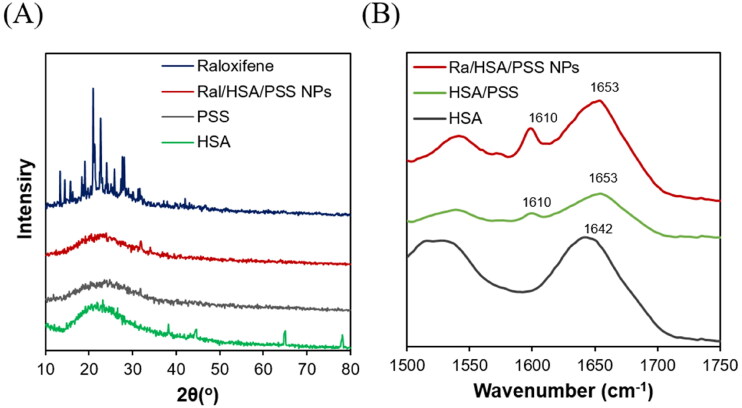
“…at 1642 cm−1 in the HSA spectrum was assigned random coils; it disappeared in the HSA-PSS and Ral/HSA/PSS NPs spectra and two peaks at 1632 and 1610 cm−1 were identified, which were mainly associated with α-helical structures and intermolecular β-sheet structures, respectively (Lu et al., 2015).”
BackgroundUse of tamoxifen and raloxifene for breast cancer chemoprevention in 2010
Waters, E. A., McNeel, T. S., Stevens, W. M., & Freedman, A. N. (2012) · Breast Cancer Research and Treatment · doi:10.1007/s10549-012-2089-2 · Cited by 181 · cited 1×
“Furthermore, preclinical data show that raloxifene also can display as an estrogen antagonist to reduce the risk of breast cancer incidence in postmenopausal women (Delmas et al., 2002; Waters et al., 2012).”
BackgroundTaranta, A., Brama, M., Teti, A., De luca, V, Scandurra, R., Spera, G., Agnusdei, D., Termine, J. D., & Migliaccio, S. (2002) · Bone · doi:10.1016/s8756-3282(01)00685-8 · Cited by 167 · cited 1×
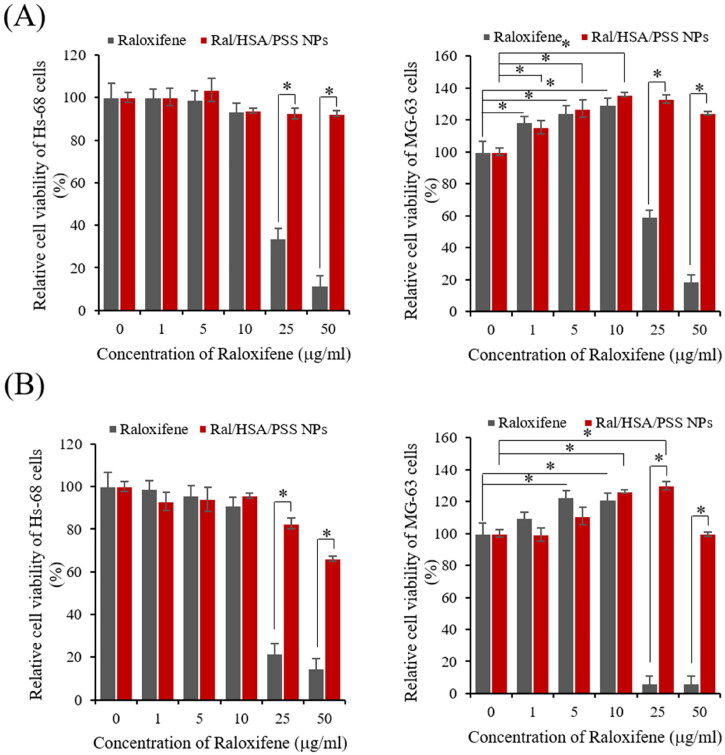
“%) observed at 10 µg/mL due to effects on osteoblast activity (Taranta et al., 2002; Muzio et al., 2013).”
Background
Cited by
Osteoporosis treatment: current drugs and future developments
Chen, Y., Jia, L.-H., Han, T.-H., Zhao, Z., Yang, J. M., Xiao, J., Yang, H., & Yang, K. Q. (2024) · Frontiers in Pharmacology · doi:10.3389/fphar.2024.1456796 · Cited by 107
Mechanistic advances in osteoporosis and anti‐osteoporosis therapies
Wang, H., Luo, Y., Wang, H., Li, F., Yu, F., & Ye, L. (2023) · MedComm · doi:10.1002/mco2.244 · Cited by 88
Emerging role of liver-bone axis in osteoporosis
Gao, H., Peng, X., Li, N., Gou, L., Xu, T., Wang, Y., Qin, J., Liang, H., Ma, P., Li, S., et al. (2024) · Journal of Orthopaedic Translation · doi:10.1016/j.jot.2024.07.008 · Cited by 36
“On the other hand, there are two groups of pharmacological osteoporosis treatments: antiresorptive and anabolic agents [223].”
BackgroundPant, A., Sharma, G., Saini, S., Kaur, G., Jain, A., Thakur, A., & Singh, B. (2023) · Drug Delivery and Translational Research · doi:10.1007/s13346-023-01427-3 · Cited by 21
The Role of Nanomedicine in Benign Gynecologic Disorders
Lulseged, B. A., Ramaiyer, M. S., Michel, R., Saad, E. E., Özpolat, B., & Borahay, M. A. (2024) · Molecules · doi:10.3390/molecules29092095 · Cited by 22
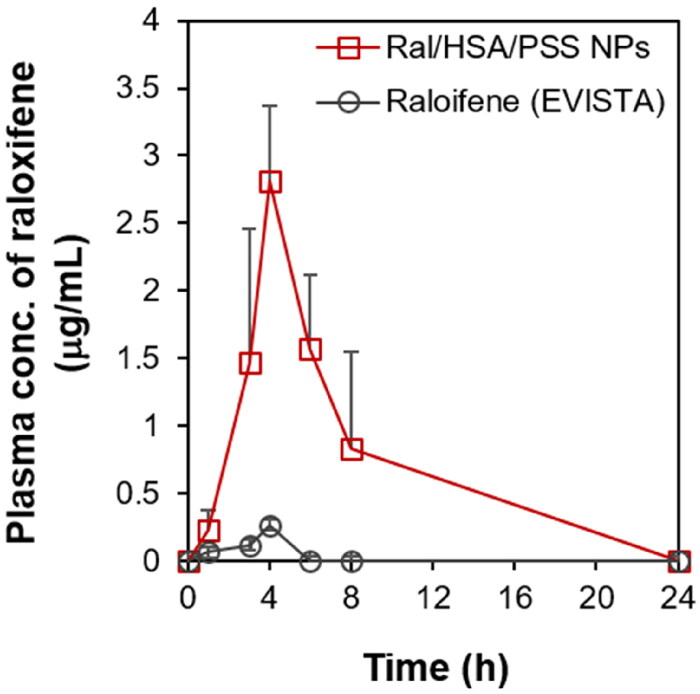
“Additionally, the bioavailability of RLX increased with the intravenous administration of human serum albumin (HSA)-based nanoparticles (Ral/HSA/PSS NPs) or the oral administration of RLX bio-adhesive nanoparticles (RLX-bNPs) in rats [44,45].”
Background
Metadata
- Authors
- Yang, S.-J., Chang, C.-H., Young, T.-H., Wang, C.-H., Tseng, T.-H., & Wang, M.-L.
- Affiliations
- National Taiwan University (TW)
- CYBER ELITE LIMITED, Vistra Corporate Services Centre
- Corresponding author
- Chang, Chih-Hao
- Venue
- Drug Delivery
- Publisher
- Informa UK Limited
- Published
- 2022-08-16
- Volume
- 29
- Issue
- 1
- Pages
- 2685-2693
- ISSN
- 1071-7544 (ISSN-L)
- 1521-0464
- PMC
- PMC9387319
- OpenAlex
- W4292305370
- Cited by
- 22
- References
- 41
- Citations by year
- 2026: 3 · 2025: 3 · 2024: 11 · 2023: 4 · 2022: 1
- FWCI
- 1.19
- Type
- journal article
- Language
- en
- Open access
- gold
- doi.org
- Licence
- cc-by
- creativecommons.org/licenses/by/4.0/ (vor)
- doi.org/10.1080/policies-text-data-mining (tdm)
- Locations
- Drug Delivery (publishedVersion, cc-by)
- PubMed Central (publishedVersion, cc-by)
- PubMed (publishedVersion)
- DOAJ (DOAJ: Directory of Open Access Journals) (submittedVersion, cc-by-sa)
- Funders
- Taipei Veterans General Hospital (VN107-13)
- Ministry of Science and Technology (MOST 110-2314-B-002-043-)
- Min-Sheng General Hospital (109F005-110-M)
- National Taiwan University Hospital (111-S0196)
- Topics
- Physical Sciences › Materials Science › Biomaterials › Nanoparticle-Based Drug Delivery
- Life Sciences › Pharmacology, Toxicology and Pharmaceutics › Pharmaceutical Science › Advanced Drug Delivery Systems
- Life Sciences › Biochemistry, Genetics and Molecular Biology › Molecular Biology › Protein Interaction Studies and Fluorescence Analysis
- Keywords
- raloxifene, human serum albumin, nanoparticles, drug encapsulation, bioavailability, postmenopausal osteoporosis, selective estrogen receptor modulators, intravenous administration, drug stability, hemocompatibility, cytotoxicity, plasma half-life, nanomedicine
- MeSH terms
- Serum Albumin, Human, Animals, Biological Availability, Female, Humans, Osteoporosis, Postmenopausal, Selective Estrogen Receptor Modulators, Raloxifene Hydrochloride, Rats, Nanoparticles
About these checks
Registry, retraction, Cites and statistics results are computed, not judged, with one exception: a printed reference that no index lists is read once by a model before it counts as a citation error. Claims are extracted by a model and kept only when their quote appears verbatim in the text; each cited source is then checked, with a model’s help, for whether it says what the claim relies on. Those verdicts can be wrong — read the claim’s quote and the cited source before relying on one.
Statistics and arithmetic are recomputed, not judged.
Confidence bands are shown only for fields calibrated on our annotated test set. None is calibrated yet, so no band is shown.
What counts as a claim ›How we measure confidence ›How we check this ›
Are you an author, or do you see a problem with this page? Request a review
How to cite
Cite CoChat for the checks on this page, and the paper for its own findings.
- This page
- CoChat. (2026). Citation check: Human serum albumin-based nanoparticles alter raloxifene administration and improve bioavailability. https://app.cochat.ai/papers/10.1080/10717544.2022.2111479
- The paper
- Yang, S.-J., Chang, C.-H., Young, T.-H., Wang, C.-H., Tseng, T.-H., & Wang, M.-L. (2022). Human serum albumin-based nanoparticles alter raloxifene administration and improve bioavailability. Drug Delivery. https://doi.org/10.1080/10717544.2022.2111479
Data sources
Bibliographic data: Semantic Scholar, OpenAlex, Crossref.
Contains information from the Semantic Scholar Academic Graph Datasets, made available under the ODC Attribution License (ODC-BY 1.0).
Semantic Scholar’s data is described in: Kinney, R., et al. (2023). The Semantic Scholar Open Data Platform. arXiv:2301.10140.
