

The DOI matches its Crossref record.
Physicochemical properties of surimi gel from silver carp as affected by ultrasonically emulsified vegetable oils
Open accessAbstract
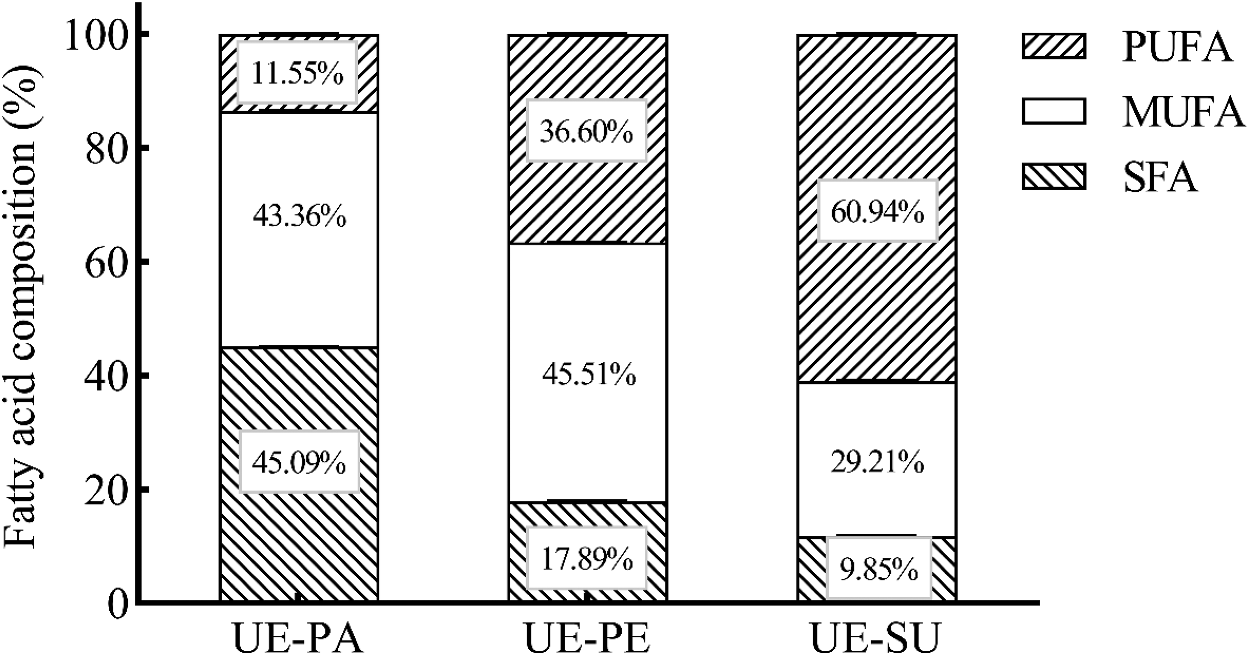
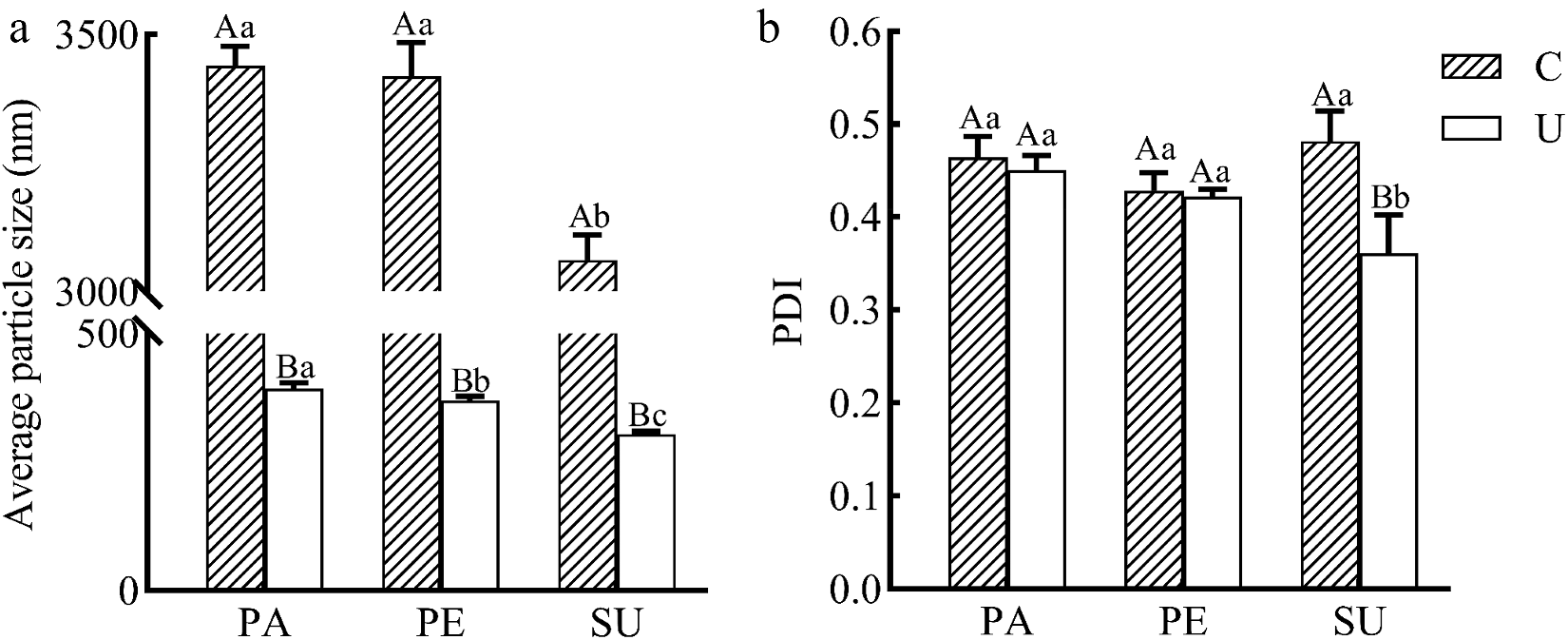
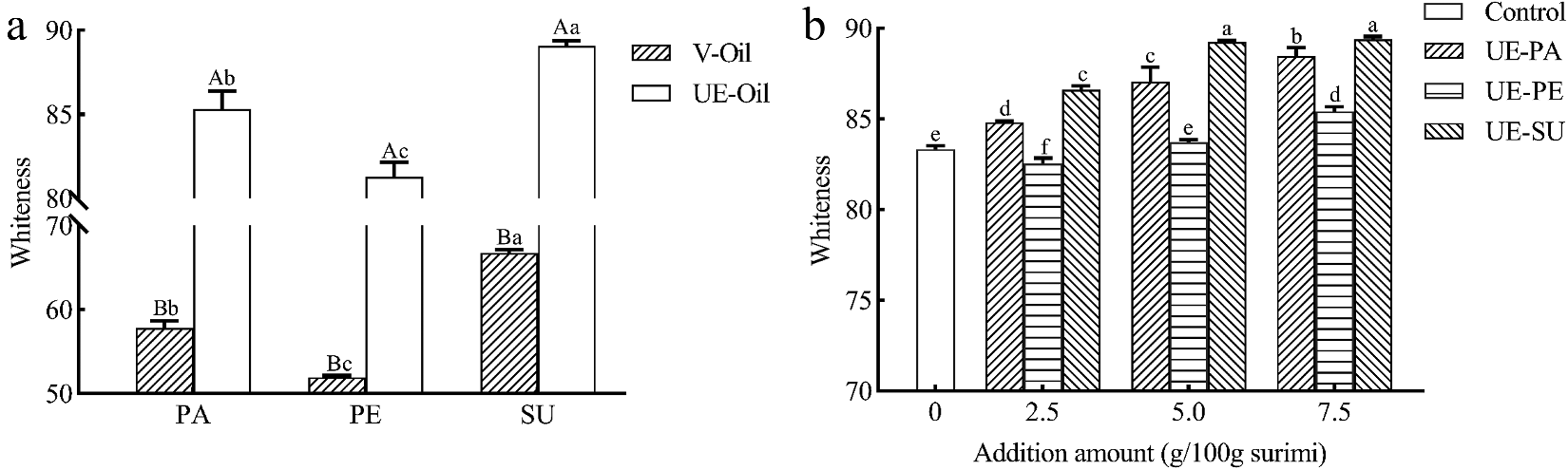
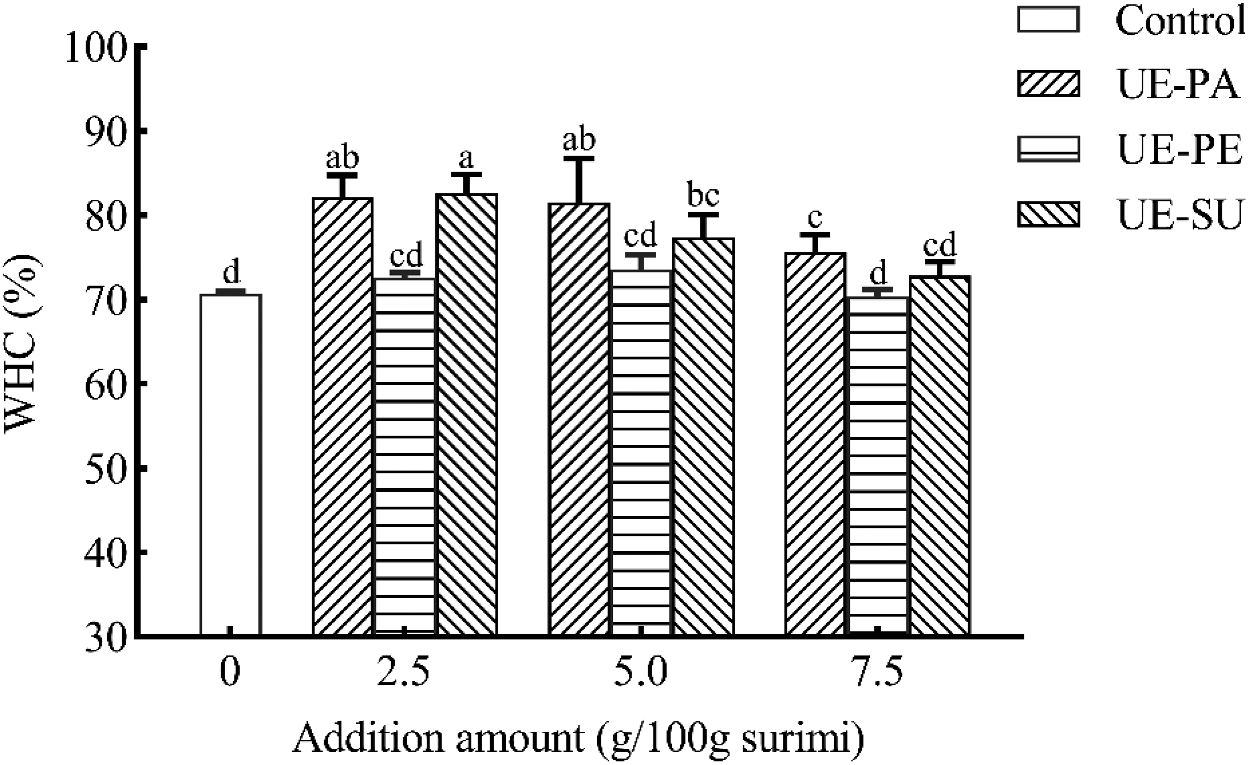
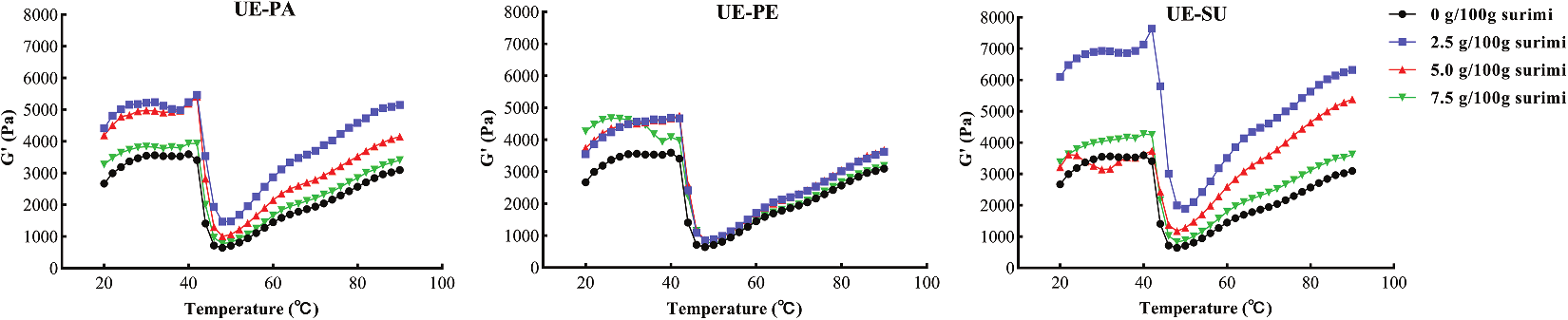
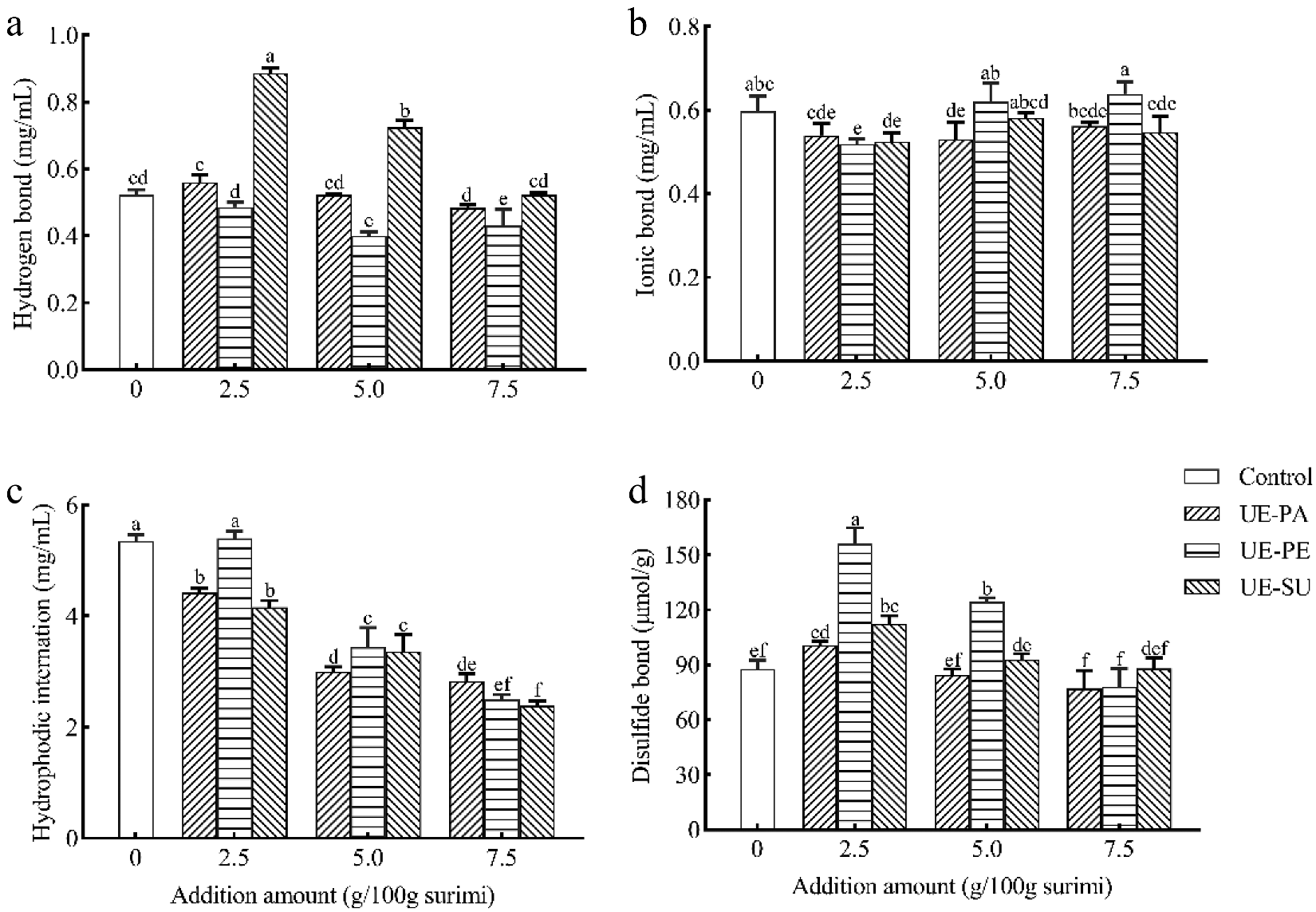
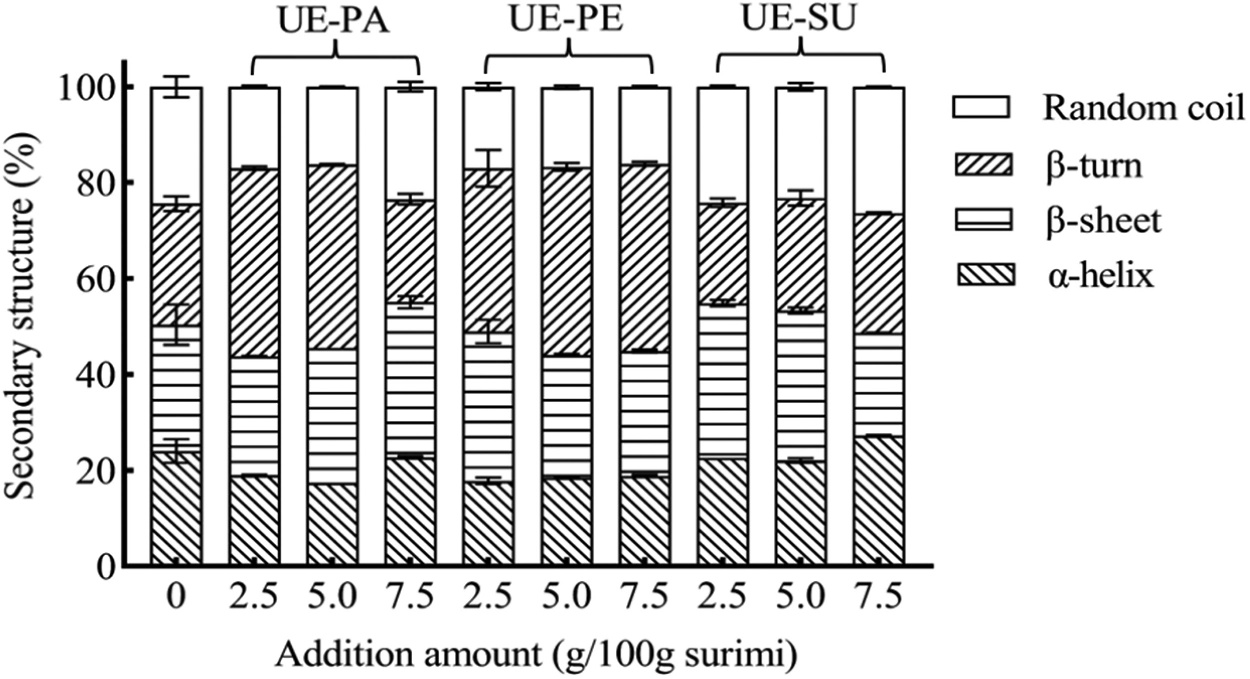
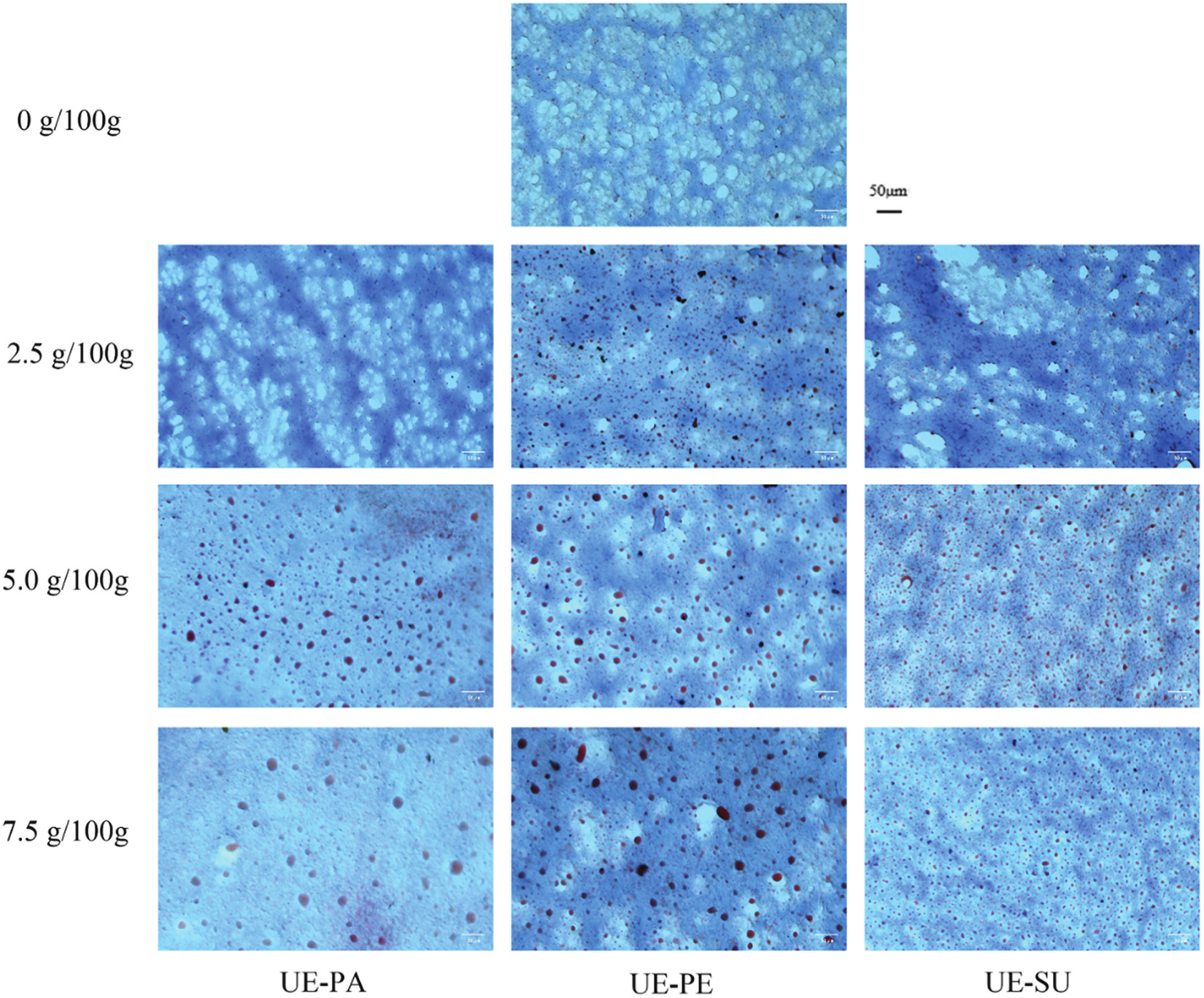
The objective of this study was to investigate the effects of ultrasonically emulsified palm oil (UE-PA), peanut oil (UE-PE), and sunflower oil (UE-SU) on the whiteness, textural, rheological, and microstructural properties of surimi gels from silver carp. Three ultrasonically emulsified oils had different specific fatty acids and oil droplet sizes of 300-400 nm. Compared with the control group, low addition of UE-SU (2.5 g/100 g) showed the highest water-holding capacity (WHC), storage modulus (G’), and hydrogen bond in surimi gels. The low addition of UE-PE (2.5 g/100 g) increased disulfide bond, β-sheet, and β-turn of surimi gel, so had higher hardness and chewiness values, comparing to those with other emulsified oils. As ultrasonically emulsified oil addition increased in surimi gels (2.5–7.5 g/100 g), hardness, chewiness, WHC, G’ were decreased, while whiteness was increased (p < .05). Light microscopy showed the most uniform distribution of oil droplets of UE-SU in surimi gels. Results demonstrated that lower addition of UE-PE and UE-SU (2.5 g/100 g) could potentially improve the whiteness, textural, rheological, and nutritional quality of surimi-based products.
Overview
The claims and statistics of this paper haven’t been checked yet.
Run the check — free, no account needed. It reads the open-access text and checks the sources it cites.
Integrity signals
Registry
Cites
Statistics
Figures
Verification
Claims the paper makes
The claims and statistics of this paper haven’t been checked yet.
Run the check — free, no account needed. It reads the open-access text and checks the sources it cites.
Claims other papers make about this one
Each is checked against this paper’s own text: does it say what the citing paper says it does?
The source backs part of the claim, not all of it — or backs it for a different population, condition or comparison.
In the citing paper
“Although sulfhydryl groups are less abundant, the disulfide bonds they form are strong and high‐energy covalent linkages that play a critical role in stabilizing and reinforcing the protein network (Khoo and Norton 2011; M. Chen, Wang, et al. 2023), which can make disulfide bond a major force in gel formation.”
From Designing Protein Gels for Nutrient Delivery: From Formulation to Digestion (2026) · cites this paper as M. Chen, Wang, et al. 2023
Experimental — accuracy not yet measured
Self-check
Percentages, sums and reported differences re-computed from the paper’s own numbers.
The self-check needs the paper’s full text.
Citations
Cites
No references could be resolved yet.
Research works printed but not linked: 57
- 10.1016/j.foodhyd.2007.10.003 · DOI
- 10.1016/j.lwt.2014.02.003 · DOI
- 10.1002/fsn3.2889 · DOI
- 10.1016/j.foodres.2010.06.010 · DOI
- 10.1016/j.foodhyd.2003.05.001 · DOI
- 10.1016/S1350-4177(98)00027-3 · DOI
- 10.1016/j.ultsonch.2021.105802 · DOI
- 10.1016/j.ultsonch.2020.105294 · DOI
- 10.1016/j.jfoodeng.2011.08.018 · DOI
- 10.1016/j.ultsonch.2016.02.007 · DOI
- 10.1016/j.foodres.2012.05.004 · DOI
- 10.1016/j.lwt.2020.109755 · DOI
- 10.1016/j.ultsonch.2022.105915 · DOI
- 10.1016/j.foodchem.2019.125758 · DOI
- 10.1016/j.lwt.2021.111513 · DOI
- 10.1016/j.meatsci.2013.06.031 · DOI
- 10.1016/j.lwt.2017.03.026 · DOI
- 10.1007/s13197-017-2958-0 · DOI
- 10.1016/j.foodhyd.2011.10.016 · DOI
- 10.1016/j.foodhyd.2018.03.037 · DOI
- 10.1016/j.lwt.2020.110242 · DOI
- 10.1111/jfq.12121 · DOI
- 10.1080/10942912.2016.1214146 · DOI
- 10.1016/s0021-9258(19)52451-6 · DOI
- 10.1016/j.foodchem.2015.10.030 · DOI
- 10.3390/molecules24203637 · DOI
- 10.1016/j.meatsci.2015.11.007 · DOI
- 10.1007/s00217-017-2966-3 · DOI
- 10.1016/j.ultsonch.2013.11.006 · DOI
- 10.1016/j.cis.2003.10.023 · DOI
- 10.1016/j.foodhyd.2015.01.001 · DOI
- 10.1016/j.tifs.2020.09.024 · DOI
- 10.1016/S0958-6946(99)00138-7 · DOI
- 10.5650/jos.ess17097 · DOI
- 10.1016/j.jfoodeng.2018.11.018 · DOI
- 10.1016/j.ijbiomac.2020.11.017 · DOI
- 10.1016/j.foodchem.2004.05.021 · DOI
- 10.1016/j.ultsonch.2010.11.023 · DOI
- 10.1016/j.tifs.2007.05.006 · DOI
- 10.1016/j.foodres.2014.01.024 · DOI
- 10.1016/j.meatsci.2015.08.018 · DOI
- 10.1016/j.foodhyd.2014.05.008 · DOI
- 10.1016/j.foodhyd.2018.03.037 · DOI
- 10.1016/j.foodchem.2013.02.111 · DOI
- 10.1111/j.1750-3841.2007.00470.x · DOI
- 10.1111/j.1750-3841.2009.01140.x · DOI
- 10.1016/j.lwt.2006.10.002 · DOI
- 10.1016/j.foodhyd.2011.12.014 · DOI
- 10.3390/foods11020179 · DOI
- 10.1016/j.foodhyd.2020.105779 · DOI
- 10.1021/jf040259r · DOI
- 10.1016/j.lwt.2014.02.023 · DOI
- 10.1016/j.ultsonch.2022.106065 · DOI
- 10.1016/j.biotechadv.2004.09.005 · DOI
- 10.1111/j.1750-3841.2009.01511.x · DOI
- 10.1016/j.lwt.2021.113007 · DOI
- 10.1016/j.foodres.2011.07.003 · DOI
Cited by
Sorted by citations
Designing Protein Gels for Nutrient Delivery: From Formulation to Digestion
Dong, X., Wang, Y., Chen, X. D., & Selomulya, C. (2026) · Comprehensive Reviews in Food Science and Food Safety · doi:10.1111/1541-4337.70424 · Cited by 17
Self-citation
Metadata
- Authors
- Chen, M., Wang, Y., Tong, Y., Zhong, Q., Zhuang, Y., & Yang, H.
- Affiliations
- Huazhong Agricultural University (CN)
- Huazhong Agricultural University
- Corresponding author
- Yang, Hong
- Venue
- International Journal of Food Properties
- Publisher
- Informa UK Limited
- Published
- 2023-05-10
- Volume
- 26
- Issue
- 1
- Pages
- 1214-1229
- ISSN
- 1094-2912 (ISSN-L)
- 1532-2386
- OpenAlex
- W4382314058
- Cited by
- 34
- References
- 0
- Citations by year
- 2026: 5 · 2025: 14 · 2024: 14 · 2023: 1
- FWCI
- 6.53
- Type
- journal article
- Language
- en
- Open access
- gold
- doi.org
- Licence
- Locations
- International Journal of Food Properties (publishedVersion, cc-by-nc)
- DOAJ (DOAJ: Directory of Open Access Journals) (submittedVersion, cc-by-sa)
- Funders
- the National Key R&D Program of China (2018YFD0901003)
- Topics
- Life Sciences › Agricultural and Biological Sciences › Animal Science and Zoology › Meat and Animal Product Quality
- Life Sciences › Agricultural and Biological Sciences › Food Science › Proteins in Food Systems
- Life Sciences › Agricultural and Biological Sciences › Food Science › Polysaccharides Composition and Applications
- Keywords
- surimi gel, silver carp, sunflower oil, peanut oil, palm oil, water holding capacity, gel texture, gel rheology, protein secondary structure, disulfide bonds, hydrogen bonding, oil droplet size, whiteness, fish paste
About these checks
Registry, retraction, Cites and statistics results are computed, not judged, with one exception: a printed reference that no index lists is read once by a model before it counts as a citation error. Claims are extracted by a model and kept only when their quote appears verbatim in the text; each cited source is then checked, with a model’s help, for whether it says what the claim relies on. Those verdicts can be wrong — read the claim’s quote and the cited source before relying on one.
Statistics and arithmetic are recomputed, not judged.
Confidence bands are shown only for fields calibrated on our annotated test set. None is calibrated yet, so no band is shown.
What counts as a claim ›How we measure confidence ›How we check this ›
Are you an author, or do you see a problem with this page? Request a review
How to cite
Cite CoChat for the checks on this page, and the paper for its own findings.
- This page
- CoChat. (2026). Citation check: Physicochemical properties of surimi gel from silver carp as affected by ultrasonically emulsified vegetable oils. https://app.cochat.ai/papers/10.1080/10942912.2023.2209704
- The paper
- Chen, M., Wang, Y., Tong, Y., Zhong, Q., Zhuang, Y., & Yang, H. (2023). Physicochemical properties of surimi gel from silver carp as affected by ultrasonically emulsified vegetable oils. International Journal of Food Properties. https://doi.org/10.1080/10942912.2023.2209704
