

The DOI matches its Crossref record; 206 of the 211 references it cites were found in a registry or an index, and 5 are not checked yet.
Music therapy for stress reduction: a systematic review and meta-analysis
Open accessAbstract
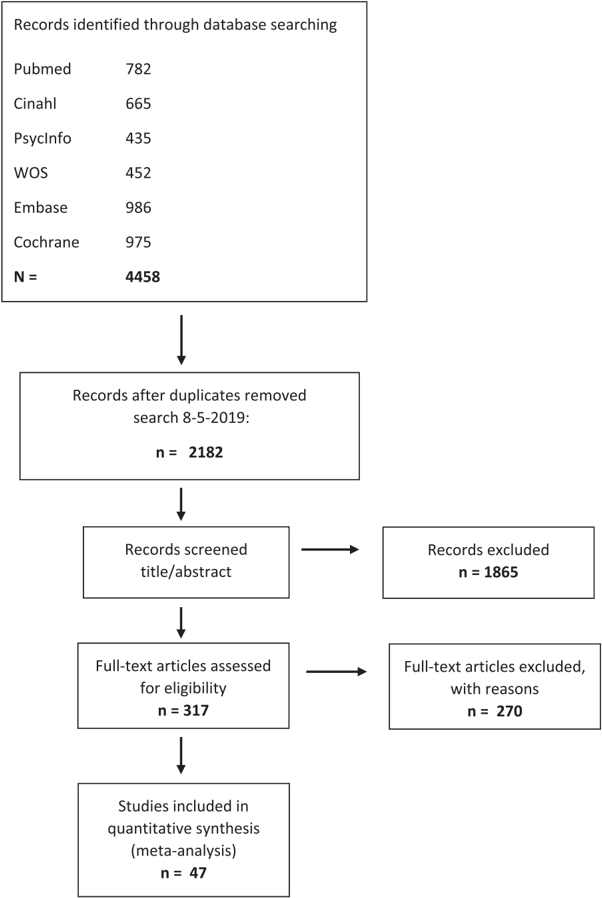
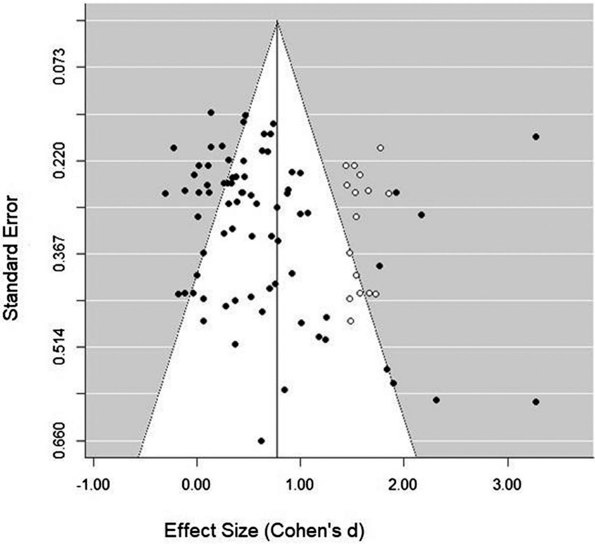
Music therapy is increasingly being used as an intervention for stress reduction in both medical and mental healthcare settings. Music therapy is characterized by personally tailored music interventions initiated by a trained and qualified music therapist, which distinguishes music therapy from other music interventions, such as ‘music medicine’, which concerns mainly music listening interventions offered by healthcare professionals. To summarize the growing body of empirical research on music therapy, a multilevel meta-analysis, containing 47 studies, 76 effect sizes and 2.747 participants, was performed to assess the strength of the effects of music therapy on both physiological and psychological stress-related outcomes, and to test potential moderators of the intervention effects. Results showed that music therapy showed an overall medium-to-large effect on stress-related outcomes (d = .723, [.51–.94]). Larger effects were found for clinical controlled trials (CCT) compared to randomized controlled trials (RCT), waiting list controls instead of care as usual (CAU) or other stress-reducing interventions, and for studies conducted in Non-Western countries compared to Western countries. Implications for both music therapy and future research are discussed.
Overview
The claims and statistics of this paper haven’t been checked yet.
Run the check — free, no account needed. It reads the open-access text and checks the sources it cites.
Integrity signals
Registry
Cites
Statistics
Figures
Verification
Claims the paper makes
The claims and statistics of this paper haven’t been checked yet.
Run the check — free, no account needed. It reads the open-access text and checks the sources it cites.
Claims other papers make about this one
Each is checked against this paper’s own text: does it say what the citing paper says it does?
The check wasn’t confident either way, so it gives no verdict — never disputed.
In the citing paper
“CBT-I has demonstrated efficacy in traumaexposed populations, reducing pre-sleep arousal and improving sleep continuity by integrating conventional behavioral sleep strategies with trauma-informed adaptations in multiple RCTs [115,116], especially when combined with trauma-focused interventions, such as trauma-focused cognitive behavioral therapy (TF-CBT) and eye movement desensitization and repro”
From Pre-Sleep Anxiety: Mechanisms and Therapeutic Approaches in Clinical Practice. (2026) · cites this paper as [115]
Experimental — accuracy not yet measured
Self-check
Percentages, sums and reported differences re-computed from the paper’s own numbers.
The self-check needs the paper’s full text.
Citations
Cites
Tabachnick, B. G., & Fidell, L. S. (1983) · Cited by 79,882
A Global Measure of Perceived Stress
Cohen, S., Kamarck, T., & Mermelstein, R. (1983) · Journal of Health and Social Behavior · doi:10.2307/2136404 · Cited by 32,807
Eysenck, H. J. (1985) · Behaviour Research and Therapy · doi:10.1016/0005-7967(85)90087-7 · Cited by 32,038
“Stress: appraisal and coping,”
Folkman, S. (2013) · Encyclopedia of Behavioral Medicine · doi:10.1007/978-1-4419-1005-9_215 · Cited by 27,833
(1970) · Cited by 24,983
Conducting Meta-Analyses in R with the metafor Package
Viechtbauer, W. (2010) · Journal of Statistical Software · doi:10.18637/jss.v036.i03 · Cited by 20,464
Duval, S., & Tweedie, R. (2000) · Biometrics · doi:10.1111/j.0006-341x.2000.00455.x · Cited by 14,099
Hao (2015) · doi:10.1002/14651858 · Cited by 11,321
(2000) · Cited by 9,198
Multilevel analysis techniques and applications
Hox, J. J., Moerbeek, M., & van de Schoot, R. (2002) · Cited by 6,006
Research works printed but not linked: 11
- Aldwin, C. M. (2007). Stress, coping, and development, second edition: An integrative perspective. Guilford Press.
- American Music Therapy Association. (2018). Definition and quotes about music therapy. What is music therapy? https://www.musictherapy.org/about/quotes/
- American Psychological Association. (2017). Stress in America: Coping with Change. https://www.apa.org/news/press/releases/stress/2016/coping-with-change.pdf
- 10.1186/s13063-016-1752-z · DOI
- Casey, G. (2017). Stress and disease. Kai Tiaki Nursing New Zealand, 23, 20–24.
- Câmara, Y. M. R., Campo, M. R. M., & Câmara, Y. R. (2013). Music therapy as a therapeutic resource for mental health. Braz J Mental Health, 94–117.
- Gabrielsson, A., & Lindström, E. (2010). The role of structure in the musical expression of emotions. In P. N. Juslin, & J. A. Sloboda (Eds.), Series in affective science. Handbook of music and emotion: Theory, research, applications (pp. 367–400). Oxford University Press. · DOI
- McNair, D. M., Lorr, M., & Droppleman, L. (1981). Profile of mood states questionnaire. EDITS.
- Schumacher, K., & Calvet, C. (2008). Synchronization. Music therapy with children on the autistic spectrum. Vandenhoeck & Ruprecht.
- 10.1007/s00520-014-2478-7 · DOI
- 10.1002/cncr.11842 · DOI
Cited by
Sorted by citations
Items 401–443 of 443
Murphy, P., Kelly-Harrington, R., Killion, M. G., McCaffrey, T., Groarke, J. M., & Burca, R. D. (2026) · Journal of Mental Health · doi:10.1080/09638237.2026.2695972
Valentin, O., Zendel, B. R., Fournier, P., Walsh, Z., & Lehmann, A. (2026) · Cannabis and Cannabinoid Research · doi:10.1177/25785125261467505
Yang, L., Yuan, R., & Zheng, Y. (2026) · Frontiers in Psychology · doi:10.3389/fpsyg.2026.1745444
“Playing off the Beat”: How and why Insights from the Evolution of Music Can Inform Psychotherapy
Brüne, M. (2026) · Springer eBooks · doi:10.1007/978-3-032-27009-2_17
Ouderen met traumagerelateerde klachten
Gielkens, E. M. J., & Weyden, R. (2026) · doi:10.1007/978-90-368-3222-9_7
Shang, H., Ma, H., Xu, Z., Liu, Y., Xu, Z. Y., Zhao, L., Gao, Y., Bai, T., & Hou, X. (2026) · Clinical Gastroenterology and Hepatology · doi:10.1016/j.cgh.2026.03.047
Drum, A. R., Nguyen, A., & Khan, K. M. (2026) · SSRN Electronic Journal · doi:10.2139/ssrn.7169752
Causes and intervention strategies for appearance anxiety: a critical review of recent advances
Wei, J. N., Song, Y., & Guo, M. (2026) · Frontiers in Psychiatry · doi:10.3389/fpsyt.2026.1779181
Kollarukandy, S., Yohannan, S. V., & Devassy, S. M. (2026) · The Arts in Psychotherapy · doi:10.1016/j.aip.2026.102511
Neurophysiological and biological effects of music-based interventions in ADHD: a mini review
Zrelski, M. M., Serrallach, B. L., & Groß, C. (2026) · Frontiers in Psychiatry · doi:10.3389/fpsyt.2026.1901818
Tarcău, B.-M., Vâță, D., Popescu, I. A., Temelie-Olinici, D., Postu, A., Halip, I. A., Gheuca-Solovastru, D. F., Mocanu, M., Găină, M.-A., & Solovăstru, L. G. (2026) · Journal of Clinical Medicine · doi:10.3390/jcm15155984
Ding, Y., Fu, W., Tang, Y., & Zhang, D. (2026) · medRxiv · doi:10.64898/2026.08.05.26359641
Li, W., Li, S., & Wang, G. (2026) · Frontiers in Human Neuroscience · doi:10.3389/fnhum.2026.1892159
Nurse-led music-based interventions across clinical care settings: a scoping review protocol
Zhang, C., Ge, J., Yang, J., Wang, M., Wang, X., Liu, X., & Peng, S. (2026) · BMJ Open · doi:10.1136/bmjopen-2026-122147
Li, Z., Wu, T., & Fu, H. (2026) · Journal of Medical Imaging and Radiation Oncology · doi:10.1111/1754-9485.70168
Zhang, Y., Tu, S., Zhou, L., & Xue, C. (2026) · Psychology of Music · doi:10.1177/03057356261471423
Lucendo‐Noriega, A., Bamford, J. S., Danso, A., Baltazar, M., Tervaniemi, M. H., Carlson, E. J., Linnavalli, T., & Saarikallio, S. H. (2026) · Music & Science · doi:10.1177/20592043261476842
Bolat, A., Canbolat, M. Z., Uzel, T., Dagli, I., Karakayali, H., & Öztürk, E. (2026) · Urology · doi:10.1016/j.urology.2026.08.035
Börekçi, A., & Arslan, B. Ş. (2026) · International Journal of Educational Research · doi:10.1016/j.ijer.2026.103096
Falade, T. A. (2026) · Noise and Health · doi:10.4103/nah.nah_249_25 · Cited by 1
Huang, Q., Shuxiang, H., & Liu, Y. (2026) · Frontiers in Psychology · doi:10.3389/fpsyg.2026.1904643
Understanding emotional responses to music using machine learning: evidence from a public dataset
Sun, H. (2026) · Frontiers in Psychology · doi:10.3389/fpsyg.2026.1864672
Music intervention as a therapeutic approach to cognitive impairments in APP/PS1 mice
Bu, X., Yuan, Y., Song, W., & Wang, W. (2026) · Brain Research Bulletin · doi:10.1016/j.brainresbull.2026.112113
“Musicoterapia para reducir la Ansiedad Pediátrica en Procedimientos de Radiodiagnóstico”
Gavilánez, J. D. S., Ríos, S. A. J., Verdezoto, J. A. A., & Montoya, E. B. C. (2026) · Scientia Andes · doi:10.64230/sca.v2i3.8
Bradt, J., de Witte, M., Aithal, S., Flynn, L. M., Karkou, V., Koch, S. C., Orkibi, H., Sajnani, N. L., Berberian, M., Fietje, N., et al. (2026) · Research Square · doi:10.21203/rs.3.rs-5961850/v2
Giordano, F. C., Baroni, M., Zingarelli, M., Scarlata, E., Pelazza, C., Mazzucco, R., Santi, M., Albini, G., Visconti, M., Rossi, M., et al. (2026) · BMJ Open · doi:10.1136/bmjopen-2026-122143
Sound relief: Restorative Music as a strategy to improve clinician wellbeing
Salehi, N., Takarabe, C., Walesa, M., Pause, L., Agarwal, G., & Bonakdarpour, B. (2026) · Frontiers in Psychology · doi:10.3389/fpsyg.2026.1864986
Operationalising the arts exposome
Sacco, P. L., & Fancourt, D. E. (2026) · Current Opinion in Psychology · doi:10.1016/j.copsyc.2026.102460
Arslan, B. Ş., & Börekçi, A. (2026) · Psychology of Music · doi:10.1177/03057356261480028
Kumari, P., Miranda, J. P., Amin, A. S., & Subramanium, V. (2026) · Journal of Health and Allied Sciences NU · doi:10.25259/jhasnu_81_2026
Effects of Movement Sonification on Simple Motor Task Performance: A Pilot Study
Tuszy, A., Romaniszyn‐Kania, P., Ledwoń, D. J., Śwituła, M., Kania, D., Komosar, M., Haueisen, J., & Mitas, A. W. (2026) · Advances in intelligent systems and computing · doi:10.1007/978-3-032-33719-1_22
ОСНОВНІ ПИТАННЯ ПСИХОПРОФІЛАКТИКИ ПСИХОЛОГІЧНОГО ДИСТРЕСУ
Duranyk, G. Y., Korsakevych, S., & An, M. (2026) · Актуальні проблеми сучасної медицини Вісник Української медичної стоматологічної академії · doi:10.31718/2077-1096.26.3.240
Professional Dementia Caregivers’ Use of Music in Care: An Australian Workforce Survey
Antipas, H., Tamplin, J., Sousa, T. V., & Baker, F. A. (2026) · Journal of Music Therapy · doi:10.1093/jmt/thag016
Li, W., Wang, G., Manoharan, P., Cui, X., Dai, L., & Huang, L. (2026) · PLoS ONE · doi:10.1371/journal.pone.0360478
Guo, K., Chen, C., Lao, Z., Xiao, Y., Yang, L., Liao, G., Lu, S., Shi, P., & Liang, Y. (2026) · International Journal of Language & Communication Disorders · doi:10.1111/1460-6984.70341
Sigrist, F. (2026) · Elsevier eBooks · doi:10.1016/b978-3-437-21245-1.00026-x
Psychosomatische Rehabilitation
Schmidt, H. U., Stegemann, T., Geipel, J., & Spitzer, C. (2026) · Elsevier eBooks · doi:10.1016/b978-3-437-21245-1.00028-3
Forschung in der Musiktherapie
Schmidt, H. U., Stegemann, T., Geipel, J., & Spitzer, C. (2026) · Elsevier eBooks · doi:10.1016/b978-3-437-21245-1.00014-3
Millman, L. S. M., Kennedy-Barnes, E., Duarte, A., Pacelli, J., Basamh, Y., Hodsoll, J. P., & Pick, S. (2026) · Journal of Psychosomatic Research · doi:10.1016/j.jpsychores.2026.113023
A Review on Music Induced Emotion and Music Processing in the Brain
Anees, S., Basheer, B. B., Sharin, R., Liyakath, S., Raaziya, S. S., & Zubairu, H. U. (2026) · International Journal of Innovative Science and Research Technology (IJISRT) · doi:10.38124/ijisrt/26oct134
Zhan, H.-T., Xu, Q.-J., Guan, R.-F., Li, M.-H., Li, J.-R., Wang, K., Ren, X.-B., Yuan, X.-R., Jin, Z.-Q., Zhao, S.-S., et al. (2026) · Acta Psychologica · doi:10.1016/j.actpsy.2026.108018
Sebastian, D., Kumar, S. N., & Kannadhasan, S. (2026) · Lecture notes in civil engineering · doi:10.1007/978-3-032-28528-7_47
Chall, K., Komperla, S., Abdelaal, A., & Seeruthun, R. (2026) · Journal of Perioperative Practice · doi:10.1177/17504589261490336
Metadata
- Authors
- de Witte, M., Pinho, A. D. S., Stams, G.-J., Moonen, X., Bos, A. E. R., & van Hooren, S.
- Affiliations
- University of Amsterdam
- University of Amsterdam (NL)
- Zuyd University of Applied Sciences (NL)
- The Open University (GB)
- KenVaK, Research Centre for the Arts Therapies
- Venue
- Health Psychology Review
- Publisher
- Informa UK Limited
- Published
- 2020-11-27
- Volume
- 16
- Issue
- 1
- Pages
- 134-159
- ISSN
- 1743-7199 (ISSN-L)
- 1743-7202
- OpenAlex
- W3105716709
- Cited by
- 444
- References
- 204
- Citations by year
- 2026: 117 · 2025: 131 · 2024: 81 · 2023: 59 · 2022: 35 · 2021: 20 · 2020: 1
- FWCI
- 4.64
- Type
- journal article
- Language
- en
- Open access
- hybrid
- doi.org
- Licence
- Locations
- Health Psychology Review (publishedVersion, cc-by-nc-nd)
- PubMed (publishedVersion)
- UvA-DARE (University of Amsterdam) (submittedVersion, cc-by-nc-nd)
- DSpace (Open University in the Netherlands) (submittedVersion, cc-by-nc-nd)
- DSpace (Open University in the Netherlands) (submittedVersion, other-oa)
- Data Archiving and Networked Services (DANS) (submittedVersion, other-oa)
- Funders
- Nederlandse Organisatie voor Wetenschappelijk Onderzoek (grant number 023.007.068)
- Topics
- Social Sciences › Psychology › Social Psychology › Music Therapy and Health
- Social Sciences › Psychology › Clinical Psychology › Art Therapy and Mental Health
- Life Sciences › Neuroscience › Cognitive Neuroscience › Neuroscience and Music Perception
- Keywords
- music therapy, stress reduction, physiological stress, psychological stress, intervention moderators, music medicine, music listening intervention, healthcare settings
- MeSH terms
- Anxiety, Humans, Music, Music Therapy, Stress, Psychological
About these checks
Registry, retraction, Cites and statistics results are computed, not judged, with one exception: a printed reference that no index lists is read once by a model before it counts as a citation error. Claims are extracted by a model and kept only when their quote appears verbatim in the text; each cited source is then checked, with a model’s help, for whether it says what the claim relies on. Those verdicts can be wrong — read the claim’s quote and the cited source before relying on one.
Statistics and arithmetic are recomputed, not judged.
Confidence bands are shown only for fields calibrated on our annotated test set. None is calibrated yet, so no band is shown.
What counts as a claim ›How we measure confidence ›How we check this ›
Are you an author, or do you see a problem with this page? Request a review
