

Molecular basis for the mechanism of action of an anti‐TACE antibody
Open accessThe DOI matches its Crossref record; 32 of the 32 references it cites were found in a registry or an index.
Abstract
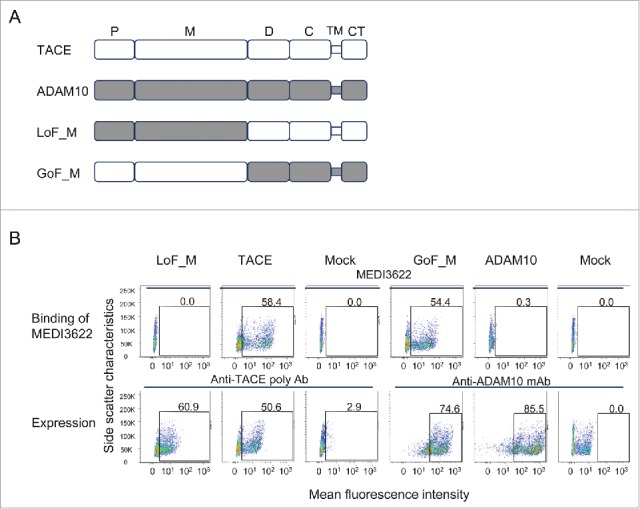
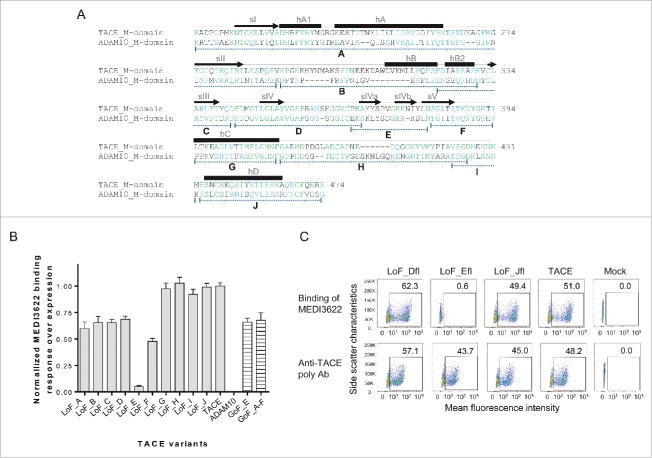
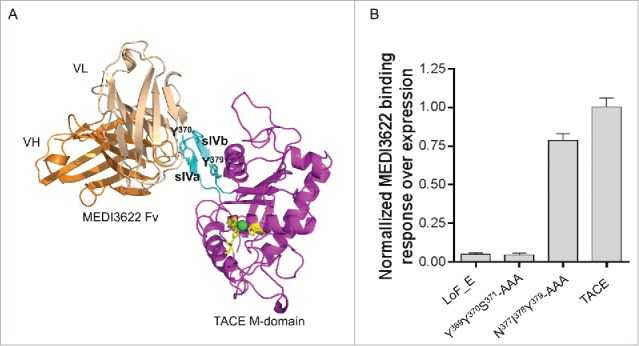
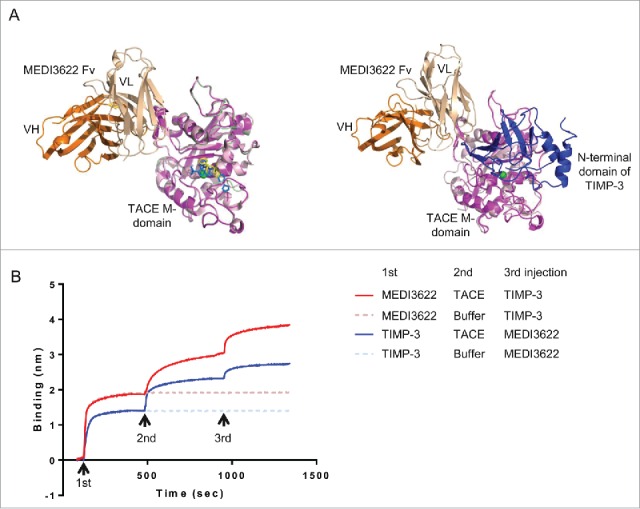
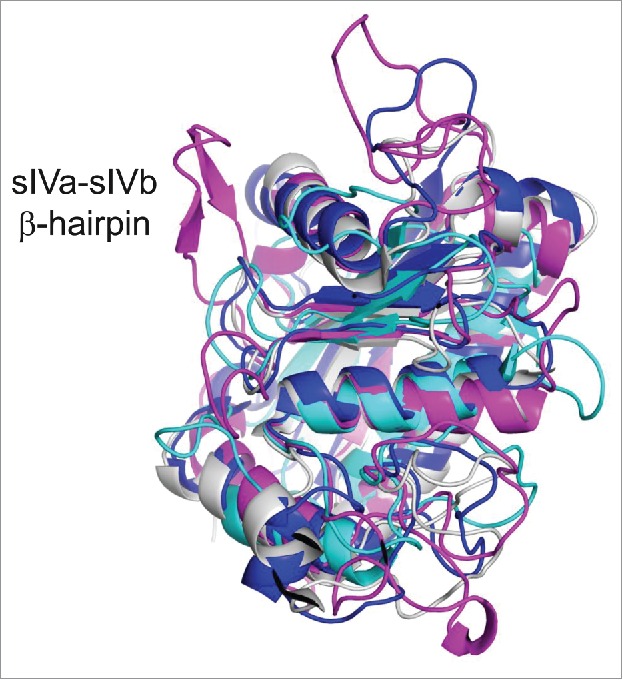
Inhibitors of tumor necrosis factor-α converting enzyme (TACE) have potential as therapeutics for various diseases. Many small molecule inhibitors, however, exhibit poor specificity profiles because they target the highly conserved catalytic cleft of TACE. We report for the first time the molecular interaction of a highly specific anti-TACE antagonistic antibody (MEDI3622). We characterized the binding of MEDI3622 using mutagenesis, as well as structural modeling and docking approaches. We show that MEDI3622 recognizes a unique surface loop of sIVa-sIVb β-hairpin on TACE M-domain, but does not interact with the conserved catalytic cleft or its nearby regions. The exquisite specificity of MEDI3622 is mediated by this distinct structural feature on the TACE M-domain. These findings may aid the design of antibody therapies against TACE.
Overview
The claims and statistics of this paper haven’t been checked yet.
Free: it reads the open-access text and checks the first 5 claims that cite a source we can check. Create a free account to check every claim.
Integrity signals
Registry
Cites
Statistics
Figures
Verification
Claims the paper makes
The claims and statistics of this paper haven’t been checked yet.
Free: it reads the open-access text and checks the first 5 claims that cite a source we can check. Create a free account to check every claim.
Claims other papers make about this one
Each is checked against this paper’s own text: does it say what the citing paper says it does?
The source backs part of the claim, not all of it — or backs it for a different population, condition or comparison.
In the citing paper
“MEDI3622 (anti‐TACE antibody) showed promising preclinical activity in human colorectal adenocarcinoma progression [148, 149].”
From Tumor microenvironment signaling and therapeutics in cancer progression (2023) · cites this paper as [148]
Experimental — accuracy not yet measured
Self-check
Percentages, sums and reported differences re-computed from the paper’s own numbers.
The self-check needs the paper’s full text.
Citations
Cites
CHARMM: A program for macromolecular energy, minimization, and dynamics calculations
Brooks, B. R., Bruccoleri, R. E., Olafson, B. D., States, D. J., Swaminathan, S., & Karplus, M. (1983) · Journal of Computational Chemistry · doi:10.1002/jcc.540040211 · Cited by 14,944
A metalloproteinase disintegrin that releases tumour-necrosis factor-α from cells
Black, R. A., Rauch, C. T., Kozlosky, C. J., Peschon, J. J., Slack, J. L., Wolfson, M. F., Castner, B. J., Stocking, K. L., Reddy, P., Srinivasan, S., et al. (1997) · Nature · doi:10.1038/385729a0 · Cited by 3,149
Canonical structures for the hypervariable regions of immunoglobulins
Chothia, C., & Lesk, A. M. (1987) · Journal of Molecular Biology · doi:10.1016/0022-2836(87)90412-8 · Cited by 1,406 · cited 1×
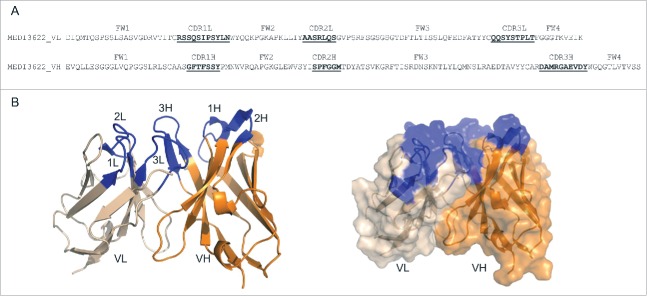
“CDRs are shown in bold and underlined according to Chothia definition.(29) (B) Modeled 3-dimensional structure of MEDI3622 variable domains, with VH in orange and VL in beige.”
BackgroundZDOCK: An initial‐stage protein‐docking algorithm
Chen, R., Li, L., & Weng, Z. (2003) · Proteins: Structure, Function, and Bioinformatics · doi:10.1002/prot.10389 · Cited by 1,393
Cloning of a disintegrin metalloproteinase that processes precursor tumour-necrosis factor-α
Moss, M. L., Jin, S.-L. C., Milla, M. E., Burkhart, W., Carter, H. L., Chen, W.-J., Clay, W. C., Didsbury, J. R., Hassler, D., Hoffman, C. R., et al. (1997) · Nature · doi:10.1038/385733a0 · Cited by 1,378 · cited 1×
“It was initially identified as a convertase for tumor necrosis factor-a, a immunomodulatory and proinflammatory cytokine.(2,3) It has also been shown to catalyze the release of various epidermal growth factors (EGF),(4,5) including amphiregulin, heparin-binding EGF-like growth factor, epiregulin, and epigen, which are…”
BackgroundEDWARDS, D., HANDSLEY, M., & PENNINGTON, C. (2008) · Molecular Aspects of Medicine · doi:10.1016/j.mam.2008.08.001 · Cited by 1,161 · cited 1×
“TACE (tumor necrosis factor-a converting enzyme, also known as ADAM17) is a membrane-bound metalloprotease responsible for ectodomain shedding of pathologically significant substrates.(1) It was initially identified as a convertase for tumor necrosis factor-a, a immunomodulatory and proinflammatory cytokine.”
BackgroundDistinct roles for ADAM10 and ADAM17 in ectodomain shedding of six EGFR ligands
Sahin, U., Weskamp, G., Kelly, K., Zhou, H.-M., Higashiyama, S., Peschon, J., Hartmann, D., Saftig, P., & Blobel, C. P. (2004) · The Journal of Cell Biology · doi:10.1083/jcb.200307137 · Cited by 979
Janes, P. W., Saha, N., Barton, W. A., Kolev, M. V., Wimmer-Kleikamp, S. H., Nievergall, E., Blobel, C. P., Himanen, J.-P., Lackmann, M., & Nikolov, D. B. (2005) · Cell · doi:10.1016/j.cell.2005.08.014 · Cited by 443
Sunnarborg, S. W., Hinkle, C. L., Stevenson, M., Russell, W. E., Raska, C. S., Peschon, J. J., Castner, B. J., Gerhart, M. J., Paxton, R. J., Black, R. A., et al. (2002) · Journal of Biological Chemistry · doi:10.1074/jbc.m112050200 · Cited by 413
Crystal structure of the catalytic domain of human tumor necrosis factor-α-converting enzyme
Maskos, K., Fernandez-Catalan, C., Huber, R., Bourenkov, G. P., Bartunik, H., Ellestad, G. A., Reddy, P., Wolfson, M. F., Rauch, C. T., Castner, B. J., et al. (1998) · Proceedings of the National Academy of Sciences · doi:10.1073/pnas.95.7.3408 · Cited by 387 · cited 3×
“These inhibitors interact with the conserved catalytic cleft located on the surface of the ellipsoid-shaped M domain.(7,8,17,18) The catalytic cleft contains a catalytic zinc (Zn) ion at its center, coordinated by 4 highly conserved residues (H(405), E(406), H(409), H(415)) typical of a Zn-binding motif (HEXXHXXGXXHD…”
Background
Cited by
Targeting IL-6 trans-signalling: past, present and future prospects
Rose-John, S., Jenkins, B. J., Garbers, C., Moll, J. M., & Scheller, J. (2023) · Nature Reviews Immunology · doi:10.1038/s41577-023-00856-y · Cited by 524
“…studies employing ADAM17-neutralizing monoclonal antibodies that act via several modalities, including allosteric perturbation of the binding ability of its catalytic active site, or steric hindrance leading to competitive or noncompetitive inhibition of protein substrate binding 170,171 (Fig.”
Tumor microenvironment signaling and therapeutics in cancer progression
Goenka, A., Khan, F., Verma, B., Sinha, P., Dmello, C. C., Jogalekar, M. P., Gangadaran, P., & Ahn, B. (2023) · Cancer Communications · doi:10.1002/cac2.12416 · Cited by 323
“MEDI3622 (anti-TACE antibody) showed promising preclinical activity in human colorectal adenocarcinoma progression [148, 149].”
BackgroundOvercoming Resistance to Natural Killer Cell Based Immunotherapies for Solid Tumors
Nayyar, G., Chu, Y., & Cairo, M. S. (2019) · Frontiers in Oncology · doi:10.3389/fonc.2019.00051 · Cited by 177
“MEDI3622 is a human mAb of ADAM17 with high specificity and a potent inhibitory activity (163).”
BackgroundRecent Advances in ADAM17 Research: A Promising Target for Cancer and Inflammation
Moss, M. L., & Minond, D. (2017) · Mediators of Inflammation · doi:10.1155/2017/9673537 · Cited by 153
“Another ADAM17 inhibitory antibody (MEDI3622) was recently developed and studied in vitro, ex vivo, and in vivo [146, 147].”
BackgroundStrategies to Target ADAM17 in Disease: From Its Discovery to the iRhom Revolution
Calligaris, M., Cuffaro, D., Bonelli, S., Spanò, D. P., Rossello, A., Nuti, E., & Scilabra, S. D. (2021) · Molecules · doi:10.3390/molecules26040944 · Cited by 132
“In addition, this cross-domain inhibitory antibody was proven to block tumor growth in vivo, when the human ovarian cancer cell line IGROV1-Luc was xenografted in Balb/c nude mice [213].”
BackgroundWu, J., Mishra, H. K., & Walcheck, B. K. (2019) · Journal of Leukocyte Biology · doi:10.1002/jlb.2mr1218-501r · Cited by 122
ADAM proteases: Emerging role and targeting of the non-catalytic domains
Saha, N., Tzvetkova‐Robev, D., Himanen, J. P., & Nikolov, D. B. (2019) · Cancer Letters · doi:10.1016/j.canlet.2019.10.003 · Cited by 81
Mishra, H. K., Pore, N., Michelotti, E. F., & Walcheck, B. K. (2018) · Cancer Immunology Immunotherapy · doi:10.1007/s00262-018-2193-1 · Cited by 52
Monoclonal antibodies against metzincin targets
Santamaria, S., & de Groot, R. (2018) · British Journal of Pharmacology · doi:10.1111/bph.14186 · Cited by 43
“This mAb (MED13622) binds to the Cat domain only and acquires its specificity from binding to the highly variable loop between βIV and βV of the five-stranded β-sheet (Rios-Doria et al., 2015; Peng et al., 2016).”
BackgroundRenal ADAM10 and 17: Their Physiological and Medical Meanings
Kato, T., Hagiyama, M., & Ito, A. (2018) · Frontiers in Cell and Developmental Biology · doi:10.3389/fcell.2018.00153 · Cited by 50
“MEDI3622, another antibody for ADAM17, was produced to bind to a unique hairpin loop in the ADAM17 structure, and it was useful in an EGFR-dependent tumor model (Rios-Doria et al., 2015; Peng et al., 2016; Dosch et al., 2017).”
BackgroundRecent developments and strategies for the discovery of TACE inhibitors
Murumkar, P. R., Ghuge, R. B., Chauhan, M., Barot, R. R., Sorathiya, S., Choudhary, K. M., Joshi, K. D., & Yadav, M. R. (2020) · Expert Opinion on Drug Discovery · doi:10.1080/17460441.2020.1744559 · Cited by 35
“[86] have successfully reported the molecular interactions of a highly specific antibody (MEDI3622).”
BackgroundVerhulst, E., Garnier, D., Meester, I. D., & Bauvois, B. (2022) · Cancers · doi:10.3390/cancers14030624 · Cited by 30
“By blocking the ADAM17-mediated shedding of HB-EGF (ligand of the EGF receptor/EGFR), MEDI3622 exhibits antitumour activity in xenograft models of EGFRdependent colorectal and oesophageal cancer [192,196,197].”
BackgroundActivation of ADAM17 by IL-15 Limits Human NK Cell Proliferation
Mishra, H. K., Dixon, K. J., Pore, N., Felices, M., Miller, J. S., & Walcheck, B. K. (2021) · Frontiers in Immunology · doi:10.3389/fimmu.2021.711621 · Cited by 31
“ADAM17 was blocked using MEDI3622, a human IgG1 mAb that is well characterized for its inhibitory activity in vitro and in vivo (24, 26, 27), and also blocks ADAM17 activity in human NK cells (22).”
MethodADAM Proteases in Cancer: Biological Roles, Therapeutic Challenges, and Emerging Opportunities
Arora, S., Scott, A. M., & Janes, P. W. (2025) · Cancers · doi:10.3390/cancers17101703 · Cited by 32
Clinical Implications of Compounds Designed to Inhibit ECM‐Modifying Metalloproteinases
Amar, S., Minond, D., & Fields, G. B. (2017) · PROTEOMICS · doi:10.1002/pmic.201600389 · Cited by 25
“112) and colorectal cancer model H292 (ΔTGI = 110) [113, 114].”
BackgroundInhibitory monoclonal antibody targeting ADAM17 expressed on cancer cells
Saha, N., Xu, K. Y., Zhu, Z., Tzvetkova‐Robev, D., Kalidindi, T. M., Xu, Y., Himanen, J. P., de Stanchina, E., Pillarsetty, N., Dimitrov, D. S., et al. (2021) · Translational Oncology · doi:10.1016/j.tranon.2021.101265 · Cited by 24
Mishra, H. K., Ma, J., Mendez, D. C., Hullsiek, R., Pore, N., & Walcheck, B. K. (2020) · International Journal of Molecular Sciences · doi:10.3390/ijms21186688 · Cited by 19
“MEDI3622 is a well characterized ADAM17 mAb and a highly selective and potent inhibitor [20,21].”
BackgroundCombined Radiochemotherapy: Metalloproteinases Revisited
Waller, V., & Pruschy, M. N. (2021) · Frontiers in Oncology · doi:10.3389/fonc.2021.676583 · Cited by 17
Hedges, J. F., Snyder, D. T., Robison, A., Grifka‐Walk, H. M., Blackwell, K., Shepardson, K. M., Kominsky, D. J., Rynda‐Apple, A., Walcheck, B. K., & Jutila, M. A. (2022) · Frontiers in Immunology · doi:10.3389/fimmu.2022.918881 · Cited by 17
Wollacott, A. M., Robinson, L. N., Ramakrishnan, B., Tissire, H., Viswanathan, K., Shriver, Z. H., & Babcock, G. J. (2019) · Journal of Molecular Recognition · doi:10.1002/jmr.2778 · Cited by 9
Structural insights into the activation and inhibition of the ADAM17–iRhom2 complex
Maciag, J. J., Slone, C. E., Alnajjar, H. F., Rich, M. F., Guion, B., Ifergan, I., Blobel, C., & Seegar, T. C. M. (2025) · Proceedings of the National Academy of Sciences · doi:10.1073/pnas.2500732122 · Cited by 9
Johnson, K. M., & Lee, D. A. (2025) · Frontiers in Immunology · doi:10.3389/fimmu.2025.1646719 · Cited by 8
Tschanz, F., Bender, S., Telarović, I., Waller, V., Speck, R. F., & Pruschy, M. N. (2021) · Cancer Research Communications · doi:10.1158/2767-9764.crc-21-0067 · Cited by 8
“We address ADAM17-inhibition with the novel ADAM17-directed inhibitory antibody MEDI3622 (14) in combination with IR in murine tumor models in vivo, including its antiangiogenic response, and probe the efficacy of the combined treatment of radiotherapy and MEDI3622 in an orthotopic lung adenocarcinoma tumor model.”
BackgroundMethodEctodomain shedding by ADAM17 (a disintegrin and metalloproteinase 17) in canine neutrophils
Snyder, K. M., McAloney, C. A., Montel, J. S., Modiano, J. F., & Walcheck, B. K. (2020) · Veterinary Immunology and Immunopathology · doi:10.1016/j.vetimm.2020.110162 · Cited by 7
“does not occur in other ADAM family members (Peng et al., 2016).”
BackgroundYasir, M., Park, J. H., Han, E., Han, J., Park, W. S., Choe, J., & Chun, W. (2025) · Future Pharmacology · doi:10.3390/futurepharmacol5040055 · Cited by 7
“Key residues in these pockets have been validated by cross-referencing crystallographic data and biochemical studies [32,33].”
Natural killer cell-based immunotherapy: a new fighter against melanoma?
Urbonas, V., Smailytė, G., Urbonaite, G. V., Dulskas, A., Burokienė, N., & Kasiulevičius, V. (2018) · Melanoma Research · doi:10.1097/cmr.0000000000000552 · Cited by 2
ADAM17-dependent Autocrine and Paracrine Signaling Promotes Pancreatic Premalignant Progression
Wen, H.-J., Davis, E. T., Moore, J. S., Brender, S. M., Benitz, S., Wombwell, A. M., Loveless, I. M., Long, D. W., Salas-Escabillas, D. J., Lee, J., et al. (2025) · Cellular and Molecular Gastroenterology and Hepatology · doi:10.1016/j.jcmgh.2025.101711
“To accomplish this, we used the ADAM17 blocking antibody MEDI3622 43,44 to systematically block ADAM17 activity in K*C mice after neoplastic transformation.”
Kalantar, M., Buxton, E. K., Reid, K. M., Bleyl, D., Leitner, D., & Raeeszadeh-Sarmazdeh, M. (2025) · Biomolecules · doi:10.3390/biom16010031
“…family, exhibits sub-nanomolar inhibition constants (200 pM) [44], while antibody inhibitors such as MEDI3622 (with 7 amino acid residues in CDR-H3) show high selectivity by potently blocking ADAM17-mediated substrate shedding without detectable activity against ADAM10, its closest homolog [45].”
Natural Killer Cells in the Skin and Lymphoid Tissues
Johnson, K. M., & Lee, D. A. (2026) · Springer eBooks · doi:10.1007/978-3-662-68816-8_72-1
Jiang, X., Ma, J., Liu, Z., & Chen, J. (2026) · Frontiers in Pharmacology · doi:10.3389/fphar.2026.1955615
“Because the catalytic clefts of ADAM and matrix metalloproteinase family members are structurally related, early compounds frequently inhibited multiple metalloproteases (Peng et al., 2016).”
Metadata
- Authors
- Peng, L., Cook, K., Xu, L., Cheng, L., Damschroder, M., Gao, C., Wu, H., & Dall'Acqua, W. F.
- Corresponding author
- Peng, Li
- Venue
- mAbs
- Publisher
- Informa UK Limited
- Published
- 2016-09-09
- Volume
- 8
- Issue
- 8
- Pages
- 1598-1605
- ISSN
- 1942-0862 (ISSN-L)
- 1942-0870
- PMC
- PMC5098442
- OpenAlex
- W2518560246
- Cited by
- 30
- References
- 32
- Citations by year
- 2026: 2 · 2025: 6 · 2023: 2 · 2022: 2 · 2021: 5 · 2020: 3 · 2019: 4 · 2018: 4 · 2017: 2
- FWCI
- 2.89
- Type
- journal article
- Language
- en
- Open access
- gold
- doi.org
- Licence
- Locations
- mAbs (publishedVersion, cc-by-nc)
- PubMed Central (publishedVersion, cc-by-nc)
- PubMed (publishedVersion)
- Topics
- Life Sciences › Immunology and Microbiology › Immunology › Monoclonal and Polyclonal Antibodies Research
- Life Sciences › Biochemistry, Genetics and Molecular Biology › Cancer Research › Protease and Inhibitor Mechanisms
- Life Sciences › Biochemistry, Genetics and Molecular Biology › Structural Biology › Enzyme Structure and Function
- Keywords
- ADAM17, transarterial chemoembolization, antibody specificity, M-domain, beta-hairpin loop, catalytic cleft, antibody-enzyme interaction, antibody design, structural modeling, molecular docking
- MeSH terms
- ADAM17 Protein, Antibodies, Monoclonal, Humans, Models, Molecular, Epitope Mapping
About these checks
Registry, retraction, Cites and statistics results are computed, not judged, with one exception: a printed reference that no index lists is read once by a model before it counts as a citation error. Claims are extracted by a model and kept only when their quote appears verbatim in the text; each cited source is then checked, with a model’s help, for whether it says what the claim relies on. Those verdicts can be wrong — read the claim’s quote and the cited source before relying on one.
Statistics and arithmetic are recomputed, not judged.
Confidence bands are shown only for fields calibrated on our annotated test set. None is calibrated yet, so no band is shown.
What counts as a claim ›How we measure confidence ›How we check this ›
Are you an author, or do you see a problem with this page? Request a review
Data sources
Bibliographic data: Semantic Scholar, OpenAlex, Crossref.
Contains information from the Semantic Scholar Academic Graph Datasets, made available under the ODC Attribution License (ODC-BY 1.0).
Semantic Scholar’s data is described in: Kinney, R., et al. (2023). The Semantic Scholar Open Data Platform. arXiv:2301.10140.
