

Trauma-related dissociation and the autonomic nervous system: a systematic literature review of psychophysiological correlates of dissociative experiencing in PTSD patients
Open accessThe DOI matches its Crossref record; 123 of the 123 references it cites were found in a registry or an index; 44 of the 169 sources its claims cite were checked for support.
Abstract
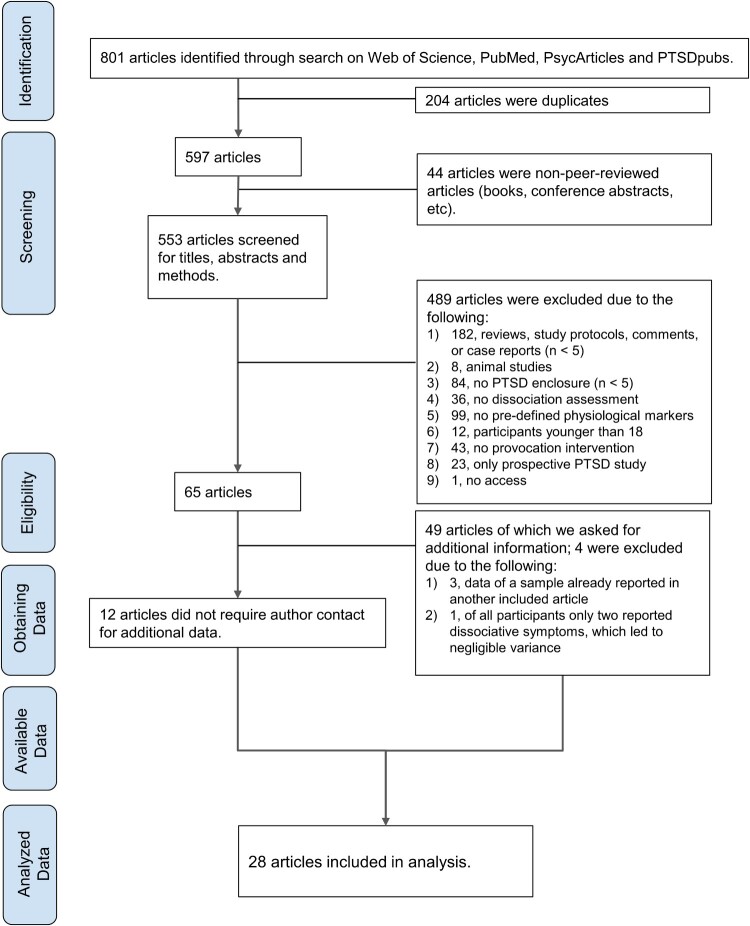
Background: Neurophysiological models link dissociation (e.g. feeling detached during or after a traumatic event) to hypoarousal. It is currently assumed that the initial passive reaction to a threat may coincide with a blunted autonomic response, which constitutes the dissociative subtype of post-traumatic stress disorder (PTSD). Objective: Within this systematic review we summarize research which evaluates autonomic nervous system activation (e.g. heart rate, blood pressure) and dissociation in PTSD patients to discern the validity of current neurophysiological models of trauma-related hypoarousal. Method: Of 553 screened articles, 28 studies (N = 1300 subjects) investigating the physiological response to stress provocation or trauma-related interventions were included in the final analysis. Results: No clear trend exists across all measured physiological markers in trauma-related dissociation. Extracted results are inconsistent, in part due to high heterogeneity in experimental methodology. Conclusion: The current review is unable to provide robust evidence that peri- and post-traumatic dissociation are associated with hypoarousal, questioning the validity of distinct psychophysiological profiles in PTSD.
Overview
CoChat Summary
TL;DR
This systematic review of 28 studies (N = 1300) found no clear or consistent autonomic nervous system pattern for trauma-related dissociation in PTSD. The authors conclude there is insufficient robust evidence that peri- and post-traumatic dissociation are associated with hypoarousal, questioning distinct psychophysiological profiles in PTSD.
Key findings
- Across all included studies, no clear trend emerged across measured physiological markers; extracted results were inconsistent, partly due to high heterogeneity in experimental methodology.
- Trait dissociation showed contradictory findings: two Trier Social Stress Test studies found negative correlations between trait dissociation and heart rate (Simeon et al.: r = −.48, p < .050; Powers et al.: r = −.65, p = .009), while Hyer et al. found higher HR in a high vs. medium dissociative group under trauma condition (p < .050, d = 0.34) and Schmahl et al. found a positive correlation with systolic blood pressure change score (r = .65, p = .032).
- Peritraumatic dissociation was mixed but tended toward hyperarousal in some studies (Sledjeski & Delahanty: HR r = .34, p = .034; Hetzel-Riggin & Wilber PTSD subsample: HR r = .52, p = .023; Ladwig et al.: SCR p = .017, d = 0.42), while Bichescu-Burian et al. found a negative HR change-score correlation (r = −.54, p = .010).
- Acute post-traumatic dissociation showed some evidence of attenuated response (Sack et al.: maximum HR r = −.30, p < .050; high vs. low dissociation p = .002, d = −1.11; Chou et al.: LF/HF-ratio r = −.53, p < .050; D’Andrea et al.: SCR p = .040, d = −0.57; Krause-Utz et al.: HF-HRV during downregulation of negative pictures r = .66, p = .025), but the review concludes no robust evidence for hypoarousal across peri- and post-traumatic dissociation.
Methods
- Systematic review following PRISMA-IPD procedures, searching Web of Science, PubMed, PsycArticles, and PTSDpubs until 21 March 2022; 801 articles were identified, 553 peer-reviewed articles were screened, and 28 studies (N = 1300 subjects) were included.
- Inclusion criteria: age ≥ 18; at least 5 patients with PTSD diagnosis or meeting criteria; experimental trauma-related intervention or stress provocation; measurable specific autonomic outcomes; correlative or comparative design linking dissociation and physiological markers. Exclusion criteria included animal studies, no dissociation assessment, treatment outcome or baseline/resting state only, and prospective PTSD assessment after intervention.
- Data were extracted into a coding spreadsheet and grouped by trait, peritraumatic, or acute dissociation; effect sizes (r or Cohen’s d) were obtained or calculated where possible, and findings were synthesized qualitatively because of heterogeneity.
Limitations
- The authors state that this qualitative review did not include a quantitative meta-analysis because of high heterogeneity in sample characteristics, experimental interventions, dissociation assessment tools, and physiological measures; they also note that most instruments did not solely measure derealization/depersonalization, limiting interpretation, and that low sample sizes, limited statistical power, and few studies assessing multiple dissociation modalities constrain conclusions.
- The paper also states that most studies related dissociation to mean psychophysiological scores rather than temporal changes, and that only five studies included at least two types of dissociation modalities.
- Evident from the text: included studies varied widely in sample size (n = 14 to n = 200), population (PTSD, BPD, trauma-exposed, controls), and dissociation measures (14 unique measures), making direct comparison and generalization difficult.
Model-written summary. Check it against the paper before relying on it.
Integrity signals
Registry
Cites
Statistics
Figures
Verification
Claims the paper makes
34 Valid · 10 Not valid · 66 Not checked · 54 Own results and interpretations
At least one cited source doesn’t support this claim or points to a different paper, and none confirmed it — see the verdicts below.
In the paper
“None of the other studies found correlations between HRV and trait dissociation after exposure to trauma related material (Hauschildt et al., 2011) or general stress stimuli (Powers et al., 2021; Schäflein et al., 2018).”
§ Trauma-related dissociation and the autonomic nervous system: a systematic literature review of psychophysiological correlates of dissociative experiencing in PTSD patients > Results > Trait dissociation
What the sources say
- Not checked — no full text of the sourcecites Hauschildt et al., 2011 matched to “Heart rate variability in response to affective scenes in posttraumatic stress disorder” (2011) source
- Disputedcites Powers et al., 2021 matched to “Emotion dysregulation and dissociation contribute to decreased heart rate variability to an acute psychosocial stressor in trauma-exposed Black women” (2021) sourceExperimental — accuracy not yet measured
The Results (page not supplied) report a significant positive association between dissociation and the LF/HF measure of heart rate variability 45 minutes after a general psychosocial stressor. The Methods describe dissociation as past-month symptoms measured by questionnaire, rather than a momentary response. Thus, this study found the kind of post-stressor association the citing sentence says it did not find. (LLM, conf=0.90)
Checked by a reasoning model — may be wrong.
- Could not verifycites Schäflein et al., 2018 matched to “The enemy in the mirror: self-perception-induced stress results in dissociation of psychological and physiological responses in patients with dissociative disorder” (2018) sourceExperimental — accuracy not yet measured
The Methods (Instruments and Data analysis; page unavailable) say the study measured trait dissociation with the Dissociative Experiences Scale and HRV with RMSSD, but describe mixed-model comparisons rather than correlations between them. The Results (Sympathetic and parasympathetic tone during CFM; page unavailable) report HRV changes during mirror-confrontation, not whether HRV correlated with trait dissociation. I found no reported test of the claimed correlation. (LLM, conf=0.76)
plain- Asserted: passes — The authors put it forward as true.
- Checkable: passes — It can be checked against evidence.
- Load-bearing: unclear — It is unclear whether the paper’s conclusions depend on it.
- Based: passes — The paper gives a reason why it holds.
- Rests on an assumption not shown here.
The cited sources support only part of this claim — read each source’s verdict below.
In the paper
“It should be noted, though, that sympathetic and parasympathetic activity are not reciprocal, but interact in a loosely coupled fashion (e.g. Billman, 2013; de Geus et al., 2019).”
§ Trauma-related dissociation and the autonomic nervous system: a systematic literature review of psychophysiological correlates of dissociative experiencing in PTSD patients > Introduction > The autonomic nervous system
What the sources say
- Partly supportedcites Billman, 2013 matched to “The LF/HF ratio does not accurately measure cardiac sympatho-vagal balance” (2013) sourceExperimental — accuracy not yet measured
In the section on LF/HF and sympatho-vagal balance, Billman describes complex, non-linear interactions and examples where sympathetic and parasympathetic activity do not change reciprocally. But the paper also says small arterial-pressure changes typically provoke reciprocal changes, so the claim's unqualified statement that the activities 'are not reciprocal' overstates the source. (LLM, conf=0.85)
- Supportedcites de Geus et al., 2019 matched to “Should heart rate variability be “corrected” for heart rate? Biological, quantitative, and interpretive considerations” (2019) source
The Introduction says the two arms of the autonomic nervous system do not function reciprocally across many behavioral states and may show coactivation. Its autonomic space model also allows reciprocal, independent, and coactive patterns, supporting the claim that their activity is not obligatorily reciprocal. (LLM, conf=0.90)
plainstates an association- Asserted: passes — The authors put it forward as true.
- Checkable: passes — It can be checked against evidence.
- Load-bearing: passes — The paper’s conclusions depend on it.
- Based: passes — The paper gives a reason why it holds.
- Partly supported
The cited sources that could be checked couldn’t confirm or dispute this claim.
In the paper
“studies which have proven that trait dissociation is negatively correlated with heart rate during experimentally-induced social stress (Powers et al., 2021; Simeon et al., 2008).”
§ Trauma-related dissociation and the autonomic nervous system: a systematic literature review of psychophysiological correlates of dissociative experiencing in PTSD patients > Introduction > Psychophysiological models
What the sources say
- Could not verifycites Powers et al., 2021 matched to “Emotion dysregulation and dissociation contribute to decreased heart rate variability to an acute psychosocial stressor in trauma-exposed Black women” (2021) sourceExperimental — accuracy not yet measured
The Results (page not available) report a positive association between dissociation and the LF/HF heart-rate-variability ratio 45 minutes after the stressor, not a negative correlation with heart rate. I searched the paper’s discussion of dissociation, heart rate, and post-stressor correlations; the available passages do not establish the claimed heart-rate relationship. (LLM, conf=0.72)
- Not checked — no full text of the sourcecites Simeon et al., 2008 matched to “Dissociation versus posttraumatic stress: Cortisol and physiological correlates in adults highly exposed to the World Trade Center attack on 9/11” (2008) source
boostedstates an association- Asserted: passes — The authors put it forward as true.
- Checkable: passes — It can be checked against evidence.
- Load-bearing: passes — The paper’s conclusions depend on it.
- Based: passes — The paper gives a reason why it holds.
- Could not verify
The cited sources support only part of this claim — read each source’s verdict below.
In the paper
“newer publications reveal publication bias in studies on heart rate variability and PTSD (Ge et al., 2020; Schneider & Schwerdtfeger, 2020).”
§ Trauma-related dissociation and the autonomic nervous system: a systematic literature review of psychophysiological correlates of dissociative experiencing in PTSD patients > Methods > Publication bias
What the sources say
- Not matchedcites Ge et al., 2020
This doesn’t read as a citation we can look up.
- Supportedcites Schneider & Schwerdtfeger, 2020 matched to “Autonomic dysfunction in posttraumatic stress disorder indexed by heart rate variability: a meta-analysis” (2020) source
The Discussion reports that publication bias was evident in two PTSD–heart-rate-variability meta-analyses, for LF/HF ratio and RMSSD. This supports the claim that the publication identified bias, though it did not find bias for every measure. (LLM, conf=0.92)
plain- Asserted: passes — The authors put it forward as true.
- Checkable: passes — It can be checked against evidence.
- Load-bearing: passes — The paper’s conclusions depend on it.
- Based: passes — The paper gives a reason why it holds.
- Not matched
The cited sources support only part of this claim — read each source’s verdict below.
In the paper
“a study of PTSD patients demonstrated that experiencing acute dissociation during trauma recall (via personalized trauma audio-scripts) is associated with reduced heart rate (Sack et al., 2012).”
§ Trauma-related dissociation and the autonomic nervous system: a systematic literature review of psychophysiological correlates of dissociative experiencing in PTSD patients > Introduction > Psychophysiological models
What the sources say
- Partly supportedcites Sack et al., 2012 matched to “Acute dissociation and cardiac reactivity to script-driven imagery in trauma-related disorders” (2012) sourceExperimental — accuracy not yet measured
The Results passage reports that participants with high acute dissociation had lower heart rate during the trauma script, and the Methods describe personalized trauma scripts recorded on audiotape. However, the Participants section says only 42 of 61 participants (69%) had a PTSD diagnosis; the reported association is for the broader trauma-related sample, not specifically for PTSD patients. (LLM, conf=0.87)
boostedstates an association- Asserted: passes — The authors put it forward as true.
- Checkable: passes — It can be checked against evidence.
- Load-bearing: unclear — It is unclear whether the paper’s conclusions depend on it.
- Based: passes — The paper gives a reason why it holds.
- Partly supported
73 more claims · 12 with their cited sources checked
Create a free account to see all 164 claims and to verify the 7 references still open.
- It may state two separate claims as one. 51
- Probably not a substantial claim. 49
- The quote only partly states this claim. 1
Self-check
Percentages, sums and reported differences re-computed from the paper’s own numbers.
Each contradiction between two passages listed here was confirmed by an independent check.
Rated minor: it would not touch a result — a value no result rests on, a p-value that stays on the same side of the significance level, or a conflict that is clerical, resolved elsewhere in the paper, or outside its own findings.
In the paper
§ Trauma-related dissociation and the autonomic nervous system: a systematic literature review of psychophysiological correlates of dissociative experiencing in PTSD patients > Results > Acute dissociation
“Krause-Utz et al. (2019) | 20 | BPD patients with comorbid PTSD”
§ Trauma-related dissociation and the autonomic nervous system: a systematic literature review of psychophysiological correlates of dissociative experiencing in PTSD patients > Results > Acute dissociation
“Krause-Utz et al. (2018) also demonstrated no effects of acute dissociation on HF-HRV while participants watched pictures with varying emotional valence.”
Rated minor: it would not touch a result — a value no result rests on, a p-value that stays on the same side of the significance level, or a conflict that is clerical, resolved elsewhere in the paper, or outside its own findings.
In the paper
§ Trauma-related dissociation and the autonomic nervous system: a systematic literature review of psychophysiological correlates of dissociative experiencing in PTSD patients > Results > Acute dissociation
“Sack et al. (2012) found no correlation between the RMSSD acute dissociation in the overall sample”
§ Trauma-related dissociation and the autonomic nervous system: a systematic literature review of psychophysiological correlates of dissociative experiencing in PTSD patients > Results > Acute dissociation
“(r = −.21, p < .050)”
Citations
Cites
Diagnostic and Statistical Manual of Mental Disorders
American Psychiatric Association (2013) · doi:10.1176/appi.books.9780890425596 · Cited by 116,369
Heart rate variability: origins, methods, and interpretive caveats
BERNTSON, G. G., THOMAS BIGGER, J., ECKBERG, D. L., GROSSMAN, P., KAUFMANN, P. G., MALIK, M., NAGARAJA, H. N., PORGES, S. W., SAUL, J. P., STONE, P. H., et al. (1997) · Psychophysiology · doi:10.1111/j.1469-8986.1997.tb02140.x · Cited by 3,962 · cited 2×
“Parameters of heart rate variability (HRV) were assessed in four studies, including root mean square successive difference (RMSSD), high frequency HRV (HF-HRV), low frequency HRV (LF-HRV), the ratio of low frequency to high frequency (LF/HF-ratio) and respiratory sinus arrhythmia (RSA), which can be interpreted as an…”
BackgroundDevelopment, reliability, and validity of a dissociation scale
BERNSTEIN, E. M., & PUTNAM, F. W. (1986) · The Journal of Nervous and Mental Disease · doi:10.1097/00005053-198612000-00004 · Cited by 3,793 · cited 3×
“To evaluate acute dissociation, four studies used the Dissociation-Tension Scale-acute (DSS-acute; Stiglmayr et al., 2003; Stiglmayr et al., 2010), consisting of dissociation-related items from the DES (Bernstein & Putnam, 1986), somatoform dissociation from the Somatoform Dissociation Questionnaire (SDQ-20; Nijenhuis…”
MethodPorges, S. W. (2007) · Biological Psychology · doi:10.1016/j.biopsycho.2006.06.009 · Cited by 3,415 · cited 2×
“The polyvagal theory, developed by Stephen Porges (2003, 2007, 2011), has received substantial attention in the psychotraumatology field.”
BackgroundAssessing psychological trauma and PTSD
(1997) · Choice Reviews Online · doi:10.5860/choice.34-5966 · Cited by 2,330
Stewart, L. A., Clarke, M., Rovers, M., Riley, R. D., Simmonds, M., Stewart, G., & Tierney, J. F. (2015) · JAMA · doi:10.1001/jama.2015.3656 · Cited by 2,134 · cited 1×
“This systematic review was conducted with studies published until 21 March 2022, following the Preferred Reporting Items for Systematic Review and Meta Analysis for Individual Patient Data (PRISMA-IPD; Stewart et al., 2015) procedures.”
MethodThe LF/HF ratio does not accurately measure cardiac sympatho-vagal balance
Billman, G. E. (2013) · Frontiers in Physiology · doi:10.3389/fphys.2013.00026 · Cited by 1,401 · cited 1×
“It should be noted, though, that sympathetic and parasympathetic activity are not reciprocal, but interact in a loosely coupled fashion (e.g. Billman, 2013; de Geus et al., 2019).”
BackgroundThe Extent and Consequences of P-Hacking in Science
Head, M. L., Holman, L., Lanfear, R., Kahn, A. T., & Jennions, M. D. (2015) · PLOS Biology · doi:10.1371/journal.pbio.1002106 · Cited by 1,388 · cited 1×
“Publication bias remains an important issue in psychological and medical research (Head et al., 2015; Thornton & Lee, 2000).”
BackgroundPublication bias in meta-analysis its causes and consequences
Thornton, A. (2000) · Journal of Clinical Epidemiology · doi:10.1016/s0895-4356(99)00161-4 · Cited by 1,291
(2011) · Cited by 1,181
Cited by
Assessing dissociation: A systematic review and evaluation of existing measures
Wainipitapong, S., Millman, L. S. M., Huang, X., Wieder, L., Terhune, D. B., & Pick, S. (2024) · Journal of Psychiatric Research · doi:10.1016/j.jpsychires.2024.11.040 · Cited by 44
Brzozowska, A., & Grabowski, J. (2025) · International Journal of Molecular Sciences · doi:10.3390/ijms26115216 · Cited by 41
“Its manifestations can include “negative” symptoms such as depersonalization, derealiza-tion, emotional numbing, analgesia, immobility as well as “positive symptoms” (intrusions) [44,150,152].”
Coimbra, B. M., Hoeboer, C. M., van Zuiden, M., Williamson, R. E., D'Elia, A. T., Mello, A. F., Mello, M. F., & Olff, M. (2023) · Journal of Anxiety Disorders · doi:10.1016/j.janxdis.2023.102730 · Cited by 25
Kratzer, L., Tschöke, S., Schröder, J., Shevlin, M. E., Hyland, P., Eckenberger, C., Heinz, P., & Karatzias, T. (2024) · Psychopathology · doi:10.1159/000539740 · Cited by 10
“Yet, many questions regarding the nature of dissociative symptoms in PTSD remain unanswered [28, 29].”
Dyball, D. M., Maqsood, R., Schofield, S. J., Bennett, A. N., Cullinan, P., Bull, A. M. J., Boos, C. J., & Fear, N. T. (2025) · Journal of Affective Disorders · doi:10.1016/j.jad.2025.01.087 · Cited by 12
Lathan, E. C., Guelfo, A., Barrie, D. L. L., Teer, A. P., Powers, A. D., Siegle, G. J., & Fani, N. (2023) · Journal of Psychiatric Research · doi:10.1016/j.jpsychires.2023.05.028 · Cited by 7
Danböck, S. K., Hettegger, S. E., Anders, S., Franke, L. K., Liedlgruber, M., Miedl, S. F., Gashi, A., Kurapov, A., Weber, R.-C., Ehring, T. W., et al. (2023) · European Journal of Psychotraumatology · doi:10.1080/20008066.2023.2238492 · Cited by 7
“…risk factors, neurobiological alterations, elevated symptom severity, comorbidity, chronicity and functional impairment as well as di ff erential treatment outcomes (for reviews see Atchley & Bedford, 2021; Beutler et al., 2022; Lanius et al., 2010; Roydeva & Reinders, 2021; Schiavone et al., 2018).”
Olff, M. (2023) · European Journal of Psychotraumatology · doi:10.1080/20008066.2023.2170818 · Cited by 5
“Trauma-related dissociation and the autonomic nervous system: a systematic literature review of psychophysiological correlates of dissociative experiencing in PTSD patients (Beutler et al., 2022) This review provides an important overview on psychophysiological correlates of peri- and post-traumatic dissociation.”
BackgroundImpaired interoception in Colombian victims of armed conflict with PTSD: a preliminary HEP study
Herrera, E., Gutiérrez-Sterling, D., Barrera-Ocampo, A. A., Jaramillo, J. O., Santamaría‐García, H. A., & Birba, A. (2025) · Frontiers in Psychology · doi:10.3389/fpsyg.2025.1567574 · Cited by 6
Bruno, S., Cichetti, G., & Velotti, P. (2025) · Clinical Psychology Review · doi:10.1016/j.cpr.2025.102647 · Cited by 8
How-To Study Dissociative Symptoms in a Broad Range of Mental Disorders: A Methodological Primer
Danböck, S. K., Mertens, Y. L., Kulla, P., Seitz, K. I., & Schalinski, I. (2025) · Journal of Trauma & Dissociation · doi:10.1080/15299732.2025.2481474 · Cited by 4
“…dissociative symptoms in a broad range of mental disorders and their neurobiological (Lotfinia et al., 2020; Roydeva & Reinders, 2021), autonomic (Beutler et al., 2022; Boulet et al., 2022; Roydeva & Reinders, 2021), and genetic (Roydeva & Reinders, 2021) correlates as well as associations with…”
InfluentialSelf-citationPape, V. R., Sammer, G., Hanewald, B., Schäflein, E., Rauschenbach, F., & Stingl, M. (2024) · Frontiers in Psychology · doi:10.3389/fpsyg.2024.1406180 · Cited by 3
“According to this, it can be hypothesized that the lack of physiological responses to emotional stimuli might be the result of autonomic blunting due to a dissociative process (Schäflein et al., 2018; Beutler et al., 2022).”
BackgroundLear, M. K., & Luoma, J. B. (2025) · Journal of Clinical Psychology · doi:10.1002/jclp.23810 · Cited by 9
Putica, A., Agathos, J. A., & Felmingham, K. L. (2025) · Nature Reviews Psychology · doi:10.1038/s44159-025-00479-1 · Cited by 8
“PTSD and FND are also uniquely characterized by dissociation 48,216 , experiential avoidance 217–219 and alexithymia 34,72,220 .”
Caselli, I., Ielmini, M., Gastaldello, G., Bellini, A., & Callegari, C. (2025) · Journal of Trauma & Dissociation · doi:10.1080/15299732.2025.2481031 · Cited by 4
Tremblay, L., Gordon, W. V., & Elander, J. (2025) · European Journal of Mental Health · doi:10.5708/ejmh.20.2025.0044 · Cited by 3
“This is posited as the precursor to the frequently reported experience of dissociation: a psychological protective measure whereby the individual mentally escapes from the deeply traumatic experience for an unspecified amount of time (Beutler et al., 2022).”
Stief, L., Sattel, H. C., Paschinger, K., Sack, M., & Schäflein, E. (2025) · BJPsych Open · doi:10.1192/bjo.2025.10072 · Cited by 3
Heekerens, J. B., Gross, J. J., Kreibig, S. D., Wingenfeld, K., & Roepke, S. (2023) · BMC Psychology · doi:10.1186/s40359-023-01209-z · Cited by 9
Biological mechanisms underlying adverse mental health outcome after trauma
van Zuiden, M., & Olff, M. (2025) · European Journal of Psychotraumatology · doi:10.1080/20008066.2025.2541473 · Cited by 3
“The final article consisted of a systematic review (Beutler et al. 2022).”
Kandeğer, A., Ekici, F., Güler, H. A., Bayırlı, Ö., Özaltın, M. S., & Selvi, Y. (2025) · Journal of Trauma & Dissociation · doi:10.1080/15299732.2025.2503709 · Cited by 2
“Dissociation, which is more closely related to clinical negative outcomes such as developing PTSD, may be more strongly associated with ADHD persistence as an indicator of having been affected by trauma exposure (Beutler et al., 2022).”
Beutler, S., Franz, M., Daniels, J. K., Schellong, J., Weidner, K., & Croy, I. (2025) · Psychiatry Research · doi:10.1016/j.psychres.2024.116345 · Cited by 7
Self-citationMcDermott, T. J., Siegle, G. J., Guelfo, A., Huynh, K., Karkare, M. C., Krawczak, R. A., Johnston, A., Elbasheir, A., Fulton, T. M., Semerod, J., et al. (2025) · Journal of Anxiety Disorders · doi:10.1016/j.janxdis.2025.103008 · Cited by 1
Alameddine, A. (2025) · Scandinavian Journal of Child and Adolescent Psychiatry and Psychology · doi:10.2478/sjcapp-2025-0006 · Cited by 2
Barbano, A. C., Piggott, D. M., Raugh, I. M., Ellem, J. R., Sexton, M. B., & Anderson, R. E. (2025) · Journal of Traumatic Stress · doi:10.1002/jts.23182 · Cited by 5
“Although theories of threat response vary in their conceptualization of TI etiology (for a review, see Beutler et al., 2022), most agreed-upon definitions of TI include elements of both physical immobility (e.g., paralysis, numbness, inability to vocal-ize) and mental numbing without loss of…”
Does Dissociation Have an Emotion-Regulation Function? Evidence From Daily Life and the Laboratory
Heekerens, J. B., Gross, J. J., Kreibig, S. D., Ober, H., Eichentopf, R., Dittrich, T., Lebovitz, J. G., Hellmann‐Regen, J., Wingenfeld, K., & Roepke, S. (2026) · Clinical Psychological Science · doi:10.1177/21677026251396803 · Cited by 4
Is Child Maltreatment Painful? An Exploration of Peritraumatic Pain in Child Maltreatment
Tsur, N., Katz, C., & Shemesh, N. (2025) · Journal of Child & Adolescent Trauma · doi:10.1007/s40653-024-00682-x · Cited by 2
Can Listening to a Verbal Trauma Report Induce Intrusions? – Replication of a Randomized Trial
Daniels, J. K., Thielemann, J. F. B., & Borg, C. (2024) · Journal of Trauma & Dissociation · doi:10.1080/15299732.2024.2374369 · Cited by 1
“This might be the result of altered peritraumatic encoding of the trauma information or due to habitual dissociation following the exposure (as has been discussed for primary trauma victims; Beutler et al., 2022; Mertens et al., 2022; Ozer et al., 2003).”
BackgroundInfluentialSelf-citationChild Maltreatment and Adolescent Dissociative Symptomatology: Moderation by Autonomic Regulation
Tabilin, D., Rudd, K. L., & Yates, T. M. (2025) · Child Maltreatment · doi:10.1177/10775595251323218 · Cited by 2
“Although some have suggested that low RSA may re fl ect hyper-aroused physiological states that confer vulnerability to PTSD symptoms (Barry et al., 2015), extant reviews of dissociative biomarkers reveal no consistent relations between RSA and dissociative symptoms (Beutler et al., 2022).”
Trauma-analogue symptom variability predicted by inhibitory control and peritraumatic heart rate
Petersdotter, L., Miller, L., Johansson, M., & Hammar, Å. (2025) · Scientific Reports · doi:10.1038/s41598-025-99564-x · Cited by 3
“One possibility is that participants exhibited a blunted arousal response—a pattern observed in trauma-related dissociation or freezing reactions 66,67 .”
When Silence Breaks: The Influence of Pure Tones and White Noises on Conditioned Flight Responses
di Licosa, S. F. M., Moro, A. S., Ferro, M., Malgaroli, A., & Lamanna, J. (2025) · Brain and Behavior · doi:10.1002/brb3.70561 · Cited by 1
“Some researchers suggest that dissociation itself functions as a defensive mechanism against trauma-related stimuli, leading to a blunted psychophys-iological response (Beutler et al. 2022).”
António, H., Barros, C. A. F., de Castro, M. V., Oliveira, J., Gamito, P. S., Bouchard, S., & Pinto, R. J. (2025) · Cyberpsychology Behavior and Social Networking · doi:10.1177/21522715251394917 · Cited by 3
“While both responses are regulated by the autonomic nervous system, 39,40 HRV is regulated by both the sympathetic and parasympathetic systems, 41 whereas SCL is primarily regulated by the sympathetic sys-tem, as sweat glands are innervated by fi bers of this system and activated in response to…”
A network analysis of peritraumatic dissociation and subsequent intrusive memories
Maccallum, F., Gutmann, H., Creamer, M. C., O'Donnell, M. L., Forbes, D., McFARLANE, A. C., Silove, D. M., & Bryant, R. A. (2025) · European Journal of Psychotraumatology · doi:10.1080/20008066.2025.2555793 · Cited by 1
“Recent reviews have indicated that there is not a robust relationship between dissociation and suppressed arousal or reactivity (Beutler et al., 2022; Roydeva & Reinders, 2021).”
Varma-Doyle, A. V., & Robbins, N. M. (2025) · Seminars in Neurology · doi:10.1055/a-2764-3644 · Cited by 2
Fung, H. W., Celine Mylx, L. I., Yuan, G. F., Chau, A. K. C., Reyes, M. E. S., Jaya, E. S., Mukhtar, F., Lian, A. E. Z., Derin, G., Bengwasan, P. D., et al. (2026) · Social Psychiatry and Psychiatric Epidemiology · doi:10.1007/s00127-026-03053-z · Cited by 1
Abrahams, T., van Dooren, J. C., Hakvoort, L., Konijn, C., Otten, R., Popma, A., & Nijhof, K. S. (2026) · The Arts in Psychotherapy · doi:10.1016/j.aip.2026.102479 · Cited by 1
Troup, O., & McCann, B. (2026) · Psychology of sport and exercise · doi:10.1016/j.psychsport.2026.103235 · Cited by 1
Ayahuasca in the treatment of bipolar disorder with psychotic features–A retrospective case studyPreprint
Turkia, M. (2023) · PsyArXiv (OSF Preprints) · doi:10.31234/osf.io/65se9 · Cited by 2
Danböck, S. K., Hettegger, S., Anders, S., et al. (2023) · doi:10.31234/osf.io/b3deh · Cited by 1
Heekerens, J. B., Gross, J. J., Kreibig, S. D., Wingenfeld, K., & Röpke, S. (2023) · doi:10.31234/osf.io/aq63g
Oggiano, M., & Adriani, W. (2023) · Springer eBooks · doi:10.1007/978-3-031-43571-3_9
Safe Spaces for Queer Couples: A Case Study
Outler, C., & Lowery, D. F. (2024) · Contemporary Family Therapy · doi:10.1007/s10591-024-09721-z
“…includes attuning to the client’s experience in the room (physiological symptoms, somatic responses, the physical space of their sessions), as well as how one shows up in the therapeutic relationship (consistency and modeling) (Beutler et al., 2022; Kimberg & Wheeler, 2019; Kuhfuß et al., 2021).”
Grundlagen der Diagnostik und Therapie
(2024) · Elsevier eBooks · doi:10.1016/b978-3-437-22487-4.16001-0
Psychological and Biological Theories of Child and Adolescent Traumatic Stress Disorders
Ford, J. D., & Greene, C. A. (2024) · Springer eBooks · doi:10.1007/978-3-031-77215-3_5
Heumann, J., Quednow, B. B., Chumbley, J. R., Eisner, M., Ribeaud, D., Shanahan, L., & Shanahan, M. J. (2025) · bioRxiv (Cold Spring Harbor Laboratory) · doi:10.1101/2025.05.11.652731
“Dimin-ished RHRV in victims—reflected in overall (SDNN), long-term (SDANN, SDSD), and short-term (rMSSD, pNN50) measures—and a higher LF/HF ratio align with meta-analytic findings from on PTSD [14, 127].”
Ayahuasca revisited. Case studies & observationsPreprint
Turkia, M. (2025) · PsyArXiv (OSF Preprints) · doi:10.31234/osf.io/pefct_v1 · Cited by 1
Kratzer, L., Tschöke, S., Schröder, J., Shevlin, M. E., Hyland, P., Eckenberger, C., Heinz, P., Preyer, S., Safavi, L. M., & Karatzias, T. (2025) · Trauma und Gewalt · doi:10.21706/tg-19-3-202
Varshney, D. K. S., Agrawal, M., Tripathi, R. K., et al. (2025) · PubMed
Fraser, A. (2025) · International Journal of Therapeutic Massage & Bodywork Research Education & Practice · doi:10.3822/ijtmb.v18i3.1183
“(12) Therapeutic massage is a promising adjunct, promoting neuroplastic changes (13) and increasing cortical activity in regions involved in sensory integration, (8) collectively helping temper limbic system activity.”
Daniels, J. K., Fereidooni, F., & Lange, N. B. (2025) · Journal of Trauma & Dissociation · doi:10.1080/15299732.2025.2599758 · Cited by 1
“These are typically employed to investigate psychophysiological (e.g., Beutler et al., 2022) or neural (e.g., Mertens et al., 2022) correlates of dissociative states in the laboratory.”
Self-citationKratzer, L., Knoblauch, H., Powers, A. D., Katrinli, Ş., Michopoulos, V., Fani, N., Gillespie, C. F., Jovanović, T., Ressler, K. J., Smith, A. K., et al. (2026) · Scientific Reports · doi:10.1038/s41598-026-42512-0 · Cited by 1
Giordano, A. L., Dorrough, K. M., Smith, D. L., & Zhu, P. (2026) · Journal of Counseling & Development · doi:10.1002/jcad.70032
Biomarkers for complex post-traumatic stress disorder: translational and evolutionary perspectives
Rajkumar, R. P. (2026) · Frontiers in Psychiatry · doi:10.3389/fpsyt.2026.1786811 · Cited by 1
“Studies examining physiological markers of dissociation in PTSD, which may be relevant to C-PTSD, have failed to yield consistent results (34).”
Stam, J. V., Vink, R. J. P., Matti, L. I., & Speelman, L. (2026) · Journal of Child & Adolescent Trauma · doi:10.1007/s40653-026-00843-0
“Distorted activity of the lower brain areas and of the sympathetic nervous system is common in traumatized individuals (Bedi & Arora, 2007; Beutler et al., 2022; Perry et al., 1995).”
Li, C.-H., Qian, J., Qian, J.-Z., Wang, X.-H., & Zhang, Q. (2026) · Frontiers in Psychiatry · doi:10.3389/fpsyt.2026.1837385
“” While patients often use the word indiscriminately, neurobiological reality suggests two distinct states (19, 20).”
Rouleaux, M., de Looff, P. C., Bouwmeester, S., Mevissen, L., Peters-Scheffer, N. C., Lindauer, R., & Didden, R. (2026) · European Journal of Trauma & Dissociation · doi:10.1016/j.ejtd.2026.100719
Zvi, L., Handelzalts, J. E., Horesh, D., & Shlomi, I. (2026) · Frontiers in Psychiatry · doi:10.3389/fpsyt.2026.1855046
Regulating Trauma Through the Body: A Narrative Review of Somatic-Based Interventions
Visco‐Comandini, F., Marselli, G., Gobbo, A., Arcieri, S., Abagnale, S., Autuori, M., Biase, R. D., Pastina, R. D., Forno, B. D., Grimaldi, R., et al. (2026) · Psychiatry International · doi:10.3390/psychiatryint7040177 · Cited by 1
“It is well known [5,6] that exposure to threatening situations activates archaic defense mechanisms regulated by the autonomic nervous system: fight-or-flight responses are mediated by the sympathetic system through the release of norepinephrine, while the parasympathetic system, and in particular…”
InfluentialPandey, A. (2026) · Frontiers in Psychology · doi:10.3389/fpsyg.2026.1853837
“Persistent states of hyperarousal are characterized by sympathetic nervous system dominance, with elevated physiological activation, increased vigilance for potential threats, and increased physiological mobilization (Beutler et al., 2022).”
InfluentialCui, X., Zhang, L., Ou, Y., Liu, Y., Lang, B., & Guo, W. (2026) · Psychiatry and Clinical Neurosciences · doi:10.1111/pcn.70125 · Cited by 1
Tegtmeyer, M., Gross, J. J., Preece, D. A., & Heekerens, J. B. (2026) · Scientific Reports · doi:10.1038/s41598-026-70906-7
Metadata
- Authors
- Beutler, S., Mertens, Y. L., Ladner, L., Schellong, J., Croy, I., & Daniels, J. K.
- Affiliations
- Technische Universität Dresden (DE)
- University of Groningen (NL)
- Carilion Clinic (US)
- Friedrich Schiller University Jena (DE)
- Corresponding author
- Daniels, Judith K.
- Venue
- European Journal of Psychotraumatology
- Publisher
- Informa UK Limited
- Published
- 2022-11-02
- Volume
- 13
- Issue
- 2
- Pages
- 2132599-2132599
- ISSN
- 2000-8066 (ISSN-L)
- PMC
- PMC9635467
- OpenAlex
- W4307931697
- Cited by
- 64
- References
- 123
- Citations by year
- 2026: 15 · 2025: 29 · 2024: 12 · 2023: 8
- FWCI
- 2.04
- Type
- journal article
- Language
- en
- Open access
- gold
- doi.org
- Licence
- Locations
- European Journal of Psychotraumatology (publishedVersion, cc-by-nc)
- PubMed Central (publishedVersion, cc-by-nc)
- PubMed (publishedVersion)
- DOAJ (DOAJ: Directory of Open Access Journals) (submittedVersion)
- University of Groningen research database (University of Groningen / Centre for Information Technology) (submittedVersion, cc-by-nc)
- Qucosa (Saxon State and University Library Dresden) (submittedVersion, cc-by-nc)
- Funders
- Deutsche Forschungsgemeinschaft (CR 479/9–1)
- German Academic Exchange Service
- Heinrich Böll Stiftung
- EU Rosalind-Franklin Fellowship
- Topics
- Social Sciences › Psychology › Clinical Psychology › Posttraumatic Stress Disorder Research
- Health Sciences › Medicine › Psychiatry and Mental health › Psychosomatic Disorders and Their Treatments
- Social Sciences › Psychology › Clinical Psychology › Psychoanalysis and Psychopathology Research
- Keywords
- dissociation, post-traumatic stress disorder, autonomic nervous system, hypoarousal, dissociative subtype of PTSD, heart rate, blood pressure, psychophysiological correlates, trauma-related dissociation, stress response
- MeSH terms
- Autonomic Nervous System, Dissociative Disorders, Heart Rate, Humans, Psychophysiology, Stress Disorders, Post-Traumatic
About these checks
Registry, retraction, Cites and statistics results are computed, not judged, with one exception: a printed reference that no index lists is read once by a model before it counts as a citation error. Claims are extracted by a model and kept only when their quote appears verbatim in the text; each cited source is then checked, with a model’s help, for whether it says what the claim relies on. Those verdicts can be wrong — read the claim’s quote and the cited source before relying on one.
The claim verdicts this report counts are experimental: their accuracy is not yet measured.
A language model drew the claims from the paper on 2026-10-10, under version 3 of the claim definition (model deepseek-v4.1-flash, prompt extract-v3).
A second model labelled each claim on 2026-10-10 (model jev-1.13-20260917, definition revision gold-guideline-v0.2).
Cited sources are checked with a language model’s help (gpt-6-sol).
Statistics and arithmetic are recomputed, not judged.
Confidence bands are shown only for fields calibrated on our annotated test set. None is calibrated yet, so no band is shown.
What counts as a claim ›How we measure confidence ›How we check this ›
Are you an author, or do you see a problem with this page? Request a review
Data sources
Bibliographic data: Semantic Scholar, OpenAlex, Crossref.
Contains information from the Semantic Scholar Academic Graph Datasets, made available under the ODC Attribution License (ODC-BY 1.0).
Semantic Scholar’s data is described in: Kinney, R., et al. (2023). The Semantic Scholar Open Data Platform. arXiv:2301.10140.
