

Dissecting the molecular mechanisms of gene x environment interactions: implications for diagnosis and treatment of stress-related psychiatric disorders
Open accessThe DOI matches its Crossref record; 37 of the 37 references it cites were found in a registry or an index.
Abstract
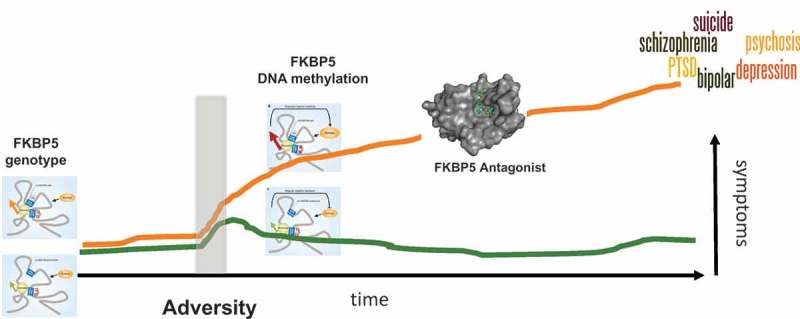
Epidemiological studies indicate a combined contribution of genetic and environmental factors, mainly exposure to adverse life events, in the risk for psychiatric disease. Understanding how adverse life events interact with genetic predisposition on the molecular level to shape risk and resilience to psychiatric disorders may yield important insight into disease mechanism. Using the example of the molecular mechanisms of interaction of functional genetic variants within the stress-regulating gene FKBP5 and early adversity, it is delineated how this interaction could contribute to transdiagnostic disease risk via a combined genetic and epigenetic disinhibition of FKBP5 transcription. This knowledge may now allow to develop biomarkers for a transdiagnostic subset of psychiatric patients and to personalize treatment.
Overview
The claims and statistics of this paper haven’t been checked yet.
Free: it reads the open-access text and checks the first 5 claims that cite a source we can check. Create a free account to check every claim.
Integrity signals
Registry
Cites
Statistics
Figures
Verification
Claims the paper makes
The claims and statistics of this paper haven’t been checked yet.
Free: it reads the open-access text and checks the first 5 claims that cite a source we can check. Create a free account to check every claim.
Claims other papers make about this one
Each is checked against this paper’s own text: does it say what the citing paper says it does?
The source backs part of the claim, not all of it — or backs it for a different population, condition or comparison.
In the citing paper
“However, the development of MDD also substantially depends on gene x environmental interactions [20-22].”
From The HPA Axis as Target for Depression (2024) · cites this paper as [21]
Experimental — accuracy not yet measuredThe cited source says what the claim attributes to it.
In the citing paper
“In the past decade, growing evidence has shown a link between epigenetic processes, and a range of mental health disorders (Binder, 2017).”
From Can epigenetics shine a light on the biological pathways underlying major mental disorders? (2022) · cites this paper as Binder, 2017
Self-check
Percentages, sums and reported differences re-computed from the paper’s own numbers.
The self-check needs the paper’s full text.
Citations
Cites
The link between childhood trauma and depression: insights from HPA axis studies in humans
Heim, C., Newport, D. J., Mletzko, T., Miller, A. H., & Nemeroff, C. B. (2008) · Psychoneuroendocrinology · doi:10.1016/j.psyneuen.2008.03.008 · Cited by 1,704
Allele-specific FKBP5 DNA demethylation mediates gene–childhood trauma interactions
Klengel, T., Mehta, D., Anacker, C., Rex-Haffner, M., Pruessner, J. C., Pariante, C. M., Pace, T. W. W., Mercer, K. B., Mayberg, H. S., Bradley, B., et al. (2013) · Nature Neuroscience · doi:10.1038/nn.3275 · Cited by 1,447 · cited 4×
“These effects have been observed in DNA from peripheral blood cells and saliva in both adults exposed to early trauma as well as children (Klengel et al., 2013; Non et al., 2016; Tyrka et al., 2015; Yehuda et al., 2016).”
BackgroundSelf-citationChildhood adversity and adult psychiatric disorder in the US National Comorbidity Survey
KESSLER, R. C., DAVIS, C. G., & KENDLER, K. S. (1997) · Psychological Medicine · doi:10.1017/s0033291797005588 · Cited by 1,298
Binder, E. B., Salyakina, D., Lichtner, P., Wochnik, G. M., Ising, M., Pütz, B., Papiol, S., Seaman, S., Lucae, S., Kohli, M. A., et al. (2004) · Nature Genetics · doi:10.1038/ng1479 · Cited by 977 · cited 2×
“polymorphism rs1360780) in the FKBP5 locus (Binder et al., 2004; Klengel et al., 2013).”
BackgroundSelf-citationHolocaust Exposure Induced Intergenerational Effects on FKBP5 Methylation
Yehuda, R., Daskalakis, N. P., Bierer, L. M., Bader, H. N., Klengel, T., Holsboer, F., & Binder, E. B. (2016) · Biological Psychiatry · doi:10.1016/j.biopsych.2015.08.005 · Cited by 782
Self-citationWochnik, G. M., Rüegg, J., Abel, G. A., Schmidt, U., Holsboer, F., & Rein, T. (2005) · Journal of Biological Chemistry · doi:10.1074/jbc.m407498200 · Cited by 638 · cited 1×
“When FKBP5 is bound to the complex, the GR has low affinity to cortisol and does not translocate readily to the nucleus (Davies, Ning, & Sanchez, 2002; Wochnik et al., 2005).”
BackgroundGene–Stress–Epigenetic regulation of FKBP5: clinical and translational implications
Zannas, A. S., Wiechmann, T., Gassen, N. C., & Binder, E. B. (2016) · Neuropsychopharmacology · doi:10.1038/npp.2015.235 · Cited by 622
Self-citationA New First Step in Activation of Steroid Receptors
Davies, T. H., Ning, Y.-M., & Sánchez, E. R. (2002) · Journal of Biological Chemistry · doi:10.1074/jbc.c100531200 · Cited by 427
The glucocorticoid responses are shaped by molecular chaperones
Grad, I., & Picard, D. (2007) · Molecular and Cellular Endocrinology · doi:10.1016/j.mce.2007.05.018 · Cited by 423 · cited 1×
“It is part of the GR complex (Grad & Picard, 2007).”
BackgroundKendler, K. S., Davis, C. G., & Kessler, R. C. (1997) · British Journal of Psychiatry · doi:10.1192/bjp.170.6.541 · Cited by 412
Cited by
Is the HPA Axis as Target for Depression Outdated, or Is There a New Hope?
Menke, A. (2019) · Frontiers in Psychiatry · doi:10.3389/fpsyt.2019.00101 · Cited by 240
The HPA Axis as Target for Depression
Menke, A. (2024) · Current Neuropharmacology · doi:10.2174/1570159x21666230811141557 · Cited by 131
Liu, S., Xiu, J., Zhu, C., Meng, K., Li, C., Han, R., Du, T., Li, L., Xu, L., Liu, R., et al. (2021) · Nature Communications · doi:10.1038/s41467-021-27044-7 · Cited by 118
“(1) Adrb2-3' UTR with wild-type m6A sites TCTAGATAGTGTCCTGTCAAGGAGGGGTCTTAGAGAGTAGAAAGC CTGTATTACAGTGGCGAGTCATTTGTACTACAGTTCCTTCCTTGGG AGTCAACGCTAAGGCTAGGCACAGTACCTTGACAGTTCACAAAGC CTTCCATGCCTGGGGGATCCTCACACAGCAGTTCCTGTTCTCTCTC CTGCCCCAGCTGACAAGTGTTTGGCTCCCCTGTGTAGTCCGTTCTG CCGTTGCTATTGCTAGAGTAGCCGTTCCCATAGGTTTTCGAAGA…”
BackgroundElbau, I., Cruceanu, C., & Binder, E. B. (2019) · Biological Psychiatry · doi:10.1016/j.biopsych.2019.04.025 · Cited by 101
Self-citationA decennial review of psychotraumatology: what did we learn and where are we going?
Olff, M., Amstadter, A., Armour, C., Birkeland, M. S., Bui, E., Cloitre, M., Ehlers, A., Ford, J. D., Greene, T., Hansen, M., et al. (2019) · European Journal of Psychotraumatology · doi:10.1080/20008198.2019.1672948 · Cited by 78
“Binder (Binder, 2017) provided an eloquent review of how a key gene within”
BackgroundInfluentialCan epigenetics shine a light on the biological pathways underlying major mental disorders?
Alameda, L., Trotta, G., Quigley, H., Rodriguez, V., Gadelrab, R., Dwir, D., Dempster, E., Wong, C. C. Y., & Forti, M. D. (2022) · Psychological Medicine · doi:10.1017/s0033291721005559 · Cited by 60
“In the past decade, growing evidence has shown a link between epigenetic processes, and a range of mental health disorders (Binder, 2017).”
BackgroundOlff, M., Hein, I. M., Amstadter, A. B., Armour, C., Birkeland, M. S., Bui, É., Cloître, M., Ehlers, A., Ford, J. D., Greene, T., et al. (2025) · European Journal of Psychotraumatology · doi:10.1080/20008066.2025.2458406 · Cited by 76
“…effects of trauma on psychological health, consequently increasing the risk for developing psychiatric disorders as well as physical illnesses (Akiki et al., 2018; Binder, 2017; Bussières et al., 2023; Clemens et al., 2018; Engel et al., 2020, 2023; Lüönd et al., 2025; Nugent et al., 2014, 2016).”
Kaul, D., Schwab, S. G., Mechawar, N., & Matosin, N. (2021) · Neuroscience & Biobehavioral Reviews · doi:10.1016/j.neubiorev.2021.01.025 · Cited by 64
Genome‐wide analyses of psychological resilience in U.S. Army soldiers
Stein, M. B., Choi, K. W., Jain, S., Campbell‐Sills, L., Chen, C., Gelernter, J., He, F., Heeringa, S. G., Maihofer, A. X., Nievergelt, C., et al. (2019) · American Journal of Medical Genetics Part B: Neuropsychiatric Genetics · doi:10.1002/ajmg.b.32730 · Cited by 55
Menke, A. (2018) · Pharmacogenomics and Personalized Medicine · doi:10.2147/pgpm.s146110 · Cited by 41
Herzog, D. P., Wegener, G., Lieb, K., Müller, M. B., & Treccani, G. (2019) · International Journal of Molecular Sciences · doi:10.3390/ijms20040949 · Cited by 40
“In the complex symphony of genetic risk load and environmental factors of depression, epigenetics plays a pivotal role in the gene-environmental interaction [19].”
BackgroundAlameda, L., Liu, Z., Sham, P. C., Aas, M., Trotta, G., Rodríguez, V., Forti, M. D., Stilo, S. A., Kandaswamy, R., Arango, C., et al. (2023) · Molecular Psychiatry · doi:10.1038/s41380-023-02044-9 · Cited by 30
“Control participants without a lifetime diagnosis of psychotic disorder were recruited from the same population as the cases using guided random and quota sampling strategies.”
MethodLei, C., Li, N., Chen, J., & Wang, Q. (2023) · Molecules · doi:10.3390/molecules28093859 · Cited by 23
Stressful Newborn Memories: Pre-Conceptual, In Utero, and Postnatal Events
Papadopoulou, Z. L., Vlaikou, A., Theodoridou, D., Markopoulos, G. S., Tsoni, K., Agakidou, E., Drosou‐Agakidou, V., Turck, C. W., Filiou, M. D., & Syrrou, M. (2019) · Frontiers in Psychiatry · doi:10.3389/fpsyt.2019.00220 · Cited by 20
“This phenotype becomes evident by learning and emotion regulation difficulties, alcohol and substance abuse, externalizing problems, as well as depression and anxiety disorders (7).”
BackgroundInterdisciplinary approaches to understand traumatic stress as a public health problem
Frewen, P., Schmahl, C. G., & Olff, M. (2017) · European Journal of Psychotraumatology · doi:10.1080/20008198.2018.1441582 · Cited by 21
“…study primarily emphasizes social and psychological determinants of risk for trauma exposure and PTSD, the second paper of this special issue by Dr Binder (2018) summarizes research aimed at understanding the molecular mechanisms underlying gene by environment interactions with an emphasis on…”
Backgroundde Assis, S. G., Tavares, P. H., Oliveira, N. C. D. S., Serpeloni, F., & Avanci, J. Q. (2025) · International Journal of Developmental Neuroscience · doi:10.1002/jdn.70042 · Cited by 19
“…et al. 2012; Bove et al. 2018; Tyagi et al. 2015); psychological resilience (Connolly et al. 2018); resilience to social stress and the environment (Binder 2017; Wang et al. 2018; Elliott et al. 2010); resilience to psychopathologies as depres- sion-and anxiety-like behaviours (Deng et al. 2017)…”
Barrantes-Vidal, N., Torrecilla, P., Mas-Bermejo, P., Papiol, S., Bakermans‐Kranenburg, M. J., van IJzendoorn, M. H., Jolicoeur‐Martineau, A., Kwapil, T. R., & Rosa, A. (2025) · Schizophrenia Bulletin · doi:10.1093/schbul/sbad130 · Cited by 17
Salivary cortisol response to psychosocial stress in the late evening depends on CRHR1 genotype
Weeger, J., Ising, M., Müller‐Myhsok, B., Uhr, M., Schmidt, U., & Steiger, A. (2020) · Psychoneuroendocrinology · doi:10.1016/j.psyneuen.2020.104685 · Cited by 11
Womersley, J. S., Roeh, S., Martin, L. I., Ahmed-Leitao, F., Sauer, S., Rex‐Haffner, M., Hemmings, S. M. J., Binder, E. B., & Seedat, S. (2022) · Brain Structure and Function · doi:10.1007/s00429-022-02577-9 · Cited by 10
“…chronic effects of CT, as the stress response system, which acts via the hypothalamic–pituitary–adrenal axis, both coordinates the neuroendocrine response to adverse environmental influences and has been implicated in the pathophysiology underlying a range of psychiatric disorders (Binder 2017).”
BackgroundSelf-citationFKBP5 methylation predicts functional network architecture of the rostral anterior cingulate cortex
Muehlhan, M., Miller, R. E., Strehle, J., Smolka, M. N., & Alexander, N. (2019) · Brain Structure and Function · doi:10.1007/s00429-019-01980-z · Cited by 7
“In turn, this demethylation has been suggested to convey long-term dysregulation of neuroendocrine systems via promoting GR resistance and possibly constitutes a mediating pathway from maltreatment to negative health outcomes (Binder, 2017; Klengel et al.”
BackgroundPosttraumatische Belastungsstörung
Ehring, T. W., & Kunze, A. E. (2020) · Springer eBooks · doi:10.1007/978-3-662-61814-1_51 · Cited by 7
Mazzarotto, F., Monteleone, P., Minelli, A., Mattevi, S., Cascino, G., Rocca, P., Rossi, A., Bertolino, A., Aguglia, E., Altamura, C. A., et al. (2024) · Psychiatry Research · doi:10.1016/j.psychres.2024.116107 · Cited by 5
The “systems approach” to treating the brain: opportunities in developmental psychopharmacology
Bussone, S., & Iacono, L. L. (2019) · Dialogues in Clinical Neuroscience · doi:10.31887/dcns.2019.21.2/lloiacono · Cited by 4
Sheerin, C. M., Vladimirov, V. I., Williamson, V. S., Bountress, K. E., Danielson, C. K., Ruggiero, K. J., & Amstadter, A. B. (2019) · European Journal of Psychotraumatology · doi:10.1080/20008198.2019.1688935 · Cited by 5
“As the literature develops in this area, post-replication agnostic approaches will be useful for identification of pathways to be examined in functional studies (e.g. Binder, 2017).”
BackgroundFrom “Gig” to Genes: The enduring legacy of Seymour Levine in developmental stress neurobiology
Schmidt, M. V. (2025) · Neurobiology of Stress · doi:10.1016/j.ynstr.2025.100772 · Cited by 3
“Subsequently, modulators of GR function, specifically the co-chaperone FKBP51, were implicated in robust G × E interactions related to stress resilience and susceptibility (Binder, 2017; Matosin et al., 2018).”
EXPRESSION OF SIR1-SIR7 GENES IN THE COURSE OF RECURRENT DEPRESSIVE DISORDERS
Staroń, E., Filip, M., Talarowska, M. E., Szemraj, J., & Gałecki, P. (2019) · Psychiatria Danubina · doi:10.24869/psyd.2019.347 · Cited by 1
“…scientific studies attempting to explain the aetiology of recurrent depressive disorders (RDD) have increasingly referred to the role that epigenetic mechanisms (modification of histones, DNA methylation, or gene expression changes) can play in this phenomenon (Binder 2018, Matosin et al. 2018).”
BackgroundGrundlagen der Diagnostik und Therapie
(2024) · Elsevier eBooks · doi:10.1016/b978-3-437-22487-4.16001-0
Pérez‐Ramos, A., Segura, À. G., Julià, L., García‐Rizo, C., Sánchez-Torres, A. M., Cavone, V., Zorrilla, I., Mané, A., Rodríguez, N., Roldán, A., et al. (2025) · Revista de Psiquiatría y Salud Mental · doi:10.1016/j.sjpmh.2025.08.002 · Cited by 1
Multi-omic molecular signatures from peripheral blood samples of patients with mood disorders
Mokhtari, A. (2022) · theses.fr (ABES) · doi:10.70675/6e6b049ez0ae2z40f2za015z47c5c58102d3
Mechanistic link of obesity to depression and cognitive decline in Alzheimer’s disease
Kusi‐Mensah, K., Jones, N., Haroon, H., Veldić, M., & Choi, D. (2026) · Neuroscience & Biobehavioral Reviews · doi:10.1016/j.neubiorev.2026.106979
Metadata
- Authors
- Binder, E. B.
- Affiliations
- Emory University (US)
- Corresponding author
- Binder, Elisabeth B.
- ORCID
- Binder, Elisabeth B.
- Venue
- European Journal of Psychotraumatology
- Publisher
- Informa UK Limited
- Published
- 2017-10-27
- Volume
- 8
- Issue
- sup5
- Pages
- 1412745-1412745
- ISSN
- 2000-8066 (ISSN-L)
- PMC
- PMC5774411
- OpenAlex
- W2791064048
- Cited by
- 29
- References
- 37
- Citations by year
- 2026: 1 · 2025: 4 · 2024: 2 · 2023: 4 · 2022: 2 · 2021: 2 · 2020: 2 · 2019: 10 · 2018: 1 · 2017: 1
- Type
- journal article
- Language
- en
- Open access
- gold
- doi.org
- Licence
- Locations
- European Journal of Psychotraumatology (publishedVersion, cc-by)
- PubMed Central (publishedVersion, cc-by)
- PubMed (publishedVersion)
- MPG.PuRe (Max Planck Society) (submittedVersion, cc-by)
- DOAJ (DOAJ: Directory of Open Access Journals) (submittedVersion)
- Max Planck Digital Library (submittedVersion, other-oa)
- Funders
- Böhringer Ingelheim
- Topics
- Life Sciences › Neuroscience › Behavioral Neuroscience › Stress Responses and Cortisol
- Social Sciences › Psychology › Clinical Psychology › Posttraumatic Stress Disorder Research
- Social Sciences › Psychology › Clinical Psychology › Child Abuse and Trauma
- Keywords
- gene-environment interaction, FKBP5, childhood adversity, life events, stress-related psychiatric disorders, epigenetic regulation, biomarkers, personalized treatment, resilience, genetic susceptibility
About these checks
Registry, retraction, Cites and statistics results are computed, not judged, with one exception: a printed reference that no index lists is read once by a model before it counts as a citation error. Claims are extracted by a model and kept only when their quote appears verbatim in the text; each cited source is then checked, with a model’s help, for whether it says what the claim relies on. Those verdicts can be wrong — read the claim’s quote and the cited source before relying on one.
Statistics and arithmetic are recomputed, not judged.
Confidence bands are shown only for fields calibrated on our annotated test set. None is calibrated yet, so no band is shown.
What counts as a claim ›How we measure confidence ›How we check this ›
Are you an author, or do you see a problem with this page? Request a review
Data sources
Bibliographic data: Semantic Scholar, OpenAlex, Crossref.
Contains information from the Semantic Scholar Academic Graph Datasets, made available under the ODC Attribution License (ODC-BY 1.0).
Semantic Scholar’s data is described in: Kinney, R., et al. (2023). The Semantic Scholar Open Data Platform. arXiv:2301.10140.
