

The DOI matches its Crossref record; 2 of the 2 references it cites were found in a registry or an index.
Debunking False Information: Investigating Journalists’ Fact-Checking Skills
Open accessAbstract
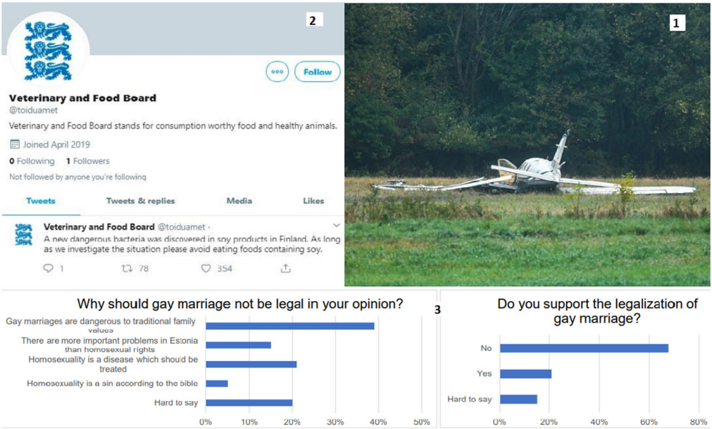
The study presented in this article demonstrates journalists’ abilities to debunk mis-, dis- and malinformation in everyday work situations. It shows how journalists use core skills and competencies to verify the information and it describes why false information evades the journalistic filter and gets published. We combined semi-structured interviews with a think-aloud method in which 20 Estonian journalists were shown constructed episodes of false information and then asked to discuss them. Based on the results, we argue that journalists use traditional fact-checking skills in specific combinations, which is usually sufficient to validate the information. However, when under time pressure, journalists tend to trust their professional experience and take the risk of publishing unchecked information. This risk is even higher when the source seems to be trustworthy and the information is presented on an official social media platform or on the journalist’s personal social media page, or if the journalist lacks more in-depth knowledge about a specific topic. Video manipulation (e.g. deep fake) and decontextualised photo presentations are the most difficult for journalists to verify, and that is similar regardless of the platform the journalist specialises in. The results of this study are useful for training journalism students and practicing journalists in how to debunk false information.
Overview
The claims and statistics of this paper haven’t been checked yet.
Run the check — free, no account needed. It reads the open-access text and checks the sources it cites.
Integrity signals
Registry
Cites
Statistics
Figures


Verification
Claims the paper makes
The claims and statistics of this paper haven’t been checked yet.
Run the check — free, no account needed. It reads the open-access text and checks the sources it cites.
Claims other papers make about this one
Each is checked against this paper’s own text: does it say what the citing paper says it does?
The check wasn’t confident either way, so it gives no verdict — never disputed.
In the citing paper
“However, digital business models also face their own challenges, such as declining advertising revenues due to fierce competition from tech giants such as Google and Facebook.”
From CHANGES IN PUBLIC INFORMATION CONSUMPTION PATTERNS IN THE DIGITAL ERA: A LITERATURE STUDY ON DIGITAL JOURNALISM (2025) · cites this paper as Himma-Kadakas & Ojamets, 2022
Experimental — accuracy not yet measuredThe check wasn’t confident either way, so it gives no verdict — never disputed.
In the citing paper
“Traditional media such as print newspapers have seen declining advertising revenues and sales, so many have shifted to digital platforms.”
From CHANGES IN PUBLIC INFORMATION CONSUMPTION PATTERNS IN THE DIGITAL ERA: A LITERATURE STUDY ON DIGITAL JOURNALISM (2025) · cites this paper as Himma-Kadakas & Ojamets, 2022
Experimental — accuracy not yet measuredThe check wasn’t confident either way, so it gives no verdict — never disputed.
In the citing paper
“Changes in public information consumption patterns have forced the journalism industry to adjust their business models.”
From CHANGES IN PUBLIC INFORMATION CONSUMPTION PATTERNS IN THE DIGITAL ERA: A LITERATURE STUDY ON DIGITAL JOURNALISM (2025) · cites this paper as Himma-Kadakas & Ojamets, 2022
Experimental — accuracy not yet measured
Self-check
Percentages, sums and reported differences re-computed from the paper’s own numbers.
The self-check needs the paper’s full text.
Citations
Cites
A Practical Iterative Framework for Qualitative Data Analysis
Srivastava, P., & Hopwood, N. (2009) · International Journal of Qualitative Methods · doi:10.1177/160940690900800107 · Cited by 1,230
The Need for Smarter Definitions and Practical, Timely Empirical Research on Information Disorder
Wardle, C. (2018) · Digital Journalism · doi:10.1080/21670811.2018.1502047 · Cited by 193 · cited 2×
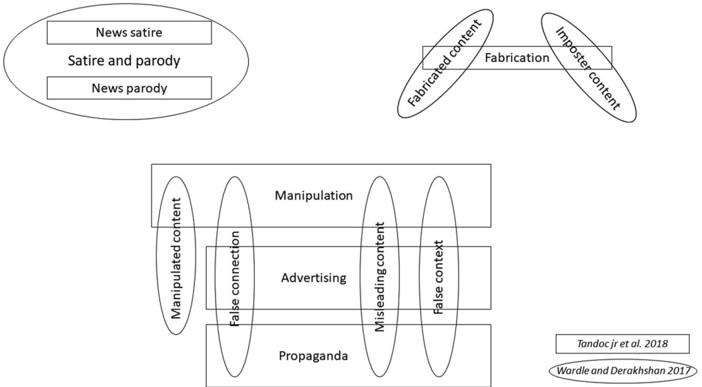
“The episodes were based on the types, categories and elements of information disorder outlined by Wardle (2018), Tandoc Jr et al. (2018), and the EU Commission’s (2018) report on disinformation.”
BackgroundMethod
Research works printed but not linked: 45
- 10.1080/21670811.2015.1124728 · DOI
- 10.1080/02500167.2020.1723664 · DOI
- 10.1177/0093650220911814 · DOI
- 10.1080/1461670X.2020.1772855 · DOI
- 10.17645/mac.v9i1.3529 · DOI
- 10.1177/107769580906400305 · DOI
- 10.1080/21670811.2018.1493940 · DOI
- 10.1177/1464884919850387 · DOI
- 10.1080/1461670X.2020.1831398 · DOI
- 10.1093/acrefore/9780190228613.013.806 · DOI
- 10.26650/CONNECTIST2020-0007 · DOI
- 10.1177/073953290802900203 · DOI
- 10.25200/BJR.v13n1.2017.909 · DOI
- Gans Herbert J., 1979, Deciding What’s News
- 10.1080/17512786.2013.791067 · DOI
- 10.1111/cccr.12163 · DOI
- 10.1080/1369118X.2020.1764603 · DOI
- 10.1080/17512786.2019.1623710 · DOI
- 10.5130/ccs.v9i2.5469 · DOI
- Himma-Kadakas, Marju. 2018. Skill Performance of Estonian Online Journalists: Assessment Model for Newsrooms and Research. Tartu: University of Tartu Press.
- 10.1177/1940161219900126 · DOI
- 10.19195/1899-5101.12.3(24).2 · DOI
- Kvale Steinal., 1996, Interviews: An Introduction to Qualitative Research Interviewing
- Kwanda Febbie Austina, 2020, Communication & Society, 23, 6, 849
- Lluis Micó Josep., 2006, Periodisme a la Xarxa
- 10.1080/17512786.2020.1870529 · DOI
- 10.4135/9781412957397 · DOI · Paper page
- Örnebring Henrik., 2016, Newsworkers: A Comparative European Perspective
- Örnebring Henrik, 2016, Journalism, 19, 1
- Patton Michael Quinn., 1980, Qualitative Evaluation Methods
- 10.1371/journal.pone.0208600 · DOI
- 10.1080/1461670X.2014.882484 · DOI
- 10.1080/17512786.2013.765638 · DOI
- 10.1080/21670811.2017.1360143 · DOI
- 10.1080/23808985.2020.1759443 · DOI
- Tuchman Gaye., 1978, Making News: A Study in the Construction of Reality
- 10.3998/nmw.12848274.0001.001 · DOI
- 10.1017/CBO9781316050774.011 · DOI
- van Someren Maarten, 1994, The Think-Aloud Method: A Practical Approach to Modelling Cognitive
- 10.1080/21670811.2019.1653208 · DOI
- 10.1080/1461670X.2018.1492881 · DOI
- Wardle Claire, 2017, Report, 27, 1
- 10.1080/17512786.2016.1249004 · DOI
- 10.1177/1464884917716000 · DOI
- 10.1080/17512786.2019.1689372 · DOI
Cited by
Sulistiani, I., Caroline, C., & Syarifuddin (2025) · MORFAI JOURNAL · doi:10.54443/morfai.v5i1.2544 · Cited by 3
“(Himma-Kadakas & Ojamets, 2022).”
Metadata
- Authors
- Himma-Kadakas, M., & Ojamets, I.
- Affiliations
- Karlstad University (SE)
- University of Tartu (EE)
- Corresponding author
- Himma-Kadakas, Marju
- ORCID
- Himma-Kadakas, Marju
- Venue
- Digital Journalism
- Publisher
- Informa UK Limited
- Published
- 2022-03-02
- Volume
- 10
- Issue
- 5
- Pages
- 866-887
- ISSN
- 2167-0811 (ISSN-L)
- 2167-082X
- OpenAlex
- W4214809898
- Cited by
- 64
- References
- 2
- Citations by year
- 2026: 10 · 2025: 12 · 2024: 20 · 2023: 18 · 2022: 4
- FWCI
- 19.42
- Type
- journal article
- Language
- en
- Open access
- hybrid
- doi.org
- Licence
- Locations
- Digital Journalism (publishedVersion, cc-by-nc-nd)
- Diva portal (Dalarna University Library) (submittedVersion, other-oa)
- Funders
- the Ander Foundation: Anne Marie och Gustav Anders Stiftelse för mediaforskning
- Ander Foundation: Anne Marie och Gustav Anders Stiftelse för mediaforskning
- Topics
- Social Sciences › Sociology and Political Science › Misinformation and Its Impacts
- Social Sciences › Communication › Journalism and Media Studies
- Social Sciences › Communication › News Media Framing and Political Communication
- Keywords
- fact-checking, misinformation, disinformation, malinformation, journalistic competence, time pressure, source trustworthiness, deepfakes, video manipulation, social media, journalism education
About these checks
Registry, retraction, Cites and statistics results are computed, not judged, with one exception: a printed reference that no index lists is read once by a model before it counts as a citation error. Claims are extracted by a model and kept only when their quote appears verbatim in the text; each cited source is then checked, with a model’s help, for whether it says what the claim relies on. Those verdicts can be wrong — read the claim’s quote and the cited source before relying on one.
Statistics and arithmetic are recomputed, not judged.
Confidence bands are shown only for fields calibrated on our annotated test set. None is calibrated yet, so no band is shown.
What counts as a claim ›How we measure confidence ›How we check this ›
Are you an author, or do you see a problem with this page? Request a review
Data sources
Bibliographic data: Semantic Scholar, OpenAlex, Crossref.
Contains information from the Semantic Scholar Academic Graph Datasets, made available under the ODC Attribution License (ODC-BY 1.0).
Semantic Scholar’s data is described in: Kinney, R., et al. (2023). The Semantic Scholar Open Data Platform. arXiv:2301.10140.
