

Sexual and reproductive health services in universal health coverage: a review of recent evidence from low- and middle-income countries
Open accessThe DOI matches its Crossref record; 119 of the 121 references it cites were found in a registry or an index.
Abstract
If universal health coverage (UHC) cannot be achieved without the sexual and reproductive health (SRH) needs of the population being met, what then is the current situation vis-à-vis universal coverage of SRH services, and the extent to which SRH services have been prioritised in national UHC plans and processes? This was the central question that guided this critical review of more than 200 publications between 2010 and 2019. The findings are the following. The Essential Package of Healthcare Services (EPHS) across many countries excludes several critical SRH services (e.g. safe abortion services, reproductive cancers) that are already poorly available. Inadequate international and domestic public funding of SRH services contributes to a sustained burden of out-of-pocket expenditure (OOPE) and inequities in access to SRH services. Policy and legal barriers, restrictive gender norms and gender-based inequalities challenge the delivery and access to quality SRH services. The evidence is mixed as to whether an expanded role and scope of the private sector improves availability and access to services of underserved populations. As momentum gathers towards SRH and UHC, the following actions are necessary and urgent. Advocacy for greater priority for SRH in government EPHS and health budgets aligned with SRH and UHC goals is needed. Implementation of stable and sustained financing mechanisms that would reduce the proportion of SRH-financing from OOPE is a priority. Evidence, moving from descriptive towards explanatory studies which provide insights into the "hows" and "whys" of processes and pathways are essential for guiding policy and programme actions.
Overview
The claims and statistics of this paper haven’t been checked yet.
Free: it reads the open-access text and checks the first 5 claims that cite a source we can check. Create a free account to check every claim.
Integrity signals
Registry
Cites
Statistics
Figures
Verification
Claims the paper makes
The claims and statistics of this paper haven’t been checked yet.
Free: it reads the open-access text and checks the first 5 claims that cite a source we can check. Create a free account to check every claim.
Claims other papers make about this one
Each is checked against this paper’s own text: does it say what the citing paper says it does?
The source backs part of the claim, not all of it — or backs it for a different population, condition or comparison.
In the citing paper
“However, systematic reviews demonstrate that infertility itself is not integrated into sexual and reproductive health policies or, if it is, prevention is not included (Morshed-Behbahani et al., 2020; Ravindran and Govender, 2020).”
From Declining global fertility rates and the implications for family planning and family building: an IFFS consensus document based on a narrative review of the literature (2024) · cites this paper as Ravindran and Govender, 2020
Experimental — accuracy not yet measured
Self-check
Percentages, sums and reported differences re-computed from the paper’s own numbers.
The self-check needs the paper’s full text.
Citations
Cites
Dixon-Woods, M., Cavers, D., Agarwal, S., Annandale, E., Arthur, A., Harvey, J., Hsu, R., Katbamna, S., Olsen, R., Smith, L., et al. (2006) · BMC Medical Research Methodology · doi:10.1186/1471-2288-6-35 · Cited by 2,289
Bohren, M. A., Vogel, J. P., Hunter, E. C., Lutsiv, O., Makh, S. K., Souza, J. P., Aguiar, C., Saraiva Coneglian, F., Diniz, A. L. A., Tunçalp, Ö., et al. (2015) · PLOS Medicine · doi:10.1371/journal.pmed.1001847 · Cited by 1,656
Starrs, A. M., Ezeh, A. C., Barker, G., Basu, A., Bertrand, J. T., Blum, R., Coll-Seck, A. M., Grover, A., Laski, L., Roa, M., et al. (2018) · The Lancet · doi:10.1016/s0140-6736(18)30293-9 · Cited by 1,598
Health systems financing and the path to universal coverage
Evans, D. B., & Etienne, C. (2010) · Bulletin of the World Health Organization · doi:10.2471/blt.10.078741 · Cited by 1,279
Gender inequality and restrictive gender norms: Framing the challenges to health
Heise, L., Greene, M. E., Opper, N., Stavropoulou, M., Harper, C., Nascimento, M., Zewdie, D., Darmstadt, G. L., Greene, M. E., Hawkes, S., et al. (2019) · The Lancet · doi:10.1016/s0140-6736(19)30652-x · Cited by 1,163
Lim, S. S., Dandona, L., Hoisington, J. A., James, S. L., Hogan, M. C., & Gakidou, E. (2010) · The Lancet · doi:10.1016/s0140-6736(10)60744-1 · Cited by 799
Platt, L., Grenfell, P., Meiksin, R., Elmes, J., Sherman, S. G., Sanders, T., Mwangi, P., & Crago, A.-L. (2018) · PLOS Medicine · doi:10.1371/journal.pmed.1002680 · Cited by 529
Alencar Albuquerque, G., de Lima Garcia, C., da Silva Quirino, G., Alves, M. J. H., Belém, J. M., dos Santos Figueiredo, F. W., da Silva Paiva, L., do Nascimento, V. B., da Silva Maciel, É., Valenti, V. E., et al. (2016) · BMC International Health and Human Rights · doi:10.1186/s12914-015-0072-9 · Cited by 377
Gender norms and health: insights from global survey data
Weber, A. M., Cislaghi, B., Meausoone, V., Abdalla, S., Mejía-Guevara, I., Loftus, P., Hallgren, E., Seff, I., Stark, L., Victora, C. G., et al. (2019) · The Lancet · doi:10.1016/s0140-6736(19)30765-2 · Cited by 344
Masculinity as a barrier to men's use of HIV services in Zimbabwe
Skovdal, M., Campbell, C., Madanhire, C., Mupambireyi, Z., Nyamukapa, C., & Gregson, S. (2011) · Globalization and Health · doi:10.1186/1744-8603-7-13 · Cited by 321
Obstetric violence in the daily routine of care and its characteristics
Jardim, D. M. B., & Modena, C. M. (2018) · Revista Latino-Americana de Enfermagem · doi:10.1590/1518-8345.2450.3069 · Cited by 281
Making fair choices on the path to universal health coverage
Ottersen, T., Norheim, O. F., & on behalf of the World Health Organization Consultative Group on Equity and Universal Health Coverage (2014) · Bulletin of the World Health Organization · doi:10.2471/blt.14.139139 · Cited by 262
Norheim, O. F., Ottersen, T., Berhane, F., Chitah, B., Cookson, R., Daniels, N., Eyal, N., Flores, W., Gosseries, A., Hausman, D. M., et al. (2014) · London School of Economics and Political Science Research Online (London School of Economics and Political Science) · Cited by 229
Research for Universal Health Coverage
Dye, C., Reeder, J. C., & Terry, R. F. (2013) · Science Translational Medicine · doi:10.1126/scitranslmed.3006971 · Cited by 220
Universal health coverage: friend or foe of health equity?
Gwatkin, D. R., & Ergo, A. (2011) · The Lancet · doi:10.1016/s0140-6736(10)62058-2 · Cited by 196 · cited 1×
“This requires engagement within the SRH literature with concepts central to UHC such as progressive realisation (WHO 2014) and progressive universalism, (Gwatkin and Ergo 2011) and moving away from fragmenting SRH into silos (e.”
BackgroundPatouillard, E., Goodman, C. A., Hanson, K. G., & Mills, A. J. (2007) · International Journal for Equity in Health · doi:10.1186/1475-9276-6-17 · Cited by 184
Impact of Conditional Cash Transfers on Maternal and Newborn Health
Singer, D., Sturke, R., Gleason, J., Koblinsky, M., Yarrow, K. M., Glassman, A. L., Ángeles, G., Charles, J., Saldaña, K., Duran, D., et al. (2020) · PubMed · doi:10.17615/y1py-h485 · Cited by 182
Performance of private sector health care: implications for universal health coverage
Morgan, R., Ensor, T., & Waters, H. (2016) · The Lancet · doi:10.1016/s0140-6736(16)00343-3 · Cited by 173
Bellows, N. M., Bellows, B. W., & Warren, C. (2011) · Tropical Medicine & International Health · doi:10.1111/j.1365-3156.2010.02667.x · Cited by 168 · cited 2×
“(Bellows et al. 2011; Bellows et al. 2013; Bellows et al. 2016; Grainger et al. 2014) Conditional cash transfers have been found to increase utilisation of maternal and neonatal health services, (Glassman et al.”
BackgroundReproductive Health Care Utilization among Young Mothers in Bangladesh: Does Autonomy Matter?
Haque, S. E., Rahman, M., Mostofa, M. G., & Zahan, M. S. (2011) · Women s Health Issues · doi:10.1016/j.whi.2011.08.004 · Cited by 165 · cited 1×
“Restrictive gender norms Restrictive gender norms influence behaviours related to sexuality and reproduction, and alongside gender-based inequalities in access to resources and decision-making, they often erect barriers to the use of health services by women, (Haque et al. 2012; Ameyaw et al. 2016; Obasohan et al. 201…”
BackgroundGullo, S., Galavotti, C., Sebert Kuhlmann, A., Msiska, T., Hastings, P., & Marti, C. N. (2017) · PLOS ONE · doi:10.1371/journal.pone.0171316 · Cited by 163
Beattie, T. S. H., Bhattacharjee, P., Suresh, M., Isac, S., Ramesh, B. M., & Moses, S. (2012) · Journal of Epidemiology and Community Health · doi:10.1136/jech-2011-200475 · Cited by 162
Minding the gaps: health financing, universal health coverage and gender
Witter, S., Govender, V., Ravindran, T. S., & Yates, R. (2017) · Health Policy and Planning · doi:10.1093/heapol/czx063 · Cited by 158
Self-citationThe National Health Insurance Scheme in Ghana: Prospects and Challenges: a cross-sectional evidence
Gobah, F. K., & Zhang, L. (2011) · Global Journal of Health Science · doi:10.5539/gjhs.v3n2p90 · Cited by 156 · cited 1×
“The higher enrolment may be the result of a waiver of premiums for pregnant women and the indigent, a majority of whom were women.(87) Providing premium exemptions may be the route to ensuring the enrolment in insurance schemes of groups without access to cash incomes.”
BackgroundMontagu, D., & Goodman, C. A. (2016) · The Lancet · doi:10.1016/s0140-6736(16)30242-2 · Cited by 145
Out-of-Pocket Costs and Insurance Coverage for Abortion in the United States
Roberts, S. C. M., Gould, H., Kimport, K., Weitz, T. A., & Foster, D. G. (2014) · Women s Health Issues · doi:10.1016/j.whi.2014.01.003 · Cited by 144
Men and antiretroviral therapy in Africa: our blind spot
Cornell, M., McIntyre, J., & Myer, L. (2011) · Tropical Medicine & International Health · doi:10.1111/j.1365-3156.2011.02767.x · Cited by 136 · cited 1×
“2019), men (Skovdall et al. 2011; Cornell et al. 2011) and transgender persons.”
Mbeba, R., Mkuye, M. S., Magembe, G. E., Yotham, W. L., Mellah, A. O., & Mkuwa, S. (2012) · Europe PMC (PubMed Central) · Cited by 135
Out-of-pocket costs for facility-based maternity care in three African countries
Perkins, M., Brazier, E., Themmen, E., Bassane, B., Diallo, D., Mutunga, A., Mwakajonga, T., & Ngobola, O. (2009) · Health Policy and Planning · doi:10.1093/heapol/czp013 · Cited by 129 · cited 1×
“(Akalu et al. 2012; Arsenault et al. 2013; Dalaba et al. 2015; Goli et al. 2018; Hoque et.al. 2015; Mohanty and Kastor 2017; Mukherjee at. Al. 2013; Myint et al. 2018; Perkins et al. 2009; Prinja et al. 2015; Radovich et al. 2019; Ravit et al. 2015; Shukla et al. 2015; Skordis-Worrall et al. 2011) The incidence of cat…”
BackgroundBetron, M. L., McClair, T. L., Currie, S., & Banerjee, J. (2018) · Reproductive Health · doi:10.1186/s12978-018-0584-6 · Cited by 129
A Review of Men's Health and Masculinity
Garfield, C. F., Isacco, A., & Rogers, T. E. (2008) · American Journal of Lifestyle Medicine · doi:10.1177/1559827608323213 · Cited by 122
Mother−baby friendly birthing facilities
International Federation of Gynecology and Obstetrics, Midwives, I. C. O., & White Ribbon Alliance (2014) · International Journal of Gynecology & Obstetrics · doi:10.1016/j.ijgo.2014.10.013 · Cited by 122
Chakrapani, V., Newman, P. A., Shunmugam, M., & Dubrow, R. (2011) · AIDS Care · doi:10.1080/09540121.2011.582076 · Cited by 120
Bohren, M. A., Vogel, J. P., Hunter, E. C., Lutsiv, O., Makh, S. K., Souza, J. P., de Aguiar, C. G., Coneglian, F. S., Diniz, A. L. A., Tunçalp, Ö., et al. (2015) · Cited by 120
Kattari, S. K., & Hasche, L. (2016) · Journal of Aging and Health · doi:10.1177/0898264315590228 · Cited by 113
Maternal and neonatal health expenditure in mumbai slums (India): A cross sectional study
Skordis, J., Pace, N., Bapat, U., Das, S., More, N. S., Joshi, W., Pulkki‐Brännström, A., & Osrin, D. (2011) · BMC Public Health · doi:10.1186/1471-2458-11-150 · Cited by 108
Duvall, S., Thurston, S., Weinberger, M., Nuccio, O., & Fuchs-Montgomery, N. (2014) · Global Health Science and Practice · doi:10.9745/ghsp-d-13-00116 · Cited by 105 · cited 1×
“(Kohelmoos et al. 2011; Tougher et al. 2018, Chakraborty et al. 2016; Munroe et al. 2015; Duvall et al. 2014; Glod et al. 2017; Montagu and Goodman 2016; Arur et al. 2010; Bloom et al. 2006; Ravindran 2011; Mohanan et al. 2014; Yasobant et al. 2016) Studies also suggests that the design of social marketing, social fra…”
BackgroundEmergency obstetric care in Mali: catastrophic spending and its impoverishing effects on households
Arsenault, C., Fournier, P., Philibert, A., Sissoko, K., Coulibaly, A., Tourigny, C., Traoré, M., & Dumont, A. (2013) · Bulletin of the World Health Organization · doi:10.2471/blt.12.108969 · Cited by 101
Meuwissen, L., Gorter, A., & Knottnerus, A. (2006) · Journal of Adolescent Health · doi:10.1016/j.jadohealth.2005.01.009 · Cited by 101 · cited 1×
“(Meuwissen et al. 2006; Boddam-Whetham et al. 2016) We do not know enough about the quality of care provided through the different modalities of private-sector engagement.”
BackgroundSweat, M., Denison, J., Kennedy, C., Tedrow, V., & O'Reilly, K. (2012) · Bulletin of the World Health Organization · doi:10.2471/blt.11.094268 · Cited by 93
Improving maternal health through social accountability: A case study from Orissa, India
Papp, S., Gogoi, A., & Campbell, C. (2012) · Global Public Health · doi:10.1080/17441692.2012.748085 · Cited by 93
Women’s Health Decision-Making Autonomy and Skilled Birth Attendance in Ghana
Ameyaw, E. K., Tanle, A., Kissah-Korsah, K., & Amo-Adjei, J. (2016) · International Journal of Reproductive Medicine · doi:10.1155/2016/6569514 · Cited by 92 · cited 1×
“Restrictive gender norms Restrictive gender norms influence behaviours related to sexuality and reproduction, and alongside gender-based inequalities in access to resources and decision-making, they often erect barriers to the use of health services by women, (Haque et al. 2012; Ameyaw et al. 2016; Obasohan et al. 201…”
BackgroundMohanty, S. K., & Kastor, A. (2017) · Health Economics Review · doi:10.1186/s13561-017-0167-1 · Cited by 87 · cited 3×
“Source: Mohanty and Kastor.65 ‡‡Data pertain to reproductive health services and not sexual and reproductive health services.”
BackgroundInfluentialLuvuno, Z., Ncama, B. P., & Mchunu, G. G. (2019) · African Journal of Primary Health Care & Family Medicine · doi:10.4102/phcfm.v11i1.1933 · Cited by 87
Beyeler, N., Cruz, A. Y. D. L., & Montagu, D. (2013) · PLoS ONE · doi:10.1371/journal.pone.0060669 · Cited by 86
Blake, C., Annorbah‐Sarpei, N. A., Bailey, C., Ismaila, Y., Deganus, S., Bosomprah, S., Galli, F., & Clark, S. (2016) · International Journal of Gynecology & Obstetrics · doi:10.1016/j.ijgo.2016.10.004 · Cited by 80
Self, A., Chipokosa, S., Misomali, A., Aung, T., Harvey, S. A., Chimchere, M., Chilembwe, J., Park, L., Chalimba, C., Monjeza, E., et al. (2018) · Reproductive Health · doi:10.1186/s12978-018-0549-9 · Cited by 77
Prinja, S., Bahuguna, P., Gupta, R., Sharma, A., Rana, S. K., & Kumar, R. (2015) · PLoS ONE · doi:10.1371/journal.pone.0137315 · Cited by 74 · cited 2×
“2011) The incidence of catastrophic health expenditure is found to be much higher among the poorest sections of the population, (Akalu et al. 2012; Arsenault et al. 2013; Hoque et al. 2015; Mohanty and Kastor 2017; Prinja et al. 2015)”
BackgroundMohanan, M., Bauhoff, S., Forgia, G. L., Babiarz, K. S., Singh, K., & Miller, G. (2013) · Bulletin of the World Health Organization · doi:10.2471/blt.13.124644 · Cited by 71
Sexual and reproductive health and rights in changing health systems
Sen, G., & Govender, V. (2014) · Global Public Health · doi:10.1080/17441692.2014.986161 · Cited by 70
Self-citationFamily Planning Vouchers in Low and Middle Income Countries: A Systematic Review
Bellows, B., Bulaya, C., Inambwae, S., Lissner, C. L., Ali, M., & Bajracharya, A. (2016) · Studies in Family Planning · doi:10.1111/sifp.12006 · Cited by 69
Gender, women and primary health care renewal : a discussion paper
Olukoya, P. (2010) · Medical Entomology and Zoology · Cited by 68
Family Planning in the Context of Latin America's Universal Health Coverage Agenda
Fagan, T., Dutta, A., Rosen, J. E., Olivetti, A., & Klein, K. E. (2017) · Global Health Science and Practice · doi:10.9745/ghsp-d-17-00057 · Cited by 68 · cited 1×
“In contrast, private insurance schemes covered contraceptive services only in two countries: Chile and Colombia, and in both instances, co- payment was involved.(37)”
BackgroundDuku, S. K. O. (2018) · BMC Health Services Research · doi:10.1186/s12913-018-3192-9 · Cited by 68 · cited 1×
“Encouragingly, however, studies from Ghana on its National Health Insurance Scheme, which covers all sections of the population, report a higher female than male enrolment.(85,86) The higher enrolment may be the result of a waiver of premiums for pregnant women and the indigent, a majority of whom were women.”
BackgroundSexual health, human rights and the law
(2015) · Reproductive Health Matters · doi:10.1016/j.rhm.2015.11.013 · Cited by 67
Dake, F. A. A. (2018) · International Journal for Equity in Health · doi:10.1186/s12939-018-0793-1 · Cited by 63 · cited 1×
“Encouragingly, however, studies from Ghana on its National Health Insurance Scheme, which covers all sections of the population, report a higher female than male enrolment.(85,86) The higher enrolment may be the result of a waiver of premiums for pregnant women and the indigent, a majority of whom were women.”
BackgroundKhan, M. E., Hazra, A., Kant, A., & Ali, M. (2016) · Studies in Family Planning · doi:10.1111/sifp.12004 · Cited by 61 · cited 2×
“and their impact on improving health outcomes has been mixed.(95,96,98) PFHIS for the poor seem to experience gender-based barriers to enrolment, similar to other insurance schemes.”
BackgroundResultBoydell, V., Schaaf, M., George, A., Brinkerhoff, D. W., Belle, S. V., & Khosla, R. (2019) · Sexual and Reproductive Health Matters · doi:10.1080/26410397.2019.1622357 · Cited by 61
Affordability of emergency obstetric and neonatal care at public hospitals in Madagascar
Honda, A., Randaoharison, P. G., & Matsui, M. (2011) · Reproductive Health Matters · doi:10.1016/s0968-8080(11)37559-3 · Cited by 57
Contracting for health and curative care use in Afghanistan between 2004 and 2005
Arur, A., Peters, D. H., Hansen, P., Mashkoor, M. A., Steinhardt, L. C., & Burnham, G. M. (2009) · Health Policy and Planning · doi:10.1093/heapol/czp045 · Cited by 56
Household coping strategies for delivery and related healthcare cost: findings from rural Bangladesh
Hoque, M. E., Dasgupta, S. K., Naznin, E., & Mamun, A. A. (2015) · Tropical Medicine & International Health · doi:10.1111/tmi.12546 · Cited by 55 · cited 1×
“2011) The incidence of catastrophic health expenditure is found to be much higher among the poorest sections of the population, (Akalu et al. 2012; Arsenault et al. 2013; Hoque et al. 2015; Mohanty and Kastor 2017; Prinja et al. 2015)”
BackgroundA taxonomy and results from a comprehensive review of 28 maternal health voucher programmes.
Bellows, B., Conlon, C. M., Higgs, E. S., Townsend, J., Nahed, M. G., Cavanaugh, K., Grainger, C., Okal, J., & Gorter, A. (2013) · PubMed Central · Cited by 53
Cost to households in treating maternal complications in northern Ghana: a cross sectional study
Dalaba, M. A., Akweongo, P., Aborigo, R., Saronga, H. P., Williams, J. E., Aninanya, G. A., Sauerborn, R., & Loukanova, S. (2015) · BMC Health Services Research · doi:10.1186/s12913-014-0659-1 · Cited by 53
Leone, T., Coast, E., Parmar, D., & Vwalika, B. (2016) · Health Policy and Planning · doi:10.1093/heapol/czv138 · Cited by 53
Healthy partnerships : how governments can engage the private sector to improve health in Africa
Spreng, C. P. (2011) · Cited by 51
Out-of-pocket expenditure on maternity care for hospital births in Uttar Pradesh, India
Goli, S., Rammohan, A., & Moradhvaj (2018) · Health Economics Review · doi:10.1186/s13561-018-0189-3 · Cited by 50
Sexual and reproductive health: challenges for priority-setting in Ghana's health reforms
Mayhew, S., & Adjei, S. (2004) · Health Policy and Planning · doi:10.1093/heapol/czh045 · Cited by 46 · cited 3×
“Programme of Action.”
MethodInfluentialSpousal veto over family planning services.
Cook, R. J., & Maine, D. (1987) · American Journal of Public Health · doi:10.2105/ajph.77.3.339 · Cited by 45 · cited 1×
“Some of these practices include requiring spousal consent for providing contraceptive and abortion services (Cook and Maine 1987) and denial of services to adolescents and to young unmarried persons (even in the absence of legal restrictions).”
BackgroundFinancing health care for adolescents: a necessary part of universal health coverage
Waddington, C., & Sambo, C. (2014) · Bulletin of the World Health Organization · doi:10.2471/blt.14.139741 · Cited by 44 · cited 1×
“Providing premium exemptions may be the route to ensuring the enrolment in insurance schemes of groups without access to cash incomes.(88) However, the extent to which premium-exemptions would result in increased utilisation may depend on whether affordability is a major barrier to accessing the specific SRH service u…”
BackgroundBelle, S. V., Boydell, V., George, A. S., Brinkerhof, D. W., & Khosla, R. (2018) · PLoS ONE · doi:10.1371/journal.pone.0196788 · Cited by 42
Myint, A. N. M., Liabsuetrakul, T., Htay, T. T., Wai, M. M., Sundby, J., & Bjertness, E. (2018) · BMJ Open · doi:10.1136/bmjopen-2018-022380 · Cited by 40
Grainger, C., Gorter, A., Okal, J., & Bellows, B. (2014) · International Journal for Equity in Health · doi:10.1186/1475-9276-13-33 · Cited by 39 · cited 1×
“(Bellows et al. 2011; Bellows et al. 2013; Bellows et al. 2016; Grainger et al. 2014) Conditional cash transfers have been found to increase utilisation of maternal and neonatal health services, (Glassman et al.”
BackgroundRadovich, E., Dennis, M. L., Barasa, E., Cavallaro, F. L., Wong, K. L., Borghi, J., Lynch, C. A., Lyons-Amos, M., Abuya, T., & Beňová, L. (2019) · BMJ Open · doi:10.1136/bmjopen-2018-022414 · Cited by 38
Tougher, S., Dutt, V., Pereira, S. K., Haldar, K., Shukla, V., Singh, K., Kumar, P., Goodman, C. A., & Powell‐Jackson, T. (2017) · The Lancet Global Health · doi:10.1016/s2214-109x(17)30454-0 · Cited by 37
Hulton, L., Matthews, Z., Martin‐Hilber, A., Adanu, R., Ferla, C., Getachew, A., Makwenda, C., Segun, B., & Yilla, M. D. (2014) · International Journal of Gynecology & Obstetrics · doi:10.1016/j.ijgo.2014.07.002 · Cited by 35
Universal health coverage: necessary but not sufficient
Fried, S. T., Khurshid, A., Tarlton, D., Webb, D., Gloss, S., Paz, C. D., & Stanley, T. (2013) · Reproductive Health Matters · doi:10.1016/s0968-8080(13)42739-8 · Cited by 35
Tibebe, A., Amarech, G., Melesse, T., & Mariam, D. (2012) · Ethiopian Journal of Health Development · Cited by 34
Documenting the Individual- and Household-Level Cost of Unsafe Abortion in Uganda
Sundaram, A., Vlassoff, M., Mugisha, F., Bankole, A., Singh, S. D., Amanya, L., & Onda, T. (2013) · International Perspectives on Sexual and Reproductive Health · doi:10.1363/3917413 · Cited by 34
Ilboudo, P. G., Greco, G., Sundby, J., & Torsvik, G. (2014) · Health Policy and Planning · doi:10.1093/heapol/czu025 · Cited by 34
Ravindran, T. S., & Fonn, S. (2011) · Reproductive Health Matters · doi:10.1016/s0968-8080(11)38581-3 · Cited by 33
Self-citationThe Hidden Costs of a Free Caesarean Section Policy in West Africa (Kayes Region, Mali)
Ravit, M., Philibert, A., Tourigny, C., Traoré, M., Coulibaly, A., Dumont, A., & Fournier, P. F. (2015) · Maternal and Child Health Journal · doi:10.1007/s10995-015-1687-0 · Cited by 33
Boddam-Whetham, L., Gul, X., Al-Kobati, E., & Gorter, A. (2016) · Global Health Science and Practice · doi:10.9745/ghsp-d-15-00308 · Cited by 32 · cited 1×
“(Meuwissen et al. 2006; Boddam-Whetham et al. 2016) We do not know enough about the quality of care provided through the different modalities of private-sector engagement.”
BackgroundNguyen, H. T. H., Snider, J. W., Ravishankar, N., & Magvanjav, O. (2011) · Reproductive Health Matters · doi:10.1016/s0968-8080(11)37561-1 · Cited by 31 · cited 3×
“It decreased in Rwanda, Tanzania, and Malawi during 2002–2006.(47) A study from Mexico shows that increased spending and allocation favouring households without social security resulted in greater financial risk protection, especially to poorer households.”
BackgroundInfluentialTeerawattananon, Y. (2004) · Health Policy and Planning · doi:10.1093/heapol/czh043 · Cited by 30 · cited 1×
“6 (Teerawattananon and Tangcharoensathien 2004) This framework may be a starting point that could be suitably adapted to be used as a part of deliberative processes involving a wide range of stakeholders.”
BackgroundDecision Making Autonomy and Maternal Healthcare Utilization among Nigerian Women
Obasohan, P. E., Gana, P., Mustapha, M., Umar, A. E., Makada, A., & Obasohan, D. N. (2019) · International Journal of Maternal and Child Health and AIDS · doi:10.21106/ijma.264 · Cited by 30
Maternity or catastrophe: A study of household expenditure on maternal health care in India
Mukherjee, S., Singh, A., & Chandra, R. K. (2013) · Health · doi:10.4236/health.2013.51015 · Cited by 29
Munroe, E., Hayes, B., & Taft, J. (2015) · Global Health Science and Practice · doi:10.9745/ghsp-d-15-00056 · Cited by 29 · cited 1×
“(Kohelmoos et al. 2011; Tougher et al. 2018, Chakraborty et al. 2016; Munroe et al. 2015; Duvall et al. 2014; Glod et al. 2017; Montagu and Goodman 2016; Arur et al. 2010; Bloom et al. 2006; Ravindran 2011; Mohanan et al. 2014; Yasobant et al. 2016) Studies also suggests that the design of social marketing, social fra…”
BackgroundPublic-Private Partnerships in Maternal Health Services
Ravindran, T. K. S. (2011) · Cited by 29
Self-citationBoydell, V., & Keesbury, J. (2014) · doi:10.31899/rh10.1005 · Cited by 28
Private Delivery Care in Developing Countries: Trends and Determinants
Pomeroy–Stevens, A., Koblinsky, M., & Alva, S. (2010) · Cited by 25
Falling Through the Gaps: Women Accessing Care under Health Insurance Schemes in Karnataka
Karpagam, S., Vasan, A., & Seethappa, V. (2016) · Indian Journal of Gender Studies · doi:10.1177/0971521515612864 · Cited by 25
Fonn, S., & Ravindran, T. S. (2011) · Reproductive Health Matters · doi:10.1016/s0968-8080(11)38584-9 · Cited by 24
Self-citationProgram evaluation of the Janani Suraksha Yojna
Ved, R. R., Thiagarajan, S., Gupta, G., & Rana, G. (2012) · BMC Proceedings · doi:10.1186/1753-6561-6-s5-o15 · Cited by 24
Madhavan, S., & Bishai, D. M. (2010) · Cited by 23
Evaluating the impact of social franchising on family planning use in Kenya
Chakraborty, N. M., Mbondo, M., & Wanderi, J. (2016) · Journal of Health Population and Nutrition · doi:10.1186/s41043-016-0056-y · Cited by 23
Haemmerli, M., Santos, A. C., Penn‐Kekana, L., Lange, I. L., Matovu, F., Beňová, L., Wong, K. L., & Goodman, C. A. (2018) · Health Policy and Planning · doi:10.1093/heapol/czx192 · Cited by 23
Ntambue, A. M., Malonga, F. K., Dramaix‐Wilmet, M., Mpoyi, T. I., Nkola, A. M., Matungulu, C. M., Cowgill, K. D., & Donnen, P. (2018) · PLoS ONE · doi:10.1371/journal.pone.0205082 · Cited by 23
Sidze, E., Pradhan, J., Beekink, E., Maina, T. M., & Maina, B. W. (2013) · Reproductive Health Matters · doi:10.1016/s0968-8080(13)42738-6 · Cited by 21 · cited 1×
“5 million in 2010.(76) To address the funding gap, global initiatives such as the Global Financing Facility (GFF) support national ministries of health to identify and scaleup high impact, cost-effective interventions that can be sustainably funded through a combination of increased domestic and international funding.”
BackgroundGender, women and primary health care renewal: A discussion paper
Priya, R. (2012) · The Indian Journal of Medical Research · Cited by 21
Ekezia, C. C., Lamont, K., & Bhattacharya, S. (2020) · Columbia Academic Commons (Columbia University) · doi:10.7916/thejgh.v7i1.5012 · Cited by 21
Gold, J., Burke, E., Cissé, B., Mackay, A., Eva, G., & Hayes, B. (2017) · Global Health Science and Practice · doi:10.9745/ghsp-d-17-00011 · Cited by 20
Kaur, J. (2012) · Reproductive Health Matters · doi:10.1016/s0968-8080(12)39604-3 · Cited by 17
Reproductive and Sexual Health Benefits in Private Health Insurance Plans in Washington State
Kurth, A., Bielinski, L., Graap, K., Conniff, J., & Connell, F. A. (2001) · Family Planning Perspectives · doi:10.2307/2673718 · Cited by 17 · cited 1×
“contraception and abortion services) may be excluded from private insurance plans.(81) Another study observed that the exclusion of safe abortion services from Medicaid following the Hyde Amendment in 1977 has resulted in delays in seeking abortion services, catastrophic health expenditures, and impoverishment, or uni…”
BackgroundMoore, A. M., Dennis, M. L., Anderson, R., Bankole, A., Abelson, A., Greco, G., & Vwalika, B. (2018) · Reproductive Health Matters · doi:10.1080/09688080.2018.1522195 · Cited by 14
Community‐Based Financing of Family Planning in Developing Countries: A Systematic Review
Karra, M., Canning, D., Hu, J., Ali, M., & Lissner, C. L. (2016) · Studies in Family Planning · doi:10.1111/sifp.12000 · Cited by 13 · cited 1×
“However, the extent to which premium-exemptions would result in increased utilisation may depend on whether affordability is a major barrier to accessing the specific SRH service under consideration.(89)”
BackgroundKakade, D. (2012) · BMC Proceedings · doi:10.1186/1753-6561-6-s1-o9 · Cited by 12
Ávila‐Burgos, L., Cahuana-Hurtado, L., Montañez-Hernández, J. C., Servan-Mori, E. E., Aracena-Genao, B., & Zolezzi, A. D. R. (2016) · PLoS ONE · doi:10.1371/journal.pone.0147923 · Cited by 12 · cited 3×
“A study from Mexico shows that increased spending and allocation favouring households without social security resulted in greater financial risk protection, especially to poorer households.(50) During 2003–2012, there was a three-fold increase in government expenditure on health and a steep decrease in OOPE as a propo…”
BackgroundInfluentialYasobant, S., Vora, K. S., Shewade, H. D., Annerstedt, K. S., Isaakidis, P., Mavalankar, D. V., Dholakia, N. B., & Costa, A. D. (2016) · BMC Health Services Research · doi:10.1186/s12913-016-1510-7 · Cited by 12
Universal Health Coverage, Gender Equality and Social Protection: A Health Systems Approach
Women, U. N., Sen, G., Govender, V., & El-Gamal, S. (2021) · Discussion paper · doi:10.18356/25216112/38 · Cited by 12
Self-citationHealth Insurance Coverage Within Households: The Case of Private Health Insurance in South Africa
Govender, V., Ataguba, J. E.-O., & Alaba, O. A. (2014) · The Geneva Papers on Risk and Insurance Issues and Practice · doi:10.1057/gpp.2014.29 · Cited by 11 · cited 2×
“The heads of partially insured households§§ were more likely to be female, unmarried, with primary-school education or no education, unemployed, and Black.84 Encouragingly, however, studies from Ghana on its National Health Insurance Scheme, which covers all sections of the population, report a higher female than male…”
BackgroundSelf-citationKowalski, S. (2014) · Global Public Health · doi:10.1080/17441692.2014.920892 · Cited by 10
Out-Of-Pocket Expenditure on Institutional Delivery in Rural Lucknow
Shukla, M., Kumar, A., Agarwal, M., Singh, J. V., & Gupta, A. (2015) · Indian Journal of Community Health (Indian Association of Preventive and Social Medicine) · Cited by 9
Philip, N. E., & Ravindran, T. K. S. (2017) · Journal Of Aging Research And Healthcare · doi:10.14302/issn.2474-7785.jarh-17-1489 · Cited by 9
Sexual and reproductive health and rights for all: an urgent need to change the narrative
Adewole, I. F., & Gavira, A. (2018) · The Lancet · doi:10.1016/s0140-6736(18)30888-2 · Cited by 9 · cited 1×
“(Kowalski 2015; Sen et al. 2018; Fried et al. 2013; Adewole and Gavira 2018) This paper draws on a review commissioned by the Department of Sexual and Reproductive Health and Research (World Health Organization) which aimed to explore the literature on universal coverage of SRH services within the context of UHC, to s…”
BackgroundGender Disparity in Access to the Rwandan Mutual Health Insurance Scheme
Finnoff, K. (2015) · Feminist Economics · doi:10.1080/13545701.2015.1088658 · Cited by 9
Chaumont, C., Muhorane, C., Moreira-Burgos, I., Juma, N., & Ávila‐Burgos, L. (2015) · BMC Health Services Research · doi:10.1186/s12913-015-1009-7 · Cited by 8
Hoehn, K., Stratmann, J., & Schaffler, P. (2015) · Reproductive Health Matters · doi:10.1016/j.rhm.2015.06.001 · Cited by 2 · cited 1×
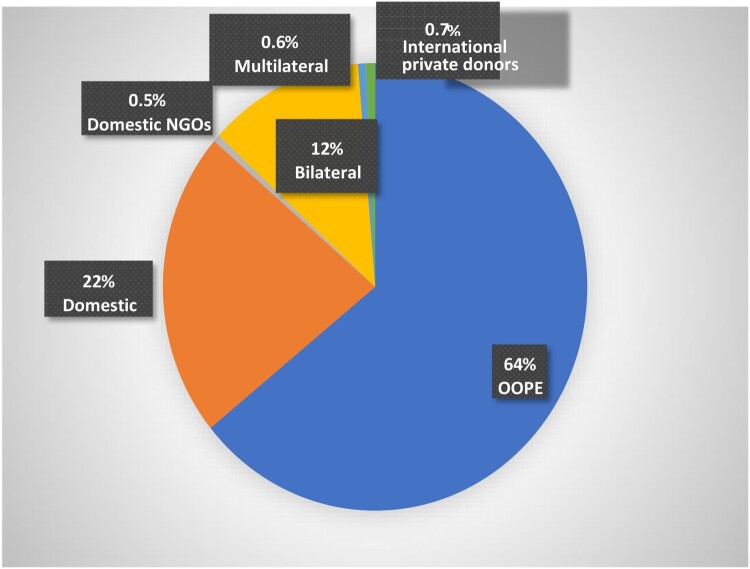
“In 2012, almost two-thirds of all expenditure on SRH services in developing countries was from out-ofpocket expenditure by households.(44,45) Government”
BackgroundRout, S. K., Pradhan, J., & Choudhury, S. (2016) · Sexual & Reproductive Healthcare · doi:10.1016/j.srhc.2016.05.001 · Cited by 2 · cited 1×
“(Nguyen et al. 2011; Chaumont et al. 2015; Rout et al. 2016; Avila-Burgos et al. 2016) OOPE was the largest source of RH financing (as seen in the overall pattern for developing countries) in three countries (Kenya, 38%; Uganda, 48% (2006); Burundi.”
BackgroundInternational Planned Parenthood Federation
Dibb, R. (2009) · Springer eBooks · doi:10.1007/978-0-387-93996-4_403 · Cited by 2
Research works printed but not linked: 31
- Repoliticising sexual and reproductive health and rights. In: Report of a global meeting, Langkawi,3-6 August 2010. London, Reproductive Health Matters and Asian-Pacific Resource& Research Centre for Women (ARROW), 2011.
- World Health Organization. Trends in maternal mortality 2000 to 2017: estimates by WHO, UNICEF, UNFPA, world bank group and the united nations population division: executive summary. World Health Organization; 2019.
- Wright J, Holtz J. Essential package of health services in 24 countries: findings from a cross-country analysis. Bethesda (MD): Health Finance & Governance Project Abt Associates Inc; 2017.
- Wright J. Essential package of health services country snapshot: Afghanistan. Bethesda (MD): Health Finance & Governance Project Abt Associates Inc; 2015.
- Wright J. Essential package of health services country snapshot: Bangladesh. Bethesda (MD): Health Finance & Governance Project Abt Associates Inc; 2015.
- Wright J. Essential package of health services country snapshot: The democratic republic of the Congo. Bethesda (MD): Health Finance & Governance Project Abt Associates Inc; 2015.
- Wright J. Essential package of health services country snapshot: Ethiopia. Bethesda (MD): Health Finance & Governance Project Abt Associates Inc; 2015.
- Wright J. Essential package of health services country snapshot: Ghana. Bethesda (MD): Health Finance & Governance Project Abt Associates Inc; 2015.
- Wright J. Essential package of health services country snapshot: Zambia. Bethesda (MD): Health Finance & Governance Project Abt Associates Inc; 2015.
- Sundewall J. Prioritizing essential packages of health services in six countries in sub-Saharan Africa. Implications and lessons for SRHR. 2019. PMNCH and Swedish International Development Agency. Unpublished report.
- Murthy R. Presentation on accountability mechanisms – SRH services in the context of UHC and inequalities. In: Technical consultative meeting on guidance for integrating sexual and reproductive health and rights (SRHR) within national UHC plans, Geneva, 15–16 May 2019. Geneva: World Health Organization; 2019.
- Todd G, Mamdani M, Loewenson R. Literature review: Essential health benefits in EAST and Southern Africa. EQUINET Discussion paper 107, IHI, Tanzania, TARSC, EQUINET, Harare, 2016.
- Population Action International. Seizing the moment. How Zambian sexual and reproductive health advocates are accelerating progress towards universal health coverage financing, 2019. [ cited 2019 Aug 15]. Available from: https://pai.org/wp-content/uploads/2019/04/Zambia-Report_Apr-2019.pdf.
- Revised Cost Estimates for the Implementation of the Programme of Action of the International Conference on Population and Development: A Methodological Report. New York, United Nations Population Fund, 2009.
- McIntyre D, Kutzin J. Health financing country diagnostic: a foundation for national strategy development. Geneva: World Health Organization; 2016; (Health Financing Guidance No. 1). Licence: CC BY-NC-SA 3.0 IGO.
- Financing the ICPD Programme of Action. Data for 2012. Estimates for 2013/14. Projections for 2015. New York (NY): United Nations Population Fund; 2014
- Barot S, Cohen SA. The global gag rule and fights over funding UNFPA: the issues that won’t go away. Guttmacher Policy Review. Available from: https://www.guttmacher.org/sites/default/files/article_files/gpr1802715.pdf.
- Country portfolio update. Sixth Investors Group Meeting. Global Financing Facility, The World Bank Group, 2017. [ cited 2019 Sep 22]. Available from: https://www.globalfinancingfacility.org/sites/gff_new/files/documents/GFF-IG6-3.pdf.
- Global Financing Facility. Fact sheet: sexual and reproductive health and rights. Washington (DC): World Bank Group; 2018. [ cited 2020 Apr 21] Available from: https://www.globalfinancingfacility.org/sites/gff_new/GFF-Annual-report/pdf/SRHR_GFF-FactSheet-EN.pdf.
- Taking Stock: IPPF Recommendations on the Global Financing Facility (GFF). International Planned Parenthood Federation, 2018. [cited 2019 September 21]. Available from: https://www.ippf.org/sites/default/files/2018-09/GFF_Recommendations_IPPF_Feb2018.pdf
- Mutunga A, Sundaram P. How will the global financing facility deliver for sexual and reproductive health and rights? Bretton Woods Project, 31 March 2015. Available from: https://www.brettonwoodsproject.org/2015/03/how-will-the-global-financing-facility-deliver-for-sexual-and-reproductive-health-and-rights/.
- Boonstra HD. Abortion in the lives of women struggling financially: why insurance coverage matters. Guttmacher Policy Review. 2016; 19: 46– 52. [ cited 2019 May 15]. Available from: https://www.guttmacher.org/sites/default/files/article_files/gpr1904616_0.pdf.
- Gupta I, Joe W, Rudra S. Demand side financing in health: How far can it address the issue of low utilization in developing countries? Geneva: World Health Organization; 2010; Background paper no. 27 to World Health Report 2010.
- Balasubramanian P, Ravindran TKS. Pro-poor maternity benefit schemes and rural women: findings from Tamil Nadu. Econ Political Weekly. 2012; 25: 19.
- Cerceau S. Gender equity in access to health care. How social health protection can tackle access barriers for women and improve gender related inequities. A case study on India’s national health insurance scheme Rashtriya Swasthya Bima Yojana (RSBY). France: Ecoles des Hautes Etudes en Sante Publique; June 2012. [ cited 2019 May 25]. Available from https://documentation.ehesp.fr/memoires/2012/mph/cerceau.pdf.
- Ramprakash R. Gender analysis of publicly-funded health insurance schemes: a study of the Chief Minister’s Comprehensive Health Insurance of Tamil Nadu. Tata Institute of Social Sciences, Mumbai, 2018 (unpublished PhD dissertation).
- Singh S, Remez L, Sedgh G, et al. Abortion worldwide 2017: uneven progress, unequal access. New York (NY): Guttmacher Institute; 2018.
- Carroll A, Mendos LR. State sponsored homophobia 2017: a world survey of sexual orientation laws: criminalisation, protection and recognition. Geneva: International Lesbian, Gay, Bisexual, Trans and Intersex Association (ILGA); 2017.
- Muñoz JT, Moreno CMR, Gil L, et al. Obstetric violence and abortion. Contributions to the debate in Colombia. New York (NY): Global Doctors for Choice Network; 2015.
- Koehlmoos TP, Gazi R, Hossain SS, et al. Social franchising evaluations: A scoping review. London: EPPI-Centre, Social Science Research Unit, Institute of Education, University of London; 2011.
- Centre for Reproductive Rights (CRR). Breaking ground 2015: human rights treaty bodies and reproductive rights. New York (NY): CRR; 2015.
Cited by
Fauser, B. C. J. M., Adamson, G. D., Boivin, J., Chambers, G. M., de Geyter, C., Dyer, S., Inhorn, M. C., Schmidt, L., Serour, G. I., Tarlatzis, B., et al. (2024) · Human Reproduction Update · doi:10.1093/humupd/dmad028 · Cited by 224
“, 2020; Ravindran and Govender, 2020).”
Davidson, N., Hammarberg, K., Romero, L., & Fisher, J. (2022) · BMC Public Health · doi:10.1186/s12889-022-12576-4 · Cited by 147
“An analysis based on low- and middleincome countries’ health services [20] showed almost all countries included maternal health care and some had SRH care for family planning and sexually transmitted infection/human immunodeficiency virus prevention and management.”
BackgroundMethodvan Daalen, K. R., Dada, S., Issa, R., Chowdhury, M., Jung, L., Singh, L., Stokes, D., Orcutt, M., & Singh, N. (2021) · Frontiers in Global Women s Health · doi:10.3389/fgwh.2021.757153 · Cited by 40
The Promise of the Dual Prevention Pill: A Framework for Development and Introduction
Friedland, B., Mathur, S., & Haddad, L. B. (2021) · Frontiers in Reproductive Health · doi:10.3389/frph.2021.682689 · Cited by 36
“Despite substantial efforts by the global health community to integrate HIV and family planning service delivery, given the simultaneous risks of HIV infection and unintended pregnancy (3–7), for most women in LMICs, these services remain siloed (8).”
BackgroundKangaude, G. D., Coast, E., & Fetters, T. (2020) · Sexual and Reproductive Health Matters · doi:10.1080/26410397.2020.1832291 · Cited by 35
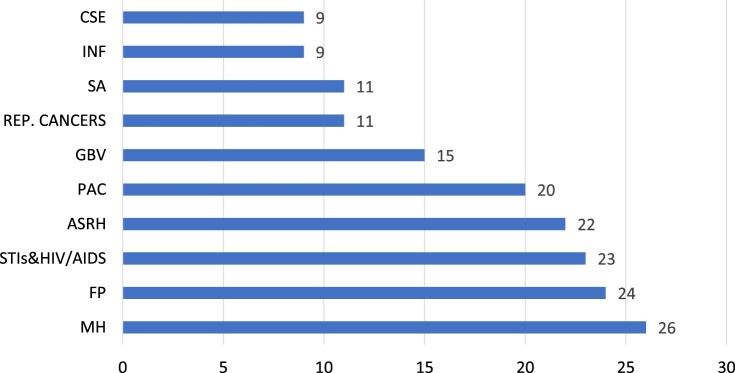
“A review of essential packages of healthcare services in LMICs found that only some adolescent SRH services, mainly related to contraception and STI/HIV, were included, and concluded that evidence on adolescent SRH in UHC remain under-researched and evidenced.(9) Across Africa, SRH laws and policies and the implicatio…”
Background
Metadata
- Authors
- Ravindran, T. K. S., & Govender, V.
- Affiliations
- United Nations University-International Institute for Global Health (MY)
- World Health Organization (CH)
- Corresponding author
- Govender, Veloshnee
- Venue
- Sexual and Reproductive Health Matters
- Publisher
- Informa UK Limited
- Published
- 2020-07-20
- Volume
- 28
- Issue
- 2
- Pages
- 1779632
- ISSN
- 2641-0397 (ISSN-L)
- PMC
- PMC7887992
- OpenAlex
- W3034899309
- Cited by
- 108
- References
- 121
- Citations by year
- 2026: 20 · 2025: 20 · 2024: 26 · 2023: 11 · 2022: 18 · 2021: 9 · 2020: 4
- FWCI
- 2.54
- Type
- journal article
- Language
- en
- Open access
- gold
- doi.org
- Licence
- Locations
- Sexual and Reproductive Health Matters (publishedVersion, cc-by-nc-sa)
- PubMed Central (publishedVersion, cc-by)
- PubMed (publishedVersion)
- UNU Collections (United Nations University) (submittedVersion)
- DOAJ (DOAJ: Directory of Open Access Journals) (submittedVersion, cc-by-sa)
- Funders
- World Health Organization
- Topics
- Health Sciences › Medicine › Public Health, Environmental and Occupational Health › Healthcare Systems and Reforms
- Health Sciences › Medicine › Public Health, Environmental and Occupational Health › Reproductive Health and Contraception
- Health Sciences › Medicine › Pediatrics, Perinatology and Child Health › Global Maternal and Child Health
- Keywords
- sexual and reproductive health services, universal health coverage, out-of-pocket costs, health care financing, safe abortion services, reproductive cancers, gender norms, gender inequality, health care access, low- and middle-income countries, health policy
- MeSH terms
- Sexual Health, Developing Countries, Humans, Private Sector, Universal Health Insurance, Reproductive Health Services, Reproductive Rights, Healthcare Financing
About these checks
Registry, retraction, Cites and statistics results are computed, not judged, with one exception: a printed reference that no index lists is read once by a model before it counts as a citation error. Claims are extracted by a model and kept only when their quote appears verbatim in the text; each cited source is then checked, with a model’s help, for whether it says what the claim relies on. Those verdicts can be wrong — read the claim’s quote and the cited source before relying on one.
Statistics and arithmetic are recomputed, not judged.
Confidence bands are shown only for fields calibrated on our annotated test set. None is calibrated yet, so no band is shown.
What counts as a claim ›How we measure confidence ›How we check this ›
Are you an author, or do you see a problem with this page? Request a review
Data sources
Bibliographic data: Semantic Scholar, OpenAlex, Crossref.
Contains information from the Semantic Scholar Academic Graph Datasets, made available under the ODC Attribution License (ODC-BY 1.0).
Semantic Scholar’s data is described in: Kinney, R., et al. (2023). The Semantic Scholar Open Data Platform. arXiv:2301.10140.
