

The DOI matches its Crossref record; 44 of the 48 references it cites were found in a registry or an index.
New Component of the Vacuolar Class C-Vps Complex Couples Nucleotide Exchange on the Ypt7 Gtpase to Snare-Dependent Docking and Fusion
Open accessAbstract
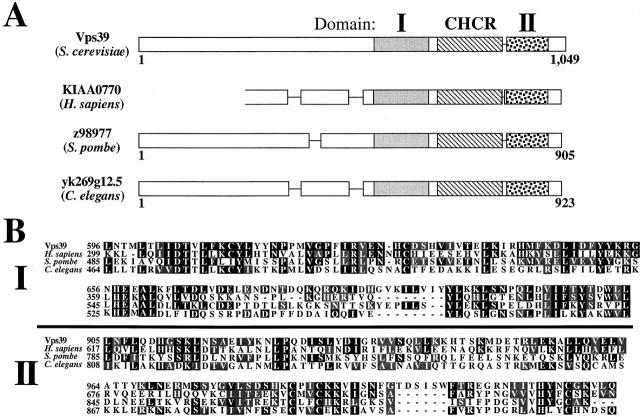
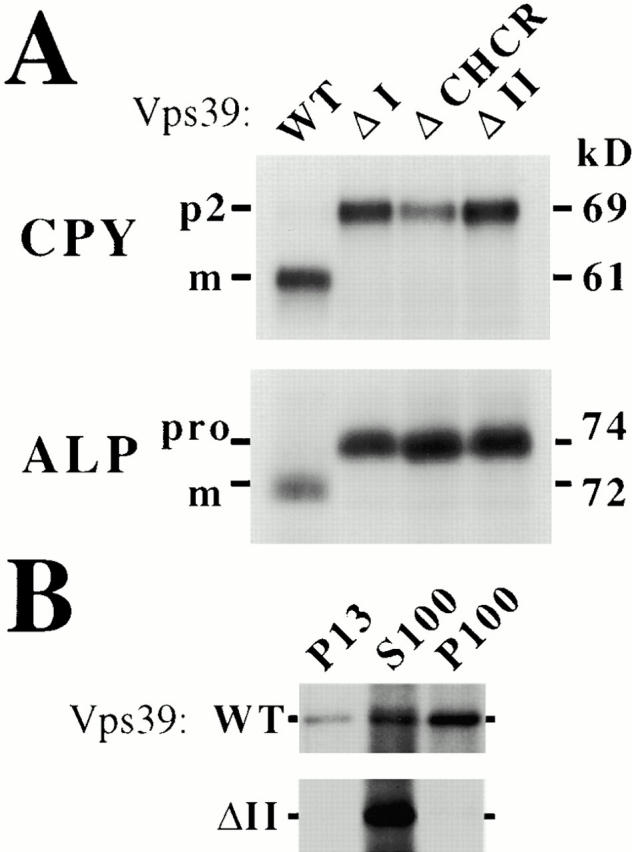
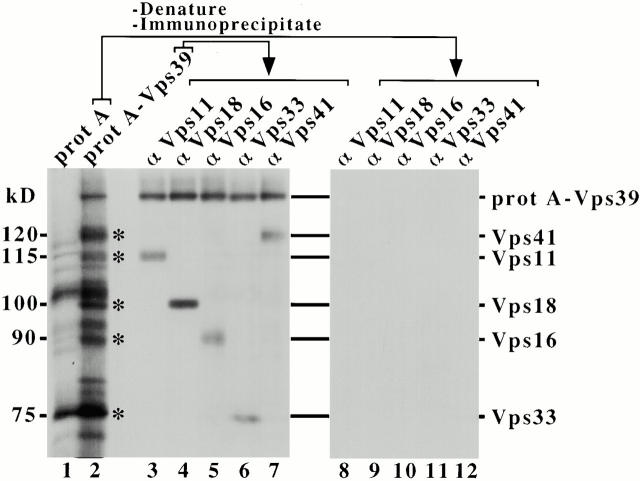
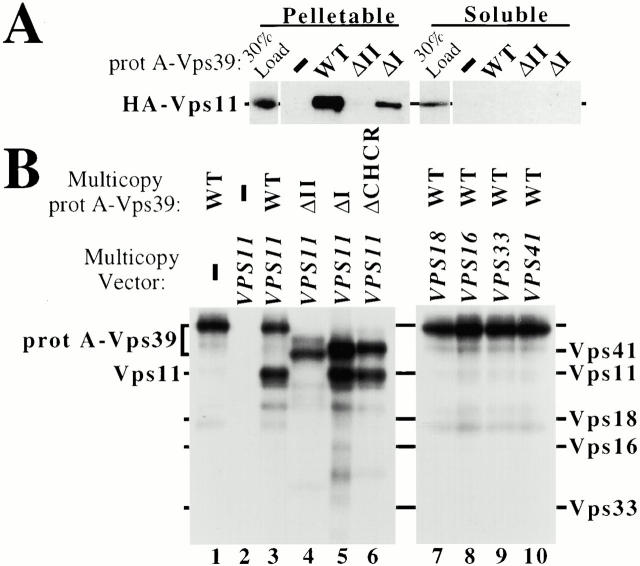
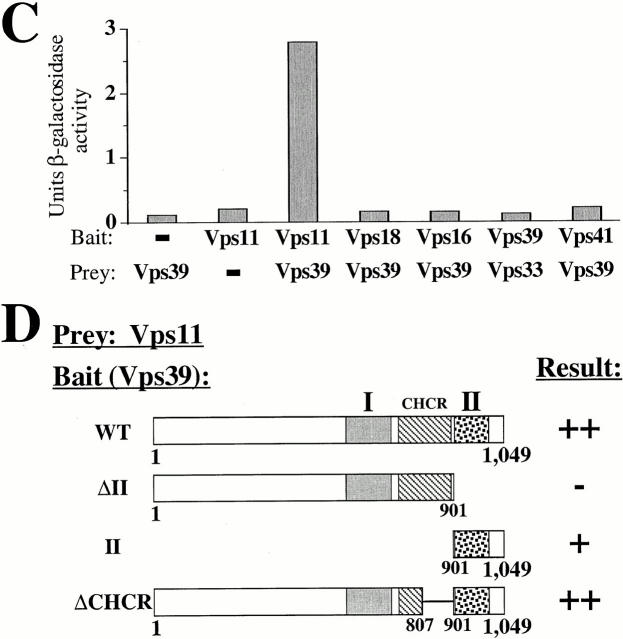
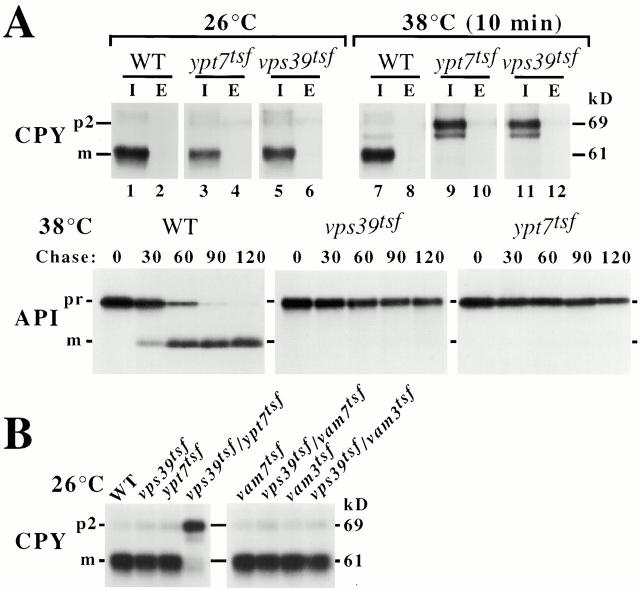
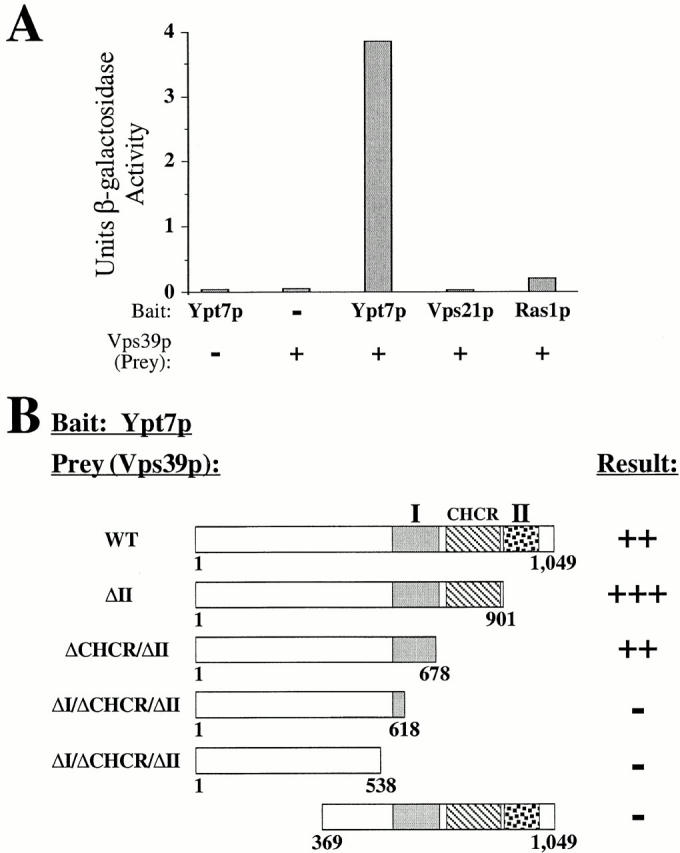
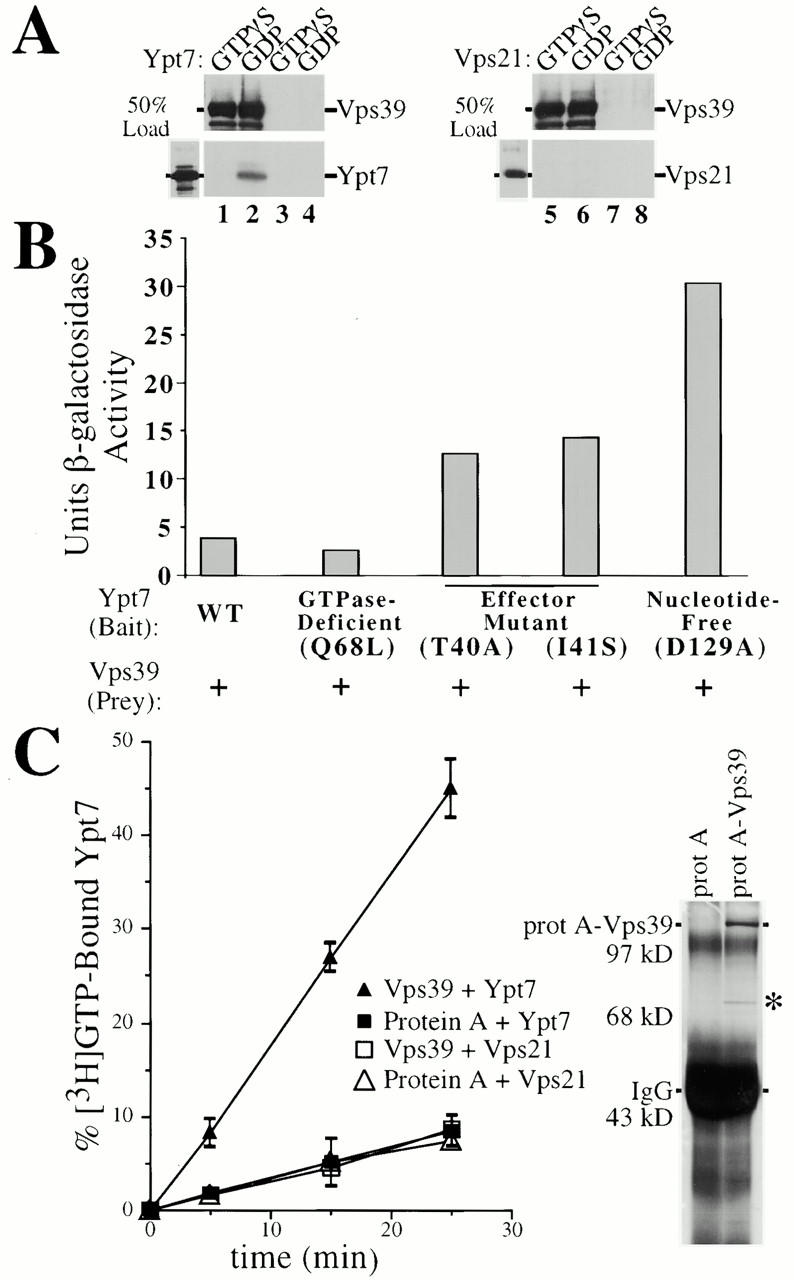
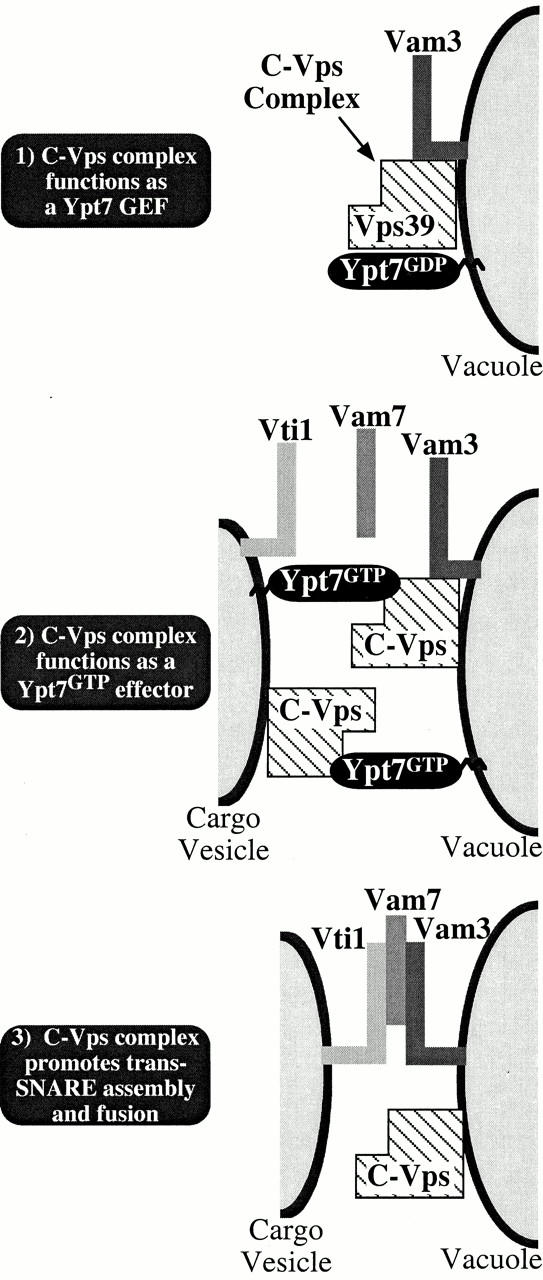
The class C subset of vacuolar protein sorting (Vps) proteins (Vps11, Vps18, Vps16 and Vps33) assembles into a vacuole/prevacuole-associated complex. Here we demonstrate that the class C-Vps complex contains two additional proteins, Vps39 and Vps41. The COOH-terminal 148 amino acids of Vps39 direct its association with the class C-Vps complex by binding to Vps11. A previous study has shown that a large protein complex containing Vps39 and Vps41 functions as a downstream effector of the active, GTP-bound form of Ypt7, a rab GTPase required for the fusion of vesicular intermediates with the vacuole (Price, A., D. Seals, W. Wickner, and C. Ungermann. 2000. J. Cell Biol. 148:1231–1238). Here we present data that indicate that this complex also functions to stimulate nucleotide exchange on Ypt7. We show that Vps39 directly binds the GDP-bound and nucleotide-free forms of Ypt7 and that purified Vps39 stimulates nucleotide exchange on Ypt7. We propose that the class C-Vps complex both promotes Vps39-dependent nucleotide exchange on Ypt7 and, based on the work of Price et al., acts as a Ypt7 effector that tethers transport vesicles to the vacuole. Thus, the class C-Vps complex directs multiple reactions during the docking and fusion of vesicles with the vacuole, each of which contributes to the overall specificity and efficiency of this transport process.
Overview
The claims and statistics of this paper haven’t been checked yet.
Run the check — free, no account needed. It reads the open-access text and checks the sources it cites.
Integrity signals
Registry
Cites
Statistics
Figures
Verification
Claims the paper makes
The claims and statistics of this paper haven’t been checked yet.
Run the check — free, no account needed. It reads the open-access text and checks the sources it cites.
Claims other papers make about this one
Each is checked against this paper’s own text: does it say what the citing paper says it does?
In the citing paper
“Fusion of the autophagosome and lysosome is mediated by the homotypic fusion and protein sorting (HOPS) complex, whose subunits include VPS11, VPS16, VPS18, VPS33A, VPS39, and VPS41 [45,46].”
From Autophagy and ALS: mechanistic insights and therapeutic implications (2022) · cites this paper as [46]
Self-check
Percentages, sums and reported differences re-computed from the paper’s own numbers.
The self-check needs the paper’s full text.
Citations
Cites
Robinson, J. S., Klionsky, D. J., Banta, L. M., & Emr, S. D. (1988) · Molecular and Cellular Biology · doi:10.1128/mcb.8.11.4936 · Cited by 981
Self-citationThe Exocyst is a multiprotein complex required for exocytosis in Saccharomyces cerevisiae.
Terbush, D. R., Maurice, T. C., Roth, D., & Novick, P. (1996) · The EMBO Journal · doi:10.1002/j.1460-2075.1996.tb01039.x · Cited by 843
Raymond, C. K., Howald-Stevenson, I., Vater, C. A., & Stevens, T. H. (1992) · Molecular Biology of the Cell · doi:10.1091/mbc.3.12.1389 · Cited by 840
Inhibition of NIH 3T3 Cell Proliferation by a Mutant ras Protein with Preferential Affinity for GDP
Feig, L. A., & Cooper, G. M. (1988) · Molecular and Cellular Biology · doi:10.1128/mcb.8.8.3235-3243.1988 · Cited by 799
The fungal vacuole: composition, function, and biogenesis
Klionsky, D. J., Herman, P. K., & Emr, S. D. (1990) · Microbiological Reviews · doi:10.1128/mr.54.3.266-292.1990 · Cited by 781
Self-citationThe exocyst is an effector for Sec4p, targeting secretory vesicles to sites of exocytosis
Guo, W., Roth, D., Walch-Solimena, C., & Novick, P. (1999) · The EMBO Journal · doi:10.1093/emboj/18.4.1071 · Cited by 627
Horiuchi, H., Lippé, R., McBride, H. M., Rubino, M., Woodman, P. G., Stenmark, H., Rybin, V., Wilm, M. S., Ashman, K., Mann, M., et al. (1997) · Cell · doi:10.1016/s0092-8674(00)80380-3 · Cited by 595
Biological and biochemical properties of human rasH genes mutated at codon 61
Der, C. J., Finkel, T., & Cooper, G. M. (1986) · Cell · doi:10.1016/0092-8674(86)90495-2 · Cited by 536
McBride, H. M., Rybin, V., Murphy, C., Giner, A., Teasdale, R., & Zerial, M. (1999) · Cell · doi:10.1016/s0092-8674(00)81966-2 · Cited by 520
Seals, D. F., Eitzen, G., Margolis, N., Wickner, W. T., & Price, A. (2000) · Proceedings of the National Academy of Sciences · doi:10.1073/pnas.97.17.9402 · Cited by 477
Cited by
Sorted by citations
Rab GTPases as coordinators of vesicle traffic
Stenmark, H. (2009) · Nature Reviews Molecular Cell Biology · doi:10.1038/nrm2728 · Cited by 3,413
Rab proteins as membrane organizers
Zerial, M., & McBride, H. (2001) · Nature Reviews Molecular Cell Biology · doi:10.1038/35052055 · Cited by 3,381
Huotari, J., & Helenius, A. (2011) · The EMBO Journal · doi:10.1038/emboj.2011.286 · Cited by 2,448
Rab Conversion as a Mechanism of Progression from Early to Late Endosomes
Rink, J. C., Ghigo, É., Kalaidzidis, Y. L., & Zerial, M. (2005) · Cell · doi:10.1016/j.cell.2005.06.043 · Cited by 1,680
Role of Rab GTPases in Membrane Traffic and Cell Physiology
Hutagalung, A. H., & Novick, P. J. (2011) · Physiological Reviews · doi:10.1152/physrev.00059.2009 · Cited by 1,460
Metadata
- Authors
- Wurmser, A. E., Sato, T. K., & Emr, S. D.
- Affiliations
- Howard Hughes Medical Institute (US)
- Venue
- The Journal of Cell Biology
- Publisher
- Rockefeller University Press
- Published
- 2000-10-30
- Volume
- 151
- Issue
- 3
- Pages
- 551-562
- ISSN
- 0021-9525 (ISSN-L)
- 1540-8140
- PMC
- PMC2185595
- OpenAlex
- W2132005005
- Cited by
- 425
- References
- 48
- Citations by year
- 2026: 4 · 2025: 8 · 2024: 10 · 2023: 12 · 2022: 7 · 2021: 12 · 2020: 10 · 2019: 13 · 2018: 8 · 2017: 16 · 2016: 16 · 2015: 15 · 2014: 23 · 2013: 17 · 2012: 28
- FWCI
- 8.09
- Type
- journal article
- Language
- en
- Open access
- green
- www.ncbi.nlm.nih.gov
- Licence
- cc-by-nc-sa
- Locations
- The Journal of Cell Biology (publishedVersion)
- PubMed Central (publishedVersion, cc-by-nc-sa)
- PubMed (publishedVersion)
- Funders
- National Institutes of Health (5p01ca058689-10)
- National Cancer Institute (CA 58689)
- Topics
- Life Sciences › Biochemistry, Genetics and Molecular Biology › Cell Biology › Cellular transport and secretion
- Life Sciences › Biochemistry, Genetics and Molecular Biology › Molecular Biology › Fungal and yeast genetics research
- Life Sciences › Biochemistry, Genetics and Molecular Biology › Cell Biology › Autophagy in Disease and Therapy
- Keywords
- VPS39, VPS41, Ypt7, Rab GTPases, nucleotide exchange, vacuole fusion, vesicle docking, SNARE proteins, vacuolar protein sorting, yeast vacuole, protein complex formation
- MeSH terms
- Amino Acid Sequence, Biological Transport, Carrier Proteins, Fungal Proteins, Guanosine Triphosphate, Membrane Fusion, Membrane Proteins, Models, Biological, Molecular Sequence Data, Mutation, Nuclear Proteins, Protein Binding, Saccharomyces cerevisiae, Substrate Specificity, Vacuoles, Sequence Alignment, RNA-Binding Proteins, Conserved Sequence, Protein Structure, Tertiary, Genes, Essential, rab GTP-Binding Proteins, Two-Hybrid System Techniques, Saccharomyces cerevisiae Proteins, Vesicular Transport Proteins, Adaptor Proteins, Vesicular Transport, Macromolecular Substances, SNARE Proteins
About these checks
Registry, retraction, Cites and statistics results are computed, not judged, with one exception: a printed reference that no index lists is read once by a model before it counts as a citation error. Claims are extracted by a model and kept only when their quote appears verbatim in the text; each cited source is then checked, with a model’s help, for whether it says what the claim relies on. Those verdicts can be wrong — read the claim’s quote and the cited source before relying on one.
Statistics and arithmetic are recomputed, not judged.
Confidence bands are shown only for fields calibrated on our annotated test set. None is calibrated yet, so no band is shown.
What counts as a claim ›How we measure confidence ›How we check this ›
Are you an author, or do you see a problem with this page? Request a review
