

Fracture mechanics of pile foundations on permafrost soils by the example of Norilsk
Open accessThe DOI matches its Crossref record; 4 of the 4 references it cites were found in a registry or an index; none of the 3 sources its claims cite is checked for support yet.
Abstract
In Norilsk, more than 30% of the housing stock is in the state of severe disrepair.The analysis of possible causes of failures and deformations of pile foundations in the city of Norilsk is presented.The numerical calculation of the warming of permafrost soils is carried out.The thawing of these soils only due to climate warming cannot result in critical deformation of pile foundations.
Overview
CoChat Summary
TL;DR
The paper analyzes causes of pile-foundation failures in Norilsk and numerically models permafrost thawing around combined piles. It concludes that climate warming alone cannot critically reduce pile bearing capacity; anthropogenic factors, design errors, and poor maintenance are more powerful causes.
Key findings
- More than 30% of Norilsk’s 859 apartment buildings are in critical condition, and 120 multi-storey residential buildings (about 10% of the city’s housing stock) have been demolished in recent years.
- Climate and design context: air temperature trend averaged 0.6 °C per 10 years; the active layer increased by 13 cm from 2002 to 2016; soil temperatures at 10–15 m range from −10 to +6 °C; saline soils become plastic above −1.5 °C; Soviet-era safety coefficients rarely exceeded 1.56.
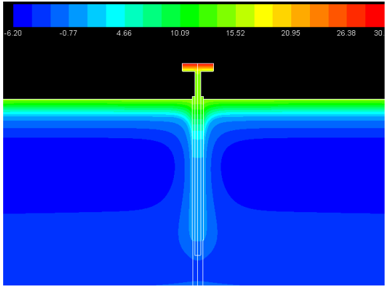
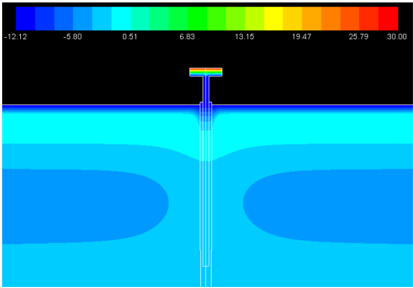
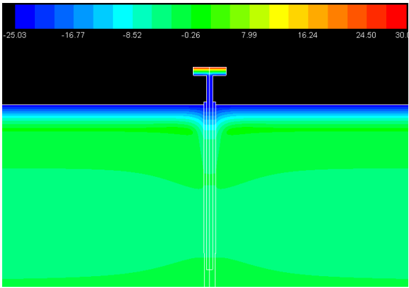
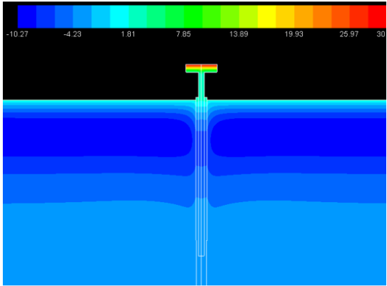
- Numerical calculations show global warming alone cannot critically affect pile bearing capacity; with anthropogenic factors, footing soils can thaw to a depth of 15 m, causing uneven frost heaving and pile deformation.
- Failures are attributed to climatic effects on foundation material in the active layer and crawl space, unaccounted thermal stresses, design errors, and poor maintenance, rather than permafrost warming alone.
Methods
- Used the enthalpy-porosity formulation to model melting/crystallization, treating the two-phase zone as a pseudo-porous medium; solved with a finite volume method on unstructured grids and an algebraic multigrid solver.
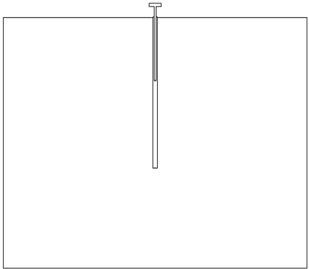
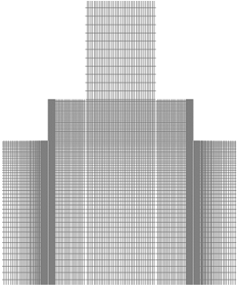
- Computational domain: depth 40 m, radius 25 m; combined piles with lower in-situ concrete grade B22.5, F300, W8 and upper precast reinforced concrete piles C12-35 in steel casing pipes 720 mm diameter and 8 mm wall thickness; grid of 250,000 cells with a 20-second time step.
- Inputs included ice content 20%, initial permafrost temperature −0.2 °C, frozen rock thermal conductivity 1.93 W/(m·K), density 1.8 g/cm³, volume heat capacity 2.31 MJ/(m³·K), soils described as sandy loam, loam, sand, and clay, and seasonal surface temperatures from long-term meteorological observations.
Limitations
- Not stated in the paper: the paper has no explicit limitations section.
- Evident from the text: the model uses a single computational geometry (40 m depth, 25 m radius) and one set of soil/thermal properties, so generality is not demonstrated.
- Evident from the text: anthropogenic factors are included “using coefficients” without reported calibration or validation; the paper states the resulting thawing picture “can correspond” to observed destruction patterns rather than validating against field measurements.
Model-written summary. Check it against the paper before relying on it.
Integrity signals
Registry
Cites
Statistics
Figures
Verification
Claims the paper makes
0 Valid · 0 Not valid · 3 Not checked · 10 Own results and interpretations
A result the paper reports from its own data — it cites no other source for it, so there is none to check. The quote shows it is in the paper.
In the paper
“The calculations have shown that only global warming factors are not able to have a critical impact on the bearing capacity of the pile foundations.”
§ Fracture mechanics of pile foundations on permafrost soils by the example of Norilsk > 3. Results and discussion
plain- Asserted: passes — The authors put it forward as true.
- Checkable: passes — It can be checked against evidence.
- Load-bearing: passes — The paper’s conclusions depend on it.
- Based: passes — The paper gives a reason why it holds.
A result the paper reports from its own data — it cites no other source for it, so there is none to check. The quote shows it is in the paper.
In the paper
“Taking into account various anthropogenic factors, using coefficients, the picture of the thawing of permafrost soils is obtained which can correspond to the existing patterns of the destruction of pile foundations.”
§ Fracture mechanics of pile foundations on permafrost soils by the example of Norilsk > 3. Results and discussion
plainstates an association- Asserted: passes — The authors put it forward as true.
- Checkable: passes — It can be checked against evidence.
- Load-bearing: passes — The paper’s conclusions depend on it.
- Based: passes — The paper gives a reason why it holds.
- Rests on an assumption not shown here.
A result the paper reports from its own data — it cites no other source for it, so there is none to check. The quote shows it is in the paper.
In the paper
“The thawing of these soils only due to climate warming cannot result in critical deformation of pile foundations.”
§ Fracture mechanics of pile foundations on permafrost soils by the example of Norilsk > Abstract
plain- Asserted: passes — The authors put it forward as true.
- Checkable: passes — It can be checked against evidence.
- Load-bearing: passes — The paper’s conclusions depend on it.
- Based: passes — The paper gives a reason why it holds.
A result the paper reports from its own data — it cites no other source for it, so there is none to check. The quote shows it is in the paper.
In the paper
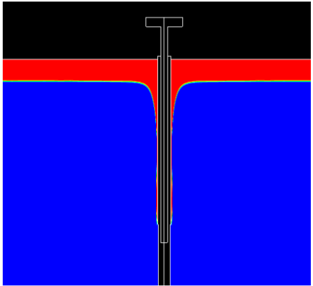
“The calculations have shown that when taking into account anthropogenic factors the soil of the footings can be thawed to a depth of 15 m.”
§ Fracture mechanics of pile foundations on permafrost soils by the example of Norilsk > 4. Conclusions
plainstates a possible cause- Asserted: passes — The authors put it forward as true.
- Checkable: passes — It can be checked against evidence.
- Load-bearing: passes — The paper’s conclusions depend on it.
- Based: passes — The paper gives a reason why it holds.
- Rests on an assumption not shown here.
A result the paper reports from its own data — it cites no other source for it, so there is none to check. The quote shows it is in the paper.
In the paper
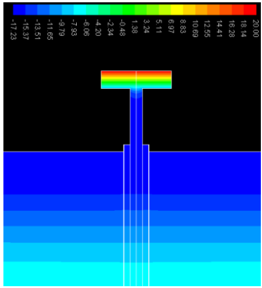
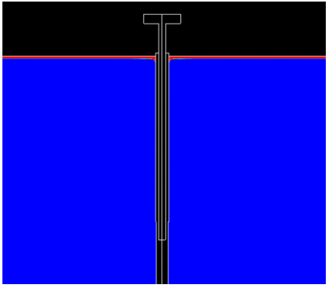
“It can be seen from the figures that the main temperature front propagates along the metal casing.”
§ Fracture mechanics of pile foundations on permafrost soils by the example of Norilsk > 3. Results and discussion
plain- Asserted: passes — The authors put it forward as true.
- Checkable: passes — It can be checked against evidence.
- Load-bearing: unclear — It is unclear whether the paper’s conclusions depend on it.
- Based: passes — The paper gives a reason why it holds.
5 more claims
Create a free account to see all 13 claims and every source verdict.
- It may state two separate claims as one. 3
Citations
Cites
Numerical modeling of permafrost dynamics in Alaska using a high spatial resolution dataset
Jafarov, E. E., Marchenko, S. S., & Romanovsky, V. E. (2012) · The Cryosphere · doi:10.5194/tc-6-613-2012 · Cited by 228
Nicolsky, D. J., Romanovsky, V. E., & Panteleev, G. G. (2008) · Cold Regions Science and Technology · doi:10.1016/j.coldregions.2008.03.003 · Cited by 150
Climate Change and Foundations of Buildings in Permafrost Regions
Shur, Y., & Goering, D. J. (2008) · Soil Biology · doi:10.1007/978-3-540-69371-0_17 · Cited by 34
Numerical modeling of permafrost dynamics in Alaska using a high spatial resolution datasetPreprint
Jafarov, E. E., Marchenko, S. S., & Romanovsky, V. E. (2012) · doi:10.5194/tcd-6-89-2012 · Cited by 15
Research works printed but not linked: 2
- National Report on the Peculiarities of Climate in the Territory of the Russian Federation for 2016 (Moscow: Roshydromet) p 70
- Soil Bases and Foundations on Permafrost Soils. SP 25.13330.2012 (Moscow) p 236
Metadata
- Authors
- Arkhipov, I. N., Amelchugov, S. P., Dekterev, A. A., Inzhutov, I. S., Lukyanov, V. V., Maximov, A. V., Minakov, A. V., & Palagushkin, V. I.
- Affiliations
- Siberian Federal University (RU)
- Venue
- IOP Conference Series: Materials Science and Engineering
- Publisher
- IOP Publishing
- Published
- 2018-12-31
- Volume
- 456
- Pages
- 012034
- ISSN
- 1757-8981 (ISSN-L)
- 1757-899X
- OpenAlex
- W2907014851
- Cited by
- 0
- References
- 3
- FWCI
- 0.00
- Type
- conference paper
- Language
- en
- Open access
- diamond
- doi.org
- Licence
- cc-by
- iopscience.iop.org/info/page/text-and-data-mining (tdm)
- creativecommons.org/licenses/by/3.0/ (vor)
- Locations
- IOP Conference Series Materials Science and Engineering (publishedVersion, cc-by)
- SibFU Digital Repository (Siberian Federal University) (submittedVersion)
- Funders
- Russian Foundation for Basic Research
- Topics
- Physical Sciences › Earth and Planetary Sciences › Atmospheric Science › Climate change and permafrost
- Physical Sciences › Engineering › Civil and Structural Engineering › Geotechnical Engineering and Soil Mechanics
- Physical Sciences › Engineering › Mechanics of Materials › Soil, Finite Element Methods
- Keywords
- pile foundations, permafrost soils, fracture mechanics, foundation failure, global warming, permafrost warming, foundation deformation, Norilsk
About these checks
Registry, retraction, Cites and statistics results are computed, not judged, with one exception: a printed reference that no index lists is read once by a model before it counts as a citation error. Claims are extracted by a model and kept only when their quote appears verbatim in the text; each cited source is then checked, with a model’s help, for whether it says what the claim relies on. Those verdicts can be wrong — read the claim’s quote and the cited source before relying on one.
A language model drew the claims from the paper on 2026-10-05, under version 3 of the claim definition (model deepseek-v4.1-flash, prompt extract-v3).
A second model labelled each claim on 2026-10-05 (model jev-1.13-20260917, definition revision gold-guideline-v0.2).
Statistics and arithmetic are recomputed, not judged.
Confidence bands are shown only for fields calibrated on our annotated test set. None is calibrated yet, so no band is shown.
What counts as a claim ›How we measure confidence ›How we check this ›
Are you an author, or do you see a problem with this page? Request a review
How to cite
Cite CoChat for the checks on this page, and the paper for its own findings.
- This page
- CoChat. (2026). Citation check: Fracture mechanics of pile foundations on permafrost soils by the example of Norilsk. https://app.cochat.ai/papers/10.1088/1757-899x/456/1/012034
- The paper
- Arkhipov, I. N., Amelchugov, S. P., Dekterev, A. A., Inzhutov, I. S., Lukyanov, V. V., Maximov, A. V., Minakov, A. V., & Palagushkin, V. I. (2018). Fracture mechanics of pile foundations on permafrost soils by the example of Norilsk. IOP Conference Series: Materials Science and Engineering. https://doi.org/10.1088/1757-899x/456/1/012034
Data sources
Bibliographic data: Semantic Scholar, OpenAlex, Crossref.
Contains information from the Semantic Scholar Academic Graph Datasets, made available under the ODC Attribution License (ODC-BY 1.0).
Semantic Scholar’s data is described in: Kinney, R., et al. (2023). The Semantic Scholar Open Data Platform. arXiv:2301.10140.
