

The DOI matches its Crossref record; 3 of the 3 references it cites were found in a registry or an index.
Minimally Invasive Auricoloplasty With an Anterior Approach: A 15-Year Experience
Open accessAbstract
Background: The otoplasty technique, independently conceived by Kaye and Lewis, is a simple and effective method for correcting prominent ears with an underdeveloped antihelical fold, but it is inappropriate for correcting ears with conchal hypertrophy. Objectives: To describe an anterior approach to otoplasty that can correct prominent ears, even for those with conchal hypertrophy. Methods: The 100 most recent otoplasty interventions to correct prominent ears were analyzed retrospectively. Indications, aesthetic results, complications and corrections were evaluated. Results: The 100 patients who underwent otoplasty included 40 males and 60 females with a mean age of 18 years (range, 8–62 years). Sixty-five patients underwent correction of an underdeveloped antihelical fold, 30 underwent correction of conchal hypertrophy and 5 required resection of a conchal cartilage crescent. Intervention was bilateral in 96 patients and monolateral in 4 patients. Two patients required secondary corrections, including 1 requiring monolateral correction for a trauma after 10 days. No patient experienced hematomas or infections, despite the absence of antibiotic coverage. Conclusions: This minimally invasive otoplasty technique is a simple, quick, and effective method, even in patients with conchal hypertrophy. Level of Evidence: 4:
Overview
The claims and statistics of this paper haven’t been checked yet.
Run the check — free, no account needed. It reads the open-access text and checks the sources it cites.
Integrity signals
Registry
Cites
Statistics
Figures
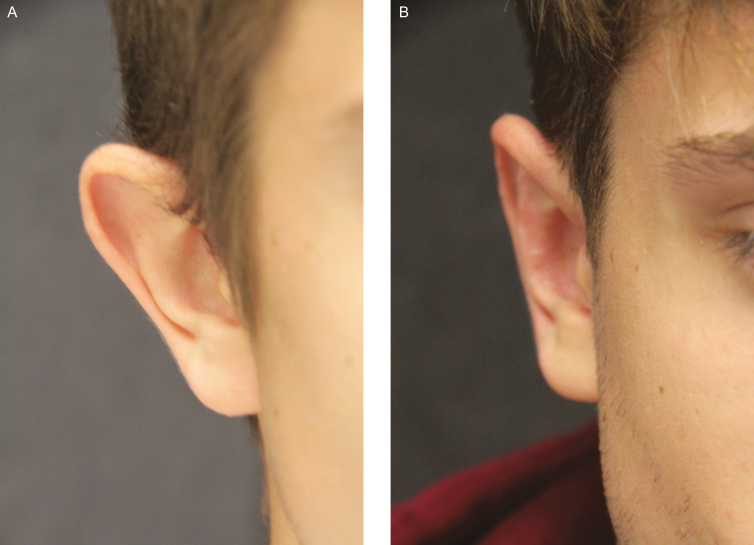
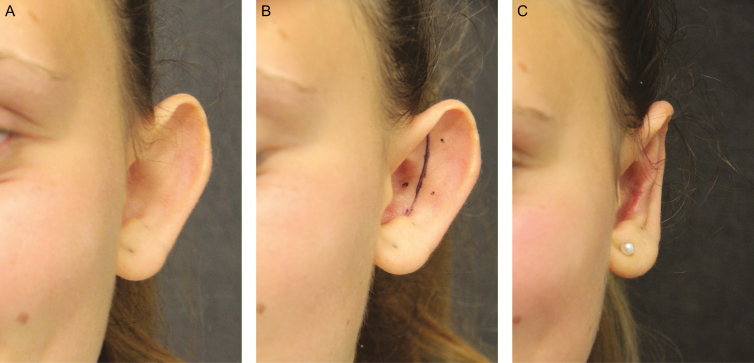
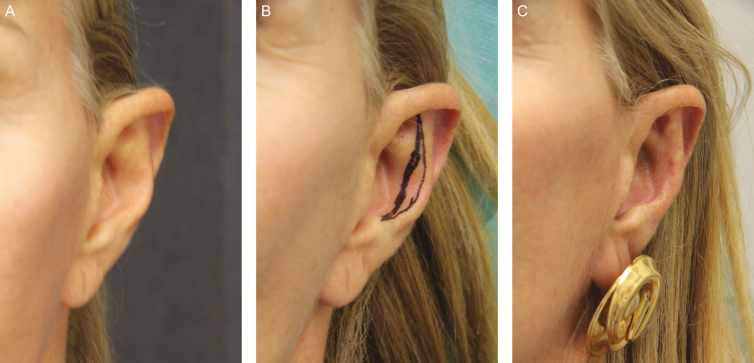
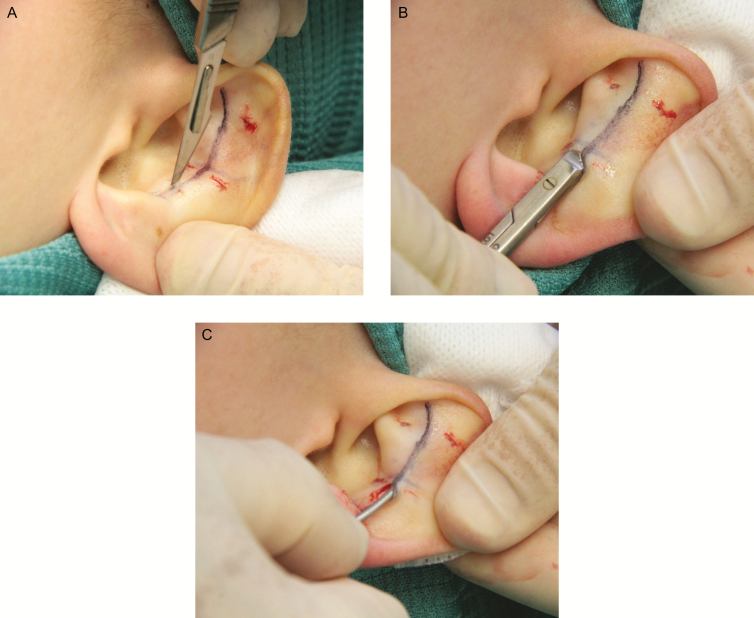
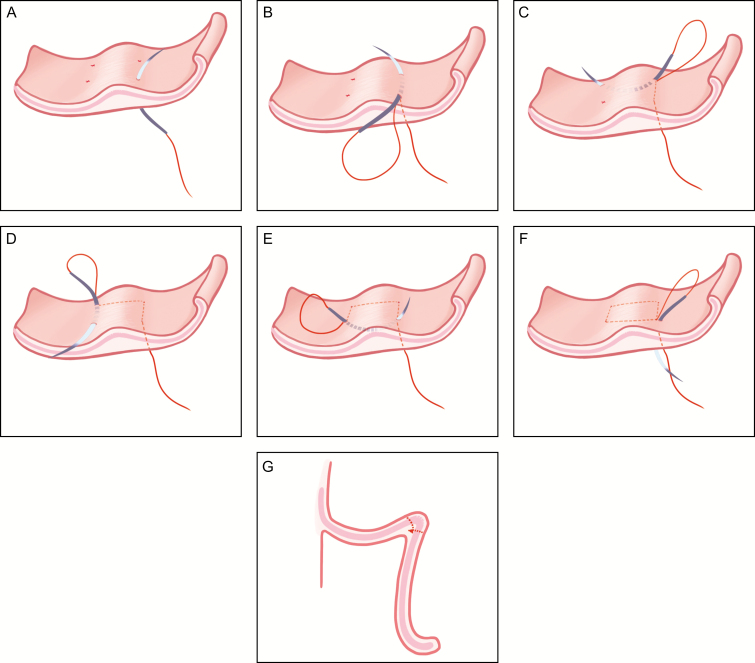
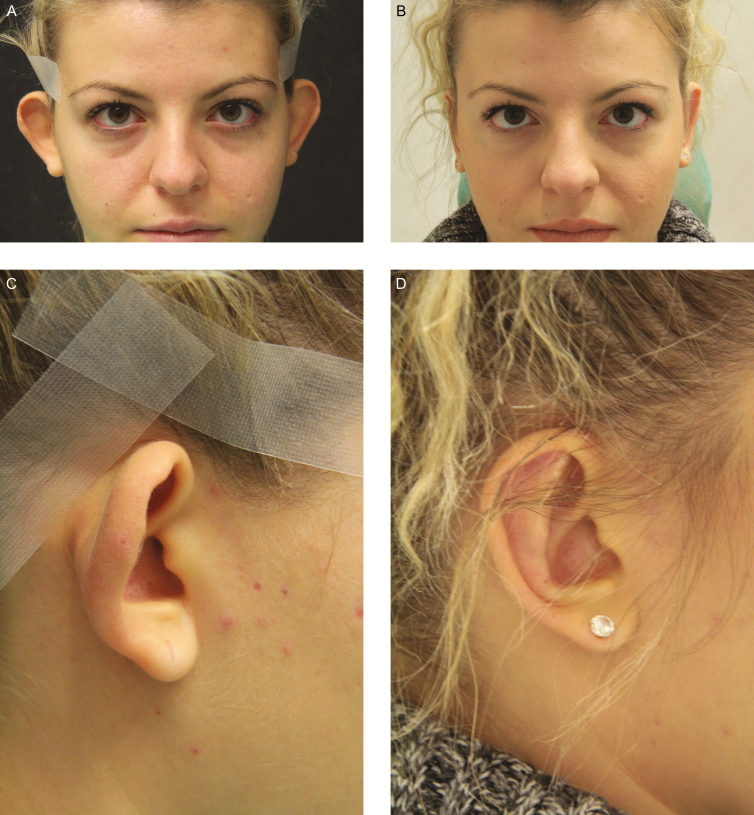
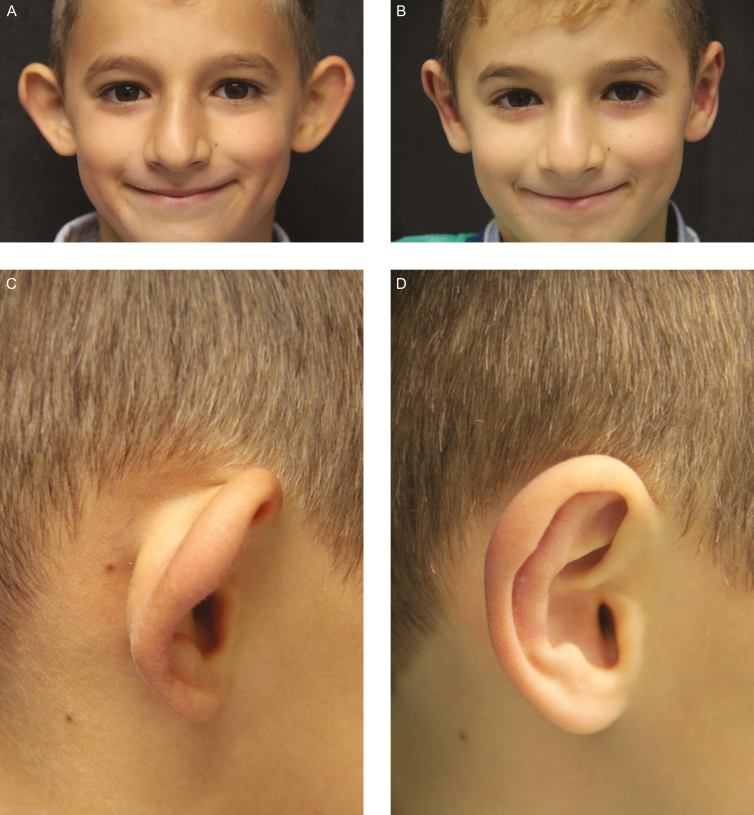
Verification
Claims the paper makes
The claims and statistics of this paper haven’t been checked yet.
Run the check — free, no account needed. It reads the open-access text and checks the sources it cites.
Claims other papers make about this one
Each is checked against this paper’s own text: does it say what the citing paper says it does?
The source backs part of the claim, not all of it — or backs it for a different population, condition or comparison.
In the citing paper
“Outcomes demonstrate high satisfaction, minimal morbidity, and optimal results in patients with well-defined antihelix and limited conchal hypertrophy.50–52”
From Otoplasty Surgical Techniques and Clinical Outcomes: A Practical Review (2026) · cites this paper as [52]
Experimental — accuracy not yet measured
Self-check
Percentages, sums and reported differences re-computed from the paper’s own numbers.
The self-check needs the paper’s full text.
Citations
Cites
Correction of prominent ears by concha-mastoid sutures
FURNAS, D. W. (1968) · Plastic and Reconstructive Surgery · doi:10.1097/00006534-196809000-00001 · Cited by 329
The Treatment of Prominent Ears by Buried Mattress Sutures: A Ten-Year Survey
MUSTARDÉE, J. C. (1967) · Plastic and Reconstructive Surgery · doi:10.1097/00006534-196704000-00008 · Cited by 162
Janis, J. E., Rohrich, R. J., & Gutowski, K. A. (2005) · Plastic and Reconstructive Surgery · doi:10.1097/01.prs.0000156218.93855.c9 · Cited by 159
Research works printed but not linked: 6
- Kaye, 1967, A simplified method for correcting the prominent ear, Plast Reconstr Surg, 40, 44, 10.1097/00006534-196707000-00006 · DOI
- McDowell, 1968, Goals in otoplasty for protruding ears, Plast Reconstr Surg, 41, 17, 10.1097/00006534-196801000-00004 · DOI
- Converse, 1955, A technique for surgical correction of lop ears, Plast Reconstr Surg, 15, 411, 10.1097/00006534-195505000-00004 · DOI
- Caouette-Laberge, 2000, Otoplasty: anterior scoring technique and results in 500 cases, Plast Reconstr Surg, 105, 504, 10.1097/00006534-200002000-00004 · DOI
- Elliott, 1990, Otoplasty: a combined approach, Clin Plast Surg, 17, 373, 10.1016/S0094-1298(20)31251-7 · DOI
- Erol, 2001, New modification in otoplasty: anterior approach, Plast Reconstr Surg, 107, 193, 10.1097/00006534-200101000-00032 · DOI
Cited by
Sorted by citations
Otoplasty Surgical Techniques and Clinical Outcomes: A Practical Review
Kaleeny, J. D., & Janis, J. E. (2026) · Plastic and Reconstructive Surgery - Global Open · doi:10.1097/gox.0000000000007404
“49 52 LACR provides a noninvasive option.”
Metadata
- Authors
- Bellinvia, G., & Bellinvia, P.
- Corresponding author
- Bellinvia, Giacomo
- Venue
- Aesthetic Surgery Journal Open Forum
- Publisher
- Oxford University Press (OUP)
- Published
- 2020-01
- Volume
- 2
- Issue
- 1
- Pages
- ojaa004-ojaa004
- ISSN
- 2631-4797 (ISSN-L)
- PMC
- PMC7780454
- OpenAlex
- W3003771157
- Cited by
- 5
- References
- 3
- Citations by year
- 2026: 1 · 2024: 2 · 2023: 2
- FWCI
- 0.46
- Type
- journal article
- Language
- en
- Open access
- gold
- doi.org
- Licence
- Locations
- Aesthetic Surgery Journal Open Forum (publishedVersion, cc-by-nc-nd)
- PubMed Central (publishedVersion, cc-by-nc-nd)
- PubMed (publishedVersion)
- Topics
- Health Sciences › Medicine › Surgery › Reconstructive Facial Surgery Techniques
- Health Sciences › Medicine › Surgery › Nasal Surgery and Airway Studies
- Health Sciences › Medicine › Genetics (clinical) › Congenital Ear and Nasal Anomalies
- Keywords
- otoplasty, prominent ears, anterior approach, minimally invasive surgery, antihelical fold, postoperative complications, cosmetic outcome
About these checks
Registry, retraction, Cites and statistics results are computed, not judged, with one exception: a printed reference that no index lists is read once by a model before it counts as a citation error. Claims are extracted by a model and kept only when their quote appears verbatim in the text; each cited source is then checked, with a model’s help, for whether it says what the claim relies on. Those verdicts can be wrong — read the claim’s quote and the cited source before relying on one.
Statistics and arithmetic are recomputed, not judged.
Confidence bands are shown only for fields calibrated on our annotated test set. None is calibrated yet, so no band is shown.
What counts as a claim ›How we measure confidence ›How we check this ›
Are you an author, or do you see a problem with this page? Request a review
