

The DOI matches its Crossref record; 60 of the 62 references it cites were found in a registry or an index.
Chemical substructures that enrich for biological activity
Open accessAbstract
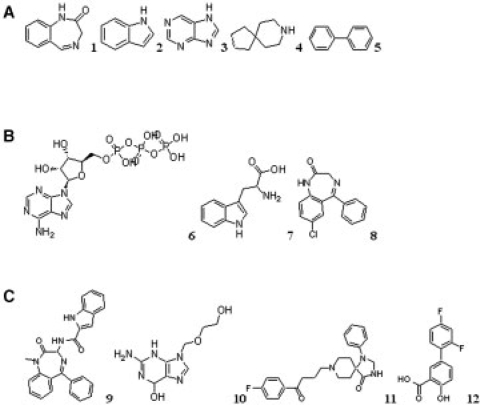
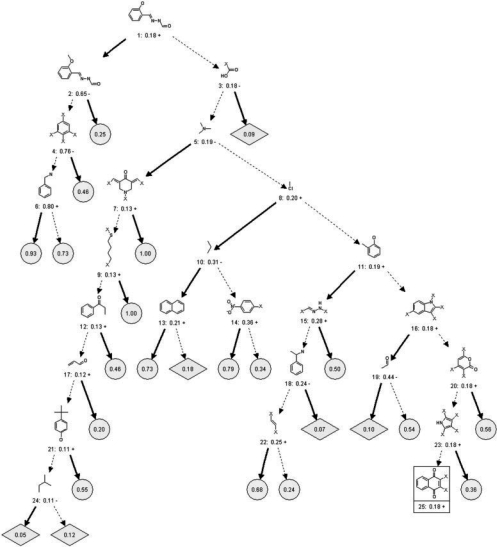
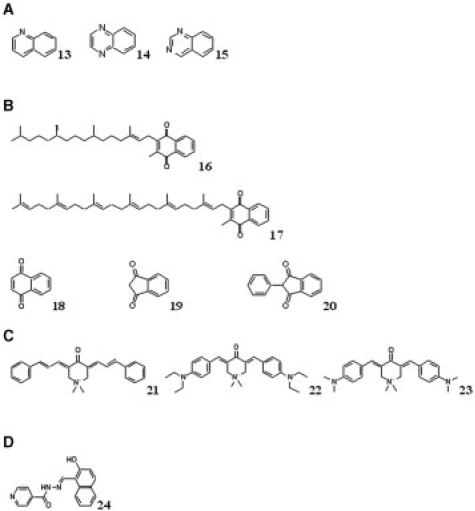
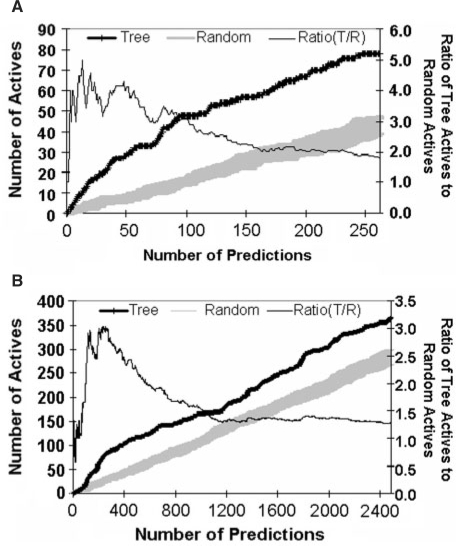
Motivation: Certain chemical substructures are present in many drugs. This has led to the claim of ‘privileged’ substructures which are predisposed to bioactivity. Because bias in screening library construction could explain this phenomenon, the existence of privilege has been controversial. Results: Using diverse phenotypic assays, we defined bioactivity for multiple compound libraries. Many substructures were associated with bioactivity even after accounting for substructure prevalence in the library, thus validating the privileged substructure concept. Determinations of privilege were confirmed in independent assays and libraries. Our analysis also revealed ‘underprivileged’ substructures and ‘conditional privilege’—rules relating combinations of substructure to bioactivity. Most previously reported substructures have been flat aromatic ring systems. Although we validated such substructures, we also identified three-dimensional privileged substructures. Most privileged substructures display a wide variety of substituents suggesting an entropic mechanism of privilege. Compounds containing privileged substructures had a doubled rate of bioactivity, suggesting practical consequences for pharmaceutical discovery. Contact: fritz_roth@hms.harvard.edu Supplementary information: Supplementary data are available at Bioinformatics online.
Overview
The claims and statistics of this paper haven’t been checked yet.
Run the check — free, no account needed. It reads the open-access text and checks the sources it cites.
Integrity signals
Registry
Cites
Statistics
Figures
Verification
Claims the paper makes
The claims and statistics of this paper haven’t been checked yet.
Run the check — free, no account needed. It reads the open-access text and checks the sources it cites.
Claims other papers make about this one
Each is checked against this paper’s own text: does it say what the citing paper says it does?
The source backs part of the claim, not all of it — or backs it for a different population, condition or comparison.
In the citing paper
“To bypass the limitations of MS/MS spectral libraries, an alternative computational approach translates MS/MS information directly into structural information as structural fingerprints.163”
From Connecting metabolome and phenotype: recent advances in functional metabolomics tools for the identification of bioactive natural products (2024) · cites this paper as [163]
Experimental — accuracy not yet measured
Self-check
Percentages, sums and reported differences re-computed from the paper’s own numbers.
The self-check needs the paper’s full text.
Citations
Cites
Lipinski, C. A., Lombardo, F., Dominy, B. W., & Feeney, P. J. (2001) · Advanced Drug Delivery Reviews · doi:10.1016/s0169-409x(00)00129-0 · Cited by 18,139
The Combinatorial Synthesis of Bicyclic Privileged Structures or Privileged Substructures
Horton, D. A., Bourne, G. T., & Smythe, M. L. (2003) · Chemical Reviews · doi:10.1021/cr020033s · Cited by 3,032
The Properties of Known Drugs. 1. Molecular Frameworks
Bemis, G. W., & Murcko, M. A. (1996) · Journal of Medicinal Chemistry · doi:10.1021/jm9602928 · Cited by 2,501
Small Molecule Inhibitor of Mitotic Spindle Bipolarity Identified in a Phenotype-Based Screen
Mayer, T. U., Kapoor, T. M., Haggarty, S. J., King, R. W., Schreiber, S. L., & Mitchison, T. J. (1999) · Science · doi:10.1126/science.286.5441.971 · Cited by 1,752
Proceedings of the 20th conference on Uncertainty in artificial intelligence
Meek, C., Chickering, M., & Halpern, J. Y. (2004) · Cited by 1,548
Evans, B., Rittle, K. E., Bock, M. G., DiPardo, R. M., Freidinger, R. M., Whitter, W. L., Lundell, G. F., Veber, D. F., Anderson, P., Chang, R. S. L., et al. (1988) · Journal of Medicinal Chemistry · doi:10.1021/jm00120a002 · Cited by 1,460
A Selective Inhibitor of eIF2α Dephosphorylation Protects Cells from ER Stress
Boyce, M., Bryant, K. F., Jousse, C., Long, K., Harding, H. P., Scheuner, D. L., Kaufman, R. J., Ma, D., Coen, D. M., Ron, D., et al. (2005) · Science · doi:10.1126/science.1101902 · Cited by 1,403
McGaughey, G. B., Gagné, M., & Rappé, A. K. (1998) · Journal of Biological Chemistry · doi:10.1074/jbc.273.25.15458 · Cited by 1,163
Haggarty, S. J., Koeller, K. M., Wong, J. C., Grozinger, C. M., & Schreiber, S. L. (2003) · Proceedings of the National Academy of Sciences · doi:10.1073/pnas.0430973100 · Cited by 1,066
A Common Mechanism Underlying Promiscuous Inhibitors from Virtual and High-Throughput Screening
McGovern, S. L., Caselli, E., Grigorieff, N., & Shoichet, B. K. (2002) · Journal of Medicinal Chemistry · doi:10.1021/jm010533y · Cited by 1,048
Research works printed but not linked: 1
- Patchett, 2000, Privileged structures – an update, Annu. Rep. Med. Chem, 35, 289
Cited by
Sorted by citations
PaDEL‐descriptor: An open source software to calculate molecular descriptors and fingerprints
Yap, C. W. (2010) · Journal of Computational Chemistry · doi:10.1002/jcc.21707 · Cited by 2,979
Searching molecular structure databases with tandem mass spectra using CSI:FingerID
Dührkop, K., Shen, H., Meusel, M., Rousu, J., & Böcker, S. (2015) · Proceedings of the National Academy of Sciences · doi:10.1073/pnas.1509788112 · Cited by 1,190
Systematic classification of unknown metabolites using high-resolution fragmentation mass spectra
Dührkop, K., Nothias, L.-F., Fleischauer, M., Reher, R., Ludwig, M., Hoffmann, M. A., Petras, D., Gerwick, W. H., Rousu, J., Dorrestein, P. C., et al. (2021) · Nature Biotechnology · doi:10.1038/s41587-020-0740-8 · Cited by 860
Molecular fingerprint similarity search in virtual screening
Cereto‐Massagué, A., Ojeda, M. J., Valls, C., Mulero, M., Garcı́a-Vallvé, S., & Pujadas, G. (2014) · Methods · doi:10.1016/j.ymeth.2014.08.005 · Cited by 881
Machine-learning approaches in drug discovery: methods and applications
Lavecchia, A. (2014) · Drug Discovery Today · doi:10.1016/j.drudis.2014.10.012 · Cited by 822
Illuminating the dark matter in metabolomics
Silva, R., Dorrestein, P. C., & Quinn, R. A. (2015) · Proceedings of the National Academy of Sciences · doi:10.1073/pnas.1516878112 · Cited by 552
Willighagen, E., Mayfield, J. W., Alvarsson, J., Berg, A., Carlsson, L., Jeliazkova, N., Kühn, S., Pluskal, T., Rojas‐Chertó, M., Spjuth, O., et al. (2017) · Journal of Cheminformatics · doi:10.1186/s13321-017-0220-4 · Cited by 534
Carotenoids Database: structures, chemical fingerprints and distribution among organisms
Yabuzaki, J. (2017) · Database · doi:10.1093/database/bax004 · Cited by 399
Dereplication of microbial metabolites through database search of mass spectra
Mohimani, H., Gurevich, A. A., Shlemov, A., Mikheenko, A., Korobeynikov, A., Cao, L., Shcherbin, E., Nothias-Scaglia, L.-F., Dorrestein, P. C., & Pevzner, P. A. (2018) · Nature Communications · doi:10.1038/s41467-018-06082-8 · Cited by 353
Yang, H., Sun, L., Li, W., Liu, G., & Tang, Y. (2018) · Frontiers in Chemistry · doi:10.3389/fchem.2018.00030 · Cited by 287
An overview of molecular fingerprint similarity search in virtual screening
Muegge, I., & Mukherjee, P. K. (2015) · Expert Opinion on Drug Discovery · doi:10.1517/17460441.2016.1117070 · Cited by 290
Spiegel, M., Капуста, К., Kołodziejczyk, W., Saloni, J., Żbikowska, B., Hill, G., & Sroka, Z. (2020) · Molecules · doi:10.3390/molecules25133088 · Cited by 239
Palladium(II)‐Initiated Catellani‐Type Reactions
Cheng, H., Chen, S., Chen, R., & Zhou, Q. (2018) · Angewandte Chemie International Edition · doi:10.1002/anie.201813491 · Cited by 229
MSNovelist: de novo structure generation from mass spectra
Stravs, M. A., Dührkop, K., Böcker, S., & Zamboni, N. (2022) · Nature Methods · doi:10.1038/s41592-022-01486-3 · Cited by 226
Machine Learning Toxicity Prediction: Latest Advances by Toxicity End Point
Cavasotto, C. N., & Scardino, V. (2022) · ACS Omega · doi:10.1021/acsomega.2c05693 · Cited by 234
A predictive model for drug bioaccumulation and bioactivity in Caenorhabditis elegans
Burns, A. R., Wallace, I. M., Wildenhain, J., Tyers, M., Giaever, G. N., Bader, G. D., Nislow, C., Cutler, S. R., & Roy, P. J. (2010) · Nature Chemical Biology · doi:10.1038/nchembio.380 · Cited by 187
Wu, Z., Cheng, F., Li, J., Li, W., Liu, G., & Tang, Y. (2016) · Briefings in Bioinformatics · doi:10.1093/bib/bbw012 · Cited by 132
Cichońska, A., Ravikumar, B., Parri, E., Timonen, S., Pahikkala, T., Airola, A., Wennerberg, K., Rousu, J., & Aittokallio, T. A. (2017) · PLoS Computational Biology · doi:10.1371/journal.pcbi.1005678 · Cited by 122
Ji, H., Deng, H., Lü, H., & Zhang, Z. (2020) · Analytical Chemistry · doi:10.1021/acs.analchem.0c01450 · Cited by 120
Cortés‐Ciriano, I., Murrell, D. S., van Westen, G. J. P., Bender, A., & Malliavin, T. E. (2015) · Journal of Cheminformatics · doi:10.1186/s13321-014-0049-z · Cited by 117
In Silico Assessment of Chemical Biodegradability
Cheng, F., Ikenaga, Y., Zhou, Y., Yu, Y. S., Li, W., Shen, J., Du, Z., Chen, L., Xu, C., Liu, G., et al. (2012) · Journal of Chemical Information and Modeling · doi:10.1021/ci200622d · Cited by 116
Applications of Machine Learning Methods in Drug Toxicity Prediction
Zhang, L., Zhang, H., Ai, H., Hu, H., Li, S., Zhao, J. H., & Liu, H. (2018) · Current Topics in Medicinal Chemistry · doi:10.2174/1568026618666180727152557 · Cited by 118
Metabolomics and complementary techniques to investigate the plant phytochemical cosmos
Tsugawa, H., Rai, A., Saito, K., & Nakabayashi, R. (2021) · Natural Product Reports · doi:10.1039/d1np00014d · Cited by 122
How can SHAP values help to shape metabolic stability of chemical compounds?
Wojtuch, A., Jankowski, R., & Podlewska, S. (2021) · Journal of Cheminformatics · doi:10.1186/s13321-021-00542-y · Cited by 119
Tsou, L. K., Yeh, S.-H., Ueng, S., Chang, C., Song, J., Wu, M.-H., Chang, H.-F., Chen, S.-R., Shih, C., Chen, C., et al. (2020) · Scientific Reports · doi:10.1038/s41598-020-73681-1 · Cited by 108
Liu, L., Zhang, L., Feng, H., Li, S., Liu, M., Zhao, J. H., & Liu, H. (2021) · Chemical Research in Toxicology · doi:10.1021/acs.chemrestox.0c00343 · Cited by 106
A generalizable definition of chemical similarity for read-across
Floris, M., Manganaro, A., Nicolotti, O., Medda, R., Mangiatordi, G. F., & Benfenati, E. (2014) · Journal of Cheminformatics · doi:10.1186/s13321-014-0039-1 · Cited by 103
MoleRec: Combinatorial Drug Recommendation with Substructure-Aware Molecular Representation Learning
Yang, N., Zeng, K., Wu, Q., & Yan, J. (2023) · International World Wide Web Conference (WWW) · doi:10.1145/3543507.3583872 · Cited by 109
Network Pharmacology: Exploring the Resources and Methodologies
Junaid, M., Khan, A., Ali, A., Fang, L., Yanjing, W., Xu, Q., & Wei, D. (2018) · Current Topics in Medicinal Chemistry · doi:10.2174/1568026618666180330141351 · Cited by 100
Tabei, Y., Pauwels, E., Stoven, V., Takemoto, K., & Yamanishi, Y. (2012) · Bioinformatics · doi:10.1093/bioinformatics/bts412 · Cited by 97
Yang, H., Lou, C., Li, W., Liu, G., & Tang, Y. (2020) · Chemical Research in Toxicology · doi:10.1021/acs.chemrestox.0c00006 · Cited by 98
Effectiveness of molecular fingerprints for exploring the chemical space of natural products
Boldini, D., Ballabio, D., Consonni, V., Todeschini, R., Grisoni, F., & Sieber, S. A. (2024) · Journal of Cheminformatics · doi:10.1186/s13321-024-00830-3 · Cited by 97
Learning with multiple pairwise kernels for drug bioactivity prediction
Cichońska, A., Pahikkala, T., Szedmák, S., Julkunen, H., Airola, A., Heinonen, M., Aittokallio, T. A., & Rousu, J. (2018) · Bioinformatics · doi:10.1093/bioinformatics/bty277 · Cited by 88
CREDO: A Protein–Ligand Interaction Database for Drug Discovery
Schreyer, A. M., & Blundell, T. L. (2009) · Chemical Biology & Drug Design · doi:10.1111/j.1747-0285.2008.00762.x · Cited by 88
Abad, N., Sallam, H. H., Al-Ostoot, F. H., Khamees, H. A., Al-horaibi, S. A., Sridhar, M. A., Khanum, S. A., Mahendra, M., Hafi, M. E., Mague, J. T., et al. (2021) · Journal of Molecular Structure · doi:10.1016/j.molstruc.2021.130004 · Cited by 85
Alberga, D., Trisciuzzi, D., Montaruli, M., Leonetti, F., Mangiatordi, G. F., & Nicolotti, O. (2018) · Journal of Chemical Information and Modeling · doi:10.1021/acs.jcim.8b00698 · Cited by 86
Extracting Sets of Chemical Substructures and Protein Domains Governing Drug-Target Interactions
Yamanishi, Y., Pauwels, E., Saigo, H., & Stoven, V. (2011) · Journal of Chemical Information and Modeling · doi:10.1021/ci100476q · Cited by 79
Insights into Molecular Basis of Cytochrome P450 Inhibitory Promiscuity of Compounds
Cheng, F., Yu, Y., Zhou, Y., Shen, Z., Xiao, W. J., Liu, G., Li, W., Lee, P. W., & Tang, Y. (2011) · Journal of Chemical Information and Modeling · doi:10.1021/ci200317s · Cited by 82
Probing the origins of human acetylcholinesterase inhibition via QSAR modeling and molecular docking
Simeon, S., Anuwongcharoen, N., Shoombuatong, W., Malik, A. A., Prachayasittikul, V., Wikberg, J. E. S., & Nantasenamat, C. (2016) · PeerJ · doi:10.7717/peerj.2322 · Cited by 83
Yang, H., Li, J., Wu, Z., Li, W., Liu, G., & Tang, Y. (2017) · Chemical Research in Toxicology · doi:10.1021/acs.chemrestox.7b00083 · Cited by 76
A Survey of Quantitative Descriptions of Molecular Structure
Guha, R., & Willighagen, E. (2012) · Current Topics in Medicinal Chemistry · doi:10.2174/156802612804910278 · Cited by 83
In silico prediction of hERG potassium channel blockage by chemical category approaches
Zhang, C., Zhou, Y., Gu, S., Wu, Z., Wu, W., Liu, C., Wang, K., Liu, G., Li, W., Lee, P. W., et al. (2016) · Toxicology Research · doi:10.1039/c5tx00294j · Cited by 75
Computational methods to identify metabolic sub-networks based on metabolomic profiles
Frainay, C., & Jourdan, F. (2016) · Briefings in Bioinformatics · doi:10.1093/bib/bbv115 · Cited by 76
Robust optimization of SVM hyperparameters in the classification of bioactive compounds
Czarnecki, W. M., Podlewska, S., & Bojarski, A. J. (2015) · Journal of Cheminformatics · doi:10.1186/s13321-015-0088-0 · Cited by 68
Brown, D. G., Gagnon, M. M., & Boström, J. (2015) · Journal of Medicinal Chemistry · doi:10.1021/jm501894t · Cited by 68
Metal‐Free Synthesis of Pharmaceutically Important Biaryls by Photosplicing
Kloß, F., Neuwirth, T., Haensch, V. G., & Hertweck, C. (2018) · Angewandte Chemie International Edition · doi:10.1002/anie.201805961 · Cited by 64
Bajusz, D., Rácz, A., & Héberger, K. (2017) · Elsevier eBooks · doi:10.1016/b978-0-12-409547-2.12345-5 · Cited by 66
Vitale, G. A., Geibel, C., Minda, V., Wang, M., Aron, A. T., & Petras, D. (2024) · Natural Product Reports · doi:10.1039/d3np00050h · Cited by 66
Chen, Y., Cheng, F., Sun, L. G., Li, W., Liu, G., & Tang, Y. (2014) · Ecotoxicology and Environmental Safety · doi:10.1016/j.ecoenv.2014.08.026 · Cited by 61
Skinnider, M. A., Dejong, C. A., Franczak, B. C., McNicholas, P. D., & Magarvey, N. A. (2017) · Journal of Cheminformatics · doi:10.1186/s13321-017-0234-y · Cited by 63
Recent Trends and Observations in the Design of High-Quality Screening Collections
Renner, S., Popov, M., Schuffenhauer, A., ROTH, H. ‐., Breitenstein, W., Marzinzik, A. L., Lewis, I., Krastel, P., Nigsch, F., Jenkins, J. L., et al. (2011) · Future Medicinal Chemistry · doi:10.4155/fmc.11.15 · Cited by 61
Current Modeling Methods Used in QSAR/QSPR
Yee, L. C., & Wei, Y. C. (2012) · Wiley eBooks · doi:10.1002/9783527645121.ch1 · Cited by 60
Transition‐Metal‐Free Oxidative Cross‐Coupling of Tetraarylborates to Biaryls Using Organic Oxidants
Gerleve, C., & Studer, A. (2020) · Angewandte Chemie International Edition · doi:10.1002/anie.202002595 · Cited by 58
Sawada, R., Kotera, M., & Yamanishi, Y. (2014) · Molecular Informatics · doi:10.1002/minf.201400066 · Cited by 61
Privileged Structures - Dream or Reality: Preferential Organization of Azanaphthalene Scaffold
Polański, J., Kurczyk, A., Bąk, A., & Musioł, R. (2012) · Current Medicinal Chemistry · doi:10.2174/092986712800167356 · Cited by 59
Hao, Y., Sun, G., Fan, T., Sun, X., Liu, Y., Zhang, N., Zhao, L., Zhong, R., & Peng, Y. (2019) · Ecotoxicology and Environmental Safety · doi:10.1016/j.ecoenv.2019.109822 · Cited by 58
Accurate Models for P-gp Drug Recognition Induced from a Cancer Cell Line Cytotoxicity Screen
Levatić, J., Ćurak, J., Kralj, M., Šmuc, T., Osmak, M., & Supek, F. (2013) · Journal of Medicinal Chemistry · doi:10.1021/jm400328s · Cited by 55
Sepman, H., Malm, L., Peets, P., MacLeod, M., Martin, J. W., Breitholtz, M., & Kruve, A. (2023) · Analytical Chemistry · doi:10.1021/acs.analchem.3c01744 · Cited by 53
Schaduangrat, N., Anuwongcharoen, N., Charoenkwan, P., & Shoombuatong, W. (2023) · Journal of Cheminformatics · doi:10.1186/s13321-023-00721-z · Cited by 55
In silico prediction of chemical toxicity on avian species using chemical category approaches
Zhang, C., Cheng, F., Sun, L., Zhuang, S., Li, W., Liu, G., Lee, P. W., & Tang, Y. (2014) · Chemosphere · doi:10.1016/j.chemosphere.2014.12.001 · Cited by 52
Cai, C., Fang, J., Guo, P., Wang, Q., Hong, H., Moslehi, J. J., & Cheng, F. (2018) · Journal of Chemical Information and Modeling · doi:10.1021/acs.jcim.7b00641 · Cited by 52
Murrell, D. S., Cortés‐Ciriano, I., van Westen, G. J. P., Stott, I. P., Bender, A., Malliavin, T. E., & Glen, R. C. (2015) · Journal of Cheminformatics · doi:10.1186/s13321-015-0086-2 · Cited by 50
MolToxPred: small molecule toxicity prediction using machine learning approach
Anjali, S., Jani, V., Sonavane, U., & Joshi, R. (2024) · RSC Advances · doi:10.1039/d3ra07322j · Cited by 54
De Novo Molecular Formula Annotation and Structure Elucidation Using SIRIUS 4
Ludwig, M., Fleischauer, M., Dührkop, K., Hoffmann, M., & Böcker, S. (2020) · Methods in molecular biology · doi:10.1007/978-1-0716-0239-3_11 · Cited by 49
A survey on adverse drug reaction studies: data, tasks and machine learning methods
Nguyễn, Đ. A., Nguyen, C. H., & Mamitsuka, H. (2019) · Briefings in Bioinformatics · doi:10.1093/bib/bbz140 · Cited by 48
Liu, W., Wang, Z., Chen, J., Tang, W., & Wang, H. (2023) · Chemical Research in Toxicology · doi:10.1021/acs.chemrestox.3c00074 · Cited by 47
Compound Prioritization Methods Increase Rates of Chemical Probe Discovery in Model Organisms
Wallace, I. M., Urbanus, M. L., Luciani, G. M., Burns, A. R., Han, M. K. L., Wang, H., Arora, K., Heisler, L. E., Proctor, M. J., St.Onge, R. P., et al. (2011) · Chemistry & Biology · doi:10.1016/j.chembiol.2011.07.018 · Cited by 46
MetStabOn—Online Platform for Metabolic Stability Predictions
Podlewska, S., & Kafel, R. (2018) · International Journal of Molecular Sciences · doi:10.3390/ijms19041040 · Cited by 50
Verdegem, D., Lambrechts, D., Carmeliet, P., & Ghesquière, B. (2016) · Metabolomics · doi:10.1007/s11306-016-1036-3 · Cited by 46
Proteochemometric modeling in a Bayesian framework
Cortés‐Ciriano, I., van Westen, G. J. P., Lenselink, E. B., Murrell, D. S., Bender, A., & Malliavin, T. E. (2014) · Journal of Cheminformatics · doi:10.1186/1758-2946-6-35 · Cited by 45
DrugRPE: Random projection ensemble approach to drug-target interaction prediction
Zhang, J., Zhu, M., Chen, P., & Wang, B. (2016) · Neurocomputing · doi:10.1016/j.neucom.2016.10.039 · Cited by 45
Krettler, C. A., & Thallinger, G. (2021) · Briefings in Bioinformatics · doi:10.1093/bib/bbab073 · Cited by 46
Probing the origin of estrogen receptor alpha inhibition via large-scale QSAR study
Suvannang, N., Preeyanon, L., Malik, A. A., Schaduangrat, N., Shoombuatong, W., Worachartcheewan, A., Tantimongcolwat, T., & Nantasenamat, C. (2018) · RSC Advances · doi:10.1039/c7ra10979b · Cited by 44
Identification of active molecules againstMycobacterium tuberculosisthrough machine learning
Ye, Q., Chai, X., Jiang, D., Liu, Y., Shen, C., Zhang, X., Li, D., Cao, D., & Hou, T. (2021) · Briefings in Bioinformatics · doi:10.1093/bib/bbab068 · Cited by 49
Molecular representations in bio-cheminformatics
Nguyen‐Vo, T., Teesdale‐Spittle, P. H., Harvey, J. E., & Nguyen, B. P. (2024) · Memetic Computing · doi:10.1007/s12293-024-00414-6 · Cited by 54
Composition and applications of focus libraries to phenotypic assays
Wassermann, A. M., Camargo, L. M., & Auld, D. S. (2014) · Frontiers in Pharmacology · doi:10.3389/fphar.2014.00164 · Cited by 44
Montaruli, M., Alberga, D., Ciriaco, F., Trisciuzzi, D., Tondo, A. R., Mangiatordi, G. F., & Nicolotti, O. (2019) · Molecules · doi:10.3390/molecules24122233 · Cited by 41
In Silico Prediction of Chemicals Binding to Aromatase with Machine Learning Methods
Du, H., Cai, Y., Yang, H., Zhang, H., Xue, Y., Liu, G., Tang, Y., & Li, W. (2017) · Chemical Research in Toxicology · doi:10.1021/acs.chemrestox.7b00037 · Cited by 43
In silico prediction of chemical aquatic toxicity for marine crustaceans via machine learning
Liu, L., Yang, H., Cai, Y., Cao, Q., Sun, L., Wang, Z., Li, W., Liu, G., Lee, P. W., & Tang, Y. (2019) · Toxicology Research · doi:10.1039/c8tx00331a · Cited by 41
Hua, Y., Shi, Y., Cui, X., & Li, X. (2021) · Molecular Diversity · doi:10.1007/s11030-021-10255-x · Cited by 41
Luechtefeld, T., Maertens, A., McKim, J. M., Härtung, T., Kleensang, A., & Sá-Rocha, V. M. (2015) · Journal of Applied Toxicology · doi:10.1002/jat.3172 · Cited by 39
The development and application of in silico models for drug induced liver injury
Li, X., Chen, Y., Song, X., Zhang, Y., Li, H., & Zhao, Y. (2018) · RSC Advances · doi:10.1039/c7ra12957b · Cited by 39
Sizing up feature descriptors for macromolecular machine learning with polymeric biomaterials
Stuart, S., Watchorn, J., & Gu, F. (2023) · npj Computational Materials · doi:10.1038/s41524-023-01040-5 · Cited by 44
Lee, S., Kang, Y.-M., Park, H., Dong, M., Shin, J.-M., & No, K. T. (2013) · Chemical Research in Toxicology · doi:10.1021/tx400249t · Cited by 37
Cortés‐Ciriano, I. (2016) · Journal of Cheminformatics · doi:10.1186/s13321-016-0125-7 · Cited by 38
Peng, X., Liang, J., Wang, K., Zhao, X., Peng, Z., Li, Z., Zeng, J., Zheng, L. X., Lei, M., & Huang, D. (2024) · npj Computational Materials · doi:10.1038/s41524-024-01403-6 · Cited by 37
The influence of the inactives subset generation on the performance of machine learning methods
Podlewska, S., Kurczab, R., & Bojarski, A. J. (2013) · Journal of Cheminformatics · doi:10.1186/1758-2946-5-17 · Cited by 37
Ain, Q. U., Méndez‐Lucio, O., Cortés‐Ciriano, I., Malliavin, T. E., van Westen, G. J. P., & Bender, A. (2014) · Integrative Biology · doi:10.1039/c4ib00175c · Cited by 37
Sadgrove, N. J., Oliveira, T. B., Khumalo, G. P., van Vuuren, S. F., & Wyk, B.-E. V. (2020) · Antibiotics · doi:10.3390/antibiotics9050223 · Cited by 35
Palladium(II)‐Initiated Catellani‐Type Reactions
Cheng, H., Chen, S., Chen, R., & Zhou, Q. (2018) · Angewandte Chemie · doi:10.1002/ange.201813491 · Cited by 35
In Silico Prediction of Chemical Acute Dermal Toxicity Using Explainable Machine Learning Methods
Lou, S., Yu, Z., Huang, Z., Wang, H., Pan, F., Li, W., Liu, G., & Tang, Y. (2024) · Chemical Research in Toxicology · doi:10.1021/acs.chemrestox.4c00012 · Cited by 36
Li, X., Zhang, Y., Chen, H., Li, H., & Zhao, Y. (2017) · Journal of Chemical Information and Modeling · doi:10.1021/acs.jcim.7b00476 · Cited by 33
Podlewska, S., Kurczab, R., & Bojarski, A. J. (2013) · Chemometrics and Intelligent Laboratory Systems · doi:10.1016/j.chemolab.2013.08.003 · Cited by 34
Fragment library design: efficiently hunting drugs in chemical space
Boyd, S. M., & de Kloe, G. E. (2010) · Drug Discovery Today Technologies · doi:10.1016/j.ddtec.2010.11.010 · Cited by 34
Learning to SMILE(S)Preprint
Jastrzȩbski, S., Leśniak, D., & Czarnecki, W. M. (2016) · arXiv (Cornell University) · doi:10.48550/arxiv.1602.06289 · Cited by 34
Saagar–A New, Extensible Set of Molecular Substructures for QSAR/QSPR and Read-Across Predictions
Sedykh, A., Shah, R., Kleinstreuer, N., Auerbach, S. S., & Gombar, V. K. (2020) · Chemical Research in Toxicology · doi:10.1021/acs.chemrestox.0c00464 · Cited by 35
ADMET-PrInt: Evaluation of ADMET Properties: Prediction and Interpretation
Jamrozik, E., Śmieja, M., & Podlewska, S. (2024) · Journal of Chemical Information and Modeling · doi:10.1021/acs.jcim.3c02038 · Cited by 33
Weighted Tanimoto Extreme Learning Machine with Case Study in Drug Discovery
Czarnecki, W. M. (2015) · IEEE Computational Intelligence Magazine · doi:10.1109/mci.2015.2437312 · Cited by 32
Small and colorful stones make beautiful mosaics: fragment-based chemogenomics
de Graaf, C., Vischer, H. F., de Kloe, G. E., Kooistra, A. J., Nijmeijer, S., Kuijer, M., Verheij, M. H. P., ENGLAND, P. J., van Muijlwijk‐Koezen, J. E., Leurs, R., et al. (2012) · Drug Discovery Today · doi:10.1016/j.drudis.2012.12.003 · Cited by 32
Arthur, D. E., Uzairu, A., Mamza, P. A., & Abechi, S. E. (2016) · Journal of Advanced Research · doi:10.1016/j.jare.2016.03.010 · Cited by 31
Metadata
- Authors
- Klekota, J., & Roth, F. P.
- Affiliations
- Harvard University (US)
- Corresponding author
- Roth, Frederick P.
- ORCID
- Roth, Frederick P.
- Venue
- Bioinformatics
- Publisher
- Oxford University Press (OUP)
- Published
- 2008-09-11
- Volume
- 24
- Issue
- 21
- Pages
- 2518-2525
- ISSN
- 1367-4803 (ISSN-L)
- 1367-4811
- PMC
- PMC2732283
- OpenAlex
- W2107081909
- Cited by
- 392
- References
- 62
- Citations by year
- 2026: 27 · 2025: 28 · 2024: 43 · 2023: 37 · 2022: 24 · 2021: 22 · 2020: 22 · 2019: 18 · 2018: 34 · 2017: 27 · 2016: 31 · 2015: 22 · 2014: 17 · 2013: 13 · 2012: 14
- FWCI
- 5.66
- Type
- journal article
- Language
- en
- Open access
- hybrid
- doi.org
- Licence
- Locations
- Bioinformatics (publishedVersion, cc-by-nc)
- PubMed Central (publishedVersion, cc-by-nc)
- PubMed (publishedVersion)
- Digital Access to Scholarship at Harvard (DASH) (Harvard University) (submittedVersion, cc-by)
- Funders
- Centre National de la Recherche Scientifique
- National Institute on Aging (R01AG017115)
- National Heart, Lung, and Blood Institute (U01HL081341)
- National Human Genome Research Institute (R01 HG0017115, R01HG003224, P50HG004233)
- Topics
- Life Sciences › Pharmacology, Toxicology and Pharmaceutics › Drug Discovery › Computational Drug Discovery Methods
- Physical Sciences › Chemistry › Organic Chemistry › Synthesis and Characterization of Heterocyclic Compounds
- Physical Sciences › Chemistry › Organic Chemistry › Chemical Synthesis and Analysis
- Keywords
- chemical substructures, bioactivity prediction, chemical libraries, phenotypic assays, aromatic ring systems, drug discovery, structure-activity relationship
- MeSH terms
- Animals, Cells, Cultured, Pharmaceutical Preparations, Humans, Ligands, Structure-Activity Relationship, Drug Design, Databases, Factual, Combinatorial Chemistry Techniques
About these checks
Registry, retraction, Cites and statistics results are computed, not judged, with one exception: a printed reference that no index lists is read once by a model before it counts as a citation error. Claims are extracted by a model and kept only when their quote appears verbatim in the text; each cited source is then checked, with a model’s help, for whether it says what the claim relies on. Those verdicts can be wrong — read the claim’s quote and the cited source before relying on one.
Statistics and arithmetic are recomputed, not judged.
Confidence bands are shown only for fields calibrated on our annotated test set. None is calibrated yet, so no band is shown.
What counts as a claim ›How we measure confidence ›How we check this ›
Are you an author, or do you see a problem with this page? Request a review
