

The DOI matches its Crossref record; 25 of the 27 references it cites were found in a registry or an index.
Subclinical Tuberculosis Disease—A Review and Analysis of Prevalence Surveys to Inform Definitions, Burden, Associations, and Screening Methodology
Open accessAbstract
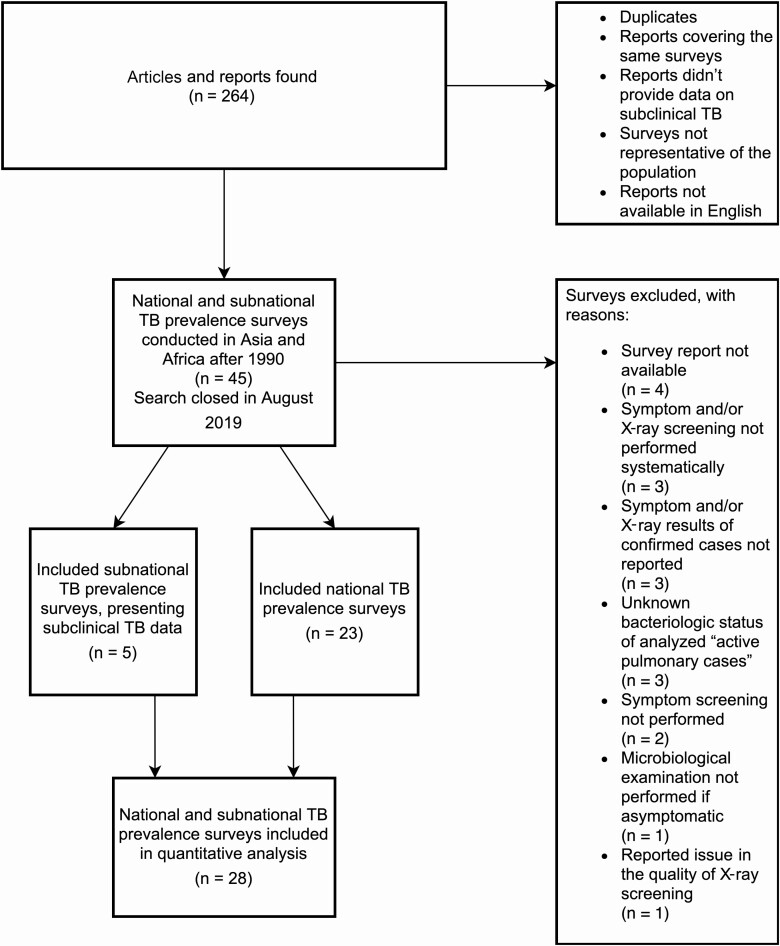
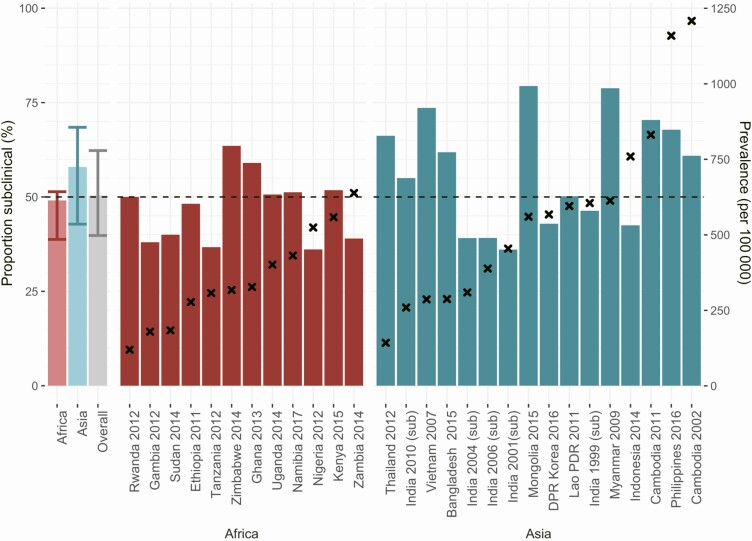
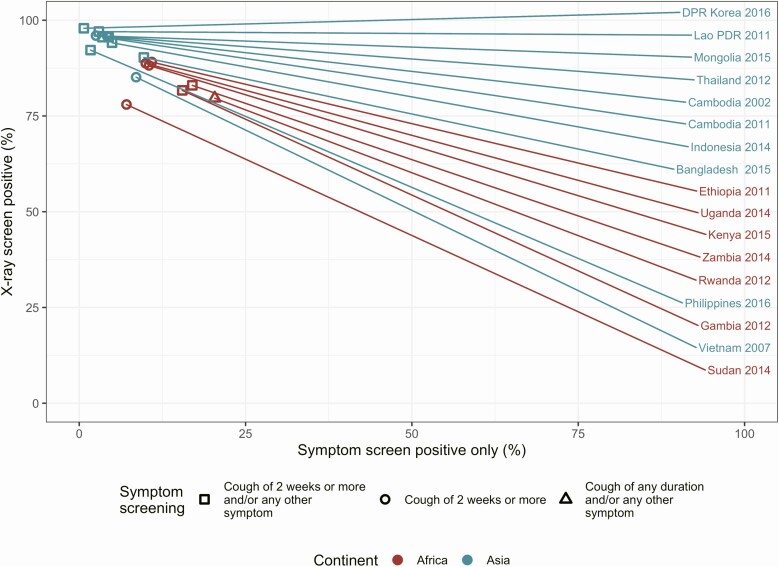
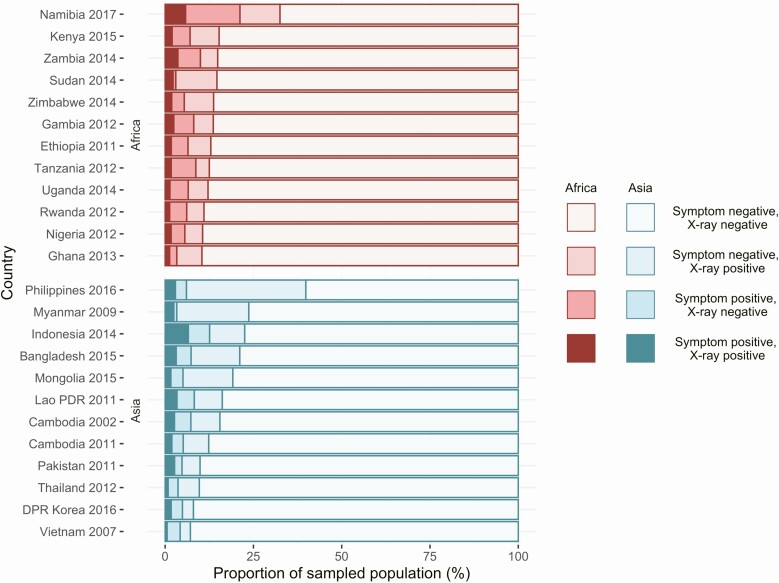
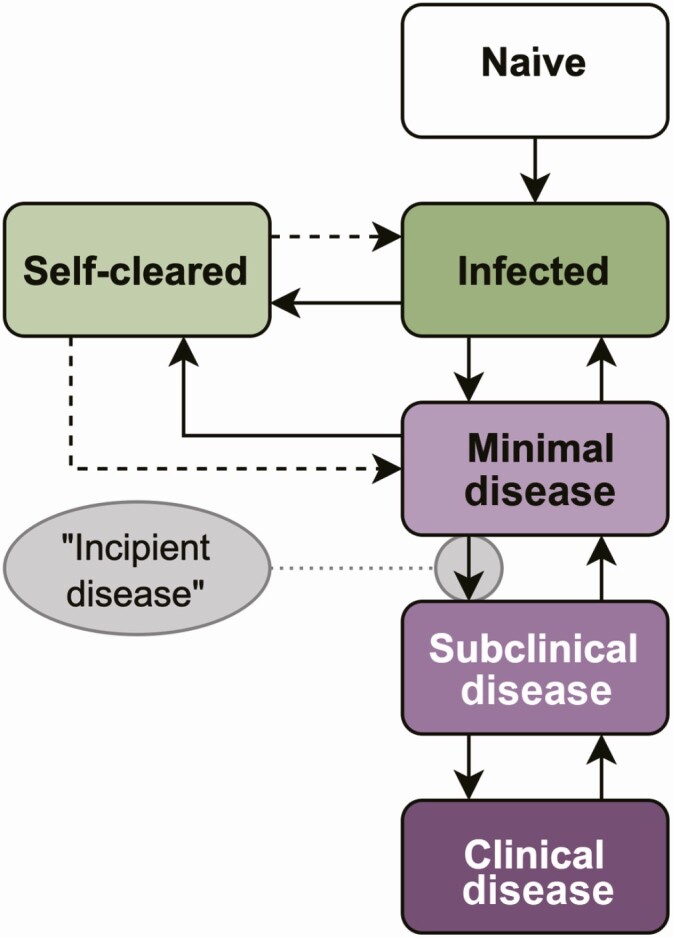
While it is known that a substantial proportion of individuals with tuberculosis disease (TB) present subclinically, usually defined as bacteriologically-confirmed but negative on symptom screening, considerable knowledge gaps remain. Our aim was to review data from TB prevalence population surveys and generate a consistent definition and framework for subclinical TB, enabling us to estimate the proportion of TB that is subclinical, explore associations with overall burden and program indicators, and evaluate the performance of screening strategies. We extracted data from all publicly available prevalence surveys conducted since 1990. Between 36.1% and 79.7% (median, 50.4%) of prevalent bacteriologically confirmed TB was subclinical. No association was found between prevalence of subclinical and all bacteriologically confirmed TB, patient diagnostic rate, or country-level HIV prevalence (P values, .32, .4, and .34, respectively). Chest Xray detected 89% (range, 73%–98%) of bacteriologically confirmed TB, highlighting the potential of optimizing current TB case-finding policies.
Overview
The claims and statistics of this paper haven’t been checked yet.
Run the check — free, no account needed. It reads the open-access text and checks the sources it cites.
Integrity signals
Registry
Cites
Statistics
Figures
Verification
Claims the paper makes
The claims and statistics of this paper haven’t been checked yet.
Run the check — free, no account needed. It reads the open-access text and checks the sources it cites.
Claims other papers make about this one
Each is checked against this paper’s own text: does it say what the citing paper says it does?
The cited source says what the claim attributes to it.
In the citing paper
“Prevalence surveys from 23 African and Asian countries show that 36–80% of individuals with TB disease have no TB symptoms. (12)”
Self-check
Percentages, sums and reported differences re-computed from the paper’s own numbers.
The self-check needs the paper’s full text.
Citations
Cites
Metaprop: a Stata command to perform meta-analysis of binomial data
Nyaga, V. N., Arbyn, M., & Aerts, M. (2014) · Archives of Public Health · doi:10.1186/2049-3258-72-39 · Cited by 2,139
The spectrum of latent tuberculosis: rethinking the biology and intervention strategies
Barry, C. E., Boshoff, H. I., Dartois, V. A., Dick, T., Ehrt, S., Flynn, J. L., Schnappinger, D., Wilkinson, R. J., & Young, D. B. (2009) · Nature Reviews Microbiology · doi:10.1038/nrmicro2236 · Cited by 1,441
Transmission of Mycobacterium tuberculosis from patients smear-negative for acid-fast bacilli
Behr, M. A., Warren, S., Salamon, H., Hopewell, P. C., Ponce‐de‐León, A., Daley, C. L., & Small, P. M. (1999) · The Lancet · doi:10.1016/s0140-6736(98)03406-0 · Cited by 751
Dorman, S. E., Schumacher, S. G., Alland, D., Nabeta, P., Armstrong, D. T., King, B., Hall, S. L., Chakravorty, S., Cirillo, D. M., Tukvadze, N., et al. (2017) · The Lancet Infectious Diseases · doi:10.1016/s1473-3099(17)30691-6 · Cited by 705
Tuberculosis prevalence in China, 1990–2010; a longitudinal analysis of national survey data
Wang, L., Zhang, H., Ruan, Y., Chin, D. P., Xia, Y., Cheng, S., Chen, M.-T., Zhao, Y., Jiang, S., Du, X., et al. (2014) · The Lancet · doi:10.1016/s0140-6736(13)62639-2 · Cited by 538
Horton, K. C., MacPherson, P., Houben, R. M. G. J., White, R. G., & Corbett, E. L. (2016) · PLoS Medicine · doi:10.1371/journal.pmed.1002119 · Cited by 532
Self-citationImperial, M. Z., Nahid, P., Phillips, P. P. J., Davies, G., Fielding, K., Hanna, D. L., Hermann, D. J., Wallis, R. S., Johnson, J. L., Lienhardt, C., et al. (2018) · Nature Medicine · doi:10.1038/s41591-018-0224-2 · Cited by 354
Qin, Z. Z., Sander, M. S., Rai, B., Titahong, C. N., Sudrungrot, S., Laah, S. N., Adhikari, L. M., Carter, E. J., Puri, L., Codlin, A. J., et al. (2019) · Scientific Reports · doi:10.1038/s41598-019-51503-3 · Cited by 289
Community-wide Screening for Tuberculosis in a High-Prevalence Setting
Marks, G. B., Nhung, N. V., Nguyen, P. T. B., Nguyen, T. A., Nguyen, H. B., Tran, K. H., Nguyen, S. V., Luu, K. B., Tran, D. T. T., Vo, Q. T. N., et al. (2019) · New England Journal of Medicine · doi:10.1056/nejmoa1902129 · Cited by 220
Law, I., Floyd, K., & the African TB Prevalence Survey Group (2020) · Tropical Medicine & International Health · doi:10.1111/tmi.13485 · Cited by 209
Self-citation
Research works printed but not linked: 2
- World Health Organization, 2013, Systematic screening for active tuberculosis: principles and recommendations
- 2017, Consensus meeting report: development of a target product profile (TPP) and a framework for evaluation for a test for predicting progression from tuberculosis infection to active disease
Cited by
Sorted by citations
Multidrug-resistant tuberculosis
Dheda, K. U. J., Mirzayev, F., Cirillo, D. M., Udwadia, Z. F., Dooley, K. E., Chang, K. C., Omar, S. V., Reuter, A., Perumal, T., Horsburgh, C. R., et al. (2024) · Nature Reviews Disease Primers · doi:10.1038/s41572-024-00504-2 · Cited by 277
Community-based active case-finding interventions for tuberculosis: a systematic review
Burke, R. M., Nliwasa, M., Feasey, H. R. A., Chaisson, L. H., Golub, J. E., Naufal, F., Shapiro, A. E., Rupérez, M., Telisinghe, L., Ayles, H., et al. (2021) · The Lancet Public Health · doi:10.1016/s2468-2667(21)00033-5 · Cited by 201
The Epidemiological Importance of Subclinical Tuberculosis. A Critical Reappraisal
Kendall, E. A., Shrestha, S., & Dowdy, D. W. (2021) · American Journal of Respiratory and Critical Care Medicine · doi:10.1164/rccm.202006-2394pp · Cited by 185
Trajman, A., Campbell, J. R., Kunor, T., Ruslami, R., Amanullah, F., Behr, M. A., & Menzies, D. (2025) · The Lancet · doi:10.1016/s0140-6736(24)02479-6 · Cited by 212
Coussens, A. K., Zaidi, S. M. A., Allwood, B., Dewan, P. K., Gray, G., Kohli, M., Kredo, T., Marais, B. J., Marks, G. B., Martínez, L., et al. (2024) · The Lancet Respiratory Medicine · doi:10.1016/s2213-2600(24)00028-6 · Cited by 179
Self-citationThe definition of tuberculosis infection based on the spectrum of tuberculosis disease
Migliori, G. B., Ong, C. W. M., Petrone, L., D'Ambrosio, L., Centis, R., & Goletti, D. (2021) · Breathe · doi:10.1183/20734735.0079-2021 · Cited by 166
Biomarker-guided tuberculosis preventive therapy (CORTIS): a randomised controlled trial
Scriba, T. J., Fiore-Gartland, A. J., Penn‐Nicholson, A., Mulenga, H., Mbandi, S. K., Borate, B. R., Mendelsohn, S. C., Hadley, K., Hikuam, C., Kaskar, M., et al. (2021) · The Lancet Infectious Diseases · doi:10.1016/s1473-3099(20)30914-2 · Cited by 156
Latent Tuberculosis: Two Centuries of Confusion
Behr, M. A., Kaufmann, E., Duffin, J., Edelstein, P. H., & Ramakrishnan, L. (2021) · American Journal of Respiratory and Critical Care Medicine · doi:10.1164/rccm.202011-4239pp · Cited by 148
Moyo, S., Ismail, F., der Walt, M. L. V., Ismail, N. A., Mkhondo, N., Dlamini, S. S., Mthiyane, T., Chikovore, J., Oladimeji, O., Mametja, D., et al. (2022) · The Lancet Infectious Diseases · doi:10.1016/s1473-3099(22)00149-9 · Cited by 132
Self-citationEmery, J. C., Dodd, P. J., Banu, S., Frascella, B., Garden, F. L., Horton, K. C., Hossain, S. A. S., Law, I., van Leth, F., Marks, G. B., et al. (2023) · eLife · doi:10.7554/elife.82469 · Cited by 122
Self-citationIndependent evaluation of 12 artificial intelligence solutions for the detection of tuberculosis
Codlin, A. J., Dao, T. P., Vo, L. N. Q., Forse, R. J., Van Truong, V., Dang, H. M., Nguyen, L. H., Nguyen, H. B., Nguyen, N. V., Sidney-Annerstedt, K., et al. (2021) · Scientific Reports · doi:10.1038/s41598-021-03265-0 · Cited by 106
Diagnostic biomarkers for active tuberculosis: progress and challenges
Nogueira, B. M. F., Krishnan, S., Barreto‐Duarte, B., Araújo‐Pereira, M., Queiroz, A. T. L., Ellner, J. J., Salgame, P. R., Scriba, T. J., Sterling, T. R., Gupta, A., et al. (2022) · EMBO Molecular Medicine · doi:10.15252/emmm.202114088 · Cited by 106
Sossen, B., Richards, A. S., Heinsohn, T., Frascella, B., Balzarini, F., Oradini‐Alacreu, A., Odone, A., Rogozińska, E., Häcker, B., Cobelens, F. G. J., et al. (2023) · The Lancet Respiratory Medicine · doi:10.1016/s2213-2600(23)00097-8 · Cited by 106
Self-citationTests for tuberculosis infection: landscape analysis
Hamada, Y., Cirillo, D. M., Matteelli, A., Penn‐Nicholson, A., Rangaka, M. X., & Rühwald, M. (2021) · European Respiratory Journal · doi:10.1183/13993003.00167-2021 · Cited by 101
Mycobacterium tuberculosis Transmission in High-Incidence Settings—New Paradigms and Insights
Coleman, M. C., Martínez, L., Theron, G., Wood, R., & Marais, B. J. (2022) · Pathogens · doi:10.3390/pathogens11111228 · Cited by 117
Richards, A. S., Sossen, B., Emery, J. C., Horton, K. C., Heinsohn, T., Frascella, B., Balzarini, F., Oradini‐Alacreu, A., Häcker, B., Odone, A., et al. (2023) · The Lancet Global Health · doi:10.1016/s2214-109x(23)00082-7 · Cited by 80
Self-citationStuck, L. H., Klinkenberg, E., Ali, N. A., Abukaraig, E. A. B., Adusi-Poku, Y., Wagaw, Z. A., Fatima, R., Kapata, N., Chanda‐Kapata, P., Kirenga, B., et al. (2024) · The Lancet Infectious Diseases · doi:10.1016/s1473-3099(24)00011-2 · Cited by 85
Self-citationPillay, S., Steingart, K. R., Davies, G., Chaplin, M., de Vos, M., Schumacher, S. G., Warren, R. M., & Theron, G. (2022) · Cochrane Database of Systematic Reviews · doi:10.1002/14651858.cd014841.pub2 · Cited by 87
Accelerating research and development of new vaccines against tuberculosis: a global roadmap
Cobelens, F. G. J., Suri, R. K., Helinski, M. E. H., Makanga, M. M., Weinberg, A. L., Schaffmeister, B., Deege, F., & Hatherill, M. (2022) · The Lancet Infectious Diseases · doi:10.1016/s1473-3099(21)00810-0 · Cited by 81
Fehr, J., Konigorski, S., Olivier, S., Gunda, R., Surujdeen, A., Gareta, D., Smit, T., Baisley, K., Moodley, S., Moosa, Y., et al. (2021) · npj Digital Medicine · doi:10.1038/s41746-021-00471-y · Cited by 74
Reimagining the status quo: How close are we to rapid sputum-free tuberculosis diagnostics for all?
Nathavitharana, R. R., García‐Basteiro, A. L., Rühwald, M., Cobelens, F. G. J., & Theron, G. (2022) · EBioMedicine · doi:10.1016/j.ebiom.2022.103939 · Cited by 74
The Spectrum of Tuberculosis Disease in an Urban Ugandan Community and Its Health Facilities
Kendall, E. A., Kitonsa, P. J., Nalutaaya, A., Erisa, K. C., Mukiibi, J., Nakasolya, O., Isooba, D., Baik, Y., Robsky, K., Kato‐Maeda, M., et al. (2020) · Clinical Infectious Diseases · doi:10.1093/cid/ciaa1824 · Cited by 65
Mind the gap – Managing tuberculosis across the disease spectrum
Esmail, H., Macpherson, L., Coussens, A. K., & Houben, R. M. G. J. (2022) · EBioMedicine · doi:10.1016/j.ebiom.2022.103928 · Cited by 65
Self-citationGlobal estimates of paediatric tuberculosis incidence in 2013–19: a mathematical modelling analysis
Yerramsetti, S. M., Cohen, T., Atun, R. A., & Menzies, N. A. (2021) · The Lancet Global Health · doi:10.1016/s2214-109x(21)00462-9 · Cited by 66
Shapiro, A. E., Ross, J. M., Yao, M., Schiller, I., Kohli, M., Dendukuri, N., Steingart, K. R., & Horne, D. J. D. L. (2021) · Cochrane Database of Systematic Reviews · doi:10.1002/14651858.cd013694.pub2 · Cited by 67
Latent Tuberculosis: Two Centuries of Confusion.
Behr, M. A., Kaufmann, E., Duffin, J. M., Edelstein, P. H., & Ramakrishnan, L. (2021) · Apollo (University of Cambridge) · doi:10.17863/cam.71875 · Cited by 61
Tuberculosis and HIV coinfection: Progress and challenges towards reducing incidence and mortality
Sossen, B., Kubjane, M., & Meintjes, G. (2025) · International Journal of Infectious Diseases · doi:10.1016/j.ijid.2025.107876 · Cited by 74
Self-citationInfectious and clinical tuberculosis trajectories: Bayesian modeling with case finding implications
Ryckman, T. S., Dowdy, D. W., & Kendall, E. A. (2022) · Proceedings of the National Academy of Sciences · doi:10.1073/pnas.2211045119 · Cited by 54
Mendelsohn, S. C., Fiore-Gartland, A. J., Penn‐Nicholson, A., Mulenga, H., Mbandi, S. K., Borate, B. R., Hadley, K., Hikuam, C., Musvosvi, M., Bilek, N., et al. (2021) · The Lancet Global Health · doi:10.1016/s2214-109x(21)00045-0 · Cited by 58
Ku, C.-C., MacPherson, P., Khundi, M., Soko, R. N., Feasey, H. R. A., Nliwasa, M., Horton, K. C., Corbett, E. L., & Dodd, P. J. (2021) · BMC Medicine · doi:10.1186/s12916-021-02128-9 · Cited by 55
Mendelsohn, S. C., Mbandi, S. K., Fiore-Gartland, A. J., Penn‐Nicholson, A., Musvosvi, M., Mulenga, H., Fisher, M., Hadley, K., Erasmus, M., Nombida, O., et al. (2022) · Communications Medicine · doi:10.1038/s43856-022-00086-8 · Cited by 48
A half-century of research on tuberculosis: Successes and challenges
Bloom, B. R. (2023) · The Journal of Experimental Medicine · doi:10.1084/jem.20230859 · Cited by 47
Horton, K. C., Richards, A. S., Emery, J. C., Esmail, H., & Houben, R. M. G. J. (2023) · Proceedings of the National Academy of Sciences · doi:10.1073/pnas.2221186120 · Cited by 41
Self-citationDiagnostic Challenges in Childhood Pulmonary Tuberculosis—Optimizing the Clinical Approach
Gunasekera, K. S., Vonasek, B. J., Oliwa, J. N., Triasih, R., Lancioni, C., Graham, S. M., Seddon, J. A., & Marais, B. J. (2022) · Pathogens · doi:10.3390/pathogens11040382 · Cited by 45
Teo, A. K. J., MacLean, E. L.-H., & Fox, G. J. (2024) · European Respiratory Review · doi:10.1183/16000617.0208-2023 · Cited by 54
Immunologic, metabolic and genetic impact of diabetes on tuberculosis susceptibility
Ssekamatte, P., Sande, O. J., van Crevel, R., & Biraro, I. A. (2023) · Frontiers in Immunology · doi:10.3389/fimmu.2023.1122255 · Cited by 52
Bashir, S., Kik, S. V., Rühwald, M., Khan, A. A., Tariq, M., Hussain, H., & Denkinger, C. M. (2022) · PLoS ONE · doi:10.1371/journal.pone.0277393 · Cited by 41
Strategies for shortening tuberculosis therapy
Dartois, V. A., Mizrahi, V., Savić, R. M., Silverman, J. A., Hermann, D. J., & Barry, C. E. (2025) · Nature Medicine · doi:10.1038/s41591-025-03742-3 · Cited by 46
Asymptomatic but infectious – The silent driver of pathogen transmission. A pragmatic review
Shaikh, N., Swali, P., & Houben, R. M. G. J. (2023) · Epidemics · doi:10.1016/j.epidem.2023.100704 · Cited by 43
Self-citationHamada, Y., Penn‐Nicholson, A., Krishnan, S., Cirillo, D. M., Matteelli, A., Wyss, R., Denkinger, C. M., Rangaka, M. X., Rühwald, M., & Schumacher, S. G. (2022) · EBioMedicine · doi:10.1016/j.ebiom.2022.104174 · Cited by 42
It Is Time to Focus on Asymptomatic Tuberculosis
Wong, E. B. (2020) · Clinical Infectious Diseases · doi:10.1093/cid/ciaa1827 · Cited by 39
Hui, S. Y. A., & Lao, T. T.-H. (2022) · Best Practice & Research Clinical Obstetrics & Gynaecology · doi:10.1016/j.bpobgyn.2022.07.006 · Cited by 43
Community-based active-case finding for tuberculosis: navigating a complex minefield
MacPherson, P., Shanaube, K., Phiri, M. D., Rickman, H. M., Horton, K. C., Feasey, H. R. A., Corbett, E. L., Burke, R. M., & Rangaka, M. X. (2024) · BMC Global and Public Health · doi:10.1186/s44263-024-00042-9 · Cited by 42
Longitudinal Dynamics of a Blood Transcriptomic Signature of Tuberculosis
Mulenga, H., Musvosvi, M., Mendelsohn, S. C., Penn‐Nicholson, A., Mbandi, S. K., Fiore-Gartland, A. J., Tameris, M. D., Mabwe, S., Africa, H., Bilek, N., et al. (2021) · American Journal of Respiratory and Critical Care Medicine · doi:10.1164/rccm.202103-0548oc · Cited by 33
Biomarkers in diagnosing and therapeutic monitoring of tuberculosis: a review
Leo, S., Narasimhan, M., Rathinam, S., & Banerjee, A. (2024) · Annals of Medicine · doi:10.1080/07853890.2024.2386030 · Cited by 40
Tuberculosis: An Update for the Clinician
Janssen, S., Murphy, M., Upton, C. M., Allwood, B., & Diacon, A. H. (2025) · Respirology · doi:10.1111/resp.14887 · Cited by 35
Nguyen, L. H., Codlin, A. J., Vo, L. N. Q., Dao, T. P., Tran, D. M., Forse, R., Vu, T. N., Le, G. T., Luu, T. H. T., Do, G. C., et al. (2020) · Tropical Medicine and Infectious Disease · doi:10.3390/tropicalmed5040185 · Cited by 34
Mbuya, A. W., Mboya, I. B., Semvua, H. H., Mamuya, S., & Msuya, S. E. (2023) · PLoS ONE · doi:10.1371/journal.pone.0280396 · Cited by 34
Driessche, K. V., Mahlobo, P. Z., Venter, R., Caldwell, J., Jennings, K., Diacon, A. H., Cotton, M. F., de Groot, R., Hens, N., Marx, F. M., et al. (2021) · The Lancet Respiratory Medicine · doi:10.1016/s2213-2600(21)00020-5 · Cited by 33
Stuck, L. H., van Haaster, A.-C., Chanda‐Kapata, P., Klinkenberg, E., Kapata, N., & Cobelens, F. G. J. (2022) · Clinical Infectious Diseases · doi:10.1093/cid/ciab1050 · Cited by 33
Clark, R. A., Weerasuriya, C. K., Portnoy, A., Mukandavire, C., Quaife, M., Bakker, R., Scarponi, D., Harris, R. C., Rade, K., Mattoo, S. K., et al. (2023) · BMC Medicine · doi:10.1186/s12916-023-02992-7 · Cited by 31
Asymptomatic tuberculosis: undetected and underestimated, but not unimportant
Dheda, K. U. J., Perumal, T., & Fox, G. J. (2025) · The Lancet · doi:10.1016/s0140-6736(25)00555-0 · Cited by 31
Mendelsohn, S. C., Mulenga, H., Tameris, M. D., Moloantoa, T., Malherbe, S. T., Katona, A., Maruri, F., Noor, F., Panchia, R., Hlongwane, K. E., et al. (2025) · The Lancet Global Health · doi:10.1016/s2214-109x(25)00276-1 · Cited by 31
Berhanu, R. H., Lebina, L., Nonyane, B. A. S., Milovanovic, M., Kinghorn, A., Connell, L., Nyathi, S., Young, K., Hausler, H., Naidoo, P., et al. (2023) · Clinical Infectious Diseases · doi:10.1093/cid/ciac965 · Cited by 28
Advanced HIV disease: A review of diagnostic and prophylactic strategies
Lehman, A. C., Ellis, J. P., Nalintya, E., Bahr, N. C., Loyse, A., & Rajasingham, R. (2023) · HIV Medicine · doi:10.1111/hiv.13487 · Cited by 30
Martinson, N. A., Lebina, L., Webb, E. L., Ratsela, A., Varavia, E., Kinghorn, A., Lala, S. G., Golub, J. E., Bosch, Z., Motsomi, K., et al. (2021) · Clinical Infectious Diseases · doi:10.1093/cid/ciab1047 · Cited by 29
The Radiographic and Mycobacteriologic Correlates of Subclinical Pulmonary TB in Canada
Lau, A., Lin, C., Barrié, J., Winter, C., Armstrong, G. A., Egedahl, M. L., Doroshenko, A., Heffernan, C., Asadi, L., Fisher, D., et al. (2022) · CHEST Journal · doi:10.1016/j.chest.2022.01.047 · Cited by 25
Soares, T. R., de Oliveira, R. D., Liu, Y. E., Santos, A. D. S., dos Santos, P. C. P., Monte, L. R. S., de Oliveira, L. M., Park, C. M., Hwang, E. J., Andrews, J. R., et al. (2022) · The Lancet Regional Health - Americas · doi:10.1016/j.lana.2022.100388 · Cited by 28
Alemu, A., Bitew, Z. W., Diriba, G., Seid, G., Eshetu, K., Tadesse, M., Berhe, N. B., & Gumi, B. (2022) · International Journal of Infectious Diseases · doi:10.1016/j.ijid.2022.05.046 · Cited by 32
Qin, Z. Z., Barrett, R., Castro, M. D. M., Zaidi, S., Codlin, A. J., Creswell, J., & Denkinger, C. M. (2023) · PLoS ONE · doi:10.1371/journal.pone.0277843 · Cited by 26
Jha, D. K., Kakadiya, R., Sharma, A., Naidu, S., De, D., & Sharma, V. (2025) · Autoimmunity Reviews · doi:10.1016/j.autrev.2025.103758 · Cited by 25
Tuberculosis prevalence: beyond the tip of the iceberg
Houben, R. M. G. J., Esmail, H., Cobelens, F. G. J., Williams, C., & Coussens, A. K. (2022) · The Lancet Respiratory Medicine · doi:10.1016/s2213-2600(22)00184-9 · Cited by 25
Self-citationPopulation-wide active case finding as a strategy to end TB
Nguyen, T. A., Teo, A. K. J., Zhao, Y., Quelapio, M., Hill, J., Morishita, F., Marais, B. J., & Marks, G. B. (2024) · The Lancet Regional Health - Western Pacific · doi:10.1016/j.lanwpc.2024.101047 · Cited by 25
Mungai, B., Ong‘angò, J., Ku, C. C., Henrion, M. Y. R., Morton, B., Joekes, E., Onyango, E., Kiplimo, R., Kirathe, D., Masini, E., et al. (2022) · PLOS Global Public Health · doi:10.1371/journal.pgph.0001272 · Cited by 24
End-point definition and trial design to advance tuberculosis vaccine development
García‐Basteiro, A. L., White, R. G., Tait, D. R., Schmidt, A. C., Rangaka, M. X., Quaife, M., Nemes, E., Mogg, R., Hill, P. C., Harris, R. C., et al. (2022) · European Respiratory Review · doi:10.1183/16000617.0044-2022 · Cited by 24
Howlett, P. J., Mousa, H., Said, B., Mbuya, A. W., Kon, O. M., Mpagama, S. G., & Feary, J. R. (2023) · PLOS Global Public Health · doi:10.1371/journal.pgph.0002085 · Cited by 23
Esmail, H., Miller, C. R., Falzon, D., de Vries, G., Chijioke-Akaniro, O., Horton, K. C., Kohli, M., Vachaspathi, T. D., Vo, L. N. Q., Zaidi, S. M. A., et al. (2025) · International Journal of Infectious Diseases · doi:10.1016/j.ijid.2025.107875 · Cited by 23
Self-citationTan, Y., Tan, Y., Li, J., Hu, P., Guan, P., Kuang, H., Liang, Q., Yu, Y., Chen, Z., Wang, Q., et al. (2021) · Journal of Translational Medicine · doi:10.1186/s12967-021-02970-8 · Cited by 23
Okada, K., Yamada, N., Takayanagi, K., Hiasa, Y., Kitamura, Y., Hoshino, Y., Hirao, S., Yoshiyama, T., Onozaki, I., & Kato, S. (2024) · Tropical Medicine and Health · doi:10.1186/s41182-023-00560-6 · Cited by 24
Self-citationHamada, Y., Quartagno, M., Law, I., Malik, F., Bonsu, F. A., Adetifa, I., Adusi-Poku, Y., D’Alessandro, U., Bashorun, A. O., Begum, V., et al. (2023) · EClinicalMedicine · doi:10.1016/j.eclinm.2023.102191 · Cited by 22
Self-citationScott, A. J., Perumal, T., Hohlfeld, A., Oelofse, S., Kühn, L., Swanepoel, J., Geric, C., Khan, F. A., Esmail, A., Ochodo, E., et al. (2024) · Open Forum Infectious Diseases · doi:10.1093/ofid/ofae020 · Cited by 21
Matji, R., Maama, L., Roscigno, G., Lerotholi, M., Agonafir, M., Sekibira, R., Law, I., Tadolini, M., & Kak, N. (2023) · PLOS ONE · doi:10.1371/journal.pone.0273245 · Cited by 22
Self-citationMcQuaid, C. F., Clark, R. A., White, R. G., Bakker, R., Alexander, P. M., Henry, R., Velayutham, B., Muniyandi, M., Sinha, P., Bhargava, M., et al. (2025) · The Lancet Global Health · doi:10.1016/s2214-109x(24)00505-9 · Cited by 21
Self-citationNaidoo, K., Moodley, M. C., Hassan-Moosa, R., Dookie, N., Yende‐Zuma, N., Perumal, R., Dawood, H., Mvelase, N. R., Mathema, B., & Karim, S. S. A. (2022) · Clinical Infectious Diseases · doi:10.1093/cid/ciac185 · Cited by 20
Brümmer, L. E., Thompson, R. R., Malhotra, A., Shrestha, S., Kendall, E. A., Andrews, J. R., Phillips, P. P. J., Nahid, P., Cattamanchi, A., Marx, F. M., et al. (2023) · Clinical Infectious Diseases · doi:10.1093/cid/ciad501 · Cited by 21
Artificial intelligence in tuberculosis: a new ally in disease control
McClean, M., Panciu, T. C., Lange, C. G., Duarte, R., & Theis, F. J. (2024) · Breathe · doi:10.1183/20734735.0056-2024 · Cited by 21
Fritschi, N., Wind, A., Hammer, J., & Ritz, N. (2021) · Clinical Infectious Diseases · doi:10.1093/cid/ciab708 · Cited by 21
Coleman, M. C., Nguyen, T. A., Luu, K. B., Hill, J., Ragonnet, R. R., Trauer, J. M., Fox, G. J., Marks, G. B., & Marais, B. J. (2023) · Frontiers in Medicine · doi:10.3389/fmed.2023.1275140 · Cited by 19
Implications of subclinical tuberculosis for vaccine trial design and global effect
Churchyard, G., Houben, R. M. G. J., Fielding, K., Fiore-Gartland, A. L., Esmail, H., Grant, A. D., Rangaka, M. X., Behr, M. A., García‐Basteiro, A. L., Wong, E. B., et al. (2024) · The Lancet Microbe · doi:10.1016/s2666-5247(24)00127-7 · Cited by 20
Self-citationTang, P., Liu, R., Lin, Q., Xu, P., Xiong, Y., Deng, Y., Lv, Z., Shang, Y., Gao, X., Lin, Y., et al. (2022) · Emerging Microbes & Infections · doi:10.1080/22221751.2022.2148564 · Cited by 21
Management of individuals exposed to multidrug-resistant or rifampicin-resistant tuberculosis
Seddon, J. A., Achar, J., Malik, A. A., Hughes, J. A., Burzynski, J. N., Chen, C., Denholm, J. T., Dravniece, G., Fox, G. J., Furin, J. J., et al. (2025) · The Lancet Infectious Diseases · doi:10.1016/s1473-3099(25)00157-4 · Cited by 18
Self-citationMacpherson, L., Kik, S. V., Quartagno, M., Lakay, F. M., Jaftha, M., Yende, N., Galant, S., Aziz, S., Daroowala, R., Court, R., et al. (2024) · Clinical Infectious Diseases · doi:10.1093/cid/ciae528 · Cited by 19
Self-citationThe nutritional nexus: Modeling the impact of malnutrition on TB transmission
Liana, Y. A., Ndendya, J. Z., & Shaban, N. (2025) · Scientific African · doi:10.1016/j.sciaf.2024.e02516 · Cited by 16
Burke, R. M., Rickman, H. M., Singh, V., Kalua, T., Labhardt, N. D., Hosseinipour, M. C., Wilkinson, R. J., & MacPherson, P. (2021) · HIV Medicine · doi:10.1111/hiv.13169 · Cited by 16
Rickman, H. M., Kamchedzera, W., Schwalb, A., Phiri, M. D., Rühwald, M., Shanaube, K., Dodd, P. J., Houben, R. M. G. J., Corbett, E. L., & MacPherson, P. (2022) · PLOS Global Public Health · doi:10.1371/journal.pgph.0001208 · Cited by 15
Self-citationClinical Predictors of Pulmonary Tuberculosis Among South African Adults With HIV
Mendelsohn, S. C., Fiore-Gartland, A. J., Awany, D., Mulenga, H., Mbandi, S. K., Tameris, M. D., Walzl, G., Naidoo, K., Churchyard, G., Scriba, T. J., et al. (2021) · EClinicalMedicine · doi:10.1016/j.eclinm.2022.101328 · Cited by 15
Lau, A., Lin, C., Barrié, J., Winter, C., Armstrong, G. A., Egedahl, M. L., Doroshenko, A., Heffernan, C., Asadi, L., Fisher, D., et al. (2022) · Scientific Reports · doi:10.1038/s41598-022-21016-7 · Cited by 17
Wang, Z., Li, H., Song, S., Sun, H., Dai, X., Chen, M., Xu, H., Zhang, H., & Pang, Y. (2023) · Frontiers in Public Health · doi:10.3389/fpubh.2023.1098519 · Cited by 17
Feasey, H. R. A., Khundi, M., Soko, R. N., Nightingale, E., Burke, R. M., Henrion, M., Phiri, M. D., Burchett, H., Chiume, L., Nliwasa, M., et al. (2023) · PLOS Global Public Health · doi:10.1371/journal.pgph.0001911 · Cited by 22
Mahmoudi, S., García, M. J. G., & Drain, P. K. (2024) · Expert Review of Clinical Immunology · doi:10.1080/1744666x.2024.2326032 · Cited by 17
Minja, L. T., Hella, J., Mbwambo, J. K. K., Nyandindi, C., Omary, U. S., Levira, F., Mpagama, S. G., Shimwela, M., Okuma, J. O., Gagneux, S., et al. (2021) · PLoS ONE · doi:10.1371/journal.pone.0250038 · Cited by 15
Scott, A. J., Perumal, T., Pooran, A., Oelofse, S., Jaumdally, S. Z., Swanepoel, J., Gina, P., Mthiyane, T., Qin, Z. Z., Fehr, J., et al. (2025) · The Lancet Global Health · doi:10.1016/s2214-109x(24)00516-3 · Cited by 14
Foster, N., Nguyen, H. V., Nhung, N. V., Nguyen, H. B., Tiemersma, E. W., Cobelens, F. G. J., Quaife, M., & Houben, R. M. G. J. (2022) · PLoS Medicine · doi:10.1371/journal.pmed.1003935 · Cited by 16
Self-citationYoon, S., Goo, J., Yim, J., Yoshiyama, T., & Flynn, J. (2022) · Insights into Imaging · doi:10.1186/s13244-022-01255-y · Cited by 11
Mishra, S., & Saito, K. (2022) · Frontiers in Cellular and Infection Microbiology · doi:10.3389/fcimb.2022.1029111 · Cited by 14
Medrano, J., Maiello, P. A., Rutledge, T. W., Tomko, J. A., Rodgers, M., Fillmore, D. J., Frye, L. J., Janssen, C., Klein, E. C., Flynn, J. L., et al. (2023) · The Journal of Infectious Diseases · doi:10.1093/infdis/jiac504 · Cited by 13
Nababan, B. W. Y., Triasih, R., Chan, G., Dwihardiani, B., Hidayat, A., Dewi, S. C., Unwanah, L., Mustofa, A., & du Cros, P. (2024) · Tropical Medicine and Infectious Disease · doi:10.3390/tropicalmed9020034 · Cited by 13
Biewer, A., Tzelios, C., Tintaya, K., Roman, B., Hurwitz, S., Yuen, C. M., Mitnick, C. D., Nardell, E. A., Lecca, L. W., Tierney, D. B., et al. (2024) · PLOS Global Public Health · doi:10.1371/journal.pgph.0002031 · Cited by 15
Cluster analysis categorizes five phenotypes of pulmonary tuberculosis
Koo, H., Min, J., Kim, H. W., Ko, Y., Oh, J. Y., Jeong, Y., Kang, H. H., Kang, J. Y., Lee, S.-S., Seo, M., et al. (2022) · Scientific Reports · doi:10.1038/s41598-022-13526-1 · Cited by 14
Integrating genomic and spatial analyses to describe tuberculosis transmission: a scoping review
Lan, Y., Rancu, I., Chitwood, M. H., Sobkowiak, B., Nyhan, K., Lin, H.-H., Wu, C.-Y., Mathema, B., Brown, T. S., Colijn, C., et al. (2025) · The Lancet Microbe · doi:10.1016/j.lanmic.2025.101094 · Cited by 12
Metadata
- Authors
- Frascella, B., Richards, A. S., Sossen, B., Emery, J. C., Odone, A., Law, I., Onozaki, I., Esmail, H., & Houben, R. M. G. J.
- Affiliations
- Vita-Salute San Raffaele University (IT)
- London School of Hygiene & Tropical Medicine (GB)
- University of Cape Town (ZA)
- World Health Organization (CH)
- Corresponding author
- Houben, Rein M G J
- ORCID
- Venue
- Clinical Infectious Diseases
- Publisher
- Oxford University Press (OUP)
- Published
- 2020-09-16
- Volume
- 73
- Issue
- 3
- Pages
- e830-e841
- ISSN
- 1058-4838 (ISSN-L)
- 1537-6591
- PMC
- PMC8326537
- OpenAlex
- W3087646693
- Cited by
- 315
- References
- 27
- Citations by year
- 2026: 49 · 2025: 65 · 2024: 63 · 2023: 57 · 2022: 46 · 2021: 30 · 2020: 5
- FWCI
- 4.53
- Type
- journal article
- Language
- en
- Open access
- hybrid
- doi.org
- Licence
- Locations
- Clinical Infectious Diseases (publishedVersion, cc-by-nc-nd)
- PubMed Central (publishedVersion, cc-by-nc-nd)
- PubMed (publishedVersion)
- ENLIGHTEN (Jurnal Bimbingan dan Konseling Islam) (submittedVersion, cc-by-nc-sa)
- LSHTM Research Online (London School of Hygiene and Tropical Medicine) (submittedVersion, cc-by-nc-sa)
- UCL Discovery (University College London) (submittedVersion)
- Funders
- European Research Council starting (757699)
- Topics
- Health Sciences › Medicine › Infectious Diseases › Tuberculosis Research and Epidemiology
- Health Sciences › Medicine › Infectious Diseases › Infectious Diseases and Tuberculosis
- Health Sciences › Medicine › Public Health, Environmental and Occupational Health › HIV, TB, and STIs Epidemiology
- Keywords
- subclinical tuberculosis, bacteriologically confirmed tuberculosis, prevalence survey, tuberculosis screening, chest radiography, case finding, HIV coinfection, diagnostic rate, tuberculosis burden
- MeSH terms
- Humans, Mass Screening, Surveys and Questionnaires, Thorax, Tuberculosis, Prevalence
About these checks
Registry, retraction, Cites and statistics results are computed, not judged, with one exception: a printed reference that no index lists is read once by a model before it counts as a citation error. Claims are extracted by a model and kept only when their quote appears verbatim in the text; each cited source is then checked, with a model’s help, for whether it says what the claim relies on. Those verdicts can be wrong — read the claim’s quote and the cited source before relying on one.
Statistics and arithmetic are recomputed, not judged.
Confidence bands are shown only for fields calibrated on our annotated test set. None is calibrated yet, so no band is shown.
What counts as a claim ›How we measure confidence ›How we check this ›
Are you an author, or do you see a problem with this page? Request a review
