

New therapies for obesity
Open accessThe DOI matches its Crossref record; 142 of the 142 references it cites were found in a registry or an index.
Abstract
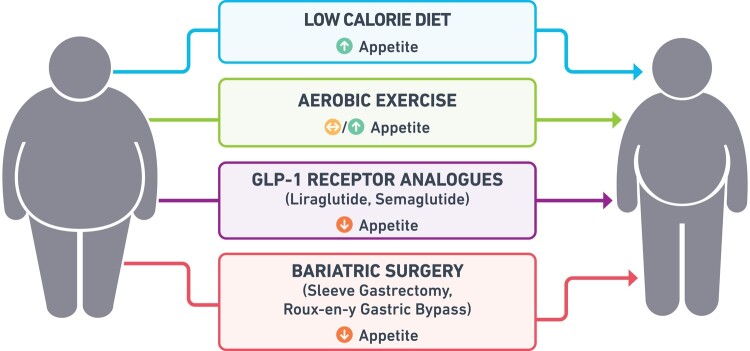
Obesity is a chronic disease associated with serious complications and increased mortality. Weight loss (WL) through lifestyle changes results in modest WL long-term possibly due to compensatory biological adaptations (increased appetite and reduced energy expenditure) promoting weight gain. Bariatric surgery was until recently the only intervention that consistently resulted in ≥ 15% WL and maintenance. Our better understanding of the endocrine regulation of appetite has led to the development of new medications over the last decade for the treatment of obesity with main target the reduction of appetite. The efficacy of semaglutide 2.4 mg/week—the latest glucagon-like peptide-1 (GLP-1) receptor analogue—on WL for people with obesity suggests that we are entering a new era in obesity pharmacotherapy where ≥15% WL is feasible. Moreover, the WL achieved with the dual agonist tirzepatide (GLP-1/glucose-dependent insulinotropic polypeptide) for people with type 2 diabetes and most recently also obesity, indicate that combining the GLP-1 with other gut hormones may lead to additional WL compared with GLP-1 receptor analogues alone and in the future, multi-agonist molecules may offer the potential to bridge further the efficacy gap between bariatric surgery and the currently available pharmacotherapies.
Overview
The claims and statistics of this paper haven’t been checked yet.
Free: it reads the open-access text and checks the first 5 claims that cite a source we can check. Create a free account to check every claim.
Integrity signals
Registry
Cites
Statistics
Figures
Verification
Claims the paper makes
The claims and statistics of this paper haven’t been checked yet.
Free: it reads the open-access text and checks the first 5 claims that cite a source we can check. Create a free account to check every claim.
Claims other papers make about this one
Each is checked against this paper’s own text: does it say what the citing paper says it does?
The source backs part of the claim, not all of it — or backs it for a different population, condition or comparison.
In the citing paper
“Around 10–30% of participants (especially people with T2D) achieved <10% WL in clinical trials even with the higher doses of the new pharmacotherapies [101, 102].”
From What is the pipeline for future medications for obesity? (2025) · cites this paper as [101]
Experimental — accuracy not yet measuredThe source backs part of the claim, not all of it — or backs it for a different population, condition or comparison.
In the citing paper
“Multiple other molecules (including combinations of entero-pancreatic hormones and oral GLP-1 RA) are in late phase clinical trials as potential obesity treatments, leading to WL that approaches the efficacy of bariatric surgery [101].”
From What is the pipeline for future medications for obesity? (2025) · cites this paper as [101]
Experimental — accuracy not yet measuredThe cited source says what the claim attributes to it.
In the citing paper
“Despite that sleeve gastrectomy and gastric bypass, the two most commonly performed bariatric procedures today, can result in sustained long-term WL ≥ 20–25% in people with obesity and T2D and in multiple cardiometabolic benefits, bariatric surgery is an intervention which is not scalable in population level and people can be hesitant to this option due to the risk of postoperative complications [”
The cited source says what the claim attributes to it.
In the citing paper
“Despite that sleeve gastrectomy and gastric bypass, the two most commonly performed bariatric procedures today, can result in sustained long-term WL ≥ 20–25% in people with obesity and T2D and in multiple cardiometabolic benefits, bariatric surgery is an intervention which is not scalable in population level and people can be hesitant to this option due to the risk of postoperative complications [”
1 more claim about this paper
Create a free account to see every claim other papers make about this one.
Self-check
Percentages, sums and reported differences re-computed from the paper’s own numbers.
The self-check needs the paper’s full text.
Citations
Cites
‘Small Changes' to Diet and Physical Activity Behaviors for Weight Management
Hills, A. P., Byrne, N. M., Lindstrom, R., & Hill, J. O. (2013) · Obesity Facts · doi:10.1159/000345030 · Cited by 9,493
Liraglutide and Cardiovascular Outcomes in Type 2 Diabetes
Marso, S. P., Daniels, G. H., Brown-Frandsen, K., Kristensen, P., Mann, J. F. E., Nauck, M. A., Nissen, S. E., Pocock, S., Poulter, N. R., Ravn, L. S., et al. (2016) · New England Journal of Medicine · doi:10.1056/nejmoa1603827 · Cited by 7,629
Semaglutide and Cardiovascular Outcomes in Patients with Type 2 Diabetes
Marso, S. P., Bain, S. C., Consoli, A., Eliaschewitz, F. G., Jódar, E., Leiter, L. A., Lingvay, I., Rosenstock, J., Seufert, J., Warren, M. L., et al. (2016) · New England Journal of Medicine · doi:10.1056/nejmoa1607141 · Cited by 6,900
Once-Weekly Semaglutide in Adults with Overweight or Obesity
Wilding, J. P. H., Batterham, R. L., Calanna, S., Davies, M., Van Gaal, L. F., Lingvay, I., McGowan, B. M., Rosenstock, J., Tran, M. T. D., Wadden, T. A., et al. (2021) · New England Journal of Medicine · doi:10.1056/nejmoa2032183 · Cited by 5,205 · cited 3×
“68 On the other hand, in the STEP-3 study where semaglutide 2.4 mg was combined with IBT and an 8-week low-calorie diet, 15,73 the WL achieved at 68 weeks was similar to the WL reported when Semaglutide 2.4 mg was combined with a 500 kcal/day deficit diet 15 (16 vs. 14.9”
BackgroundMethodInfluentialSelf-citationProspective Studies Collaboration (2009) · The Lancet · doi:10.1016/s0140-6736(09)60318-4 · Cited by 4,807
Effects of Bariatric Surgery on Mortality in Swedish Obese Subjects
Sjöström, L., Narbro, K., Sjöström, C. D., Karason, K., Larsson, B., Wedel, H., Lystig, T., Sullivan, M., Bouchard, C., Carlsson, B., et al. (2007) · New England Journal of Medicine · doi:10.1056/nejmoa066254 · Cited by 4,668 · cited 1×
“…associated with improvement in QoL and obesity-related complications, reduction by 53% in fatal and 33% in total cardiovascular events, and reduction by 29% in mortality compared with the usual care group, 11,12,46,47 providing a WL threshold associated with multiple clinically important benefits.”
BackgroundLifestyle, diabetes, and cardiovascular risk factors 10 years after bariatric surgery
Sjöström, L., Lindroos, A.-K., Peltonen, M., Torgerson, J., Bouchard, C., Carlsson, B., Dahlgren, S., Larsson, B., Narbro, K., Sjöström, C. D., et al. (2004) · New England Journal of Medicine · doi:10.1056/nejmoa035622 · Cited by 4,457
Tirzepatide Once Weekly for the Treatment of Obesity
Jastreboff, A. M., Aronne, L. J., Ahmad, N. N., Wharton, S., Connery, L., Alves, B., Kiyosue, A., Zhang, S., Liu, B., Bunck, M. C., et al. (2022) · New England Journal of Medicine · doi:10.1056/nejmoa2206038 · Cited by 3,838 · cited 2×
“77 Other dual co-agonists acting on GLP-1/amylin receptors and GLP-1/ glucagon receptors are also being assessed in early phase clinical trials as potential treatments for obesity and metabolic complications.”
BackgroundHaslam, D. W., & James, W. P. T. (2005) · The Lancet · doi:10.1016/s0140-6736(05)67483-1 · Cited by 3,757
European Guidelines for Obesity Management in Adults
Yumuk, V., Tsigos, C., Fried, M., Schindler, K., Busetto, L., Micic, D., & Toplak, H. (2015) · Obesity Facts · doi:10.1159/000442721 · Cited by 3,432
Research works printed but not linked: 1
- De Silva A, Salem V, Long C, Makwana A, Newbould R, Rabiner E, Ghatei M, Bloom S, Matthews P, Beaver J. The gut hormones PYY 3– 36 And GLP-1 7– 36 Amide reduce food intake and modulate brain activity in appetite centers in humans. Cell Metab 2011; 14: 700– 706.
Cited by
What is the pipeline for future medications for obesity?
Melson, E., Ashraf, U., Papamargaritis, D., & Davies, M. J. (2025) · International Journal of Obesity · doi:10.1038/s41366-024-01473-y · Cited by 332
“Multiple other molecules (including combinations of entero-pancreatic hormones and oral GLP-1 RA) are in late phase clinical trials as potential obesity treatments, leading to WL that approaches the ef fi cacy of bariatric surgery [101].”
Self-citationEfficacy and Safety of Tirzepatide in Type 2 Diabetes and Obesity Management
Sinha, R., Papamargaritis, D., Sargeant, J. A., & Davies, M. J. (2023) · Journal of Obesity & Metabolic Syndrome · doi:10.7570/jomes22067 · Cited by 138
Self-citationMłynarska, E., Bojdo, K., Bulicz, A., Frankenstein, H., Gąsior, M., Kustosik, N., Rysz, J., & Franczyk, B. (2025) · Current Issues in Molecular Biology · doi:10.3390/cimb47100787 · Cited by 108
“Although dedicated cardiovascular outcome trials in people with obesity are still needed, current data suggest no increased cardiovascular risk [119].”
Domingo, E., Marqués, P., Francisco, V., Piqueras, L., & Sanz, M. (2024) · Pharmacological Research · doi:10.1016/j.phrs.2024.107058 · Cited by 74
Janež, A., Muzurović, E. M., Bogdański, P., Czupryniak, L., Fábryová, Ľ., Fras, Z., Guja, C., Haluzík, M., Kempler, P., Lalic, N. M., et al. (2024) · Diabetes Therapy · doi:10.1007/s13300-024-01615-5 · Cited by 70
“Similarly, lifestyle interventions are key for the management of obesity; however, even the implementation of most intensive programmes translates into 5–10% BW loss with a tendency for weight regain [31].”
BackgroundMelson, E., Miras, A. D., & Papamargaritis, D. (2023) · Clinical Medicine · doi:10.7861/clinmed.2023-0144 · Cited by 46
Self-citationTirzepatide for overweight and obesity management
Hamza, M., Papamargaritis, D., & Davies, M. J. (2025) · Expert Opinion on Pharmacotherapy · doi:10.1080/14656566.2024.2436595 · Cited by 43
“Findings from these two large trials as well as real-world studies will provide further information on the potential cost-effectiveness of tirzepatide [69].”
InfluentialSelf-citationPharmacovigilance study of GLP-1 receptor agonists for metabolic and nutritional adverse events
He, L., Li, Q., Yang, Y., Li, J., Luo, W., Huang, Y., & Zhong, X. (2024) · Frontiers in Pharmacology · doi:10.3389/fphar.2024.1416985 · Cited by 40
Glucose-Dependent Insulinotropic Polypeptide in Incretin Physiology: Role in Health and Disease
Wolfe, M. M., Boylan, M. O., & Chin, W. W. (2025) · Endocrine Reviews · doi:10.1210/endrev/bnaf006 · Cited by 48
Gogineni, P., Melson, E., Papamargaritis, D., & Davies, M. (2024) · Expert Opinion on Pharmacotherapy · doi:10.1080/14656566.2024.2356254 · Cited by 32
Self-citationFrom Metabolic Syndrome to Type 2 Diabetes in Youth
Iafusco, D., Franceschi, R., Maguolo, A., Nuzio, S. G., Crinò, A., Delvecchio, M., Iughetti, L., Maffeis, C., Calcaterra, V., & Manco, M. (2023) · Children · doi:10.3390/children10030516 · Cited by 33
“Furthermore, these molecules are effective in the long-term maintenance of healthy weight when in association with lifestyle intervention [113].”
BackgroundInfluentialEfficacy of Intragastric Balloon versus Liraglutide as Bridge to Surgery in Super-Obese Patients
Martines, G., Dezi, A., Giove, C., Lantone, V., Rotelli, M. T., Picciariello, A., & Tomasicchio, G. (2023) · Obesity Facts · doi:10.1159/000531459 · Cited by 26
Marott, J. L., Ingebrigtsen, T. S., Çolak, Y., Kankaanranta, H., Bakke, P. S., Vestbo, J., Nordestgaard, B. G., & Lange, P. (2023) · The Lancet Regional Health - Europe · doi:10.1016/j.lanepe.2023.100759 · Cited by 30
“38,39 High BMI has also been causally associated with increased severe exacerbations and pneumonias in individuals with COPD in the present cohort.”
BackgroundMolecular Mechanisms behind Obesity and Their Potential Exploitation in Current and Future Therapy
Nicze, M., Dec, A., Borówka, M., Krzyżak, D., Bołdys, A., Bułdak, Ł., & Okopień, B. (2024) · International Journal of Molecular Sciences · doi:10.3390/ijms25158202 · Cited by 34
Sabatella, L., Ortega, P., Valentí, V., Rotellar, F., Pagola, A. U., Ahmed, A., Purkayastha, S., Tuero, C., Blanco, N., & Landecho, M. F. (2025) · Obesity · doi:10.1002/oby.70100 · Cited by 33
“Conversely, the outcomes observed with tirzepatide suggest a promising potential to further narrow the efficacy gap between MBS and existing pharmacological treatments [7].”
Dutta, D., Kamrul-Hasan, A. B. M., Nagendra, L., & Bhattacharya, S. (2024) · touchREVIEWS in Endocrinology · doi:10.17925/ee.2024.20.2.10 · Cited by 23
Aamir, A. B., Latif, R., Alqoofi, J. F., Almarzoq, F. A., Fallatah, J. O., Hassan, G. A., & Saab, F. A. A. A. A. (2025) · Journal of Clinical Medicine Research · doi:10.14740/jocmr6231 · Cited by 19
Papamargaritis, D., Al‐Najim, W., Lim, J. Z. M., Crane, J., Bodicoat, D. H., Barber, S. R., Lean, M. E. J., McGowan, B. M., O'Shea, D. B., Webb, D. R., et al. (2024) · The Lancet Regional Health - Europe · doi:10.1016/j.lanepe.2024.100853 · Cited by 22
“26 For example, in the UK, NICE has approved semaglutide 2.4 mg use for maximum of 2 years, for people seen in SWMS with BMI ≥ 35 kg/m 2 and at least one obesity-related complication, with a stopping rule of ≥ 5% WL at 6 months.”
InfluentialSelf-citationTime-Restricted Eating: A Novel Dietary Strategy for Cardiac Rehabilitation
Small, S. L., Iglesies‐Grau, J., Gariepy, C., Wilkinson, M. J., Taub, P. R., & Kirkham, A. A. (2023) · Canadian Journal of Cardiology · doi:10.1016/j.cjca.2023.09.017 · Cited by 19
Zhao, L. Q., Li, W., Zhang, P., Wang, D., Yang, L., & Yuan, G. (2024) · Endocrine · doi:10.1007/s12020-024-03734-2 · Cited by 17
“In recent years, there has been a boom in interest in controlling obesity by targeting GLP-1 signaling [21 – 23].”
Changes in ghrelin, GLP-1, and PYY levels after diet and exercise in obese individuals
ALYAR, G., Umudum, F. Z., & Akbaş, N. (2024) · Revista da Associação Médica Brasileira · doi:10.1590/1806-9282.20230263 · Cited by 16
Kamrul-Hasan, A. B. M., Pappachan, J. M., Nagendra, L., Ashraf, H., Dutta, D., Bhattacharya, S., & Kapoor, N. (2025) · Clinical Obesity · doi:10.1111/cob.70008 · Cited by 13
Ibrahim, M. A., Ba-Essa, E. M., Ahmed, A., Ahmad, E., Annabi, F. A., Chaabane, H., Tuccinardi, D., Davies, M. J., Domenico, F. D., Eckel, R. H., et al. (2025) · Diabetes/Metabolism Research and Reviews · doi:10.1002/dmrr.70057 · Cited by 21
“A number of other gut‐hormone‐based pharmacotherapies for the management of T2D and obesity are in the different phases of clinical trials and are expected to further improve outcomes and fasting experience for people with T2D in the coming years [48].”
Self-citationStumpf, M. A. M., Cercato, C., de Melo, M. E., Santos, R. D., & Mancini, M. C. (2023) · European Journal of Preventive Cardiology · doi:10.1093/eurjpc/zwad280 · Cited by 12
Martines, G., Giove, C., Carlucci, B., Dezi, A., Ranieri, C., Rotelli, M. T., Fazio, M. D., & Tomasicchio, G. (2024) · Surgical Endoscopy · doi:10.1007/s00464-024-11231-w · Cited by 12
Novel oral agents in anti‐obesity pharmacotherapy: A narrative review
Buch, A., Eldor, R., Brown, R., & Zonszein, J. (2025) · Diabetes Obesity and Metabolism · doi:10.1111/dom.16618 · Cited by 11
Bridging the Gap: A Literature Review of Advancements in Obesity and Diabetes Mellitus Management
Pop, G. N., Manole, F., Buleu, F. N., Motofelea, A. C., Bircea, S., Popa, D. I., Motofelea, N., & Pîrvu, C. A. (2024) · Applied Sciences · doi:10.3390/app14156565 · Cited by 12
Intestinal stearoyl-coenzyme A desaturase-inhibition improves obesity-associated metabolic disorders
Xia, Y., Zhang, Y., Zhang, Z., Yan, N., Sawaswong, V., Sun, L., Guo, W., Wang, P., Krausz, K. W., Gavrilova, O., et al. (2024) · Acta Pharmaceutica Sinica B · doi:10.1016/j.apsb.2024.11.022 · Cited by 11
“Obesity and the associated metabolic disorders are globally wide-spread chronic diseases that impair human health and increase economic burden 1,2 .”
Khong, J., Suresh, R., Park, K. E., & Soltanian, H. T. (2025) · Aesthetic Surgery Journal · doi:10.1093/asj/sjaf131 · Cited by 11
Fusco, S. A. D., Mocini, E., Gulizia, M. M., Gabrielli, D., Grimaldi, M., Oliva, F. G., & Colivicchi, F. (2024) · Eating and Weight Disorders - Studies on Anorexia Bulimia and Obesity · doi:10.1007/s40519-023-01630-8 · Cited by 10
Perioperative Considerations for Patients on Semaglutide
Pai, S., Smith, M. A., Beam, W. B., & Harbell, M. W. (2024) · Current anesthesiology reports · doi:10.1007/s40140-024-00611-6 · Cited by 10
Induction of Autophagy as a Therapeutic Breakthrough for NAFLD: Current Evidence and Perspectives
Liu, Y., Zhang, M., & Wang, Y. (2025) · Biology · doi:10.3390/biology14080989 · Cited by 15
“Currently, GLP-1 receptor agonists (GLP-1RAs) are widely used in the clinical management of diabetes and obesity [60,61].”
Cardiometabolic disease: linking pathogenic mechanisms to therapeutic opportunities
Chavakis, T., Cosentino, F., & Schmidt, A. M. (2023) · Cardiovascular Research · doi:10.1093/cvr/cvae015 · Cited by 15
Schaefer, L. M., Williams‐Kerver, G. A., Allison, K. C., Kohoutek, B., & Steffen, K. J. (2025) · Psychiatric Clinics of North America · doi:10.1016/j.psc.2025.08.013 · Cited by 12
Amylin analogs for the treatment of obesity without diabetes: present and future
Panou, T., Gouveri, E., Popovic, D. S., & Papanas, N. (2024) · Expert Review of Clinical Pharmacology · doi:10.1080/17512433.2024.2409403 · Cited by 5
“Effective pharmacotherapy for obesity has become available only during the last decades [3].”
Polu, P. R. (2026) · Obesity Medicine · doi:10.1016/j.obmed.2026.100686 · Cited by 7
A Federated Database for Obesity Research: An IMI-SOPHIA Study
Delfin, C., Dragan, I., Kuznetsov, D., Tajes, J. F., Smit, F., Coral, D., Farzaneh, A., Haugg, A., Hungele, A., Niknejad, A., et al. (2024) · Life · doi:10.3390/life14020262 · Cited by 6
The Goldilocks for chronic weight management—Balancing quantity with quality of weight loss
Henriksen, K., Chakravarthy, M. V., Bager, C. L., Larsen, A. T., Mohamed, K. E., & Karsdal, M. A. (2025) · Diabetes Obesity and Metabolism · doi:10.1111/dom.16379 · Cited by 4
“7,84 For semaglutide, the weight loss appears to mainly arise from the substantial appetite suppression and, to some extent, a change in the preference for food, although the impact of this remains a little unclear.”
InfluentialNew insights into understanding obesity: from measures to mechanisms
Timpson, N. J., Wade, K. H., Smith, M. L., Goudswaard, L. J., Sattar, N. A., Pournaras, D. J., & Corbin, L. J. (2024) · BMJ Medicine · doi:10.1136/bmjmed-2023-000787 · Cited by 7
Jewell, M. L. (2023) · Aesthetic Surgery Journal · doi:10.1093/asj/sjad263 · Cited by 4
Sun, Y., Xia, Y. Y., Ge, W., & Li, Q. (2026) · European Journal of Pharmacology · doi:10.1016/j.ejphar.2026.178523 · Cited by 3
Rao, P. P. (2026) · Obesity Medicine · doi:10.1016/j.obmed.2026.100694 · Cited by 3
Murkamilov, I. T., Айтбаев, К. А., Ymankulov, D. S., Khakimov, S., Raimzhanov, Z. R., Yusupova, Z. F., Yusupova, T. F., & Yusupov, F. A. (2024) · Bulletin of Science and Practice · doi:10.33619/2414-2948/104/22 · Cited by 5
Carmo‐Silva, S., & Nóbrega, C. (2024) · Springer eBooks · doi:10.1007/978-3-031-62491-9_2 · Cited by 3
Liraglutide prevents body and fat mass gain in ovariectomized Wistar rats
Rossetti, C. L., Andrade, I. S., Boa, L. F. F., Neves, M. B., Fassarella, L. B., Bertasso, I. M., de Souza, M. D. G. C., Bouskela, E., Lisboa, P. C., Takyia, C. M., et al. (2024) · Molecular and Cellular Endocrinology · doi:10.1016/j.mce.2024.112374 · Cited by 3
Chenna, H., Khelef, Y., Zengin, G., Yılmaz, M. A., Çakır, O., Halimi, I., Djouder, C., Tarhan, A., Boumendjel, M., Boumendjel, A., et al. (2025) · Comparative Clinical Pathology · doi:10.1007/s00580-025-03654-1 · Cited by 4
Assessment of the Potential of GLP-1 Analogs in the Treatment of Addictions: A Literature Review
Torres, I. N., & Alverde, M. J. B. (2025) · Substance Use & Addiction Journal · doi:10.1177/29767342251351111 · Cited by 3
“14 Research conducted in rodents has demonstrated that GLP-1 analogs, such as semaglutide, can modulate reward-related behaviors and reduce the intake of both alcohol and caloric substances, suggesting a potential role in appetite regulation and obesity treatment.”
Omar, T. Y., Al-mosaidyyen, S. M., Mohammed, E. N., Saied, N. A., Ayman, F. A., Khalil, J. K., Shawoush, A. M. A., & Mohamed, A. S. (2025) · Current Topics in Medicinal Chemistry · doi:10.2174/0115680266388484250807033921 · Cited by 2
Should weight loss be the first-line treatment for obstructive sleep apnoea? A pro–con debate
Patel, S. R., & Ryan, S. (2026) · European Respiratory Review · doi:10.1183/16000617.0255-2025 · Cited by 3
“Relapse following weight loss is common and after lifestyle interventions approximately 80% of weight lost is expected to be regained over the next 5 years [64, 65].”
InfluentialKang, X., Zhou, L., Zhang, Y., Kang, C., & Xue, J. (2025) · Scientific Reports · doi:10.1038/s41598-024-84282-7 · Cited by 3
Rational approaches to the treatment of patients with overweight and obesity: a cardiologist’s view
Miklishanskaya, S. V., & Mazur, N. A. (2024) · Rational Pharmacotherapy in Cardiology · doi:10.20996/1819-6446-2024-3087 · Cited by 2
Future Perspectives in the Management of Obesity
Garcha, S. C., & Kalra, S. (2025) · Springer eBooks · doi:10.1007/978-981-96-1651-0_6 · Cited by 2
Martines, G., Tomasicchio, G., Rotelli, M. T., & Fazio, M. D. (2025) · Frontiers in Surgery · doi:10.3389/fsurg.2025.1624455 · Cited by 2
“It works by binding to GLP-1 receptors in both the peripheral and central nervous systems, which slows gastric emptying and helps regulate food intake by inducing a feeling of satiety (15, 16).”
The perspectives in obesity and type 2 diabetes therapy: the present and future of incretin therapy
Shestakova, M. V., & Bashlykova, R. O. (2025) · Terapevticheskii arkhiv · doi:10.26442/00403660.2025.10.203366 · Cited by 6
Zhang, F., Chen, W., Wang, H., Wu, D., Chen, Z., Cheng, R., Hu, J., Xie, L., Qiu, Y., Zhou, Z., et al. (2026) · Journal of Advanced Research · doi:10.1016/j.jare.2026.02.006 · Cited by 3
Warden, B. A., Duell, P. B., Bucheit, J. D., & Purnell, J. Q. (2026) · Journal of clinical lipidology · doi:10.1016/j.jacl.2025.11.013 · Cited by 1
Zhang, W., Xue, J., Wang, J., Ni, D., Zhou, W., Wang, B., Shi, J., & Wang, A. (2026) · Metabolism and Target Organ Damage · doi:10.20517/mtod.2025.210 · Cited by 3
Xiao, L., Li, R., Zhu, X., Liu, Z. H., Zhang, R., Han, G., Zhao, T., Zhang, Z., & Geng, J. (2026) · Analytical Chemistry · doi:10.1021/acs.analchem.6c01395 · Cited by 1
Xie, J., Yang, Y., Chen, W., (45927), L. W., Weng, S., Lyu, Q., & Cao, G. (2026) · Current Obesity Reports · doi:10.1007/s13679-026-00722-7 · Cited by 1
Sümer, A., Demirtaş, Ö., Pınarbaş, E., Kutlu, E. Y., & Kılıç, H. (2024) · bioRxiv (Cold Spring Harbor Laboratory) · doi:10.1101/2024.10.05.616820 · Cited by 1
Editorial: Bariatric surgery, nutritional aspects and beyond
Cava, E., Boyle, C. N., Ahlin, S., & Capristo, E. (2023) · Frontiers in Nutrition · doi:10.3389/fnut.2023.1214952
“A growing body of literature is available regarding the two most common bariatric procedures performed, namely, laparoscopic Roux-en-Y gastric bypass (RYGB) and sleeve gastrectomy (SG) (6, 9).”
BackgroundNEW TREATMENTS FOR OBESITY: DOUBLE AGONIST TWO GIP/ GLP-1 RECEPTORS – TIRZEPATIDE
Pinto, G. M., Gonçalves, M. C., Duarte, P. L. S., Mendes, E. A. B. N., Massariol, L. B., Navarro, M. P. T. B. D. M., Burnier, V. D. L., Rosa, J. D. A. A., Fonseca, L. C., Carbone, M., et al. (2024) · International Journal of Health Science · doi:10.22533/at.ed.1594122423011
Mokhber, S., Rezaei, M., Sadat, S. M., & Gholi, Z. (2024) · Obesity Surgery · doi:10.1007/s11695-024-07289-z
“The primary goal of this surgery is to decrease obesity-related mortality and morbidity [2].”
Advances in detection, prevention and treatment of heart failure in type 2 diabetes: part II
Cowley, A., Dattani, A., Brady, E. M., McCann, G. P., & Gulsin, G. S. (2024) · British Journal of Diabetes · doi:10.15277/bjd.2024.442
The mechanisms of diseases and global approaches
Tanabe, S., Kim, T.-Y., Rodríguez‐Rodríguez, R., & Park, C.-B. (2024) · Folia Pharmacologica Japonica · doi:10.1254/fpj.24033
Prescribing indications, issues and concerns surrounding semaglutide
Mendes, A. (2024) · Journal of Prescribing Practice · doi:10.12968/jprp.2024.6.9.364
Current Approach of Diabetes Mellitus in Obese Patients
Karaburgu, S. (2023) · doi:10.69860/nobel.9786053359111.8
Xie, J., Hong, Z., Mao, J., Peng, L., Bai, Y., Sheng, J., & Tian, Y. (2024) · Food Science and Human Wellness · doi:10.26599/fshw.2024.9250328
Ahmad, E., Jarvis, J., & Webb, D. R. (2024) · British Journal of Diabetes · doi:10.15277/bjd.2024.464 · Cited by 2
Vahedi, F., Yalamanchi, M., & Issa, D. (2025) · Current Opinion in Gastroenterology · doi:10.1097/mog.0000000000001134
Ponce, J., Lutfi, R. E., Buchwald, J. N., & Peterson, R. (2026) · Obesity Surgery · doi:10.1007/s11695-026-08503-w
Jurado‐Fasoli, L., Martínez‐Téllez, B., Köhler, I., Ruiz, J. R., & Osuna‐Prieto, F. J. (2026) · Journal of Physiology and Biochemistry · doi:10.1007/s13105-026-01155-5 · Cited by 1
Zhu, C., & Liu, N. (2026) · Obesity Surgery · doi:10.1007/s11695-026-08629-x · Cited by 1
“These pharmacological differences may have con - tributed to the observed variability in results, as more potent GLP-1 RAs like semaglutide may exert stronger effects than liraglutide or other agents [37 , 38].”
Metadata
- Authors
- Papamargaritis, D., le Roux, C. W., Holst, J. J., & Davies, M. J.
- Affiliations
- University of Leicester (GB)
- Diabetes Complications Research Centre, Conway Institute, University College Dublin , Dublin 4 , Ireland
- University of Copenhagen (DK)
- Corresponding author
- Papamargaritis, Dimitris
- Venue
- Cardiovascular Research
- Publisher
- Oxford University Press (OUP)
- Published
- 2022-11-30
- Volume
- 119
- Issue
- 18
- Pages
- 2825-2842
- ISSN
- 0008-6363 (ISSN-L)
- 1755-3245
- PMC
- PMC10874276
- OpenAlex
- W4310416488
- Semantic Scholar
- c9c62a64b6cead4b21fbd76ca890be39591b68cc
- Cited by
- 73
- References
- 141
- Citations by year
- 2026: 12 · 2025: 19 · 2024: 31 · 2023: 11
- FWCI
- 9.13
- Type
- journal article
- Language
- en
- Open access
- hybrid
- doi.org
- Licence
- public-domain
- creativecommons.org/licenses/by/4.0/ (vor)
- Locations
- Cardiovascular Research (publishedVersion, public-domain)
- PubMed Central (publishedVersion, cc-by)
- PubMed (publishedVersion)
- Research at the University of Copenhagen (University of Copenhagen) (publishedVersion, cc-by)
- Ulster University Research Portal (Ulster University) (submittedVersion, public-domain)
- Figshare (submittedVersion, cc-by)
- Funders
- Leicester NIHR Biomedical Research Centre
- National Institute of Clinical Research Clinical Lectureship
- Topics
- Health Sciences › Medicine › Pharmacology (medical) › Pharmacology and Obesity Treatment
- Life Sciences › Neuroscience › Endocrine and Autonomic Systems › Regulation of Appetite and Obesity
- Health Sciences › Medicine › Surgery › Bariatric Surgery and Outcomes
- Keywords
- obesity, obesity pharmacotherapy, weight loss, appetite regulation, bariatric surgery, semaglutide, GLP-1 receptor agonists, tirzepatide, glucose-dependent insulinotropic polypeptide, lifestyle intervention
- MeSH terms
- Glucagon-Like Peptide-1 Receptor, Glucagon-Like Peptide-1 Receptor Agonists, Appetite, Diabetes Mellitus, Type 2, Humans, Hypoglycemic Agents, Obesity, Weight Loss, Glucagon-Like Peptide 1
About these checks
Registry, retraction, Cites and statistics results are computed, not judged, with one exception: a printed reference that no index lists is read once by a model before it counts as a citation error. Claims are extracted by a model and kept only when their quote appears verbatim in the text; each cited source is then checked, with a model’s help, for whether it says what the claim relies on. Those verdicts can be wrong — read the claim’s quote and the cited source before relying on one.
Statistics and arithmetic are recomputed, not judged.
Confidence bands are shown only for fields calibrated on our annotated test set. None is calibrated yet, so no band is shown.
What counts as a claim ›How we measure confidence ›How we check this ›
Are you an author, or do you see a problem with this page? Request a review
Data sources
Bibliographic data: Semantic Scholar, OpenAlex, Crossref.
Contains information from the Semantic Scholar Academic Graph Datasets, made available under the ODC Attribution License (ODC-BY 1.0).
Semantic Scholar’s data is described in: Kinney, R., et al. (2023). The Semantic Scholar Open Data Platform. arXiv:2301.10140.
