

Cerebral mitochondrial dysfunction associated with deep hypothermic circulatory arrest in neonatal swine
Open accessThe DOI matches its Crossref record; 23 of the 23 references it cites were found in a registry or an index.
Abstract
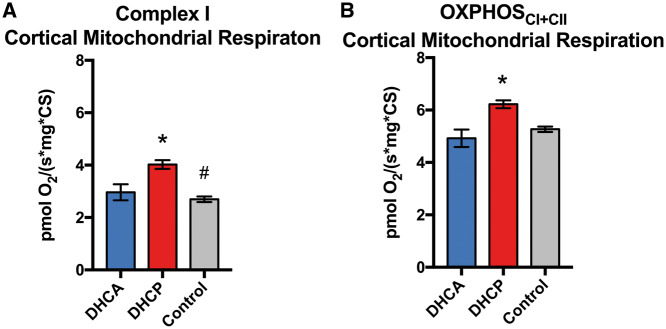
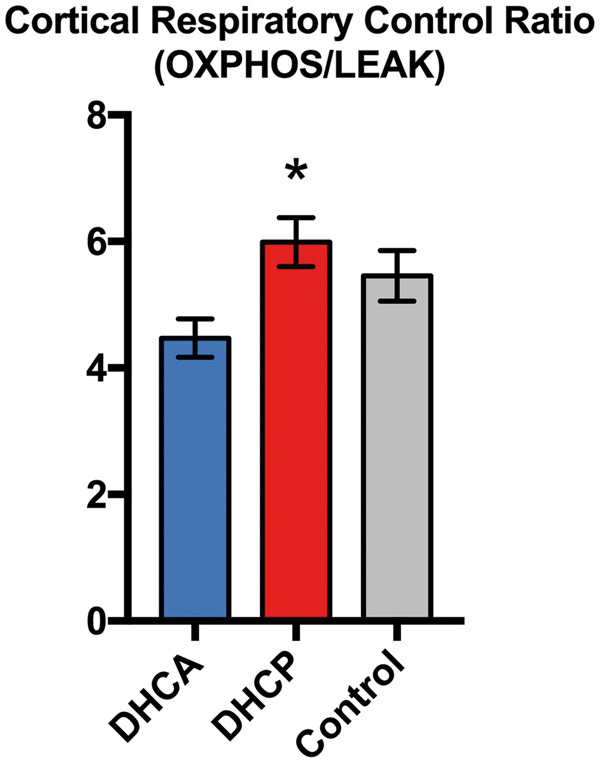
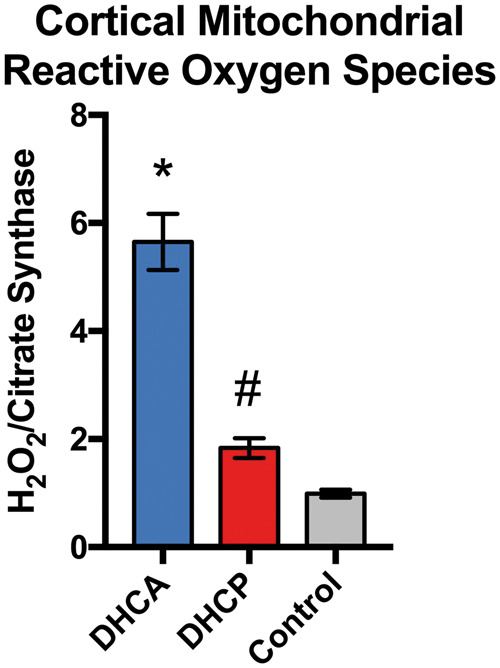
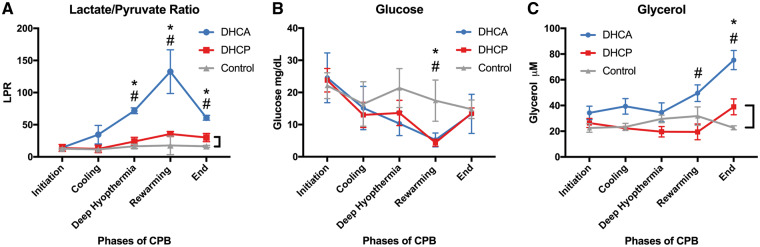
OBJECTIVES: Controversy remains regarding the use of deep hypothermic circulatory arrest (DHCA) in neonatal cardiac surgery. Alterations in cerebral mitochondrial bioenergetics are thought to contribute to ischaemia–reperfusion injury in DHCA. The purpose of this study was to compare cerebral mitochondrial bioenergetics for DHCA with deep hypothermic continuous perfusion using a neonatal swine model. METHODS: Twenty-four piglets (mean weight 3.8 kg) were placed on cardiopulmonary bypass (CPB): 10 underwent 40-min DHCA, following cooling to 18°C, 10 underwent 40 min DHCA and 10 remained at deep hypothermia for 40 min; animals were subsequently rewarmed to normothermia. 4 remained on normothermic CPB throughout. Fresh brain tissue was harvested while on CPB and assessed for mitochondrial respiration and reactive oxygen species generation. Cerebral microdialysis samples were collected throughout the analysis. RESULTS: DHCA animals had significantly decreased mitochondrial complex I respiration, maximal oxidative phosphorylation, respiratory control ratio and significantly increased mitochondrial reactive oxygen species (P < 0.05 for all). DHCA animals also had significantly increased cerebral microdialysis indicators of cerebral ischaemia (lactate/pyruvate ratio) and neuronal death (glycerol) during and after rewarming. CONCLUSIONS: DHCA is associated with disruption of mitochondrial bioenergetics compared with deep hypothermic continuous perfusion. Preserving mitochondrial health may mitigate brain injury in cardiac surgical patients. Further studies are needed to better understand the mechanisms of neurological injury in neonatal cardiac surgery and correlate mitochondrial dysfunction with neurological outcomes.
Overview
The claims and statistics of this paper haven’t been checked yet.
Free: it reads the open-access text and checks the first 5 claims that cite a source we can check. Create a free account to check every claim.
Integrity signals
Registry
Cites
Statistics
Figures
Verification
Claims the paper makes
The claims and statistics of this paper haven’t been checked yet.
Free: it reads the open-access text and checks the first 5 claims that cite a source we can check. Create a free account to check every claim.
Self-check
Percentages, sums and reported differences re-computed from the paper’s own numbers.
The self-check needs the paper’s full text.
Citations
Cites
Cyclosporine before PCI in Patients with Acute Myocardial Infarction
Cung, T.-T., Morel, O., Cayla, G., Rioufol, G., Garcia-Dorado, D., Angoulvant, D., Bonnefoy-Cudraz, E., Guérin, P., Elbaz, M., Delarche, N., et al. (2015) · New England Journal of Medicine · doi:10.1056/nejmoa1505489 · Cited by 713 · cited 1×
“Citrate synthase (CS) was measured as a marker of mitochondrial content and used in addition to tissue weight for normalization of brain tissue as previously described [15].”
MethodNeurodevelopmental Outcomes After Cardiac Surgery in Infancy
Gaynor, J. W., Stopp, C., Wypij, D., Andropoulos, D. B., Atallah, J., Atz, A. M., Beca, J., Donofrio, M. T., Duncan, K., Ghanayem, N. S., et al. (2015) · Pediatrics · doi:10.1542/peds.2014-3825 · Cited by 518
Self-citationAlgra, S. O., Jansen, N. J. G., van der Tweel, I., Schouten, A. N. J., Groenendaal, F., Toet, M., van Oeveren, W., van Haastert, I. C., Schoof, P. H., de Vries, L. S., et al. (2014) · Circulation · doi:10.1161/circulationaha.113.003312 · Cited by 163
Gaynor, J. W., Stopp, C., Wypij, D., Andropoulos, D. B., Atallah, J., Atz, A. M., Beca, J., Donofrio, M. T., Duncan, K., Ghanayem, N. S., et al. (2016) · The Annals of Thoracic Surgery · doi:10.1016/j.athoracsur.2016.05.081 · Cited by 152
Self-citationCell-permeable succinate prodrugs bypass mitochondrial complex I deficiency
Ehinger, J. K., Piel, S., Ford, R., Karlsson, M., Sjövall, F., Frostner, E. Å., Morota, S., Taylor, R. W., Turnbull, D. M., Cornell, C., et al. (2016) · Nature Communications · doi:10.1038/ncomms12317 · Cited by 142 · cited 1×
“human cells with inhibited CI function [17] and we plan further”
BackgroundSelf-citationDuebener, L. F., Hagino, I., Sakamoto, T., Mime, L. B., Stamm, C., Zurakowski, D., Schäfers, H., & Jonas, R. A. (2002) · Circulation · doi:10.1161/01.cir.0000032916.33237.a9 · Cited by 95 · cited 1×
“We chose pH stat during hypothermia and while cooling to optimize cerebral blood flow during these time periods according to both our institutional protocol and its demonstrated advantages [22, 23].”
MethodKilbaugh, T. J., Bhandare, S., Lorom, D. H., Saraswati, M., Robertson, C. L., & Margulies, S. S. (2011) · Journal of Neurotrauma · doi:10.1089/neu.2010.1635 · Cited by 94 · cited 1×
“In swine models of cardiac arrest and traumatic brain injury, alterations in the mitochondrial function correlated with neurological injury [10].”
BackgroundSelf-citationDose-dependent effect of isoflurane on regional cerebral blood flow in anesthetized macaque monkeys
Li, C.-X., Patel, S., Auerbach, E. J., & Zhang, X. (2013) · Neuroscience Letters · doi:10.1016/j.neulet.2013.02.007 · Cited by 88 · cited 1×
“5–1% to simulate human anaesthetic protocols and minimize confounding toxicity and cerebral blood flow changes associated with higher doses of isoflurane [11, 12].”
BackgroundTargeting mitochondria for resuscitation from cardiac arrest
Ayoub, I. M., Radhakrishnan, J., & Gazmuri, R. J. (2008) · Critical Care Medicine · doi:10.1097/ccm.0b013e31818a89f4 · Cited by 84
Han, F., Da, T., Riobo, N. A., & Becker, L. B. (2008) · Critical Care Medicine · doi:10.1097/ccm.0b013e31818a8a51 · Cited by 77 · cited 1×
“Cerebral mitochondrial dysfunction has been shown to be a critical component driving secondary brain injury after ischaemia–reperfusion (IR) [8, 9].”
Background
Cited by
Kant, S., Banerjee, D., Sabe, S. A., Sellke, F. W., & Feng, J. (2023) · Frontiers in Medicine · doi:10.3389/fmed.2023.1110532 · Cited by 67
Ko, T. S., Mavroudis, C. D., Baker, W. B., Morano, V. C., Mensah-Brown, K. G., Boorady, T. W., Schmidt, A. L., Lynch, J. M., Busch, D. R., Gentile, J. I., et al. (2018) · Journal of Cerebral Blood Flow & Metabolism · doi:10.1177/0271678x18809828 · Cited by 45
“1.(40) Continuous non-invasive measurements comprised NPT ( C), for guidance of hypothermic therapy, and frequency-domain diffuse optical spectroscopy (FD-DOS) and DCS.”
MethodSelf-citationContrast-enhanced ultrasound of the pediatric brain
Hwang, M., Barnewolt, C. E., Jüngert, J., Prada, F. U., Sridharan, A. N., & Didier, R. A. (2021) · Pediatric Radiology · doi:10.1007/s00247-021-04974-4 · Cited by 37
Davidson, J. A., Khailova, L. S., Treece, A. L., Robison, J., Soranno, D. E., Jaggers, J. J., Ing, R. J., Lawson, S., & Lujan, S. M. O. (2019) · Scientific Reports · doi:10.1038/s41598-019-50481-w · Cited by 28
Kajimoto, M., Nuri, M., Sleasman, J. R., Charette, K. A., Nelson, B. R., & Portman, M. A. (2020) · Journal of Thoracic and Cardiovascular Surgery · doi:10.1016/j.jtcvs.2019.12.075 · Cited by 26
Mechanisms of perioperative brain damage in children with congenital heart disease
Zhu, S., Sai, X., Lin, J., Deng, G., Zhao, M., Nasser, M. I., & Zhu, P. (2020) · Biomedicine & Pharmacotherapy · doi:10.1016/j.biopha.2020.110957 · Cited by 30
Marquez, A. M., Morgan, R. W., Ko, T. S., Landis, W. P., Hefti, M. M., Mavroudis, C. D., McManus, M. J., Karlsson, M., Starr, J. P., Roberts, A. L., et al. (2020) · Journal of the American Heart Association · doi:10.1161/jaha.119.015032 · Cited by 27
Self-citationNeuroprotective Strategies in Repair and Replacement of the Aortic Arch
Mullan, C. W., Catalano, M. A., & Manetta, F. (2018) · International Journal of Angiology · doi:10.1055/s-0038-1649512 · Cited by 24
Electroencephalographic Response to Deep Hypothermic Circulatory Arrest in Neonatal Swine and Humans
Mavroudis, C. D., Mensah-Brown, K. G., Ko, T. S., Boorady, T. W., Massey, S. L., Abend, N. S., Nicolson, S. C., Morgan, R. W., Mascio, C. E., Gaynor, J. W., et al. (2018) · The Annals of Thoracic Surgery · doi:10.1016/j.athoracsur.2018.06.036 · Cited by 20
“Our-high fidelity, DHCA piglet experimental protocol has been described elsewhere [12].”
MethodResultSelf-citationYan, W., Gao, S., Zhang, Q., Qi, J., Liu, G., Teng, Y., Wang, J., Yan, S., & Ji, B. (2022) · Pharmaceutics · doi:10.3390/pharmaceutics14112467 · Cited by 21
“Recent studies revealed that DHCA can induce cerebral mitochondrial dysfunction and alter neonatal neurodevelopmental progression [4,5].”
BackgroundIncreased cerebral mitochondrial dysfunction and reactive oxygen species with cardiopulmonary bypass
Volk, L. E., Mavroudis, C. D., Ko, T. S., Hallowell, T., Delso, N., Roberts, A. L., Starr, J. P., Landis, W. P., Lin, Y., Hefti, M. M., et al. (2020) · European Journal of Cardio-Thoracic Surgery · doi:10.1093/ejcts/ezaa439 · Cited by 18
“tral cannulation and direct right atrial pressure monitoring [18].”
BackgroundMethodSelf-citationJang, D. H., Piel, S., Greenwood, J. C., Kelly, M., Mazandi, V. M., Ranganathan, A., Lin, Y., Starr, J. P., Hallowell, T., Shofer, F. S., et al. (2021) · Clinical Toxicology · doi:10.1080/15563650.2020.1870691 · Cited by 19
“Citrate synthase activity (CS) was measured as a marker of mitochondrial content and used in addition to tissue weight for normalization of brain tissue as previously described [24].”
BackgroundMethodSelf-citationMa, S., Li, Y., Liu, Y., Xu, C., Li, H., Yao, Q., Wang, Y., Yang, Z., Zuo, P., Yang, M., et al. (2020) · Frontiers in Neurology · doi:10.3389/fneur.2020.00691 · Cited by 14
“73.29 ± 16.11 NA Preoperative SBP (mmHg) 98.57 ± 11.63 NA Preoperative DBP (mmHg) 57.57 ± 9.74 NA Preoperative pH 7.34 ± 0.03 NA CPB time (min) 61.75 ± 7.52 NA AO time (min) 38.52 ± 5.38 NA Mean ± SD. TOF, tetralogy of Fallot; HC, healthy children; SpO2, saturation of pulse oxygen; SBP, systolic blood pressure; DBP, d…”
BackgroundInfluentialMavroudis, C. D., Ko, T. S., Volk, L. E., Smood, B. F., Morgan, R. W., Lynch, J. M., Davarajan, M., Boorady, T. W., Licht, D. J., Gaynor, J. W., et al. (2020) · Journal of Thoracic and Cardiovascular Surgery · doi:10.1016/j.jtcvs.2020.12.005 · Cited by 19
Self-citationYu, Y., Lyu, Y., Jin, L., Xu, L., Wang, H., Hu, Y., Ren, Y., & Guo, K. (2019) · Brain and Behavior · doi:10.1002/brb3.1309 · Cited by 16
“Cerebral ischemia indexes (lactic acid/pyruvate ratio) which increase during following subsequent warming may be one of the mechanisms leading to impaired brain function (Mavroudis et al., 2018).”
BackgroundNormoxic re-oxygenation ameliorates end-organ injury after cardiopulmonary bypass
Peng, Y.-W., Major, T. C., Mohammed, A., Deatrick, K. B., & Charpie, J. R. (2020) · Journal of Cardiothoracic Surgery · doi:10.1186/s13019-020-01173-4 · Cited by 14
“In addition, further understanding of the pathophysiology of organ injury after CPB may uncover new therapeutic targets to help improve multi-organ function and recovery [23, 24].”
BackgroundHanley, F. L., Ito, H., Gu, M., Hurd, R. E., Riemer, R. K., & Spielman, D. M. (2019) · Journal of Thoracic and Cardiovascular Surgery · doi:10.1016/j.jtcvs.2019.10.103 · Cited by 10
Deep Hypothermic Circulatory Arrest Activates Neural Precursor Cells in the Neonatal Brain
Centola, L., Kanamitsu, H., Kinouchi, K., Fuji, Y., Ito, H., Maeda, K., Beckman, R., Ma, X., Hanley, F. L., & Riemer, R. K. (2020) · The Annals of Thoracic Surgery · doi:10.1016/j.athoracsur.2020.02.058 · Cited by 8
Padawer-Curry, J. A., Volk, L. E., Mavroudis, C. D., Ko, T. S., Morano, V. C., Busch, D. R., Rosenthal, T. M., Melchior, R. W., Shade, B. C., Schiavo, K. L., et al. (2021) · Pediatric Research · doi:10.1038/s41390-021-01525-3 · Cited by 9
“Our group has used a preclinical swine model of neonatal bypass surgery to reduce the heterogeneity seen clinically and to better isolate individual risk factors (22, 23).”
InfluentialSelf-citationHypothermia causes platelet activation in the human spleen
Horioka, K., Tanaka, H., Okaba, K., Yamada, S., Ishii, N., Motomura, A., Inoue, H., Alkass, K., Druid, H., & Yajima, D. (2021) · Thrombosis Research · doi:10.1016/j.thromres.2021.06.023 · Cited by 8
Petko, M., Myung, R. J., Volk, L. E., Judkins, A. R., Ittenbach, R. F., & Gaynor, J. W. (2020) · Cardiology in the Young · doi:10.1017/s1047951120004606 · Cited by 5
Self-citationPuwei, S., Ma, S., Zhuoga, D., Wu, K., Zhaocong, Y., Patel, N. D., Liu, X., & Mo, X. (2023) · Immunity Inflammation and Disease · doi:10.1002/iid3.795 · Cited by 4
Spielman, D. M., Gu, M., Hurd, R. E., Riemer, R. K., Okamura, K., & Hanley, F. L. (2022) · NMR in Biomedicine · doi:10.1002/nbm.4752 · Cited by 4
Early Impairment of Cerebral Bioenergetics After Cardiopulmonary Bypass in Neonatal Swine
Aronowitz, D. I., Geoffrion, T. R., Piel, S., Benson, E. J., Morton, S. R., Starr, J. P., Melchior, R. W., Gaudio, H., Degani, R. E., Widmann, N. J., et al. (2024) · World Journal for Pediatric and Congenital Heart Surgery · doi:10.1177/21501351241232077 · Cited by 4
“2,12,13 The following respiratory states were measured and normalized to citrate synthase activity: maximal oxidative phosphorylation via complex I (OXPHOS CI ), maximal convergent oxidative phosphorylation via complexes I and II (OXPHOS CI + CII ), maximal convergent nonphosphorylating respiration…”
InfluentialSelf-citationSpielman, D. M., Gu, M., Liu, H., Liu, S.-C., Hurd, R. E., Riemer, R. K., Okamura, K., Shibata, M., Shuttleworth, P., Kleiman, Z. I., et al. (2025) · Journal of Thoracic and Cardiovascular Surgery · doi:10.1016/j.jtcvs.2025.01.016 · Cited by 4
Simoniuk, U., Haunschild, J., von ASPERN, K., Boschmann, M., Klug, L., Рубеновна, Х. З., Bianchi, E., Oßmann, S., Oo, A., Borger, M. A., et al. (2020) · European Journal of Cardio-Thoracic Surgery · doi:10.1093/ejcts/ezaa124 · Cited by 3
Carbon monoxide as a cellular protective agent in a swine model of cardiac arrest protocol
Greenwood, J. C., Morgan, R. W., Abella, B. S., Shofer, F. S., Baker, W. B., Lewis, A., Ko, T. S., Forti, R. M. M., Yodh, A. G., Kao, S.-H., et al. (2024) · PLoS ONE · doi:10.1371/journal.pone.0302653 · Cited by 4
Self-citationAltered In Utero Metabolic Brain Trajectories in CHD
Panigrahy, A., Blüml, S., & Rajagopalan, V. (2023) · Journal of the American College of Cardiology · doi:10.1016/j.jacc.2023.08.039 · Cited by 3
Aronowitz, D. I., Geoffrion, T. R., Piel, S., Morton, S. R., Starr, J. P., Melchior, R. W., Gaudio, H., Degani, R. E., Widmann, N. J., Weeks, M. K., et al. (2024) · International Journal of Molecular Sciences · doi:10.3390/ijms25105466 · Cited by 3
“The samples were analyzed for glycerol, lactate, and pyruvate levels [4–6 , 12 Following euthanasia, fresh brain tissue samples were prepared and analyzed by high-resolution mitochondrial respirometry and normalized to citrate synthase activity, as in previous reports [4–6 ,12].”
BackgroundMethodInfluentialSelf-citationKo, T. S., Mavroudis, C. D., Benson, E. J., Forti, R. M. M., Melchior, R. W., Boorady, T. W., Morano, V. C., Mensah-Brown, K. G., Lin, Y., Aronowitz, D. I., et al. (2022) · Metabolites · doi:10.3390/metabo12080737 · Cited by 3
“In this study, we performed new analyses of data from a prospective, randomized cohort study whose methods have been previously described [8,11].”
MethodSelf-citationRisk Factors of Perioperative Brain Injury in Children Under Two Years Undergoing Coarctation Repair
Cheng, M., Xu, H., Zhang, K., Peng, X., Pan, Z., & Hu, Y. (2023) · Pediatric Neurology · doi:10.1016/j.pediatrneurol.2023.01.007 · Cited by 3
Catalano, M. A., Toubat, O., Jacobs, J. P., Tchervenkov, C. I., Fraser, C. D., Fraser, C. D., Bleiweis, M. S., Jacobs, M. L., Mavroudis, C. D., Louis, J. D. S., et al. (2026) · The Annals of Thoracic Surgery · doi:10.1016/j.athoracsur.2026.03.064 · Cited by 1
Self-citationLi, H., Shen, L., Ge, J., Li, H., Chen, F., Chen, X., & Hong, H. (2024) · Combinatorial Chemistry & High Throughput Screening · doi:10.2174/0113862073281209231227044205 · Cited by 1
Methods of Reconstruction for Distal Aortic Dissection
Soborov, M. A. (2021) · IntechOpen eBooks · doi:10.5772/intechopen.93339
“Its main drawback is the need to protect the brain and spinal cord, as well as internal organs from hypoxia and a limited time of safe duration of circulatory arrest, no more than 90 min at a body temperature of 18°C [44].”
BackgroundOmon, A., Gu, M., Hurd, R. E., Riemer, R. K., Hanley, F. L., & Spielman, D. M. (2026) · Magnetic Resonance in Medicine · doi:10.1002/mrm.70364 · Cited by 1
“…Mavroudis et al. reported cerebral mitochondrial dysfunction and increased lactate and lactate/pyruvate ratios with DHCA based on combined measurements from cerebral microdialysis, blood chemistry, and in vitro assessments of mitochondrial respiration and reactive oxygen species generation [16].”
Peng, L., Wei, W., Du, L., & Xiong, J. (2026) · Journal of Cardiothoracic Surgery · doi:10.1186/s13019-026-04532-9
“One possible explanation is that the activity of mitochondrial cytochrome c oxidase (Complex IV), which catalyzes > 90% of cellular oxygen consumption, falls by > 60% below 28 ℃ and reaches its minimum at 22–25 ℃ [24–26].”
General Principles of Pediatric and Congenital Cardiac Surgery
Mavroudis, C. D., Sharaf, O. M., Jacobs, J. P., & Tchervenkov, C. I. (2026) · Elsevier eBooks · doi:10.1016/b978-0-443-11851-7.00027-6
Self-citation
Metadata
- Authors
- Mavroudis, C. D., Karlsson, M., Ko, T., Hefti, M., Gentile, J. I., Morgan, R. W., Plyler, R., Mensah-Brown, K. G., Boorady, T. W., Melchior, R. W., Rosenthal, T. M., Shade, B. C., Schiavo, K. L., Nicolson, S. C., Spray, T. L., Sutton, R. M., Berg, R. A., Licht, D. J., Gaynor, J. W., & Kilbaugh, T. J.
- Affiliations
- Children's Hospital of Philadelphia (US)
- University of Iowa (US)
- Corresponding author
- Mavroudis, Constantine D
- ORCID
- Venue
- European Journal of Cardio-Thoracic Surgery
- Publisher
- Oxford University Press (OUP)
- Published
- 2018-01-15
- Volume
- 54
- Issue
- 1
- Pages
- 162-168
- ISSN
- 1010-7940 (ISSN-L)
- 1873-734X
- PMC
- PMC7448940
- OpenAlex
- W2782798890
- Cited by
- 37
- References
- 23
- Citations by year
- 2026: 4 · 2025: 1 · 2024: 4 · 2023: 4 · 2022: 3 · 2021: 5 · 2020: 10 · 2019: 3 · 2018: 3
- FWCI
- 4.48
- Type
- journal article
- Language
- en
- Open access
- hybrid
- doi.org
- Licence
- Locations
- European Journal of Cardio-Thoracic Surgery (publishedVersion, cc-by-nc)
- PubMed Central (publishedVersion, cc-by-nc)
- PubMed (publishedVersion)
- Funders
- NIH
- Topics
- Health Sciences › Medicine › Surgery › Cardiac and Coronary Surgery Techniques
- Health Sciences › Medicine › Critical Care and Intensive Care Medicine › Thermal Regulation in Medicine
- Life Sciences › Biochemistry, Genetics and Molecular Biology › Molecular Biology › Mitochondrial Function and Pathology
- Keywords
- deep hypothermic circulatory arrest, mitochondrial dysfunction, neonatal cardiac surgery, ischemia-reperfusion injury, oxidative phosphorylation, reactive oxygen species, cerebral microdialysis, lactate/pyruvate ratio, glycerol, neuronal cell death, brain injury, cardiopulmonary bypass
- MeSH terms
- Animals, Animals, Newborn, Cardiopulmonary Bypass, Cerebral Cortex, Energy Metabolism, Female, Hemodynamics, Mitochondria, Reactive Oxygen Species, Microdialysis, Cell Respiration, Sus scrofa, Circulatory Arrest, Deep Hypothermia Induced
About these checks
Registry, retraction, Cites and statistics results are computed, not judged, with one exception: a printed reference that no index lists is read once by a model before it counts as a citation error. Claims are extracted by a model and kept only when their quote appears verbatim in the text; each cited source is then checked, with a model’s help, for whether it says what the claim relies on. Those verdicts can be wrong — read the claim’s quote and the cited source before relying on one.
Statistics and arithmetic are recomputed, not judged.
Confidence bands are shown only for fields calibrated on our annotated test set. None is calibrated yet, so no band is shown.
What counts as a claim ›How we measure confidence ›How we check this ›
Are you an author, or do you see a problem with this page? Request a review
Data sources
Bibliographic data: Semantic Scholar, OpenAlex, Crossref.
Contains information from the Semantic Scholar Academic Graph Datasets, made available under the ODC Attribution License (ODC-BY 1.0).
Semantic Scholar’s data is described in: Kinney, R., et al. (2023). The Semantic Scholar Open Data Platform. arXiv:2301.10140.
