

Classic and 11-oxygenated androgens in serum and saliva across adulthood: a cross-sectional study analyzing the impact of age, body mass index, and diurnal and menstrual cycle variation
Open accessThe DOI matches its Crossref record; 47 of the 47 references it cites were found in a registry or an index.
Abstract
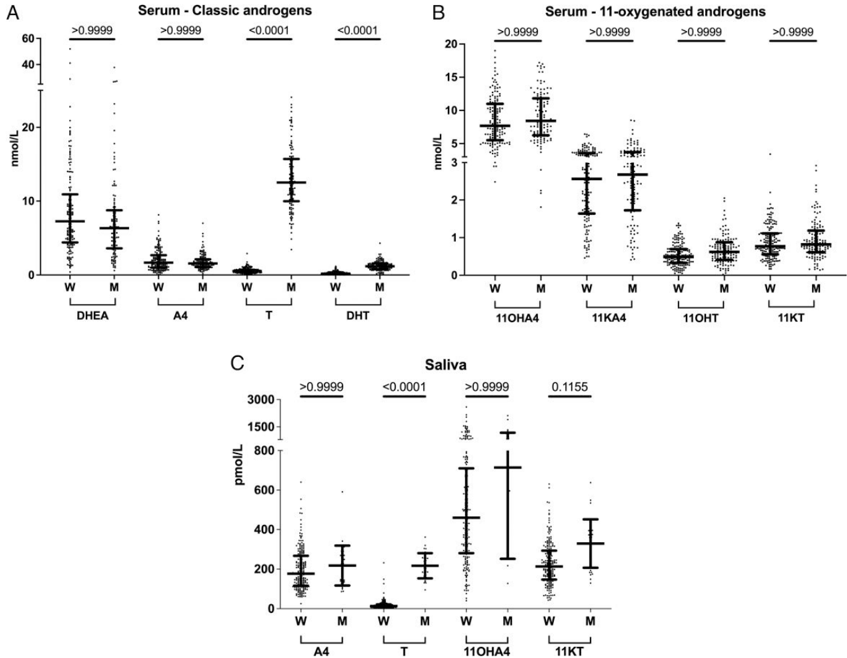
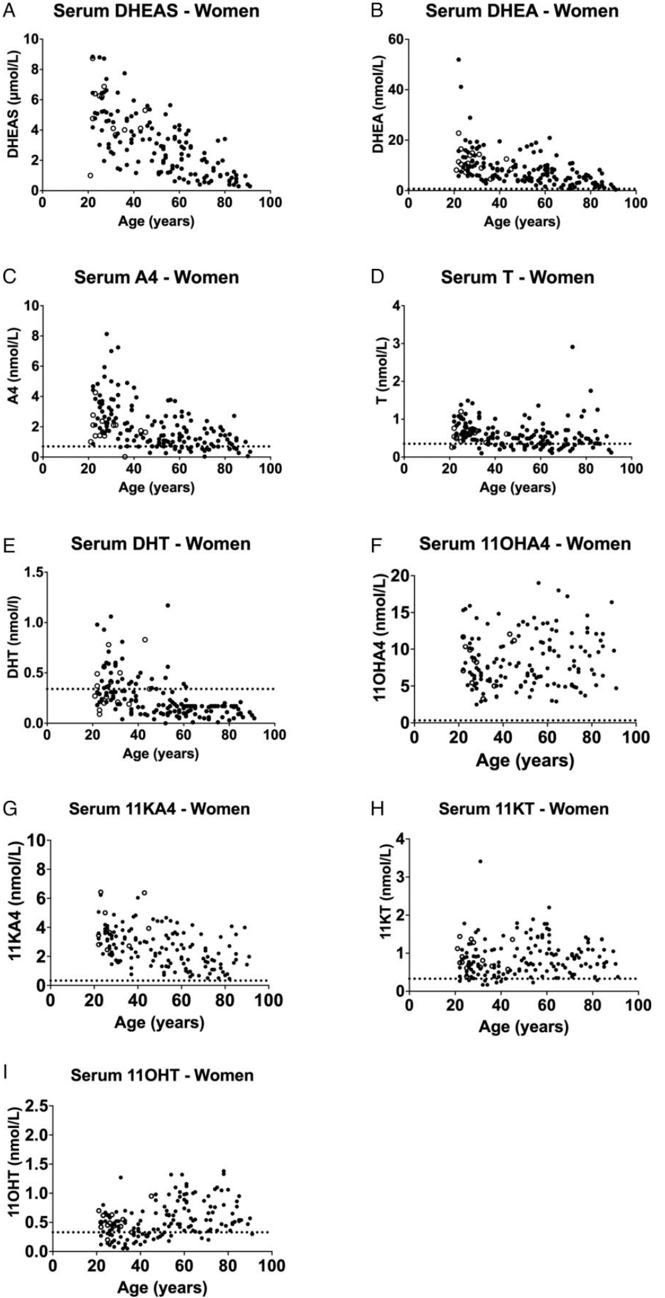
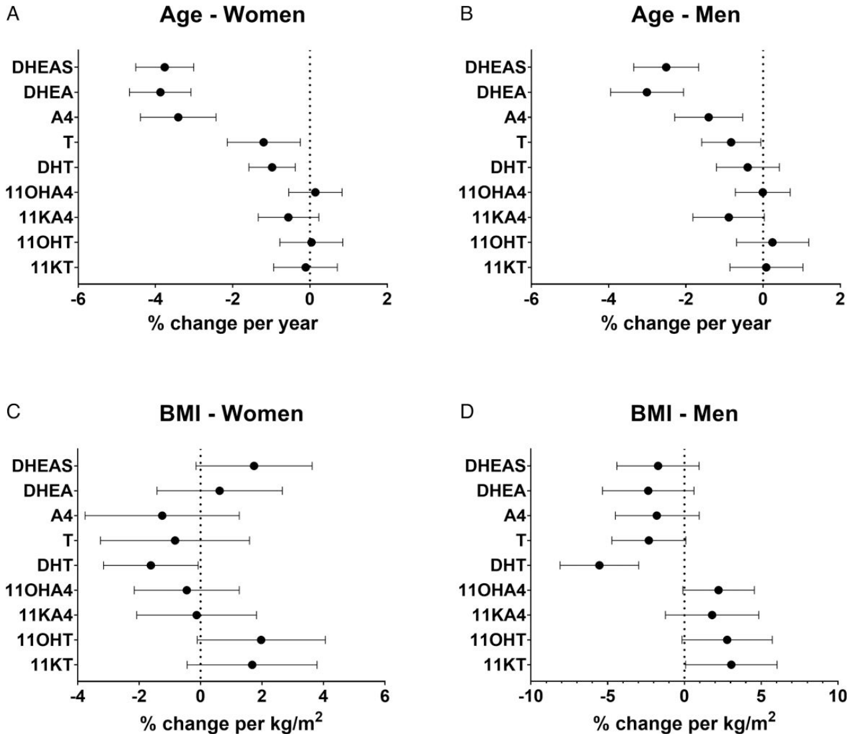
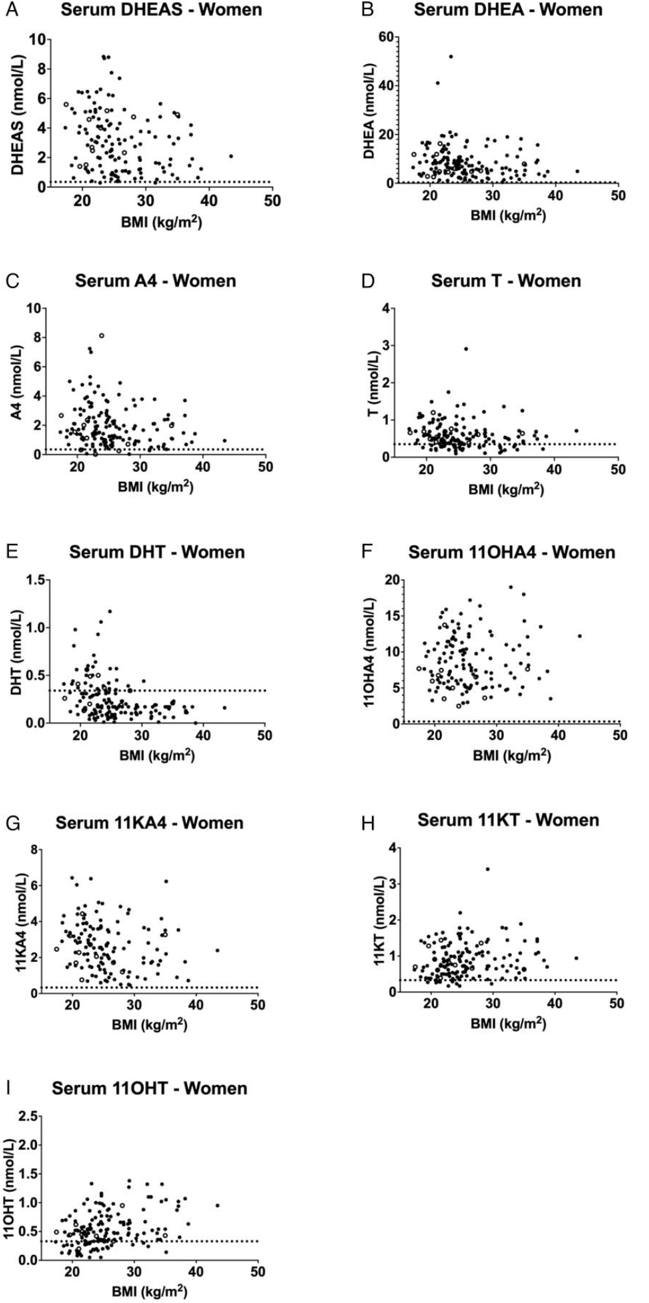
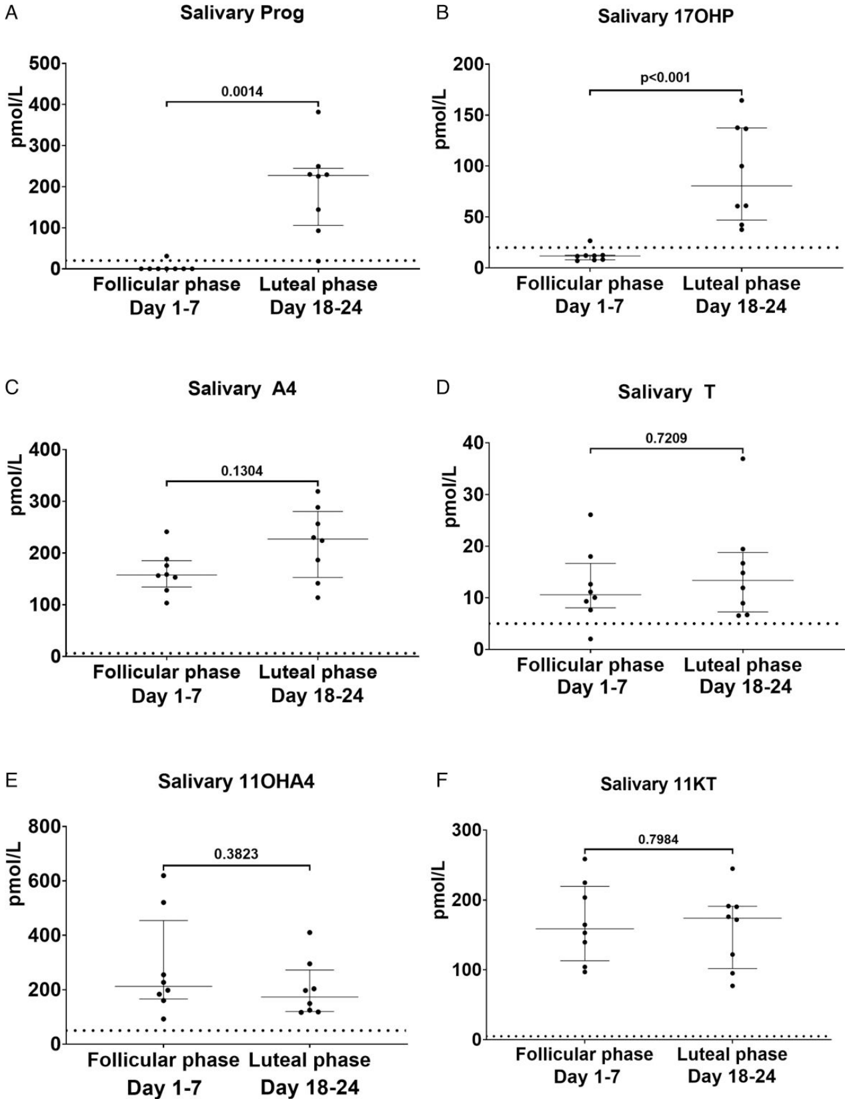
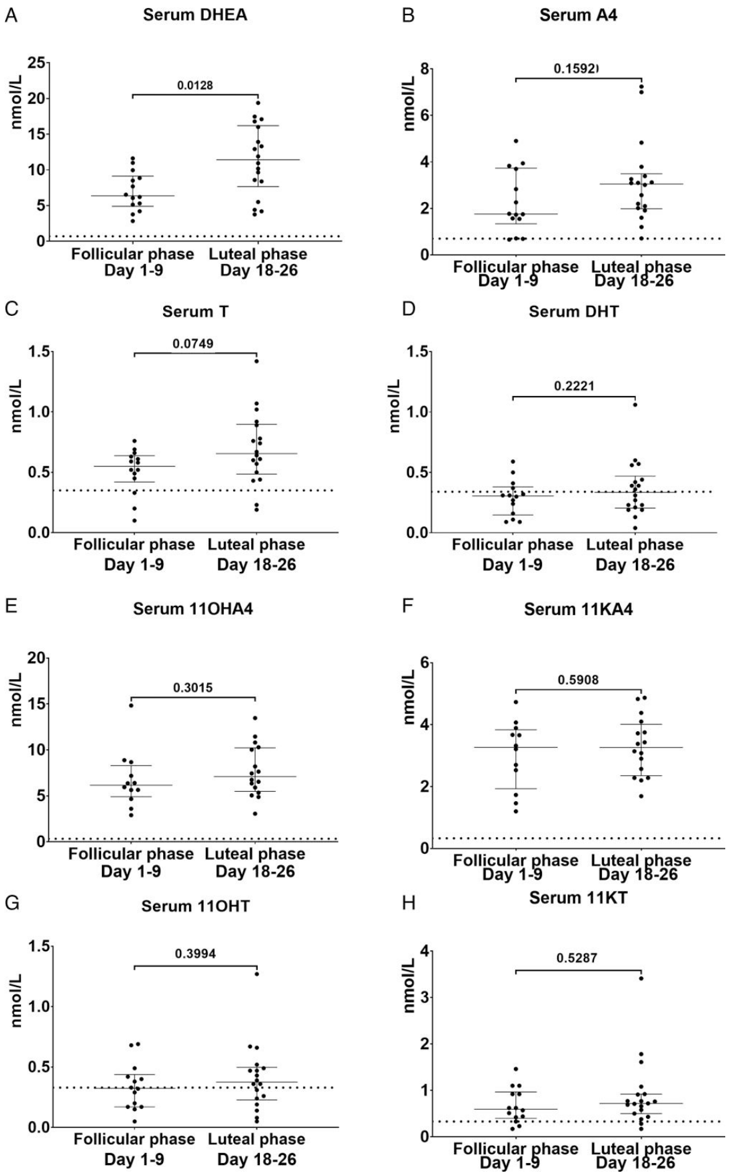
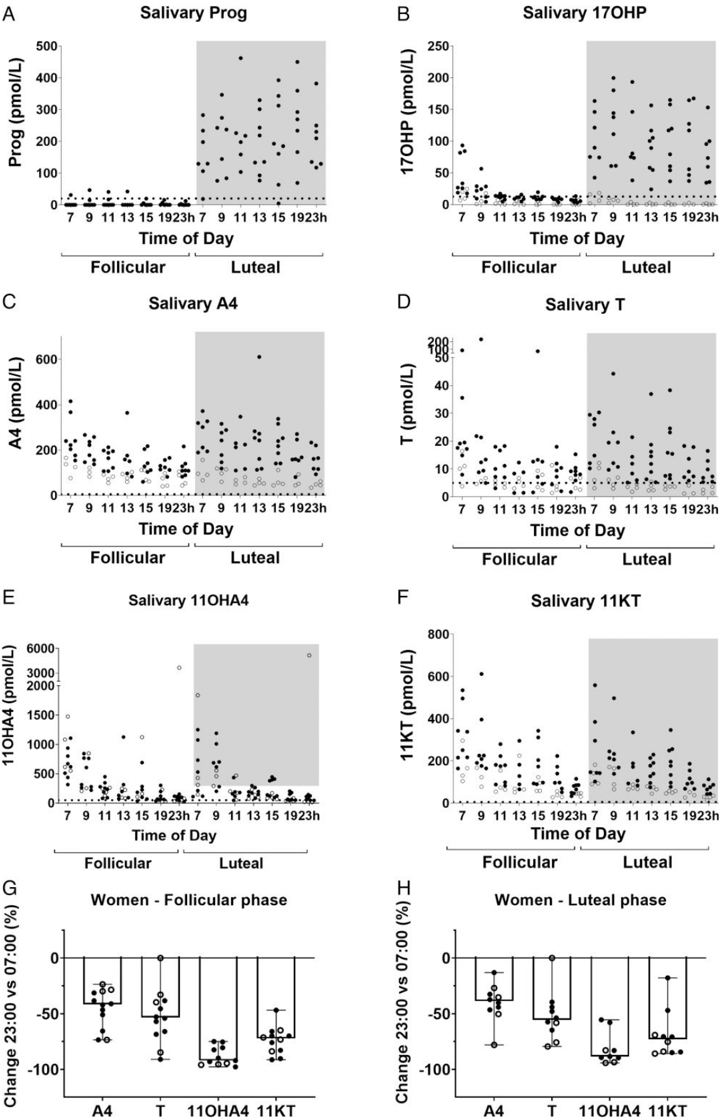
Objective: 11-oxygenated androgens significantly contribute to the circulating androgen pool. Understanding the physiological variation of 11-oxygenated androgens and their determinants is essential for clinical interpretation, for example, in androgen excess conditions. We quantified classic and 11-oxygenated androgens in serum and saliva across the adult age and body mass index (BMI) range, also analyzing diurnal and menstrual cycle-dependent variation. Design: Cross-sectional. Morning serum samples were collected from 290 healthy volunteers (125 men, 22-95 years; 165 women, 21-91 years). Morning saliva samples were collected by a sub-group (51 women and 32 men). Diurnal saliva profiles were collected by 13 men. Twelve women collected diurnal saliva profiles and morning saliva samples on 7 consecutive days during both follicular and luteal menstrual cycle phases. Methods: Serum and salivary steroids were quantified by liquid chromatography–tandem mass spectrometry profiling assays. Results: Serum classic androgens decreased with age-adjusted BMI, for example, %change kg/m2 for 5α-dihydrotestosterone: men −5.54% (95% confidence interval (CI) −8.10 to −2.98) and women −1.62% (95%CI −3.16 to −0.08). By contrast, 11-oxygenated androgens increased with BMI, for example, %change kg/m2 for 11-ketotestosterone: men 3.05% (95%CI 0.08-6.03) and women 1.68% (95%CI −0.44 to 3.79). Conversely, classic androgens decreased with age in both men and women, while 11-oxygenated androgens did not. Salivary androgens showed a diurnal pattern in men and in the follicular phase in women; in the luteal phase, only 11-oxygenated androgens showed diurnal variation. Conclusions: Classic androgens decrease while active 11-oxygenated androgens increase with increasing BMI, pointing toward the importance of adipose tissue mass for the activation of 11-oxygenated androgens. Classic but not 11-oxygenated androgens decline with age.
Overview
The claims and statistics of this paper haven’t been checked yet.
Free: it reads the open-access text and checks the first 5 claims that cite a source we can check. Create a free account to check every claim.
Integrity signals
Registry
Cites
Statistics
Figures

Verification
Claims the paper makes
The claims and statistics of this paper haven’t been checked yet.
Free: it reads the open-access text and checks the first 5 claims that cite a source we can check. Create a free account to check every claim.
Claims other papers make about this one
Each is checked against this paper’s own text: does it say what the citing paper says it does?
The source backs part of the claim, not all of it — or backs it for a different population, condition or comparison.
In the citing paper
“Notably, the concentrations of 11KT are not diminished by oral contraceptives or gonadotropin-releasing hormone analog-mediated ovarian suppression.14”
From Steroid hormone profiling reveals altered adrenal androgen production in endometriosis (2026) · cites this paper as [14]
Experimental — accuracy not yet measuredThe source backs part of the claim, not all of it — or backs it for a different population, condition or comparison.
In the citing paper
“Several sensitive and robust LC-MS/MS methods for multiple steroids have been developed in recent years and many methods meet the re quirements for clinical applications [5 -16].”
From Sex- and age-specific reference intervals of 16 steroid metabolites quantified simultaneously by LC-MS/MS in sera from 2458 healthy subjects aged 0 to 77 years (2024) · cites this paper as [13]
Experimental — accuracy not yet measuredThe source backs part of the claim, not all of it — or backs it for a different population, condition or comparison.
In the citing paper
“as well as in women with known menstrual cycle timing at blood sampling [1,13,22].”
From Sex- and age-specific reference intervals of 16 steroid metabolites quantified simultaneously by LC-MS/MS in sera from 2458 healthy subjects aged 0 to 77 years (2024) · cites this paper as [13]
Experimental — accuracy not yet measuredThe cited source says what the claim attributes to it.
In the citing paper
“Consistent with previous reports,14 11-oxygenated androgens did not differ by menstrual cycle phase (Table S1).”
From Steroid hormone profiling reveals altered adrenal androgen production in endometriosis (2026) · cites this paper as [14]
The cited source says what the claim attributes to it.
In the citing paper
“and five to nine adrenal and androgenic steroids in men and women [8,13,14,21]”
Self-check
Percentages, sums and reported differences re-computed from the paper’s own numbers.
The self-check needs the paper’s full text.
Citations
Cites
Schiffer, L., Barnard, L., Baranowski, E. S., Gilligan, L. C., Taylor, A. E., Arlt, W., Shackleton, C. H. L., & Storbeck, K.-H. (2019) · The Journal of Steroid Biochemistry and Molecular Biology · doi:10.1016/j.jsbmb.2019.105439 · Cited by 450
Self-citationThe backdoor pathway to dihydrotestosterone
Auchus, R. J. (2004) · Trends in Endocrinology & Metabolism · doi:10.1016/j.tem.2004.09.004 · Cited by 347
Arlt, W., Walker, E. A., Draper, N., Ivison, H. E., Ride, J. P., Hammer, F., Chalder, S. M., Borucka-Mankiewicz, M., Hauffa, B. P., Malunowicz, E. M., et al. (2004) · The Lancet · doi:10.1016/s0140-6736(04)16503-3 · Cited by 345
Self-citationCole, T. J. (2000) · Statistics in Medicine · doi:10.1002/1097-0258(20001130)19:22<3109::aid-sim558>3.0.co;2-f · Cited by 325
11-Oxygenated C19 steroids are the predominant androgens in polycystic ovary syndrome
O’Reilly, M. W., Kempegowda, P., Jenkinson, C., Taylor, A. E., Quanson, J. L., Storbeck, K.-H., & Arlt, W. (2017) · The Journal of Clinical Endocrinology & Metabolism · doi:10.1210/jc.2016-3285 · Cited by 267
Self-citationTurcu, A. F., Nanba, A. T., Chomic, R., Upadhyay, S. K., Giordano, T. J., Shields, J. J., Merke, D. P., Rainey, W. E., & Auchus, R. J. (2016) · European Journal of Endocrinology · doi:10.1530/eje-15-1181 · Cited by 231
Rege, J., Nakamura, Y., Satoh, F., Morimoto, R., Kennedy, M. R., Layman, L. C., Honma, S., Sasano, H., & Rainey, W. E. (2013) · The Journal of Clinical Endocrinology & Metabolism · doi:10.1210/jc.2012-2912 · Cited by 227
O’Reilly, M. W., Kempegowda, P., Walsh, M., Taylor, A. E., Manolopoulos, K. N., Allwood, J. W., Semple, R. K., Hebenstreit, D., Dunn, W. B., Tomlinson, J. W., et al. (2017) · The Journal of Clinical Endocrinology & Metabolism · doi:10.1210/jc.2017-00947 · Cited by 215
Self-citationTHE SECRETION OF DEHYDROEPIANDROSTERONE AND DEHYDROEPIANDROSTERONE SULPHATE IN MAN
NIESCHLAG, E., LORIAUX, D. L., RUDER, H. J., ZUCKER, I. R., KIRSCHNER, M. A., & LIPSETT, M. B. (1973) · Journal of Endocrinology · doi:10.1677/joe.0.0570123 · Cited by 209
Storbeck, K.-H., Bloem, L. M., Africander, D., Schloms, L., Swart, P., & Swart, A. C. (2013) · Molecular and Cellular Endocrinology · doi:10.1016/j.mce.2013.07.006 · Cited by 198
Research works printed but not linked: 2
- 11. Endocr Res . 2015;40(1):8-13. https://doi.org/10.3109/07435800. 2014.895377 · doi:10.3109/07435800
- 37. Barbier ID, Gent R, Du Toit T, Swart AC. https://doi.org/10.1210/ jendso/bvab048.132 2021. · doi:10.1210/jendso/bvab048.132
Cited by
Androgen excess: a hallmark of polycystic ovary syndrome
Wang, K., Lǐ, Y., & Chen, Y. (2023) · Frontiers in Endocrinology · doi:10.3389/fendo.2023.1273542 · Cited by 162
The clinical and biochemical significance of 11-oxygenated androgens in human health and disease
Storbeck, K.-H., & O’Reilly, M. W. (2023) · European Journal of Endocrinology · doi:10.1093/ejendo/lvad047 · Cited by 63
Self-citationFrederiksen, H., Johannsen, T. H., Andersen, S. E., Petersen, J. H., Busch, A. S., Ljubicic, M. L., Fischer, M. B., Upners, E. N., Hagen, C. P., Main, K. M., et al. (2024) · Clinica Chimica Acta · doi:10.1016/j.cca.2024.119852 · Cited by 46
Age-related Changes in the Adrenal Cortex: Insights and Implications
Warde, K. M., Smith, L., & Basham, K. J. (2023) · Journal of the Endocrine Society · doi:10.1210/jendso/bvad097 · Cited by 34
“However, recent studies show that 11-oxygenated androgens that are also synthesized in the adrenal do not decline in aged humans [95-97].”
BackgroundAltinkilic, E. M., du Toit, T., Sakin, Ö., Attar, R., Groessl, M., & Flück, C. E. (2023) · The Journal of Steroid Biochemistry and Molecular Biology · doi:10.1016/j.jsbmb.2023.106366 · Cited by 22
“Another characteristic of PCOS is the disruption of the menstrual cycle with constantly low P4 levels comparable to levels in control women in the follicular phase of a normal cycle (Andrieu et al., 2022; Schiffer et al., 2023).”
Society for Endocrinology Clinical Practice Guideline for the Evaluation of Androgen Excess in Women
Elhassan, Y., Hawley, J. M., Cussen, L., Abbara, A., Clarke, S. A., Kempegowda, P., Dhillon‐Smith, R. K., Thadani, P., Busby, M., Owusu‐Darkwah, L., et al. (2025) · Clinical Endocrinology · doi:10.1111/cen.15265 · Cited by 31
“Serum classic androgen precursors (A4, DHEA and DHEAS) and active androgens (T and DHT) decline with age in women [29].”
Self-citationEriksson, E. S., Rodriguez, M. L., Halvorsen, B. L., Johansson, I., Mårtensson, A. K. F., Wilhelmson, A. S., Huse, C., Ueland, T., Aukrust, P., Broch, K., et al. (2025) · Nature Communications · doi:10.1038/s41467-025-56217-x · Cited by 24
Biomarkers in congenital adrenal hyperplasia
Bacila, I. A., Lawrence, N., Badrinath, S. G., Balagamage, C., & Krone, N. P. (2023) · Clinical Endocrinology · doi:10.1111/cen.14960 · Cited by 26
Schiffer, L., Oestlund, I., Snoep, J. L., Gilligan, L. C., TAYLOR, A. E. R., Sinclair, A. J., Singhal, R., Freeman, A., Ajjan, R., Tiganescu, A., et al. (2024) · The FASEB Journal · doi:10.1096/fj.202302131r · Cited by 18
“Moreover, several studies have also shown that 11KT circulates at concentrations 46 equal to or higher than those of testosterone in women (3, 6, 7).”
BackgroundResultInfluentialSelf-citationReference intervals for serum 11-oxygenated androgens in children
Adriaansen, B. P. H., Oude-Alink, S., Swinkels, D. W., Schröder, M. A. M., Span, P. N., Sweep, F. C. G. J., der Grinten, H. L. C., & van Herwaarden, A. E. (2024) · European Journal of Endocrinology · doi:10.1093/ejendo/lvae008 · Cited by 18
Human Gonads Do Not Contribute to the Circulating Pool of 11-Oxygenated Androgens
Charoensri, S., Rege, J., Lee, C., Marko, X., Sherk, W. M., Sholinyan, J., Rainey, W. E., & Turcu, A. F. (2024) · The Journal of Clinical Endocrinology & Metabolism · doi:10.1210/clinem/dgae420 · Cited by 13
Gjorgoska, M., & Rižner, T. L. (2024) · The Journal of Steroid Biochemistry and Molecular Biology · doi:10.1016/j.jsbmb.2024.106578 · Cited by 16
“…[20], which included 100 premenopausal women, Davio et al., [21], which included 72 women between 20 and 39 years, and 78 women between 40 and 59 years, Caron et al., [22], which included 10 women between 20 and 40 years, and Schiffer et al., [23], which included 84 women younger than 50 years.”
The Role of 11-Oxygenated Androgens and Endocrine Disruptors in Androgen Excess Disorders in Women
Vítků, J., Varausova, A., Škodová, T., Kolátorová, L., Vosátková, M., Včelák, J., Vrbíková, J., Šimková, M., & Dušková, M. (2024) · International Journal of Molecular Sciences · doi:10.3390/ijms25179691 · Cited by 14
“In contrast to other studies [45,46], however, the levels of 11-oxygenated androgens were not associated with either age or BMI in our study.”
ResultPopovic, M., Monnerat, S., TAYLOR, A. E. R., Gilligan, L. C., Schiffer, L., Arlt, W., Vogt, D., Geyter, C. D., Hutter, N., Donath, M. Y., et al. (2024) · Frontiers in Endocrinology · doi:10.3389/fendo.2024.1435698 · Cited by 12
Self-citationOestlund, I., Snoep, J. L., Schiffer, L., Wabitsch, M., Arlt, W., & Storbeck, K. (2023) · The Journal of Steroid Biochemistry and Molecular Biology · doi:10.1016/j.jsbmb.2023.106436 · Cited by 13
“…was found to dock in a similar orientation to A4, but with a 1.2-fold and 1.8-fold greater distance between the 17-keto group of the substrate and the two catalytic hydroxyl groups of Ser170 and Tyr183 in agreement with lower catalytic activity towards this substrate ( Supplementary Figure 3C ).”
BackgroundInfluentialSelf-citation46,XX males with congenital adrenal hyperplasia: a clinical and biochemical description
Adriaansen, B. P. H., Utari, A., Westra, D., Juniarto, A. Z., Ariani, M. D., Ediati, A., Schröder, M. A. M., Span, P. N., Sweep, F. C. G. J., Drop, S. L. S., et al. (2024) · Frontiers in Endocrinology · doi:10.3389/fendo.2024.1410122 · Cited by 9
Extra-nuclear and cytoplasmic steroid receptor signalling in hormone dependent cancers
Agbana, S., & McIlroy, M. (2024) · The Journal of Steroid Biochemistry and Molecular Biology · doi:10.1016/j.jsbmb.2024.106559 · Cited by 5
“In recent years there have been rapid advances in our ability to explore the tumour intracrine environment via various chromatography tandem mass-spectrometry approaches [147,148] and mass-spectrometry imaging [149,150].”
BackgroundTomkins, M., McDonnell, T., Cussen, L., Sagmeister, M. S., Oestlund, I., Shaheen, F., Harper, L., Hardy, R., TAYLOR, A. E. R., Gilligan, L. C., et al. (2024) · The Journal of Clinical Endocrinology & Metabolism · doi:10.1210/clinem/dgae714 · Cited by 7
“Anthropomorphic measurements at the study visit included height, weight, body mass index (BMI), and body composition as assessed by bioimpedance with Tanita MC-780 MA S and Tanita DC-360, recording measures for total, visceral, and free fat mass as well as muscle mass.”
InfluentialSelf-citationSampson, O. L., Jay, C., Adland, E., Csala, A., Lim, N. T. Y., Ebbrecht, S. M., Gilligan, L. C., TAYLOR, A. E. R., George, S. S., Longet, S., et al. (2024) · Frontiers in Immunology · doi:10.3389/fimmu.2024.1329805 · Cited by 7
Self-citationSex steroids, SHBG and type 2 diabetes in women: what do we really know?
Verhoog, N. J. D., Africander, D., & Storbeck, K. (2026) · Diabetologia · doi:10.1007/s00125-025-06647-5 · Cited by 8
Avenant, C., Singata‐Madliki, M., Bick, A. J., Africander, D., Balakrishna, Y., Storbeck, K., Moliki, J. M., Dlamini, S., Skosana, S. B., Smit, J. A., et al. (2024) · PLoS ONE · doi:10.1371/journal.pone.0307736 · Cited by 5
“Testosterone is one of the major androgens in the serum of premenopausal women [26, 27].”
BackgroundFemale Adipose Tissue Sex Steroid Biosynthesis
Hetemäki, N., Mikkola, T. S., & Savolainen-Peltonen, H. M. (2025) · Seminars in Reproductive Medicine · doi:10.1055/s-0045-1811952 · Cited by 5
Petrozzi, B. P., Lamadé, E. K., Schneiberg, R., Scharnholz, B., Vítků, J., Hill, M., Stárka, L., Gilles, M., & Deuschle, M. (2023) · Psychoneuroendocrinology · doi:10.1016/j.psyneuen.2023.106366 · Cited by 3
Hepatic metabolism of 11-oxygenated androgens in humans: an integrated in vivo and ex vivo approach
McDonnell, T., Anthony, A., Clarke, G., Schiffer, L., TAYLOR, A. E. R., Cussen, L., Fan, Y., Hann, A., Mao, J., Shaheen, F., et al. (2025) · European Journal of Endocrinology · doi:10.1093/ejendo/lvaf166 · Cited by 4
“7,8 Since their identification in humans many studies have highlighted the pivotal role played by 11-oxygenated androgens in congenital adrenal hyperplasia, polycystic ovary syndrome (PCOS), premature adrenarche, and castration resistant prostate cancer.”
Self-citationAllaoui, G., Rylander, C., Fuskevåg, O., Grimnes, G., Averina, M., Wilsgaard, T., & Berg, V. (2024) · Acta Diabetologica · doi:10.1007/s00592-024-02266-5 · Cited by 4
Dubinski, I., Pozza, S. B., Bidlingmaier, M., Hawley, J. M., Keevil, B. G., Kunz, S. L., Nowotny, H. F., Reisch, N., Schiergens, K. A., Tschaidse, L., et al. (2024) · Journal of Pediatric Endocrinology and Metabolism · doi:10.1515/jpem-2024-0027 · Cited by 3
Self-citation11- Oxygenated Androgens Inhibit Brown Adipose Tissue Differentiation
Yuan, Y., Steenbergen, J., Goulart, A. D. O. S., Sabaté-Pérez, A., & Visser, J. A. (2025) · Endocrinology · doi:10.1210/endocr/bqaf172 · Cited by 1
Steroid hormone profiling reveals altered adrenal androgen production in endometriosis
Simitsidellis, I., Ainslie, R. J., Taylor, A. E., Gilligan, L. C., Shaheen, F., Blanke, S., Anderson, C., Hapangama, D., Arlt, W., Horne, A. W., et al. (2026) · European Journal of Endocrinology · doi:10.1093/ejendo/lvag109 · Cited by 1
Self-citationGjorgoska, M., Taylor, A. E., Smrkolj, Š., & Rižner, T. L. (2025) · Cancers · doi:10.3390/cancers17101679 · Cited by 1
“Steroids were extracted from serum samples by liquid–liquid extraction, as described previously [25,26].”
Self-citationDiurnal variation in salivary testosterone independent of food consumption
Fenn, J. S., Gill, H., Kalaria, T., Starbrook, L., Ford, L. T., Sharrod–Cole, H., Ford, C., & Gama, R. M. (2025) · Annals of Clinical Biochemistry International Journal of Laboratory Medicine · doi:10.1177/00045632251357140 · Cited by 1
Current insights into monitoring of congenital adrenal hyperplasia
Leusink, Q. M., Verploegen, E., Adriaansen, B. P. H., Chin, X., Stikkelbroeck, N. M. M. L., Span, P. N., Sweep, F. C. G. J., Dona, M., van Herwaarden, A. E., & der Grinten, H. L. C. (2026) · Frontiers in Endocrinology · doi:10.3389/fendo.2026.1774145 · Cited by 2
“Consequently, early follicular phase sampling is often recommended to minimize gonadal in fl uence and ensure accurate monitoring of adrenal steroidogenesis (4, 36).”
InfluentialRacial and ethnic differences in classic and 11-oxygenated androgens in men
Vibhatavata, P., Lee, C., McDonald, J., Rege, J., Rainey, W. E., Sharifi, N., Auchus, R. J., & Turcu, A. F. (2026) · The Journal of Clinical Endocrinology & Metabolism · doi:10.1210/clinem/dgag335
11-Oxygenated androgens in PCOS: impact of PCOS phenotypes and first-line interventions
Dokras, A., Kunselman, A. R., Stetter, C. M., McPhaul, M. J., Stanczyk, F. Z., & Legro, R. S. (2026) · The Journal of Clinical Endocrinology & Metabolism · doi:10.1210/clinem/dgag329 · Cited by 1
Park, J., Titman, A., Bright, O., Dliso, S., Shantsila, A., Lip, G. Y. H., Adaway, J., Keevil, B. G., Hawcutt, D. B., & Blair, J. (2025) · Clinical Endocrinology · doi:10.1111/cen.15258 · Cited by 1
“Morning serum androgens have been studied in healthy adult volunteers ( n = 290), aged 21 – 95 years [16].”
InfluentialSelf-citationSimitsidellis, I., Ainslie, R. J., Taylor, A., Gilligan, L. C., Shaheen, F., Blanke, S., Anderson, C., Hapangama, D. K., Arlt, W., Horne, A. W., et al. (2025) · medRxiv · doi:10.1101/2025.05.24.25328281 · Cited by 1
“Concentrations of 11KT are not diminished by oral contraceptives or gonadotropin-releasing hormone analogue-mediated ovarian suppression 27 .”
InfluentialSelf-citationSampson, O. L., Jay, C., Adland, E., Csala, A., Lim, N. T. Y., Ebbrecht, S. M., Gilligan, L. C., TAYLOR, A. E. R., George, S. S., Longet, S., et al. (2023) · bioRxiv (Cold Spring Harbor Laboratory) · doi:10.1101/2023.08.01.551423
Self-citationAdrenal steroids: New assays, new methods
Bouys, L., Bonnet-Serrano, F., & Assié, G. (2025) · Annales d Endocrinologie · doi:10.1016/j.ando.2025.101709
Avenant, C., Moliki, J. M., Bick, A. J., Dlamini, S., Singata‐Madliki, M., Hofmeyr, G. J., Chen, P., Storbeck, K., Africander, D., Erikson, D. W., et al. (2025) · Contraception and Reproductive Medicine · doi:10.1186/s40834-025-00388-x
“Testosterone concentrations in healthy women are substantially lower than those of men, typically ranging from 0.06– 1.68 nmol/L when determined by LC–MS/MS meth - ods [20–23].”
InfluentialLiu, Y., Jin, T., Wei, Y.-H., Qin, X., Deng, S., Zheng, J., Yan, B., Nong, Y., Ye, Y., Huang, S., et al. (2025) · Annals of Laboratory Medicine · doi:10.3343/alm.2025.0090
“OH A4—is generally stable across age groups [18, 20, 21].”
Pettersen, T., Fuskevåg, O., Figenschau, Y., Evensen, E., Furberg, A., Winther, A., & Grimnes, G. (2026) · Journal of Endocrinological Investigation · doi:10.1007/s40618-025-02793-0 · Cited by 1
Laubi, B., Burkart, J. M., Willems, E. P., & van Schaik, C. P. (2026) · bioRxiv (Cold Spring Harbor Laboratory) · doi:10.64898/2026.05.20.726499
Redefining testosterone reference ranges for adult females
Wainwright, E., Getreu, N., Crawford, L., Timpson, A., Vaz, S. R., Adams, G., Lawrie, L., Woolley, T., Brightmore, L., Abbara, A., et al. (2026) · Journal of Endocrinological Investigation · doi:10.1007/s40618-026-02929-w
“Further, increasing emphasis has been placed on alternative androgen pathways, particularly 11-oxygen-ated androgens, which may contribute up to half of total androgen action and show relatively little decline across the menopausal transition [ 9 ].”
Metadata
- Authors
- Schiffer, L., Kempegowda, P., Sitch, A. J., Adaway, J. E., Shaheen, F., Ebbehoj, A., Singh, S., McTaggart, M. P., O’Reilly, M. W., Prete, A., Hawley, J. M., Keevil, B. G., Bancos, I., Taylor, A. E., & Arlt, W.
- Affiliations
- University of Birmingham (GB)
- University Hospitals Birmingham NHS Foundation Trust (GB)
- Department of Clinical Biochemistry, Wythenshawe Hospital , Manchester , United Kingdom
- Division of Endocrinology, Metabolism, Diabetes and Nutrition, Department of Internal Medicine, Mayo Clinic , Rochester, MN , United States
- Mayo Clinic (US)
- Royal College of Surgeons in Ireland (IE)
- Wythenshawe Hospital (GB)
- Corresponding author
- Arlt, Wiebke
- ORCID
- Venue
- European Journal of Endocrinology
- Publisher
- Oxford University Press (OUP)
- Published
- 2023-01-10
- Volume
- 188
- Issue
- 1
- Pages
- 86-100
- ISSN
- 0804-4643 (ISSN-L)
- 1479-683X
- OpenAlex
- W4317242549
- Cited by
- 42
- References
- 47
- Citations by year
- 2026: 8 · 2025: 12 · 2024: 14 · 2023: 8
- FWCI
- 8.62
- Type
- journal article
- Language
- en
- Open access
- hybrid
- doi.org
- Licence
- Locations
- European Journal of Endocrinology (publishedVersion, cc-by)
- PubMed (publishedVersion)
- University of Birmingham Research Portal (University of Birmingham) (publishedVersion, cc-by)
- Funders
- Wellcome Trust (WT209492/Z/17/Z)
- National Institute of Diabetes and Digestive and Kidney Diseases (K23DK121888)
- National Institute of Aging (AG71934)
- National Institutes of Health
- Health Research Board (ECSA-2020-001)
- NIHR Birmingham Biomedical Research Centre at the University Hospitals Birmingham NHS Foundation Trust
- University of Birmingham (BRC-1215-20009)
- Topics
- Health Sciences › Medicine › Endocrinology, Diabetes and Metabolism › Hormonal and reproductive studies
- Health Sciences › Medicine › Endocrinology, Diabetes and Metabolism › Adrenal Hormones and Disorders
- Health Sciences › Medicine › Reproductive Medicine › Ovarian function and disorders
- Keywords
- 11-oxygenated androgens, 11-ketotestosterone, dihydrotestosterone, serum androgens, body mass index, age-related decline, diurnal variation, menstrual cycle, follicular phase, luteal phase, adipose tissue, hyperandrogenism
- MeSH terms
- Adult, Androgens, Cross-Sectional Studies, Female, Humans, Male, Menstrual Cycle, Saliva, Body Mass Index
About these checks
Registry, retraction, Cites and statistics results are computed, not judged, with one exception: a printed reference that no index lists is read once by a model before it counts as a citation error. Claims are extracted by a model and kept only when their quote appears verbatim in the text; each cited source is then checked, with a model’s help, for whether it says what the claim relies on. Those verdicts can be wrong — read the claim’s quote and the cited source before relying on one.
Statistics and arithmetic are recomputed, not judged.
Confidence bands are shown only for fields calibrated on our annotated test set. None is calibrated yet, so no band is shown.
What counts as a claim ›How we measure confidence ›How we check this ›
Are you an author, or do you see a problem with this page? Request a review
Data sources
Bibliographic data: Semantic Scholar, OpenAlex, Crossref.
Contains information from the Semantic Scholar Academic Graph Datasets, made available under the ODC Attribution License (ODC-BY 1.0).
Semantic Scholar’s data is described in: Kinney, R., et al. (2023). The Semantic Scholar Open Data Platform. arXiv:2301.10140.
