

The effect of statin therapy on heart failure events: a collaborative meta-analysis of unpublished data from major randomized trials
Open accessThe DOI matches its Crossref record; 50 of the 51 references it cites were found in a registry or an index.
Abstract
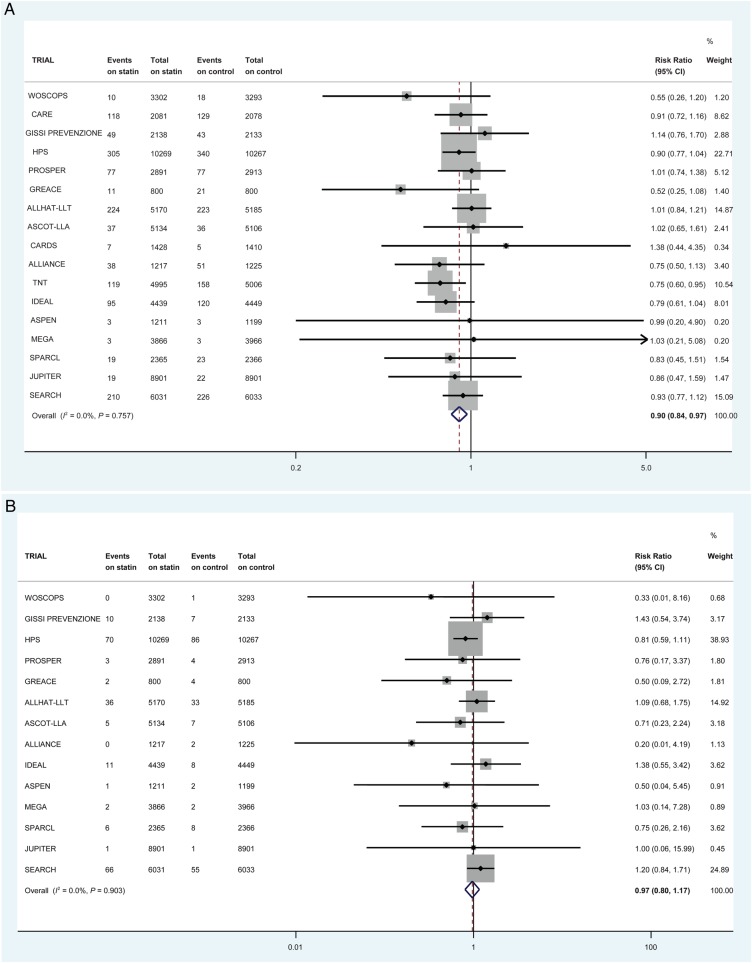
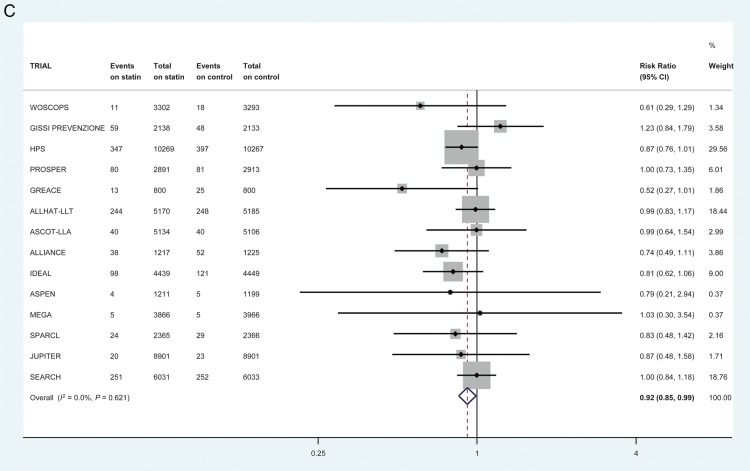
AIMS: The effect of statins on risk of heart failure (HF) hospitalization and HF death remains uncertain. We aimed to establish whether statins reduce major HF events. METHODS AND RESULTS: We searched Medline, EMBASE, and the Cochrane Central Register of Controlled Trials for randomized controlled endpoint statin trials from 1994 to 2014. Collaborating trialists provided unpublished data from adverse event reports. We included primary- and secondary-prevention statin trials with >1000 participants followed for >1 year. Outcomes consisted of first non-fatal HF hospitalization, HF death and a composite of first non-fatal HF hospitalization or HF death. HF events occurring <30 days after within-trial myocardial infarction (MI) were excluded. We calculated risk ratios (RR) with fixed-effects meta-analyses. In up to 17 trials with 132 538 participants conducted over 4.3 [weighted standard deviation (SD) 1.4] years, statin therapy reduced LDL-cholesterol by 0.97 mmol/L (weighted SD 0.38 mmol/L). Statins reduced the numbers of patients experiencing non-fatal HF hospitalization (1344/66 238 vs. 1498/66 330; RR 0.90, 95% confidence interval, CI 0.84-0.97) and the composite HF outcome (1234/57 734 vs. 1344/57 836; RR 0.92, 95% CI 0.85-0.99) but not HF death (213/57 734 vs. 220/57 836; RR 0.97, 95% CI 0.80-1.17). The effect of statins on first non-fatal HF hospitalization was similar whether this was preceded by MI (RR 0.87, 95% CI 0.68-1.11) or not (RR 0.91, 95% CI 0.84-0.98). CONCLUSION: In primary- and secondary-prevention trials, statins modestly reduced the risks of non-fatal HF hospitalization and a composite of non-fatal HF hospitalization and HF death with no demonstrable difference in risk reduction between those who suffered an MI or not.
Overview
The claims and statistics of this paper haven’t been checked yet.
Free: it reads the open-access text and checks the first 5 claims that cite a source we can check. Create a free account to check every claim.
Integrity signals
Registry
Cites
Statistics
Figures
Verification
Claims the paper makes
The claims and statistics of this paper haven’t been checked yet.
Free: it reads the open-access text and checks the first 5 claims that cite a source we can check. Create a free account to check every claim.
Claims other papers make about this one
Each is checked against this paper’s own text: does it say what the citing paper says it does?
In the citing paper
“Patients at higher atherothrombotic risk [as assessed by the TIMI (Thrombolysis In Myocardial Infarction) risk score for secondary prevention] benefitted the most from the addition of ezetimibe [448].”
From 2019 ESC/EAS guidelines for the management of dyslipidaemias: lipid modification to reduce cardiovascular risk (2019) · cites this paper as [448]
Self-check
Percentages, sums and reported differences re-computed from the paper’s own numbers.
The self-check needs the paper’s full text.
Citations
Cites
Preferred Reporting Items for Systematic Reviews and Meta-Analyses: the PRISMA statement
Moher, D., Liberati, A., Tetzlaff, J., Altman, D. G., & for the PRISMA Group (2009) · BMJ · doi:10.1136/bmj.b2535 · Cited by 83,823
Measuring inconsistency in meta-analyses
Higgins, J. P. T., Thompson, S. G., Deeks, J. J., & Altman, D. G. (2003) · BMJ · doi:10.1136/bmj.327.7414.557 · Cited by 63,139 · cited 1×
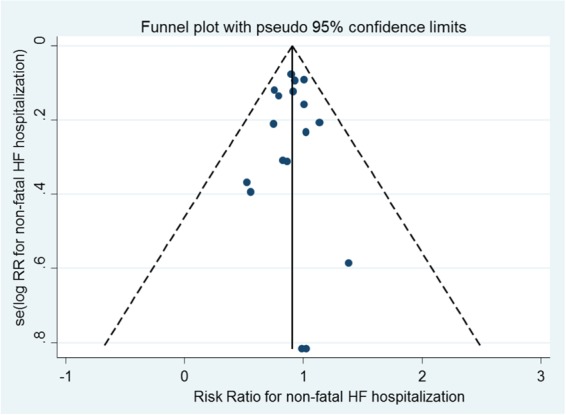
“We assessed the potential for publication bias through formal statistical testing, namely funnel plots and Egger tests.(32) To evaluate potential relationships of the effects of statins on non-fatal MI and LDL-cholesterol reductions, respectively, with occurrence of HF events, meta-regression analyses were performed.”
MethodPreferred reporting items for systematic reviews and meta-analyses: the PRISMA Statement.
(2009) · PubMed Central · Cited by 44,859
Assessing the quality of reports of randomized clinical trials: Is blinding necessary?
Jadad, A. R., Moore, R. A., Carroll, D., Jenkinson, C., Reynolds, D. J. M., Gavaghan, D. J., & McQuay, H. J. (1996) · Controlled Clinical Trials · doi:10.1016/0197-2456(95)00134-4 · Cited by 17,582 · cited 1×
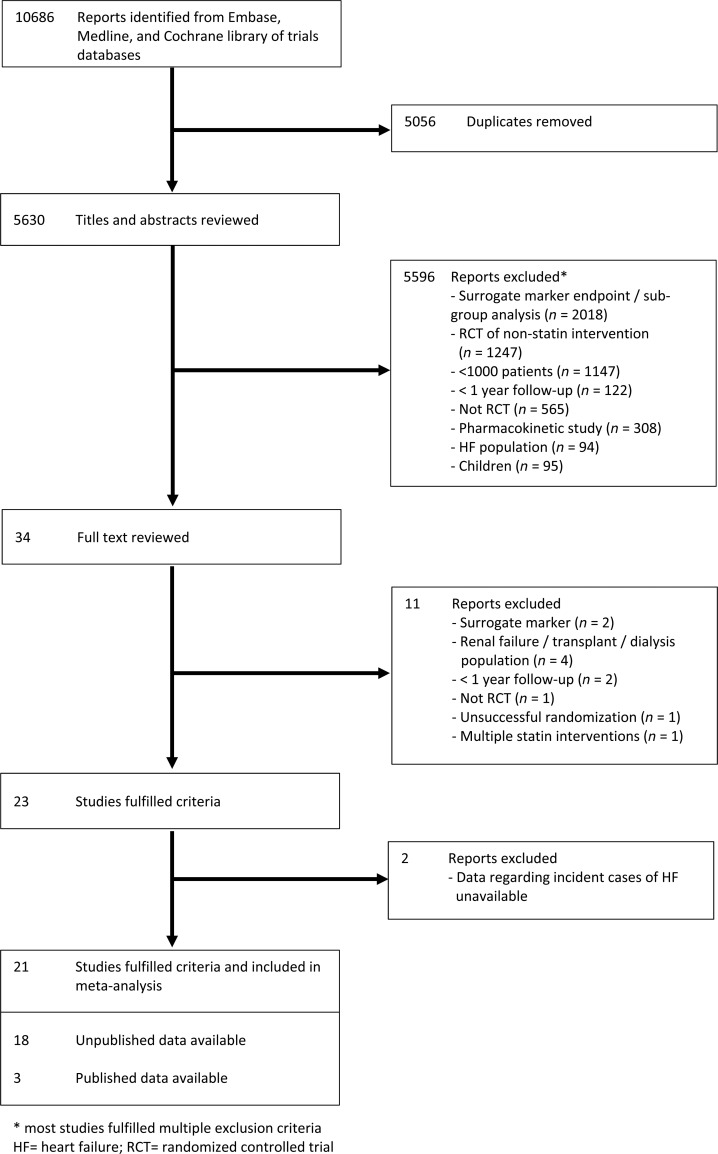
“An assessment of study design and quality for each trial was made using the Jadad score.(13) Our search strategy identified 23potentially suitable trials for which unpublished data were sought (Figure 1).”
MethodZhang, Q., Wang, C., Zheng, M., Li, Y., Li, J., Zhang, L., Shang, X., & Yan, C. (2015) · Cerebrovascular Diseases · doi:10.1159/000369778 · Cited by 11,533
OLSSON, A. G., McMurray, J. J. V., Thorgeirsson, G., Spaulding, C. M., Slattery, J., Pyörälà, K., Færgeman, O., Wright, R. S., Berg, K. M., Wilhelmsen, L., et al. (1994) · The Lancet · Cited by 8,467
Self-citationPrevention of Coronary Heart Disease with Pravastatin in Men with Hypercholesterolemia
Shepherd, J., Cobbe, S. M., Ford, I., Isles, C. G., Lorimer, A. R., Macfarlane, P. W., McKillop, J. H., & Packard, C. J. (1995) · New England Journal of Medicine · doi:10.1056/nejm199511163332001 · Cited by 7,449
Self-citationSacks, F. M., Pfeffer, M. A., Moye, L. A., Rouleau, J. L., Rutherford, J. D., Cole, T. G., Brown, L., Warnica, J. W., Arnold, J. M. O., Wun, C.-C., et al. (1996) · New England Journal of Medicine · doi:10.1056/nejm199610033351401 · Cited by 7,439
Self-citationRosuvastatin to Prevent Vascular Events in Men and Women with Elevated C-Reactive Protein
Ridker, P. M., Danielson, E., Fonseca, F. A. H., Genest, J., Gotto, A. M., Kastelein, J. J. P., Koenig, W., Libby, P., Lorenzatti, A. J., MacFadyen, J. G., et al. (2008) · New England Journal of Medicine · doi:10.1056/nejmoa0807646 · Cited by 6,674
Self-citation
Cited by
Items 101–163 of 163
Abdel-Qadir, H. M., Nolan, M. T., & Thavendiranathan, P. (2016) · Canadian Journal of Cardiology · doi:10.1016/j.cjca.2016.04.010 · Cited by 10
PCSK9 inhibition in patients with heart failure: neutral or harmful intervention?
Niessner, A., & Drexel, H. (2021) · European Heart Journal · doi:10.1093/eurheartj/ehab913 · Cited by 9
Giustino, G., Colantonio, L. D., Brown, T. M., Carson, A. P., Dai, Y., Farkouh, M. E., Monda, K. L., Muntner, P., & Rosenson, R. S. (2018) · Cardiovascular Drugs and Therapy · doi:10.1007/s10557-018-6816-8 · Cited by 7
Fröhlich, H., Raman, N., Täger, T., Schellberg, D., Goode, K. M., Kazmi, S., Grundtvig, M., Hole, T., Cleland, J. G. F., Katus, H. A., et al. (2017) · International Journal of Cardiology · doi:10.1016/j.ijcard.2017.03.028 · Cited by 7
“Treatment with statins in patients with CHF has been associated with reduced hospital admissions and mortality in several non-randomized studies (25, 28-31), post-hoc analyses (32, 33) and meta-analyses of randomized trials (34-36).”
BackgroundIto, Y., Maejima, Y., Tamura, N., Shiheido‐Watanabe, Y., Konishi, M., Ashikaga, T., Hirao, K., & Isobe, M. (2018) · FEBS Open Bio · doi:10.1002/2211-5463.12416 · Cited by 7
Zvizdi, F., Godinjak, A., Durak-Nalbantić, A., Rama, A., Iglica, A., Vučijak-Grgurević, M., & Sokolović, Š. (2018) · Medical Archives · doi:10.5455/medarh.2018.72.401-405 · Cited by 7
“In a large meta- analysis by Preiss et al, statin use showed a significant reduction in non-fatal MI and a significant but modest reduction in HF hospitalizations (14).”
MethodAre statins failing in heart failure?: Figure 1
KJEKSHUS, J. K. (2015) · European Heart Journal · doi:10.1093/eurheartj/ehv133 · Cited by 7
“examined the statin effects on the risk of HF hospitalization and HF death by analysing all primary and secondary randomized controlled trials with statins between 1994 and 2014 in a standardized fashion.(10) Seventeen trials with 132 568 patients, virtually all without HF at”
BackgroundLipophilic Statins and Aldosterone Secretion: A Bridge Too Far?
Andersson, C., & Vasan, R. S. (2015) · Circulation · doi:10.1161/circulationaha.115.019130 · Cited by 8
Are gliflozins the new statins for diabetes?
Giugliano, D., Maiorino, M. I., Longo, M., & Esposito, K. (2019) · Diabetes Research and Clinical Practice · doi:10.1016/j.diabres.2019.04.014 · Cited by 6
Piepoli, M. F., Rosano, G. M. C., Abreu, A., Adamo, M., Attanasio, A., Chioncel, O., Solal, A. C., Filippatos, G., Gerdts, E., Gevaert, A. B., et al. (2023) · European Heart Journal · doi:10.1093/eurheartj/ehag362 · Cited by 7
Huang, Q., Qiu, W., Chen, C., Wang, J., Ou, Y., & Feng, Y. (2025) · Journal of the American Heart Association · doi:10.1161/jaha.124.040039 · Cited by 5
“5 Beyond conventional lipid measures, emerging evidence points to remnant cholesterol (RC), which consists of chylomicrons, very- low-density lipoproteins, and intermediate-density lipoproteins, indicating the triglyceride-rich lipoproteins’ cholesterol content, 6 as a pivotal player in the…”
Hopper, I., Marwick, T. H., Wolfe, R. S., Amerena, J. V., Curtis, A. J., Freedman, B., GREEN, D. J., Kaye, D. M., Kolomoisky, A., McNeil, J. J., et al. (2025) · American Heart Journal · doi:10.1016/j.ahj.2025.06.004 · Cited by 5
Liu, C., Hui, Q., Wells, Q. S., Farber‐Eger, E. H., Gaziano, J. M., Wilson, P. W. F., Quyyumi, A. A., Vaccarino, V., Hu, Y., Benkeser, D. C., et al. (2024) · Genes · doi:10.3390/genes15091126 · Cited by 5
“It has been shown that intensive blood pressure lowering can effectively prevent HF [10], and similarly, statin therapy has been shown to be effective in reducing the risk of nonfatal HF hospitalization [11].”
BackgroundChrysohoou, C. A., & Tsioufis, K. P. (2024) · Archives of Medical Science · doi:10.5114/aoms/190351 · Cited by 5
“…management in HF patients takes a modest position among all therapeutic tools, as a class III recommendation, which means that lipid-lowering therapy (LLT) initiation is not recommended in the absence of other indications (which in fact refers to only about 30% of all HF patients) [2, 3, 6–9].”
BackgroundResultZhu, Y., Wang, Y., Cui, Z., Liu, F., Hu, C., & Hu, J. (2024) · Cell Reports · doi:10.1016/j.celrep.2024.114735 · Cited by 5
Ferket, B. S., Hunink, M. G. M., Masharani, U. B., Max, W. B., Yeboah, J., & Fleischmann, K. E. (2025) · Journal of the American Heart Association · doi:10.1161/jaha.124.041543 · Cited by 5
Statin Lipophilicity and the Risk of Incident Heart Failure
Imran, T. F., Wong, A., Schneeweiß, S., & Desai, R. J. (2020) · Cardiology · doi:10.1159/000506003 · Cited by 5
Riluzole is associated with reduced risk of heart failure
Kim, K., Kim, S., Katana, M., Terentyev, D. A., Radwański, P., & Munger, M. A. (2025) · European Journal of Neurology · doi:10.1111/ene.70033 · Cited by 5
Research advances in protein prenylation in cardiovascular diseases
Shi, W., Chen, Y., Zhang, X., Lou, L., Wang, P., Jiang, R., Liu, S., Sok, T., Zhang, Q., Guo, X., et al. (2025) · European Journal of Pharmacology · doi:10.1016/j.ejphar.2025.178093 · Cited by 4
Gómez-García, D. M., Barragán, L. B., & García‐Perdomo, H. A. (2023) · REC CardioClinics · doi:10.1016/j.rccl.2023.09.008 · Cited by 5
Taimeh, Z. A., Duprez, D. A., & Garry, D. J. (2017) · Springer eBooks · doi:10.1007/978-3-319-44577-9_18 · Cited by 4
Lian, Z., Song, J.-X., Yu, S., Su, L., Cui, Y.-X., Li, S., Lee, C.-Y., Liang, H., & Chen, H. (2021) · European Journal of Pharmacology · doi:10.1016/j.ejphar.2021.173888 · Cited by 4
Barman, H. A., Tanyolaç, S., Doğan, Ö. T., Bal, E., Atıcı, A., Özyıldırım, S., & Yiğit, Z. (2022) · Clinical Drug Investigation · doi:10.1007/s40261-022-01161-7 · Cited by 4
“Statins commonly used in the treatment of dyslipidemia have been shown to reduce adverse events associated with HF in primary and secondary prevention studies on patients with HF with and without coronary artery disease [5].”
BackgroundATORVASTATIN — 20 YEARS IN THE STRUGGLE FOR LIFE
Гоголашвили, Н. Г. (2018) · Russian Journal of Cardiology · doi:10.15829/1560-4071-2018-2-134-149 · Cited by 5
Can Carbohydrate Antigen-125 Be a New Biomarker to Guide Heart Failure Treatment?
D’Aloia, A., Vizzardi, E., & Metra, M. (2016) · JACC Heart Failure · doi:10.1016/j.jchf.2016.09.001 · Cited by 4
Liu, X., Zhang, J., Zhou, W., Liu, J., & Wang, Y. (2023) · Cellular and Molecular Biology · doi:10.14715/cmb/2023.69.2.18 · Cited by 4
Time course of remnant cholesterol and the risk of heart failure
Liu, X., Zhang, Y., Tian, X., Xu, Q., Xia, X., Chen, S., Liu, F., Wu, S., & Wang, A. (2024) · Endocrine · doi:10.1007/s12020-024-04028-3 · Cited by 3
“However, even with the recommended LDL-C target or elevated HDL-C levels, there was a substantial residual risk of HF [10, 11].”
Isnard, R., Hammoudi, N., Legrand, L., & Pousset, F. (2017) · La Presse Médicale · doi:10.1016/j.lpm.2017.07.003 · Cited by 3
Sud, M. K., Chu, A., Austin, P. C., Naimark, D. M. J., Thanassoulis, G., Wijeysundera, H. C., & Ko, D. T. (2022) · European Heart Journal - Quality of Care and Clinical Outcomes · doi:10.1093/ehjqcco/qcac044 · Cited by 3
Strand, L. N., Young, R. L., Bertoni, A. G., Bluemke, D. A., Burke, G. L., Lima, J. A. C., Sotoodehnia, N., Psaty, B. M., McClelland, R. L., Heckbert, S. R., et al. (2018) · Pharmacoepidemiology and Drug Safety · doi:10.1002/pds.4389 · Cited by 3
“17).(4) The mechanism of the beneficial effect of statins on stroke outcomes is still being elucidated.”
The long and unfinished journey of hyperglycaemia and heart failure research
Rahimi, K. (2016) · Heart · doi:10.1136/heartjnl-2016-310336 · Cited by 3
Self-citationAthyros, V. G., Imprialos, K. P., Doumas, M. N., & Karagiannis, A. I. (2016) · Clinical Lipidology · doi:10.1080/17584299.2016.1230316 · Cited by 3
Self-citationSánchez‐Viñas, A., Wu, R., Aznar-Lou, I., Mihaylova, B., & Rubio-Valera, M. (2026) · PharmacoEconomics · doi:10.1007/s40273-026-01597-1 · Cited by 2
“The model simulates the effects of treatments on the risk of major cardiovascular events and mortality, using relative risks derived from meta-analyses of randomised controlled trials, as detailed in Supplementary Table ST5 [26–31].”
Dyslipidaemias in cancer patients
Nazir, M. S., Cegla, J., Andrés, M. S., Ray, K. K., & Lyon, A. R. (2026) · European Heart Journal · doi:10.1093/eurheartj/ehag265 · Cited by 2
Self-citationTribulations of Recent Cardiology Trials, the Audacity of Hope, and HOPE-3
Waters, D. D., & Chau, K. H.-Y. (2015) · Canadian Journal of Cardiology · doi:10.1016/j.cjca.2015.08.020 · Cited by 2
Self-citationLipid association of India (LAI) expert consensus statement: part 2, specific patient categories
Athyros, V. G., Katsiki, N., & Doumas, M. N. (2017) · Clinical Lipidology · doi:10.1080/17584299.2017.1411068 · Cited by 2
Self-citationManagement of dyslipidemia in special groups
Jayagopal, P. B., & Kerkar, P. G. (2024) · Indian Heart Journal · doi:10.1016/j.ihj.2024.01.018 · Cited by 1
Modern Understanding in the Causes and Prevention of Heart Failure
Zeng, Q., Zhan, Q., Jiang, S., & Xu, D. (2025) · Cardiology Discovery · doi:10.1097/cd9.0000000000000178 · Cited by 1
Management of dyslipidaemia in patients with comorbidities—facing the challenge: heart failure
Drexel, H., Frick, M., Zirlik, A., Niessner, A., Huber, K., Tamargo, J., Dobrev, D., MADER, A., & Agewall, S. (2026) · European Heart Journal - Cardiovascular Pharmacotherapy · doi:10.1093/ehjcvp/pvag033 · Cited by 1
“74,75 In contrast to possible benefits of statin therapy in pre-existing HF, in a meta-analysis based on 17 statin trials including over 132 000 patients, Preiss et al. 76 looked at the incidence of HF in statin trials targeting CAD.”
InfluentialRole of ACE Inhibitors and Angiotensin Receptor Blockers in Peripheral Artery Disease
Nandave, M. (2024) · Springer eBooks · doi:10.1007/978-981-97-7380-0_8 · Cited by 1
Schirmer, B., & Schuler, J. (2025) · Springer eBooks · doi:10.1007/978-3-662-70594-0_11 · Cited by 1
The Call for Precision Health Trials in Older Adults
Robinson, J. G., & Hernandez, A. F. (2018) · Journal of the American College of Cardiology · doi:10.1016/j.jacc.2018.03.503 · Cited by 1
Statins in Cardio-oncology: Holy Grail or Epiphenomenon
Davis, M. K., & Virani, S. (2018) · Canadian Journal of Cardiology · doi:10.1016/j.cjca.2018.12.026 · Cited by 1
Statin therapy for heart failure: to prescribe or not?
Huang, X., & Zhao, S. (2015) · PubMed · doi:10.3978/j.issn.2072-1439.2015.10.49
Imaging, prevention, and rehabilitation
Lüscher, T. F. (2015) · European Heart Journal · doi:10.1093/eurheartj/ehv180
Won, J., Hong, Y. J., Jeong, M. H., Park, H., Kim, M. C., Kim, W. J., Kim, H. K., Sim, D. S., Kim, J. H., Ahn, Y., et al. (2016) · Chonnam Medical Journal · doi:10.4068/cmj.2016.52.2.128
“A meta-analysis also found that statin therapy significantly decreases the rate of hospitalization for worsening HF and increased left ventricular ejection fraction, though it does not decrease all-cause or cardiovascular mortality compared with placebo.(23) Statin therapies for hypercholesterolemia and primary and se…”
BackgroundStatins Impede a Healthy Lifestyle
Wenderlein, J. M. (2016) · Deutsches Ärzteblatt international · doi:10.3238/arztebl.2016.0344c
Levenson, R. (2015) · British Journal of Hospital Medicine · doi:10.12968/hmed.2015.76.4.188
Cardiac Remodeling: The Course Towards Heart Failure-II. Diagnostic and Therapeutic Approaches
Cokkinos, D. V. (2019) · Springer eBooks · doi:10.1007/978-3-319-98186-4_13
Outcomes in patients with heart failure with regard to statin therapy
Godinjak, A., Đešević, M., Iglica, A., & Kukuljac, A. (2019) · Cardiologia Croatica · doi:10.15836/ccar2019.222
Reducing Bias in Public Health Guidelines
Chartres, N. (2019) · The Sydney eScholarship Repository (The University of Sydney)
Gorb, Y. G., Strona, V. I., & Komir, I. (2020) · Ukraïnsʹkij žurnal medicini bìologìï ta sportu · doi:10.26693/jmbs05.02.018
Prevention and Treatment of the Troubles of the Elderly
Libertini, G., Corbi, G., Conti, V., Shubernetskaya, O. S., & Ferrara, N. (2021) · Advances in studies of aging and health · doi:10.1007/978-3-030-73774-0_8
Schirmer, B., & Schuler, J. (2022) · Springer eBooks · doi:10.1007/978-3-662-66303-5_11
Ancillary pharmacological treatment options
Agewall, S., Gelder, I. C. V., & Savelieva, I. (2023) · Oxford University Press eBooks · doi:10.1093/med/9780198891628.003.0051
Schirmer, B., & Schuler, J. (2023) · Springer eBooks · doi:10.1007/978-3-662-68371-2_11
A RETROSPECTIVE COHORT STUDY STATIN LIPOPHILICITY AND THE RISK OF DEVELOPING HEART FAILURE
Singh, B. K. (2024) · Student s Journal of Health Research Africa · doi:10.51168/sjhrafrica.v5i12.1472
Vuori, M. A., Reinikainen, J., Söderberg, S., Bergdahl, E., Jousilahti, P., Tunstall-Pedoe, H., Zeller, T., Westermann, D., Sans, S., Linneberg, A., et al. (2021) · Figshare · doi:10.6084/m9.figshare.16696264
Schirmer, B., & Schuler, J. C. (2026) · Springer eBooks · doi:10.1007/978-3-662-72738-6_11
Sud, M. K. (2023) · TSpace (University of Toronto)
Cholesterol-lowering and heart failure
Katzmann, J. L., Abdelhamid, M., & Laufs, U. (2026) · European Journal of Heart Failure · doi:10.1093/ejhf/xuag185
Đuzel, A., Rotkvić, P. G., Babić, Z., Šipoš, I. H., Bekić, M., Bratičević, M. N., Rotkvić, L., & Berković, M. C. (2026) · Medicina · doi:10.3390/medicina62071402
“In light of their pleiotropic action, observational clinical studies additionally suggest that statin use may reduce mortality risk in patients with HFpEF, whereas comparable benefits have not been consistently observed in HFrEF [184–189].”
Drug Therapies and Incident Heart Failure in Atrial Fibrillation: A Systematic Review
Zobdeh, A., Peterson, G. M., Bezabhe, W. M. M., Shastri, P., & Hoyle, D. J. (2026) · Journal of Clinical Medicine · doi:10.3390/jcm15208118
“Randomized data from populations outside AF are consistent with a modest reduction in HF events with statin therapy [91]; nonetheless, whether statins confer an additional benefit in AF specifically, independent of cholesterol level and prior atherosclerotic disease, cannot be resolved from these…”
Metadata
- Authors
- Preiss, D., Campbell, R. T., Murray, H. M., Ford, I., Packard, C. J., Sattar, N., Rahimi, K., Colhoun, H. M., Waters, D. D., LaRosa, J. C., Amarenco, P., Pedersen, T. R., Tikkanen, M. J., Koren, M. J., Poulter, N. R., Sever, P. S., Ridker, P. M., MacFadyen, J. G., Solomon, S. D., Davis, B. R., Simpson, L. M., Nakamura, H., Mizuno, K., Marfisi, R. M., Marchioli, R., Tognoni, G., Athyros, V. G., Ray, K. K., Gotto, A. M., Clearfield, M. B., Downs, J. R., & McMurray, J. J.
- Affiliations
- University of Glasgow (GB)
- Western Infirmary (GB)
- The George Institute for Global Health (GB)
- University of Dundee (GB)
- University of California, San Francisco (US)
- SUNY Downstate Health Sciences University (US)
- Hôpital Bichat-Claude-Bernard (FR)
- Oslo University Hospital (NO)
- University of Helsinki (FI)
- Jacksonville Center for Clinical Research (US)
- Imperial College London (GB)
- Brigham and Women's Hospital (US)
- Mitsukoshi Health and Welfare Foundation (JP)
- Nippon Medical School (JP)
- Mario Negri Sud Foundation (IT)
- Aristotle University of Thessaloniki (GR)
- Weill Cornell Medicine (US)
- Touro University California (US)
- The University of Texas at San Antonio Health Science Center (US)
- Corresponding author
- Preiss, David
- ORCID
- Preiss, David
- Campbell, Ross T.
- Ford, Ian
- Packard, Chris J.
- Sattar, Naveed
- Rahimi, Kazem
- Colhoun, Helen M.
- Waters, David D.
- Amarenco, Pierre
- Pedersen, Terje R.
- Koren, Michael J.
- Poulter, Neil R.
- Ridker, Paul M.
- Solomon, Scott D.
- Davis, Barry R.
- Mizuno, Kyoichi
- Athyros, Vasilios G.
- Ray, Kausik K.
- Gotto, Antonio M.
- McMurray, John J.
- Venue
- European Heart Journal
- Publisher
- Oxford University Press (OUP)
- Published
- 2015-03-23
- Volume
- 36
- Issue
- 24
- Pages
- 1536-1546
- ISSN
- 0195-668X (ISSN-L)
- 1522-9645
- PMC
- PMC4769322
- OpenAlex
- W2104553590
- Cited by
- 160
- References
- 51
- Citations by year
- 2026: 10 · 2025: 14 · 2024: 9 · 2023: 13 · 2022: 20 · 2021: 13 · 2020: 9 · 2019: 17 · 2018: 19 · 2017: 12 · 2016: 14 · 2015: 10
- FWCI
- 3.51
- Type
- journal article
- Language
- en
- Open access
- hybrid
- doi.org
- Licence
- cc-by
- Locations
- European Heart Journal (publishedVersion, cc-by)
- PubMed Central (publishedVersion, cc-by)
- PubMed (publishedVersion)
- Discovery Research Portal (University of Dundee) (publishedVersion)
- ENLIGHTEN (Jurnal Bimbingan dan Konseling Islam) (acceptedVersion)
- Research Bank (Australian Catholic University) (submittedVersion, cc-by)
- Touro Scholar (Touro College) (submittedVersion, cc-by)
- eScholarship (California Digital Library) (submittedVersion)
- Työväentutkimus Vuosikirja (submittedVersion)
- Spiral (Imperial College London) (submittedVersion, cc-by)
- Funders
- Pfizer
- National Institute for Health and Care Research (CDF-2013-06-012, NF-SI-0513-10059)
- British Heart Foundation (PG/13/17/30050)
- University of Glasgow
- Topics
- Health Sciences › Medicine › Cardiology and Cardiovascular Medicine › Lipoproteins and Cardiovascular Health
- Health Sciences › Medicine › Cardiology and Cardiovascular Medicine › Heart Failure Treatment and Management
- Life Sciences › Biochemistry, Genetics and Molecular Biology › Cancer Research › Cancer, Lipids, and Metabolism
- Keywords
- statins, heart failure, heart failure hospitalization, heart failure mortality, LDL cholesterol lowering, primary prevention, secondary prevention, myocardial infarction, cardiovascular risk reduction, statin safety
- MeSH terms
- Female, Heart Failure, Humans, Male, Middle Aged, Myocardial Infarction, Risk Factors, Randomized Controlled Trials as Topic, Treatment Outcome, Hydroxymethylglutaryl-CoA Reductase Inhibitors, Secondary Prevention
About these checks
Registry, retraction, Cites and statistics results are computed, not judged, with one exception: a printed reference that no index lists is read once by a model before it counts as a citation error. Claims are extracted by a model and kept only when their quote appears verbatim in the text; each cited source is then checked, with a model’s help, for whether it says what the claim relies on. Those verdicts can be wrong — read the claim’s quote and the cited source before relying on one.
Statistics and arithmetic are recomputed, not judged.
Confidence bands are shown only for fields calibrated on our annotated test set. None is calibrated yet, so no band is shown.
What counts as a claim ›How we measure confidence ›How we check this ›
Are you an author, or do you see a problem with this page? Request a review
Data sources
Bibliographic data: Semantic Scholar, OpenAlex, Crossref.
Contains information from the Semantic Scholar Academic Graph Datasets, made available under the ODC Attribution License (ODC-BY 1.0).
Semantic Scholar’s data is described in: Kinney, R., et al. (2023). The Semantic Scholar Open Data Platform. arXiv:2301.10140.
