

Making development assistance work for Africa: from aid-dependent disease control to the new public health order
Open accessThe DOI matches its Crossref record; 24 of the 24 references it cites were found in a registry or an index.
Abstract
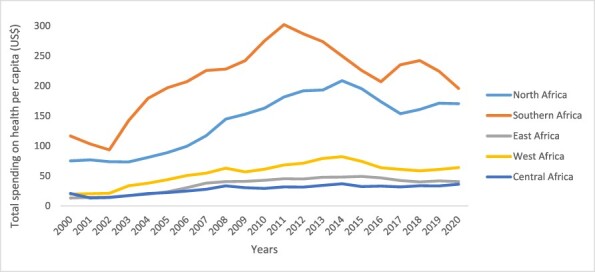
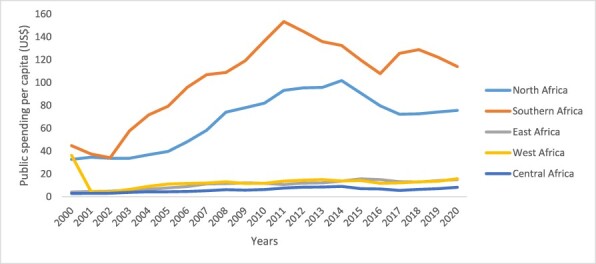
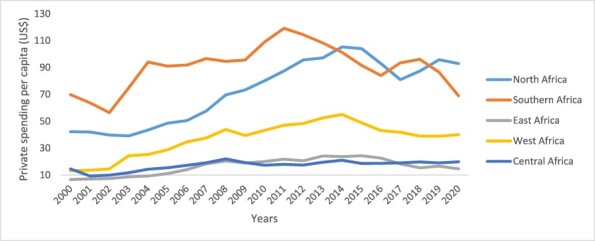
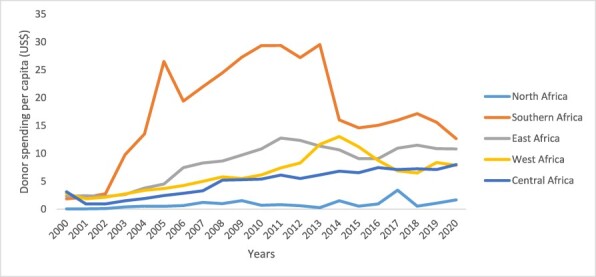
The Coronavirus disease (COVID-19) pandemic has revealed the fragility of pre-crisis African health systems, in which too little was invested over the past decades. Yet, development assistance for health (DAH) more than doubled between 2000 and 2020, raising questions about the role and effectiveness of DAH in triggering and sustaining health systems investments. This paper analyses the inter-regional variations and trends of DAH in Africa in relation to some key indicators of health system financing and service delivery performance, examining (1) the trends of DAH in the five regional economic communities of Africa since 2000; (2) the relationship between DAH spending and health system performance indicators and (3) the quantitative and qualitative dimensions of aid substitution for domestic financing, policy-making and accountability. Africa is diverse and the health financing picture has evolved differently in its subregions. DAH represents 10% of total spending in Africa in 2020, but DAH benefitted Southern Africa significantly more than other regions over the past two decades. Results in terms of progress towards universal health coverage (UHC) are slightly associated with DAH. Overall, DAH may also have substituted for public domestic funding and undermined the formation of sustainable UHC financing models. As the COVID-19 crisis hit, DAH did not increase at the country level. We conclude that the current architecture of official development assistance (ODA) is no longer fit for purpose. It requires urgent transformation to place countries at the centre of its use. Domestic financing of public health institutions should be at the core of African social contracts. We call for a deliberate reassessment of ODA modalities, repurposing DAH on what it could sustainably finance. Finally, we call for a new transparent framework to monitor DAH that captures its contribution to building institutions and systems.
Overview
The claims and statistics of this paper haven’t been checked yet.
Free: it reads the open-access text and checks the first 5 claims that cite a source we can check. Create a free account to check every claim.
Integrity signals
Registry
Cites
Statistics
Figures
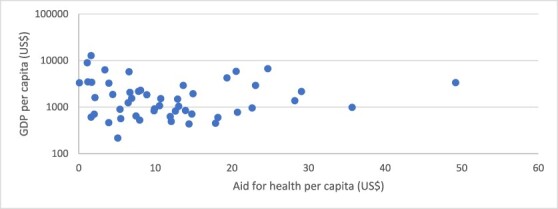
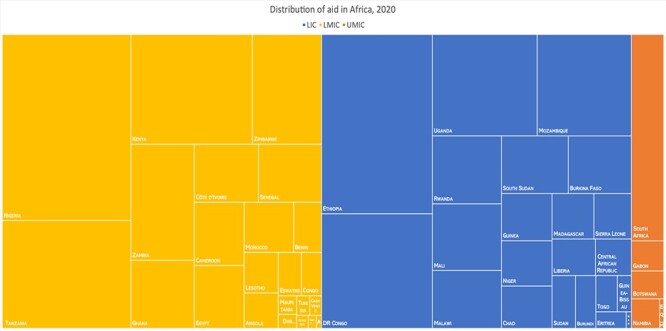
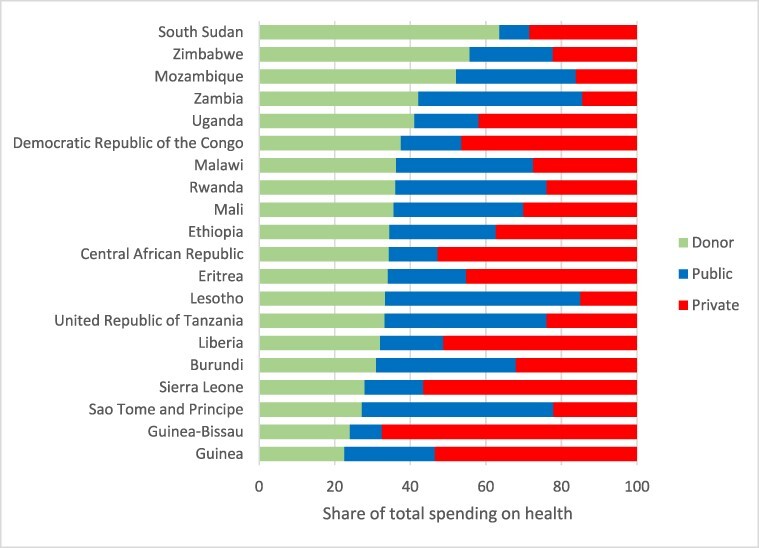
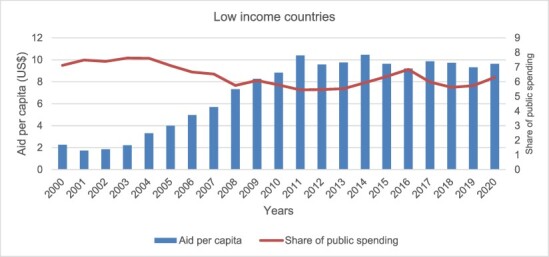
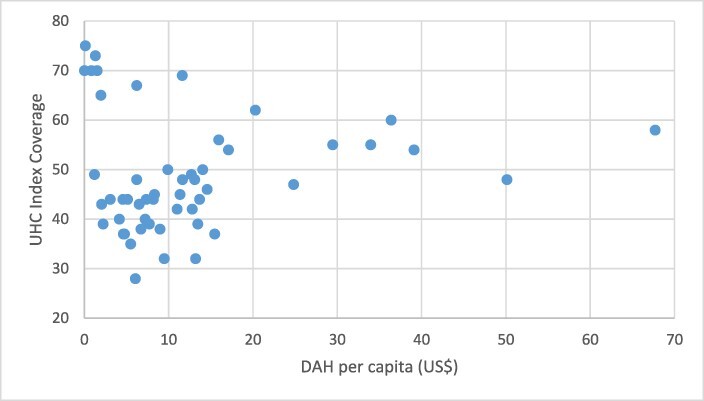
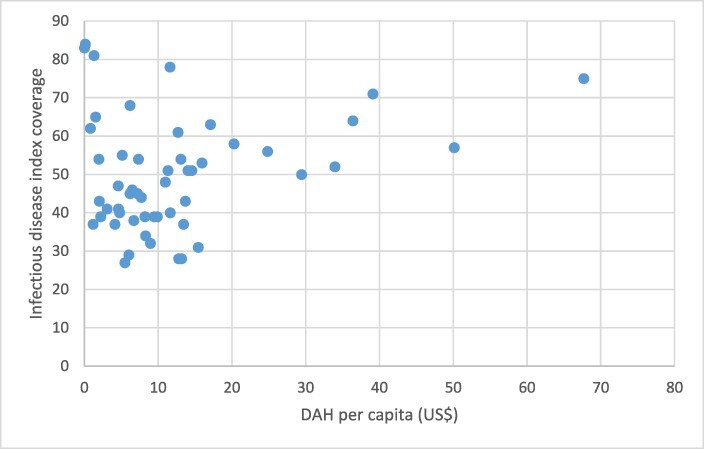
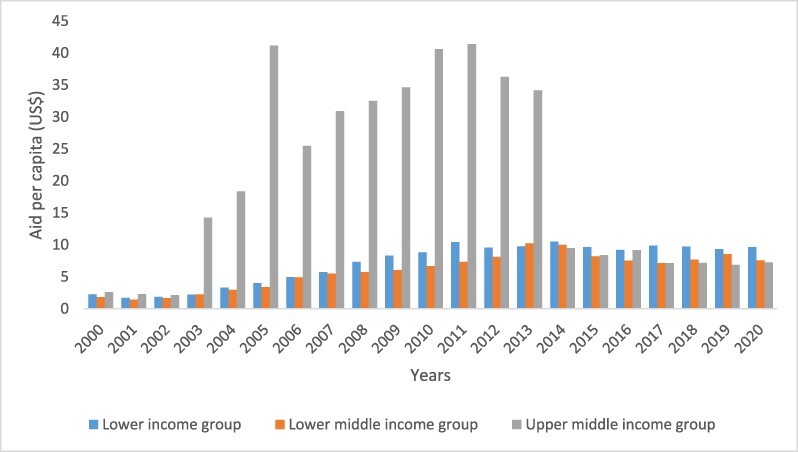
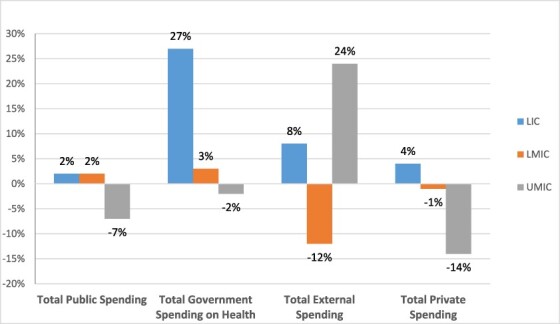
Verification
Claims the paper makes
The claims and statistics of this paper haven’t been checked yet.
Free: it reads the open-access text and checks the first 5 claims that cite a source we can check. Create a free account to check every claim.
Self-check
Percentages, sums and reported differences re-computed from the paper’s own numbers.
The self-check needs the paper’s full text.
Citations
Cites
Global health 2035: a world converging within a generation
Jamison, D. T., Summers, L. H., Alleyne, G., Arrow, K. J., Berkley, S., Binagwaho, A., Bustreo, F., Evans, D., Feachem, R. G. A., Frenk, J., et al. (2013) · The Lancet · doi:10.1016/s0140-6736(13)62105-4 · Cited by 1,220 · cited 1×
“Cost-effectiveness estimates inform selections of ‘best buy’ interventions for collective financing to achieve value for money, where value is defined as the avoided loss of life-years (Jamison et al. , 2013).”
BackgroundSelf-citation[Global health 2035: a world converging within a generation].
Jamison, D. T. T., Summers, L. H., Alleyne, G. A. O., Arrow, K. J., Berkley, S., Binagwaho, A., Bustreo, F., Evans, D., Feachem, R. G., Frenk, J. M., et al. (2015) · PubMed · Cited by 944
Self-citation(2014) · Choice Reviews Online · doi:10.5860/choice.51-6210 · Cited by 381
Tessema, G. A., Kinfu, Y., Dachew, B. A., Tesema, A. G., Assefa, Y., Alene, K. A., Aregay, A. F., Ayalew, M. B., Bezabhe, W. M., Bali, A. G., et al. (2021) · BMJ Global Health · doi:10.1136/bmjgh-2021-007179 · Cited by 271 · cited 1×
“…(Global Fund to Fight AIDS, Tuberculosis, and Malaria, 2007; Kenney and Glassman, 2019; Waithaka et al. , 2022), there were widespread fears and acknowledgements that African countries did not have health system capacities to effectively respond to the COVID-19 pandemic (Tessema et al. , 2021).”
BackgroundPublic spending on health: a closer look at global trends
Xu, K., Soucat, A. L. B., Kutzin, J., Brindley, C., Maele, N. V. D., Touré, H., Garcia, M. A., Li, D., Barroy, H., Flores, G., et al. (2019) · Cited by 155
Self-citationDoes Funding From Donors Displace Government Spending For Health In Developing Countries?
Farag, M., Nandakumar, A. K., Wallack, S. S., Gaumer, G., & Hodgkin, D. (2009) · Health Affairs · doi:10.1377/hlthaff.28.4.1045 · Cited by 114 · cited 1×
“By contrast, the literature shows that DAH partially substitutes for domestic government health spending (Farag et al. , 2009; Dieleman and Hanlon, 2014).”
ResultTomlinson, M., Chopra, M., Hoosain, N., & Rudan, I. (2011) · Health Research Policy and Systems · doi:10.1186/1478-4505-9-19 · Cited by 112 · cited 1×
“Such compacts and preferences constitute qualitative substitutions for stakeholder engagement in setting (Tomlinson et al. , 2011) country policy priorities that derive from domestic transactions and bargaining among interest groups of policymakers, elected officials, tech-nocrats, health service…”
Background(1957) · International Organization · doi:10.1017/s0020818300024115 · Cited by 91
MEASURING THE DISPLACEMENT AND REPLACEMENT OF GOVERNMENT HEALTH EXPENDITURE
Dieleman, J. L., & Hanlon, M. (2013) · Health Economics · doi:10.1002/hec.3016 · Cited by 73 · cited 1×
“By contrast, the literature shows that DAH partially substitutes for domestic government health spending (Farag et al. , 2009; Dieleman and Hanlon, 2014).”
ResultStrengthening accountability of the global health metrics enterprise
Shiffman, J., & Shawar, Y. R. (2020) · The Lancet · doi:10.1016/s0140-6736(20)30416-5 · Cited by 71 · cited 1×
“Finally, the global health enterprises that produce metrics of disease burden and cost-effectiveness are not accountable to governments of LICs and MICs (Shiffman and Shawar, 2020).”
BackgroundFinancing Common Goods for Health: Fundamental for Health, the Foundation for UHC
Soucat, A. L. B. (2019) · Health Systems & Reform · doi:10.1080/23288604.2019.1671125 · Cited by 61 · cited 2×
“• There is a clear economic rationale for intervention based on market failures, with a focus on (1) public goods (non-rival and non-exclusionary) or (2) large social externalities (Yazbeck and Soucat, 2019).”
BackgroundSelf-citationBenefit‐incidence analysis: are government health expenditures more pro‐rich than we think?
Wagstaff, A. R. (2011) · Health Economics · doi:10.1002/hec.1727 · Cited by 59 · cited 1×
“This rationale has been expanded to poorer countries to access more health funding, using a welfare economics-or rights-based approach, although evidence tends to show public financing and DAH benefit richer groups more (Yazbeck, 2009; Wagstaff, 2012).”
BackgroundWhen Both Markets and Governments Fail Health
Yazbeck, A. S., & Soucat, A. (2019) · Health Systems & Reform · doi:10.1080/23288604.2019.1660756 · Cited by 56 · cited 1×
“• There is a clear economic rationale for intervention based on market failures, with a focus on (1) public goods (non-rival and non-exclusionary) or (2) large social externalities (Yazbeck and Soucat, 2019).”
BackgroundSelf-citationCommon goods for health: economic rationale and tools for prioritization
Gaudin, S., Smith, P. C., Soucat, A., & Yazbeck, A. S. (2019) · Health Systems & Reform · doi:10.1080/23288604.2019.1656028 · Cited by 39 · cited 1×
“Global burden of disease estimates provide broad parameters to identify these unmet needs for technology-based interventions and policy measures, such as taxes, to curb the consumption of harmful products with negative externalities, a prime example of which is tobacco (Gaudin et al. , 2019).”
BackgroundSelf-citationWaithaka, D., Cashin, C., & Barasa, E. (2022) · Health Systems & Reform · doi:10.1080/23288604.2022.2068231 · Cited by 36 · cited 1×
“…WHO (World Health Organization, 2007) and global financiers (Global Fund to Fight AIDS, Tuberculosis, and Malaria, 2007; Kenney and Glassman, 2019; Waithaka et al. , 2022), there were widespread fears and acknowledgements that African countries did not have health system capacities to effectively…”
BackgroundSchäferhoff, M., Chodavadia, P., Martinez, S., McDade, K. K., Fewer, S., Silva, S., Jamison, D., & Yamey, G. (2019) · Health Systems & Reform · doi:10.1080/23288604.2019.1663646 · Cited by 32 · cited 1×
“The data are also consistent with those of Sch ̈ aferhoff et al. (2019), using the Creditor Reporting System and G-FINDER databases, which estimated DAH to be about US$7 billion for global common goods in 2017 in addition to spending at the country level and over-heads, bringing overall DAH…”
MethodDecision-making processes for essential packages of health services: experience from six countries
Baltussen, R. M. P. M., Mwalim, O., Blanchet, K., Carballo, M., Eregata, G. T., Hailu, A., Huda, M., Jama, M., Johansson, K. A., Reynolds, T. A., et al. (2023) · BMJ Global Health · doi:10.1136/bmjgh-2022-010704 · Cited by 31 · cited 1×
“…cover all other basic services, and substitutes a narrow emphasis on health technology assessment for a robust priority setting exercise that includes not only technical considerations but also socio-political transactions and bargaining among domestic interest groups (Baltussen et al. , 2023).”
BackgroundAttacking Inequality in the Health Sector
Yazbeck, A. S. (2009) · World Bank, Washington, DC eBooks · doi:10.1596/978-0-8213-7444-3 · Cited by 31 · cited 1×
“This rationale has been expanded to poorer countries to access more health funding, using a welfare economics-or rights-based approach, although evidence tends to show public financing and DAH benefit richer groups more (Yazbeck, 2009; Wagstaff, 2012).”
BackgroundGlobal Common Goods for Health: Towards a New Framework for Global Financing
Soucat, A. L. B., & Kickbusch, I. (2020) · Global Policy · doi:10.1111/1758-5899.12875 · Cited by 30
Self-citationLy, C., Eozenou, P., Nandakumar, A. K., Pablos-Méndez, A., Evans, T., & Adeyi, O. (2017) · Health Systems & Reform · doi:10.1080/23288604.2017.1325549 · Cited by 22 · cited 1×
“Their exit from reliance on DAH for basic health services to funding those services exclusively from domestic resources, in what is often referred to as the economic transition of health, is fraught with risks of failure (Ly et al. , 2017; OECD, 2021).”
BackgroundSelf-citationMacroeconomic Determinants of Infant Mortality in WAEMU Countries: Evidence from Panel Data Analysis
Abbuy, K. E. (2018) · Applied Economics and Finance · doi:10.11114/aef.v5i6.3682 · Cited by 15 · cited 1×
“These benefits should, however, be considered in relation to other drivers of improvements in health such as female education, access to clean water and income growth (Abbuy, 2018).”
BackgroundMisguided charity: the bane of global health
Adeyi, O. (2023) · BMJ Global Health · doi:10.1136/bmjgh-2023-013322 · Cited by 5
Self-citationReal-World Dynamics of Development Assistance for Health
(2021) · World Scientific series in health investment and financing · doi:10.1142/9789811245961_0008 · Cited by 2
Fiscal Implications of the Deteriorating Global Economic Environment for EMDEs
World Bank Group (2022) · World Bank, Washington, DC eBooks · doi:10.1596/38129 · Cited by 2
Research works printed but not linked: 7
- Adeyi O. 2021. Opinion: global health, narcissistic charity, and neo-dependency. Development Today. https://www.development-today.com/archive/dt-2021/dt-9—2021/global-health-narcissistic-charity-and-neo-dependency, accessed 17 February 2023.
- Drake T, Regan L, Baker P. 2023. Reimagining global health financing: how refocusing health aid at the margin could strengthen health systems and futureproof aid financial flows. Policy Paper. Center for Global Development. https://www.cgdev.org/publication/reimagining-global-health-financing-how-refocusing-health-aid-margin-could-strengthen, accessed 28 February 2023.
- Financing the Global Commons for Pandemic Preparedness and Response. 2022. Financing the Global Commons for Pandemic Preparedness and Response. Retrieved from Financing the Global Commons for Pandemic Preparedness and Response. https://pandemic-financing.org/about-us/, accessed 23 February 2023.
- Global Fund to Fight AIDS, Tuberculosis, and Malaria. 2007. Global Fund Strategic Approach to Health-Systems Strengthening. Board Decisions. GF/B15/DP06. https://www.theglobalfund.org/kb/board-decisions/b15/b15-dp06/, accessed 27 February 2023.
- Institute of Health Metrics and Evaluation (IHME). 2022. Global Expected Health Spending 2019-2050, GHDx. https://ghdx.healthdata.org/record/ihme-data/global-expected-health-spending-2019-2050, accessed 27 February 2023.
- OECD. 2021. Financing transition in the health sector: what can development assistance committee members do? OECD Development Policy Paper No. 37, Paris: OECD.
- World Health Organization. 2019. Global spending on health: a world in transition. No. WHO/HIS/HGF/HFWorkingPaper/19.4. World Health Organization. License: CC BY-NC-SA 3.0 IGO.
Cited by
Global health 2050: the path to halving premature death by mid-century
Jamison, D. T., Summers, L. H., Chang, A. Y., Karlsson, O., Mao, W., Norheim, O. F., Ogbuoji, O., Schäferhoff, M., Watkins, D., Adeyi, O., et al. (2024) · The Lancet · doi:10.1016/s0140-6736(24)01439-9 · Cited by 125
Self-citationKinney, M. V., Kwesiga, D. K., Lawn, J. E., Walmisley, U., Kumar, M. B., Kiendrébéogo, J. A., Wanduru, P., Waiswa, P., Shamba, D., Baraka, J., et al. (2025) · Global Health Action · doi:10.1080/16549716.2025.2476820 · Cited by 9
“Amongst African Union countries in 2020, an estimated 10% of total health expenditure was from external financing and this varied between regions [2].”
Davis, A. L., Felker-Kantor, E., Ahmed, J., Jezman, Z., Kamaté, B., Munthali, J., Umulisa, N., & Yattara, O. (2024) · Global Health Science and Practice · doi:10.9745/ghsp-d-23-00509 · Cited by 9
Mhazo, A. T., & Maponga, C. C. (2024) · Health Policy and Planning · doi:10.1093/heapol/czae052 · Cited by 9
Global health partnerships for a post-2030 agenda
Puyvallée, A. D. B., Harman, S., Rushton, S., & Storeng, K. T. (2025) · The Lancet · doi:10.1016/s0140-6736(24)02816-2 · Cited by 8
Metadata
- Authors
- Nonvignon, J., Soucat, A., Ofori-Adu, P., & Adeyi, O.
- Affiliations
- University of Ghana (GH)
- Agence Francaise de Developpement , Paris, France
- Ghana Health Service (GH)
- Johns Hopkins University (US)
- Venue
- Health Policy and Planning
- Publisher
- Oxford University Press (OUP)
- Published
- 2024-01-01
- Volume
- 39
- Issue
- Supplement_1
- Pages
- i79-i92
- ISSN
- 0268-1080 (ISSN-L)
- 1460-2237
- PMC
- PMC10803194
- OpenAlex
- W4391116175
- Cited by
- 23
- References
- 24
- Citations by year
- 2026: 11 · 2025: 7 · 2024: 4
- FWCI
- 22.60
- Type
- journal article
- Language
- en
- Open access
- gold
- doi.org
- Licence
- Locations
- Health Policy and Planning (publishedVersion, cc-by-nc)
- PubMed Central (publishedVersion, cc-by-nc-sa)
- PubMed (publishedVersion)
- Topics
- Social Sciences › Development › International Development and Aid
- Health Sciences › Medicine › Public Health, Environmental and Occupational Health › Healthcare Systems and Reforms
- Social Sciences › Political Science and International Relations › Public health and occupational medicine
- Keywords
- development assistance for health, official development assistance, health care financing, domestic health financing, universal health coverage, health system performance, COVID-19 pandemic, health system fragility, health care delivery, African regional economic communities
- MeSH terms
- Africa, Humans, Public Health, Healthcare Financing
About these checks
Registry, retraction, Cites and statistics results are computed, not judged, with one exception: a printed reference that no index lists is read once by a model before it counts as a citation error. Claims are extracted by a model and kept only when their quote appears verbatim in the text; each cited source is then checked, with a model’s help, for whether it says what the claim relies on. Those verdicts can be wrong — read the claim’s quote and the cited source before relying on one.
Statistics and arithmetic are recomputed, not judged.
Confidence bands are shown only for fields calibrated on our annotated test set. None is calibrated yet, so no band is shown.
What counts as a claim ›How we measure confidence ›How we check this ›
Are you an author, or do you see a problem with this page? Request a review
Data sources
Bibliographic data: Semantic Scholar, OpenAlex, Crossref.
Contains information from the Semantic Scholar Academic Graph Datasets, made available under the ODC Attribution License (ODC-BY 1.0).
Semantic Scholar’s data is described in: Kinney, R., et al. (2023). The Semantic Scholar Open Data Platform. arXiv:2301.10140.
