

The impact of an mHealth monitoring system on health care utilization by mothers and children: an evaluation using routine health information in Rwanda
Open accessThe DOI matches its Crossref record; 18 of the 18 references it cites were found in a registry or an index.
Abstract
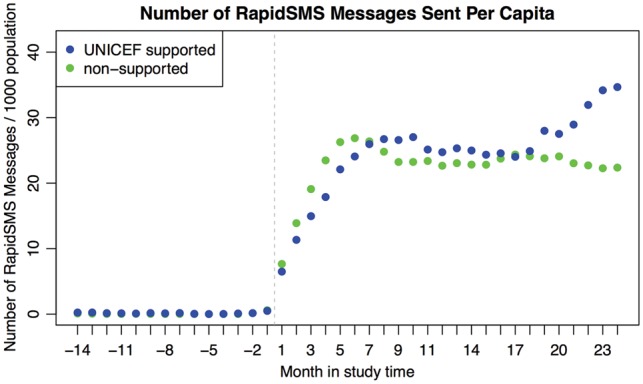
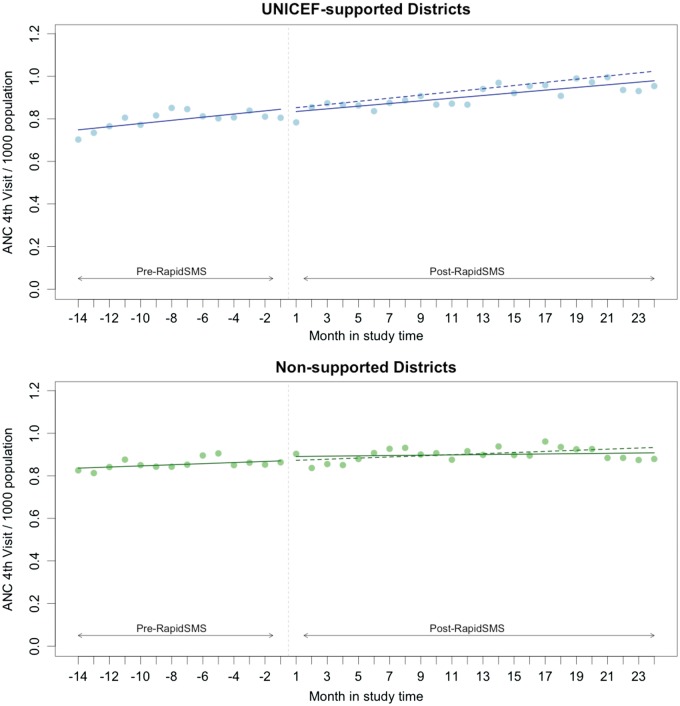
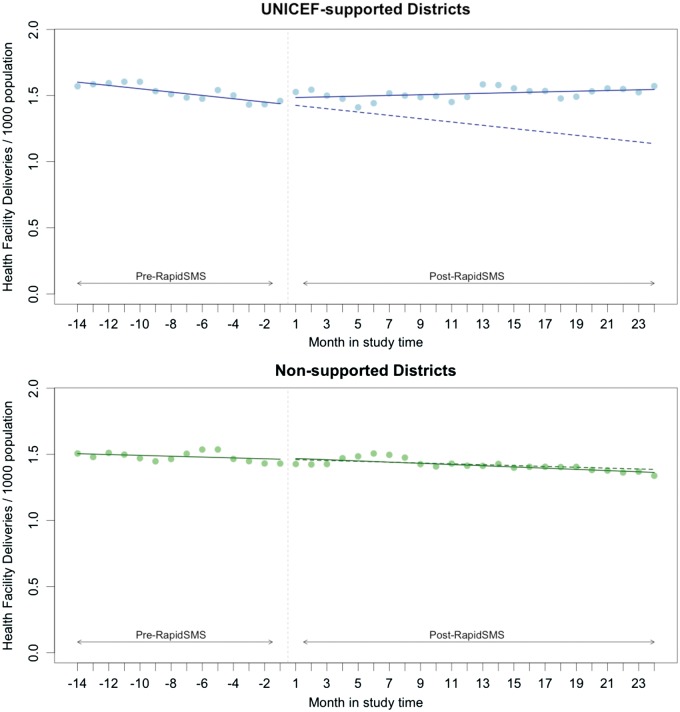
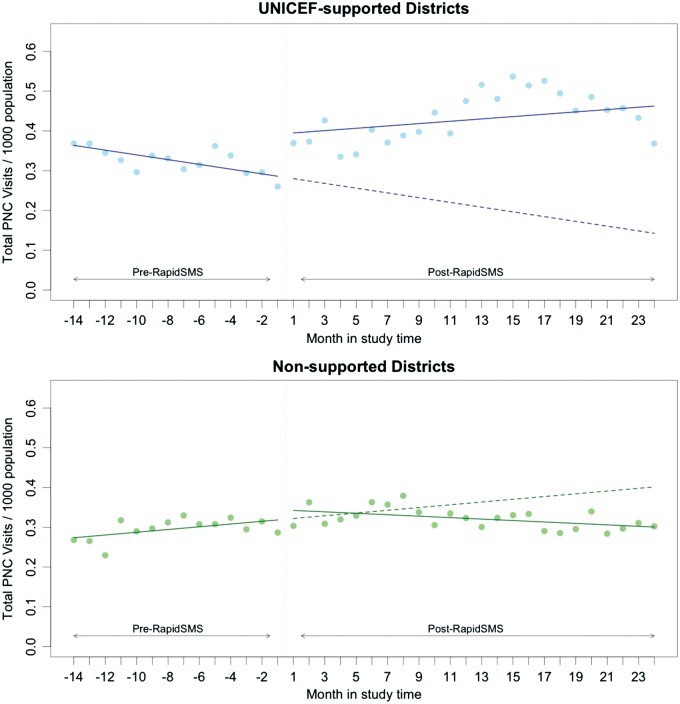
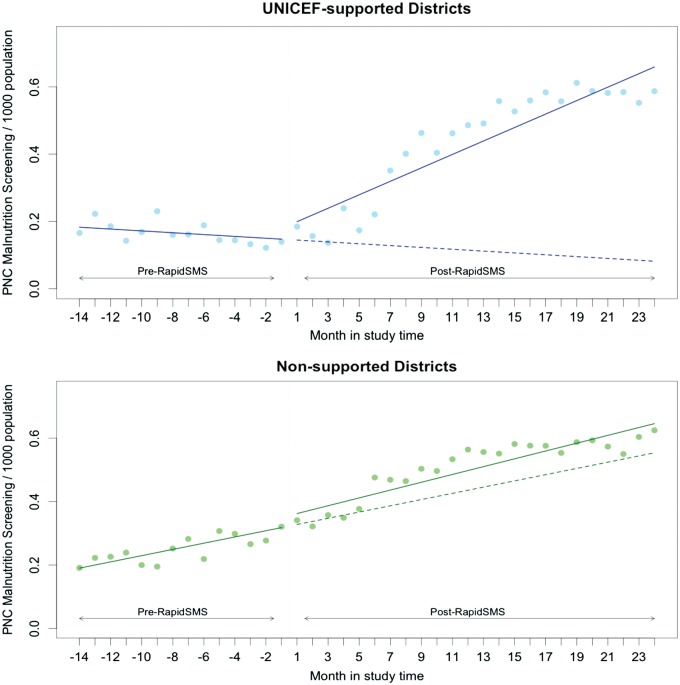
Maternal and child mortality rates remain unacceptably high globally, particularly in sub-Saharan Africa. A popular approach to counter these high rates is interventions delivered using mobile phones (mHealth). However, few mHealth interventions have been implemented nationwide and there has been little evaluation of their effectiveness, particularly at scale. Therefore, we evaluated the Rwanda RapidSMS programme-one of the few mHealth programmes in Africa that is currently operating nationwide. Using interrupted time series analysis and monthly data routinely reported by public health centres (n = 461) between 2012 and 2016, we studied the impact of RapidSMS on four indicators: completion of four antenatal care visits, deliveries in a health facility, postnatal care visits and malnutrition screening. We stratified all analyses based on whether the district received concurrent additional supports, including staff and equipment (10 out of 30 Districts). We found that community health workers in Rwanda sent more than 9.3 million messages using RapidSMS, suggesting the programme was successfully implemented. We found that the implementation of the RapidSMS system combined with additional support including training, supervision and equipment provision increased the use of maternal and child health services. In contrast, implementing the RapidSMS system alone was ineffective. This suggests that mHealth programmes alone may be insufficient to improve the use of health services. Instead, they should be considered as a part of more comprehensive interventions that provide the necessary equipment and health system capacity to support them.
Overview
The claims and statistics of this paper haven’t been checked yet.
Free: it reads the open-access text and checks the first 5 claims that cite a source we can check. Create a free account to check every claim.
Integrity signals
Registry
Cites
Statistics
Figures
Verification
Claims the paper makes
The claims and statistics of this paper haven’t been checked yet.
Free: it reads the open-access text and checks the first 5 claims that cite a source we can check. Create a free account to check every claim.
Self-check
Percentages, sums and reported differences re-computed from the paper’s own numbers.
The self-check needs the paper’s full text.
Citations
Cites
Segmented regression analysis of interrupted time series studies in medication use research
Wagner, A. K., Soumerai, S. B., Zhang, F., & Ross-Degnan, D. (2002) · Journal of Clinical Pharmacy and Therapeutics · doi:10.1046/j.1365-2710.2002.00430.x · Cited by 3,279
Lee, S. H., Nurmatov, U. B., Nwaru, B. I., Mukherjee, M., Grant, L., & Pagliari, C. (2016) · Journal of Global Health · doi:10.7189/jogh.06.010401 · Cited by 456
Mobile phones improve antenatal care attendance in Zanzibar: a cluster randomized controlled trial
Lund, S., Nielsen, B. B., Hemed, M., Boas, I. M., Said, A., Said, K., Makungu, M. H., & Rasch, V. (2014) · BMC Pregnancy and Childbirth · doi:10.1186/1471-2393-14-29 · Cited by 301
(2012) · PubMed Central · doi:10.11604/pamj.2012.13.31.1864 · Cited by 259
Zhang, F., Wagner, A. K., Soumerai, S. B., & Ross-Degnan, D. (2009) · Journal of Clinical Epidemiology · doi:10.1016/j.jclinepi.2008.08.007 · Cited by 247
Moscoe, E., Bor, J., & Bärnighausen, T. (2015) · Journal of Clinical Epidemiology · doi:10.1016/j.jclinepi.2014.06.021 · Cited by 234
Lund, S., Hemed, M., Nielsen, B., Said, A., Said, K., Makungu, M., & Rasch, V (2012) · BJOG: An International Journal of Obstetrics & Gynaecology · doi:10.1111/j.1471-0528.2012.03413.x · Cited by 228 · cited 1×
“A randomized trial conducted in Zanzibar found that an mHealth intervention combined with a voucher increased the percentage of pregnant women who completed four antenatal care (ANC) visits (Lund et al., 2012, 2014).”
BackgroundReduced premature mortality in Rwanda: lessons from success
Farmer, P. E., Nutt, C. T., Wagner, C. M., Sekabaraga, C., Nuthulaganti, T., Weigel, J. L., Farmer, D. B., Habinshuti, A., Mugeni, S. D., Karasi, J.-C., et al. (2013) · BMJ · doi:10.1136/bmj.f65 · Cited by 195
Condo, J., Mugeni, C., Naughton, B., Hall, K., Tuazon, M. A., Omwega, A., Nwaigwe, F., Drobac, P., Hyder, Z., Ngabo, F., et al. (2014) · Human Resources for Health · doi:10.1186/1478-4491-12-71 · Cited by 172
Uddin, M. J., Shamsuzzaman, M., Horng, L., Labrique, A., Vasudevan, L., Zeller, K., Chowdhury, M., Larson, C. P., Bishai, D., & Alam, N. (2016) · Vaccine · doi:10.1016/j.vaccine.2015.11.024 · Cited by 155 · cited 2×
“Similarly, a quasiexperimental study in Bangladesh found that sending SMS reminders to mothers living in hard to reach areas significantly improved vaccination coverage (Uddin et al., 2016).”
Background
Research works printed but not linked: 2
- 18. Rebecca L, Alison C, Sarah K. et al. 2015. mHealth Compendium, Volume Five. Arlington, VA: African Strategies for Health, Management Sciences for Health.
- 20. Sherri H. 2016. mHealth Compendium, Special Edition 2016: Reaching Scale. Arlington, VA: Management Sciences for Health.
Cited by
Nisingizwe, M. P., Ndishimye, P., Swaibu, K., Nshimiyimana, L., Karame, P., Dushimiyimana, V., Musabyimana, J. P., Musanabaganwa, C., Nsanzimana, S., & Law, M. R. (2022) · The Lancet Global Health · doi:10.1016/s2214-109x(22)00048-1 · Cited by 175
Self-citationHung, Y. W., Hoxha, K., Irwin, B. R., Law, M. R., & Grépin, K. A. (2020) · BMC Health Services Research · doi:10.1186/s12913-020-05660-1 · Cited by 116
“Exclusion of missing data was the most common practice, and among studies that used this technique, they excluded facilities from the analytic samples [38, 41, 45, 52, 65, 79, 83, 84, 87, 94, 96, 121], restricted the study period based on explicit criteria [54, 122], or applied sensitivity analysis to compare various…”
MethodSelf-citationKnop, M. R., Hayashi, M., Lin, R., Saing, C. H., Ung, M., Oy, S., Yam, E. L. Y., Zahari, M., & Yi, S. (2024) · BMC Medicine · doi:10.1186/s12916-024-03417-9 · Cited by 167
Kabongo, E. M., Mukumbang, F. C., Delobelle, P., & Nicol, E. (2021) · BMC Pregnancy and Childbirth · doi:10.1186/s12884-021-03684-x · Cited by 105
Akintunde, T. Y., Akintunde, O. D., Musa, T. H., Muhideen, S., Tassang, A. E., Reed, L. M., & Chen, S. (2021) · Global Health Journal · doi:10.1016/j.glohj.2021.07.006 · Cited by 91
Osei, E., Kuupiel, D., Vezi, P. N., & Mashamba-Thompson, T. P. (2021) · BMC Medical Informatics and Decision Making · doi:10.1186/s12911-020-01381-x · Cited by 67
Routine Health Information System (RHIS) improvements for strengthened health system management
Leon, N., Balakrishna, Y., Hohlfeld, A., Odendaal, W., Schmidt, B., Zweigenthal, V., Watkins, J. A., & Daniels, K. (2020) · Cochrane Database of Systematic Reviews · doi:10.1002/14651858.cd012012.pub2 · Cited by 80
“[DOI: 10.1111/j.1475-6773.2007.00715.x] Ruton 2018 {published data only} Ruton H, Musabyimana A, Gaju E, Berhe A, Grépin KA, Ngenzi J, et al. The impact of an mHealth monitoring system on health care utilization by mothers and children: an evaluation using routine health information in Rwanda.”
BackgroundInfluentialLateef, A., Kuupiel, D., Mchunu, G. G., & Pillay, J. D. (2024) · International Journal of Environmental Research and Public Health · doi:10.3390/ijerph21040440 · Cited by 72
Digital Health Innovations, Tools, and Resources to Support Helping Babies Survive Programs
Bucher, S., Cardellichio, P., Muinga, N., Patterson, J. K., Thukral, A., Deorari, A. K., Santorino, D., Umoren, R. A., & Purkayastha, S. (2020) · PEDIATRICS · doi:10.1542/peds.2020-016915i · Cited by 48
Avoka, C. K., McArthur, E., & Banke-Thomas, A. O. (2022) · Tropical Medicine & International Health · doi:10.1111/tmi.13747 · Cited by 53
“Italian NGO (CUAMM) Neighbouring district which is similar to intervention district in demographics, culture, history and economic activities and which did not receive the intervention Absolute change in mean annual caesarean section rate = 0.87– 1.66 Absolute change in mean annual caesarean section rate = 0.50– 0.56…”
BackgroundMethodInfluentialMusabyimana, A., Ruton, H., Gaju, E., Berhe, A., Grépin, K. A., Ngenzi, J., Nzabonimana, E., Hategeka, C., & Law, M. R. (2018) · PLOS ONE · doi:10.1371/journal.pone.0198725 · Cited by 32
Self-citationAboye, G. T., Vande Walle, M., Simegn, G. L., & Aerts, J.-M. (2023) · Digital Health · doi:10.1177/20552076231180972 · Cited by 31
Collins, T. E., Akselrod, S., Altymysheva, A., Nga, P. T., Banatvala, N., & Berlina, D. (2023) · BMJ · doi:10.1136/bmj-2022-071074 · Cited by 46
“34 41 Furthermore, many digital health interventions for the prevention and management of non-communicable diseases have not been rigorously evaluated, and best practices are yet to be identified.”
BackgroundHung, Y. W., Law, M. R., Cheng, L., Abramowitz, S. A., Alcayna‐Stevens, L., Lurton, G., Mayaka, S., Olekhnovitch, R., Kyomba, G. K., Ruton, H., et al. (2019) · BMJ Global Health · doi:10.1136/bmjgh-2019-002119 · Cited by 32
Self-citationTechnologies of Power in Digital Inclusion
Pandey, P., & Zheng, Y. (2023) · Journal of the Association for Information Systems · doi:10.17705/1jais.00822 · Cited by 46
Hategeka, C., Ruton, H., & Law, M. R. (2019) · Global Health Research and Policy · doi:10.1186/s41256-019-0098-y · Cited by 37
Self-citationKabongo, E. M., Mukumbang, F. C., Delobelle, P., & Nicol, E. (2020) · BMC Medical Research Methodology · doi:10.1186/s12874-020-01164-y · Cited by 40
Kachimanga, C., Zaniku, H. R., Divala, T. H., Ket, J. C. F., Mukherjee, J. S., Palazuelos, D., Kulinkina, A. V., Abejirinde, I. O., & van den Akker, T. (2024) · JMIR mhealth and uhealth · doi:10.2196/55819 · Cited by 49
“SMS text messaging–based study [60] and 2 (50”
BackgroundInfluentialHategeka, C., Tuyisenge, G., Bayingana, C., & Tuyisenge, L. (2019) · Global Health Research and Policy · doi:10.1186/s41256-019-0106-2 · Cited by 28
“crease in coverage of maternal and child health services when CHWs benefited from additional support including regular training and supervision [20, 21].”
BackgroundImproving Child Survival in Sub-Saharan Africa: Key Environmental and Nutritional Interventions
Amegah, A. K. (2020) · Annals of Global Health · doi:10.5334/aogh.2908 · Cited by 24
mHealth Apps and Services for Maternal Healthcare in Developing Countries
Iyawa, G. E., & Hamunyela, S. L. (2019) · IST-Africa Conference (IST-Africa) · doi:10.23919/istafrica.2019.8764878 · Cited by 24
“Different types of applications and services have been used in facilitating mHealth for maternal healthcare with a majority of the services focusing on short message service [29] [31] [32] [35] [36] [38] [40] [41].”
BackgroundBarriers to Surgical Care at a Tertiary Hospital in Kigali, Rwanda
Dworkin, M. S., Cyuzuzo, T., Hategekimana, J. D. D., Katabogama, J. B., Ntirenganya, F., & Rickard, J. (2020) · Journal of Surgical Research · doi:10.1016/j.jss.2019.12.045 · Cited by 22
Patil, S. R., Nimmagadda, S., Gopalakrishnan, L., Avula, R., Bajaj, S., Diamond‐Smith, N., Paul, A., Fernald, L. C. H., Menon, P., & Walker, D. M. (2022) · BMJ Global Health · doi:10.1136/bmjgh-2021-007298 · Cited by 25
Nuhu, A. G. K., Dwomoh, D., Amuasi, S. A., Dotse‐Gborgbortsi, W., Kubio, C., Apraku, E. A., Timbire, J. K., & Nonvignon, J. (2023) · Scientific Reports · doi:10.1038/s41598-023-29683-w · Cited by 23
Kumurenzi, A., Richardson, J. A., Thabane, L., Kagwiza, J., Musabyemariya, I., & Bosch, J. (2022) · African Journal of Disability · doi:10.4102/ajod.v11i0.1004 · Cited by 19
“For example, mHealth programmes using mobile phones have increased maternal and child health services (Ruton et al. 2018) and increased access to antiretroviral drugs (Nsanzimana et al. 2012).”
BackgroundRahutomo, R., Nurlaila, I., Perbangsa, A. S., & Pardamean, B. (2020) · International Conference on Information Management and Technology (ICIMTech) · doi:10.1109/icimtech50083.2020.9211170 · Cited by 14
“This platform was successfully at educating people to have more intense interaction with some health services through SMS blast [12].”
Yang, S., Chen, Y., Zhou, L., Huang, Y., & Dai, J. (2021) · JMIR mhealth and uhealth · doi:10.2196/23155 · Cited by 15
“Overall, mHealth has proven to be a great success for the management of chronic disease [11], remote monitoring of weight control [12], improvement of child vaccine coverage, and neonatal care among young mothers [13].”
Amadou, I., & Lawali, S. (2022) · Frontiers in Sustainable Food Systems · doi:10.3389/fsufs.2022.725536 · Cited by 23
“This type of parent thinks that health and nutrition education will have to be promoted more widely to guarantee the future of their child (Ruton et al., 2018).”
BackgroundmHealth Apps Assessment among Postpartum Women with Obesity and Depression
Radzi, C. W. J. W. M., Jenatabadi, H. S., & Samsudin, N. (2020) · Healthcare · doi:10.3390/healthcare8020072 · Cited by 17
“People chose to use the mHealth apps for daily routine self-management activities [65], record individual health behavior, track health data, and improve the quality of care [66].”
BackgroundWillems, A., Iyamuremye, J. D., Misago, C. N., Smith‐Swintosky, V. L., & Kayiteshonga, Y. (2021) · Frontiers in Public Health · doi:10.3389/fpubh.2021.632793 · Cited by 14
“Recent research has found that the implementation of the mHealth solution RapidSMS, a two-way communication system between CHWs and the Ministry of Health in Rwanda, increased the use of maternal and child health services, but only when combined with additional support and as part of a comprehensive intervention (18).”
BackgroundMantel, C. F., Hugo, C., Federici, C., Sano, N., Camara, S. C., Rodríguez, E., Castillo, L., Condo, J. U., Irakiza, P. M., Sabi, I., et al. (2025) · Vaccine · doi:10.1016/j.vaccine.2025.127066 · Cited by 14
“There is a growing interest from governments, donors and implementing partners to introduce and scale up digital health interventions to support immunization and maternal and child health services [3 – 6].”
Simeone, D., Laranjeira, A. D. S. S., Lopes, P. M. R., Nogueira, V. C. S., Sousa, D. S., Martins, Y., Carvalho, M. W. A., Eyzaguirre, I. A. L., Fernandes, M. E. B., & Filho, A. B. D. O. (2025) · Frontiers in Public Health · doi:10.3389/fpubh.2025.1681810 · Cited by 9
Rathi, S., Chakrabarti, A. S., Chatterjee, C., & Hegde, A. (2022) · Review of Development Economics · doi:10.1111/rode.12909 · Cited by 11
“Studies specifically focusing on MNCH are RapidSMS in Rwanda (Ruton et al., 2018), Text4Baby in the USA and Russia (Evans et al., 2012), mMom in Vietnam (McBride et al., 2018), and a pilot impact study in rural Guatemala (Prieto et al., 2017).”
BackgroundMenezes, R., Lelijveld, N., Wrottesley, S. V., Brennan, E., Mates, E., & James, P. (2022) · Nutrients · doi:10.3390/nu14214488 · Cited by 13
“This was discussed particularly in relation to nutrition education and counselling programmes delivered by CHWs, and to CHWs working with ANC services [6,11,19,20,30].”
BackgroundEdu-Mensah, M., Feeley, C., Walker, S., & Stacey, T. (2025) · Midwifery · doi:10.1016/j.midw.2025.104426 · Cited by 14
Methods and Lessons From Costing a Large mHealth Intervention at Scale in India
Shukla, R., & Kapur, A. (2022) · Frontiers in Public Health · doi:10.3389/fpubh.2022.894390 · Cited by 6
“Moreover, programs must be augmented with continuous training, supervision and the provision of equipment as well as planning costs over time (26).”
BackgroundEnvironmentally sustainable surgical systems
Ledda, V., Adisa, A., Agyei, F., Caton, L., George, C., Ghaffar, A., Ghosh, D., Hachach‐Haram, N., Haque, P. D., Ingabire, J. A., et al. (2024) · BMJ Global Health · doi:10.1136/bmjgh-2024-015066 · Cited by 11
Chaudhari, N. B., Bhade, M. W., Havelikar, U. A., & Patel, V. P. (2025) · Intelligent Hospital · doi:10.1016/j.inhs.2025.100010 · Cited by 9
Papadopoulou, E., Lim, Y. C., Chin, W. Y., Dwan, K. M., Munabi-Babigumira, S. K., & Lewin, S. A. (2023) · Cochrane Database of Systematic Reviews · doi:10.1002/14651858.cd015311 · Cited by 7
Coffey, P. S., Israel-Ballard, K. A., Meyer, L. L., Mansen, K., Agonafir, N., Bekere, M., Dube, Q., Kaberuka, G., Kasar, J., Kharade, A., et al. (2023) · Global Health Science and Practice · doi:10.9745/ghsp-d-22-00510 · Cited by 8
Hategeka, C., Lynd, L. D., Kenyon, C. F., Tuyisenge, L., & Law, M. R. (2021) · Health Policy and Planning · doi:10.1093/heapol/czab109 · Cited by 5
Self-citationNkwo, M. S., Orji, R., Ajah, I. A., Igwe, J., Ogbaga, I. N., & Chigozie-Okwum, C. C. (2021) · African Human Computer Interaction Conference (AfriCHI) · doi:10.1145/3448696.3448707 · Cited by 7
“For instance, SMS have been used to inform health centers about the health of pregnant and postpartum women [42], improve documentation of pregnancy [17] and antenatal care attendance [19] in many African countries such as Rwanda, Malawi, and South Africa.”
MethodManirambona, E., Khan, N. E., Ogungbe, O., Irakoze, S., Li, J., Uwiringiyimana, E., Fawole, I. O., Habarugira, C., Akingbade, O., Nzabonimana, A., et al. (2024) · Scientific Reports · doi:10.1038/s41598-024-80121-x · Cited by 4
Nzabonimana, E., Malele‐Kolisa, Y., & Hlongwa, P. (2024) · Clinical Cosmetic and Investigational Dentistry · doi:10.2147/ccide.s481599 · Cited by 7
Self-citationImproving health care facility birth rates in Rorya District, Tanzania: a multiple baseline trial
Webber, G. C., Chirangi, B., Magatti, N., Mallick, R., & Taljaard, M. (2022) · BMC Pregnancy and Childbirth · doi:10.1186/s12884-022-04408-5 · Cited by 6
“In the neighbouring country of Rwanda, an interrupted time series of a m-health CHW project using Rapid SMS from 2012 to 2016 demonstrated an increased use of maternal and child health services, however, the Rapid SMS system alone was ineffective; training, supervision and equipment were required to demonstrate a posi…”
BackgroundKalisa, R., Muriithi, M. K., Bijlmakers, L. A., van den Akker, T., & van Roosmalen, J. (2020) · doi:10.21203/rs.3.rs-32015/v1 · Cited by 4
“In LICs, mobile phone technology has been associated with signi cant reductions of maternal and neonatal deaths [33].”
BackgroundAtiku, S. O., & Olakotan, O. O. (2026) · Journal of Evaluation in Clinical Practice · doi:10.1111/jep.70372 · Cited by 4
Kachimanga, C., Ng’ambi, W. F., Kazinga, D., Ndarama, E. P. L., Amulele, M. A., Munyaneza, F., Abejirinde, I. O., van den Akker, T., & Kulinkina, A. V. (2025) · International Journal of Women s Health · doi:10.2147/ijwh.s497100 · Cited by 10
“39 The high coverage of ANC may explain the marginal 4% month-to-month increase in new ANC visits in this study.”
Rajapakse, V., & Jayathilaka, R. (2025) · Journal of Health Population and Nutrition · doi:10.1186/s41043-025-00862-x · Cited by 8
“Countries like Rwanda and India have successfully implemented mobile health (mHealth) platforms such as RapidSMS, Co-WIN, and U-WIN, which enable real-time vaccine tracking and community engagement to maintain high coverage rates [56, 57].”
Nuhu, A. G. K., Dwomoh, D., Amuasi, S. A., Dotse-Gborgbortsi, W., Kubio, C., Apraku, E. A., Timbire, J. K., & Nonvignon, J. (2022) · Research Square · doi:10.21203/rs.3.rs-1281199/v1 · Cited by 3
Tariku, A., Andargie, B. A., Yilma, T. M., Hussen, A. M., Abera, A., Mohan, D., Pandya, S., Kan, L., Ruton, H., Kimball, M., et al. (2025) · Oxford Open Digital Health · doi:10.1093/oodh/oqaf018 · Cited by 3
“While several studies have evaluated the role of mobile health (mhealth) interventions on reproductive, maternal and child health services [14, 15], there are limited evidences showing links between mobile phones ownership with access to reproductive, maternal and child health services in Rwanda.”
Self-citationXiaocui, H., Shengyao, Y., Samsudin, N., Li, K., & Xuefen, L. (2025) · BMC Women s Health · doi:10.1186/s12905-025-03907-9 · Cited by 3
“…to set daily reminders for important health tasks [11], access useful educational resources, log their health-related activities, monitor personal health statistics, share their health progress with healthcare professionals [12], and ultimately enhance the overall quality of their health-care [13].”
Choudhry, V., Weiner, B. J., Karkhanis, P., Avinandan, V., Shah, N., Bahl, N., Wadhwa, R., Sridhar, P., & Chandurkar, D. (2020) · Gates Open Research · doi:10.12688/gatesopenres.13128.1 · Cited by 2
SCOPING REVIEW TENTANG PENGGUNAAN MOBILE APP DALAM PEMANTAUAN KESEHATAN ANAK BALITA
Rahmawati, R. N., Setyonugroho, W., & Kurniawati, H. F. (2022) · Jakiyah Jurnal Ilmiah Umum dan Kesehatan Aisyiyah · doi:10.35721/jakiyah.v6i2.82 · Cited by 2
“15 (24) Kanada Quasi Eksperimen Rwanda RapidSMS Untuk mempelajari dampak RapidSMS pada empat indikator: penyelesaian empat kunjungan perawatan antenatal, persalinan di fasilitas kesehatan, kunjungan perawatan pascapersalinan, dan skrining malnutrisi.”
BackgroundOlomi, G. A., Cansdale, L. G., Woodworth, S., Manongi, R. N., Mlay, P. S., Yeates, K., West, N., Hirst, J. E., Redman, C., Mahande, M. J., et al. (2023) · HRB Open Research · doi:10.12688/hrbopenres.13799.1 · Cited by 2
Mugisha, M., Ntakirutimana, I., Kayiranga, D., Muhirwa, A., Nkurunziza, E., Sibomana, E. H., Uwamahoro, A., Igihozo, T., Ndoli, A., Niyonshuti, E., et al. (2024) · Studies in health technology and informatics · doi:10.3233/shti240447 · Cited by 1
Hakizimana, D., Schurer, J. M., Irimaso, E., Rabinowitz, P. M., Ndagijimana, J., & Amuguni, J. H. (2025) · PLOS Digital Health · doi:10.1371/journal.pdig.0000990 · Cited by 1
Diop, B., Faye, S. L., Cissé, B., Sow, G. H. C., Ndao, A., Badiane, M., Diakhate, F., Dia, N., Ndiaye, F., Bocoum, M., et al. (2026) · Frontiers in Tropical Diseases · doi:10.3389/fitd.2026.1778438 · Cited by 2
Conducting evaluations using routine health information system data: A researcher’s guide
Grépin, K. A., Hotchkiss, D. R., Feng, S., & Law, M. R. (2026) · SSM - Health Systems · doi:10.1016/j.ssmhs.2026.100214 · Cited by 2
Self-citationUsing data from routine health information systems as a public good in Trinidad and Tobago
Ivey, M. A., Samlal, K. C., Moore, A., & SIMEON, D. T. (2024) · Revista Panamericana de Salud Pública · doi:10.26633/rpsp.2024.87 · Cited by 2
Kumurenzi, A., Jesus, T. S., Richardson, J. A., Thabane, L., Kagwiza, J., Cockburn, L., Langhorne, P., DePaul, V. G., Melifonwu, R., Hamilton, L., et al. (2025) · Disability and Rehabilitation · doi:10.1080/09638288.2025.2490225 · Cited by 2
“In Rwanda, tele-medicine has proven successful in enhancing maternal and child health service utilization [33], as well as improving access to antiretroviral drugs [34].”
Mukami, V., Millham, R. C., Puckree, T., & Fong, S. J. (2021) · Lecture notes in networks and systems · doi:10.1007/978-981-33-4073-2_18
Pandemics & Technology Engagement: New Evidence from m-Health Intervention During COVID-19 in IndiaPreprint
Rathi, S., Chakrabarti, A. S., Chatterjee, C., & Hegde, A. (2021) · SSRN Electronic Journal · doi:10.2139/ssrn.3935242
The intervening role of mHealth apps in postpartum obesity and mental health (Preprint)Preprint
Radzi, C. W. J. W. M., Jenatabadi, H. S., & Samsudin, N. (2019) · doi:10.2196/preprints.14152
Hategeka, C., Lynd, L. D., Kenyon, C. F., Ngabonzima, A., Luginaah, I., Cechetto, D. F., & Law, M. R. (2024) · medRxiv · doi:10.1101/2024.10.24.24316071
Self-citationKabongo, E. M., Mukumbang, F. C., Delobelle, P., & Nicol, E. (2021) · Figshare · doi:10.6084/m9.figshare.14189889
Webber, G. C., Chirangi, B., Magatti, N., Mallick, R., & Taljaard, M. (2022) · Figshare · doi:10.6084/m9.figshare.19085170
Webber, G. C., Chirangi, B., Magatti, N., Mallick, R., & Taljaard, M. (2022) · Figshare · doi:10.6084/m9.figshare.19085167
M Kabongo, E., Mukumbang, F. C., Delobelle, P., & Nicol, E. (2020) · Figshare · doi:10.6084/m9.figshare.13294738
Kabongo, E. M., Mukumbang, F. C., Delobelle, P., & Nicol, E. (2021) · Figshare · doi:10.6084/m9.figshare.14189886
Winarsih, W., Subekti, D., Widyaningpertiwi, H., Sunarsih, T., Astuti, E. P., & Shanti, E. F. A. (2026) · Journal of Health Research · doi:10.56808/2586-940x.1214
Sugira, D., Nkurikiyeyezu, K. N., Marara, A. A., Mugisha, E., Twizere, C., & Tumusiime, D. K. (2026) · Research Square · doi:10.21203/rs.3.rs-10831662/v1
The Implementation Research and Evaluation section: scope and future
Chen, J., Hargreaves, J., & Sibanda, E. L. (2026) · Health Policy and Planning · doi:10.1093/heapol/czag103
“Authors have evaluated mobile health platforms for tracking routine care utilization (Ruton et al. 2018) alongside the pragmatic adaptation of everyday communication tools, such as WhatsApp Messenger as a low-cost platform for health research and field data collection (Manji et al. 2021).”
FemTech and the equity imperative: no woman left behind
Mfeka-Nkabinde, N. G. (2026) · Frontiers in Reproductive Health · doi:10.3389/frph.2026.1893000
“…increased postpartum care-seeking and family planning uptake in peri-urban Kenya (30), while Rwanda’s RapidSMS experience showed that improvements in service utilisation were strongest where the platform was paired with training, supervision and equipment as broader health-system investments (31).”
Metadata
- Authors
- Ruton, H., Musabyimana, A., Gaju, E., Berhe, A., Grépin, K. A., Ngenzi, J., Nzabonimana, E., & Law, M. R.
- Affiliations
- University of British Columbia (CA)
- School of Public Health, College of Medicine and Health Sciences, University of Rwanda, Kigali, Rwanda
- Ministry of Health (RW)
- United Nations Children's Fund (US)
- Wilfrid Laurier University (CA)
- University of Rwanda (RW)
- Harvard University (US)
- Corresponding author
- Ruton, Hinda
- Venue
- Health Policy and Planning
- Publisher
- Oxford University Press (OUP)
- Published
- 2018-08-28
- Volume
- 33
- Issue
- 8
- Pages
- 920-927
- ISSN
- 0268-1080 (ISSN-L)
- 1460-2237
- PMC
- PMC6172419
- OpenAlex
- W2894761324
- Cited by
- 74
- References
- 18
- Citations by year
- 2026: 7 · 2025: 10 · 2024: 9 · 2023: 7 · 2022: 13 · 2021: 10 · 2020: 13 · 2019: 4 · 2018: 1
- FWCI
- 10.69
- Type
- journal article
- Language
- en
- Open access
- hybrid
- doi.org
- Licence
- Locations
- Health Policy and Planning (publishedVersion, cc-by-nc)
- Europe PMC (PubMed Central) (publishedVersion, cc-by-nc)
- PubMed Central (publishedVersion, cc-by-nc)
- PubMed (publishedVersion)
- Funders
- United Nations Children's Fund
- Canada Research Chair
- Michael Smith Foundation for Health Research Scholar Award
- Topics
- Health Sciences › Health Professions › General Health Professions › Mobile Health and mHealth Applications
- Physical Sciences › Computer Science › Information Systems › ICT in Developing Communities
- Health Sciences › Medicine › Pediatrics, Perinatology and Child Health › Global Maternal and Child Health
- Keywords
- mobile health, maternal and child health services, health care utilization, prenatal care, institutional delivery, postpartum care, malnutrition screening, community health workers, health system capacity, Rwanda
- MeSH terms
- Maternal-Child Health Services, Child, Female, Health Facilities, Humans, Mothers, Patient Acceptance of Health Care, Pregnancy, Prenatal Care, Rwanda, Telemedicine, Cell Phone
About these checks
Registry, retraction, Cites and statistics results are computed, not judged, with one exception: a printed reference that no index lists is read once by a model before it counts as a citation error. Claims are extracted by a model and kept only when their quote appears verbatim in the text; each cited source is then checked, with a model’s help, for whether it says what the claim relies on. Those verdicts can be wrong — read the claim’s quote and the cited source before relying on one.
Statistics and arithmetic are recomputed, not judged.
Confidence bands are shown only for fields calibrated on our annotated test set. None is calibrated yet, so no band is shown.
What counts as a claim ›How we measure confidence ›How we check this ›
Are you an author, or do you see a problem with this page? Request a review
Data sources
Bibliographic data: Semantic Scholar, OpenAlex, Crossref.
Contains information from the Semantic Scholar Academic Graph Datasets, made available under the ODC Attribution License (ODC-BY 1.0).
Semantic Scholar’s data is described in: Kinney, R., et al. (2023). The Semantic Scholar Open Data Platform. arXiv:2301.10140.
