

Comparison of pharmaceutical properties and biological activities of prednisolone, deflazacort, and vamorolone in DMD disease models
Open accessThe DOI matches its Crossref record; 57 of the 58 references it cites were found in a registry or an index.
Abstract
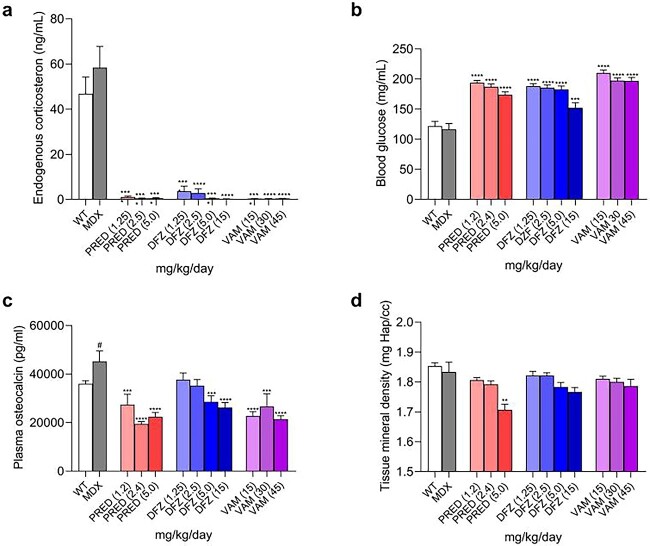
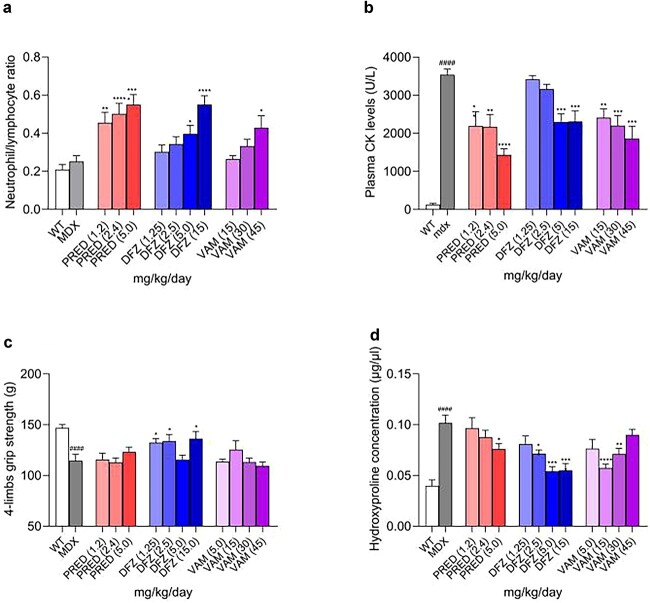
Duchenne muscular dystrophy (DMD) is a progressive disabling X-linked recessive disorder that causes gradual and irreversible loss of muscle, resulting in early death. The corticosteroids prednisone/prednisolone and deflazacort are used to treat DMD as the standard of care; however, only deflazacort is FDA approved for DMD. The novel atypical corticosteroid vamorolone is being investigated for treatment of DMD. We compared the pharmaceutical properties as well as the efficacy and safety of the three corticosteroids across multiple doses in the B10-mdx DMD mouse model. Pharmacokinetic studies in the mouse and evaluation of p-glycoprotein (P-gP) efflux in a cellular system demonstrated that vamorolone is not a strong P-gp substrate resulting in measurable central nervous system (CNS) exposure in the mouse. In contrast, deflazacort and prednisolone are strong P-gp substrates. All three corticosteroids showed efficacy, but also side effects at efficacious doses. After dosing mdx mice for two weeks, all three corticosteroids induced changes in gene expression in the liver and the muscle, but prednisolone and vamorolone induced more changes in the brain than did deflazacort. Both prednisolone and vamorolone induced depression-like behavior. All three corticosteroids reduced endogenous corticosterone levels, increased glucose levels, and reduced osteocalcin levels. Using micro-computed tomography, femur bone density was decreased, reaching significance with prednisolone. The results of these studies indicate that efficacious doses of vamorolone, are associated with similar side effects as seen with other corticosteroids. Further, because vamorolone is not a strong P-gp substrate, vamorolone distributes into the CNS increasing the potential CNS side-effects.
Overview
The claims and statistics of this paper haven’t been checked yet.
Free: it reads the open-access text and checks the first 5 claims that cite a source we can check. Create a free account to check every claim.
Integrity signals
Registry
Cites
Statistics
Figures
Verification
Claims the paper makes
The claims and statistics of this paper haven’t been checked yet.
Free: it reads the open-access text and checks the first 5 claims that cite a source we can check. Create a free account to check every claim.
Claims other papers make about this one
Each is checked against this paper’s own text: does it say what the citing paper says it does?
In the citing paper
“In addition, ischemia/reperfusion injury and the use of immunosuppressants [206,207] after liver transplantation, which can lead to bone loss, cannot be disregarded, and further research is needed to determine the underlying molecular mechanisms involved.”
From Emerging role of liver-bone axis in osteoporosis (2024) · cites this paper as [207]
Self-check
Percentages, sums and reported differences re-computed from the paper’s own numbers.
The self-check needs the paper’s full text.
Citations
Cites
1 retracted
Gloss, D., Moxley, R. T., Ashwal, S., & Oskoui, M. (2016) · Neurology · doi:10.1212/wnl.0000000000002337 · Cited by 258
RetractedModerated estimation of fold change and dispersion for RNA-seq data with DESeq2
Love, M. I., Huber, W., & Anders, S. (2014) · Genome Biology · doi:10.1186/s13059-014-0550-8 · Cited by 95,106
STAR: ultrafast universal RNA-seq aligner
Dobin, A., Davis, C. A., Schlesinger, F., Drenkow, J., Zaleski, C., Jha, S., Batut, P., Chaisson, M., & Gingeras, T. R. (2013) · Bioinformatics · doi:10.1093/bioinformatics/bts635 · Cited by 51,709
Dystrophin: the protein product of the Duchenne muscular dystrophy locus
Hoffman, E. P., Brown, R. H., & Kunkel, L. M. (1987) · Cell · doi:10.1016/0092-8674(87)90579-4 · Cited by 4,693 · cited 1×
“Dystrophin is critical to the structural and membrane stability of muscle fibers in skeletal and cardiac muscle [3, 4].”
BackgroundGene–Stress–Epigenetic regulation of FKBP5: clinical and translational implications
Zannas, A. S., Wiechmann, T., Gassen, N. C., & Binder, E. B. (2016) · Neuropsychopharmacology · doi:10.1038/npp.2015.235 · Cited by 622 · cited 1×
“Expression of FKBP5 is reportedtobeGREregulated[35],and Drd4 isareportedbiomarker of depression [36, 37].”
BackgroundTherapeutic Mechanisms of Glucocorticoids
Vandewalle, J., Luypaert, A., De Bosscher, K., & Libert, C. (2018) · Trends in Endocrinology & Metabolism · doi:10.1016/j.tem.2017.10.010 · Cited by 548 · cited 5×
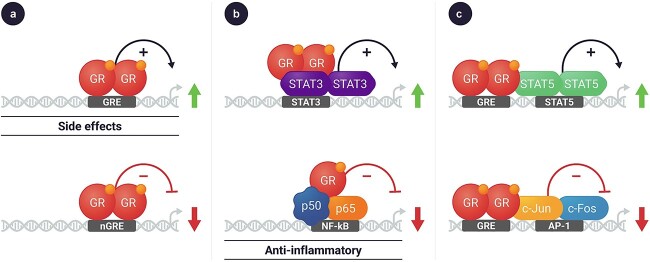
“Many of the anti-inflammatory effects of corticosteroids results from the association of the GR-ligand complex with other proteins, including the trans-suppression of transcription of the proinflammatory nuclear factor kappa B (NF-κ B) [21].”
BackgroundInfluentialRandomized, Double-Blind Six-Month Trial of Prednisone in Duchenne's Muscular Dystrophy
Mendell, J. R., Moxley, R. T., Griggs, R. C., Brooke, M. H., Fenichel, G. M., Miller, J. P., King, W., Signore, L., Pandya, S., Florence, J., et al. (1989) · New England Journal of Medicine · doi:10.1056/nejm198906153202405 · Cited by 520 · cited 1×
“The corticosteroids prednisone/prednisolone and deflazacort are the current standard of care for treating DMD [10] and prolong reduction in muscle strength and the time before loss of ambulation and mortality in DMD patients [11–13].”
BackgroundGlobal epidemiology of Duchenne muscular dystrophy: an updated systematic review and meta-analysis
Crisafulli, S., Sultana, J., Fontana, A., Salvo, F., Messina, S., & Trifirò, G. (2020) · Orphanet Journal of Rare Diseases · doi:10.1186/s13023-020-01430-8 · Cited by 500
Corticosteroids for the treatment of Duchenne muscular dystrophy
Matthews, E., Brassington, R., Kuntzer, T., Jichi, F., & Manzur, A. Y. (2016) · Cochrane Database of Systematic Reviews · doi:10.1002/14651858.cd003725.pub4 · Cited by 493 · cited 1×
“…and inhibiting NF-kB activity that is associated with anti-inflammatory effects (bottom); or (c) binding directly to DNA and interacting with neighboring transcription factors, such as STAT5 (top) and c-Jun and c-Fos (bottom). changes, Cushing’s syndrome, stunted growth, and osteoporosis [16–18].”
Pastan, I., Gottesman, M. M., Ueda, K., Lovelace, E., Rutherford, A. V., & Willingham, M. C. (1988) · Proceedings of the National Academy of Sciences · doi:10.1073/pnas.85.12.4486 · Cited by 484 · cited 1×
“Testing for permeability and MDR1 substrate assessment was done in MDCK cells transfected to overexpress human MDR1 gene that encodes efflux transporter protein (P-gp) [55].”
Background
Cited by
Emerging role of liver-bone axis in osteoporosis
Gao, H., Peng, X., Li, N., Gou, L., Xu, T., Wang, Y., Qin, J., Liang, H., Ma, P., Li, S., et al. (2024) · Journal of Orthopaedic Translation · doi:10.1016/j.jot.2024.07.008 · Cited by 36
“In addition, ischemia/reperfusion injury and the use of immunosuppressants [206,207] after liver transplantation, which can lead to bone loss, cannot be disregarded, and further research is needed to determine the underlying molecular mechanisms involved.”
BackgroundEfficacy and Safety of Vamorolone in Duchenne Muscular Dystrophy: A Systematic Review
Pascual‐Morena, C., Lucerón‐Lucas‐Torres, M., Martínez‐García, I., Rodríguez‐Gutiérrez, E., Patiño‐Cardona, S., & Sequí‐Domínguez, I. (2024) · Pediatric Drugs · doi:10.1007/s40272-024-00655-5 · Cited by 16
“Although it acts on nuclear factor-κB, it has no affinity for glucocorticoid response elements, potentially reducing its adverse effects [12–14].”
Corticosteroids for the treatment of Duchenne muscular dystrophy: a safety review
Czifrus, E., & Berlau, D. J. (2024) · Expert Opinion on Drug Safety · doi:10.1080/14740338.2024.2394578 · Cited by 16
“Further, in-human comparisons are needed to fully answer this question [36].”
Hurley-Novatny, A. C., Chang, D., Murakami, K., Wang, L., & Li, H. (2024) · Frontiers in Endocrinology · doi:10.3389/fendo.2024.1398050 · Cited by 21
The behavioural consequences of dystrophinopathy
Verhaeg, M. A. T., van der Pijl, E. M., van de Vijver, D., Winter, C. L. T.-D., Stan, T. L., van Uffelen, A., Censoni, L., & van Putten, M. (2025) · Disease Models & Mechanisms · doi:10.1242/dmm.052047 · Cited by 9
“…in patients with DMD and mouse models remain largely unclear; however, it is known that the treatment regime of corticosteroids is linked to brain pathology, gray matter volume, specifically, in patients with DMD (Geuens et al., 2023), and depressive-like behavior in mdx mice (Liu et al., 2024).”
Zulfiqar, E., Hurjkaliani, S., Umar, S. A., Shahzad, M., Ahsan, M., Tahir, Q., Nizami, U., Rizvi, B., Khan, A. A., Baloch, A., et al. (2025) · Annals of Medicine and Surgery · doi:10.1097/ms9.0000000000003049 · Cited by 9
“The absence of dystrophin causes gradual muscle loss, replaced by connective tissue and fat, leading to a decline in function [ 2 ] .”
Unleashing the Potential of Givinostat: A Novel Therapy for Duchenne Muscular Dystrophy
Anjum, A. F., Anjum, M. B., & Rehman, R. U. (2025) · Current Therapeutic Research · doi:10.1016/j.curtheres.2025.100787 · Cited by 6
Dulos, J., Debruin, D. A., van der Aar, E., Chaitanya, V. B. S., Lecru, L., Campelj, D. G., Addinsall, A. B., & Stupka, N. (2025) · Science Translational Medicine · doi:10.1126/scitranslmed.ado2112 · Cited by 5
Wang, Q., Zeng, Y., Jiao, L., He, J., Li, B., Guo, Y., & Song, Z. (2024) · Frontiers in Neurology · doi:10.3389/fneur.2024.1456559 · Cited by 2
Short-term daily deflazacort decreases membrane permeability and increases maximum force in mdx mice
Turner, K., Qian, Y., Claflin, D. R., Newell‐Stamper, B. L., Peter, A. K., Michele, D. E., Russell, A. J., & Brooks, S. V. (2025) · American Journal of Physiology-Cell Physiology · doi:10.1152/ajpcell.00187.2025 · Cited by 2
Status of Clinical Care of Duchenne Muscular Dystrophy: Global Perspective and Situation in India
Rohil, A., Kamila, G., & Gulati, S. (2026) · The Indian Journal of Pediatrics · doi:10.1007/s12098-025-05975-z · Cited by 2
“FDA-approved in October 2023 for patients ≥2 y (6 mg/kg/d; max 300 mg), it shows similar efficacy to prednisone but fewer Cushingoid features and adverse effects on growth/BMI, though CNS side-effects (mood, psychiatric, behavioral) are more frequent [ 35 – 37].”
Siddika, A., Rousseau, J., Veillette, F., Bouchard, C., Lu, Y., & Tremblay, J. P. (2026) · Cells · doi:10.3390/cells15100852 · Cited by 2
Glucocorticoid-induced osteoporosis in children: emerging vascular and molecular targets
Barik, S. K., & Crane, J. L. (2025) · Current Opinion in Pediatrics · doi:10.1097/mop.0000000000001476 · Cited by 2
Major, G. S., Chen, J., van den Berg, E., Merry, D. L., & Lindsay, A. (2026) · The Journal of Physiology · doi:10.1113/jp291378 · Cited by 1
“The oral prednisolone dose (5 mg/kg/day) was selected based on established dosing paradigms shown to modify muscle pathology and function in mdx mice (Kourakis et al., 2024; Liu et al., 2024).”
InfluentialTãtaru, E.-A., Ouillade, M.-C., Chan, C., & Pearce, D. A. (2024) · Rare Disease and Orphan Drugs Journal · doi:10.20517/rdodj.2024.08 · Cited by 4
Investigating the effects of prednisolone on behavior in mouse models of Duchenne muscular dystrophyPreprint
Verhaeg, M. A. T., van de Vijver, D., Winter, C. L. T.-D., van der Pijl, E. M., Mastenbroek, L., Leka, U., Stan, T. L., & van Putten, M. (2024) · bioRxiv (Cold Spring Harbor Laboratory) · doi:10.1101/2024.10.29.620838
DUCHENNE KAS DİSTROFİSİNDE YENİ UFUKLAR: NÜKLEER FAKTÖR KAPPA YOLU VE VAMOROLON’UN TEDAVİYE ETKİLERİ
Helvacı, G., & Bilgin, A. (2025) · Ankara Universitesi Eczacilik Fakultesi Dergisi · doi:10.33483/jfpau.1601594
Translational progress in the development of pharmacotherapies for Duchenne muscular dystrophy
Swiderski, K., & Lynch, G. S. (2025) · Regenerative Medicine · doi:10.1080/17460751.2025.2571355 · Cited by 2
Bellis, M. D., Imbrici, P., Lenti, R., Liantonio, A., & Luca, A. D. (2026) · Biomedicines · doi:10.3390/biomedicines14010230 · Cited by 1
“Indeed, cases of acute kidney injury in DMD patients undergoing polypharmacy have been reported [67], underscoring the need for careful renal monitoring in this vulnerable population.”
Vamorolone Safety, Pharmacokinetics, and Exploratory Efficacy in Duchenne Muscular Dystrophy
Mah, J. K., Gonorazky, H. D., Nigro, E., Lochmüller, H., Alemán, A., Yaworski, A., Oskoui, M., Sbrocchi, A. M., Selby, K. A., de Vera, A., et al. (2026) · Neurology · doi:10.1212/wnl.0000000000218066 · Cited by 2
Zeng, Y., Wu, H., Wang, X., Tan, X., Wang, R. L., Liu, Y., & Duan, J. (2026) · Frontiers in Pharmacology · doi:10.3389/fphar.2026.1838974
Duchenne muscular dystrophy: from gene to gene-ius therapies
Muchir, A., Musarò, A., & Chamberlain, J. S. (2026) · Skeletal Muscle · doi:10.1186/s13395-026-00439-0
“However, compared with deflazacort, Vamorolone has been associated with increased behavioral and neuropsychiatric adverse effects, including mood changes, irritability, anxiety, sleep disturbances, and aggression [61].”
Cohen, H., Hosny, N., Thompson, B. R., & Metzger, J. M. (2026) · Cytoskeleton · doi:10.1002/cm.70175
Metadata
- Authors
- Liu, G., Lipari, P., Mollin, A., Jung, S., Teplova, I., Li, W., Ying, L., More, V., Lennox, W., Yeh, S., McGann, E., Moon, Y.-C., Rice, C., Huarte, E., Gruszka, B., Ray, B., Goodwin, E., Buckendahl, P., Yurkow, E., Braughton, B., Narasimhan, J., Welch, E., Voronin, G., & Weetall, M.
- Affiliations
- PTC Therapeutics (United States) (US)
- Rutgers, The State University of New Jersey (US)
- Corresponding author
- Weetall, Marla
- ORCID
- Venue
- Human Molecular Genetics
- Publisher
- Oxford University Press (OUP)
- Published
- 2023-10-11
- Volume
- 33
- Issue
- 3
- Pages
- 211-223
- ISSN
- 0964-6906 (ISSN-L)
- 1460-2083
- PMC
- PMC10800023
- OpenAlex
- W4387523530
- Cited by
- 23
- References
- 58
- Citations by year
- 2026: 8 · 2025: 8 · 2024: 7
- FWCI
- 2.04
- Type
- journal article
- Language
- en
- Open access
- hybrid
- doi.org
- Licence
- Locations
- Human Molecular Genetics (publishedVersion, cc-by)
- PubMed Central (publishedVersion, cc-by)
- PubMed (publishedVersion)
- Funders
- PTC Therapeutics
- Topics
- Life Sciences › Biochemistry, Genetics and Molecular Biology › Molecular Biology › Muscle Physiology and Disorders
- Health Sciences › Medicine › Endocrinology, Diabetes and Metabolism › Adrenal Hormones and Disorders
- Health Sciences › Medicine › Genetics (clinical) › Neurogenetic and Muscular Disorders Research
- Keywords
- Duchenne muscular dystrophy, vamorolone, deflazacort, prednisolone, pharmacokinetics, P-glycoprotein efflux, depression-like behavior, osteocalcin, bone mineral density, corticosterone, corticosteroid adverse effects
- MeSH terms
- Animals, Corticosterone, Pharmaceutical Preparations, Prednisolone, Pregnadienediols, Pregnenediones, Mice, Inbred mdx, Muscular Dystrophy, Duchenne, Mice, X-Ray Microtomography
About these checks
Registry, retraction, Cites and statistics results are computed, not judged, with one exception: a printed reference that no index lists is read once by a model before it counts as a citation error. Claims are extracted by a model and kept only when their quote appears verbatim in the text; each cited source is then checked, with a model’s help, for whether it says what the claim relies on. Those verdicts can be wrong — read the claim’s quote and the cited source before relying on one.
Statistics and arithmetic are recomputed, not judged.
Confidence bands are shown only for fields calibrated on our annotated test set. None is calibrated yet, so no band is shown.
What counts as a claim ›How we measure confidence ›How we check this ›
Are you an author, or do you see a problem with this page? Request a review
Data sources
Bibliographic data: Semantic Scholar, OpenAlex, Crossref.
Contains information from the Semantic Scholar Academic Graph Datasets, made available under the ODC Attribution License (ODC-BY 1.0).
Semantic Scholar’s data is described in: Kinney, R., et al. (2023). The Semantic Scholar Open Data Platform. arXiv:2301.10140.
