

Identification of a novel synaptic protein, TMTC3, involved in periventricular nodular heterotopia with intellectual disability and epilepsy
Open accessThe DOI matches its Crossref record; 50 of the 50 references it cites were found in a registry or an index.
Abstract
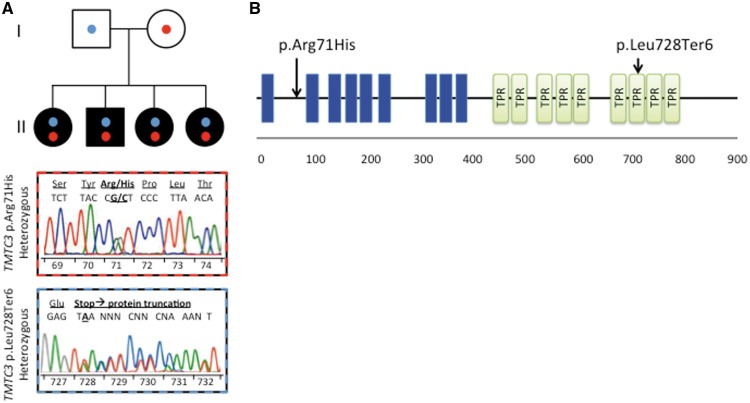
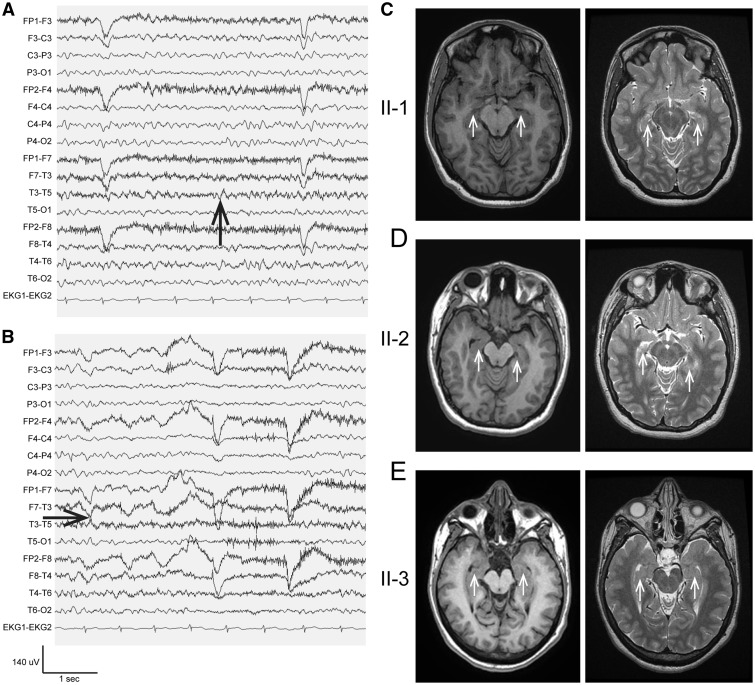
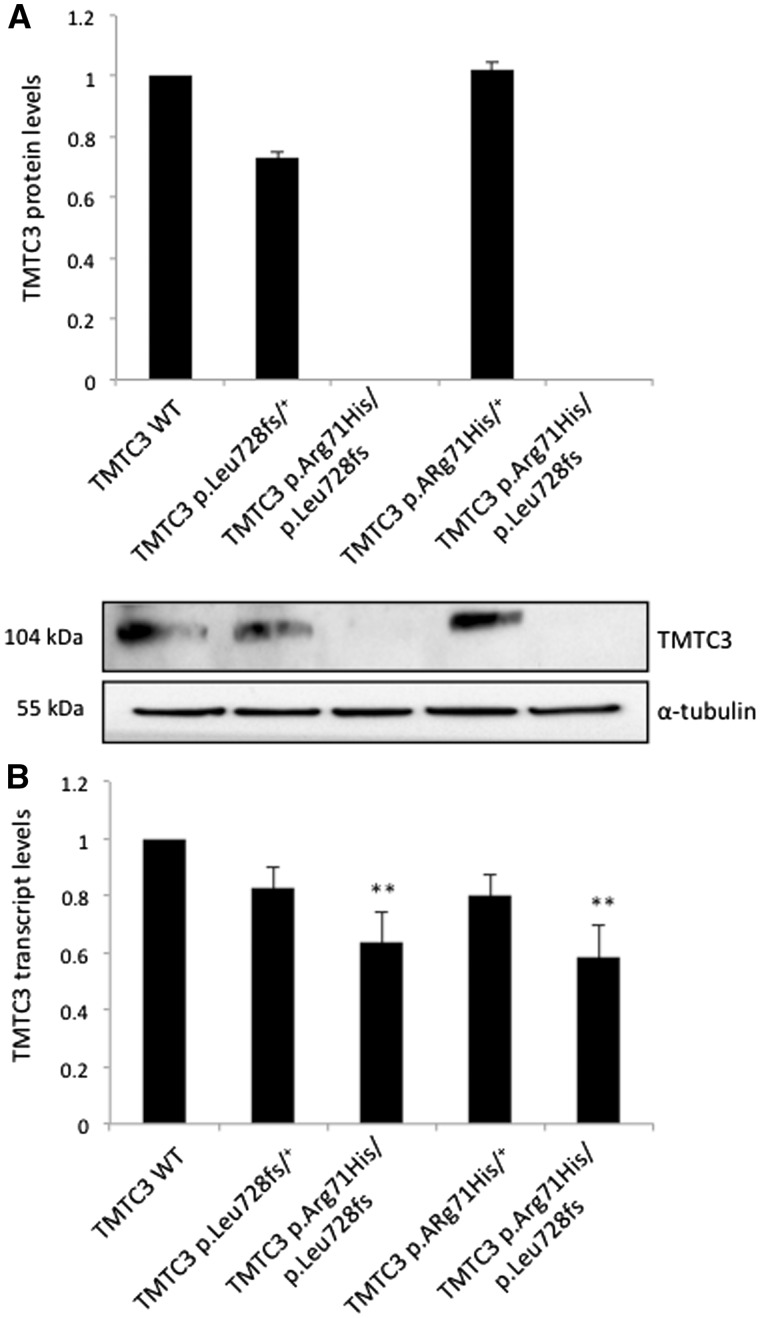
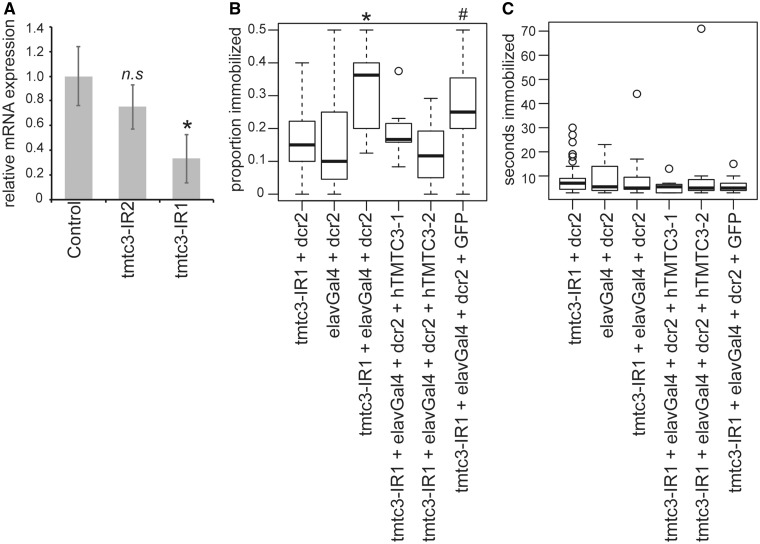
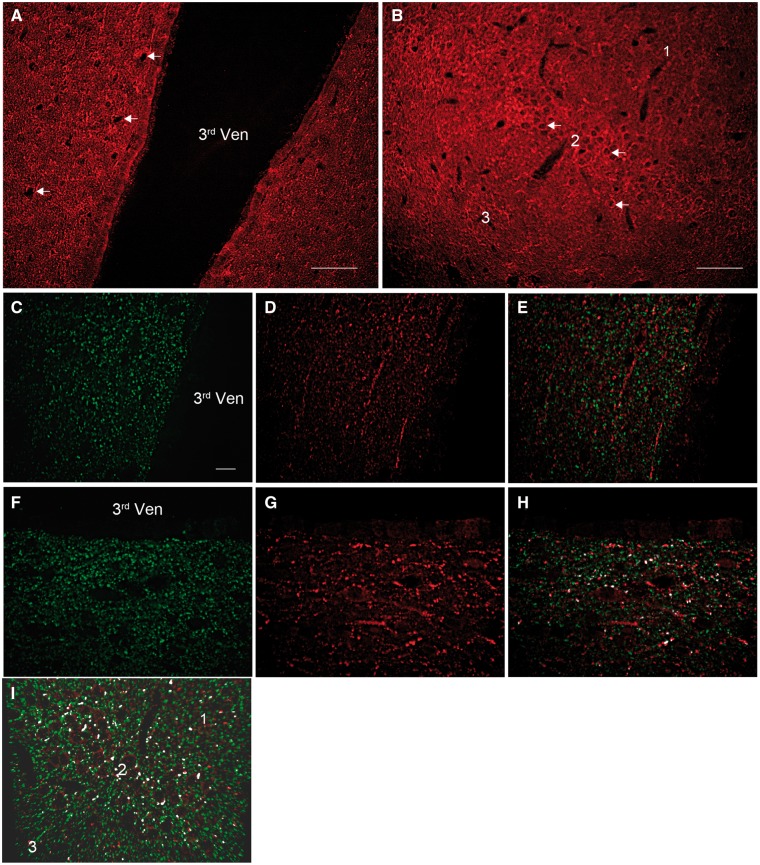
Defects in neuronal migration cause brain malformations, which are associated with intellectual disability (ID) and epilepsy. Using exome sequencing, we identified compound heterozygous variants (p.Arg71His and p. Leu729ThrfsTer6) in TMTC3, encoding transmembrane and tetratricopeptide repeat containing 3, in four siblings with nocturnal seizures and ID. Three of the four siblings have periventricular nodular heterotopia (PVNH), a common brain malformation caused by failure of neurons to migrate from the ventricular zone to the cortex. Expression analysis using patient-derived cells confirmed reduced TMTC3 transcript levels and loss of the TMTC3 protein compared to parental and control cells. As TMTC3 function is currently unexplored in the brain, we gathered support for a neurobiological role for TMTC3 by generating flies with post-mitotic neuron-specific knockdown of the highly conserved Drosophila melanogaster TMTC3 ortholog, CG4050/tmtc3. Neuron-specific knockdown of tmtc3 in flies resulted in increased susceptibility to induced seizures. Importantly, this phenotype was rescued by neuron-specific expression of human TMTC3, suggesting a role for TMTC3 in seizure biology. In addition, we observed co-localization of TMTC3 in the rat brain with vesicular GABA transporter (VGAT), a presynaptic marker for inhibitory synapses. TMTC3 is localized at VGAT positive pre-synaptic terminals and boutons in the rat hypothalamus and piriform cortex, suggesting a role for TMTC3 in the regulation of GABAergic inhibitory synapses. TMTC3 did not co-localize with Vglut2, a presynaptic marker for excitatory neurons. Our data identified TMTC3 as a synaptic protein that is involved in PVNH with ID and epilepsy, in addition to its previously described association with cobblestone lissencephaly.
Overview
The claims and statistics of this paper haven’t been checked yet.
Free: it reads the open-access text and checks the first 5 claims that cite a source we can check. Create a free account to check every claim.
Integrity signals
Registry
Cites
Statistics
Figures
Verification
Claims the paper makes
The claims and statistics of this paper haven’t been checked yet.
Free: it reads the open-access text and checks the first 5 claims that cite a source we can check. Create a free account to check every claim.
Claims other papers make about this one
Each is checked against this paper’s own text: does it say what the citing paper says it does?
The source backs part of the claim, not all of it — or backs it for a different population, condition or comparison.
In the citing paper
“CG4050 is a mammalian ortholog of TMTC3, one of a family of ER proteins recently shown to be O-mannosyltransferases; deletion of TMTC3 causes neurological defects [61,62].”
From Functional unknomics: Systematic screening of conserved genes of unknown function (2023) · cites this paper as [61]
Experimental — accuracy not yet measured
Self-check
Percentages, sums and reported differences re-computed from the paper’s own numbers.
The self-check needs the paper’s full text.
Citations
Cites
Fiji: an open-source platform for biological-image analysis
Schindelin, J., Arganda-Carreras, I., Frise, E., Kaynig, V., Longair, M., Pietzsch, T., Preibisch, S., Rueden, C., Saalfeld, S., Schmid, B., et al. (2012) · Nature Methods · doi:10.1038/nmeth.2019 · Cited by 66,890 · cited 1×
“To determine whether the knockdown of the tmtc3 gene had any effect on the morphology of the Drosophila NMJ, images of the NMJ were loaded into the open-source image analysis software, Fiji (48).”
MethodThe Genome Analysis Toolkit: A MapReduce framework for analyzing next-generation DNA sequencing data
McKenna, A., Hanna, M., Banks, E., Sivachenko, A., Cibulskis, K., Kernytsky, A., Garimella, K., Altshuler, D., Gabriel, S., Daly, M., et al. (2010) · Genome Research · doi:10.1101/gr.107524.110 · Cited by 27,895
A global reference for human genetic variation
The 1000 Genomes Project Consortium, authors, C., Auton, A., Abecasis, G. R., Steering committee, Altshuler, D. M., Durbin, R. M., Abecasis, G. R., Bentley, D. R., Chakravarti, A., et al. (2015) · Nature · doi:10.1038/nature15393 · Cited by 18,247 · cited 2×
“%]) according to NCBI dbSNP, 1000 Genomes (39), NHLBI ESP Exome Variant Server (40), and Exome Aggregation Consortium (ExAC) (41) datasets to identify any variants.”
MethodSelf-citationA framework for variation discovery and genotyping using next-generation DNA sequencing data
DePristo, M. A., Banks, E., Poplin, R., Garimella, K. V., Maguire, J. R., Hartl, C., Philippakis, A. A., del Angel, G., Rivas, M. A., Hanna, M., et al. (2011) · Nature Genetics · doi:10.1038/ng.806 · Cited by 11,456
Analysis of protein-coding genetic variation in 60,706 humans
Exome Aggregation Consortium, Lek, M., Karczewski, K. J., Minikel, E. V., Samocha, K. E., Banks, E., Fennell, T., O’Donnell-Luria, A. H., Ware, J. S., Hill, A. J., et al. (2016) · Nature · doi:10.1038/nature19057 · Cited by 9,587
Kumar, P., Henikoff, S., & Ng, P. C. (2009) · Nature Protocols · doi:10.1038/nprot.2009.86 · Cited by 6,521 · cited 2×
“Leu728fsTer6) were assessed using the following predictive in silico tools: Polymorphism Phenotyping version 2 (PolyPhen-2) (42), Sorting Intolerant From Tolerant (SIFT) (43), and MutationTaster2 (44).”
MethodPredicting Functional Effect of Human Missense Mutations Using PolyPhen‐2
Adzhubei, I., Jordan, D. M., & Sunyaev, S. R. (2013) · Current Protocols in Human Genetics · doi:10.1002/0471142905.hg0720s76 · Cited by 3,705 · cited 1×
“Leu728fsTer6) were assessed using the following predictive in silico tools: Polymorphism Phenotyping version 2 (PolyPhen-2) (42), Sorting Intolerant From Tolerant (SIFT) (43), and MutationTaster2 (44).”
MethodMutationTaster2: mutation prediction for the deep-sequencing age
Schwarz, J. M., Cooper, D. N., Schuelke, M., & Seelow, D. (2014) · Nature Methods · doi:10.1038/nmeth.2890 · Cited by 3,362
The developmental transcriptome of Drosophila melanogaster
Graveley, B. R., Brooks, A. N., Carlson, J. W., Duff, M. O., Landolin, J. M., Yang, L., Artieri, C. G., van Baren, M. J., Boley, N., Booth, B. W., et al. (2011) · Nature · doi:10.1038/nature09715 · Cited by 1,484
Using FlyAtlas to identify better Drosophila melanogaster models of human disease
Chintapalli, V. R., Wang, J., & Dow, J. A. T. (2007) · Nature Genetics · doi:10.1038/ng2049 · Cited by 1,472
Self-citation
Cited by
Buchsbaum, I. Y., & Cappello, S. (2019) · Development · doi:10.1242/dev.163766 · Cited by 147
Discovery of an O-mannosylation pathway selectively serving cadherins and protocadherins
Larsen, I. S. B., Narimatsu, Y., Joshi, H. J., Siukstaite, L., Harrison, O. J., Brasch, J., Goodman, K. M., Hansen, L., Shapiro, L., Honig, B., et al. (2017) · Proceedings of the National Academy of Sciences · doi:10.1073/pnas.1708319114 · Cited by 108
Glycobiology and schizophrenia: a biological hypothesis emerging from genomic research
Mealer, R. G., Williams, S., Daly, M. J., Scolnick, E. M., Cummings, R. D., & Smoller, J. W. (2020) · Molecular Psychiatry · doi:10.1038/s41380-020-0753-1 · Cited by 77
Functional unknomics: Systematic screening of conserved genes of unknown function
Rocha, J. J., Jayaram, S. A., Stevens, T. J., Muschalik, N., Shah, R. D., Emran, S., Robles, C., Freeman, M., & Munro, S. (2023) · PLOS Biology · doi:10.1371/journal.pbio.3002222 · Cited by 70
Ferent, J., Zaidi, D., & Francis, F. (2020) · Frontiers in Cell and Developmental Biology · doi:10.3389/fcell.2020.578341 · Cited by 67
Multiple distinct O-Mannosylation pathways in eukaryotes
Larsen, I. S. B., Narimatsu, Y., Clausen, H., Joshi, H. J., & Halim, A. (2019) · Current Opinion in Structural Biology · doi:10.1016/j.sbi.2019.03.003 · Cited by 59
Boycott, K. M., Campeau, P. M., Howley, H. E. A., Pavlidis, P., Rogić, S., Oriel, C., Berman, J. N., Hamilton, R. M., Hicks, G. G., Lipshitz, H. D., et al. (2020) · The American Journal of Human Genetics · doi:10.1016/j.ajhg.2020.01.009 · Cited by 48
Genetic causes underlying grey matter heterotopia
Vriend, I., & Oegema, R. (2021) · European Journal of Paediatric Neurology · doi:10.1016/j.ejpn.2021.09.015 · Cited by 48
Recent Developments in Using Drosophila as a Model for Human Genetic Disease
Oriel, C., & Lasko, P. F. (2018) · International Journal of Molecular Sciences · doi:10.3390/ijms19072041 · Cited by 44
van Tol, W., Wessels, H. J. C. T., & Lefeber, D. J. (2019) · Current Opinion in Structural Biology · doi:10.1016/j.sbi.2018.12.006 · Cited by 40
TPR-containing proteins control protein organization and homeostasis for the endoplasmic reticulum
Graham, J. B., Canniff, N. P., & Hebert, D. N. (2019) · Critical Reviews in Biochemistry and Molecular Biology · doi:10.1080/10409238.2019.1590305 · Cited by 38
Investigating Developmental and Epileptic Encephalopathy Using Drosophila melanogaster
Takai, A., Yamaguchi, M., Yoshida, H., & Chiyonobu, T. (2020) · International Journal of Molecular Sciences · doi:10.3390/ijms21176442 · Cited by 36
The SHDRA syndrome-associated gene TMEM260 encodes a protein-specific O-mannosyltransferase
Larsen, I. S. B., Povolo, L., Zhou, L., Tian, W., Mygind, K. J., Hintze, J., Chen, J., Hartill, V. L., Prescott, K., Johnson, C. A., et al. (2023) · Proceedings of the National Academy of Sciences · doi:10.1073/pnas.2302584120 · Cited by 32
Graham, J. B., Sunryd, J. C., Mathavan, K., Weir, E., Larsen, I. S. B., Halim, A., Clausen, H., Cousin, H., Alfandari, D., & Hebert, D. N. (2019) · Molecular Biology of the Cell · doi:10.1091/mbc.e19-07-0408 · Cited by 31
Strynatka, K. A., Gurrola-Gal, M. C., Berman, J. N., & McMaster, C. R. (2018) · Genetics · doi:10.1534/genetics.117.300124 · Cited by 29
Mir, Y. R., & Kuchay, R. A. H. (2019) · Journal of Medical Genetics · doi:10.1136/jmedgenet-2018-105821 · Cited by 25
New genetic drivers in hemorrhagic hereditary telangiectasia
Cerdà, P., Castillo, S. D., Aguilera, C., Iriarte, A., Rocamora, J. L. S., Martinez‐Larrinaga, A., Viñals, F., Graupera, M., & Riera-Mestre, A. (2023) · European Journal of Internal Medicine · doi:10.1016/j.ejim.2023.08.024 · Cited by 23
Hegele, R. A., & Dron, J. S. (2020) · Arteriosclerosis Thrombosis and Vascular Biology · doi:10.1161/atvbaha.120.313065 · Cited by 22
Self-citationEisenhaber, B., Sinha, S., Jaladanki, C. K., Shitov, V. A., Tan, Q. W., Sirota, F. L., & Eisenhaber, F. (2021) · Biology Direct · doi:10.1186/s13062-021-00291-w · Cited by 22
Protein O-mannosylation: one sugar, several pathways, many functions
Koff, M., Monagas-Valentin, P., Novikov, B., Chandel, I., & Panin, V. M. (2023) · Glycobiology · doi:10.1093/glycob/cwad067 · Cited by 18
Global View of Domain-Specific O-Linked Mannose Glycosylation in Glycoengineered Cells
Povolo, L., Tian, W., Vakhrushev, S. Y., & Halim, A. (2024) · Molecular & Cellular Proteomics · doi:10.1016/j.mcpro.2024.100796 · Cited by 17
Ecovoiu, A. A., Rațiu, A. C., Micheu, M. M., & Chifiriuc, M. C. (2022) · International Journal of Molecular Sciences · doi:10.3390/ijms23052613 · Cited by 17
Wang, L. R., Radonjic, A., Dilliott, A. A., McIntyre, A. D., & Hegele, R. A. (2018) · Journal of Investigative Medicine High Impact Case Reports · doi:10.1177/2324709618786770 · Cited by 16
Self-citationProtein O-mannosylation across kingdoms and related diseases: From glycobiology to glycopathology
Hang, J., Wang, J., Lu, M., Xue, Y.-C., Qiao, J., & Tao, L. (2022) · Biomedicine & Pharmacotherapy · doi:10.1016/j.biopha.2022.112685 · Cited by 15
Self-citationThe clinical and imaging features of FLNA positive and negative periventricular nodular heterotopia
Lu, Y., Hsu, C., Liu, Y., Chan, C.-K., Chuang, Y., Lin, C., Chang, K., Ho, C.-J., Ng, C. C., Lim, K. S., et al. (2021) · Biomedical Journal · doi:10.1016/j.bj.2021.05.003 · Cited by 13
A novel Drosophila model for neurodevelopmental disorders associated with Shwachman–Diamond syndrome
Takai, A., Chiyonobu, T., Ueoka, I., Tanaka, R., Tozawa, T., Yoshida, H., Morimoto, M., Hosoi, H., & Yamaguchi, M. (2020) · Neuroscience Letters · doi:10.1016/j.neulet.2020.135449 · Cited by 11
Invertebrate Model Organisms as a Platform to Investigate Rare Human Neurological Diseases
Lee, J. (2022) · Experimental Neurobiology · doi:10.5607/en22003 · Cited by 8
A Report on a Family with TMTC3-Related Syndrome and Review
Hana, S., Karthik, D., Shan, J., El‐Hayek, S., Chouchane, L., & Mégarbané, A. (2020) · Case Reports in Medicine · doi:10.1155/2020/7163038 · Cited by 7
Prognostic value of TMTC1 in pan-cancer analysis
Zhang, Y., Wu, D., Yu, T., Liu, Y., Zhao, C., & Xue, R. (2024) · Heliyon · doi:10.1016/j.heliyon.2024.e38308 · Cited by 7
Yamaguchi, M., Huynh, M. A., Chiyonobu, T., & Yoshida, H. (2023) · Experimental Cell Research · doi:10.1016/j.yexcr.2023.113827 · Cited by 6
Hu, X., Guo, B., Sun, T., & Wang, W. (2023) · Open Medicine · doi:10.1515/med-2023-0635 · Cited by 5
A Drosophila model of the neurological symptoms in Mpv17-related diseases
Kodani, A., Yamaguchi, M., Itoh, R., Huynh, M. A., & Yoshida, H. (2022) · Scientific Reports · doi:10.1038/s41598-022-27329-x · Cited by 5
Liu, G., Zhou, Q., Han, L., Li, N., Ye, H., & Wang, J. (2020) · Experimental and Therapeutic Medicine · doi:10.3892/etm.2020.9226 · Cited by 4
Self-citationUnderstanding Human Genetic Disease With the Fly
Hope, K. A., & Reiter, L. T. (2019) · Elsevier eBooks · doi:10.1016/b978-0-12-816573-7.00004-3 · Cited by 2
Malformations of Cortical Development
Geraldo, A. F., Rossi, A., & Severino, M. (2021) · Springer eBooks · doi:10.1007/978-3-662-46258-4_6-1 · Cited by 2
Structure and mechanism of the human TMEM260 O-mannosyltransferasePreprint
Cifuente, J. O., Povolo, L., Ochoa-Lizarralde, B., Ahmed, S. M., Vakhrushev, S. Y., López-Alonso, J. P., Tascón, I., Fernández-Martínez, J., Joshi, H. J., Halim, A., et al. (2026) · bioRxiv (Cold Spring Harbor Laboratory) · doi:10.64898/2026.03.17.711096 · Cited by 2
O-Mannose Glycosylations Influence E-Cadherin Functional Interactions
Xie, S., Madunić, K., Bringas, O. G. R., Tian, W., Vakhrushev, S. Y., Permentier, H. P., Horvatovich, P. L., Halim, A., & LaCava, J. (2026) · Molecular & Cellular Proteomics · doi:10.1016/j.mcpro.2026.101559 · Cited by 1
Buchsbaum, I. Y. (2019) · Elektronische Hochschulschriften der LMU München (Ludwig-Maximilians-Universität München) · doi:10.5282/edoc.24798 · Cited by 1
El‐Dessouky, S. H., Sharaf‐Eldin, W. E., Aboulghar, M. M., Aref, H., Senousy, S. M., Maher, M., Harms, F. L., Matsa, L. S., Elarab, A. E., Ateya, M. I., et al. (2026) · Ophthalmic Genetics · doi:10.1080/13816810.2026.2630987
Purine transport in plasmodium falciparum
Quashie, N. B. (2008) · Enlighten: Theses (The University of Glasgow)
Congenital disorders of glycosylation
Liu, Y., & He, M. (2026) · Elsevier eBooks · doi:10.1016/b978-0-443-41379-7.00011-1
Eisenhaber, B., Sinha, S., Jadalanki, C. K., Shitov, V. A., Tan, Q. W., Sirota, F. L., & Eisenhaber, F. (2021) · Figshare · doi:10.6084/m9.figshare.13565811
Gene variants in periventricular nodular heterotopia
Song, J., Sun, X., & Zhang, C. (2026) · Acta Epileptologica · doi:10.1186/s42494-026-00243-9
Silva, V. F. C. D. (2019) · Portuguese National Funding Agency for Science, Research and Technology (RCAAP Project by FCT)
Genetic alterations in cortical development as a cause of epileptogenic disorders
Llinares-Benadero, C. (2019) · LA Referencia (Red Federada de Repositorios Institucionales de Publicaciones Científicas)
Unraveling the Etiology of Childhood Hypotonia Using Exome Sequencing
Shambhavi, A., Moirangthem, A., Maurya, R. K., Srinivasan, V. M., Sait, H., Srivastava, S., Suthar, R., & Phadke, S. R. (2025) · Journal of Pediatric Genetics · doi:10.53391/2146-460x.1012
Metadata
- Authors
- Farhan, S. M. K., Nixon, K. C. J., Everest, M., Edwards, T. N., Long, S., Segal, D., Knip, M. J., Arts, H. H., Chakrabarti, R., Wang, J., Robinson, J. F., Lee, D., Mirsattari, S. M., Rupar, C. A., Siu, V. M., FORGE Canada Consortium, Poulter, M. O., Hegele, R. A., & Kramer, J. M.
- Affiliations
- Robarts Research Institute (CA)
- Western University (CA)
- Radboud University Medical Center (NL)
- Children’s Health Research Institute (CA)
- Department of Medical Imaging
- Corresponding author
- Kramer, Jamie M
- ORCID
- Venue
- Human Molecular Genetics
- Publisher
- Oxford University Press (OUP)
- Published
- 2017-08-16
- Volume
- 26
- Issue
- 21
- Pages
- 4278-4289
- ISSN
- 0964-6906 (ISSN-L)
- 1460-2083
- PMC
- PMC5886076
- OpenAlex
- W2765091165
- Cited by
- 43
- References
- 50
- Citations by year
- 2026: 4 · 2024: 2 · 2023: 6 · 2022: 5 · 2021: 6 · 2020: 8 · 2019: 7 · 2018: 3 · 2017: 1
- FWCI
- 4.27
- Type
- journal article
- Language
- en
- Open access
- hybrid
- doi.org
- Licence
- Locations
- Human Molecular Genetics (publishedVersion, cc-by-nc)
- Europe PMC (PubMed Central) (publishedVersion, cc-by-nc)
- PubMed Central (publishedVersion, cc-by-nc)
- PubMed (publishedVersion)
- Scholarship@Western (Western University) (submittedVersion)
- Funders
- University of Ottawa
- McGill University
- Genome Canada (OGI-049)
- Ontario Genomics (OGI-049)
- Ontario Genomics Institute (OGI-049)
- Genome British Columbia
- Canada Research Chairs
- University of Toronto
- Canadian Institutes of Health Research (OGI-049)
- Topics
- Health Sciences › Medicine › Clinical Neurology › Epilepsy research and treatment
- Life Sciences › Biochemistry, Genetics and Molecular Biology › Genetics › Genetics and Neurodevelopmental Disorders
- Health Sciences › Medicine › Pediatrics, Perinatology and Child Health › Fetal and Pediatric Neurological Disorders
- Keywords
- periventricular nodular heterotopia, intellectual disability, epilepsy, neuronal migration disorders, brain malformations, synaptic proteins, vesicular GABA transporter, Drosophila, seizure susceptibility, cobblestone lissencephaly, compound heterozygosity, hypothalamus, piriform cortex
- MeSH terms
- Exome Sequencing, Adult, Animals, Brain, Carrier Proteins, Cerebral Cortex, Drosophila melanogaster, Epilepsy, Female, Heterozygote, Humans, Male, Membrane Proteins, Intellectual Disability, Nervous System Malformations, Neurons, Pedigree, Seizures, Synapses, Presynaptic Terminals, Rats, Periventricular Nodular Heterotopia, Gene Knockdown Techniques
About these checks
Registry, retraction, Cites and statistics results are computed, not judged, with one exception: a printed reference that no index lists is read once by a model before it counts as a citation error. Claims are extracted by a model and kept only when their quote appears verbatim in the text; each cited source is then checked, with a model’s help, for whether it says what the claim relies on. Those verdicts can be wrong — read the claim’s quote and the cited source before relying on one.
Statistics and arithmetic are recomputed, not judged.
Confidence bands are shown only for fields calibrated on our annotated test set. None is calibrated yet, so no band is shown.
What counts as a claim ›How we measure confidence ›How we check this ›
Are you an author, or do you see a problem with this page? Request a review
Data sources
Bibliographic data: Semantic Scholar, OpenAlex, Crossref.
Contains information from the Semantic Scholar Academic Graph Datasets, made available under the ODC Attribution License (ODC-BY 1.0).
Semantic Scholar’s data is described in: Kinney, R., et al. (2023). The Semantic Scholar Open Data Platform. arXiv:2301.10140.
