

Subgroup analysis of Japanese patients in a Phase 3 study of atezolizumab in advanced triple-negative breast cancer (IMpassion130)
Open accessThe DOI matches its Crossref record; 33 of the 33 references it cites were found in a registry or an index.
Abstract
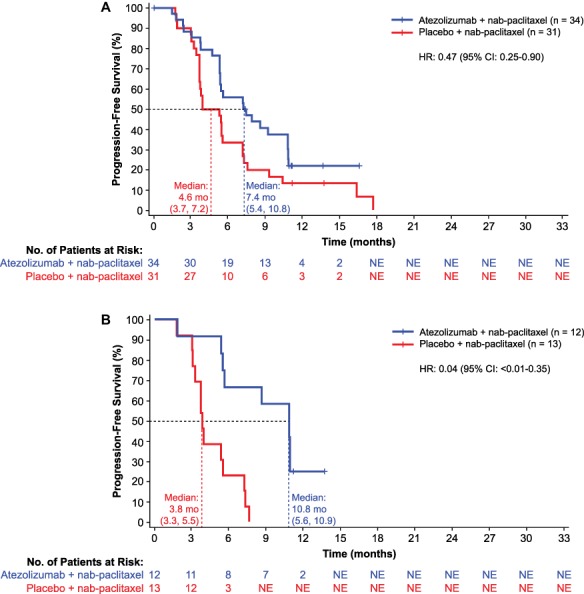
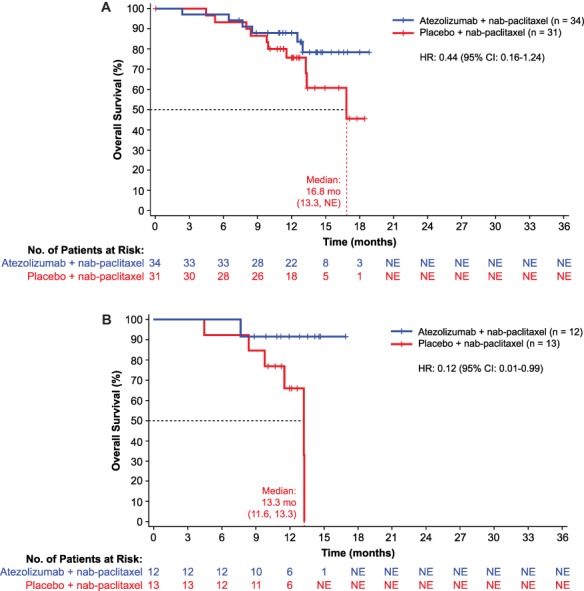
BACKGROUND: In the randomised Phase 3 IMpassion130 trial, atezolizumab combined with nab-paclitaxel (atezo + nab-P) in 902 patients with triple-negative breast cancer (TNBC) showed prolonged progression-free survival (PFS) in both the intention-to-treat (ITT) population and programmed death-ligand 1 (PD-L1)-positive subgroup compared with placebo plus nab-P (plac + nab-P). This study assessed the efficacy and safety of atezo + nab-P in the IMpassion130 Japanese subpopulation. METHODS: Eligible patients had unresectable locally advanced or metastatic TNBC previously untreated with chemotherapy for metastatic disease. Patients were randomised 1:1 to receive either atezo + nab-P or plac + nab-P. Co-primary endpoints were investigator-assessed PFS and overall survival (ITT population and PD-L1-positive subgroup). These were also assessed in the Japanese subpopulation. RESULTS: There were 65 Japanese patients (34 atezo + nab-P; 31 plac + nab-P). The PD-L1-positive subgroup included 25 patients (12 atezo + nab-P; 13 plac + nab-P). Median PFS was 7.4 months (atezo + nab-P) versus 4.6 months (plac + nab-P; hazard ratio [HR], 0.47; 95% CI, 0.25-0.90). In the PD-L1-positive subgroup, median PFS was 10.8 months (atezo + nab-P) versus 3.8 months (plac + nab-P; HR, 0.04; 95% CI, <0.01-0.35). Safety results in the Japanese subgroup were consistent with those in the overall population. The Japanese subgroup had a lower incidence of adverse events leading to treatment withdrawal than the overall population. More patients in the atezo + nab-P arm had neutrophil count decreases and stomatitis than patients in the plac + nab-P arm. CONCLUSIONS: Atezo + nab-P efficacy in Japanese patients was consistent with the overall IMpassion130 population. No new safety signals were observed, and tolerability was consistent with that of the overall population.
Overview
The claims and statistics of this paper haven’t been checked yet.
Free: it reads the open-access text and checks the first 5 claims that cite a source we can check. Create a free account to check every claim.
Integrity signals
Registry
Cites
Statistics
Figures
Verification
Claims the paper makes
The claims and statistics of this paper haven’t been checked yet.
Free: it reads the open-access text and checks the first 5 claims that cite a source we can check. Create a free account to check every claim.
Claims other papers make about this one
Each is checked against this paper’s own text: does it say what the citing paper says it does?
The cited source says what the claim attributes to it.
In the citing paper
“anti-PD-L1 antibodies such as Atezolizumab, Avelumab, and Durvalumab, have been developed and proven effective for treatment of a variety of cancers including NSCLC, urothelial carcinoma, triple negative breast cancer (TNBC) and Merkel cell carcinoma (Iwata et al., 2019; Kaufman et al., 2018; Powles et al., 2018; Rittmeyer et al., 2017).”
From Hallmarks of response, resistance, and toxicity to immune checkpoint blockade (2021) · cites this paper as Iwata et al., 2019
Self-check
Percentages, sums and reported differences re-computed from the paper’s own numbers.
The self-check needs the paper’s full text.
Citations
Cites
PD-1 and PD-L1 Immune Checkpoint Blockade to Treat Breast Cancer
Hartkopf, A. D., Taran, F.-A., Wallwiener, M., Walter, C. B., Krämer, B., Grischke, E.-M., & Brucker, S. Y. (2016) · Breast Care · doi:10.1159/000453569 · Cited by 30,845
Oncology meets immunology: the cancer-immunity cycle.
Chen, D. S., & Mellman, I. (2013) · Immunity · doi:10.1016/j.immuni.2013.07.012 · Cited by 6,929 · cited 1×
“Programmed death-ligand 1 (PD-L1) expression has been reported to occur mainly on tumour-infiltrating immune cells (IC) in patients with TNBC (6, 7), which leads to inhibition of anticancer immune responses (8, 9).”
BackgroundPredictive correlates of response to the anti-PD-L1 antibody MPDL3280A in cancer patients
Herbst, R. S., Soria, J.-C., Kowanetz, M., Fine, G. D., Hamid, O., Gordon, M. S., Sosman, J. A., McDermott, D. F., Powderly, J. D., Gettinger, S. N., et al. (2014) · Nature · doi:10.1038/nature14011 · Cited by 5,231 · cited 2×
“Hoffmann-La Roche/Genentech) is a humanised monoclonal anti–PD-L1 antibody that selectively targets PD-L1 signalling to restore tumour-specific T-cell immunity (9).”
BackgroundAtezolizumab and nab-paclitaxel in advanced triple-negative breast cancer
Schmid, P., Adams, S., Rugo, H. S., Schneeweiss, A., Barrios, C. H., Iwata, H., Diéras, V., Hegg, R., Im, S.-A., Shaw Wright, G., et al. (2018) · New England Journal of Medicine · doi:10.1056/nejmoa1809615 · Cited by 4,350 · cited 5×
“Details of the statistical analysis have been previously described (13).”
BackgroundMethodResultInfluentialSelf-citationHammond, M. E. H., Hayes, D. F., Dowsett, M., Allred, D. C., Hagerty, K. L., Badve, S., Fitzgibbons, P. L., Francis, G., Goldstein, N. S., Hayes, M., et al. (2010) · Journal of Clinical Oncology · doi:10.1200/jco.2009.25.6529 · Cited by 4,213
Wolff, A. C., Hammond, M. E. H., Hicks, D. G., Dowsett, M., McShane, L. M., Allison, K. H., Allred, D. C., Bartlett, J. M. S., Bilous, M., Fitzgibbons, P., et al. (2013) · Journal of Clinical Oncology · doi:10.1200/jco.2013.50.9984 · Cited by 4,030
Paclitaxel plus Bevacizumab versus Paclitaxel Alone for Metastatic Breast Cancer
Miller, K., Wang, M., Gralow, J., Dickler, M., Cobleigh, M., Perez, E. A., Shenkier, T., Cella, D., & Davidson, N. E. (2007) · New England Journal of Medicine · doi:10.1056/nejmoa072113 · Cited by 3,081
Benson, A. B., Abrams, T. A., Ben-Josef, E., Bloomston, P. M., Botha, J. F., Clary, B. M., Covey, A., Curley, S. A., D'Angelica, M. I., Davila, R., et al. (2009) · Journal of the National Comprehensive Cancer Network · doi:10.6004/jnccn.2009.0027 · Cited by 2,268
3rd ESO–ESMO International Consensus Guidelines for Advanced Breast Cancer (ABC 3)
Cardoso, F., Costa, A., Senkus, E., Aapro, M., André, F., Barrios, C. H., Bergh, J., Bhattacharyya, G., Biganzoli, L., Cardoso, M. J., et al. (2017) · Annals of Oncology · doi:10.1093/annonc/mdw544 · Cited by 2,033
PD-L1 Expression in Triple-Negative Breast Cancer
Mittendorf, E. A., Philips, A. V., Meric-Bernstam, F., Qiao, N., Wu, Y., Harrington, S., Su, X., Wang, Y., Gonzalez-Angulo, A. M., Akcakanat, A., et al. (2014) · Cancer Immunology Research · doi:10.1158/2326-6066.cir-13-0127 · Cited by 1,396 · cited 1×
“Programmed death-ligand 1 (PD-L1) expression has been reported to occur mainly on tumour-infiltrating immune cells (IC) in patients with TNBC (6, 7), which leads to inhibition of anticancer immune responses (8, 9).”
Background
Cited by
Hallmarks of response, resistance, and toxicity to immune checkpoint blockade
Morad, G., Helmink, B. A., Sharma, P., & Wargo, J. A. (2021) · Cell · doi:10.1016/j.cell.2021.09.020 · Cited by 1,648
Pembrolizumab and atezolizumab in triple-negative breast cancer
Kwapisz, D. (2021) · Cancer Immunology, Immunotherapy · doi:10.1007/s00262-020-02736-z · Cited by 271
Zhou, Y.-J., Li, G., Wang, J., Liu, M., Wang, Z., Song, Y., Zhang, X., & Wang, X. (2023) · Blood Science · doi:10.1097/bs9.0000000000000149 · Cited by 96
Ferroptosis and tumor immunotherapy: A promising combination therapy for tumors
Cai, H., Ren, Y., Chen, S., Wang, Y., & Chu, L. (2023) · Frontiers in Oncology · doi:10.3389/fonc.2023.1119369 · Cited by 80
Mukai, H., Shimizu, C., Masuda, N., Ohtani, S., Ohno, S., Takahashi, M., Yamamoto, Y., Nishimura, R., Sato, N., Ohsumi, S., et al. (2018) · International Journal of Clinical Oncology · doi:10.1007/s10147-018-1353-9 · Cited by 81
Self-citationKang, C., & Syed, Y. Y. (2020) · Drugs · doi:10.1007/s40265-020-01295-y · Cited by 68
Wang, Q., Li, G., Ma, X., Liu, L., Liu, J., Yin, Y., Li, H., Chen, Y., Zhang, X., Zhang, L., et al. (2023) · Cell Death and Disease · doi:10.1038/s41419-023-05609-2 · Cited by 68
“Atezolizumab is the first approved PD-L1 monoclonal antibody [7, 8].”
BackgroundWang, H., Ma, H., Sové, R. J., Emens, L. A., & Popel, A. S. (2021) · Journal for ImmunoTherapy of Cancer · doi:10.1136/jitc-2020-002100 · Cited by 53
The application of immune checkpoint blockade in breast cancer and the emerging role of nanoparticle
Masoumi, E., Tahaghoghi-Hajghorbani, S., Jafarzadeh, L., Sanaei, M., Pourbagheri‐Sigaroodi, A., & Bashash, D. (2021) · Journal of Controlled Release · doi:10.1016/j.jconrel.2021.10.018 · Cited by 35
Modern Immunotherapy in the Treatment of Triple-Negative Breast Cancer
Wesolowski, J., Tankiewicz‐Kwedlo, A., & Pawlak, D. (2022) · Cancers · doi:10.3390/cancers14163860 · Cited by 34
“The safety and efficacy of therapy with atezolizumab and nab-paclitaxel were also evaluated in a Japanese subgroup.”
BackgroundInfluentialDevelopment of New Oncolytic Virotherapy Targeting Breast Cancer Using Coxsackievirus B3
Sagara, M., Miyamoto, S., ITOH, S., Soda, Y., & Tani, K. (2021) · Anticancer Research · doi:10.21873/anticanres.14753 · Cited by 27
Balibegloo, M., Nejadghaderi, S. A., Sadeghalvad, M., Soleymanitabar, A., Nezamabadi, S. S., Saghazadeh, A., & Rezaei, N. (2021) · International Immunopharmacology · doi:10.1016/j.intimp.2021.107796 · Cited by 30
Vishnu, K. S., Win, T. T., Aye, S. N., & Basavaraj, A. K. (2022) · BMC Cancer · doi:10.1186/s12885-022-10225-y · Cited by 33
“Iwata 2019 [15] NCT02425891 III 34 31 25 57 (31-82) 840 mg, IV on days 1 and 15 24”
BackgroundHattori, M., Masuda, N., Takano, T., Tsugawa, K., Inoue, K., Matsumoto, K., Ishikawa, T., Itoh, M., Yasojima, H., Tanabe, Y., et al. (2023) · Cancer Medicine · doi:10.1002/cam4.5757 · Cited by 28
Self-citationIm, S., Cortés, J., Cescon, D. W., Yusof, M. M., Iwata, H., Masuda, N., Takano, T., Huang, C., Chung, C.-F., Tsugawa, K., et al. (2024) · npj Breast Cancer · doi:10.1038/s41523-024-00679-7 · Cited by 37
“4monthswithatezolizumabpluschemotherapyand 4.6monthswithplacebopluschemotherapy (HR,0.47[95%CI,0.25 ‒ 0.90]) in the ITT population 28 .”
InfluentialSelf-citationImmune Checkpoint Inhibitors: Review of the Existing Evidence and Challenges in Breast Cancer
Jalalvand, M., Darbeheshti, F., & Rezaei, N. (2021) · Immunotherapy · doi:10.2217/imt-2020-0283 · Cited by 26
Battogtokh, G., Obidiro, O. P., & Akala, E. O. (2024) · Cancers · doi:10.3390/cancers16112012 · Cited by 31
“The efficacy of a combination of immunotherapy and chemotherapy agents in Japanese patients with TNBC was consistent with the overall IM passion 130 population [34].”
Kenmotsu, H., Sugawara, S., Watanabe, Y., Saito, H., Okada, M., Chen-Yoshikawa, T. F., Ohe, Y., Nishio, W., Nakagawa, S., & Nagao, H. (2022) · Cancer Science · doi:10.1111/cas.15564 · Cited by 25
Self-citationOuyang, T., Cao, Y., Kan, X., Chen, L., Ren, Y., Sun, T., Yan, L., Xiong, B., Liang, B., & Zheng, C. (2021) · Frontiers in Oncology · doi:10.3389/fonc.2021.621639 · Cited by 23
Wang, Z., You, P., Yang, Z., Xiao, H., Tang, X., Pan, Y., Li, X., & Gao, F. (2024) · BMC Cancer · doi:10.1186/s12885-024-13105-9 · Cited by 26
Lu, Y., Yeo, W., Yap, Y. S., Park, Y. H., Tamura, K., Li, H., & Cheng, R. (2021) · Targeted Oncology · doi:10.1007/s11523-021-00838-x · Cited by 24
“In IMpassion130, the White and Asian subgroups had similar median PFS [115], and a subgroup analysis of the 65 Japanese patients participating in IMpassion130 showed consistent results to those in the overall population [114].”
BackgroundResultSelf-citationRole of tumor cell pyroptosis in anti-tumor immunotherapy
Zhang, L., Bai, H., Zhou, J., Ye, L., & Gao, L. (2024) · Cell Insight · doi:10.1016/j.cellin.2024.100153 · Cited by 17
“…success in certain tumor types (Hodi et al., 2010; O'Day et al., 2010), including non-small cell lung carcinoma (NSCLC) (Rittmeyer et al., 2017), urothelial carcinoma (Powles et al., 2018), triple negative breast cancer (TNBC) (Iwata et al., 2019), and Merkel cell carcinoma (Kaufman et al., 2018).”
BackgroundHunter, E., Dezfouli, M., Koutsothanasi, C., Wilson, A., Santos, F. C., Salter, M., Westra, J. W., Powell, R., Dring, A., Egan, B., et al. (2023) · Cancers · doi:10.3390/cancers15102696 · Cited by 19
Next‐Generation Immune Checkpoints and Tumor Microenvironment Modulation in Cancer Immunotherapy
Bautista, J., Echeverría, C. E., Maldonado-Noboa, I., Adatty-Molina, J., Urresta, S. S., Coral-Riofrio, E. C., Araujo‐Abad, S., Kyriakidis, N. C., & López-Cortés, A. (2026) · Journal of Immunology Research · doi:10.1155/jimr/7864229 · Cited by 16
PD-1/PD-L1 Inhibitor - Related Adverse Events and Their Management in Breast Cancer
Lei, C., Kong, X., Li, Y., Yang, H., Zhang, K., Wang, Z., Chang, H., & Xuan, L. (2024) · Journal of Cancer · doi:10.7150/jca.85433 · Cited by 15
“The results of the IMpassion130 Japanese subgroup analysis suggested a lower incidence of treatment discontinuation caused by AEs, but a higher incidence of dose reduction and treatment interruption compared to the entire population of Impassion130 [34] ( Figure 1B ).”
ResultKern, R., Corrêa, S., Scandolara, T. B., da Silva, J. C., Pires, B. R. B., & Panis, C. (2020) · Personalized Medicine · doi:10.2217/pme-2020-0070 · Cited by 16
Ameri, A., Tavakoli‐Far, B., Rostami, M., Kiasari, B. A., Sakhaei, D., Ahmed, O. S., Forouzani, F., & Fazli, Y. (2022) · International Immunopharmacology · doi:10.1016/j.intimp.2022.109334 · Cited by 12
Chisaki, Y., Kuwada, Y., Matsumura, C., & Yano, Y. (2021) · Clinical Drug Investigation · doi:10.1007/s40261-021-01017-6 · Cited by 11
Saji, S., Ohsumi, S., Ito, M., Hayashi, N., Kobayashi, K., Masuda, N., Niikura, N., Yamashita, T., Kiyama, K., Hasegawa, A., et al. (2022) · Japanese Journal of Clinical Oncology · doi:10.1093/jjco/hyac098 · Cited by 10
“Any grade 17 (100) 19 (100) Grade 3–4 12 (71) 13 (68) Grade 5 0 0 Serious AEs 5 (29) 4 (21) Treatment-related 5 (29) 4 (21) AESIs Any grade 15 (88) 18 (95) Grade 3–4 6 (35) 4 (21) Requiring systemic corticosteroids 4 (24) 1 (5) AEs leading to discontinuation of any study drug 10 (59) 9 (47) Atezolizumab or placebo 7 (…”
BackgroundInfluentialSelf-citationYuan, K., Wu, J., Zhao, Y., Lyu, S., Zhou, Q., Shi, F., Li, Y., & Song, Q. (2022) · Diagnostic Pathology · doi:10.1186/s13000-022-01249-w · Cited by 8
“The positive rate of TME PD-L1 was 36%, in consistent with the Impassion130 trial in Japan [9].”
ResultTargeting tumour-infiltrating B cells: mechanisms and advances in cancer therapy
Yang, S., Yang, Y., Fang, Y., Zhou, Q., Sun, W., Zhang, Z., Yuan, W., & Li, Z. (2025) · Cell Death and Disease · doi:10.1038/s41419-025-08254-z · Cited by 12
Liang, Y., Liu, X., Li, K., & Li, H. (2022) · Chinese Journal of Cancer Research · doi:10.21147/j.issn.1000-9604.2022.02.07 · Cited by 9
Alimohammadi, M., Faramarzi, F., Mafi, A., Mousavi, T., Rahimi, A. A. R., Mirzaei, H., & Asemi, Z. (2023) · Current Pharmaceutical Design · doi:10.2174/0113816128270102231016110637 · Cited by 7
Design of a protease‐activated PD‐L1 inhibitor
Goudy, O. J., Peng, A., Tripathy, A., & Kuhlman, B. A. (2023) · Protein Science · doi:10.1002/pro.4578 · Cited by 6
“…such as Atezolizumab, Avelumab, and Durvalumab have been successful across various cancers including PD-L1-positive triple-negative breast cancer (Iwata et al., 2019), metastatic urothelial carcinoma (Powles et al., 2018), and non-small-cell lung cancer (de Sousa et al., 2019; Hargadon et al.,…”
BackgroundBattogtokh, G., & Akala, E. O. (2025) · Pharmaceutics · doi:10.3390/pharmaceutics17040425 · Cited by 6
“Some of the combination therapies have reached clinical trials: chemotherapeutics [10–12], immunotherapeutic [13,14], PI3K/AKT/mTOR pathway inhibitors [15–17], and poly(ADP-ribose) polymerase (PARP) inhibitors [18,19].”
Papadimitriou, M., Liakouli, Z., & PAPADIMITRIOU, C. A. (2021) · Journal of Cancer Metastasis and Treatment · doi:10.20517/2394-4722.2021.138 · Cited by 9
State of affairs regarding targeted pharmacological therapy of cancers metastasized to the brain
Steiger, H., Vollmer, K., Rogers, S. J., & Schwyzer, L. (2022) · Neurosurgical Review · doi:10.1007/s10143-022-01839-8 · Cited by 3
“Immune checkpoint inhibitors were also trialed for these difficult to treat receptor negative breast cancers [13, 36, 63].”
BackgroundHosonaka, K., Yamaoka, K., Ikeda, N., Uchida, M., Uesawa, Y., Takahashi, K., & Shimizu, T. (2024) · Oncology · doi:10.1159/000535331 · Cited by 2
“A sub-analysis of Japanese patients with breast cancer mentioned in the IMpassion130 study showed a slightly increased incidence of stomatitis in the nab-PTX + atezolizumab group compared to the nab-PTX + placebo group [23].”
Ruan, H., Zou, Y., Huang, L., Zha, W., Ouyang, Q., & Yang, L. (2025) · Frontiers in Oncology · doi:10.3389/fonc.2025.1540538 · Cited by 1
Khan, N., & Jabeen, S. (2025) · Cureus · doi:10.7759/cureus.98330 · Cited by 4
“…checkpoint inhibitor group versus control, which is the comparator group, showing no real significant difference in adverse effects in both groups [39-41] PD-L1, programmed cell death ligand 1; CI, confidence interval; df, degrees of freedom Treatment-related adverse effects: Three out of six…”
InfluentialVasan, K., Chalmers, Z. R., Kong, H., & Chandel, N. S. (2026) · Cancer & Metabolism · doi:10.1186/s40170-026-00426-5 · Cited by 2
“These successes spurred the development of additional agents targeting PD-L1, such as atezolizumab, avelumab, and durvalumab, which have proven effective in cancers like NSCLC, urothelial carcinoma, triple-negative breast cancer, and Merkel cell carcinoma [12–15].”
Hunter, E., Dezfouli, M., Koutsothanasi, C., Wilson, A. J., Santos, F. C., Salter, M., Westra, J. W., Powell, R., Dring, A. M., Egan, B., et al. (2021) · medRxiv · doi:10.1101/2021.12.21.21268094 · Cited by 1
Message from the Editor-in-Chief
Kunitoh, H. (2020) · Japanese Journal of Clinical Oncology · doi:10.1093/jjco/hyaa205 · Cited by 1
Lyu, Z., Zheng, S., Tian, S., Nie, Y., Huang, R., Zhao, H., Lou, L., Kai, G., Ye, H., & Liang, Y. (2022) · SSRN Electronic Journal · doi:10.2139/ssrn.4159562
Yuri, A., Nakane, S., Miyano, Y., Yamada, K., Sugano, H., Nakatsuji, E., Aoki, M., & Murayama, A. (2025) · International Journal of Clinical Oncology · doi:10.1007/s10147-025-02904-0
“Atezoli-zumab (840 mg intravenous infusion) plus nab-paclitaxel was approved for PD-L1-positive, unresectable, or recurrent TNBC in Japan in 2019 [8] based on the IMpassion130 trial [7, 9].”
InfluentialShatalova, O. V., Ганичева, Л. М., & Борискина, М. А. (2026) · Safety and Risk of Pharmacotherapy · doi:10.30895/2312-7821-2026-14-1-66-77
Metadata
- Authors
- Iwata, H., Inoue, K., Kaneko, K., Ito, Y., Tsugawa, K., Hasegawa, A., Nakagawa, S., Kuratomi, H., & Tamura, K.
- Affiliations
- Aichi Cancer Center (JP)
- Saitama Cancer Center (JP)
- Niigata Cancer Center Hospital (JP)
- The Cancer Institute Hospital (JP)
- St. Marianna University School of Medicine (JP)
- Chugai Pharmaceutical Co., Ltd. (Japan) (JP)
- National Cancer Center Hospital (JP)
- Corresponding author
- Iwata, Hiroji
- Venue
- Japanese Journal of Clinical Oncology
- Publisher
- Oxford University Press (OUP)
- Published
- 2019-10-15
- Volume
- 49
- Issue
- 12
- Pages
- 1083-1091
- ISSN
- 0368-2811 (ISSN-L)
- 1465-3621
- PMC
- PMC6935297
- OpenAlex
- W2980868069
- Semantic Scholar
- ec20000c0ec07c72eedffaa7d73f82c9e6ab8010
- Cited by
- 46
- References
- 33
- Citations by year
- 2026: 3 · 2025: 5 · 2024: 6 · 2023: 7 · 2022: 9 · 2021: 11 · 2020: 4
- FWCI
- 2.50
- Type
- journal article
- Language
- en
- Open access
- hybrid
- doi.org
- Licence
- Locations
- Japanese Journal of Clinical Oncology (publishedVersion, cc-by-nc)
- Europe PMC (PubMed Central) (publishedVersion, cc-by-nc)
- PubMed Central (publishedVersion, cc-by-nc)
- PubMed (publishedVersion)
- Funders
- Chugai Pharmaceutical
- F. Hoffmann-La Roche/Genentech/Chugai
- Topics
- Health Sciences › Medicine › Oncology › Cancer Immunotherapy and Biomarkers
- Life Sciences › Biochemistry, Genetics and Molecular Biology › Cancer Research › Breast Cancer Treatment Studies
- Health Sciences › Medicine › Oncology › Advanced Breast Cancer Therapies
- Keywords
- atezolizumab, triple-negative breast cancer, Japanese patients, nab-paclitaxel, progression-free survival, overall survival, immune checkpoint inhibitors, treatment safety, neutropenia, stomatitis
- MeSH terms
- Progression-Free Survival, Adult, Aged, Aged, 80 and over, Albumins, Antineoplastic Combined Chemotherapy Protocols, Female, Humans, Japan, Middle Aged, Safety, Paclitaxel, B7-H1 Antigen, Antibodies, Monoclonal, Humanized, Triple Negative Breast Neoplasms
About these checks
Registry, retraction, Cites and statistics results are computed, not judged, with one exception: a printed reference that no index lists is read once by a model before it counts as a citation error. Claims are extracted by a model and kept only when their quote appears verbatim in the text; each cited source is then checked, with a model’s help, for whether it says what the claim relies on. Those verdicts can be wrong — read the claim’s quote and the cited source before relying on one.
Statistics and arithmetic are recomputed, not judged.
Confidence bands are shown only for fields calibrated on our annotated test set. None is calibrated yet, so no band is shown.
What counts as a claim ›How we measure confidence ›How we check this ›
Are you an author, or do you see a problem with this page? Request a review
Data sources
Bibliographic data: Semantic Scholar, OpenAlex, Crossref.
Contains information from the Semantic Scholar Academic Graph Datasets, made available under the ODC Attribution License (ODC-BY 1.0).
Semantic Scholar’s data is described in: Kinney, R., et al. (2023). The Semantic Scholar Open Data Platform. arXiv:2301.10140.
