

A new bioinformatics analysis tools framework at EMBL-EBI
Open accessThe DOI matches its Crossref record; 18 of the 20 references it cites were found in a registry or an index.
Abstract
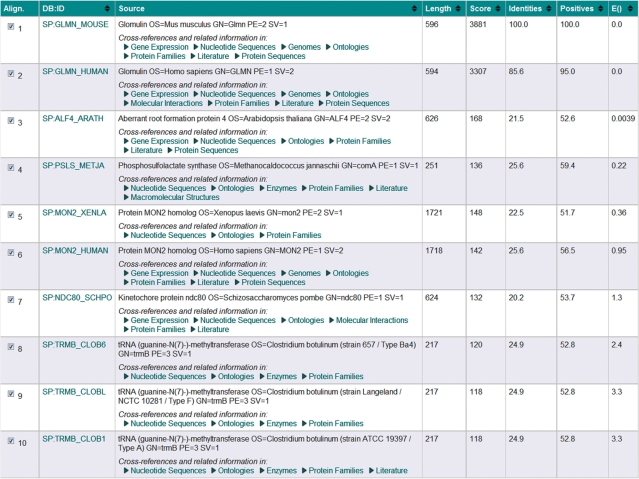
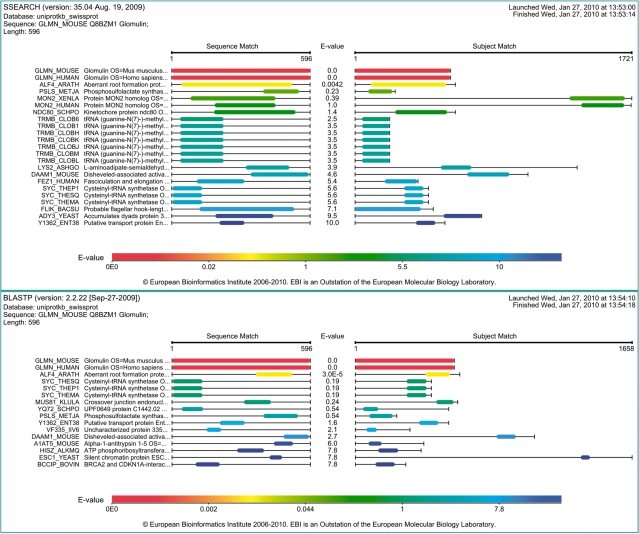
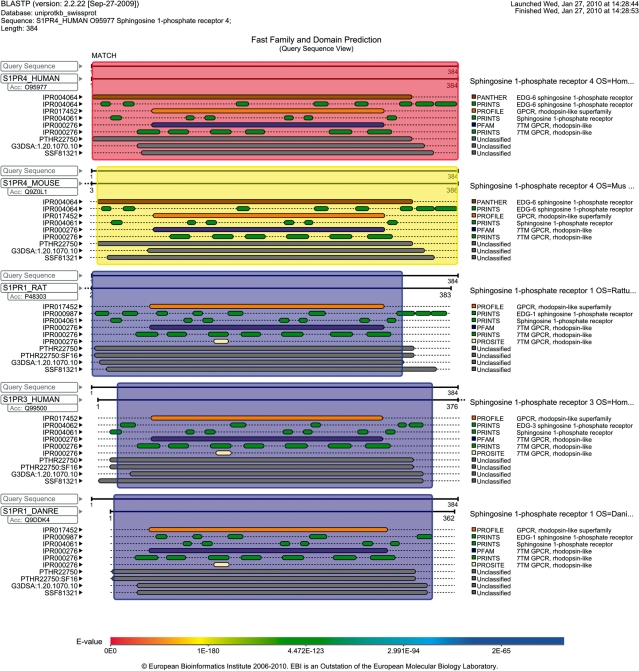
The EMBL-EBI provides access to various mainstream sequence analysis applications. These include sequence similarity search services such as BLAST, FASTA, InterProScan and multiple sequence alignment tools such as ClustalW, T-Coffee and MUSCLE. Through the sequence similarity search services, the users can search mainstream sequence databases such as EMBL-Bank and UniProt, and more than 2000 completed genomes and proteomes. We present here a new framework aimed at both novice as well as expert users that exposes novel methods of obtaining annotations and visualizing sequence analysis results through one uniform and consistent interface. These services are available over the web and via Web Services interfaces for users who require systematic access or want to interface with customized pipe-lines and workflows using common programming languages. The framework features novel result visualizations and integration of domain and functional predictions for protein database searches. It is available at http://www.ebi.ac.uk/Tools/sss for sequence similarity searches and at http://www.ebi.ac.uk/Tools/msa for multiple sequence alignments.
Overview
The claims and statistics of this paper haven’t been checked yet.
Free: it reads the open-access text and checks the first 5 claims that cite a source we can check. Create a free account to check every claim.
Integrity signals
Registry
Cites
Statistics
Figures
Verification
Claims the paper makes
The claims and statistics of this paper haven’t been checked yet.
Free: it reads the open-access text and checks the first 5 claims that cite a source we can check. Create a free account to check every claim.
Claims other papers make about this one
Each is checked against this paper’s own text: does it say what the citing paper says it does?
The check wasn’t confident either way, so it gives no verdict — never disputed.
In the citing paper
“It is possible that we observed low cross-link coverage within the MBD2 -GATAD2A coiled-coil domain because, as the authors of that study noted, this interaction hides at least 1337 A 2 of the solvent-accessible area, potentially hindering BS3 accessibility.”
From Towards elucidating the stability, dynamics and architecture of the nucleosome remodeling and deacetylase complex by using quantitative interaction proteomics (2015) · cites this paper as [31]
Experimental — accuracy not yet measured
Self-check
Percentages, sums and reported differences re-computed from the paper’s own numbers.
The self-check needs the paper’s full text.
Citations
Cites
Gapped BLAST and PSI-BLAST: a new generation of protein database search programs
Altschul, S. (1997) · Nucleic Acids Research · doi:10.1093/nar/25.17.3389 · Cited by 73,302
MUSCLE: multiple sequence alignment with high accuracy and high throughput
Edgar, R. C. (2004) · Nucleic Acids Research · doi:10.1093/nar/gkh340 · Cited by 44,662
Clustal W and Clustal X version 2.0
Larkin, M. A., Blackshields, G., Brown, N. P., Chenna, R., McGettigan, P. A., McWilliam, H., Valentin, F., Wallace, I. M., Wilm, A., Lopez, R., et al. (2007) · Bioinformatics · doi:10.1093/bioinformatics/btm404 · Cited by 28,358
Self-citationImproved tools for biological sequence comparison.
Pearson, W. R., & Lipman, D. J. (1988) · Proceedings of the National Academy of Sciences · doi:10.1073/pnas.85.8.2444 · Cited by 11,227 · cited 3×
“These include sequence similarity search services (http://www.ebi.ac .uk/Tools/similarity.html), such as FASTA (3), BLAST (4,5) and InterProScan (6) and multiple sequence alignment tools (http://www.ebi.ac.uk/Tools/sequence.html), such as ClustalW (7), T-Coffee (8), MUSCLE (9), Kalign (10) and MAFFT (11).”
T-coffee: a novel method for fast and accurate multiple sequence alignment 1 1Edited by J. Thornton
Notredame, C., Higgins, D. G., & Heringa, J. (2000) · Journal of Molecular Biology · doi:10.1006/jmbi.2000.4042 · Cited by 6,852
InterProScan: protein domains identifier
Quevillon, E., Silventoinen, V., Pillai, S., Harte, N., Mulder, N., Apweiler, R., & Lopez, R. (2005) · Nucleic Acids Research · doi:10.1093/nar/gki442 · Cited by 3,015 · cited 3×
“These include sequence similarity search services (http://www.ebi.ac .uk/Tools/similarity.html), such as FASTA (3), BLAST (4,5) and InterProScan (6) and multiple sequence alignment tools (http://www.ebi.ac.uk/Tools/sequence.html), such as ClustalW (7), T-Coffee (8), MUSCLE (9), Kalign (10) and MAFFT (11).”
MethodInterPro: the integrative protein signature database
Hunter, S., Apweiler, R., Attwood, T. K., Bairoch, A., Bateman, A., Binns, D., Bork, P., Das, U., Daugherty, L., Duquenne, L., et al. (2009) · Nucleic Acids Research · doi:10.1093/nar/gkn785 · Cited by 2,107 · cited 2×
“Family and domain functional predictions have been built into the framework, using pre-calculated matches from the InterPro Consortium (14) data.”
MethodSelf-citationMultiple Alignment of DNA Sequences with MAFFT
Katoh, K., Asimenos, G., & Toh, H. (2009) · Methods in Molecular Biology · doi:10.1007/978-1-59745-251-9_3 · Cited by 1,438 · cited 2×
“These include sequence similarity search services (http://www.ebi.ac .uk/Tools/similarity.html), such as FASTA (3), BLAST (4,5) and InterProScan (6) and multiple sequence alignment tools (http://www.ebi.ac.uk/Tools/sequence.html), such as ClustalW (7), T-Coffee (8), MUSCLE (9), Kalign (10) and MAFFT (11).”
BackgroundThe Universal Protein Resource (UniProt) in 2010
The UniProt Consortium (2010) · Nucleic Acids Research · doi:10.1093/nar/gkp846 · Cited by 1,257
KNIME: The Konstanz Information Miner
Berthold, M. R., Cebron, N., Dill, F., Gabriel, T. R., Kötter, T., Meinl, T., Ohl, P., Sieb, C., Thiel, K., & Wiswedel, B. (2008) · Studies in Classification, Data Analysis, and Knowledge Organization · doi:10.1007/978-3-540-78246-9_38 · Cited by 1,251
Cited by
Items 201–300 of 1,015
Rosa, B. A., Jasmer, D. P., & Mitreva, M. (2014) · PLoS neglected tropical diseases · doi:10.1371/journal.pntd.0002678 · Cited by 73
“Interproscan [29,30] was used to determine associations of genes to Gene Ontology (GO) terms [31], and FUNC [36] (which considers the hierarchical structure of GO) was used to determine significant functional enrichment among the genes overexpressed in each tissue, with a p#0.”
MethodThe Magellania venosa Biomineralizing Proteome: A Window into Brachiopod Shell Evolution
Jackson, D. J., Mann, K., Häussermann, V., Schilhabel, M. B., Lüter, C., Griesshaber, E., Schmahl, W., & Wörheide, G. (2015) · Genome Biology and Evolution · doi:10.1093/gbe/evv074 · Cited by 72
“Peroxidases are well known to be present in biomineralizing tissues in mollusks (Timmermans 1969; Hohagen and Jackson 2013), and are generally thought to function in the cross-linking of proteins present in molluscan periostracum (Kniprath 1977).”
BackgroundKiefer, C., Severing, E. I., Karl, R., Bergonzi, S., Koch, М. A., Tresch, A., & Coupland, G. (2017) · Molecular Ecology · doi:10.1111/mec.14084 · Cited by 75
“GATA (Nix & Eisen 2005), MVISTA (Mayor et al. 2000; Frazer et al. 2004), YASS (Noe & Kucherov 2005) and CLUSTALW (Larkin et al. 2007; Goujon et al. 2010; McWilliam et al. 2013) were used for different aspects of sequence analysis (details in Supplementary Methods, Supporting information).”
MethodThe root-knot nematode effector MiPFN3 disrupts plant actin filaments and promotes parasitism
Leelarasamee, N., Zhang, L., & Gleason, C. (2018) · PLoS Pathogens · doi:10.1371/journal.ppat.1006947 · Cited by 73
Comparison of Five Protein Engineering Strategies for Stabilizing an α/β-Hydrolase
Jones, B. J., Lim, H. Y., Huang, J., & Kazlauskas, R. J. (2017) · Biochemistry · doi:10.1021/acs.biochem.7b00571 · Cited by 72
diCenzo, G. C., Milunovic, B., Cheng, J., & Finan, T. M. (2012) · Journal of Bacteriology · doi:10.1128/jb.01758-12 · Cited by 71
Llarrull, L. I., Tóth, M., Champion, M. M., & Mobashery, S. (2011) · Journal of Biological Chemistry · doi:10.1074/jbc.m111.288985 · Cited by 71
Mann, K., & Edsinger, E. (2014) · Proteome Science · doi:10.1186/1477-5956-12-28 · Cited by 71
Interaction of carbohydrate-binding modules with poly(ethylene terephthalate)
Weber, J., Petrović, D., Strodel, B., Smits, S. H. J., Kolkenbrock, S., Leggewie, C., & Jaeger, K. (2019) · Applied Microbiology and Biotechnology · doi:10.1007/s00253-019-09760-9 · Cited by 70
Qian, S., Wang, Y., Mā, H., & Zhang, L. (2015) · PLANT PHYSIOLOGY · doi:10.1104/pp.15.00520 · Cited by 69
“…the sequences acquired in the first step were employed as queries to search genomic sequence data sets using a software called Phoenix (Protein Homolog Extraction), which is based on TBLASTN and GeneWise (http://www.ebi.ac.uk/Tools/psa/ genewise/; Altschul et al., 1990; Goujon et al., 2010).”
MethodGiessen, T. W., von Tesmar, A. M., & Marahiel, M. A. (2013) · Biochemistry · doi:10.1021/bi4004827 · Cited by 69
Variable microtubule architecture in the malaria parasite
Ferreira, J. L., Pražák, V., Vasishtan, D., Siggel, M., Hentzschel, F., Binder, A. M., Pietsch, E., Kosinski, J., Frischknecht, F., Gilberger, T. W., et al. (2023) · Nature Communications · doi:10.1038/s41467-023-36627-5 · Cited by 68
Yu, N., Nachman, R. J., & Smagghe, G. J. (2013) · General and Comparative Endocrinology · doi:10.1016/j.ygcen.2013.03.006 · Cited by 68
Structural Insight into African Horsesickness Virus Infection
Manole, V., Laurinmäki, P., Wyngaardt, W. V., Potgieter, C. A., Wright, I. M., Venter, G. J., van Dijk, A. A., Sewell, B. T., & Butcher, S. J. (2012) · Journal of Virology · doi:10.1128/jvi.00517-12 · Cited by 68
“for Clustal W for multiple-sequence alignments (21, 35) and with”
Giessen, T. W., von Tesmar, A. M., & Marahiel, M. A. (2013) · Chemistry & Biology · doi:10.1016/j.chembiol.2013.04.017 · Cited by 68
Kottler, V. A., Fadeev, A., Weigel, D., & Dreyer, C. (2013) · Genetics · doi:10.1534/genetics.113.151738 · Cited by 61
Jankowitsch, F., Schwarz, J., Rückert, C., Gust, B., Szczepanowski, R., Blom, J., Pelzer, S., Kalinowski, J., & Mack, M. (2012) · Journal of Bacteriology · doi:10.1128/jb.01592-12 · Cited by 68
“From the best hits, a multiple-sequence alignment was built and phylogeny was derived by applying the ClustalW2 program (16, 32).”
MethodBansal, R., Mian, M. A. R., Mittapalli, O., & Michel, A. P. (2012) · International Journal of Biological Sciences · doi:10.7150/ijbs.4189 · Cited by 68
“The amino acid sequence of the putative catalytic domain predicted by SMART tool [28] is boxed.”
MethodComparative analysis of non-coding RNAs in the antibiotic-producing Streptomyces bacteria
Moody, M. J., Young, R. A., Jones, S. E., & Elliot, M. A. (2013) · BMC Genomics · doi:10.1186/1471-2164-14-558 · Cited by 68
“Frame Plot 2.3.2 was used to highlight potential open-reading frames, and amino acid sequences of similar lengths (≤10% difference) were aligned using Clustal Omega [89,90].”
MethodInfluentialProteins that control the geometry of microtubules at the ends of cilia
Louka, P., Vasudevan, K. K., Guha, M., Joachimiak, E., Włoga, D., Tomasi, R. F.-X., Baroud, C. N., Dupuis‐Williams, P., Galati, D. F., Pearson, C. G., et al. (2018) · The Journal of Cell Biology · doi:10.1083/jcb.201804141 · Cited by 68
“A multiple sequence alignment of CEP104/FAP256 was generated using ClustalW (Larkin et al., 2007; Goujon et al., 2010).”
MethodBrandsma, E. T., Verhagen, H. J. M. P., van de Laar, T. J. W., Claas, E. C. J., Cornelissen, M. T. E., & van den Akker, E. (2020) · The Journal of Infectious Diseases · doi:10.1093/infdis/jiaa641 · Cited by 67
Jayaram, B., Dhingra, P., Mishra, A., Kaushik, R. K., Mukherjee, G., Singh, A., & Shekhar, S. (2014) · BMC Bioinformatics · doi:10.1186/1471-2105-15-s16-s7 · Cited by 67
“Homology modeling [25-30] and fold recognition/ threading methods [31-35] are knowledge based approaches, which are routinely used to generate reliable models for proteins with overall fold topology similar to an available template in the protein databases.”
MethodDistinct subunit pairing criteria within the heterodimeric IL-12 cytokine family
Jones, L. L., Chaturvedi, V., Uyttenhove, C., Snick, J. V., & Vignali, D. A. A. (2012) · Molecular Immunology · doi:10.1016/j.molimm.2012.03.025 · Cited by 67
“Amino acid sequences were aligned using ClustalW as previously described (Goujon et al., 2010; Larkin et al., 2007).”
Tissue-Specific Silencing of ArabidopsisSU(VAR)3-9 HOMOLOG8by miR171a
Manavella, P. A., Koenig, D., Rubio‐Somoza, I., Burbano, H. A., Becker, C., & Weigel, D. (2012) · PLANT PHYSIOLOGY · doi:10.1104/pp.112.207068 · Cited by 66
“Computational Analyses MIR171 precursor sequences were obtained from miRBase (Griffiths-Jones et al., 2006) and aligned with ClustalW2 using the EMBL-EBI framework (Larkin et al., 2007; Goujon et al., 2010).”
MethodCrystal Structure of the Coat Protein of the Flexible Filamentous Papaya Mosaic Virus
Yang, S., Wang, T., Bohon, J., Gagné, M.-È., Bolduc, M., Leclerc, D., & Li, H. (2012) · Journal of Molecular Biology · doi:10.1016/j.jmb.2012.05.032 · Cited by 66
“Materials and Methods Expression and Purification of Recombinant PapMV CP(6-215) from E.”
BackgroundMethodAn O‐methyltransferase modifies accumulation of methylated anthocyanins in seedlings of tomato
Roldán, M. V. G., Outchkourov, N. S., van Houwelingen, A. M. M. L., Lammers, M., de la Fuente, I. R., Ziklo, N., Aharoni, A., Hall, R. D., & Beekwilder, J. (2014) · The Plant Journal · doi:10.1111/tpj.12664 · Cited by 66
Tahon, G., & Willems, A. (2017) · Systematic and Applied Microbiology · doi:10.1016/j.syapm.2017.05.007 · Cited by 66
Model animals for the study of oxidative stress from complex II
Ishii, T., Miyazawa, M., Onouchi, H., Yasuda, K., Hartman, P. S., & Ishii, N. (2012) · Biochimica et Biophysica Acta (BBA) - Bioenergetics · doi:10.1016/j.bbabio.2012.10.016 · Cited by 65
Bansal, R., & Michel, A. P. (2013) · International Journal of Molecular Sciences · doi:10.3390/ijms14023786 · Cited by 65
“0; Center for Biological Sequence Analysis: Lyngby, Denmark, 2007) Multiple alignments of various protein sequences were performed by using ClustalW [54,55].”
MethodInfluentialLord, É., Leclercq, M., Boc, A., Diallo, A. B., & Makarenkov, V. (2012) · PLoS ONE · doi:10.1371/journal.pone.0029903 · Cited by 65
“We also included to the first version of Armadillo the access to two major data source and web service providers: GenBank maintained by the National Center for Biotechnology Information (NCBI) and Ensembl maintained by European Bioinformatics Institute (EBI) and the Wellcome Trust Sanger Institute (WTSI) (see Table 1).”
BackgroundMethodAltering the Activation Mechanism in Thermomyces lanuginosus Lipase
Skjold‐Jørgensen, J., Vind, J., Svendsen, A., & Bjerrum, M. J. (2014) · Biochemistry · doi:10.1021/bi500233h · Cited by 65
Schwarz, T., Prieler, B. E. M., Schmid, J. A., Grzmil, P., & Neesen, J. (2017) · European Journal of Cell Biology · doi:10.1016/j.ejcb.2017.02.003 · Cited by 64
“Protein alignment of huma rthologues using Clustal Omega.”
MethodInfluentialBadarau, A., Rouha, H., Malafa, S., Logan, D. T., Håkansson, M., Stulik, L., Doležílková, I., Teubenbacher, A., Gross, K., Maierhofer, B., et al. (2014) · Journal of Biological Chemistry · doi:10.1074/jbc.m114.598110 · Cited by 64
“alignment was performed with the ClustalW2 program (36).”
MethodNicolaou, S. A., Fast, A. G., Nakamaru‐Ogiso, E., & Papoutsakis, E. T. (2013) · Applied and Environmental Microbiology · doi:10.1128/aem.02322-13 · Cited by 64
“Multiple-sequence alignment was performed by using the ClustalW server (37, 38).”
MethodCadherin 26 is an alpha integrin-binding epithelial receptor regulated during allergic inflammation
Caldwell, J. M., Collins, M. H., Kemme, K. A., Sherrill, J. D., Wen, T., Rochman, M., Stucke, E. M., Amin, L., Tai, H.-C., Putnam, P. E., et al. (2017) · Mucosal Immunology · doi:10.1038/mi.2016.120 · Cited by 64
The exonuclease Xrn1 activates transcription and translation of mRNAs encoding membrane proteins
Blasco-Moreno, B., de Campos‐Mata, L., Böttcher, R., García‐Martínez, J., Jungfleisch, J., Nedialkova, D. D., Chattopadhyay, S., Gas, M.-E., Oliva, B., Pérez-Ortín, J. E., et al. (2019) · Nature Communications · doi:10.1038/s41467-019-09199-6 · Cited by 64
Rissone, A., Weinacht, K. G., la Marca, G., Bishop, K., Giocaliere, E., Jagadeesh, J., Felgentreff, K., Dobbs, K., Al-Herz, W., Jones, M., et al. (2015) · Journal of Experimental Medicine · doi:10.1084/jem.20141286 · Cited by 63
“Multi-alignment of human and zebrafish AK2 was performed with Clustal Omega (Goujon et al., 2010).”
MethodThree Ontologies to Define Phenotype Measurement Data
Shimoyama, M. E., Nigam, R., McIntosh, L. D., Nagarajan, R., Rice, T., Rao, D. C., & Dwinell, M. R. (2012) · Frontiers in Genetics · doi:10.3389/fgene.2012.00087 · Cited by 63
“, 2010), and the European Bioinformatics Institute (EBI; Goujon et al., 2010).”
Backgroundde Lange, O., Wolf, C., Dietze, J., Elsäesser, J., Morbitzer, R., & Lahaye, T. (2014) · Nucleic Acids Research · doi:10.1093/nar/gku329 · Cited by 63
Statin Lactonization by Uridine 5′-Diphospho-glucuronosyltransferases (UGTs)
Schirris, T. J. J., Ritschel, T., Bilos, A., Smeitink, J. A. M., & Rüssel, F. G. M. (2015) · Molecular Pharmaceutics · doi:10.1021/acs.molpharmaceut.5b00474 · Cited by 63
A novel de novo mutation inATP1A3and childhood-onset schizophrenia
Smedemark-Margulies, N., Brownstein, C. A., Vargas, S., Tembulkar, S. K., Towne, M. C., Shi, J., Gonzalez-Cuevas, E., Liu, K. X., Bilgüvar, K., Kleiman, R. J., et al. (2016) · Molecular Case Studies · doi:10.1101/mcs.a001008 · Cited by 63
Structural Basis of Homology-Directed DNA Repair Mediated by RAD52
Saotome, M., Saito, K., Yasuda, T., Ohtomo, H., Sugiyama, S., Nishimura, Y., Kurumizaka, H., & Kagawa, W. (2018) · iScience · doi:10.1016/j.isci.2018.04.005 · Cited by 63
Godessart, P., Lannoy, A., Dieu, M., der Verren, S. E. V., Soumillion, P., Collet, J., Remaut, H. K., Renard, P., & Bolle, X. D. (2020) · Nature Microbiology · doi:10.1038/s41564-020-00799-3 · Cited by 63
Martynov, A., Elpidina, E. N., Perkin, L., & Oppert, B. (2015) · BMC Genomics · doi:10.1186/s12864-015-1306-x · Cited by 62
“A cladogram was constructed with MegAlign, using ClustalW alignment [38,47] according to Dayhoff et al.”
Papke, R. L., Ono, F., Stokes, C. A., Urban, J. M., & Boyd, R. T. (2012) · Biochemical Pharmacology · doi:10.1016/j.bcp.2012.04.022 · Cited by 62
“Sequence identities/similarities were determined for pairwise comparisons between orthologous subunits using the programs EMBOSS Stretcher [19] and ClustalW2.”
MethodLeung, J. M., He, Y., Zhang, F., Hwang, Y.-C., Nagayasu, E., Liu, J., Murray, J. M., & Hu, K. (2017) · Molecular Biology of the Cell · doi:10.1091/mbc.e17-01-0045 · Cited by 62
Khan, N. Z., Lindquist, E., & Aronsson, H. (2013) · PLoS ONE · doi:10.1371/journal.pone.0059898 · Cited by 61
“uk/Tools/msa/clustalo/) [78,79].”
Hanko, E. K. R., Minton, N. P., & Malys, N. (2017) · Scientific Reports · doi:10.1038/s41598-017-01850-w · Cited by 61
The Ligand Binding Landscape of Diacylglycerol Kinases
Franks, C. E., Campbell, S., Purow, B. W., Harris, T. E., & Hsu, K. (2017) · Cell chemical biology · doi:10.1016/j.chembiol.2017.06.007 · Cited by 61
Zou, T., Li, S., Liu, M., Wang, T., Xiao, Q., Chen, D., Li, Q., Liang, Y., Zhu, J., Liang, Y., et al. (2017) · Scientific Reports · doi:10.1038/s41598-017-07064-4 · Cited by 61
OsPKS2 is required for rice male fertility by participating in pollen wall formation
Zou, T., Liu, M., Xiao, Q., Wang, T., Chen, D., Luo, T., Yuan, G., Li, Q., Zhu, J., Liang, Y., et al. (2018) · Plant Cell Reports · doi:10.1007/s00299-018-2265-x · Cited by 61
Mens, C., Li, D., Haaima, L. E., Gresshoff, P. M., & Ferguson, B. J. (2018) · Frontiers in Plant Science · doi:10.3389/fpls.2018.01150 · Cited by 61
“The obtained sequences were further characterized through a multiple sequence alignment via Clustal Omega hosted by EMBL-EBI (Goujon et al., 2010; Sievers et al., 2011; McWilliam et al., 2013; Corcilius et al., 2017).”
MethodLu, H., Klocko, A. L., Brunner, A. M., Ma, C., Magnuson, A., Howe, G. T., An, X., & Strauss, S. H. (2018) · New Phytologist · doi:10.1111/nph.15648 · Cited by 61
“Pairwise percentage sequence identities between the PaAG transcripts and the RNAi hairpin were calculated using C LUSTAL O MEGA (Goujon et al. , 2010; Sievers et al. , 2011).”
MethodClassification of Lipolytic Enzymes from Bacteria
Kovačić, F., Babic, N., Krauß, U., & Jaeger, K. (2019) · Springer eBooks · doi:10.1007/978-3-319-50418-6_39 · Cited by 61
Immune Signaling and Antimicrobial Peptide Expression in Lepidoptera
Casanova‐Torres, Á. M., & Goodrich‐Blair, H. (2013) · Insects · doi:10.3390/insects4030320 · Cited by 61
“Sequence alignment was performed using Clustal Omega [121,122] bootstrapping analysis, matrix calculation, matrix transformation were conducted by the Fitch-Margoliash method and the combination of the 1,000 resulting trees was identified using the Seqboot, Protdist, Fitch and Consense”
MethodPolyhistidine triad proteins of pathogenic streptococci
Plumptre, C. D., Ogunniyi, A. D., & Paton, J. C. (2012) · Trends in Microbiology · doi:10.1016/j.tim.2012.06.004 · Cited by 60
Characterization and phylogeny of fungi isolated from industrial wastewater using multiple genes
Ezeonuegbu, B. A., Machido, D. A., Whong, C. M. Z., Japhet, W. S., Kassem, H. S., Yaro, C. A., Hetta, H. F., Mostafa‐Hedeab, G., Zouganelis, G. D., & Batiha, G. E. (2022) · Scientific Reports · doi:10.1038/s41598-022-05820-9 · Cited by 60
Jirintai, S., Tanggis, Mulyanto, M., Suparyatmo, J. B., Takahashi, M., Kobayashi, T., Nagashima, S., Nishizawa, T., & Okamoto, H. (2014) · Virus Research · doi:10.1016/j.virusres.2014.03.002 · Cited by 60
Lee, P., Zou, J., Holland, J. W., Martín, S., Kanellos, T., & Secombes, C. J. (2013) · Developmental & Comparative Immunology · doi:10.1016/j.dci.2013.05.013 · Cited by 60
“0) (Goujon et al., 2010; Larkin et al., 2007) (http://www.”
MethodJia, J., Coyle, R. C., Richards, D., Berry, C., Barrs, R. W., Biggs, J., Chou, C. J., Trusk, T. C., & Mei, Y. (2016) · Acta Biomaterialia · doi:10.1016/j.actbio.2016.09.006 · Cited by 60
Yılmaz, Ö., Patinote, A., Nguyen, T., & Bobe, J. (2018) · Fish Physiology and Biochemistry · doi:10.1007/s10695-018-0524-y · Cited by 60
Fegan, J. E., Calmettes, C., Islam, E. A., Ahn, S. K., Chaudhuri, S., Yu, R., Gray‐Owen, S. D., Moraes, T. F., & Schryvers, A. B. (2019) · Frontiers in Immunology · doi:10.3389/fimmu.2019.00247 · Cited by 60
Guardado-Estrada, M., Medina‐Martínez, I., Juárez-Torres, E., Román‐Bassaure, E., Macías, J. L., Alfaro, A., Alcántara-Vázquez, A., Alonso, P., Gomez, G., Cruz-Talonia, F., et al. (2012) · Journal of Human Genetics · doi:10.1038/jhg.2012.17 · Cited by 60
Amer, H. H., Eldrehmy, E. H., Abdel-Hafez, S. M., Alghamdi, Y. S., Hassan, M. Y., & Alotaibi, S. H. (2021) · Scientific Reports · doi:10.1038/s41598-021-97297-1 · Cited by 59
Barker, A., RENZAGLIA, K. S., Fry, K., & Dawe, H. R. (2014) · BMC Genomics · doi:10.1186/1471-2164-15-531 · Cited by 59
“To be included as a putative orthologue (green or blue boxes, Additional file 1: Table S1), proteins with an evalue better than cut-off must have returned the original starting sequence when queried against the Homo sapiens proteome and, if close to the cut-off value (e-value within 5 orders of magnitude) further conf…”
MethodBacterial noncoding Y RNAs are widespread and mimic tRNAs
Chen, X., Sim, S., Wurtmann, E. J., Feke, A., & Wolin, S. L. (2014) · RNA · doi:10.1261/rna.047241.114 · Cited by 59
“Following initial primary sequence homology searches using BLASTN, the sequences in Figure 1D were aligned using Clustal Omega (Goujon et al. 2010; Sievers et al. 2011) and the alignment used to build a consensus secondary structure model using Infernal (version 1.1) (Nawrocki and Eddy 2013)…”
InfluentialAspergillus , its sexual states and the new International Code of Nomenclature
Pitt, J. I., & Taylor, J. W. (2014) · Mycologia · doi:10.3852/14-060 · Cited by 59
“Sequences were aligned with MUSCLE (Goujon et al. 2010) and trimmed to equal lengths.”
MethodKuzu, G., Kaye, E. G., Chery, J., Siggers, T., Yang, L., Dobson, J. R., Boor, S., Bliss, J. E., Liu, W., Jogl, G., et al. (2016) · PLoS Genetics · doi:10.1371/journal.pgen.1006120 · Cited by 59
“mirandaMSL2 CXC domain and determined that it lacks 4 out of 9 cysteine residues that are required to maintain its structure and the key R543 residue that contacts the cytosine specifically (S14 Fig)[40].”
BackgroundRNA Remodeling Activity of DEAD Box Proteins Tuned by Protein Concentration, RNA Length, and ATP
Kim, Y.-H., & Myong, S. (2016) · Molecular Cell · doi:10.1016/j.molcel.2016.07.010 · Cited by 59
“Motif analysis defines characteristic amino acid sequences at both the NTD and CTD as intrinsically disordered Molec regions (IDRs) (Goujon et al., 2010; Sigrist et al., 2013; Figures 1B and 1C).”
Saade, M., Gonzalez-Gobartt, E., Escalona, R., Usieto, S., & Martí, E. (2017) · Nature Cell Biology · doi:10.1038/ncb3512 · Cited by 59
Deng, C. H., Plummer, K. M., Jones, D., Mesarich, C. H., Shiller, J. B., Taranto, A. P., Robinson, A. J., Kastner, P., Hall, N. E., Templeton, M. D., et al. (2017) · BMC Genomics · doi:10.1186/s12864-017-3699-1 · Cited by 59
“InterProScan 5 [174, 178] was used to analyse conserved domains in the SSPs.”
MethodStrategies to Improve the Clinical Utility of Saporin-Based Targeted Toxins
Giansanti, F., Flavell, D. J., Angelucci, F., Fabbrini, M. S., & Ippoliti, R. (2018) · Toxins · doi:10.3390/toxins10020082 · Cited by 59
“, Conway Institute UCD Dublin, Ireland, 2017) [65].”
Predictability and persistence of prebiotic dietary supplementation in a healthy human cohort
Gurry, T., HST Microbiome Consortium*, Dannenberg, P. H., Finlayson, S. G., Hughes, T. K., Macias-Trevino, C., Owusu-Boaitey, K., Shomorony, A., Tuang, S. L., Valenstein, M. L., et al. (2018) · Scientific Reports · doi:10.1038/s41598-018-30783-1 · Cited by 55
Exit tunnel modulation as resistance mechanism of S. aureus erythromycin resistant mutant
Halfon, Y., Matzov, D., Eyal, Z., Bashan, A., Zimmerman, E., Kjeldgaard, J., Ingmer, H., & Yonath, A. (2019) · Scientific Reports · doi:10.1038/s41598-019-48019-1 · Cited by 55
Distribution of Bacterial α1,3-Galactosyltransferase Genes in the Human Gut Microbiome
Montassier, E., Al-Ghalith, G. A., Mathé, C., Le Bastard, Q., Douillard, V., Garnier, A., Guimon, R., Raimondeau, B., Touchefeu, Y., Duchalais, E., et al. (2020) · Frontiers in Immunology · doi:10.3389/fimmu.2019.03000 · Cited by 54
“We removed the duplicates to conduct the alignment and the tree building as advised for these algorithms; the alignment was performed using Clustal Omega from the EMBL-EBI website (22, 23).”
MethodTargeted proteomic dissection of Toxoplasma cytoskeleton sub‐compartments using MORN1
Lorestani, A., Ivey, F. D., Thirugnanam, S., Busby, M., Marth, G., Cheeseman, I. M., & Gubbels, M. (2012) · Cytoskeleton · doi:10.1002/cm.21077 · Cited by 58
“Multiple sequence alignments were performed and color-coded using ClustalW2 [Larkin et al., 2007; Goujon et al., 2010].”
MethodAnalysis of human upstream open reading frames and impact on gene expression
Ye, Y., Liang, Y., Yu, Q., Hu, L., Li, H., Zhang, Z., & Xu, X. (2015) · Human Genetics · doi:10.1007/s00439-015-1544-7 · Cited by 58
“Then, in order to ensure the integrity of the cross-reference data, these NM entries with nucleotide sequences were globally aligned to their corresponding GenBank sequences via ClustalW2 (Larkin et al. 2007; Goujon et al. 2010).”
MethodNDE1 and NDEL1: twin neurodevelopmental proteins with similar ‘nature’ but different ‘nurture’
Bradshaw, N. J., Hennah, W., & Soares, D. C. (2013) · BioMolecular Concepts · doi:10.1515/bmc-2013-0023 · Cited by 58
“Sasaki et al. showed that full-length murine Ndel1 interacted strongly with itself, and by means of yeast two-hybrid based assays using NDEL1 truncation The percentage amino acid sequence identity was compared using Clustal Omega (108, 109) after alignment shown in Figure 1.”
Short ROSE-Like RNA Thermometers Control IbpA Synthesis in Pseudomonas Species
Krajewski, S. S., Nagel, M., & Narberhaus, F. (2013) · PLoS ONE · doi:10.1371/journal.pone.0065168 · Cited by 58
“Sequence alignment and consensus structure of the ibpA 59UTR of different Pseudomonas species calculated with ClustalW2 and RNAalifold [33,34,36].”
MethodToxoplasma gondii-Derived Profilin Triggers Human Toll-Like Receptor 5-Dependent Cytokine Production
Gonzalez, R. M. S., Shehata, H. M., O'Connell, M. J., Yang, Y., Moreno‐Fernandez, M. E., Chougnet, C. A., & Aliberti, J. (2014) · Journal of Innate Immunity · doi:10.1159/000362367 · Cited by 58
Gruszczyk, J., Lim, N. T. Y., Arnott, A., He, W., Nguitragool, W., Roobsoong, W., Mok, Y.-F., Murphy, J. M., Smith, K. R., Lee, S. A., et al. (2015) · Proceedings of the National Academy of Sciences · doi:10.1073/pnas.1516512113 · Cited by 58
“Sequence alignment was performed using ClustalW2 (47), corrected manually and visualized using program ESPript3.”
MethodDiversity of ribosomes at the level of rRNA variation associated with human health and disease
Rothschild, D., Susanto, T. T., Sui, X., Spence, J. P., Rangan, R., Genuth, N. R., Sinnott-Armstrong, N., Wang, X., Pritchard, J. K., & Barna, M. (2024) · Cell Genomics · doi:10.1016/j.xgen.2024.100629 · Cited by 57
Division of labor in transhydrogenase by alternating proton translocation and hydride transfer
Leung, J. H., Schurig-Briccio, L. A., Yamaguchi, M., Moeller, A., Speir, J. A., Gennis, R. B., & Stout, C. D. (2015) · Science · doi:10.1126/science.1260451 · Cited by 57
Mechanisms of Toxin Inhibition and Transcriptional Repression by Escherichia coli DinJ-YafQ
Ruangprasert, A., Maehigashi, T., Miles, S. J., Giridharan, N., Liu, J. X., & Dunham, C. M. (2014) · Journal of Biological Chemistry · doi:10.1074/jbc.m114.573006 · Cited by 57
Retegan, M., & Pantazis, D. A. (2016) · Chemical Science · doi:10.1039/c6sc02340a · Cited by 57
Wiegard, A., Dörrich, A. K., Deinzer, H.-T., Beck, C., Wilde, A., Holtzendorff, J., & Axmann, I. M. I. (2013) · Microbiology · doi:10.1099/mic.0.065425-0 · Cited by 57
“Multiple sequence alignments were constructed with CLUSTAL Omega (Goujon et al., 2010; Sievers et al., 2011) and edited with GeneDoc (Nicholas et al.”
MethodZhang, L., Silva, D., Zhang, H.-D., Yue, A., Yan, Y., & Huang, X. (2014) · Nature Communications · doi:10.1038/ncomms5170 · Cited by 56
Liu, H., Zhang, H., Weisz, D. A., Vidavsky, I., Gross, M. L., & Pakrasi, H. B. (2014) · Proceedings of the National Academy of Sciences · doi:10.1073/pnas.1323063111 · Cited by 56
“Sievers F, et al. (2011) Fast, scalable generation of high-quality protein multiple sequence alignments using Clustal Omega.”
MethodThumilan, B. M., Sajeevan, R. S., Biradar, J., Madhuri, T., Nataraja, K. N., & Sreeman, S. (2016) · PLoS ONE · doi:10.1371/journal.pone.0162909 · Cited by 56
Mageeney, C. M., & Ware, V. C. (2019) · Molecular Biology of the Cell · doi:10.1091/mbc.e19-02-0086 · Cited by 56
Structural basis of target DNA recognition by CRISPR-Cas12k for RNA-guided DNA transposition
Xiao, R., Wang, S., Han, R., Li, Z., Gabel, C. A., Mukherjee, I. A., & Chang, L. (2021) · Molecular Cell · doi:10.1016/j.molcel.2021.07.043 · Cited by 56
Payne, J. T., Valentic, T. R., & Smolke, C. D. (2021) · Proceedings of the National Academy of Sciences · doi:10.1073/pnas.2112520118 · Cited by 55
“ESPript was used for visualization of protein sequence alignments (49, 50).”
Development of an Efficient Targeted Cell-SELEX Procedure for DNA Aptamer Reagents
MEYER, S. R., Maufort, J. P., Nie, J., Stewart, R. M., McIntosh, B. E., Conti, L. R., Ahmad, K. M., Soh, H. T., & Thomson, J. A. (2013) · PLoS ONE · doi:10.1371/journal.pone.0071798 · Cited by 55
“S1) [29,30].”
Friedman, K. P., Hedge, J. M., Macherla, C., Filer, D. L., Burgess, E., Simmons, S. O., Crofton, K. M., & Hornung, M. W. (2013) · Toxicology · doi:10.1016/j.tox.2013.08.006 · Cited by 55
Takaoka, S., Kurata, M., Harimoto, Y., Hatta, R., Yamamoto, M., Akimitsu, K., & Tsuge, T. (2014) · New Phytologist · doi:10.1111/nph.12754 · Cited by 55
“An InterProScan sequence search (http://www.ebi.ac.uk/Tools/pfa/iprscan/) (Zdobnov & Apweiler, 2001; Goujon et al., 2010) detected six regions corresponding to E-class group I signatures in Akt7-1 (Fig.”
Thomas, M. P., Whangbo, J., McCrossan, G., Deutsch, A. J., Martinod, K., Walch, M., & Lieberman, J. (2014) · The Journal of Immunology · doi:10.4049/jimmunol.1303296 · Cited by 48
“The ClustalW2 (21) multiple sequence alignment and phylogeny tools were used with default parameters to construct a phylogenetic tree.”
MethodNucleotide-binding mechanisms in pseudokinases
Hammarén, H. M., Virtanen, A. T., & Silvennoinen, O. (2015) · Bioscience Reports · doi:10.1042/bsr20150226 · Cited by 55
Garita‐Cambronero, J., Palacio‐Bielsa, A., López, M. M., & Cubero, J. (2016) · PLoS ONE · doi:10.1371/journal.pone.0161977 · Cited by 55
Analysis of ARMC5 expression in human tissues
Berthon, A. S., Faucz, F. R., Bertherat, J. Y., & Stratakis, C. A. (2016) · Molecular and Cellular Endocrinology · doi:10.1016/j.mce.2016.08.018 · Cited by 55
Kutchy, N. A., Menezes, E. S. B., Chiappetta, A., Tan, W., Wills, R. W., Kaya, A., Topper, E., Moura, A. A., Perkins, A., & Memili, E. (2017) · Andrologia · doi:10.1111/and.12915 · Cited by 55
“Computational biology methods including Clustal Omega and Cytoscape were performed to determine the evolutionary conservation and interactome of H3.”
MethodInfluential
Metadata
- Authors
- Goujon, M., McWilliam, H., Li, W., Valentin, F., Squizzato, S., Paern, J., & Lopez, R.
- Affiliations
- European Bioinformatics Institute (GB)
- Venue
- Nucleic Acids Research
- Publisher
- Oxford University Press (OUP)
- Published
- 2010-05-03
- Volume
- 38
- Issue
- Web Server
- Pages
- W695-W699
- ISSN
- 0305-1048 (ISSN-L)
- 1362-4962
- PMC
- PMC2896090
- OpenAlex
- W2169150541
- Semantic Scholar
- 80e86c8ca16da71d7ff279619d7b72c82a14f564
- Cited by
- 1,846
- References
- 20
- Citations by year
- 2026: 39 · 2025: 57 · 2024: 114 · 2023: 99 · 2022: 85 · 2021: 64 · 2020: 69 · 2019: 100 · 2018: 146 · 2017: 156 · 2016: 187 · 2015: 164 · 2014: 222 · 2013: 186 · 2012: 131
- FWCI
- 44.40
- Type
- journal article
- Language
- en
- Open access
- gold
- doi.org
- Licence
- Locations
- Nucleic Acids Research (publishedVersion, cc-by-nc)
- PubMed Central (publishedVersion, cc-by-nc)
- PubMed (publishedVersion)
- HighWire Press Open Archive (submittedVersion)
- Funders
- University of Virginia
- European Bioinformatics Institute
- European Molecular Biology Laboratory
- European Commission
- Topics
- Life Sciences › Biochemistry, Genetics and Molecular Biology › Molecular Biology › Genomics and Phylogenetic Studies
- Social Sciences › Decision Sciences › Information Systems and Management › Scientific Computing and Data Management
- Life Sciences › Biochemistry, Genetics and Molecular Biology › Molecular Biology › Genetics, Bioinformatics, and Biomedical Research
- Keywords
- sequence analysis tools, sequence similarity search, multiple sequence alignment, web services, annotation visualization, protein domain prediction, functional prediction, EMBL-EBI, BLAST, InterProScan, ClustalW, muscle, T-Coffee, sequence databases
- MeSH terms
- Software, Sequence Alignment, Sequence Analysis, Computational Biology, Internet, Databases, Nucleic Acid, Databases, Protein
About these checks
Registry, retraction, Cites and statistics results are computed, not judged, with one exception: a printed reference that no index lists is read once by a model before it counts as a citation error. Claims are extracted by a model and kept only when their quote appears verbatim in the text; each cited source is then checked, with a model’s help, for whether it says what the claim relies on. Those verdicts can be wrong — read the claim’s quote and the cited source before relying on one.
Statistics and arithmetic are recomputed, not judged.
Confidence bands are shown only for fields calibrated on our annotated test set. None is calibrated yet, so no band is shown.
What counts as a claim ›How we measure confidence ›How we check this ›
Are you an author, or do you see a problem with this page? Request a review
Data sources
Bibliographic data: Semantic Scholar, OpenAlex, Crossref.
Contains information from the Semantic Scholar Academic Graph Datasets, made available under the ODC Attribution License (ODC-BY 1.0).
Semantic Scholar’s data is described in: Kinney, R., et al. (2023). The Semantic Scholar Open Data Platform. arXiv:2301.10140.
