

Magnetic brain imaging of extinction processes in human classical conditioning
Open accessThe DOI matches its Crossref record; 1 of the 1 references it cites were found in a registry or an index.
Abstract
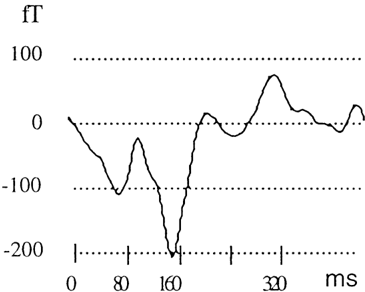
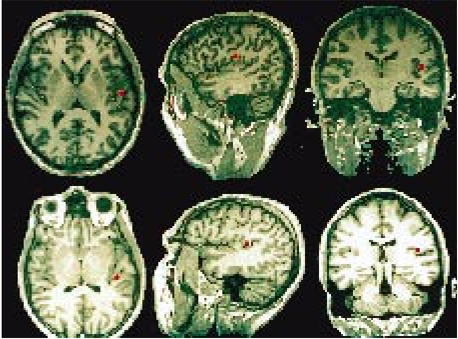
By recording neuromagnetic events during aversive classical conditioning, we examined the extinction of a previously described conditioned response. Averaging over non-reinforced exposures to the conditioned stimulus revealed magnetic activity in the secondary somatosensory and insular cortices, appearing between 110 and 140 ms after the omitted unconditioned electric shock. We suggest this activity to be elicited by the discrepancy between shock expectancy and perceptual processes associated with the omission of the unconditioned stimulus, reflecting one of several brain processes in extinction.
Overview
The claims and statistics of this paper haven’t been checked yet.
Free: it reads the open-access text and checks the first 5 claims that cite a source we can check. Create a free account to check every claim.
Integrity signals
Registry
Cites
Statistics
Figures
Verification
Claims the paper makes
The claims and statistics of this paper haven’t been checked yet.
Free: it reads the open-access text and checks the first 5 claims that cite a source we can check. Create a free account to check every claim.
Claims other papers make about this one
Each is checked against this paper’s own text: does it say what the citing paper says it does?
In the citing paper
“its activity increases for highly valued stimuli or when extinction requires that these values are updated (Wik et al., 1997; Gottfried and Dolan, 2004; Phelps et al., 2004)”
From Explicit and implicit emotion regulation: a multi-level framework (2017) · cites this paper as Wik et al., 1997
Self-check
Percentages, sums and reported differences re-computed from the paper’s own numbers.
The self-check needs the paper’s full text.
Citations
Cites
The Central Autonomic Network: Functional Organization, Dysfunction, and Perspective
BENARROCH, E. E. (1993) · Mayo Clinic Proceedings · doi:10.1016/s0025-6196(12)62272-1 · Cited by 1,534
Research works printed but not linked: 1
- Mesulam MM and Mufson EF. The insula of Reil in man and monkey. Architectonics, connectivity and function. In: Peters A and Jones EG, eds. Cerebral Cortex 4. New York: Plenum Press, 1985: 179-226.
Cited by
Explicit and implicit emotion regulation: a multi-level framework
Braunstein, L. M., Gross, J. J., & Ochsner, K. N. (2017) · Social Cognitive and Affective Neuroscience · doi:10.1093/scan/nsx096 · Cited by 539
“…or various goods (Chib et al., 2009), its activity increases for highly valued stimuli or when extinction requires that these values are updated (Wik et al., 1997; Gottfried and Dolan, 2004; Phelps et al., 2004) and decreases for devalued stimuli (Gottfried et al., 2003; Kerfoot et al., 2007).”
BackgroundMiskovic, V., & Keil, A. (2012) · Psychophysiology · doi:10.1111/j.1469-8986.2012.01398.x · Cited by 147
Berman, D. E., Hazvi, S., Stehberg, J., Bahar, A., & Dudai, Y. (2003) · Learning & Memory · doi:10.1101/lm.53703 · Cited by 86
“The investigation of the neurobiology of extinction is still in its infancy, yet has intensified in recent years (Christiansen and Schmajuk 1992; Falls et al. 1992; Swank et al. 1996; Wik et al. 1997; LaBar et al. 1998; Lee and Kim 1998; Garcia et al. 1999; Quirk et al. 2000; Weible et al. 2000; Berman and Dudai 2001).”
Fear conditioning and brain activity: A positron emission tomography study in humans.
Fischer, H., Andersson, J. L. R., Furmark, T., & Fredrikson, M. (2000) · Behavioral Neuroscience · doi:10.1037//0735-7044.114.4.671 · Cited by 69
Self-citationSperl, M. F. J., Panitz, C., Hermann, C., & Mueller, E. M. (2016) · Psychophysiology · doi:10.1111/psyp.12677 · Cited by 75
Effects of somatosensory stimulation and attention on human somatosensory cortex: An fMRI study
Chen, T. L., Babiloni, C., Ferretti, A., Perrucci, M. G., Romani, G. L., Rossini, P. M., Tartaro, A., & Gratta, C. D. (2010) · NeuroImage · doi:10.1016/j.neuroimage.2010.06.023 · Cited by 40
“…has been related to magnetic activity in SII and insula, appearing between 110 and 140 ms after the omitted unconditioned electric shock, possibly due to the discrepancy between shock expectancy and perceptual processes associated with the omission of the unconditioned stimulus (Wik et al., 1997).”
Right-sided human prefrontal brain activation during acquisition of conditioned fear.
Fischer, H., Anderson, J. L. R., Furmark, T., Wik, G., & Fredrikson, M. (2002) · Emotion · doi:10.1037//1528-3542.2.3.233 · Cited by 37
Self-citationA behavioral stages model of classical (Pavlovian) conditioning: application to cognitive aging
Powell, D. A. (1999) · Neuroscience & Biobehavioral Reviews · doi:10.1016/s0149-7634(99)00018-4 · Cited by 30
Powell, D. A., McLaughlin, J., & Chachich, M. E. (2002) · Springer eBooks · doi:10.1007/0-306-46897-2_11 · Cited by 21
The C50m response: Conditioned magnetocerebral activity recorded from the human brain
Moses, S. N., Martin, T., Houck, J. M., Ilmoniemi, R. J., & Tesche, C. D. (2005) · NeuroImage · doi:10.1016/j.neuroimage.2005.05.017 · Cited by 12
Moses, S. N., Bardouille, T., Brown, T. M., Roß, B., & McIntosh, A. R. (2010) · NeuroImage · doi:10.1016/j.neuroimage.2010.06.005 · Cited by 9
“Additionally, the reduction of the CR in our study following an extinction session without reinstatement is similar to previous MEG and fMRI reports (Moses et al., 2005; Wik et al., 1997; Yágüez et al., 2005) and the timing of this differentiation between conditioning and extinction, during the epoch of the expected r…”
BackgroundResultInfluentialKexiang, G. A. O., Yuyao, T. A. N. G., ZHANG, Y., & ZHANG, D. (2026) · Advances in Psychological Science · doi:10.3724/sp.j.1042.2026.0108
Metadata
- Authors
- Wik, G., Elbert, T., Fredrikson, M., Hoke, M., & Ross, B.
- Affiliations
- University of Münster (DE)
- University of Konstanz (DE)
- Uppsala University (SE)
- Venue
- NeuroReport
- Published
- 1997-05
- Volume
- 8
- Issue
- 7
- Pages
- 1789-1792
- ISSN
- 0959-4965 (ISSN-L)
- OpenAlex
- W2164642881
- Semantic Scholar
- 5cc25ad1d632a7192b302e1afce171933225e842
- Cited by
- 12
- References
- 1
- Citations by year
- 2025: 1 · 2017: 1 · 2016: 1 · 2012: 1
- FWCI
- 0.45
- Type
- journal article
- Language
- en
- Open access
- green
- nbn-resolving.de
- Licence
- cc-by-nc-nd
- Locations
- Neuroreport (publishedVersion)
- PubMed (publishedVersion)
- KOPS (University of Konstanz) (submittedVersion, cc-by-nc-nd)
- Funders
- Deutsche Forschungsgemeinschaft
- Topics
- Life Sciences › Neuroscience › Cognitive Neuroscience › Memory and Neural Mechanisms
- Life Sciences › Neuroscience › Cognitive Neuroscience › Neural and Behavioral Psychology Studies
- Life Sciences › Neuroscience › Neurology › Transcranial Magnetic Stimulation Studies
- Keywords
- extinction, classical conditioning, aversive conditioning, secondary somatosensory cortex, insula, conditioned response
- MeSH terms
- Adult, Brain, Conditioning, Classical, Extinction, Psychological, Humans, Image Processing, Computer-Assisted, Magnetoencephalography
About these checks
Registry, retraction, Cites and statistics results are computed, not judged, with one exception: a printed reference that no index lists is read once by a model before it counts as a citation error. Claims are extracted by a model and kept only when their quote appears verbatim in the text; each cited source is then checked, with a model’s help, for whether it says what the claim relies on. Those verdicts can be wrong — read the claim’s quote and the cited source before relying on one.
Statistics and arithmetic are recomputed, not judged.
Confidence bands are shown only for fields calibrated on our annotated test set. None is calibrated yet, so no band is shown.
What counts as a claim ›How we measure confidence ›How we check this ›
Are you an author, or do you see a problem with this page? Request a review
Data sources
Bibliographic data: Semantic Scholar, OpenAlex, Crossref.
Contains information from the Semantic Scholar Academic Graph Datasets, made available under the ODC Attribution License (ODC-BY 1.0).
Semantic Scholar’s data is described in: Kinney, R., et al. (2023). The Semantic Scholar Open Data Platform. arXiv:2301.10140.
