

The DOI matches its Crossref record; 10 of the 10 references it cites were found in a registry or an index.
Transferring Patients From Methadone to Buprenorphine: The Feasibility and Evaluation of Practice Guidelines
Open accessAbstract
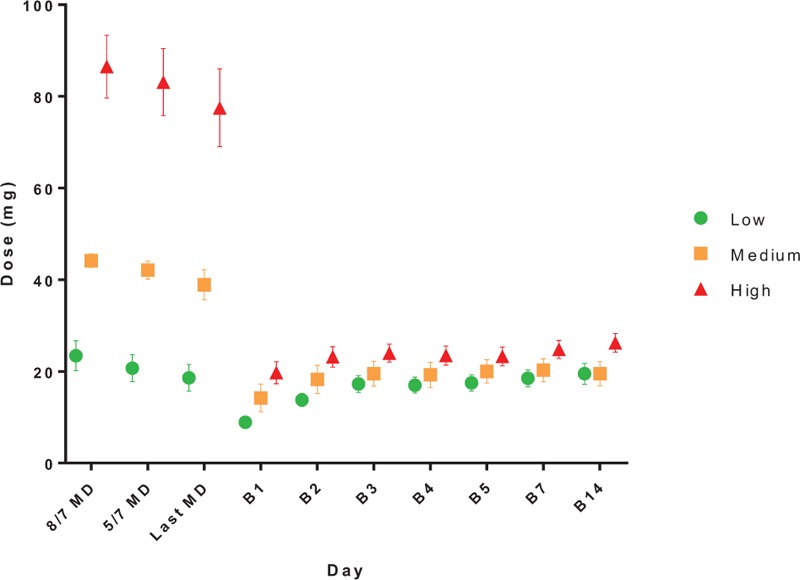
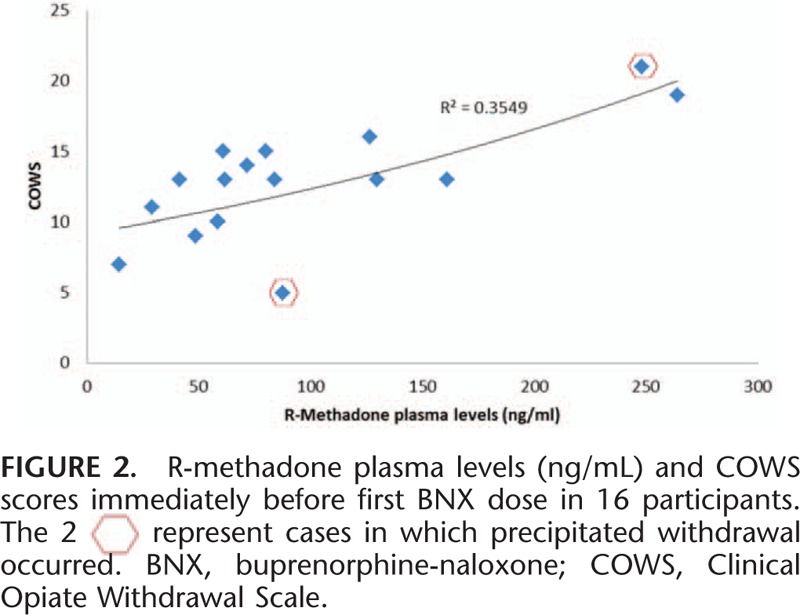
Introduction and Aims: Transfer from methadone to buprenorphine is problematic for many opioid-dependent patients, with limited documented evidence or practical clinical guidance, particularly for the range of methadone doses routinely prescribed for most patients (>50 mg). This study aimed to implement and evaluate recent national Australian guidelines for transferring patients from methadone to buprenorphine. Design and Methods: A multisite prospective cohort study. Participants were patients who transferred from methadone to buprenorphine-naloxone at 1 of 4 specialist addiction centers in Australia and New Zealand. Clinicians were trained in the guidelines, and medical records were reviewed to examine process (eg, transfer setting, doses, and guideline adherence) and safety (precipitated withdrawal) measures. Participants completed research interviews before and after transfer—assessing changes in substance use, health outcomes, and side effects. Results: In all, 33 participants underwent transfer, 9 from low methadone doses (<30 mg), 9 from medium doses (30–50 mg), and 15 from high doses (>50 mg). The majority of high-dose transfers occurred in inpatient settings. There was reasonable guideline adherence, and no complications identified in the low and medium-dose transfers. Three high-dose transfers (20%) experienced precipitated withdrawal, and 7/33 participants (21%) returned to methadone within 1 week of attempted transfer. Discussions and Conclusions: Transfer is feasible in outpatient settings for those transferring from methadone doses below 50 mg; however, inpatient settings and specialist supervision is recommended for higher-dose transfers. The Australian clinical guidelines appear safe and feasible, although further research is required to optimize high-dose transfer procedures.
Overview
The claims and statistics of this paper haven’t been checked yet.
Run the check — free, no account needed. It reads the open-access text and checks the sources it cites.
Integrity signals
Registry
Cites
Statistics
Figures
Verification
Claims the paper makes
The claims and statistics of this paper haven’t been checked yet.
Run the check — free, no account needed. It reads the open-access text and checks the sources it cites.
Claims other papers make about this one
Each is checked against this paper’s own text: does it say what the citing paper says it does?
The source backs part of the claim, not all of it — or backs it for a different population, condition or comparison.
In the citing paper
“Along with buprenorphine, the most commonly used medication for opioid use disorder is methadone, a full agonist of the MOR. 37”
From Tapering and withdrawing opioids: guidance informed by fundamental principles to minimise withdrawal symptoms (2025) · cites this paper as [37]
Experimental — accuracy not yet measured
Self-check
Percentages, sums and reported differences re-computed from the paper’s own numbers.
The self-check needs the paper’s full text.
Citations
Cites
(1992) · PubMed · Cited by 33,716
The MOS 36-ltem Short-Form Health Survey (SF-36): I. Conceptual Framework and Item Selection
Ware, J. E., & Sherbourne, C. D. (1992) · Medical Care · doi:10.1097/00005650-199206000-00002 · Cited by 30,033
The Montreal Cognitive Assessment, MoCA: a brief screening tool for mild cognitive impairment
Nasreddine, Z. S., Phillips, N. A., Bédirian, V., Charbonneau, S., Whitehead, V., Collin, I., Cummings, J. L., & Chertkow, H. (2005) · Journal of the American Geriatrics Society · doi:10.1111/j.1532-5415.2005.53221.x · Cited by 25,553
The Clinical Opiate Withdrawal Scale (COWS)
Wesson, D. R., & Ling, W. W. (2003) · Journal of Psychoactive Drugs · doi:10.1080/02791072.2003.10400007 · Cited by 1,120
Weddington, W. W., & McLellan, A. T. (1994) · Psychiatric Services · doi:10.1176/ps.45.1.80 · Cited by 839
Kampman, K. M., & Jarvis, M. A. E. (2015) · Journal of Addiction Medicine · doi:10.1097/adm.0000000000000166 · Cited by 680
Steady‐state pharmacokinetics of (R)‐ and (S)‐methadone in methadone maintenance patients
Foster, D. J. R., Somogyi, A. A., Dyer, K. R., White, J. M., & Bochner, F. (2000) · British Journal of Clinical Pharmacology · doi:10.1046/j.1365-2125.2000.00272.x · Cited by 127
Ryan, A., Holmes, J., Hunt, V., Dunlop, A. J., Mammen, K., Holland, R., Sutton, Y., Sindhusake, D. P., Rivas, G., & Lintzeris, N. (2013) · Drug and Alcohol Review · doi:10.1111/dar.12083 · Cited by 98
Self-citationMannelli, P., Peindl, K., Lee, T., Bhatia, K. S., & Wu, L.-T. T. (2012) · Current Drug Abuse Reviews · doi:10.2174/1874473711205010052 · Cited by 38
Why do patients report transferring between methadone and buprenorphine?
WINSTOCK, A. R., Lintzeris, N., & Lea, T. (2009) · Drug and Alcohol Review · doi:10.1111/j.1465-3362.2009.00127.x · Cited by 11
Self-citation
Cited by
Sorted by citations
Abie Horowitz, M., Framer, A., Strang, J., & Taylor, D. (2025) · Therapeutic Advances in Psychopharmacology · doi:10.1177/20451253251371504
“37 Unfortunately, imaging of the relationship between methadone and opioid receptors has been difficult with two studies finding no relationship between dose and occupancy of opioid receptors.”
Metadata
- Authors
- Lintzeris, N., Monds, L. A., Rivas, C., Leung, S., Dunlop, A., Newcombe, D., Walters, C., Galea, S., White, N., Montebello, M., Demirkol, A., Swanson, N., & Ali, R.
- Affiliations
- The University of Sydney (AU)
- Corresponding author
- Lintzeris, Nicholas
- ORCID
- Venue
- Journal of Addiction Medicine
- Published
- 2018-05
- Volume
- 12
- Issue
- 3
- Pages
- 234-240
- ISSN
- 1932-0620 (ISSN-L)
- 1935-3227
- PMC
- PMC5976217
- OpenAlex
- W2792357891
- Cited by
- 34
- References
- 10
- Citations by year
- 2026: 4 · 2025: 4 · 2024: 5 · 2023: 4 · 2022: 4 · 2021: 6 · 2020: 5 · 2019: 2
- FWCI
- 3.09
- Type
- journal article
- Language
- en
- Open access
- hybrid
- doi.org
- Licence
- Locations
- Journal of Addiction Medicine (publishedVersion, cc-by-nc-nd)
- Europe PMC (PubMed Central) (publishedVersion, cc-by-nc-nd)
- PubMed Central (publishedVersion, cc-by-nc-nd)
- PubMed (publishedVersion)
- Funders
- South Eastern Sydney Local Health District
- Center for Substance Abuse Treatment
- Topics
- Health Sciences › Medicine › Public Health, Environmental and Occupational Health › Opioid Use Disorder Treatment
- Health Sciences › Medicine › Epidemiology › Substance Abuse Treatment and Outcomes
- Health Sciences › Medicine › Anesthesiology and Pain Medicine › Pain Management and Opioid Use
- Keywords
- opioid use disorder, buprenorphine/naloxone, precipitated withdrawal, guideline adherence, opioid substitution therapy
- MeSH terms
- Adult, Analgesics, Opioid, Australia, Buprenorphine, Feasibility Studies, Female, Humans, Male, Methadone, Middle Aged, Opioid-Related Disorders, New Zealand, Prospective Studies, Outcome Assessment, Health Care, Practice Guidelines as Topic, Drug Substitution, Opiate Substitution Treatment
About these checks
Registry, retraction, Cites and statistics results are computed, not judged, with one exception: a printed reference that no index lists is read once by a model before it counts as a citation error. Claims are extracted by a model and kept only when their quote appears verbatim in the text; each cited source is then checked, with a model’s help, for whether it says what the claim relies on. Those verdicts can be wrong — read the claim’s quote and the cited source before relying on one.
Statistics and arithmetic are recomputed, not judged.
Confidence bands are shown only for fields calibrated on our annotated test set. None is calibrated yet, so no band is shown.
What counts as a claim ›How we measure confidence ›How we check this ›
Are you an author, or do you see a problem with this page? Request a review
