

The DOI matches its Crossref record; 29 of the 29 references it cites were found in a registry or an index.
Whole Recombinant Saccharomyces cerevisiae Yeast Expressing Ras Mutations as Treatment for Patients With Solid Tumors Bearing Ras Mutations: Results From a Phase 1 Trial
Open accessAbstract
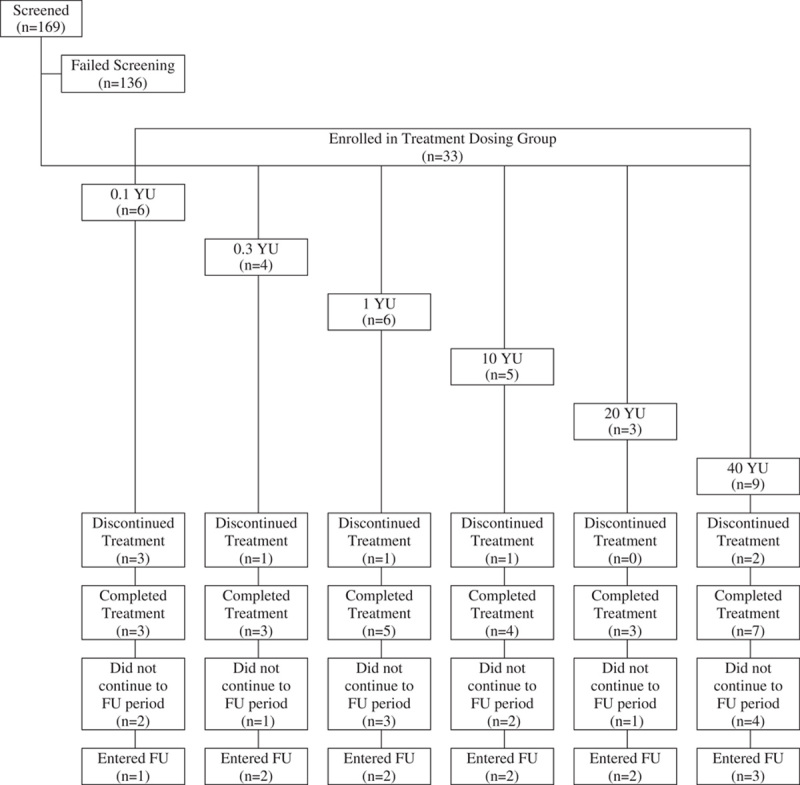
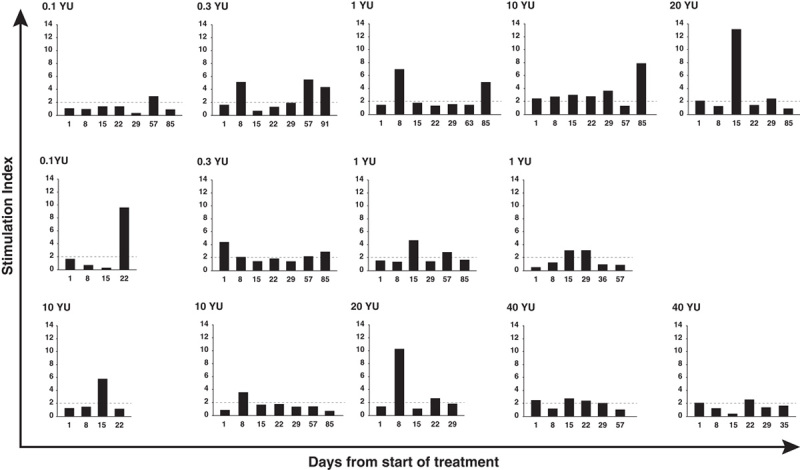
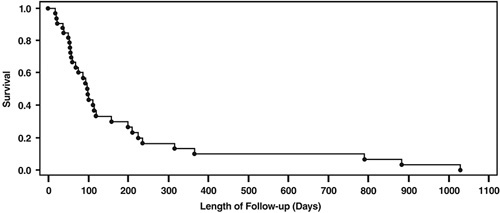
We are developing whole, heat-killed, recombinant Saccharomyces cerevisiae yeast, engineered to encode target proteins, which stimulate immune responses against malignant cells expressing those targets. This phase 1 trial, enrolling patients with advanced colorectal or pancreas cancer, was designed to evaluate safety, immunogenicity, response, and overall survival of ascending doses of the GI-4000 series of products, which express 3 different forms of mutated Ras proteins. The study enrolled 33 heavily pretreated subjects (14 with pancreas and 19 with colorectal cancer), whose tumors were genotyped before enrollment to identify the specific ras mutation and thereby to identify which GI-4000 product to administer. No dose limiting toxicities were observed and no subject discontinued treatment due to a GI-4000 related adverse event (AE). The majority of AEs and all fatal events were due to underlying disease progression and AE frequencies were not significantly different among dose groups. GI-4000 was immunogenic, as Ras mutation-specific immune responses were detected on treatment in ∼60% of subjects. No objective tumor responses were observed but based on imaging, clinical status and/or biochemical markers, stable disease was observed in 6 subjects (18%) on day 29, while 1 subject had stable disease at days 57 and 85 follow-up visits. The median overall survival was 3.3 months (95% confidence interval, 2.3–5.3 mo), and 5 subjects survived past the 48-week follow-up period. No significant dose-dependent trends for survival were observed. This first clinical trial in humans with GI-4000 demonstrated a favorable safety profile and immunogenicity in the majority of subjects.
Overview
The claims and statistics of this paper haven’t been checked yet.
Run the check — free, no account needed. It reads the open-access text and checks the sources it cites.
Integrity signals
Registry
Cites
Statistics
Figures
Verification
Claims the paper makes
The claims and statistics of this paper haven’t been checked yet.
Run the check — free, no account needed. It reads the open-access text and checks the sources it cites.
Claims other papers make about this one
Each is checked against this paper’s own text: does it say what the citing paper says it does?
The source backs part of the claim, not all of it — or backs it for a different population, condition or comparison.
In the citing paper
“GI-4000, produced in this way, targets KRAS mutations in codons 12 and 61 and provides a stable response rate of 23% in patients diagnosed with mCRC in the phase I study [110].”
From RAS Mutations in Advanced Colorectal Cancer: Mechanisms, Clinical Implications, and Novel Therapeutic Approaches (2025) · cites this paper as [110]
Experimental — accuracy not yet measuredIn the citing paper
“The GI-4000 series is composed of four heat-inactivated recombinant S. cerevisiae yeast strains, which have been shown in preclinical models to induce tumor reductions [81,82].”
From The Role of KRAS Mutations in Colorectal Cancer: Biological Insights, Clinical Implications, and Future Therapeutic Perspectives (2025) · cites this paper as [82]
In the citing paper
“The GI-4000 series is composed of four heat-inactivated recombinant S. cerevisiae yeast strains, which have been shown in preclinical models to induce tumor reductions [81,82].”
From The Role of KRAS Mutations in Colorectal Cancer: Biological Insights, Clinical Implications, and Future Therapeutic Perspectives (2025) · cites this paper as [82]
Self-check
Percentages, sums and reported differences re-computed from the paper’s own numbers.
The self-check needs the paper’s full text.
Citations
Cites
PD-1 and PD-L1 Immune Checkpoint Blockade to Treat Breast Cancer
Hartkopf, A. D., Taran, F., Wallwiener, M., Walter, C. B., Krämer, B., Grischke, E., & Brucker, S. Y. (2016) · Breast Care · doi:10.1159/000453569 · Cited by 30,989
New Guidelines to Evaluate the Response to Treatment in Solid Tumors
Therasse, P., Arbuck, S. G., Eisenhauer, E. A., Wanders, J., Kaplan, R. S., Rubinstein, L., Verweij, J., Van Glabbeke, M., van Oosterom, A. T., Christian, M. C., et al. (2000) · JNCI: Journal of the National Cancer Institute · doi:10.1093/jnci/92.3.205 · Cited by 15,660
Sipuleucel-T Immunotherapy for Castration-Resistant Prostate Cancer
Kantoff, P. W., Higano, C. S., Shore, N. D., Berger, E. R., Small, E. J., Penson, D. F., Redfern, C. H., Ferrari, A. C., Dreicer, R., Sims, R. B., et al. (2010) · New England Journal of Medicine · doi:10.1056/nejmoa1001294 · Cited by 5,572
ras oncogenes in human cancer: a review.
Bos, J. L. (1989) · PubMed · Cited by 5,061
Targeting RAS signalling pathways in cancer therapy
Downward, J. (2003) · Nature reviews. Cancer · doi:10.1038/nrc969 · Cited by 3,354
Immune Checkpoint Blockade in Cancer Therapy
Postow, M. A., Callahan, M. K., & Wolchok, J. D. (2015) · Journal of Clinical Oncology · doi:10.1200/jco.2014.59.4358 · Cited by 2,782
A Confidence Interval for the Median Survival Time
Brookmeyer, R., & Crowley, J. (1982) · Biometrics · doi:10.2307/2530286 · Cited by 914
PROVENGE (Sipuleucel-T) in Prostate Cancer: The First FDA-Approved Therapeutic Cancer Vaccine
Cheever, M. A., & Higano, C. S. (2011) · Clinical Cancer Research · doi:10.1158/1078-0432.ccr-10-3126 · Cited by 780
Currier, J. R., Kuta, E. G., Turk, E., Earhart, L. B., Loomis-Price, L. D., Janetzki, S., Ferrari, G., Birx, D. L., & Cox, J. H. (2002) · Journal of Immunological Methods · doi:10.1016/s0022-1759(01)00535-x · Cited by 320
Quoix, É., Ramlau, R., Westeel, V., Pápai, Z., Madroszyk, A., Riviere, A., Koralewski, P., Breton, J.-L., Stoelben, E., Braun, D., et al. (2011) · The Lancet Oncology · doi:10.1016/s1470-2045(11)70259-5 · Cited by 269
Cited by
Sorted by citations
Takeda, M., Yoshida, S., Inoue, T., Sekido, Y., Hata, T., Hamabe, A., Ogino, T., Miyoshi, N., Uemura, M., Yamamoto, H., et al. (2025) · Cancers · doi:10.3390/cancers17030428 · Cited by 82
“The GI-4000 series is composed of four heat-inactivated recombinant S. cerevisiae yeast strains, which have been shown in preclinical models to induce tumor reductions [81,82].”
Colorectal Cancer Immunotherapy: State of the Art and Future Directions
Cornista, A. M., Giolito, M. V., Baker, K., Hazime, H., Dufait, I., Datta, J., Khumukcham, S. S., De Ridder, M., Roper, J., Abreu, M. T., et al. (2023) · Gastro Hep Advances · doi:10.1016/j.gastha.2023.09.007 · Cited by 39
Sütcüoğlu, O., Yıldırım, H. Ç., Almuradova, E., Günenç, D., & Yalçın, Ş. (2025) · Medicina · doi:10.3390/medicina61071202 · Cited by 10
Metadata
- Authors
- Cohn, A., Morse, M. A., O’Neil, B., Whiting, S., Coeshott, C., Ferraro, J., Bellgrau, D., Apelian, D., & Rodell, T. C.
- Affiliations
- Rocky Mountain Cancer Centers (US)
- Duke Medical Center (US)
- Indiana University Melvin and Bren Simon Comprehensive Cancer Center (US)
- Fred Hutch Cancer Center (US)
- GlobeImmune (United States) (US)
- University of Colorado Denver (US)
- Corresponding author
- Cohn, Allen
- Venue
- Journal of Immunotherapy
- Published
- 2018-04
- Volume
- 41
- Issue
- 3
- Pages
- 141-150
- ISSN
- 1524-9557 (ISSN-L)
- PMC
- PMC5895167
- OpenAlex
- W2792687062
- Cited by
- 41
- References
- 29
- Citations by year
- 2026: 6 · 2025: 9 · 2024: 3 · 2023: 6 · 2022: 4 · 2021: 8 · 2020: 5
- FWCI
- 1.39
- Type
- journal article
- Language
- en
- Open access
- hybrid
- doi.org
- Licence
- Locations
- Journal of Immunotherapy (publishedVersion, cc-by-nc-nd)
- Europe PMC (PubMed Central) (publishedVersion, cc-by-nc-nd)
- PubMed Central (publishedVersion, cc-by-nc-nd)
- PubMed (publishedVersion)
- Topics
- Life Sciences › Immunology and Microbiology › Immunology › Immunotherapy and Immune Responses
- Life Sciences › Biochemistry, Genetics and Molecular Biology › Biotechnology › Bacterial Cancer Therapy
- Health Sciences › Medicine › Oncology › Cancer Immunotherapy and Biomarkers
- Keywords
- recombinant Saccharomyces cerevisiae, RAS mutations, colorectal cancer, pancreatic cancer, solid tumors, tumor-specific immunity, vaccine safety, immunogenicity, overall survival, stable disease
- MeSH terms
- Adult, Aged, Biological Therapy, Complement Activation, Female, Humans, Immunity, Male, Middle Aged, Mutation, Neoplasms, Saccharomyces cerevisiae, Biomarkers, Tumor, Gene Expression, Gene Expression Regulation, Neoplastic, ras Proteins
About these checks
Registry, retraction, Cites and statistics results are computed, not judged, with one exception: a printed reference that no index lists is read once by a model before it counts as a citation error. Claims are extracted by a model and kept only when their quote appears verbatim in the text; each cited source is then checked, with a model’s help, for whether it says what the claim relies on. Those verdicts can be wrong — read the claim’s quote and the cited source before relying on one.
Statistics and arithmetic are recomputed, not judged.
Confidence bands are shown only for fields calibrated on our annotated test set. None is calibrated yet, so no band is shown.
What counts as a claim ›How we measure confidence ›How we check this ›
Are you an author, or do you see a problem with this page? Request a review
