

From Infancy to Adolescence: Fifteen Years of Continuous Treatment With Hydroxyurea in Sickle Cell Anemia
Open accessThe DOI matches its Crossref record, with a small difference in title or year; 20 of the 20 references it cites were found in a registry or an index.
Abstract
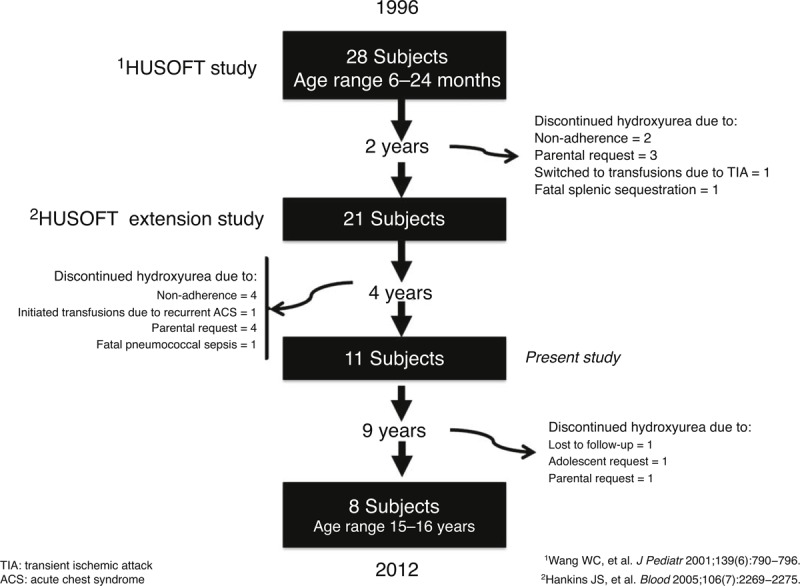
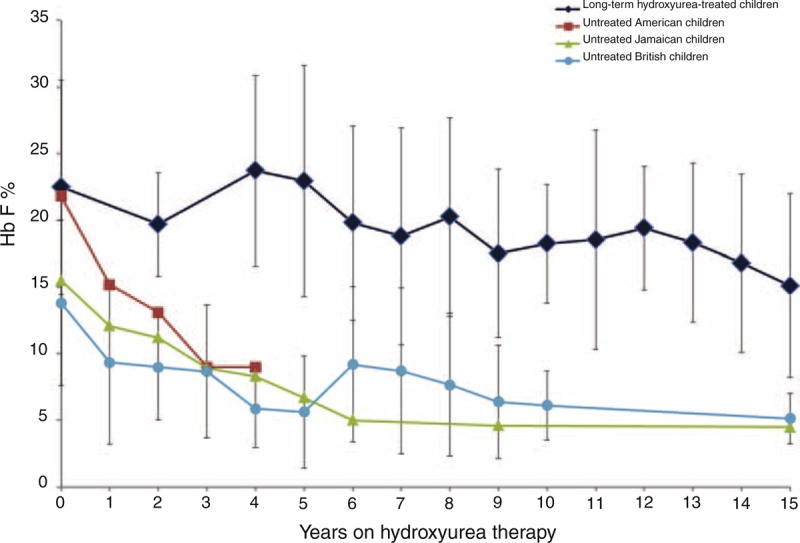
Despite documented laboratory and clinical benefits of hydroxyurea for children with sickle cell anemia (SCA), the drug's long-term safety and efficacy remains poorly defined. The HUSOFT trial and extension study examined feasibility, toxicity, and hematological efficacy of hydroxyurea in infants with SCA. This report describes HUSOFT participants who have continued hydroxyurea therapy for 15 years. With IRB approval, medical records were reviewed for clinical, laboratory, and growth parameters. Twenty-eight infants enrolled in the original 2-year HUSOFT study received open-label liquid hydroxyurea at 20 mg/kg/day; 17 completed the extension study with dose escalation to 30 mg/kg/day. Eight of these 17 (6 girls and 2 boys, all HbSS) have continued on daily hydroxyurea for at least 15 years (median age at last follow-up 17.6 years) without interruption. All hematologic indices (Hb concentration, mean corpuscular volume (MCV), fetal hemoglobin) showed sustained effect after 15 years. The median maximum tolerated dose of hydroxyurea has decreased from 30 to 26 mg/kg/day (range 19.5-31.2); neutropenia [absolute neutrophil count (ANC)<1.0×10⁹/L] prompting temporary drug discontinuation occurred a total of 10 times in 4 subjects and there was no severe neutropenia (ANC<0.5×10⁹/L). Growth rates over 15 years continued at the 50th percentile for both height and weight, and puberty occurred without delay (age range 10-14 years). There were 5.1 vaso-occlusive events (pain and acute chest syndrome)/100 patient years, 7.3 packed red blood cell transfusions/100 patient years. No malignancies, strokes, or deaths occurred. At last follow up, all subjects were at appropriate grade level (10-12 grade) with no history of repeated grades. A cohort of young teenagers with SCA who initiated treatment in infancy have had sustained and continued hematological benefits for a decade and a half. Growth and sexual development are normal and comparable to the general pediatric population. Continuous hydroxyurea therapy since infancy appears safe and efficacious in SCA.
Overview
The claims and statistics of this paper haven’t been checked yet.
Free: it reads the open-access text and checks the first 5 claims that cite a source we can check. Create a free account to check every claim.
Integrity signals
Registry
Cites
Statistics
Figures
Verification
Claims the paper makes
The claims and statistics of this paper haven’t been checked yet.
Free: it reads the open-access text and checks the first 5 claims that cite a source we can check. Create a free account to check every claim.
Claims other papers make about this one
Each is checked against this paper’s own text: does it say what the citing paper says it does?
The cited source doesn’t support the claim as written.
In the citing paper
“Therefore, even when started early in life, the HbF response to hydroxyurea might wane.88”
From Fetal hemoglobin in sickle cell anemia (2020) · cites this paper as [88]
Checked by a reasoning model — may be wrong.
Experimental — accuracy not yet measured
Self-check
Percentages, sums and reported differences re-computed from the paper’s own numbers.
The self-check needs the paper’s full text.
Citations
Cites
Effect of hydroxyurea on the frequency of painful crises in sickle cell anemia
Charache, S., Terrin, M. L., Moore, R. D., Dover, G. J., Barton, F. B., Eckert, S. V., McMahon, R. P., & Bonds, D. R. (1995) · New England Journal of Medicine · doi:10.1056/nejm199505183322001 · Cited by 2,340
Management of Sickle Cell Disease: Summary of the 2014 Evidence-Based Report by Expert Panel Members
Yawn, B. P., Buchanan, G. R., Afenyi-Annan, A. N., Ballas, S. K., Hassell, K. L., James, A. H., Jordan, L., Lanzkron, S. M., Lottenberg, R., Savage, W. J., et al. (2014) · JAMA · doi:10.1001/jama.2014.10517 · Cited by 1,599
Self-citationWang, W. C., Ware, R. E., Miller, S. T., Iyer, R. V., Casella, J. F., Minniti, C. P., Rana, S., Thornburg, C. D., Rogers, Z. R., Kalpatthi, R. V., et al. (2011) · The Lancet · doi:10.1016/s0140-6736(11)60355-3 · Cited by 803
Self-citationHydroxyurea enhances fetal hemoglobin production in sickle cell anemia.
Platt, O. S., Orkin, S. H., Dover, G., Beardsley, G. P., Miller, B., & Nathan, D. G. (1984) · Journal of Clinical Investigation · doi:10.1172/jci111464 · Cited by 535
The risks and benefits of long-term use of hydroxyurea in sickle cell anemia: a 17.5 year follow-up
Steinberg, M. H., McCarthy, W. F., Castro, O., Ballas, S. K., Armstrong, F. D., Smith, W., Ataga, K., Swerdlow, P., Kutlar, A., DeCastro, L., et al. (2010) · American Journal of Hematology · doi:10.1002/ajh.21699 · Cited by 486
Voskaridou, E., Christoulas, D., Bilalis, A., Plata, E., Varvagiannis, K., Stamatopoulos, G., Sinopoulou, K., Balassopoulou, A., Loukopoulos, D., & Terpos, E. (2010) · Blood · doi:10.1182/blood-2009-05-221333 · Cited by 430
How I use hydroxyurea to treat young patients with sickle cell anemia
Ware, R. E. (2010) · Blood · doi:10.1182/blood-2009-04-146852 · Cited by 396
Self-citationZimmerman, S. A., Schultz, W. H., Davis, J. S., Pickens, C. V., Mortier, N. A., Howard, T. A., & Ware, R. E. (2004) · Blood · doi:10.1182/blood-2003-07-2475 · Cited by 313
Self-citationLong-term hydroxyurea therapy for infants with sickle cell anemia: the HUSOFT extension study
Hankins, J. S., Ware, R. E., Rogers, Z. R., Wynn, L. W., Lane, P. A., Scott, J. P., & Wang, W. C. (2005) · Blood · doi:10.1182/blood-2004-12-4973 · Cited by 285
Self-citationInfluence of Sickle Hemoglobinopathies on Growth and Development
Platt, O. S., Rosenstock, W., & Espeland, M. A. (1984) · New England Journal of Medicine · doi:10.1056/nejm198407053110102 · Cited by 232
Cited by
Hydroxyurea therapy for sickle cell anemia
McGann, P. T., & Ware, R. E. (2015) · Expert Opinion on Drug Safety · doi:10.1517/14740338.2015.1088827 · Cited by 316
“There are now many adults and children who have been receiving hydroxyurea for 10 -- 20 years with sustained laboratory and clinical benefits [13,19,21-23,46].”
BackgroundSelf-citationHydroxyurea (hydroxycarbamide) for sickle cell disease
Nevitt, S. J., Jones, A. P., & Howard, J. (2017) · Cochrane Database of Systematic Reviews · doi:10.1002/14651858.cd002202.pub2 · Cited by 165
Fetal hemoglobin in sickle cell anemia
Steinberg, M. H. (2020) · Blood · doi:10.1182/blood.2020007645 · Cited by 136
McGann, P. T., Niss, O., Dong, M., Marahatta, A., Howard, T. A., Mizuno, T., Lane, A., Kalfa, T. A., Malik, P., Quinn, C. T., et al. (2019) · American Journal of Hematology · doi:10.1002/ajh.25510 · Cited by 105
“0 × 10(9)/L,(21,37) children treated with hydroxyurea reach MTD at ~25 mg/kg/d and can routinely achieve 25% HbF levels.(15,18,23,27,38) But relatively few patients treated at MTD will consistently maintain HbF ≥30%, a level that approximates deletional HbS/HPFH, is a benign form of SCA, in which MCGANN ET AL.”
BackgroundSelf-citationFetal haemoglobin in sickle-cell disease: from genetic epidemiology to new therapeutic strategies
Lettre, G., & Bauer, D. E. (2016) · The Lancet · doi:10.1016/s0140-6736(15)01341-0 · Cited by 104
Hankins, J. S., Estepp, J. H., Hodges, J., Villavicencio, M., Robison, L. L., Weiss, M. J., Kang, G., Schreiber, J. E., Porter, J. S., Kaste, S. C., et al. (2018) · Pediatric Blood & Cancer · doi:10.1002/pbc.27228 · Cited by 118
Self-citationQureshi, A., Kaya, B., Pancham, S., Keenan, R., Anderson, J., Akanni, M., Howard, J., & the British Society for Haematology (2018) · British Journal of Haematology · doi:10.1111/bjh.15235 · Cited by 104
“Cognitive development was also normal (Hankins et al, 2014).”
Couque, N., Girard, D., Ducrocq, R., Boizeau, P., Haouari, Z., Missud, F., Holvoet, L., Ithier, G., Belloy, M., Odièvre, M., et al. (2016) · British Journal of Haematology · doi:10.1111/bjh.14015 · Cited by 85
“HC is a recommended, safe and effective treatment for VOC and ACS prevention, as well as for correction of chronic anaemia, even in children (Wang et al, 2011; Thornburg et al, 2012; Hankins et al, 2014; Yawn et al, 2014; Stettler et al, 2015).”
BackgroundHydroxyurea (hydroxycarbamide) for sickle cell disease
Rankine‐Mullings, A., & Nevitt, S. J. (2022) · Cochrane Database of Systematic Reviews · doi:10.1002/14651858.cd002202.pub3 · Cited by 98
Dong, M., McGann, P. T., Mizuno, T., Ware, R. E., & Vinks, A. A. T. M. M. (2016) · British Journal of Clinical Pharmacology · doi:10.1111/bcp.12851 · Cited by 64
Self-citationThomas, R., Dulman, R. Y., Lewis, A., Notarangelo, B., & Yang, E. (2019) · Pediatric Blood & Cancer · doi:10.1002/pbc.27816 · Cited by 58
Pecker, L. H., Hussain, S., Christianson, M. S., & Lanzkron, S. (2020) · British Journal of Haematology · doi:10.1111/bjh.16976 · Cited by 56
Ohuma, E. O., & Altman, D. G. (2018) · Statistics in Medicine · doi:10.1002/sim.8000 · Cited by 51
Hydroxyurea Use in Young Children With Sickle Cell Anemia in New York State
Anders, D. G., Tang, F., Ledneva, T., Caggana, M., Green, N., Wang, Y., & Sturman, L. S. (2016) · American Journal of Preventive Medicine · doi:10.1016/j.amepre.2016.01.001 · Cited by 42
Hydroxycarbamide treatment and brain MRI/MRA findings in children with sickle cell anaemia
Nottage, K. A., Ware, R. E., Aygün, B., Smeltzer, M. P., Kang, G., Moen, J., Wang, W. C., Hankins, J. S., & Helton, K. J. (2016) · British Journal of Haematology · doi:10.1111/bjh.14235 · Cited by 44
Self-citationDrug Repurposing for the Treatment of Acute Myeloid Leukemia
Andresen, V., & Gjertsen, B. T. (2017) · Frontiers in Medicine · doi:10.3389/fmed.2017.00211 · Cited by 44
“Hydroxyurea is regarded as a safe agent not inducing DNA damage through its extensive use in younger patients with hemoglobinopathies (56, 57).”
BackgroundGreen, N., Manwani, D. G., Rahim, M. Q., Ireland, K., Sinha, A. A., & Smaldone, A. M. (2016) · Pediatric Blood & Cancer · doi:10.1002/pbc.26161 · Cited by 34
Table talk: How mothers and adolescents across socioeconomic status discuss food
Fielding‐Singh, P., & Wang, J. (2017) · Social Science & Medicine · doi:10.1016/j.socscimed.2017.06.016 · Cited by 39
Dong, M., & McGann, P. T. (2020) · Clinical Pharmacology & Therapeutics · doi:10.1002/cpt.2028 · Cited by 38
Casella, J. F., Adams, R. J., Brambilla, D. J., Strouse, J. J., Maier, P., Dlugash, R., Avadhani, R., Vermillion, K. K., Tonascia, J., Voeks, J. H., et al. (2018) · Clinical Trials · doi:10.1177/1740774518807160 · Cited by 32
Khargekar, N. C., Banerjee, A., Athalye, S., Mahajan, N., Kargutkar, N., Tapase, P., & Madkaikar, M. R. (2024) · Systematic Reviews · doi:10.1186/s13643-024-02461-z · Cited by 34
Ethical Challenges in Hematopoietic Cell Transplantation for Sickle Cell Disease
Nickel, R. S., & Kamani, N. R. (2017) · Transplantation and Cellular Therapy · doi:10.1016/j.bbmt.2017.08.034 · Cited by 32
“For example, given the improved clinical course of patients with HbSS and HbSβ0 treated continuously with hydroxyurea beginning in infancy, a physician may strongly recommend hydroxyurea over HLA-identical donor HCT for a young child who has not suffered a major complication [33].”
BackgroundHydroxyurea use in young infants with sickle cell disease
Schuchard, S. B., Lissick, J., Nickel, A. J., WATSON, D. A., Moquist, K. L., Blaylark, R. M., & Nelson, S. C. (2019) · Pediatric Blood & Cancer · doi:10.1002/pbc.27650 · Cited by 34
Sickle cell disease: a comprehensive program of care from birth
de Montalembert, M., Tshilolo, L. M., & Allali, S. (2019) · Hematology · doi:10.1182/hematology.2019000053 · Cited by 33
Boles, D. Z., DeSousa, M., Turnwald, B. P., Horii, R. I., Duarte, T., Zahrt, O. H., Markus, H. R., & Crum, A. J. (2021) · Frontiers in Psychology · doi:10.3389/fpsyg.2021.745950 · Cited by 30
“Construing health behaviors as something to take pleasure in rather than something we dread doing aligns with research on the value of immediate rewards in shaping behavior (Woolley and Fishbach, 2016) and thus may seem obvious in retrospect.”
ResultTreating sickle cell anemia: A new era dawns
Steinberg, M. H. (2020) · American Journal of Hematology · doi:10.1002/ajh.25724 · Cited by 28
“Even when started early in life the HbF response to hydroxyurea might wane.(5,12)”
BackgroundDong, M., Ware, R. E., Dallmann, A., & Vinks, A. A. T. M. M. (2023) · Pharmacotherapy The Journal of Human Pharmacology and Drug Therapy · doi:10.1002/phar.2793 · Cited by 32
Self-citationZhou, J., Han, J., Nutescu, E. A., Gordeuk, V. R., Saraf, S. L., & Calip, G. S. (2018) · British Journal of Haematology · doi:10.1111/bjh.15396 · Cited by 22
“HC is demonstrated to be safe when children with SCD continue therapy through puberty and adulthood, with sustained haematological benefits and minimal safety concerns (Hankins et al, 2014).”
BackgroundHasson, C., Veling, L., Rico, J. F., & Mhaskar, R. S. (2019) · Medicine · doi:10.1097/md.0000000000018225 · Cited by 23
“The study by Hankins et al[11] enrolled 11 patients in the hydroxyurea arm and administered 26.6mg/kg/day of hydroxyurea.”
Ali, G., Tariq, M. A., Shahid, K., Ahmad, F. J., & Akram, J. (2020) · Gene Therapy · doi:10.1038/s41434-020-0153-9 · Cited by 30
“CRIPSR/Cas9 have been successfully applied in βthalassemia and SCD patients, but not without limitations such as insertions and deletions at the target site and disruption of genomic DNA at non-specific targets.”
BackgroundInfluentialAlsultan, A. S., Jastaniah, W. A., Alafghani, S., Albagshi, M. H., Naserullah, Z. A., AlSuliman, A. M., & Alabdulaali, M. K. (2016) · Pediatric Transplantation · doi:10.1111/petr.12767 · Cited by 19
Treating hemoglobinopathies using gene-correction approaches: promises and challenges
Cottle, R. N., Lee, C. M., & Bao, G. (2016) · Human Genetics · doi:10.1007/s00439-016-1696-0 · Cited by 20
“Furthermore, hydroxyurea lowers circulating leukocytes and reticulocytes, which contributes to a reduced level of vaso-occlusion events and painful crises (Charache et al. 1995; Hankins et al. 2014).”
BackgroundChambers, T. M., Kahan, S., Camanda, J., Scheurer, M. E., & Airewele, G. E. (2018) · Pediatric Blood & Cancer · doi:10.1002/pbc.27365 · Cited by 17
Gunther, C. W., Rogers, C., Holloman, C. H., Hopkins, L. C., Anderson, S. E., Miller, C. K., Copeland, K. A., Dollahite, J., Pratt, K. J., Webster, A., et al. (2019) · BMC Public Health · doi:10.1186/s12889-019-7930-7 · Cited by 21
A review of hydroxyurea-related cutaneous adverse events
Grießhammer, M., Wille, K., Sadjadian, P., Stegelmann, F., & Döhner, K. (2021) · Expert Opinion on Drug Safety · doi:10.1080/14740338.2021.1945032 · Cited by 16
“Although at the start of therapy the doses of HU used are comparable in SCD and MPN patients, there are fewer reports on HU-related side effects in SCD even with long-term use [7,8].”
BackgroundSmaldone, A. M., Manwani, D. G., Aygün, B., Smith‐Whitley, K., Jia, H., Bruzzese, J., Findley, S. E., Massei, J. R., & Green, N. (2019) · BMC Pediatrics · doi:10.1186/s12887-019-1746-6 · Cited by 16
Abdullahi, S. U., Gambo, S., Murtala, H. A., Kabir, H., Shamsu, K. A., Gwarzo, G. D., Acra, S. A., Stallings, V. A., Rodeghier, M., DeBaun, M. R., et al. (2023) · Blood Advances · doi:10.1182/bloodadvances.2023010789 · Cited by 14
Haemoglobin disorders in Australia: where are we now and where will we be in the future?
Crighton, G. L., Wood, E. M., Scarborough, R., Ho, P. J., & Bowden, D. K. (2016) · Internal Medicine Journal · doi:10.1111/imj.13084 · Cited by 14
Ghafuri, D. L., Rodeghier, M., & DeBaun, M. R. (2020) · Southern Medical Journal · doi:10.14423/smj.0000000000001082 · Cited by 13
An integrated therapeutic approach to sickle cell disease management beyond infancy
Ribeil, J., Pollock, G., Frangoul, H., & Steinberg, M. H. (2023) · American Journal of Hematology · doi:10.1002/ajh.26956 · Cited by 14
“More often, waning benefits with aging often necessitate additional treatment.(13,81) We consider as indications for adding additional”
BackgroundHonsel, V., Khimoud, D., Ranque, B., Offredo, L., Joseph, L., Pouchot, J., & Arlet, J. (2019) · Journal of Clinical Medicine · doi:10.3390/jcm8122173 · Cited by 16
“Chronic transfusion therapy given for 24 months is e ff ective in normalizing growth charts in young SCD patients, as is hydroxyurea treatment in industrialized countries [23–25].”
Alkhalifah, S. A., Alanazi, M., Almasaoud, M. A., Al-Malki, H. S., Al-Murdhi, F. M., Al-hazzaa, M. S., Al-Mufarrij, S. M., Albabtain, M. A., Alshiakh, A. A., & AlRuthia, Y. S. (2022) · BMC Emergency Medicine · doi:10.1186/s12873-022-00751-0 · Cited by 12
“The reticulocyte counts have been significantly decreased after the initiation of HU treatment, which is consistent with the preponderance of evidence [21, 29].”
BackgroundAlzahrani, F. S., Albaz, G. F., AlSinan, F., Alzuhayri, J., Barnawi, Z. M., Melebari, N., & Twairgi, T. M. A. (2021) · Cureus · doi:10.7759/cureus.13453 · Cited by 13
“There was an increase in the incidence of vaso-occlusive crisis (VOC) after hydroxyurea initiation from 4.555+4.08 to 6.288+9.80; the results were not statistically significant (p-value= 0.869) (Table 3).”
BackgroundResultInfluentialEvaluating the long-term benefits of hydroxyurea in pediatric sickle cell anemia
George, P. E., Kalmus, G., Lane, P. A., Lam, W. A., Lipscomb, J., & Howard, D. H. (2025) · Blood Advances · doi:10.1182/bloodadvances.2024015564 · Cited by 11
Managing patients with sickle cell disease in primary care
Hehre, R. J. (2020) · JAAPA · doi:10.1097/01.jaa.0000697232.25913.b1 · Cited by 10
Klein, L. J., Abdullahi, S. U., Gambo, S., Stallings, V. A., Acra, S. A., Rodeghier, M., & DeBaun, M. R. (2023) · Blood Advances · doi:10.1182/bloodadvances.2023009711 · Cited by 12
The Value of U/S to Determine Priority for Upper Gastrointestinal Endoscopy in Emergency Room
Elrazek, A. E. A., Mahfouz, H., Elazeem, K. A., Fakhry, M., ElRazek, E. A., Foad, M., Alboraie, M. A. A., Ragab, A., Baghdady, S., Bilasy, S. E., et al. (2015) · Medicine · doi:10.1097/md.0000000000002241 · Cited by 9
Smaldone, A. M., Findley, S. E., Henry, S. B., Matiz, L. A., Rosenthal, S. L., Jia, H., Matos, S., Manwani, D. G., & Green, N. (2016) · Contemporary Clinical Trials · doi:10.1016/j.cct.2016.06.004 · Cited by 8
“Evidence from clinical trials supporting HU treatment benefits [16, 83, 84] and long-term safety [8, 85] in youth with SCD is translating to clinical practice.”
BackgroundHydroxyurea treatment of sickle cell disease: towards a personalized model-based approach
Pandey, A. (2021) · Journal of Translational Genetics and Genomics · doi:10.20517/jtgg.2020.45 · Cited by 10
Moore, A. M., Vadiveloo, M. K., McCurdy, K., Bouchard, K. L., & Tovar, A. (2021) · Appetite · doi:10.1016/j.appet.2021.105169 · Cited by 9
Hydroxyurea for Malignant Pertussis in Critically Ill Children
Blanc, M., Marais, C., Debs, A., Cousin, V. L., & Tissières, P. (2025) · Critical Care Explorations · doi:10.1097/cce.0000000000001218 · Cited by 9
“Long-term follow-up data suggest that hydroxyurea does not adversely affect malignancy risk, growth, or sexual development, suggesting its safety profile (25).”
Ferreira, M. N., Bonini-Domingos, C. R., Estevão, I. F., Lobo, C. L. D. C., Carrocini, G. C. S., Silveira‐Carvalho, A. P., Ricci, O., de Mattos, L. C., & Brandão, C. C. (2017) · BMC Research Notes · doi:10.1186/s13104-017-2535-7 · Cited by 7
Fostering a healthier generation of children with sickle cell disease through advancements in care
Franco, E., Nimura, C. A., & McGann, P. T. (2024) · Pediatric Research · doi:10.1038/s41390-024-03566-w · Cited by 6
Yannaki, E., Psatha, N., Παπαδοπούλου, Α., Athanasopoulos, T., Gravanis, A., Roubelakis, M. G., Tsirigotis, P. D., Anagnostopoulos, Α., Anagnou, N. P., & Vassilopoulos, G. (2021) · Human Gene Therapy · doi:10.1089/hum.2021.196 · Cited by 6
Kalibbala, D. M., Mboizi, V., Nambatya, G., Murungi, S., Ashaba, J., Nabaggala, C., Turyagyenda, L., Munube, D., Kasirye, P., Wambaka, B., et al. (2025) · British Journal of Haematology · doi:10.1111/bjh.70164 · Cited by 5
Adding hydroxyurea to chronic transfusion therapy for sickle cell anemia reduces transfusion burden
Nickel, R. S., Margulies, S., Panchapakesan, K., Chorvinsky, E. A., Niño, G., Gierdalski, M., Bost, J. E., Luban, N. L. C., & Webb, J. L. (2024) · Transfusion · doi:10.1111/trf.18073 · Cited by 9
Clinical Manifestations of Sickle Cell Anemia: Infants and Children
Nickel, R. S., & Hsu, L. L.-Y. (2016) · Springer eBooks · doi:10.1007/978-3-319-06713-1_9 · Cited by 8
Sickle cell disease: an update on management
Brewin, J. N., & Howard, J. (2017) · Paediatrics and Child Health · doi:10.1016/j.paed.2017.07.005 · Cited by 4
Fadare, J. O., Simeon, O. O., Olatunde, O. E., Oludare, O. I., & Agaja, O. T. (2018) · Malawi Medical Journal · doi:10.4314/mmj.v29i4.1 · Cited by 5
Hafiz, T. A., Aldharman, S. S., AlSubaie, R. N., Alzahrani, L. D., Albalawi, I. A. J., Alali, Y. A., Yousuf, M. M., Alharbi, H. M., Alamri, N. S., & Jamil, S. F. (2022) · Cureus · doi:10.7759/cureus.31778 · Cited by 8
Chang, M., Semakula, D., Little, J. A., Kanter, J., Manwani, D. G., Owusu-Ansah, A. T., Cohen, A. J., Cronin, R. M., Desai, P. C., Strouse, J. J., et al. (2025) · British Journal of Haematology · doi:10.1111/bjh.20263 · Cited by 3
Nelen, I. H., Leys, S., Bekaert, S.-L., Vloed, F. D., Martens, F., Sanders, E., Raj, A. P. E., Jeschke, A., Ohmura, S., Grünewald, T. G. P., et al. (2026) · Cell Death and Disease · doi:10.1038/s41419-026-08514-6 · Cited by 3
“Additionally, we performed GSEA using our different RRM2-CHK1 combination datasets by means of a custom compiled set of publicly available gene signatures (Fig.”
Hydroxyurea in Pediatric Patients With Sickle Cell Disease
Rees, A. L. (2015) · Journal of Pediatric Oncology Nursing · doi:10.1177/1043454215614962 · Cited by 3
“Hydroxyurea, a pharmacologic agent, has been used for more than 20 years in adults with SCD to decrease complications associated with SCD (Hankins et al., 2014).”
BackgroundInfluentialAlsharif, A. H., Alatawi, Y. D. A., & Alanazi, A. M. M. (2025) · Cureus · doi:10.7759/cureus.87648 · Cited by 2
“There is an urgent need for randomized controlled trials to better define the safety profile, optimal timing, and dosing strategies for hydroxyurea in malignant pertussis [28].”
A meta‐analysis of toxicities related to hydroxycarbamide dosing strategies
Mathias, J. G., Nolan, V. G., Taylor, M. M., Robinson, L. A., Howell, K. E., Gurney, J. G., Hankins, J. S., Wang, W. C., Estepp, J. H., & Smeltzer, M. P. (2020) · eJHaem · doi:10.1002/jha2.7 · Cited by 2
Self-citationAccidental hydroxyurea overdosage in a child with sickle cell anemia: An African experience
Nnebe‐Agumadu, U., Adebayo, I., Nnodu, O. E., & Adekile, A. D. (2020) · Pediatric Blood & Cancer · doi:10.1002/pbc.28632 · Cited by 2
Neurologic and Cognitive Outcomes in Sickle Cell Disease from Infancy through Adolescence
Mayer, S. L., Fields, M. E., & Hulbert, M. L. (2021) · NeoReviews · doi:10.1542/neo.22-8-e531 · Cited by 2
da Costa-Júnior, D. A., Santos, A. P. P., Silva, C. M., & Velloso‐Rodrigues, C. (2022) · Endocrine Metabolic & Immune Disorders - Drug Targets · doi:10.2174/1871530322666220303164029 · Cited by 2
Gray, J. P., & Ray, S. D. (2015) · Side effects of drugs annual · doi:10.1016/bs.seda.2015.07.013 · Cited by 1
A study about effect of hydroxyurea on scholastic performance of children with sickle cell anemia
Joshi, N., Jain, N. J., & Jain, P. R. (2021) · Indian Journal of Child Health · doi:10.32677/ijch.2021.v08.i03.002 · Cited by 1
The impact of a Smarter Lunchrooms Makeover on children's food choice and consumption
Zhuzhina, P. (2016) · DigitalCommons - CalPoly (California State Polytechnic University) · doi:10.15368/theses.2016.114 · Cited by 2
Menon, N., & Frei‐Jones, M. J. (2020) · Springer eBooks · doi:10.1007/978-3-030-49980-8_5 · Cited by 1
Examining the influence of nudges on children's fruit and vegetable consumptionPreprint
Sharps, M. A., Thomas, E., & Blissett, J. M. (2019) · OSF Preprints (OSF Preprints) · doi:10.31219/osf.io/v5xu4
Pediatric Clinicians’ Guide to Nutrition and Growth in Children with Sickle Cell Disease
Klein, L. J., Allen, C. R., & Stallings, V. A. (2025) · Pediatric Clinics of North America · doi:10.1016/j.pcl.2025.08.016
Mukhopadhyay, A., Smeltzer, M. P., Dudley, J., Badawy, S. M., Mathias, J. G., Plaxco, A. P., Ray, M. A., Wiese, A. D., Stevens, W. I., Gurney, J. G., et al. (2025) · Frontiers in Pharmacology · doi:10.3389/fphar.2025.1693126
Self-citationKhargekar, N. C., Banerjee, A., Athalye, S., Mahajan, N., Kargutkar, N., Tapase, P., & Madkaikar, M. R. (2024) · Figshare · doi:10.6084/m9.figshare.26678726
Mbayabo, G., Lumbala, P. K., Ngole, M., Lumaka, A. Z., Race, V., Matthijs, G., Mikobi, T. M., Devriendt, K., Geet, C. V., & Lukusa-Tshilobo, P. (2026) · eJHaem · doi:10.1002/jha2.70378
Metadata
- Authors
- Hankins, J. S., Aygun, B., Nottage, K., Thornburg, C., Smeltzer, M. P., Ware, R. E., & Wang, W. C.
- Affiliations
- Cincinnati Children's Hospital Medical Center (US)
- Corresponding author
- Hankins, Jane S.
- Venue
- Medicine
- Published
- 2014-12
- Volume
- 93
- Issue
- 28
- Pages
- e215
- ISSN
- 0025-7974 (ISSN-L)
- PMC
- PMC4603125
- OpenAlex
- W2322018156
- Semantic Scholar
- 30861068ba52403722eb13d5d2dfc48672595491
- Cited by
- 77
- References
- 20
- Citations by year
- 2026: 2 · 2025: 7 · 2024: 4 · 2023: 4 · 2022: 4 · 2021: 8 · 2020: 10 · 2019: 9 · 2018: 7 · 2017: 6 · 2016: 11 · 2015: 5
- FWCI
- 3.44
- Type
- journal article
- Language
- en
- Open access
- gold
- doi.org
- Licence
- cc-by-nc
- Locations
- Medicine (publishedVersion, cc-by-nc)
- PubMed Central (publishedVersion, cc-by-nc)
- PubMed (publishedVersion)
- eScholarship (California Digital Library) (submittedVersion)
- eScholarship (California Digital Library) (submittedVersion, cc-by-nc)
- Funders
- University of California, San Diego
- Topics
- Health Sciences › Medicine › Genetics (clinical) › Hemoglobinopathies and Related Disorders
- Health Sciences › Medicine › Pediatrics, Perinatology and Child Health › Neonatal Health and Biochemistry
- Health Sciences › Medicine › Hematology › Hemophilia Treatment and Research
- Keywords
- sickle cell disease, hydroxyurea, long-term treatment, infants, adolescents, fetal hemoglobin, vaso-occlusive crisis, acute chest syndrome, neutropenia, drug safety, HbSS
- MeSH terms
- Adolescent, Anemia, Sickle Cell, Antisickling Agents, Child, Child, Preschool, Dose-Response Relationship, Drug, Female, Follow-Up Studies, Forecasting, Hemoglobins, Humans, Hydroxyurea, Infant, Leukocyte Count, Male, Retrospective Studies, Treatment Outcome
About these checks
Registry, retraction, Cites and statistics results are computed, not judged, with one exception: a printed reference that no index lists is read once by a model before it counts as a citation error. Claims are extracted by a model and kept only when their quote appears verbatim in the text; each cited source is then checked, with a model’s help, for whether it says what the claim relies on. Those verdicts can be wrong — read the claim’s quote and the cited source before relying on one.
Statistics and arithmetic are recomputed, not judged.
Confidence bands are shown only for fields calibrated on our annotated test set. None is calibrated yet, so no band is shown.
What counts as a claim ›How we measure confidence ›How we check this ›
Are you an author, or do you see a problem with this page? Request a review
Data sources
Bibliographic data: Semantic Scholar, OpenAlex, Crossref.
Contains information from the Semantic Scholar Academic Graph Datasets, made available under the ODC Attribution License (ODC-BY 1.0).
Semantic Scholar’s data is described in: Kinney, R., et al. (2023). The Semantic Scholar Open Data Platform. arXiv:2301.10140.
