

The efficacy of renal replacement therapy strategies for septic-acute kidney injury: A PRISMA-compliant network meta-analysis
Open accessThe DOI matches its Crossref record, with a small difference in title or year; 30 of the 30 references it cites were found in a registry or an index.
Abstract
Background: Renal replacement therapy (RRT) is the main treatment for patients with sepsis-induced acute kidney injury (SAKI). However, the choice of RRT strategy remains controversial. Objective: This study assessed the effectiveness of RRT variants in SAKI patients by a network meta-analysis. Methods: This study searched the literature in the PubMed, EmBase, and Cochrane Library databases up to August 18, 2018. The outcomes of the analysis were the survival rate, renal recovery rate, intensive care unit (ICU) duration, and hospital duration. Results: Twenty-two articles were included in the analysis. The results showed that only the negative control was inferior to the regimens of RRT with polymyxin B-immobilized fiber (PMXF), PMXF alone, continuous venovenous hemofiltration (CVVH), CVVH plus alkaline phosphatase (AP), continuous venovenous hemodialysis (CVVHD), high-volume CVVH, and extra high-volume CVVH in terms of the survival rate. According to the surface under the cumulative ranking , RRT with PMXF (84.4%) and PMXF (84.3%) were the treatments most likely to improve the survival rate among SAKI patients, followed by CVVH plus AP (69%). Continuous venovenous hemodiafiltration (CVVHDF), extra high-volume CVVHDF, intermittent venovenous hemodiafiltration (IVVHDF), and low-volume CVVHDF resulted in very similar survival rates. CVVH plus AP conferred relative advantages in the renal recovery rate and ICU duration. Conclusion: CVVH, CVVHD, and their derived RRT strategies can improve survival rates in SAKI patients, but there is no significant difference among the RRT strategies. There was also no significant difference in the survival rate among CVVHDF, IVVHDF, and their derived strategies. More high-quality randomized controlled trials with large sample sizes are needed for further research.
Overview
The claims and statistics of this paper haven’t been checked yet.
Free: it reads the open-access text and checks the first 5 claims that cite a source we can check. Create a free account to check every claim.
Integrity signals
Registry
Cites
Statistics
Figures
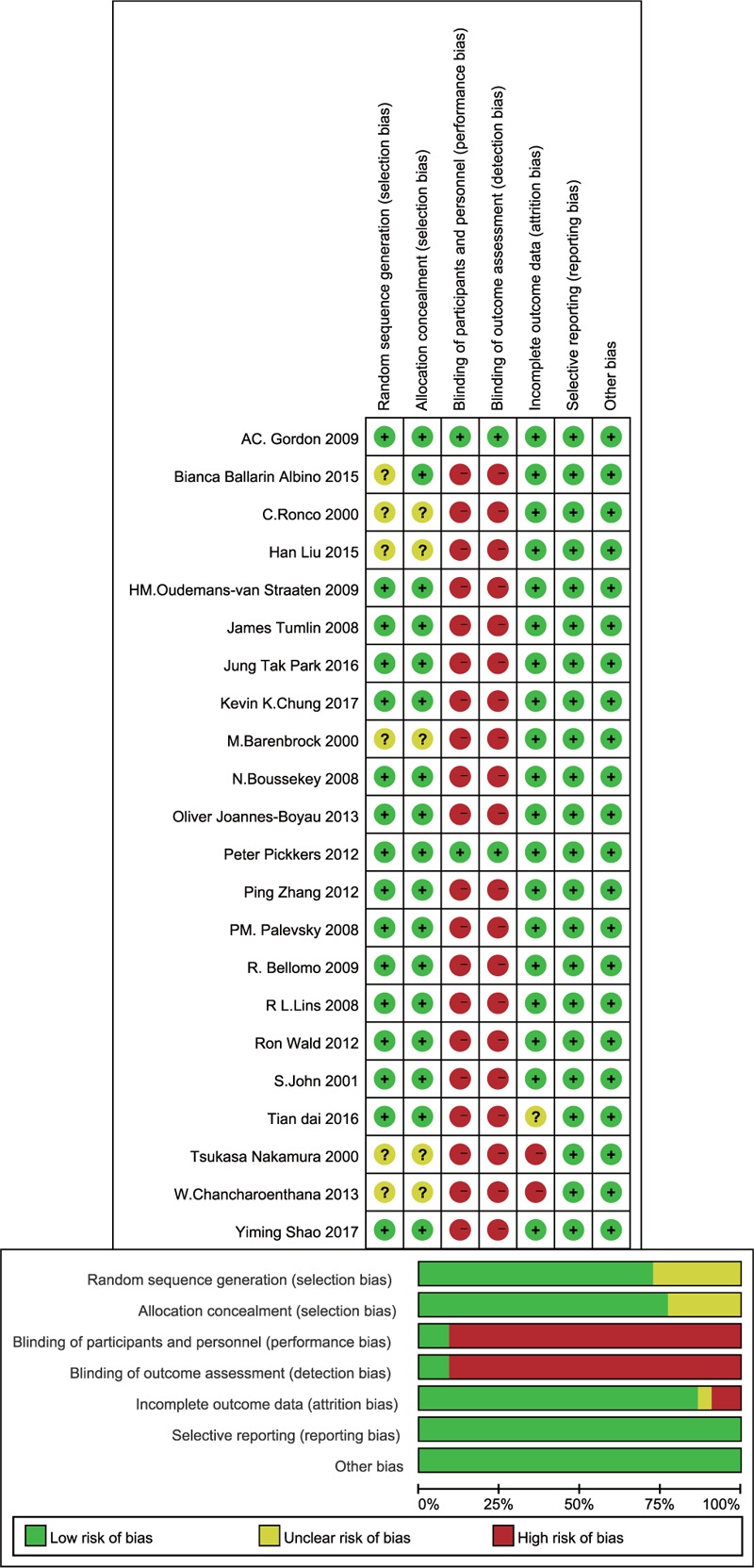
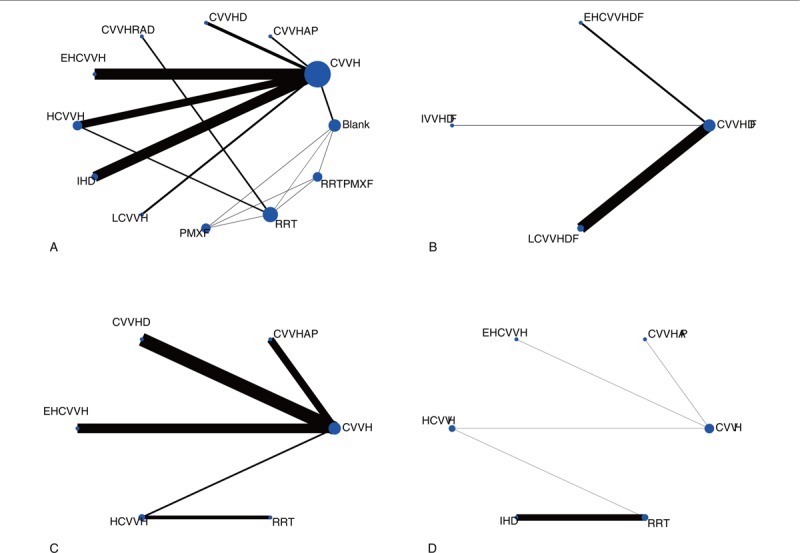
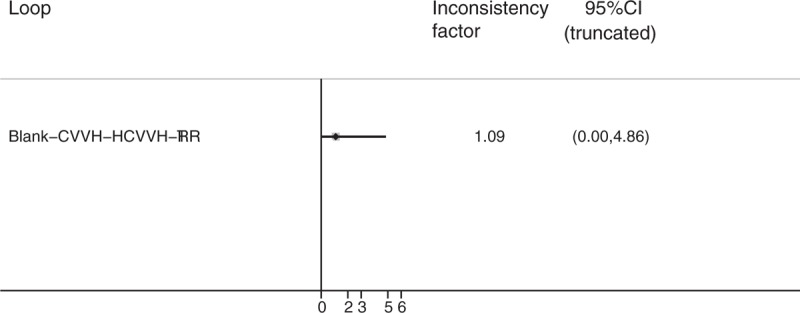
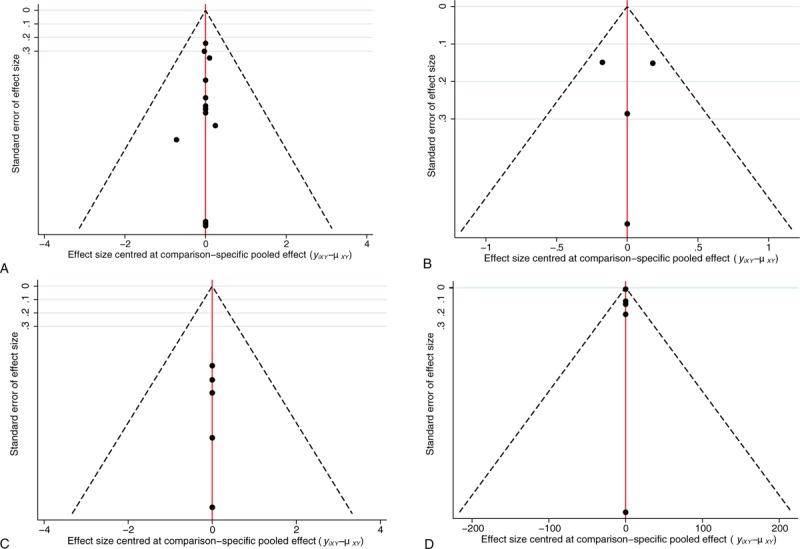
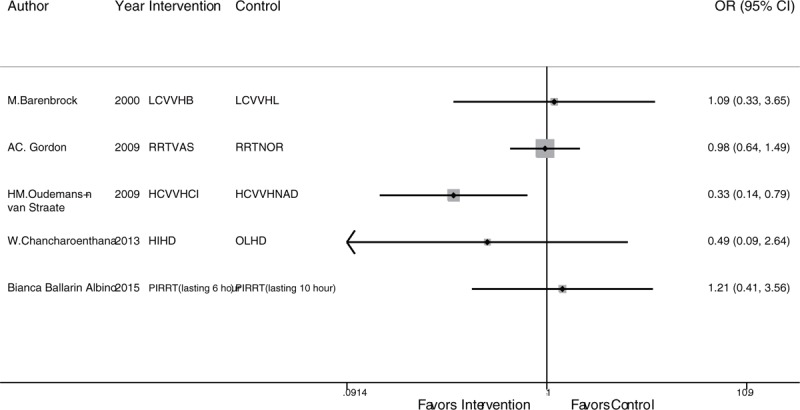
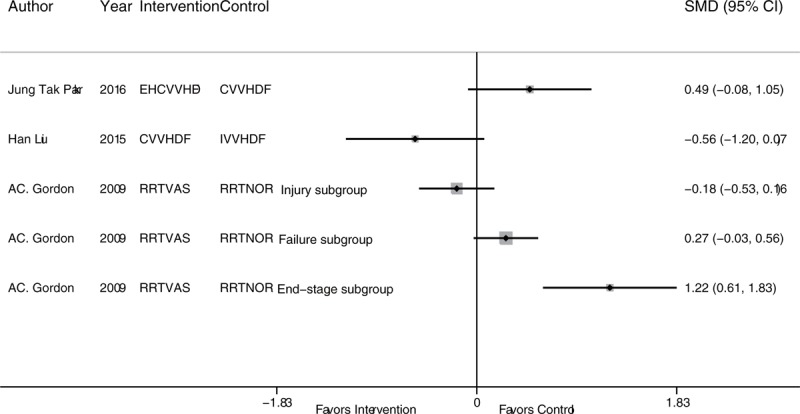
Verification
Claims the paper makes
The claims and statistics of this paper haven’t been checked yet.
Free: it reads the open-access text and checks the first 5 claims that cite a source we can check. Create a free account to check every claim.
Claims other papers make about this one
Each is checked against this paper’s own text: does it say what the citing paper says it does?
In the citing paper
“Our updated literature search identified no new RCTs but two meta-analysis comparing continuous and intermittent renal replacement therapies [503, 504].”
From Surviving sepsis campaign: international guidelines for management of sepsis and septic shock 2021 (2021) · cites this paper as [503]
Self-check
Percentages, sums and reported differences re-computed from the paper’s own numbers.
The self-check needs the paper’s full text.
Citations
Cites
Intensity of Renal Support in Critically Ill Patients with Acute Kidney Injury
(2008) · New England Journal of Medicine · doi:10.1056/nejmoa0802639 · Cited by 1,759
Ronco, C., Bellomo, R., Homel, P., Brendolan, A., Dan, M., Piccinni, P., & La Greca, G. (2000) · The Lancet · doi:10.1016/s0140-6736(00)02430-2 · Cited by 1,594
Intensity of Continuous Renal-Replacement Therapy in Critically Ill Patients
(2009) · New England Journal of Medicine · doi:10.1056/nejmoa0902413 · Cited by 1,473
Joannes-Boyau, O., Honoré, P. M., Perez, P., Bagshaw, S. M., Grand, H., Canivet, J.-L., Dewitte, A., Flamens, C., Pujol, W., Grandoulier, A.-S., et al. (2013) · Intensive Care Medicine · doi:10.1007/s00134-013-2967-z · Cited by 424
Effectiveness of polymyxin B-immobilized fiber column in sepsis: a systematic review
Cruz, D. N., Perazella, M. A., Bellomo, R., de Cal, M., Polanco, N., Corradi, V., Lentini, P., Nalesso, F., Ueno, T., Ranieri, V. M., et al. (2007) · Critical Care · doi:10.1186/cc5780 · Cited by 347
Citrate anticoagulation for continuous venovenous hemofiltration*
Oudemans-van Straaten, H. M., Bosman, R. J., Koopmans, M., van der Voort, P. H. J., Wester, J. P. J., van der Spoel, J. I., Dijksman, L. M., & Zandstra, D. F. (2009) · Critical Care Medicine · doi:10.1097/ccm.0b013e3181953c5e · Cited by 332
Zhang, Z., Xu, X., & Ni, H. (2013) · Critical Care · doi:10.1186/cc11919 · Cited by 295
Lins, R. L., Elseviers, M. M., Van der Niepen, P., Hoste, E., Malbrain, M. L., Damas, P., Devriendt, J., & for the SHARF investigators (2009) · Nephrology Dialysis Transplantation · doi:10.1093/ndt/gfn560 · Cited by 263
The effects of vasopressin on acute kidney injury in septic shock
Gordon, A. C., Russell, J. A., Walley, K. R., Singer, J., Ayers, D., Storms, M. M., Holmes, C. L., Hébert, P. C., Cooper, D. J., Mehta, S., et al. (2010) · Intensive Care Medicine · doi:10.1007/s00134-009-1687-x · Cited by 244
Efficacy and Safety of Renal Tubule Cell Therapy for Acute Renal Failure
Tumlin, J., Wali, R., Williams, W., Murray, P., Tolwani, A. J., Vinnikova, A. K., Szerlip, H. M., Ye, J., Paganini, E. P., Dworkin, L., et al. (2008) · Journal of the American Society of Nephrology · doi:10.1681/asn.2007080895 · Cited by 214
Cited by
Surviving sepsis campaign: international guidelines for management of sepsis and septic shock 2021
Evans, L., Rhodes, A., Alhazzani, W., Antonelli, M., Coopersmith, C. M., French, C., Machado, F. R., Mcintyre, L., Ostermann, M., Prescott, H. C., et al. (2021) · Intensive Care Medicine · doi:10.1007/s00134-021-06506-y · Cited by 5,082
Surviving Sepsis Campaign: International Guidelines for Management of Sepsis and Septic Shock 2021.
Evans, L., Rhodes, A., Alhazzani, W., Antonelli, M., Coopersmith, C. M., French, C., Machado, F. R., Mcintyre, L., Ostermann, M., Prescott, H. C., et al. (2021) · Critical Care Medicine · doi:10.1097/ccm.0000000000005337 · Cited by 2,935
Yoon, B. R., Leem, A. Y., Park, M. S., Kim, Y. S., & Chung, K. S. (2019) · Scientific Reports · doi:10.1038/s41598-019-48418-4 · Cited by 48
Costa, A. M., Halfwerk, F. R., Wiegmann, B., Neidlin, M., & Arens, J. (2022) · Frontiers in Medical Technology · doi:10.3389/fmedt.2022.909990 · Cited by 21
Management of Acute Kidney Injury in Critically Ill Children
Krishnasamy, S., Sinha, A. P., & Bagga, A. (2023) · The Indian Journal of Pediatrics · doi:10.1007/s12098-023-04483-2 · Cited by 14
Metadata
- Authors
- Zha, J., Li, C., Cheng, G., Huang, L., Bai, Z., & Fang, C.
- Affiliations
- Prisma (PE)
- Corresponding author
- Fang, Changtai
- Venue
- Medicine
- Published
- 2019-04
- Volume
- 98
- Issue
- 16
- Pages
- e15257
- ISSN
- 0025-7974 (ISSN-L)
- 1536-5964
- PMC
- PMC6494389
- OpenAlex
- W2938858755
- Semantic Scholar
- 69f6e96e160557e3f8d40b250aa42f78ce16e453
- Cited by
- 15
- References
- 30
- Citations by year
- 2026: 3 · 2025: 1 · 2024: 1 · 2023: 1 · 2022: 3 · 2021: 4 · 2020: 1 · 2019: 1
- FWCI
- 0.35
- Type
- journal article
- Language
- en
- Open access
- gold
- doi.org
- Licence
- Locations
- Medicine (publishedVersion, cc-by-nc)
- Europe PMC (PubMed Central) (publishedVersion, cc-by-nc)
- PubMed Central (publishedVersion, cc-by-nc)
- PubMed (publishedVersion)
- Topics
- Health Sciences › Medicine › Nephrology › Acute Kidney Injury Research
- Health Sciences › Medicine › Critical Care and Intensive Care Medicine › Sepsis Diagnosis and Treatment
- Health Sciences › Medicine › Pulmonary and Respiratory Medicine › Respiratory Support and Mechanisms
- Keywords
- sepsis-associated acute kidney injury, renal replacement therapy, continuous veno-venous hemofiltration, continuous venovenous hemodiafiltration, continuous veno-venous hemodialysis, polymyxin B-immobilized fiber, alkaline phosphatase, survival rate, renal function recovery, length of hospital stay
- MeSH terms
- Aged, Humans, Middle Aged, Renal Replacement Therapy, Sepsis, Acute Kidney Injury
About these checks
Registry, retraction, Cites and statistics results are computed, not judged, with one exception: a printed reference that no index lists is read once by a model before it counts as a citation error. Claims are extracted by a model and kept only when their quote appears verbatim in the text; each cited source is then checked, with a model’s help, for whether it says what the claim relies on. Those verdicts can be wrong — read the claim’s quote and the cited source before relying on one.
Statistics and arithmetic are recomputed, not judged.
Confidence bands are shown only for fields calibrated on our annotated test set. None is calibrated yet, so no band is shown.
What counts as a claim ›How we measure confidence ›How we check this ›
Are you an author, or do you see a problem with this page? Request a review
How to cite
Cite CoChat for the checks on this page, and the paper for its own findings.
- This page
- CoChat. (2026). Citation check: The efficacy of renal replacement therapy strategies for septic-acute kidney injury: A PRISMA-compliant network meta-analysis. https://app.cochat.ai/papers/10.1097/md.0000000000015257
- The paper
- Zha, J., Li, C., Cheng, G., Huang, L., Bai, Z., & Fang, C. (2019). The efficacy of renal replacement therapy strategies for septic-acute kidney injury: A PRISMA-compliant network meta-analysis. Medicine. https://doi.org/10.1097/md.0000000000015257
Data sources
Bibliographic data: Semantic Scholar, OpenAlex, Crossref.
Contains information from the Semantic Scholar Academic Graph Datasets, made available under the ODC Attribution License (ODC-BY 1.0).
Semantic Scholar’s data is described in: Kinney, R., et al. (2023). The Semantic Scholar Open Data Platform. arXiv:2301.10140.
