

A comprehensive evaluation of clinical efficacy and safety of celecoxib in combination with chemotherapy in metastatic or postoperative recurrent gastric cancer patients: A preliminary, three-center, clinical trial study
Open accessThe DOI matches its Crossref record; 24 of the 29 references it cites were found in a registry or an index.
Abstract
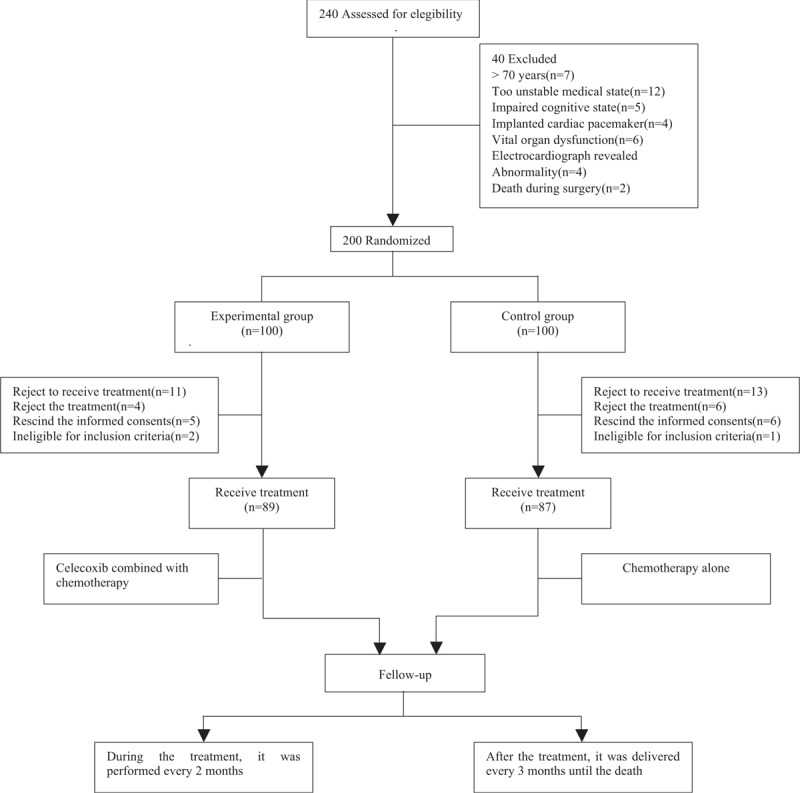
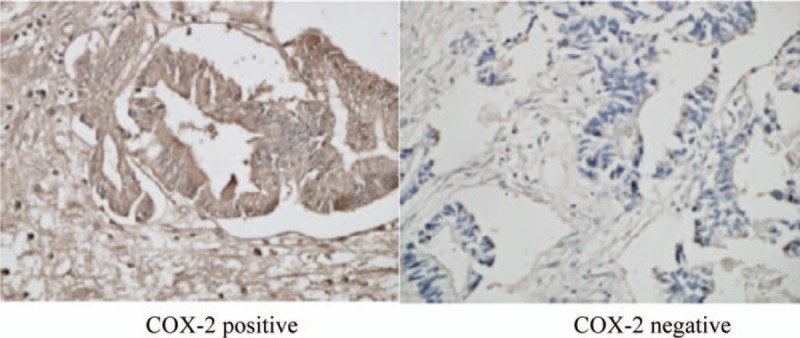
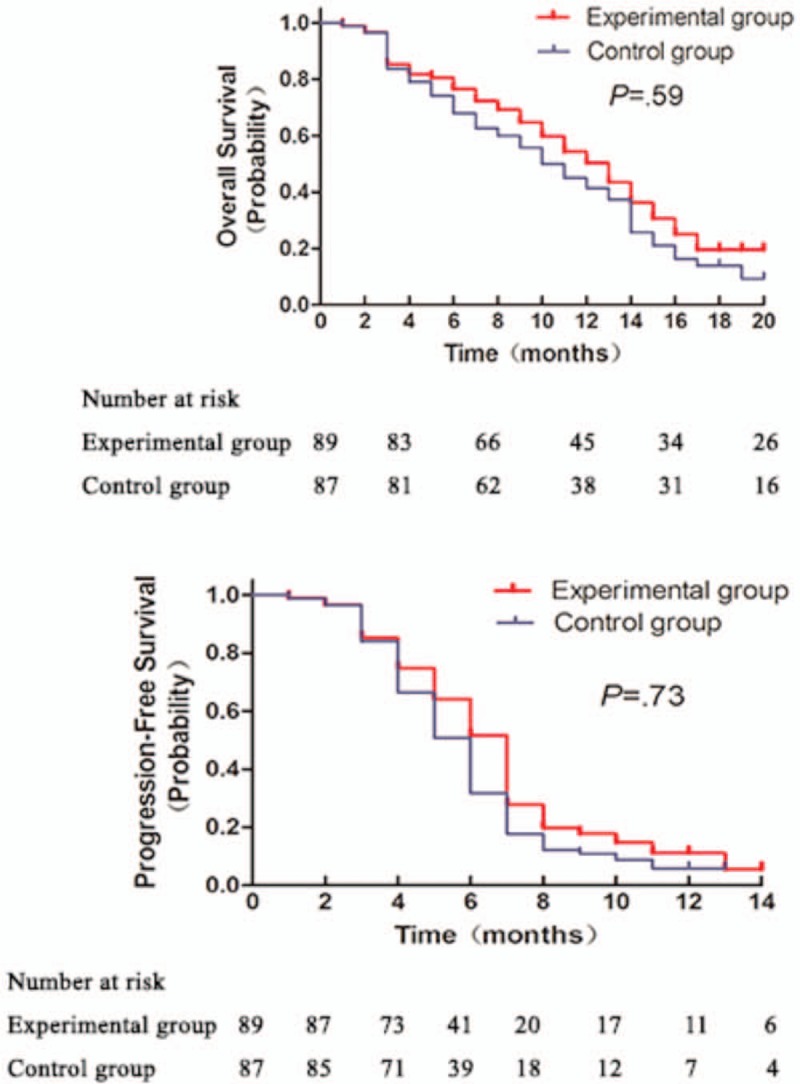
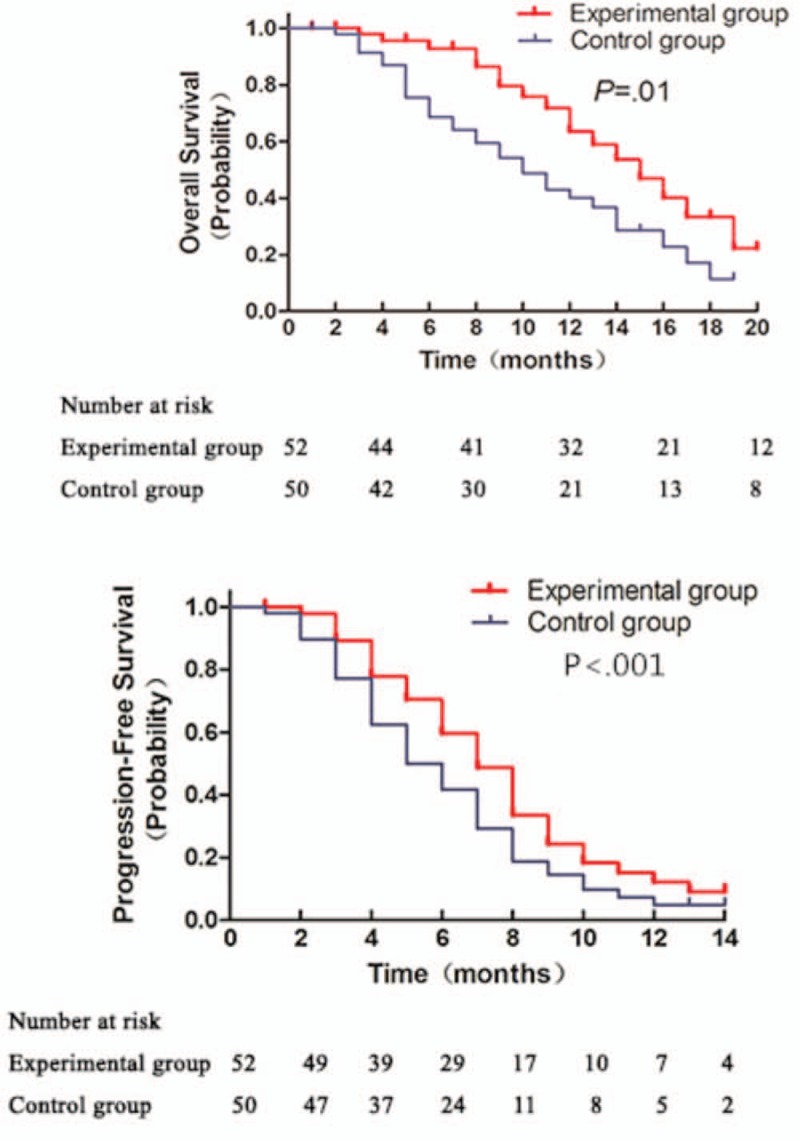
Aim: To evaluate the efficacy and safety of celecoxib combined with chemotherapy in the treatment of metastatic or postoperative recurrent gastric cancer. Methods: This preliminary, three-center, clinical trial study was conducted between September 2010 and December 2016. In the experimental group (n = 100), patients were treated with celecoxib combined with chemotherapy, and chemotherapy alone was used in the control group. Progression-free survival (PFS) was considered as the primary efficacy parameter. Overall survival (OS), remission rate (RR), quality of life (QOL) and drug safety were considered as the secondary efficacy parameters. Results: The PFS of the experimental group was 6 months, which was not significantly longer than that of the control group (5 months, P = .73). The average OS was not significantly different between the experimental group (12 months) and the control group (10 months, P = .59). The average OS of the COX-2 positive patients in the experimental group was 14 months and it was significantly longer than the 10-month OS in the control group (P = .01). The PFS of the COX-2 positive patients in the experimental group was 7.5 months, significantly longer than the 5-month PFS of patients in the control group (P < .001). No statistical significance was identified in the incidence of nausea, neutropenia, anorexia, peripheral neurotoxicity, diarrhea, vomiting, asthenia and thrombocytopenia. The EORTC QLQ-C30 questionnaire revealed that the overall QOL of the experimental group was significantly higher than that of the control group (P < .05). No statistical significance was found in the scores of functioning scale between the 2 groups. However, the scores of the symptom scale, especially for pain and fatigue in the experimental group was remarkably higher than that in the control group (P < .05). The overall score of EORTC QLQ-STO22 for the experimental group was considerably higher compared to that for the control group (P < .05). No statistical significance was identified in term of the domains of restrictions on feeding, dysphagia, anxiety, reflux, sense of taste, dry mouth, hair loss and body shape between the 2 groups (P > .05 for all mentioned outcomes). Conclusion: Celecoxib combined with chemotherapy offers more clinical benefits for COX-2 positive advanced gastric cancer patients.
Overview
The claims and statistics of this paper haven’t been checked yet.
Free: it reads the open-access text and checks the first 5 claims that cite a source we can check. Create a free account to check every claim.
Integrity signals
Registry
Cites
Statistics
Figures
Verification
Claims the paper makes
The claims and statistics of this paper haven’t been checked yet.
Free: it reads the open-access text and checks the first 5 claims that cite a source we can check. Create a free account to check every claim.
Claims other papers make about this one
Each is checked against this paper’s own text: does it say what the citing paper says it does?
The source backs part of the claim, not all of it — or backs it for a different population, condition or comparison.
In the citing paper
“Guo et al. demonstrated that administration of celecoxib post-diagnosis led to better overall survival rates in cancer patients, particularly those exhibiting positive PTGS2 expression combined with a phosphatidylinositol-4,5-bisphosphate 3-kinase catalytic subunit alpha (PIK3CA) mutation.185”
From Drug repurposing for cancer therapy (2024) · cites this paper as [185]
Experimental — accuracy not yet measured
Self-check
Percentages, sums and reported differences re-computed from the paper’s own numbers.
The self-check needs the paper’s full text.
Citations
Cites
Increased expression of cyclooxygenase-2 protein in human gastric carcinoma.
Lim, H. Y., Joo, H. J., Choi, J. H., Yi, J. W., Yang, M. S., Cho, D.-Y., Kim, H. S., Nam, D. K., Lee, K. B., & Kim, H. C. (2000) · PubMed · Cited by 249
Molecular targeted therapy in the treatment of advanced stage non‐small cell lung cancer ( NSCLC )
Kumarakulasinghe, N. B., van Zanwijk, N., & Soo, R. A. (2015) · Respirology · doi:10.1111/resp.12490 · Cited by 157 · cited 2×
“In recent years, due to the development of new biological agents, molecular targeting therapy has demonstrated high Table 3 The multivariate analysis for overall survival and disease free surviva Celecoxib combined with chemotherapy (n=89) vs Chemotherapy (n=87) OS PFS X2 P X2 Median age, y (range) 4.327 .61 3.994 Sex…”
BackgroundInfluentialCyclooxygenase‐2 expression during carcinogenesis in the human stomach
van Rees, B. P., Saukkonen, K., Ristimaki, A. P., Polkowski, W. P., Tytgat, G. N. J., Drillenburg, P., & Offerhaus, G. J. A. (2001) · The Journal of Pathology · doi:10.1002/path.1033 · Cited by 153
Saukkonen, K., Nieminen, O., van Rees, B. P., Vilkki, S., Härkönen, M., Juhola, M. T., Mecklin, J., Sipponen, P., & Ristimaki, A. P. (2001) · PubMed · Cited by 141
Miyamoto, Y., Suyama, K., & Baba, H. (2017) · International Journal of Molecular Sciences · doi:10.3390/ijms18040752 · Cited by 106 · cited 1×
“6 efficiency and low toxicity in lymphoma,([6]) breast cancer,([7]) gastrointestinal stromal tumors,([8]) colorectal cancer([9]) and nonsmall cell lung cancer (NSCLC)([10]) etc.”
BackgroundNakata, E., Mason, K. A., Hunter, N. R., Husain, A., Raju, U., Liao, Z. X., Ang, K. K., & Milas, L. (2004) · International Journal of Radiation Oncology*Biology*Physics · doi:10.1016/j.ijrobp.2003.09.061 · Cited by 94 · cited 1×
“be used as a radiosensitizer to enhance the effect of radiotherapy.([21]) In conclusion, targeting COX-2 is expected to be a new way to treat gastric cancer and has a good clinical potential.”
BackgroundScreening and Early Detection of Gastric Cancer
Suh, Y., & Yang, H. (2015) · Surgical Clinics of North America · doi:10.1016/j.suc.2015.05.012 · Cited by 78 · cited 1×
“Except a few countries, many countries do not conduct mass screening for early gastric cancer among their population.([4]) Gastric cancer is often diagnosed at an advanced stage or even with distant metastasis due to the lack of specific clinical manifestations and screening indicators.”
BackgroundLiu, M., Li, C., Chen, Z., JI, R., Guo, Q., Li, Q., Zhang, H., & Zhou, Y. (2014) · International Journal of Molecular Medicine · doi:10.3892/ijmm.2014.1713 · Cited by 73
Self-citationChen, X., Wen, L., Rui, Y., Liu, C.-X., Zhao, Q., Zhou, Z., & Hu, J. (2015) · Medicine · doi:10.1097/md.0000000000000454 · Cited by 55
Jackisch, C., Lammers, P. E., & Jacobs, I. A. (2017) · The Breast · doi:10.1016/j.breast.2017.01.010 · Cited by 47
Research works printed but not linked: 1
- Tang CW Advances in the treatment of gastric cancer with non-cytotoxic drugs. Chin J Pract Intern Med 2015; 12: 1062– 3.
Cited by
Drug repurposing for cancer therapy
Xia, Y., Sun, M., Huang, H., & Jin, W.-L. (2024) · Signal Transduction and Targeted Therapy · doi:10.1038/s41392-024-01808-1 · Cited by 443
Inflammation-Induced Tryptophan Breakdown is Related With Anemia, Fatigue, and Depression in Cancer
Lanser, L., Kink, P., Egger, E. M., Willenbacher, W., Fuchs, D., Weiss, G., & Kurz, K. (2020) · Frontiers in Immunology · doi:10.3389/fimmu.2020.00249 · Cited by 169
Li, S., Jiang, M., Wang, L., & Yu, S. (2020) · Biomedicine & Pharmacotherapy · doi:10.1016/j.biopha.2020.110389 · Cited by 166
Wang, D., Cabalag, C. S., Clemons, N. J., & DuBois, R. N. (2021) · Gastroenterology · doi:10.1053/j.gastro.2021.09.059 · Cited by 170
Targeting inflammation as cancer therapy
Wang, M., Chen, S., He, X., Yuan, Y., & Wei, X. (2024) · Journal of Hematology & Oncology · doi:10.1186/s13045-024-01528-7 · Cited by 136
“Notably, the improvement of prognosis by celecoxib-based combination treatment is more prominent in patients with tumors expressing higher levels of COX-2 [297].”
BackgroundFeng, B., Sun, K., Chen, M., & Gao, T. (2020) · Sustainability · doi:10.3390/su12072980 · Cited by 113
Chemopreventive Potential of Caryophyllane Sesquiterpenes: An Overview of Preliminary Evidence
Sotto, A. D., Mancinelli, R., Gullì, M., Eufemi, M., Mammola, C. L., Mazzanti, G., & Giacomo, S. D. (2020) · Cancers · doi:10.3390/cancers12103034 · Cited by 114
Platelets and Metastasis: New Implications of an Old Interplay
Lucotti, S., & Muschel, R. J. (2020) · Frontiers in Oncology · doi:10.3389/fonc.2020.01350 · Cited by 97
Oxidative Stress and Inflammation: Drivers of Tumorigenesis and Therapeutic Opportunities
Wang, M., Xiao, Y., Miao, J., Zhang, X., Liu, M., Zhu, L., Liu, H., Shen, X., Wang, J., Xie, B., et al. (2025) · Antioxidants · doi:10.3390/antiox14060735 · Cited by 130
Self-citationGómez‐Valenzuela, F., Escobar, E., Pérez‐Tomás, R., & Montecinos, V. P. (2021) · Frontiers in Oncology · doi:10.3389/fonc.2021.686792 · Cited by 89
Association of Quality-of-Life Outcomes in Cancer Drug Trials With Survival Outcomes and Drug Class
Samuel, J. N., Booth, C. M., Eisenhauer, E. A., Brundage, M., Berry, S. R., & Gyawali, B. (2022) · JAMA Oncology · doi:10.1001/jamaoncol.2022.0864 · Cited by 73
Mastuo, T., Miyata, Y., Yuno, T., Mukae, Y., Otsubo, A., Mitsunari, K., Ohba, K., & Sakai, H. (2020) · Molecules · doi:10.3390/molecules25030575 · Cited by 69
NF-κB in Gastric Cancer Development and Therapy
Chaithongyot, S., Jantaree, P., Sokolova, O. V., & Naumann, M. (2021) · Biomedicines · doi:10.3390/biomedicines9080870 · Cited by 68
The changing face of gastric cancer: epidemiologic trends and advances in novel therapies
Chandra, R., Balachandar, N., Wang, S. C., Reznik, S. I., Zeh, H. J., & Porembka, M. R. (2020) · Cancer Gene Therapy · doi:10.1038/s41417-020-00234-z · Cited by 57
COX 2-inhibitors; a thorough and updated survey into combinational therapies in cancers
Rodrigues, P., Bangali, H., Hammoud, A., Mustafa, Y. F., Al‐Hetty, H. R. A. K., Alkhafaji, A. T., Deorari, M. M., Al‐Taee, M. M., Zabibah, R. S., & Alsalamy, A. (2024) · Medical Oncology · doi:10.1007/s12032-023-02256-7 · Cited by 70
“5-FU combination with Celecoxib has been shown to be associated with decreased progression-free survival (PFS) and overall survival (OS) of HCC [70].”
Ozleyen, A., Yılmaz, Y. B., Dönmez, S., Atalay, H. N., Antika, G., & Tumer, T. B. (2022) · Journal of Cancer Research and Clinical Oncology · doi:10.1007/s00432-022-04187-8 · Cited by 61
Myeloid Cell–Derived Oxidized Lipids and Regulation of the Tumor Microenvironment
Hicks, K. C., Tyurina, Y. Y., Kagan, V. E., & Gabrilovich, D. I. (2022) · Cancer Research · doi:10.1158/0008-5472.can-21-3054 · Cited by 49
“advanced cancer (78, 79) Potential cardiovascular”
Ye, S.-Y., Li, J.-Y., Li, T., Song, Y., Sun, J., Chen, X., Zhao, J., Li, Y., Wu, Z., Gao, P., et al. (2022) · Current Oncology · doi:10.3390/curroncol29090482 · Cited by 39
“In terms of tertiary chemoprevention, also known as the clinical therapy phase, clinical studies reported that celecoxib improved the clinical efficacy of breast cancer, gastric cancer, rectal cancer, colorectal cancer, and head and neck cancer [29,30,46,50,56].”
BackgroundLiu, J.-H., Hsieh, C.-H., Liu, C.-Y., Chang, C.-W., Chen, Y.-J., & Tsai, T. (2021) · Journal of Ethnopharmacology · doi:10.1016/j.jep.2021.113912 · Cited by 38
Genetic variant of cyclooxygenase-2 in gastric cancer: More inflammation and susceptibility
Ji, X.-K., Madhurapantula, S. V., He, G., Wang, K., Song, C., Zhang, J., & Wang, K.-J. (2021) · World Journal of Gastroenterology · doi:10.3748/wjg.v27.i28.4653 · Cited by 37
Zhang, M., Chen, X., & Radacsi, N. (2020) · Journal of Controlled Release · doi:10.1016/j.jconrel.2020.11.047 · Cited by 38
Chun, K., Kim, E., Kim, D., Song, N., Kim, W., Na, H., & Surh, Y. (2024) · Biochemical Pharmacology · doi:10.1016/j.bcp.2024.116259 · Cited by 42
Khafaga, A. F., Shamma, R. N., Abdeen, A., Barakat, A. E. M., Noreldin, A. E., Elzoghby, A. O., & Sallam, M. A. (2021) · Nanomedicine · doi:10.2217/nnm-2021-0086 · Cited by 32
The (neuro)inflammatory system in anxiety disorders and PTSD: Potential treatment targets
Sah, A., & Singewald, N. (2025) · Pharmacology & Therapeutics · doi:10.1016/j.pharmthera.2025.108825 · Cited by 48
Molecular Classification of Gastric Cancer among Alaska Native People
Martinson, H. A., Mallari, D., Richter, C. E., Wu, T., Tiesinga, J. J., Alberts, S., & Olnes, M. J. (2020) · Cancers · doi:10.3390/cancers12010198 · Cited by 28
Celecoxib as an adjuvant to chemotherapy for patients with metastatic colorectal cancer
Mostafa, T. M., El‐Din, M. A. A., & Rashdan, A. R. (2022) · Saudi Medical Journal · doi:10.15537/smj.2022.43.1.20210574 · Cited by 20
Old drugs, new challenges: reassigning drugs for cancer therapies
Czechowicz, P., Więch, A., Sławski, J., Collawn, J. F., & Bartoszewski, R. (2025) · Cellular & Molecular Biology Letters · doi:10.1186/s11658-025-00710-0 · Cited by 22
“…(COX-2) inhibitor approved for adult arthritis [164], is extensively being tested in clinical trials (57 registered in ReDO_Trials_DB) due to multiple reports of its potential to enhance the chemosensitivity of cancer cells and to reduce the toxicity of marketed chemotherapeutics [165–167].”
Novel Therapeutic Approaches of Ion Channels and Transporters in Cancer
Ramírez, A., García‐Quiroz, J., Aguilar-Eslava, L., Sánchez-Pérez, Y., & Camacho, J. (2020) · Reviews of physiology, biochemistry and pharmacology · doi:10.1007/112_2020_28 · Cited by 17
Li, Y., Xie, D., Chen, X., Hu, T., Lu, S., & Han, Y. (2020) · Technology in Cancer Research & Treatment · doi:10.1177/1533033820964131 · Cited by 14
“Compared with palliative treatment, conversion therapy enables patients with longer survival time and higher quality of life.(36,37) Recently, an Italian Research Group enrolled 282 patients with stage IV GC by adopting a variety of treatments including conversion therapy, chemotherapy, and a combination of surgery an…”
BackgroundLi, L., Zhang, Y., & Qin, L. (2023) · European Journal of Clinical Investigation · doi:10.1111/eci.13973 · Cited by 16
Cheng, S.-H., Chiou, H.-Y. C., Wang, J., & Lin, M. (2023) · Cancers · doi:10.3390/cancers15092513 · Cited by 12
“Among these, non-steroidal anti-inflammatory molecules such as sulindac [147–149] and celecoxib [150,151] exert their influence by inhibiting COX-2 activity, and they have shown positive responses in preclinical and clinical studies on gastrointestinal cancers.”
BackgroundSelf-citationHu, T., Liu, C.-J., Yin, X., Tang, W., Yin, L., Bai, H., Liu, F., Wang, D., & Li, Y. (2023) · BMC Gastroenterology · doi:10.1186/s12876-023-02918-w · Cited by 12
“These results are in line with a prior study that found patients with locally advanced rectal cancer who received celecoxib in combination to preoperative chemoradiation experienced an increase in excellent response [40, 41, 42].”
ResultJing, W., Dai, Y., Zhu, J., & Deng, S. (2022) · BioMed Research International · doi:10.1155/2022/2711938 · Cited by 6
RetractedDevelopment of a Signature Based on Eight Metastatic-Related Genes for Prognosis of GC Patients
Shang, F., Wang, Y., Shi, Z., Deng, Z., & Ma, J. (2023) · Molecular Biotechnology · doi:10.1007/s12033-023-00671-9 · Cited by 8
“GC was one of the most common malignant tumors worldwide and the second leading cause of cancer death [28].”
BackgroundSelf-citationOverexpression of COX-2 and clinicopathological features of gastric cancer: a meta-analysis
Hu, Z., Hu, Y., & Jiang, H. (2020) · Translational Cancer Research · doi:10.21037/tcr.2020.03.52 · Cited by 6
Muller, E. B., Kruse, B., & Böttcher, J. P. (2025) · Blood · doi:10.1182/blood.2025029806 · Cited by 9
Komplementärmedizinische Behandlungsansätze bei Inappetenz und Ösophagitis
Büntzel, J., Hübner, J., & Büntzel, J. (2019) · Der Onkologe · doi:10.1007/s00761-019-00667-8 · Cited by 5
Gastric cancer and brain metastasis: A systematic review and meta‑analysis
Fotakopoulos, G., Christodoulidis, G., Georgakopoulou, V., Trakas, N., Skapani, P., Panagiotopoulos, K., Spandidos, D. A., & Foroglou, N. (2024) · Molecular and clinical oncology · doi:10.3892/mco.2024.2775 · Cited by 4
“In addition, surgical management of both the primary tumor and BM in patients with GC, in combination with chemotherapy, SRS or WBRT, has extended the survival time of this fatal disease (18).”
Saha, S., Bapat, S., Vijayasarathi, D., & Vyas, R. (2024) · Molecular Diversity · doi:10.1007/s11030-024-10995-6 · Cited by 6
Non-oncologic to oncologic drug: A systematic review of drug repurposing in cancer
Dhanush, Y., & Ganesh, V. S. (2025) · Cancer Chemotherapy and Pharmacology · doi:10.1007/s00280-025-04822-4 · Cited by 5
Jiang, Y., Chen, Y., Sun, H., & Xu, S. (2022) · Indian Journal of Surgical Oncology · doi:10.1007/s13193-022-01547-1 · Cited by 3
Yehya, A., Ghamlouche, F., Karami, R., Hachem, S., Salhab, Z., Liu, Y., Daoud, G., & Abou-Kheir, W. G. (2025) · Frontiers in Cell and Developmental Biology · doi:10.3389/fcell.2025.1551010 · Cited by 2
Zhang, Y., Zhao, S., Fu, Y., Zhou, J., Li, R., Wang, W., & Wang, D. (2025) · Updates in Surgery · doi:10.1007/s13304-025-02339-2 · Cited by 2
Drug Repurposing in Gastric Cancer: Current Status and Future Perspectives
Leite, M., Seruca, R., & Gonçalves, J. (2023) · Springer eBooks · doi:10.1007/978-3-031-21317-5_20 · Cited by 2
Interplay Between Cancer, Platelets, and Megakaryocytes During Metastasis
Lucotti, S. (2022) · Springer eBooks · doi:10.1007/978-3-030-80962-1_65-1 · Cited by 1
Han, K., & Wang, X. (2024) · Medicine · doi:10.1097/md.0000000000040171 · Cited by 3
(2022) · Elsevier eBooks · doi:10.1016/b978-3-437-23673-0.00006-9
Pan, J., Gu, X., Luo, J., Qian, X., Gao, Q., Li, T., Ye, L., & Li, C. (2022) · Frontiers in Cell and Developmental Biology · doi:10.3389/fcell.2022.1073688
“With rapid exacerbation and high mortality, the prognosis of STAD remains poor with postoperative recurrence and drug resistance due to individual abnormal genomic changes (Guo et al., 2019).”
BackgroundPathophysiology of Gastrointestinal Tract Cancers and Therapeutic Status
Abbaszadeh, F., Fakhri, S., Piri, S., & Khan, H. Z. (2023) · BENTHAM SCIENCE PUBLISHERS eBooks · doi:10.2174/9789815049633123010004
Interplay Between Cancer, Platelets, and Megakaryocytes During Metastasis
Lucotti, S. (2025) · Springer eBooks · doi:10.1007/978-3-032-00759-9_65
Hu, T., Liu, C.-J., Yin, X., Tang, W., Yin, L., Bai, H., Liu, F., Wang, D., & Li, Y. (2024) · Figshare · doi:10.6084/m9.figshare.26610375
Therapeutic Approach in Cancer: The Role of Ion Channels and Transporters
Awasthi, R., Sharma, M., Mathur, S., Alam, S., Ali, S., & Yupapin, P. (2026) · Studies in Rhythm Engineering · doi:10.1007/978-981-95-7012-6_3
NSAID and acetaminophen (paracetamol)
Bulbul, A. (2026) · Elsevier eBooks · doi:10.1016/b978-0-443-30050-9.00052-7
Metadata
- Authors
- Guo, Q., Li, Q., Wang, J., Liu, M., Wang, Y., Chen, Z., Ye, Y., Guan, Q., & Zhou, Y.
- Affiliations
- Department of Gastroenterology
- First Hospital of Lanzhou University (CN)
- Corresponding author
- Zhou, Yongning
- Venue
- Medicine
- Published
- 2019-07
- Volume
- 98
- Issue
- 27
- Pages
- e16234
- ISSN
- 0025-7974 (ISSN-L)
- 1536-5964
- PMC
- PMC6635161
- OpenAlex
- W2956263305
- Semantic Scholar
- 2ec9c0d4ac1ad06252221496c79225bc8f64713b
- Cited by
- 53
- References
- 29
- Citations by year
- 2026: 2 · 2025: 8 · 2024: 8 · 2023: 6 · 2022: 9 · 2021: 7 · 2020: 12 · 2019: 1
- FWCI
- 5.33
- Type
- journal article
- Language
- en
- Open access
- gold
- doi.org
- Licence
- Locations
- Medicine (publishedVersion, cc-by-nc)
- PubMed Central (publishedVersion, cc-by-nc)
- PubMed (publishedVersion)
- Lanzhou University Institutional Repository (submittedVersion)
- Topics
- Health Sciences › Medicine › Oncology › Gastric Cancer Management and Outcomes
- Health Sciences › Medicine › Pharmacology (medical) › Inflammatory mediators and NSAID effects
- Health Sciences › Medicine › Oncology › Colorectal Cancer Treatments and Studies
- Keywords
- celecoxib, gastric cancer, metastatic gastric cancer, recurrent gastric cancer, COX-2 inhibition, combination chemotherapy, progression-free survival, overall survival, quality of life, drug safety, COX-2 expression, postoperative recurrence, EORTC QLQ-C30, neutropenia
- MeSH terms
- Celecoxib, Capecitabine, Oxaliplatin, Adolescent, Adult, Aged, Antineoplastic Agents, Dose-Response Relationship, Drug, Drug Therapy, Combination, Female, Follow-Up Studies, Tegafur, Gastrectomy, Humans, Injections, Intravenous, Male, Middle Aged, Neoplasm Metastasis, Neoplasm Recurrence, Local, Retrospective Studies, Stomach Neoplasms, Treatment Outcome, Chemotherapy, Adjuvant, Disease-Free Survival, Young Adult
About these checks
Registry, retraction, Cites and statistics results are computed, not judged, with one exception: a printed reference that no index lists is read once by a model before it counts as a citation error. Claims are extracted by a model and kept only when their quote appears verbatim in the text; each cited source is then checked, with a model’s help, for whether it says what the claim relies on. Those verdicts can be wrong — read the claim’s quote and the cited source before relying on one.
Statistics and arithmetic are recomputed, not judged.
Confidence bands are shown only for fields calibrated on our annotated test set. None is calibrated yet, so no band is shown.
What counts as a claim ›How we measure confidence ›How we check this ›
Are you an author, or do you see a problem with this page? Request a review
Data sources
Bibliographic data: Semantic Scholar, OpenAlex, Crossref.
Contains information from the Semantic Scholar Academic Graph Datasets, made available under the ODC Attribution License (ODC-BY 1.0).
Semantic Scholar’s data is described in: Kinney, R., et al. (2023). The Semantic Scholar Open Data Platform. arXiv:2301.10140.
