

An Improvised Pulmonary Telerehabilitation Program for Postacute COVID-19 Patients Would Be Feasible and Acceptable in a Low-Resource Setting
Open accessThe DOI matches its Crossref record; 20 of the 20 references it cites were found in a registry or an index.
Abstract
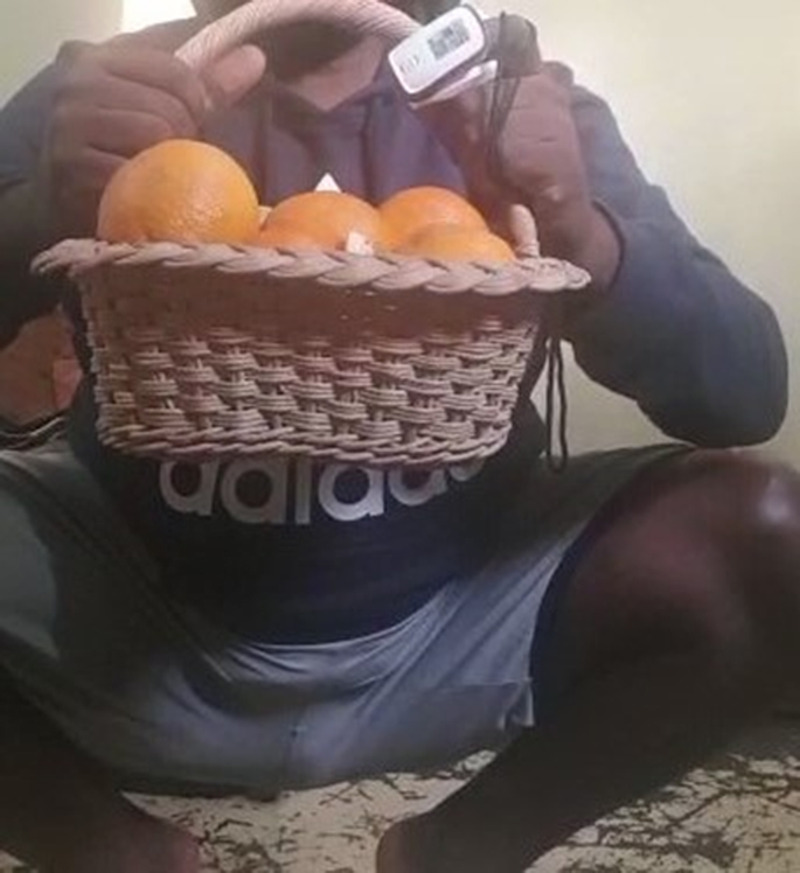
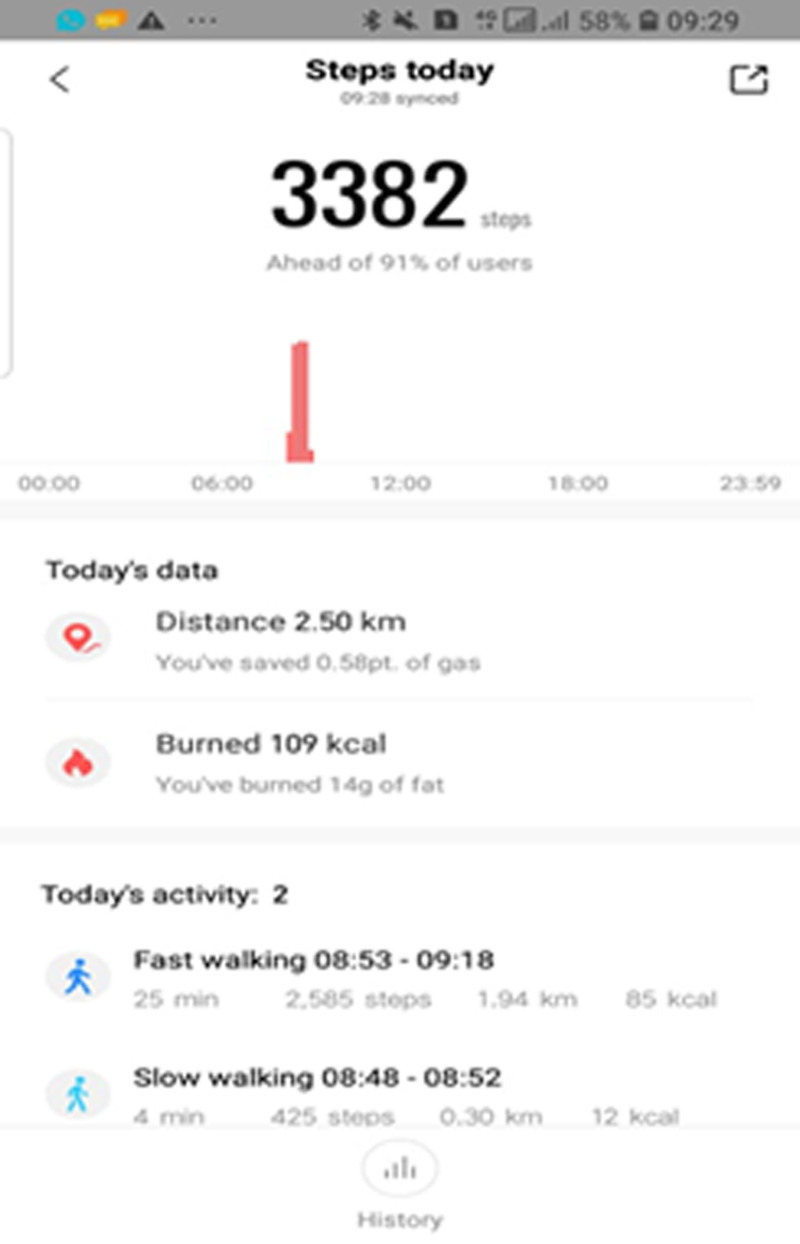
Postacute COVID-19 patients are at risk of long-term functional impairment, and the rehabilitation community is calling for action preparing for a “tsunami of rehabilitation needs” in this patient population. In the absence of standard guidelines and local evidence, a 3-wk pulmonary telerehabilitation program was successfully delivered to a postacute severe COVID-19 patient in Malawi. The patient experienced persistent dyspnea and fatigue, with a remarkable impact on his health status. On the final assessment, all his respiratory severity scores had fallen by more than their thresholds for clinical significance. He reported no continued or new complaints, was walking longer distances, had returned to work, and was discharged from follow-up. Our case shows that an improvised pulmonary telerehabilitation program for postacute COVID-19 patients could be feasible and acceptable in a low-resource setting. Benefits include reducing risk of transmission and use of personal protective equipment.
Overview
The claims and statistics of this paper haven’t been checked yet.
Free: it reads the open-access text and checks the first 5 claims that cite a source we can check. Create a free account to check every claim.
Integrity signals
Registry
Cites
Statistics
Figures
Verification
Claims the paper makes
The claims and statistics of this paper haven’t been checked yet.
Free: it reads the open-access text and checks the first 5 claims that cite a source we can check. Create a free account to check every claim.
Self-check
Percentages, sums and reported differences re-computed from the paper’s own numbers.
The self-check needs the paper’s full text.
Citations
Cites
Vestbo, J., Hurd, S. S., Agustí, A. G., Jones, P. W., Vogelmeier, C., Anzueto, A., Barnes, P. J., Fabbri, L. M., Martinez, F. J., Nishimura, M., et al. (2013) · American Journal of Respiratory and Critical Care Medicine · doi:10.1164/rccm.201204-0596pp · Cited by 15,983
Spruit, M. A., Singh, S. J., Garvey, C., ZuWallack, R., Nici, L., Rochester, C., Hill, K., Holland, A. E., Lareau, S. C., Man, W. D.-C., et al. (2013) · American Journal of Respiratory and Critical Care Medicine · doi:10.1164/rccm.201309-1634st · Cited by 3,938
Development and first validation of the COPD Assessment Test
Jones, P. W., Harding, G., Berry, P., Wiklund, I., Chen, W.-H., & Kline Leidy, N. (2009) · European Respiratory Journal · doi:10.1183/09031936.00102509 · Cited by 3,198
Bestall, J. C., Paul, E. A., Garrod, R., Garnham, R., Jones, P. W., & Wedzicha, J. A. (1999) · Thorax · doi:10.1136/thx.54.7.581 · Cited by 2,927
The CARE guidelines: consensus-based clinical case reporting guideline development
Gagnier, J. J., Kienle, G., Altman, D. G., Moher, D., Sox, H., Riley, D., & the CARE Group (2013) · Journal of Medical Case Reports · doi:10.1186/1752-1947-7-223 · Cited by 1,309
Dimensional assessment of chronic fatigue syndrome
Vercoulen, J. H. M. M., Swanink, C. M. A., Fennis, J. F. M., Galama, J. M. D., van der Meer, J. W. M., & Bleijenberg, G. (1994) · Journal of Psychosomatic Research · doi:10.1016/0022-3999(94)90099-x · Cited by 1,306
Minimum clinically important difference for the COPD Assessment Test: a prospective analysis
Kon, S. S. C., Canavan, J. L., Jones, S. E., Nolan, C. M., Clark, A. L., Dickson, M. J., Haselden, B. M., Polkey, M. I., & Man, W. D.-C. (2014) · The Lancet Respiratory Medicine · doi:10.1016/s2213-2600(14)70001-3 · Cited by 668
Spruit, M. A., Holland, A. E., Singh, S. J., Tonia, T., Wilson, K. C., & Troosters, T. (2020) · European Respiratory Journal · doi:10.1183/13993003.02197-2020 · Cited by 422 · cited 1×
“The reported overlap in many symptoms between postacute COVID-19 patients and the more traditional candidates for pulmonary rehabilitation (including those with chronic obstructive pulmonary disease) is acknowledged,(22) and the model of pulmonary rehabilitation currently suits as a framework, particularly in a subset…”
BackgroundThe assessment of fatigue: Psychometric qualities and norms for the Checklist individual strength
Worm-Smeitink, M., Gielissen, M., Bloot, L., van Laarhoven, H. W. M., van Engelen, B. G. M., van Riel, P., Bleijenberg, G., Nikolaus, S., & Knoop, H. (2017) · Journal of Psychosomatic Research · doi:10.1016/j.jpsychores.2017.05.007 · Cited by 360 · cited 1×
“His CIS-Fatigue score of 43 exceeded the threshold for “severe fatigue” (>35).(15) Subsequently, a pulmonary telerehabilitation program was designed, implemented, and supervised by the first author, who is a qualified physiotherapist registered with the Medical Council of Malawi and certified in pulmonary rehabilitati…”
BackgroundTelemedicine in the face of the COVID-19 pandemic
Vidal-Alaball, J., Acosta-Roja, R., Pastor Hernández, N., Sanchez Luque, U., Morrison, D., Narejos Pérez, S., Perez-Llano, J., Salvador Vèrges, A., & López Seguí, F. (2020) · Atención Primaria · doi:10.1016/j.aprim.2020.04.003 · Cited by 351 · cited 1×
“However, physical distancing requirements to prevent COVID-19 transmission challenge the delivery of traditional face-to-face pulmonary rehabilitation paradigms and prompted us to explore a telehealth intervention.(3) Telerehabilitation uses information and communication technologies to deliver clinical rehabilitation…”
Background
Cited by
Long COVID, a comprehensive systematic scoping review
Akbarialiabad, H., Taghrir, M. H., Abdollahi, A., Ghahramani, N., Kumar, M., Paydar, S., Razani, B., Mwangi, J., Asadi-Pooya, A. A., Malekmakan, L., et al. (2021) · Infection · doi:10.1007/s15010-021-01666-x · Cited by 344
Telemedicine in Low- and Middle-Income Countries During the COVID-19 Pandemic: A Scoping Review
Mahmoud, K., Jaramillo, C., & Barteit, S. (2022) · Frontiers in Public Health · doi:10.3389/fpubh.2022.914423 · Cited by 153
“7%) discovered a deficiency in training and comprehension of healthcare users (7, 28, 33, 38, 39, 46, 55, 58, 69).”
BackgroundBiopotential Signal Monitoring Systems in Rehabilitation: A Review
Palumbo, A., Vizza, P., Calabrese, B., & Ielpo, N. (2021) · Sensors · doi:10.3390/s21217172 · Cited by 109
“In [20,21], telerehabilitation programs consist of home exercises for aerobic reconditioning, muscle strengthening, and healthy lifestyle education.”
BackgroundSoril, L. J. J., Damant, R. W., Lam, G. Y., Smith, M. P., Weatherald, J. C., Bourbeau, J., Hernandez, P., & Stickland, M. K. (2022) · Respiratory Medicine · doi:10.1016/j.rmed.2022.106782 · Cited by 62
“Bickton (2021) Virtual and telerehabilitation (WhatsApp text messaging, Education and patienttailored progressive exercise sessions (i.e., At least 2 sessions per day, 3 days per week, over 3 weeks NR; patient in early convalescence after discharge 3 weeks after start of PR mMRC, Chronic…”
Impact of Rehabilitation on Fatigue in Post-COVID-19 Patients: A Systematic Review and Meta-Analysis
Alessandro de, S. I. R. E., Moggio, L., Marotta, N., Agostini, F., Tasselli, A., Ferrante, V. D., Curci, C., Calafiore, D., Ferraro, F., Bernetti, A., et al. (2022) · Applied Sciences · doi:10.3390/app12178593 · Cited by 57
Metadata
- Authors
- Bickton, F. M., Chisati, E., Rylance, J., & Morton, B.
- Affiliations
- University of Malawi (MW)
- Corresponding author
- Bickton, Fanuel Meckson
- Venue
- American Journal of Physical Medicine & Rehabilitation
- Published
- 2021-01-04
- Volume
- 100
- Issue
- 3
- Pages
- 209-212
- ISSN
- 0894-9115 (ISSN-L)
- 1537-7385
- PMC
- PMC7886367
- OpenAlex
- W3120853239
- Cited by
- 24
- References
- 20
- Citations by year
- 2025: 2 · 2024: 2 · 2023: 8 · 2022: 8 · 2021: 4
- FWCI
- 2.63
- Type
- journal article
- Language
- en
- Open access
- hybrid
- doi.org
- Locations
- American Journal of Physical Medicine & Rehabilitation (publishedVersion, cc-by)
- PubMed Central (publishedVersion, cc-by)
- PubMed (publishedVersion)
- LSTM Online Archive (Liverpool School of Tropical Medicine) (acceptedVersion)
- Funders
- Wellcome Trust (221465/Z/20/Z)
- Topics
- Health Sciences › Medicine › Clinical Neurology › Long-Term Effects of COVID-19
- Health Sciences › Medicine › Public Health, Environmental and Occupational Health › Telemedicine and Telehealth Implementation
- Health Sciences › Medicine › Infectious Diseases › COVID-19 Clinical Research Studies
- Keywords
- long COVID, telemedicine, resource-limited settings, feasibility, acceptability, persistent dyspnea, fatigue, respiratory function, Malawi
- MeSH terms
- Telerehabilitation, COVID-19, Female, Humans, Male, Quality of Life, Time Factors, Treatment Outcome, Recovery of Function
About these checks
Registry, retraction, Cites and statistics results are computed, not judged, with one exception: a printed reference that no index lists is read once by a model before it counts as a citation error. Claims are extracted by a model and kept only when their quote appears verbatim in the text; each cited source is then checked, with a model’s help, for whether it says what the claim relies on. Those verdicts can be wrong — read the claim’s quote and the cited source before relying on one.
Statistics and arithmetic are recomputed, not judged.
Confidence bands are shown only for fields calibrated on our annotated test set. None is calibrated yet, so no band is shown.
What counts as a claim ›How we measure confidence ›How we check this ›
Are you an author, or do you see a problem with this page? Request a review
How to cite
Cite CoChat for the checks on this page, and the paper for its own findings.
- This page
- CoChat. (2026). Citation check: An Improvised Pulmonary Telerehabilitation Program for Postacute COVID-19 Patients Would Be Feasible and Acceptable in a Low-Resource Setting. https://app.cochat.ai/papers/10.1097/phm.0000000000001666
- The paper
- Bickton, F. M., Chisati, E., Rylance, J., & Morton, B. (2021). An Improvised Pulmonary Telerehabilitation Program for Postacute COVID-19 Patients Would Be Feasible and Acceptable in a Low-Resource Setting. American Journal of Physical Medicine & Rehabilitation. https://doi.org/10.1097/phm.0000000000001666
Data sources
Bibliographic data: Semantic Scholar, OpenAlex, Crossref.
Contains information from the Semantic Scholar Academic Graph Datasets, made available under the ODC Attribution License (ODC-BY 1.0).
Semantic Scholar’s data is described in: Kinney, R., et al. (2023). The Semantic Scholar Open Data Platform. arXiv:2301.10140.
