

Utilization of Family as Faculty: A Patient Directed Simulation Education to Improve Patient and Family Communication during Patient-Family Centered Rounds (PFCR)
Open accessThe DOI matches its Crossref record; 25 of the 25 references it cites were found in a registry or an index.
Abstract
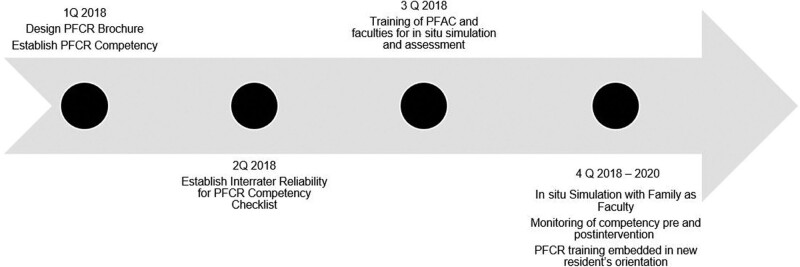
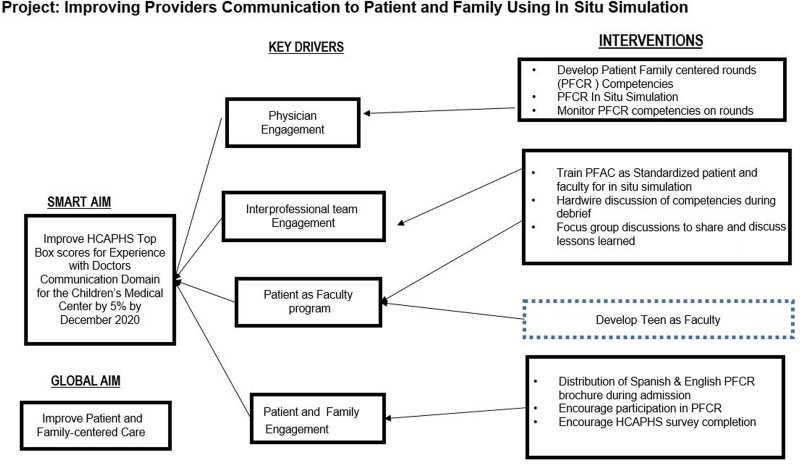
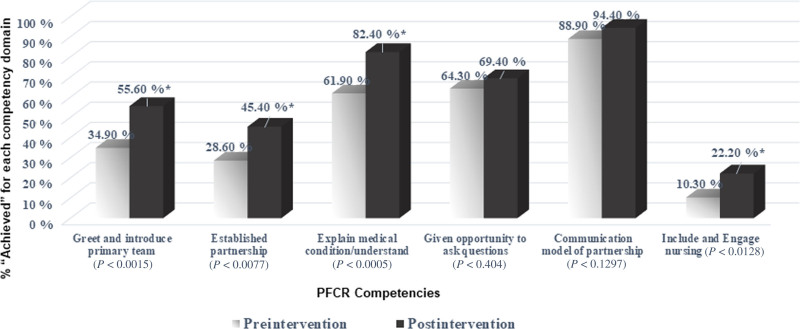
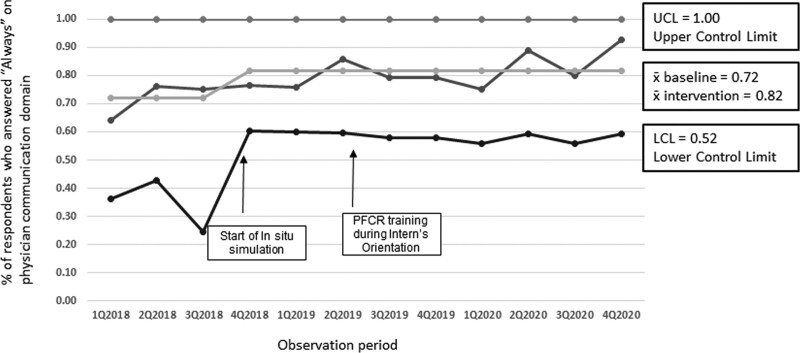
Introduction: Patient-family-centered care (PFCC) is based on the understanding that the family is the child’s source of strength and support. Effective communication between families and providers is an essential component of PFCC. Our interprofessional team designed an initiative to improve medical providers’ communication in partnership with the Patient and Family Advisory Council (PFAC). Strategies included the creation of a competency rubric and simulation curriculum using the family as faculty. The SMART aim was to improve the percentage of respondents who answered “Always” to doctor communication domains from 72% to 75.6% in Hospital Consumer Assessment of Healthcare Providers and Systems (HCAHPS) by December 2020. Methods: Pediatric residents, medical students, faculty, nurses, and PFAC members formed a Quality Improvement (QI) team to address PFCR competency. The team created a PFCC checklist to address competency. PFAC volunteers served as standardized parents in an in situ simulation of PFCR scenarios involving interprofessional in-patient teams. Evaluators observed rounds for the pre and postintervention assessment using the checklist. The outcome measure was the percentage of respondents who answered “Always” in the HCAPHS domain for physician communication. The process measure was the PFCR pre and postintervention, using Fisher’s exact test for analysis. Results: Using a statistical process chart (SPC), HCAHPS data from 2018 to 2020 showed that we exceeded our aim of >5% increase in the physician communication performance. Pre-post intervention data showed improvement in PFCR competency. Conclusion: Family as faculty simulation led to improved physician communication, translating to improved performance in the HCAHPS score and PFCR competency communication domains.
Overview
The claims and statistics of this paper haven’t been checked yet.
Free: it reads the open-access text and checks the first 5 claims that cite a source we can check. Create a free account to check every claim.
Integrity signals
Registry
Cites
Statistics
Figures
Verification
Claims the paper makes
The claims and statistics of this paper haven’t been checked yet.
Free: it reads the open-access text and checks the first 5 claims that cite a source we can check. Create a free account to check every claim.
Claims other papers make about this one
Each is checked against this paper’s own text: does it say what the citing paper says it does?
The cited source says what the claim attributes to it.
In the citing paper
“Previous studies also have suggested that patient-oriented simulation education could be associated with improvements in communication with patients and families [33].”
Self-check
Percentages, sums and reported differences re-computed from the paper’s own numbers.
The self-check needs the paper’s full text.
Citations
Cites
Patient- and Family-Centered Care and the Pediatrician's Role
COMMITTEE ON HOSPITAL CARE and INSTITUTE FOR PATIENT- AND FAMILY-CENTERED CARE (2012) · Pediatrics · doi:10.1542/peds.2011-3084 · Cited by 1,084
Family-Centered Care: Current Applications and Future Directions in Pediatric Health Care
Kuo, D. Z., Houtrow, A. J., Arango, P., Kuhlthau, K. A., Simmons, J. M., & Neff, J. M. (2012) · Maternal and Child Health Journal · doi:10.1007/s10995-011-0751-7 · Cited by 943
Low‐ to high‐fidelity simulation – a continuum of medical education?
Maran, N. J., & Glavin, R. J. (2003) · Medical Education · doi:10.1046/j.1365-2923.37.s1.9.x · Cited by 943
Effect of practice on standardised learning outcomes in simulation‐based medical education
McGaghie, W. C., Issenberg, S. B., Petrusa, E. R., & Scalese, R. J. (2006) · Medical Education · doi:10.1111/j.1365-2929.2006.02528.x · Cited by 322
Teaching about health literacy and clear communication
Kripalani, S., & Weiss, B. D. (2006) · Journal of General Internal Medicine · doi:10.1111/j.1525-1497.2006.00543.x · Cited by 242
Khan, A., Spector, N. D., Baird, J. D., Ashland, M., Starmer, A. J., Rosenbluth, G., Garcia, B. M., Litterer, K. P., Rogers, J. E., Dalal, A. K., et al. (2018) · BMJ · doi:10.1136/bmj.k4764 · Cited by 240
Schwartzberg, J. G., Cowett, A., VanGeest, J., & Wolf, M. S. (2007) · American Journal of Health Behavior · doi:10.5993/ajhb.31.s1.12 · Cited by 216
Schwartzberg, J. G., Cowett, A. A., VanGeest, J. B., et al. (2007) · PubMed · doi:10.5555/ajhb.2007.31.supp.s96 · Cited by 172
Defining Family-Centered Rounds
Sisterhen, L. L., Blaszak, R. T., Woods, M. B., & Smith, C. E. (2007) · Teaching and Learning in Medicine · doi:10.1080/10401330701366812 · Cited by 161
Family-centered Multidisciplinary Rounds Enhance the Team Approach in Pediatrics
Rosen, P., Stenger, E., Bochkoris, M., Hannon, M. J., & Kwoh, C. K. (2009) · Pediatrics · doi:10.1542/peds.2008-2238 · Cited by 158
Elliott, M. N., Cohea, C. W., Lehrman, W. G., Goldstein, E. H., Cleary, P. D., Giordano, L. A., Beckett, M. K., & Zaslavsky, A. M. (2015) · Health Services Research · doi:10.1111/1475-6773.12305 · Cited by 111
A Family-Centered Rounds Checklist, Family Engagement, and Patient Safety: A Randomized Trial
Cox, E. D., Jacobsohn, G. C., Rajamanickam, V. P., Carayon, P., Kelly, M. M., Wetterneck, T. B., Rathouz, P. J., & Brown, R. L. (2017) · Pediatrics · doi:10.1542/peds.2016-1688 · Cited by 103
Parental Presence on Pediatric Intensive Care Unit Rounds
Cameron, M. A., Schleien, C. L., & Morris, M. C. (2009) · The Journal of Pediatrics · doi:10.1016/j.jpeds.2009.03.035 · Cited by 97
Participation of family members in ward rounds: Attitude of medical staff, patients and relatives
Rotman‐Pikielny, P., Rabin, B., Amoyal, S., Mushkat, Y., Zissin, R., & Levy, Y. M. (2006) · Patient Education and Counseling · doi:10.1016/j.pec.2006.07.003 · Cited by 77
Mittal, V. S. (2014) · Pediatric Clinics of North America · doi:10.1016/j.pcl.2014.04.003 · Cited by 76
Implementing Family-Centered Rounds: Pediatric Residents’ Perceptions
Rappaport, D. I., Cellucci, M. F., & Leffler, M. G. (2010) · Clinical Pediatrics · doi:10.1177/0009922809346568 · Cited by 69
The Evaluation of Physicians’ Communication Skills From Multiple Perspectives
Burt, J., Abel, G., Elliott, M. N., Elmore, N., Newbould, J., Davey, A. F., Llanwarne, N. R., Maramba, I. D. C., Paddison, C. A. M., Campbell, J., et al. (2018) · The Annals of Family Medicine · doi:10.1370/afm.2241 · Cited by 58
Patient, parent, and physician perspectives on pediatric oncology rounds
Lewis, C., Knopf, D., Chastain-Lorber, K., Ablin, A., Zoger, S., Matthay, K., Glasser, M., & Pantell, R. (1988) · The Journal of Pediatrics · doi:10.1016/s0022-3476(88)80316-0 · Cited by 57
Mittal, V. S., Krieger, E., Lee, B. C., Kind, T., McCavit, T. L., Campbell, J. K., Li, S. T., & Flores, G. (2013) · Journal of Graduate Medical Education · doi:10.4300/jgme-d-11-00314.1 · Cited by 48
Oshimura, J. M., Downs, S. M., & Saysana, M. S. (2014) · Hospital Pediatrics · doi:10.1542/hpeds.2013-0085 · Cited by 31
Johnson, A. M., Yoder, J., & Richardson-Nassif, K. (2006) · Teaching and Learning in Medicine · doi:10.1207/s15328015tlm1803_6 · Cited by 30
Pediatric Residents’ Perceptions of Family-Centered Rounds as Part of Postgraduate Training
Pinto, J. M., Chu, D., & Петрова, А. (2013) · Clinical Pediatrics · doi:10.1177/0009922813501377 · Cited by 29
Rao, P. S., Hill, E., Palka, C. C., Rea, K. E., Jones, K., Balzer, K., Cornell, T. T., Rooney, D. M., & Cousino, M. K. (2018) · MedEdPORTAL · doi:10.15766/mep_2374-8265.10733 · Cited by 25
THE ATTITUDES AND PERCEPTIONS OF HEALTHCARE PROFESSIONALS TOWARDS FAMILY PRESENCE DURING ROUNDS.
Duncan, S. M., Vigen, K., Richards, S., & Garros, D. (2005) · Critical Care Medicine · doi:10.1097/00003246-200512002-00382 · Cited by 6
DeJohn, C. N., & Singhal, G. (2013) · American Academy of Pediatrics eBooks · doi:10.1542/9781581108101-part15-ch52 · Cited by 4
Research works printed but not linked: 2
- Committee on Hospital Care and Institute for Patient-Family Centered Care. Patient–Family Centered Care and the pediatrician’s role. Pediatrics. 2003; 112: 691– 696.12949306
- Provost LP Murray S. The Health Care Guide. Learning from Data Improvement. Ist ed. John Wiley and Sons, 2011. Pp. 76– 79.
Cited by
Jeppesen, E., Schmidt, A. A., Skjødt, C. K., Hybschmann, J., Gjærde, L. K., Thestrup, J., Hansson, H., & Sørensen, J. L. (2024) · European Journal of Pediatrics · doi:10.1007/s00431-024-05455-0 · Cited by 28
Joo, Y., Han, E., & Jang, Y. (2025) · Nurse Education Today · doi:10.1016/j.nedt.2025.106699 · Cited by 19
Use of Hospital Patient and Family Advisory Councils: A Scoping Study
Lewis, B., Cochran, C., Marquez, E., Bhandari, N., Pharr, J. R., Upadhyay, S., & Shoemaker, S. (2025) · Journal of Patient Experience · doi:10.1177/23743735251316995 · Cited by 13
Training “with” Families: Transforming Social Justice Principles into School Psychology Practice
Aceves, T. C., & Katic, B. (2025) · School Psychology Review · doi:10.1080/2372966x.2025.2508681 · Cited by 3
“To Call or Not to Call” Communication Preferences Among Pediatric Hospital Medicine Team Leaders
O’Hara, K., Tseng, A. S., Herbst, L. A., Moss, S. R., Marsicek, S. M., Herbst, B., Molas‐Torreblanca, K., Maniscalco, J., & Ziniel, S. I. (2023) · Hospital Pediatrics · doi:10.1542/hpeds.2022-006795 · Cited by 2
Metadata
- Authors
- Asuncion, A. M., Quintos-Alagheband, M. L., Leavens-Maurer, J., Akerman, M., Janicke, P., & Cavanaugh, S.
- Affiliations
- NYU Langone Health (US)
- NYU Grossman Long Island School of Medicine (US)
- Corresponding author
- Asuncion, Arsenia M.
- Quintos-Alagheband, Maria Lyn
- Leavens-Maurer, Jill
- Venue
- Pediatric Quality & Safety
- Published
- 2022-05
- Volume
- 7
- Issue
- 3
- Pages
- e551
- ISSN
- 2472-0054 (ISSN-L)
- PMC
- PMC9197349
- OpenAlex
- W4282823350
- Semantic Scholar
- d96b1d657a6e5a1f065656821eeab5b6eee046a1
- Cited by
- 10
- References
- 24
- Citations by year
- 2026: 1 · 2025: 5 · 2024: 3 · 2023: 1
- FWCI
- 1.39
- Type
- journal article
- Language
- en
- Open access
- diamond
- doi.org
- Licence
- Locations
- Pediatric Quality and Safety (publishedVersion, cc-by-nc-nd)
- PubMed Central (publishedVersion, cc-by-nc-nd)
- PubMed (publishedVersion)
- Topics
- Social Sciences › Education › Simulation-Based Education in Healthcare
- Health Sciences › Medicine › Critical Care and Intensive Care Medicine › Family and Patient Care in Intensive Care Units
- Social Sciences › Education › Innovations in Medical Education
- Keywords
- simulation-based education, physician-family communication, patient and family advisory councils, HCAHPS, interprofessional education, pediatric residents, competency rubric, quality improvement
About these checks
Registry, retraction, Cites and statistics results are computed, not judged, with one exception: a printed reference that no index lists is read once by a model before it counts as a citation error. Claims are extracted by a model and kept only when their quote appears verbatim in the text; each cited source is then checked, with a model’s help, for whether it says what the claim relies on. Those verdicts can be wrong — read the claim’s quote and the cited source before relying on one.
Statistics and arithmetic are recomputed, not judged.
Confidence bands are shown only for fields calibrated on our annotated test set. None is calibrated yet, so no band is shown.
What counts as a claim ›How we measure confidence ›How we check this ›
Are you an author, or do you see a problem with this page? Request a review
Data sources
Bibliographic data: Semantic Scholar, OpenAlex, Crossref.
Contains information from the Semantic Scholar Academic Graph Datasets, made available under the ODC Attribution License (ODC-BY 1.0).
Semantic Scholar’s data is described in: Kinney, R., et al. (2023). The Semantic Scholar Open Data Platform. arXiv:2301.10140.
