

Using mHealth for HIV/TB treatment support in Lesotho: enhancing patient-provider communication in the START study
Open accessThe DOI matches its Crossref record; 21 of the 21 references it cites were found in a registry or an index.
Abstract
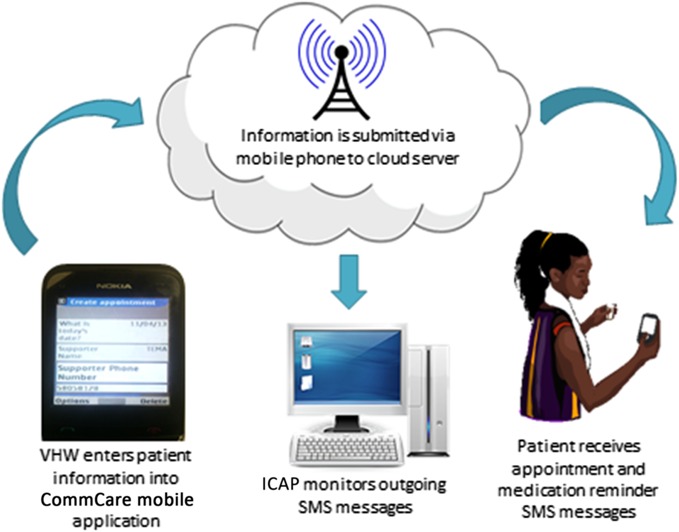
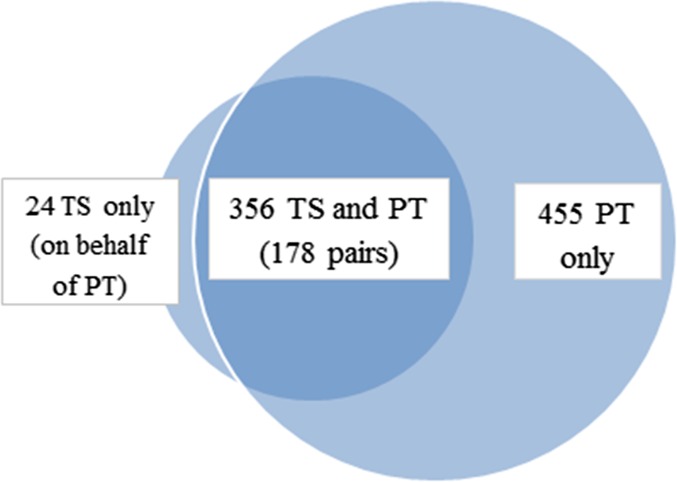
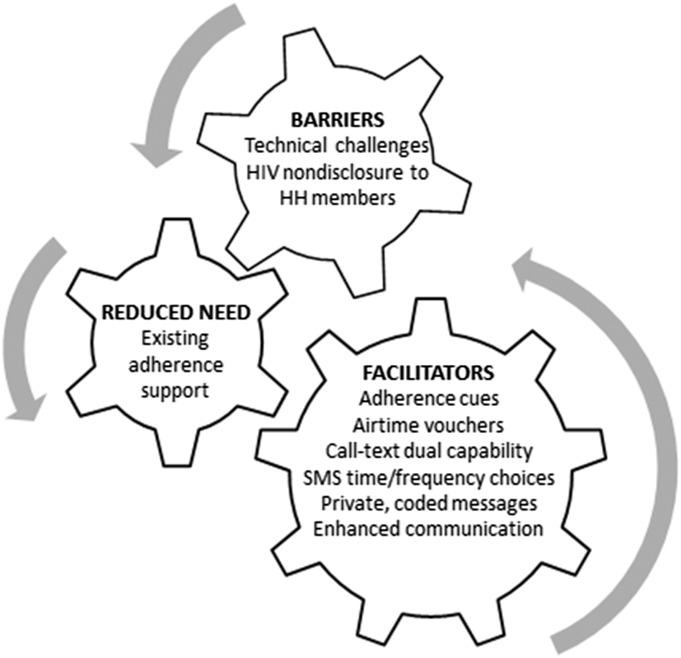
Background: mHealth is a promising means of supporting adherence to treatment. The Start TB patients on ART and Retain on Treatment (START) study included real-time adherence support using short-text messaging service (SMS) text messaging and trained village health workers (VHWs). We describe the use and acceptability of mHealth by patients with HIV/tuberculosis and health care providers. Methods: Patients and treatment supporters received automated, coded medication and appointment reminders at their preferred time and frequency, using their own phones, and $3.70 in monthly airtime. Facility-based VHWs were trained to log patient information and text message preferences into a mobile application and were given a password-protected mobile phone and airtime to communicate with community-based VHWs. The use of mHealth tools was analyzed from process data over the study course. Acceptability was evaluated during monthly follow-up interviews with all participants and during qualitative interviews with a subset of 30 patients and 30 health care providers at intervention sites. Use and acceptability were contextualized by monthly adherence data. Findings: From April 2013 to August 2015, the automated SMS system successfully delivered 39,528 messages to 835 individuals, including 633 patients and 202 treatment supporters. Uptake of the SMS intervention was high, with 92.1% of 713 eligible patients choosing to receive SMS messages. Patient and provider interviews yielded insight into barriers and facilitators to mHealth utilization. The intervention improved the quality of health communication between patients, treatment supporters, and providers. HIV-related stigma and technical challenges were identified as potential barriers. Conclusions: The mHealth intervention for HIV/tuberculosis treatment support in Lesotho was found to be a low-tech, user-friendly intervention, which was acceptable to patients and health care providers.
Overview
The claims and statistics of this paper haven’t been checked yet.
Free: it reads the open-access text and checks the first 5 claims that cite a source we can check. Create a free account to check every claim.
Integrity signals
Registry
Cites
Statistics
Figures
Verification
Claims the paper makes
The claims and statistics of this paper haven’t been checked yet.
Free: it reads the open-access text and checks the first 5 claims that cite a source we can check. Create a free account to check every claim.
Claims other papers make about this one
Each is checked against this paper’s own text: does it say what the citing paper says it does?
The source backs part of the claim, not all of it — or backs it for a different population, condition or comparison.
In the citing paper
“Health workers perceived that some clients did not want sensitive information sent to their personal devices, as they were concerned about the transmission of the information and having it on the device where others may accidentally see it (Hirsch‐Moverman 2017).”
From Health workers' perceptions and experiences of using mHealth technologies to deliver primary healthcare services: a qualitative evidence synthesis (2020) · cites this paper as Hirsch‐Moverman 2017
Experimental — accuracy not yet measuredThe source backs part of the claim, not all of it — or backs it for a different population, condition or comparison.
In the citing paper
“Health workers were alert to clients' concerns when they shared personal information concerning stigmatised issues, such as HIV/AIDS and interpersonal violence”
From Health workers' perceptions and experiences of using mHealth technologies to deliver primary healthcare services: a qualitative evidence synthesis (2020) · cites this paper as Hirsch‐Moverman 2017
Experimental — accuracy not yet measuredThe source backs part of the claim, not all of it — or backs it for a different population, condition or comparison.
In the citing paper
“changing their phone numbers regularly”
From Health workers' perceptions and experiences of using mHealth technologies to deliver primary healthcare services: a qualitative evidence synthesis (2020) · cites this paper as Hirsch‐Moverman 2017
Experimental — accuracy not yet measuredThe source backs part of the claim, not all of it — or backs it for a different population, condition or comparison.
In the citing paper
“Some health workers expressed initial hesitancy, but over time and with training, became more comfortable, to the point of expressing concern that they were becoming dependent on the intervention devices (Hirsch‐Moverman 2017; Mitchell 2012; Valaitis 2005).”
From Health workers' perceptions and experiences of using mHealth technologies to deliver primary healthcare services: a qualitative evidence synthesis (2020) · cites this paper as Hirsch‐Moverman 2017
Experimental — accuracy not yet measuredThe cited source says what the claim attributes to it.
In the citing paper
“Health workers were aware of the importance of protecting confidential client information when using mobile devices.”
From Health workers' perceptions and experiences of using mHealth technologies to deliver primary healthcare services: a qualitative evidence synthesis (2020) · cites this paper as Hirsch‐Moverman 2017
3 more claims about this paper
Create a free account to see every claim other papers make about this one.
Self-check
Percentages, sums and reported differences re-computed from the paper’s own numbers.
The self-check needs the paper’s full text.
Citations
Cites
Grounded theory research: Procedures, canons, and evaluative criteria
Corbin, J. M., & Strauss, A. (1990) · Qualitative Sociology · doi:10.1007/bf00988593 · Cited by 11,133
Toward a Conceptual Framework for Mixed-Method Evaluation Designs
Greene, J. C., Caracelli, V. J., & Graham, W. F. (1989) · Educational Evaluation and Policy Analysis · doi:10.3102/01623737011003255 · Cited by 5,687
Durlak, J. A., & DuPre, E. P. (2008) · American Journal of Community Psychology · doi:10.1007/s10464-008-9165-0 · Cited by 5,304
Lester, R. T., Ritvo, P., Mills, E. J., Kariri, A., Karanja, S., Chung, M. H., Jack, W., Habyarimana, J., Sadatsafavi, M., Najafzadeh, M., et al. (2010) · The Lancet · doi:10.1016/s0140-6736(10)61997-6 · Cited by 1,278 · cited 2×
“In early 2012 when this study was designed, the only 2 SMS trials published were from Lester et al (2010),6 who tested a weekly SMS message and found it effective, and Pop-Eleches et al (2011),8 who compared weekly and daily SMS messages and found that weekly messages had a positive effect on…”
BackgroundPop-Eleches, C., Thirumurthy, H., Habyarimana, J. P., Zivin, J. G., Goldstein, M. P., de Walque, D., MacKeen, L., Haberer, J., Kimaiyo, S., Sidle, J., et al. (2011) · AIDS · doi:10.1097/qad.0b013e32834380c1 · Cited by 982 · cited 1×
“…this study was designed, the only 2 SMS trials published were from Lester et al (2010),6 who tested a weekly SMS message and found it effective, and Pop-Eleches et al (2011),8 who compared weekly and daily SMS messages and found that weekly messages had a positive effect on adherence, whereas…”
BackgroundFinitsis, D. J., Pellowski, J. A., & Johnson, B. T. (2014) · PLoS ONE · doi:10.1371/journal.pone.0088166 · Cited by 355
E-health in low- and middle-income countries: findings from the Center for Health Market Innovations
Lewis, T., Synowiec, C., Lagomarsino, G., & Schweitzer, J. (2012) · Bulletin of the World Health Organization · doi:10.2471/blt.11.099820 · Cited by 319
Adherence to Highly Active Antiretroviral Therapy (HAART): A Meta-Analysis
Ortego, C., Huedo-Medina, T. B., Llorca, J., Sevilla, L., Santos, P., Rodríguez, E., Warren, M. R., & Vejo, J. (2011) · AIDS and Behavior · doi:10.1007/s10461-011-9942-x · Cited by 310
Mbuagbaw, L., Thabane, L., Ongolo-Zogo, P., Lester, R. T., Mills, E. J., Smieja, M., Dolovich, L., & Kouanfack, C. (2012) · PLoS ONE · doi:10.1371/journal.pone.0046909 · Cited by 224
Does mHealth increase adherence to medication? Results of a systematic review
Anglada-Martinez, H., Riu-Viladoms, G., Martin-Conde, M., Rovira-Illamola, M., Sotoca-Momblona, J. M., & Codina-Jane, C. (2015) · International Journal of Clinical Practice · doi:10.1111/ijcp.12582 · Cited by 217
Research works printed but not linked: 1
- Creswell JW Plano-Clark VL Designing and Conducting Mixed Methods Research. Los Angeles, CA: Sage Publications; 2011.
Cited by
Odendaal, W. A., Anstey Watkins, J., Leon, N., Goudge, J., Griffiths, F., Tomlinson, M., & Daniels, K. (2020) · Cochrane Database of Systematic Reviews · doi:10.1002/14651858.cd011942.pub2 · Cited by 289
Subbaraman, R., de Mondesert, L., Musiimenta, A., Pai, M., Mayer, K. H., Thomas, B. E., & Haberer, J. (2018) · BMJ Global Health · doi:10.1136/bmjgh-2018-001018 · Cited by 255
Daher, J., Vijh, R., Linthwaite, B., Dave, S., Kim, J., Dheda, K., Peter, T., & Pai, N. P. (2017) · BMJ Open · doi:10.1136/bmjopen-2017-017604 · Cited by 173
Osei, E., & Mashamba-Thompson, T. P. (2021) · Heliyon · doi:10.1016/j.heliyon.2021.e06639 · Cited by 166
Ames, H. M., Glenton, C., Lewin, S. A., Tamrat, T., Akama, E., & Leon, N. (2019) · Cochrane Database of Systematic Reviews · doi:10.1002/14651858.cd013447 · Cited by 116
Use of Digital Technology to Enhance Tuberculosis Control: Scoping Review
Lee, Y., Raviglione, M. C., & Flahault, A. (2020) · Journal of Medical Internet Research · doi:10.2196/15727 · Cited by 114
“Patient care [1-11] GeneXpert [12-22] Chest x-ray [23-31] Polymerase chain reaction [32-49] Video directly observed therapy [50-60] text messages [61-70] Mobile phone apps [71-73] Artificial intelligence [”
BackgroundDigital Solutions for Community and Primary Health Workers: Lessons From Implementations in Africa
Owoyemi, A., Osuchukwu, J. I., Azubuike, C., Ikpe, R. K., Nwachukwu, B. C., Akinde, C. B., Biokoro, G. W., Ajose, A. B., Nwokoma, E. I., Mfon, N. E., et al. (2022) · Frontiers in Digital Health · doi:10.3389/fdgth.2022.876957 · Cited by 78
“In addition, initiatives that had flexible implementation protocols also had high acceptance rates (12, 56, 66).”
BackgroundAdeagbo, O., Herbst, C., BLANDFORD, A. E., McKendry, R. A., Estcourt, C. S., Seeley, J., & Shahmanesh, M. (2019) · Journal of Medical Internet Research · doi:10.2196/15681 · Cited by 73
“mHealth interventions have the potential to decentralize access to health care and make it convenient, particularly in resource-constrained settings [18-22].”
BackgroundImplementing mHealth Interventions in a Resource-Constrained Setting: Case Study From Uganda
Meyer, A. J., Armstrong-Hough, M., Babirye, D., Mark, D., Turimumahoro, P., Ayakaka, I., Haberer, J. E., Katamba, A., & Davis, J. L. (2020) · JMIR mHealth and uHealth · doi:10.2196/19552 · Cited by 62
“For example, mHealth technologies can promote treatment adherence [6-10], enhance access to and uptake of maternal and child health care services [11,12], and improve the quality and reliability of services by connecting external quality assurance teams directly to diagnostic instruments [13].”
BackgroundOsei, E., Kuupiel, D., Vezi, P. N., & Mashamba-Thompson, T. P. (2021) · BMC Medical Informatics and Decision Making · doi:10.1186/s12911-020-01381-x · Cited by 67
Kumar, A. A., Costa, A. D., Das, A., Srinivasa, G., D′Souza, G., & Rodrigues, R. (2019) · JMIR mhealth and uhealth · doi:10.2196/11687 · Cited by 63
“A study from Lesotho, Africa, indicates that 92% of HIV/TB patients found SMS reminders for medications acceptable [28].”
Healthcare Workers’ Perspectives of mHealth Adoption Factors in the Developing World: Scoping Review
Addotey-Delove, M., Scott, R. E., & Mars, M. (2023) · International Journal of Environmental Research and Public Health · doi:10.3390/ijerph20021244 · Cited by 76
Gashu, K. D., Gelaye, K. A., Lester, R. T., & Tilahun, B. C. (2021) · BMJ Health & Care Informatics · doi:10.1136/bmjhci-2020-100268 · Cited by 59
Mwapasa, V., Joseph, J., Tchereni, T., Jousset, A., & Gunda, A. (2017) · JAIDS Journal of Acquired Immune Deficiency Syndromes · doi:10.1097/qai.0000000000001340 · Cited by 57
Karageorgos, G. M., Andreadis, I., Psychas, K., Mourkousis, G., Kiourti, A., Lazzi, G., & Nikita, K. S. (2018) · IEEE Reviews in Biomedical Engineering · doi:10.1109/rbme.2018.2868896 · Cited by 53
“In Brazil [40], Kenya [41], [42], Nigeria [43], India [44], and Lesotho [45], SMSmedication reminders have proven to be successful in improving ad-”
BackgroundLouwagie, G., Kanaan, M., Morojele, N. K., Van Zyl, A., Moriarty, A. S., Li, J., Siddiqi, K., Turner, A., Mdege, N. D., Omole, O. B., et al. (2022) · BMJ Open · doi:10.1136/bmjopen-2021-056496 · Cited by 44
Mohamed, M. S., Zary, M., Kafie, C., Chilala, C. I., Bahukudumbi, S., Foster, N., Gore, G. C., Fielding, K., Subbaraman, R., & Schwartzman, K. (2025) · BMC Infectious Diseases · doi:10.1186/s12879-025-11503-3 · Cited by 46
Implementation of eHealth Interventions Across the HIV Care Cascade: a Review of Recent Research
Kemp, C. G., & Velloza, J. (2018) · Current HIV/AIDS Reports · doi:10.1007/s11904-018-0415-y · Cited by 44
Maraba, N., Hoffmann, C. J., Chihota, V. N., Chang, L. W., Ismail, N., Candy, S., Madibogo, E., Katzwinkel, M., Churchyard, G. J., & McCarthy, K. (2018) · PLOS ONE · doi:10.1371/journal.pone.0199687 · Cited by 37
Moodley, N., Saimen, A., Zakhura, N. M., Motau, D., Setswe, G., Charalambous, S., & Chetty-Makkan, C. M. (2020) · BMC Public Health · doi:10.1186/s12889-020-08562-3 · Cited by 40
Sumari-de Boer, M., Pima, F. M., Ngowi, K. M., Chelangwa, G. M., Mtesha, B. A., Minja, L. M., Semvua, H. H., Mpagama, S., Mmbaga, B. T., Nieuwkerk, P. T., et al. (2019) · Trials · doi:10.1186/s13063-019-3483-4 · Cited by 27
Escobar-Viera, C. G., Zhou, Z., Morano, J. P., Lucero, R. J., Lieb, S., McIntosh, S., Clauson, K. A., & Cook, R. L. (2019) · JMIR mhealth and uhealth · doi:10.2196/14557 · Cited by 27
“Although a detailed description of our study participants (both users and nonusers) is available elsewhere [43], we did not collect information on nonparticipants, who may have not participated because the study was not available in Spanish, they did not have the correct type of phone, or may have been concerned about…”
BackgroundInfluentialAntelo, V. S., Kohler, R. E., Curotto, M., Viswanath, K., Paolino, M., & Arrossi, S. (2020) · JMIR Formative Research · doi:10.2196/14652 · Cited by 28
““Self-collection” was considered more discreet than alternatives such as “human papillomavirus” or “HPV,” which not only explicitly named a stigmatized STI but were also confused with HIV and was difficult to comprehend for those with poor reading and writing skills.”
ResultGimbel, S., Kawakyu, N., Dau, H., & Unger, J. A. (2018) · Current HIV/AIDS Reports · doi:10.1007/s11904-018-0416-x · Cited by 26
“CHW track patients and are able to remind them of appointments and treatment [10].”
BackgroundAli, S. M., Naureen, F., Noor, A., Fatima, I. N., Viney, K. A., Ishaq, M., Anjum, N., Rashid, A., Haider, G. R., Khan, M. A., et al. (2018) · BMC Public Health · doi:10.1186/s12889-018-5222-2 · Cited by 26
“The emerging mHealth technologies may possibly bridge the communication gap between health care providers and patients and could reduce the rate of LTFU [23, 24], for example, text message-based interventions [25, 26].”
BackgroundInfluentialOpportunities for Mobile App–Based Adherence Support for Children With Tuberculosis in South Africa
Morse, R. M., Myburgh, H., Reubi, D., Archey, A. E., Busakwe, L., Garcia‐Prats, A. J., Hesseling, A. C., Jacobs, S., Mbaba, S., Meyerson, K., et al. (2020) · JMIR mhealth and uhealth · doi:10.2196/19154 · Cited by 21
“To date, no mobile apps that aim to improve the experience of TB and TB treatment in high- or low-income countries have been developed for children; mobile health interventions for supporting TB programs have largely focused on adult patients, using SMS-based text message platforms to promote TB treatment adherence, c…”
BackgroundAddotey-Delove, M., Scott, R. E., & Mars, M. (2020) · Informatics in Medicine Unlocked · doi:10.1016/j.imu.2020.100460 · Cited by 23
Bahukudumbi, S., Chilala, C. I., Foster, N., Patel, B., Mohamed, M. S., Zary, M., Kafie, C., Gore, G. C., Schwartzman, K., Fielding, K., et al. (2025) · BMJ Global Health · doi:10.1136/bmjgh-2024-016608 · Cited by 20
Mobility and structural barriers in rural South Africa contribute to loss to follow up from HIV care
Hannaford, A., Moll, A. P., Madondo, T., Khoza, B., & Shenoi, S. (2020) · AIDS Care · doi:10.1080/09540121.2020.1808567 · Cited by 19
“MHealth strategies have demonstrated effectiveness in improving chronic disease outcomes(Drake et al., 2017; Hirsch-Moverman et al., 2017; Nachega et al., 2016), and if widely implementable, may improve retention in rural areas.”
BackgroundKuhns, L. M., Johnson, A. K., Adetunji, A. A., Kuti, K. M., Garofalo, R., Omigbodun, O. O., Awolude, O. A., Oladeji, B. D., Berzins, B., Okonkwor, O., et al. (2021) · PLoS ONE · doi:10.1371/journal.pone.0258190 · Cited by 19
eHealth in TB clinical management
Mărgineanu, I., Louka, C., Akkerman, O. W., Stienstra, Y., & Alffenaar, J.-W. (2022) · The International Journal of Tuberculosis and Lung Disease · doi:10.5588/ijtld.21.0602 · Cited by 20
Laar, A. S., Harris, M. L., Shifti, D. M., & Loxton, D. J. (2022) · BMC Health Services Research · doi:10.1186/s12913-022-08512-2 · Cited by 20
“Barriers to mHealth SRH services provision Barriers to mHealth service provision mainly consisted of infrastructural challenges [40, 41, 43] including limited and unreliable network connectivity [39–41, 44, 45], limited power for charging mobile phones [37, 40, 47].”
BackgroundInfluentialKalichman, S. C., Mathews, C., Banas, E., & Kalichman, M. O. (2018) · Global Public Health · doi:10.1080/17441692.2018.1552307 · Cited by 18
“Clinics often use cellphone contacts with patients to remind them to pick-up medications and schedule appointments (de Tolly & Constant, 2014; Hirsch-Moverman et al., 2017; Ishola & Chipps, 2015; McNairy et al., 2017).”
BackgroundMoriarty, A. S., Louwagie, G. M. C., Mdege, N. D., Morojele, N. K., Tumbo, J. M., Omole, O. B., Bachmann, M. O., Kanaan, M. N., Turner, A. C., Parrott, S., et al. (2019) · Trials · doi:10.1186/s13063-019-3551-9 · Cited by 18
“Field workers will administer the baseline part of this questionnaire as part of the Adherence will be measured using an adherence index calculated by the formula (using the four-day recall table): Total number of doses taken=Total number of doses prescribed½ x 100 ART patients with at least 95% of adherence will be c…”
BackgroundInfluentialOdendaal, W., Lewin, S. A., McKinstry, B., Tomlinson, M., Jordaan, E., Mazinu, M., Haig, P., Thorson, A. E., & Atkins, S. A. (2020) · Global Health Action · doi:10.1080/16549716.2020.1717410 · Cited by 19
Louwagie, G. M., Morojele, N., Siddiqi, K., Mdege, N. D., Tumbo, J., Omole, O., Pitso, L., Bachmann, M. O., & Ayo-Yusuf, O. A. (2020) · Translational Behavioral Medicine · doi:10.1093/tbm/ibz100 · Cited by 17
Drake, A. L., Rothschild, C. W., Jiang, W., Ronen, K., & Unger, J. A. (2020) · Current HIV/AIDS Reports · doi:10.1007/s11904-020-00534-x · Cited by 18
Health Communication and the HIV Continuum of Care
Vermund, S. H., Mallalieu, E. C., Lith, L. M. V., & Struthers, H. E. (2016) · JAIDS Journal of Acquired Immune Deficiency Syndromes · doi:10.1097/qai.0000000000001211 · Cited by 17
Senek, M., Drummond, D., Pinnock, H., Hansen, K., Ankolekar, A., O'Connor, Ú., Gonsard, A., Mazulov, O., Sreter, K. B., Thornton, C. S., et al. (2025) · Journal of Medical Internet Research · doi:10.2196/70970 · Cited by 18
Htet, K. K. K., Phyu, A. N., Thwin, T., & Chongsuvivatwong, V. (2022) · JMIR Formative Research · doi:10.2196/37779 · Cited by 16
Rentschler, J. E. M., Klaiber, C., Tariverdi, M., Desjonquères, C., & Mercadante, J. (2021) · World Bank, Washington, DC eBooks · doi:10.1596/35429 · Cited by 16
Hodges, J., Николаевна, Ж. С., Koshkinа, O. G., Suzdalnitsky, A. E., Waldman, A. L., Schwendinger, J., Vitko, S., Plenskey, A., Plotnikova, Y., Moiseeva, E., et al. (2021) · AIDS Patient Care and STDs · doi:10.1089/apc.2020.0233 · Cited by 15
“These have yet to demonstrate an improvement in these outcomes and, to our knowledge, they have not been designed for the Russian context.(16,17) Our group has previously developed a smartphone-based intervention called PositiveLinks for a rural population of people living with HIV (PLWH) in the United States.”
BackgroundAmeyaw, E. K., Amoah, P. A., Asiama, A. A., & Agbadi, P. (2025) · BMJ Open · doi:10.1136/bmjopen-2024-092746 · Cited by 15
“37 Infrastructure provisions, such as secure resources, reliable communication systems and robust internet infrastructure, are also critical enablers for mHealth utilisation.”
Garner, B. R., Burrus, O., Ortiz, A., Tueller, S., Peinado, S., Hedrick, H., Harshbarger, C. L., Galindo, C. A., Courtenay–Quirk, C., & Lewis, M. A. (2022) · JAIDS Journal of Acquired Immune Deficiency Syndromes · doi:10.1097/qai.0000000000003018 · Cited by 13
Modeling Medical Services with Mobile Health Applications
Wang, Z., Zhang, L., Ma, L., & Liu, B. (2018) · Journal of Healthcare Engineering · doi:10.1155/2018/1385034 · Cited by 14
“After describing the use and acceptability of m-Health by patients with HIV/tuberculosis and healthcare providers, Hirsch-Moverman et al. [20] found that the m-Health intervention was a low-tech, user-friendly intervention.”
MethodTschumi, N., Lerotholi, M., Kopo, M., Kao, M., Lukau, B., Nsakala, B. L., Chejane, N., Motaboli, L., Lee, T. T., Barnabas, R. V., et al. (2022) · PLoS ONE · doi:10.1371/journal.pone.0268100 · Cited by 12
Orji, R., Orji, F. A., Oyibo, K., & Ajah, I. A. (2018) · African Human Computer Interaction Conference (AfriCHI) · doi:10.1145/3283458.3283467 · Cited by 12
“For example, Hirsch-Moverman [26] described a mobile health intervention for supporting Tuberculosis (TB) and HIV treatment among patients in Lesotho called START.”
Hodges, J., Waldman, A. L., Koshkinа, O. G., Suzdalnitsky, A. E., Schwendinger, J., Vitko, S., Plenskey, A., Plotnikova, Y., Moiseeva, E., Koshcheev, M., et al. (2022) · BMJ Open · doi:10.1136/bmjopen-2021-054867 · Cited by 10
Mwase, C., Nkhoma, K. B., & Allsop, M. J. (2022) · Digital Health · doi:10.1177/20552076221133707 · Cited by 12
“40,45,46,57–59 Most studies were published in 2019 (n = 6),48,49,53–55,57 followed by 2018 (n = 4),(36,40,56,59) 2015 (n = 4)(41,44,50,51) and 2017 (n = 3).(45,46,52) Table 2 summarises the characteristics of the included studies, and Table 3 provides further details of study characteristics.”
BackgroundLepere, P., Touré, Y., Bitty-Anderson, A. M., Boni, S. P., Anago, G., Tchounga, B., Touré, P., Minga, A. K., Messou, E., Kanga, G., et al. (2019) · JMIR mhealth and uhealth · doi:10.2196/13741 · Cited by 12
Ramathebane, M. M., Makatjane, T. J., Thetsane, R. M., & Mokhethi, M. C. (2019) · African Journal of Primary Health Care & Family Medicine · doi:10.4102/phcfm.v11i1.1944 · Cited by 10
Thomas, V., Kalidindi, B., Waghmare, A., Bhatia, A., Raj, T. D. S., & Balsari, S. (2023) · JMIR Formative Research · doi:10.2196/45250 · Cited by 10
Lawal, A., Hussein, A. S., Tiberi, S., & Kunst, H. (2025) · BMC Public Health · doi:10.1186/s12889-025-25631-7 · Cited by 9
“Three in Nigeria [43–45], while Burkina Faso [29], Lesotho [46], Senegal [47], Rwanda [48], Kenya [49], and Thailand [30] accounted for each of the remaining studies.”
Scherrer, R., Tschumi, N., Lejone, T. I., Kopo, M., Motaboli, L., Mothobi, B., Amstutz, A., Deml, M. J., Lerotholi, M., & Labhardt, N. D. (2022) · Pilot and Feasibility Studies · doi:10.1186/s40814-022-01019-x · Cited by 9
Fonner, V. A., Kennedy, S., Desai, R., Eichberg, C., Martin, L., & Meissner, E. G. (2021) · JMIR Formative Research · doi:10.2196/22513 · Cited by 9
“Studies have demonstrated that mHealth interventions implemented in HIV clinics are acceptable and can improve clinical outcomes [13-17].”
BackgroundDaniels, J., Peters, R. P. H., Medina-Marino, A., Bongo, C., & Stephenson, R. B. (2022) · JMIR Research Protocols · doi:10.2196/36845 · Cited by 8
“The ability of GBMSM to plan for safe sex and consider HIV disclosure to partners through the intervention will support ART adherence and engender a sense of agency, thus reducing the negative feelings related to their HIV status and internalized HIV stigma [2,33].”
BackgroundBrown, M., Wexler, C., Gautney, B. J., Goggin, K., Hurley, E. A., Odeny, B., Maloba, M., Lwembe, R., Sandbulte, M. R., & Finocchario‐Kessler, S. (2019) · AIDS and Behavior · doi:10.1007/s10461-019-02579-5 · Cited by 8
Digital devices for tuberculosis treatment adherence
Vilyte, G., Fox, T., Rohwer, A. C., Volmink, J. A., & McCaul, M. (2023) · Cochrane Database of Systematic Reviews · doi:10.1002/14651858.cd015709 · Cited by 8
Fashakin, V., Mathur, S., Kwagala, P., Mupere, E., Kiguli, S., Kitaka, S. B., Henry, M. B., Ells, L. V., Tusuubira, S., Mulumba, L., et al. (2020) · Journal of Pediatric Hematology/Oncology · doi:10.1097/mph.0000000000001800 · Cited by 5
Health information systems in extreme contexts: Using mobile phones to fight AIDS in Uganda
Njuba, L., Gómez, J. E., Herrera, A., & Camacho, S. (2024) · The Electronic Journal of Information Systems in Developing Countries · doi:10.1002/isd2.12314 · Cited by 7
Shivalli, S., Hondappagol, A., Akshaya, K. M., Nirgude, A. S., Varun, N., Reddy, R. H. R., & Nagaraja, S. B. (2020) · BMJ Open · doi:10.1136/bmjopen-2019-032991 · Cited by 5
Tizie, S. B., Shiferaw, A. M., Beshir, M. A., Mengistie, M. B., Degualem, S. M., & Assaye, B. T. (2023) · BMC Public Health · doi:10.1186/s12889-023-17452-3 · Cited by 5
“In the healthcare system, mobile health has a means of supporting treatment adherence since medication non-adherence has been caused by factors such as not taking medications as prescribed by a professional, withdrawing from medication, losing appointments, and forgetfulness [16].”
BackgroundAffordances of mHealth technology and the structuring of clinic communication
Mikesell, L., Marti, F., Guzmán, J., McCreary, M. P., & Zima, B. T. (2018) · Journal of Applied Communication Research · doi:10.1080/00909882.2018.1465195 · Cited by 6
Yaqoob, A., Hinderaker, S. G., Fatima, R., Najmi, H., & Anwar-ul-Haq (2021) · BMC Public Health · doi:10.1186/s12889-020-10053-4 · Cited by 7
Real-time monitoring through the use of technology to enhance performances throughout HIV cascades
Avery, M. R., Mills, S. J., & Stephan, E. (2017) · Current Opinion in HIV and AIDS · doi:10.1097/coh.0000000000000397 · Cited by 5
Daniels, J., van der Merwe, L. L. A., Portle, S., Bongo, C., Nadkarni, S. S., & Peters, R. P. H. (2024) · JMIR Research Protocols · doi:10.2196/52121 · Cited by 4
“Increased evidence shows that transgender women access web-based social networking sites and use SMS for social networking through mobile and smartphone technologies, creating the potential to tag on ART adherence interventions [39,40].”
Odukoya, O. O., Ohazurike, C., Akanbi, M. O., O’Dwyer, L., Isikekpei, B., Kuteyi, E., Ameh, I. O., Osadiaye, O., Adebayo, K., Usinoma, A., et al. (2021) · JMIR mhealth and uhealth · doi:10.2196/20330 · Cited by 4
“The improved access to mobile technology presents an immense opportunity for promoting the health of people living with HIV, and mobile technology is increasingly being used to provide support for people living with HIV and promote adherence to ART [23-25].”
BackgroundInfluentialElfiyunai, N. N., Nursalam, N., Sukartini, T., & Efendi, F. (2023) · Healthcare in Low-resource Settings · doi:10.4081/hls.2023.11194 · Cited by 4
Gashu, K. D., Gelaye, K. A., & Tilahun, B. C. (2021) · Research Square · doi:10.21203/rs.3.rs-229284/v1 · Cited by 4
“Similar studies also identi ed that SMS-based mHealth intervention was acceptable for patients for TB as well as HIV treatment [23, 40, 44].”
MethodResultInfluentialVirtual case management: a differentiated approach to HIV prevention, treatment, and care
Zinck, M., Minichiello, S. N., Fick, C. A., Sawry, S., & Fonner, V. A. (2023) · AIDS · doi:10.1097/qad.0000000000003762 · Cited by 3
Adherence to antiretroviral therapy among female sex workers in Kampala, Uganda
Ssemakula, D. M., Balinda, S. N., Mayanja, Y., Kamacooko, O., Abaasa, A., & Seeley, J. (2025) · Journal of Public Health in Africa · doi:10.4102/jphia.v16i1.1376 · Cited by 3
“38,39,40,41,42,43,44 Our study also showed that old age was associated with ART adherence, a finding consistent with what has been found among the general population 18,36,45,46 and other key populations.”
Syarifah, S., & Santi, D. N. (2023) · Journal of Public Health in Africa · doi:10.4081/jphia.2023.2675 · Cited by 3
“Message delivery via SMS has a chance to apply the patient‑centered approach toward the MDR TB patients (28) Even with SMS delivery, a good relationship between patients and health officers becomes closer (29,30), which will certainly have the contribution toward the recovery of the patients.”
BackgroundMHEALTH UNTUK KEPATUHAN PASIEN TB DALAM PENGOBATAN: SEBUAH TINJAUAN LITERATUR
Pampalia, N., & Waluyo, A. D. (2019) · JURNAL WACANA KESEHATAN · doi:10.52822/jwk.v4i1.92 · Cited by 3
Digital adherence technologies for the treatment of tuberculosis: landscape and research prioritiesPreprint
Subbaraman, R., de Mondesert, L., Musiimenta, A., Pai, M., Mayer, K. H., Thomas, B. E., & Haberer, J. E. (2018) · OSF Preprints (OSF Preprints) · doi:10.31219/osf.io/dxu3s · Cited by 3
Crusto, C. A., Pittenger, S. L., Costeines, J., Amutah‐Onukagha, N., Kydd, A., Visser, M. J., Do, T., Dean, A. L., & Forsyth, B. W. C. (2025) · SAHARA-J Journal of Social Aspects of HIV/AIDS · doi:10.1080/17290376.2021.1989323 · Cited by 2
Katabaro, E., Joseph, B., Mwenda, N., Bhattarai, P., Msasa, J., Mnyippembe, A., Maila, H., Hassan, K., Kunesh, J., Sabasaba, A. N., et al. (2025) · Implementation Science Communications · doi:10.1186/s43058-025-00766-1 · Cited by 2
Sulistiyorini, D., Mustopa, & Othman, Z. (2025) · Global Health Journal · doi:10.1016/j.glohj.2025.10.002 · Cited by 2
Addotey-Delove, M., Scott, R. E., & Mars, M. (2020) · Research Square · doi:10.21203/rs.2.17194/v2 · Cited by 2
“In general m-health requires minimum literacy on the part of patients for its adoption [17], particularly when patients are appropriately trained to apply the technology [15,20,23,28,32-34].”
BackgroundDigital solutions for tuberculosis surveillance and control in primary health care: a scoping review
Sacramento, D. S., Mendonça, S. A. A., de Farias, A. S., & Sampaio, V. D. S. (2026) · Epidemiologic Reviews · doi:10.1093/epirev/mxag008 · Cited by 2
Murray, J., Connolly, T. M., Haq, Z. U., & Naughton, B. D. (2026) · BMJ Health & Care Informatics · doi:10.1136/bmjhci-2025-101485 · Cited by 2
Chilunjika, S. R. T., & Ngulube, P. (2026) · Cogent Social Sciences · doi:10.1080/23311886.2026.2686470 · Cited by 1
Adewuya, A. O., Abdulmalik, J. O., Abímbọ́lá, Ṣ., Oladipo, O. E., Dahiru, A., Shettima, F., Fasawe, A. A., Fahim, C., Marten, R., Yangchen, S., et al. (2026) · Health Research Policy and Systems · doi:10.1186/s12961-026-01463-8 · Cited by 1
“…with earlier studies in LMICs that showed high level of acceptability, effectiveness and feasibility for digital interventions in terms of health workers decision support [36–38], targeted client communication [39, 40], health workers supervision and communication [41] and stock notification [42].”
Public Health Informatics: An Overview
Mekonnen, Z. A. (2024) · Sustainable development goals series · doi:10.1007/978-3-031-71118-3_2 · Cited by 1
Nancy Chu-Widjaja, M. (2023) · ScholarSphere (Penn State Libraries) · Cited by 2
Georgette, N. (2017) · Digital Access to Scholarship at Harvard (DASH) (Harvard University)
Parwati, N. M., Januraga, P. P., & Suarjawa (2020) · Journal of A Sustainable Global South · doi:10.24843/jsgs.2020.v04.i01.p01
Addotey-Delove, M., Scott, R. E., & Mars, M. (2020) · Research Square · doi:10.21203/rs.2.17194/v3
“Although the absolute proportion of shared devices varied, for example from 21% [25] to 51.”
BackgroundMethodInfluentialmHealth and Health Care Service Delivery in Africa: A Systematic Review
Egede, A. E., Ilo, C. I., Ikechukwu-Nwobodo, M., Nnaji, T. A., Anaba, R. I., Nwimo, I. O., Elom, N. A., Ezugwu, U. A., Ezugwu, L. E., & Nkwoka, I. (2021) · Global Journal of Health Science · doi:10.5539/gjhs.v13n2p123
“Whereas attention has been focused more on SMS as feasible mHealth intervention tools by numerous recent studies (Lester et al., 2010; Armstrong et al., 2011; Jian et al., 2012; Friedman et al., 2014; Mushamiri et al., 2015; Stanton et al., 2015; Ha et al., 2016; Haberer et al., 2016; Liu et al., 2016; Haricharan et a…”
BackgroundMethodDesign Specifications for an Automated System to Deliver Instructions About Preprocedure Fasting
Chang, K., Matthews, A., Alexandre, S., Vizza, J., & Conway, A. (2024) · Journal of PeriAnesthesia Nursing · doi:10.1016/j.jopan.2024.02.001
Technical feasibility and uptake of tailored mobile health support for people with HIV in Lesotho
Lerotholi, M., Kopo, M., Kao, M., Motaboli, L., Mokebe, M., Chejane, N., Chakela, M., Nsakala, B. L., Lukau, B., Ayakaka, I., et al. (2026) · BMC Digital Health · doi:10.1186/s44247-026-00267-8
“…the feasibility of SMS-based communication in delivering HIV-related health information, particularly in supporting adherence to ART and attendance at pharmacy visits in HIV care [1, 5, 12, 28] and also adherence to prevention of mother to child transmission in South Africa were feasible [29].”
Osei, E., Kuupiel, D., Vezi, P. N., & Mashamba-Thompson, T. P. (2021) · Figshare · doi:10.6084/m9.figshare.13532021
Osei, E., Kuupiel, D., Vezi, P. N., & Mashamba-Thompson, T. P. (2021) · Figshare · doi:10.6084/m9.figshare.13532027
Moodley, N., Saimen, A., Zakhura, N. M., Motau, D., Setswe, G., Charalambous, S., & Chetty-Makkan, C. M. (2020) · Figshare · doi:10.6084/m9.figshare.12096411
Ndinawe, J. B., Kabakyenga, J. K., Namukwaya, E., Mulogo, E. M., & Nagujja, F. (2026) · BMC Palliative Care · doi:10.1186/s12904-026-02034-y
Kerrigan, D. L., Chaisson, L. H., de Lima, P. T., Durovni, B., Saraceni, V., Cavalcante, S. C., Cordeiro‐Santos, M., Spener-Gomes, R., de Souza, A. B., Sakabe, S., et al. (2026) · Journal of the International Association of Providers of AIDS Care (JIAPAC) · doi:10.1177/23259582261447940
“33 Several recent studies reveal the bene fi ts of advanced digital technology in LTBI screening and treatment.”
Kusmayanti, N. A., Subronto, Y. W., Dewi, C., Astri, A., Wisaksana, R., Sukmaningrum, E., Januraga, P. P., Kawi, N. H., Mulyani, T., Handayani, M., et al. (2026) · Research Square · doi:10.21203/rs.3.rs-10212913/v1
Chilunjika, S. R. T., & Ngulube, P. (2026) · BMC Digital Health · doi:10.1186/s44247-026-00300-w
“…Controlled Trials; quasi-experimental studies (e.g [4]), were evaluated using the JBI Checklist for Quasi-Experimental Studies; cohort studies (e.g [29, 30]), were assessed using the JBI Checklist for Cohort Studies; cross-sectional studies (e.g [31–33]), were evaluated using the JBI Checklist for…”
Influential
Metadata
- Authors
- Hirsch-Moverman, Y., Daftary, A., Yuengling, K. A., Saito, S., Ntoane, M., Frederix, K., Maama, L. B., & Howard, A. A.
- Affiliations
- ICAP, Mailman School of Public Health, Columbia University, New York, NY;
- Centre for the AIDS Programme of Research in South Africa (ZA)
- Columbia University (US)
- Ministry of Health (LS)
- Corresponding author
- Daftary, Amrita
- Yuengling, Katharine A.
- Saito, Suzue
- Ntoane, Moeketsi
- Frederix, Koen
- Howard, Andrea A.
- Venue
- JAIDS Journal of Acquired Immune Deficiency Syndromes
- Published
- 2017-01-01
- Volume
- 74
- Issue
- 1
- Pages
- S37-S43
- ISSN
- 1525-4135 (ISSN-L)
- PMC
- PMC5147041
- OpenAlex
- W2560160536
- Cited by
- 93
- References
- 21
- Citations by year
- 2026: 7 · 2025: 9 · 2024: 4 · 2023: 7 · 2022: 12 · 2021: 12 · 2020: 15 · 2019: 12 · 2018: 11 · 2017: 3
- FWCI
- 16.77
- Type
- journal article
- Language
- en
- Open access
- hybrid
- doi.org
- Licence
- Locations
- JAIDS Journal of Acquired Immune Deficiency Syndromes (publishedVersion, cc-by-nc-nd)
- Europe PMC (PubMed Central) (publishedVersion, cc-by-nc-nd)
- PubMed Central (publishedVersion, cc-by-nc-nd)
- PubMed (publishedVersion)
- ResearchSpace (University of KwaZulu-Natal) (acceptedVersion)
- Funders
- U.S. President’s Emergency Plan for AIDS Relief
- Topics
- Health Sciences › Health Professions › General Health Professions › Mobile Health and mHealth Applications
- Health Sciences › Medicine › Infectious Diseases › HIV/AIDS Research and Interventions
- Physical Sciences › Computer Science › Information Systems › ICT in Developing Communities
- Keywords
- mobile health, HIV/TB coinfection, antiretroviral therapy adherence, tuberculosis treatment, START study, SMS reminders, village health workers, patient-provider communication, acceptability, HIV stigma, Lesotho
- MeSH terms
- Adult, Appointments and Schedules, Female, Humans, Lesotho, Male, Middle Aged, Patient Compliance, Tuberculosis, HIV Infections, Reminder Systems, Telemedicine, Cell Phone, Social Stigma, Health Communication, Text Messaging
About these checks
Registry, retraction, Cites and statistics results are computed, not judged, with one exception: a printed reference that no index lists is read once by a model before it counts as a citation error. Claims are extracted by a model and kept only when their quote appears verbatim in the text; each cited source is then checked, with a model’s help, for whether it says what the claim relies on. Those verdicts can be wrong — read the claim’s quote and the cited source before relying on one.
Statistics and arithmetic are recomputed, not judged.
Confidence bands are shown only for fields calibrated on our annotated test set. None is calibrated yet, so no band is shown.
What counts as a claim ›How we measure confidence ›How we check this ›
Are you an author, or do you see a problem with this page? Request a review
Data sources
Bibliographic data: Semantic Scholar, OpenAlex, Crossref.
Contains information from the Semantic Scholar Academic Graph Datasets, made available under the ODC Attribution License (ODC-BY 1.0).
Semantic Scholar’s data is described in: Kinney, R., et al. (2023). The Semantic Scholar Open Data Platform. arXiv:2301.10140.
