

The DOI matches its Crossref record; 1 of the 1 references it cites were found in a registry or an index.
Systematic study of genes influencing cellular chain length in Streptococcus sanguinis
Abstract
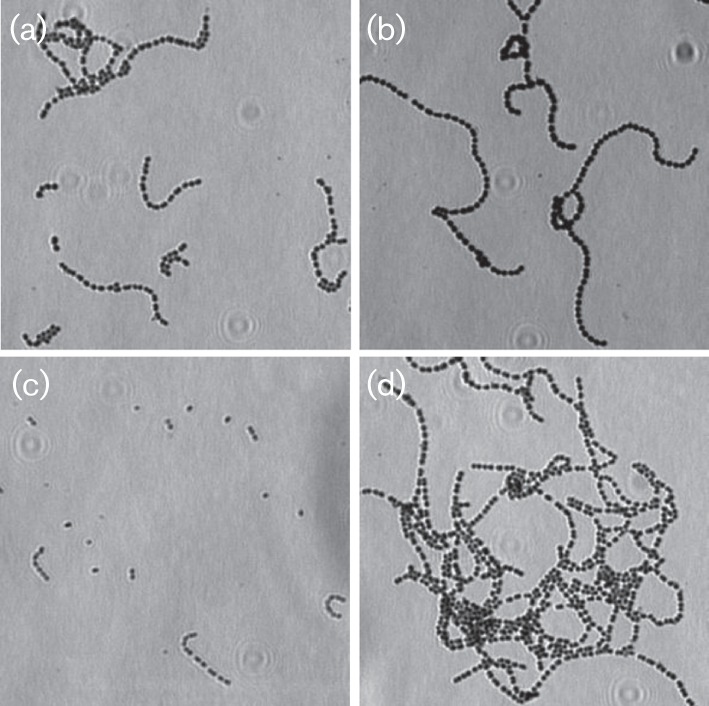
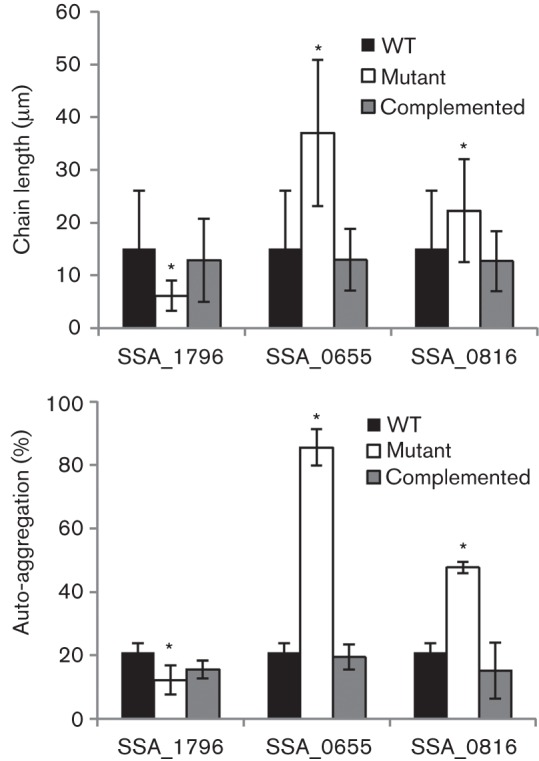
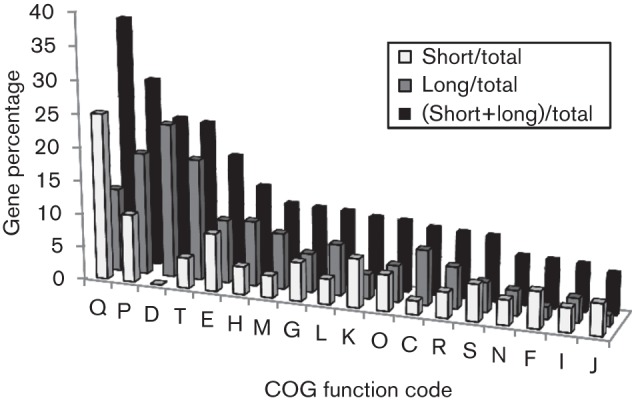
Streptococcus sanguinis is a Gram-positive bacterium that is indigenous to the oral cavity. S. sanguinis, a primary colonizer of the oral cavity, serves as a tether for the attachment of other oral pathogens. The colonization of microbes on the tooth surface forms dental plaque, which can lead to the onset of periodontal disease. We examined a comprehensive mutant library to identify genes related to cellular chain length and morphology using phase-contrast microscopy. A number of hypothetical genes related to the cellular chain length were identified in this study. Genes related to the cellular chain length were analysed along with clusters of orthologous groups (COG) for gene functions. It was discovered that the highest proportion of COG functions related to cellular chain length was ‘cell division and chromosome separation’. However, different COG functions were also found to be related with altered cellular chain length. This suggested that different genes related with multiple mechanisms contribute to the cellular chain length in S. sanguinis SK36.
Overview
The claims and statistics of this paper haven’t been checked yet.
Run the check — free, no account needed. It reads the open-access text and checks the sources it cites.
Integrity signals
Registry
Cites
Statistics
Figures
Verification
Claims the paper makes
The claims and statistics of this paper haven’t been checked yet.
Run the check — free, no account needed. It reads the open-access text and checks the sources it cites.
Claims other papers make about this one
Each is checked against this paper’s own text: does it say what the citing paper says it does?
In the citing paper
“Similarly, changes to cell morphology, including cell shortening or lack of separation following septation, and increased extracellular carbohydrate content, are also caused by fluoride stress63,107,108.”
From The link between ancient microbial fluoride resistance mechanisms and bioengineering organofluorine degradation or synthesis (2024) · cites this paper as [107]
Self-check
Percentages, sums and reported differences re-computed from the paper’s own numbers.
The self-check needs the paper’s full text.
Citations
Cites
Oral Microbial Communities: Biofilms, Interactions, and Genetic Systems
Kolenbrander, P. E. (2000) · Annual Review of Microbiology · doi:10.1146/annurev.micro.54.1.413 · Cited by 894
Research works printed but not linked: 26
- Ahmed, 2003, Viridans streptococcus bacteremia in children on chemotherapy for cancer: an underestimated problem, Pediatr Hematol Oncol, 20, 439, 10.1080/08880010390220144 · DOI
- 10.1111/j.1365-2672.2010.04935.x · DOI
- 10.1099/mic.0.039669-0 · DOI
- 10.1016/j.chom.2011.09.009 · DOI
- 10.1111/j.1365-2958.2011.07828.x · DOI
- Higgins, 1970, Site of initiation of cellular autolysis in Streptococcus faecalis as seen by electron microscopy, J Bacteriol, 103, 504, 10.1128/JB.103.2.504-512.1970 · DOI
- 10.1128/JB.187.18.6536-6544.2005 · DOI
- Kilian, 1981, Ecology and nature of immunoglobulin A1 protease-producing streptococci in the human oral cavity and pharynx, Infect Immun, 31, 868, 10.1128/IAI.31.3.868-873.1981 · DOI
- 10.1099/00207713-39-4-471 · DOI
- Kolenbrander, 1993, Adhere today, here tomorrow: oral bacterial adherence, J Bacteriol, 175, 3247, 10.1128/JB.175.11.3247-3252.1993 · DOI
- 10.1111/j.1365-2958.2004.04432.x · DOI
- 10.1016/j.micpath.2008.05.009 · DOI
- Murchison, 1982, Isolation and characterization of Streptococcus mutans mutants with altered cellular morphology or chain length, Infect Immun, 38, 282, 10.1128/IAI.38.1.282-291.1982 · DOI
- 10.1016/j.micinf.2005.04.012 · DOI
- 10.1099/mic.0.26363-0 · DOI
- 10.1111/j.1600-0765.1977.tb00112.x · DOI
- 10.1038/emboj.2012.76 · DOI · Paper page
- 10.1093/nar/29.1.22 · DOI
- 10.1111/j.1399-302X.1991.tb00500.x · DOI
- 10.1099/00207713-47-3-908 · DOI
- 10.1128/IAI.00760-09 · DOI
- Wang, 1990, High-level expression of the FtsA protein inhibits cell septation in Escherichia coli K-12, J Bacteriol, 172, 4736, 10.1128/JB.172.8.4736-4740.1990 · DOI
- 10.1128/AEM.68.3.1196-1203.2002 · DOI
- 10.1128/JB.01808-06 · DOI
- 10.1038/srep00125 · DOI
- 10.1111/j.1574-6976.2007.00098.x · DOI
Cited by
Sorted by citations
Stockbridge, R. B., & Wackett, L. P. (2024) · Nature Communications · doi:10.1038/s41467-024-49018-1 · Cited by 80
Metadata
- Authors
- Evans, K., Stone, V., Chen, L., Ge, X., & Xu, P.
- Venue
- Microbiology
- Publisher
- Microbiology Society
- Published
- 2014-02-01
- Volume
- 160
- Issue
- 2
- Pages
- 307-315
- ISSN
- 1350-0872
- 1465-2080
- PMC
- PMC3919539
- Cited by
- 14
- References
- 1
- Language
- en
- Funders
- Incentive Program (144602-3)
- Virginia Commonwealth University Presidential Research
- National Institutes of Health (R01DE018138, R01DE023078)
About these checks
Registry, retraction, Cites and statistics results are computed, not judged, with one exception: a printed reference that no index lists is read once by a model before it counts as a citation error. Claims are extracted by a model and kept only when their quote appears verbatim in the text; each cited source is then checked, with a model’s help, for whether it says what the claim relies on. Those verdicts can be wrong — read the claim’s quote and the cited source before relying on one.
Statistics and arithmetic are recomputed, not judged.
Confidence bands are shown only for fields calibrated on our annotated test set. None is calibrated yet, so no band is shown.
What counts as a claim ›How we measure confidence ›How we check this ›
Are you an author, or do you see a problem with this page? Request a review
