

The DOI matches its Crossref record; 3 of the 3 references it cites were found in a registry or an index.
A systematic review of post-marital residence patterns in prehistoric hunter-gatherers
Abstract
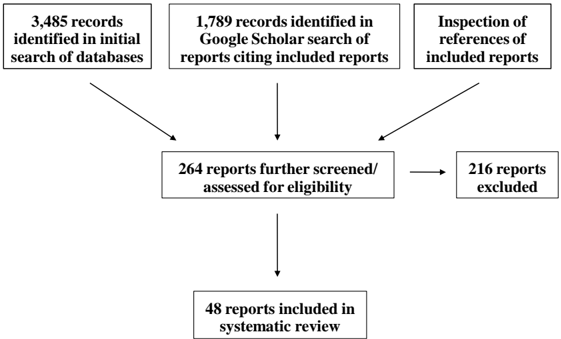
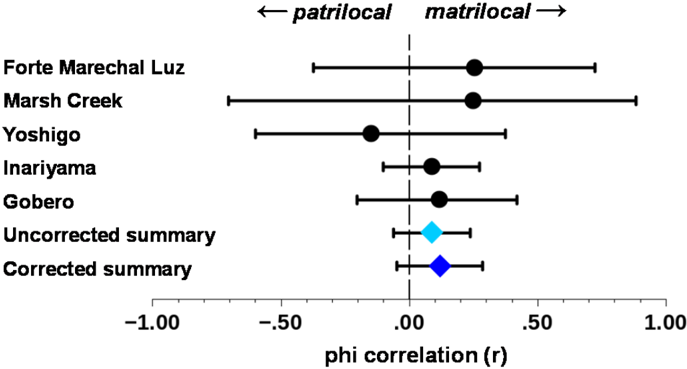
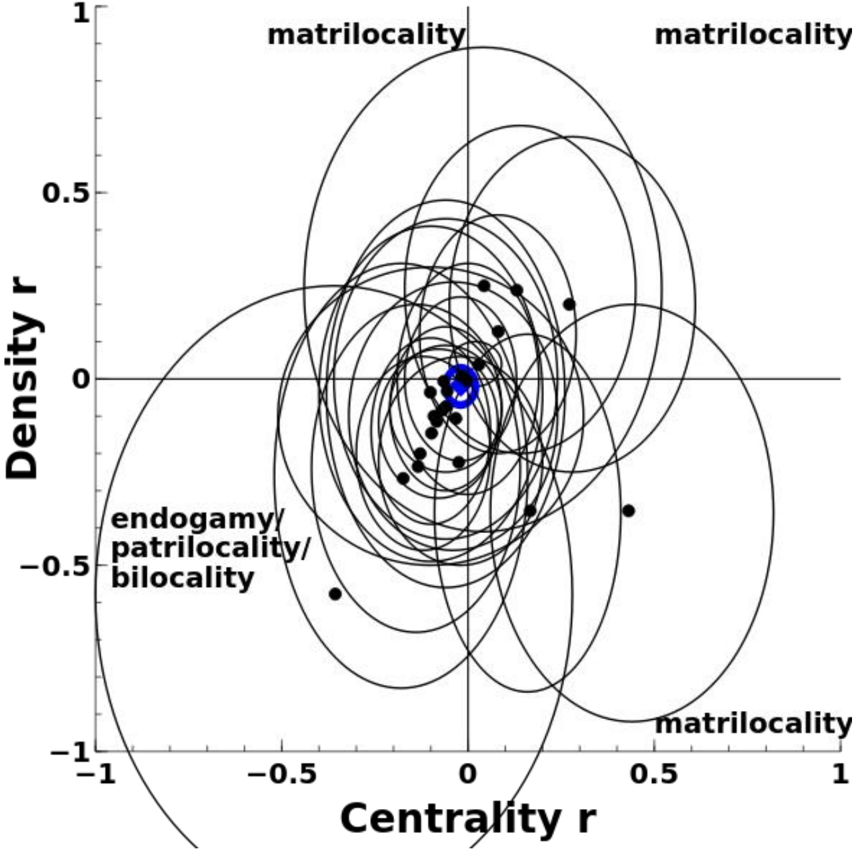
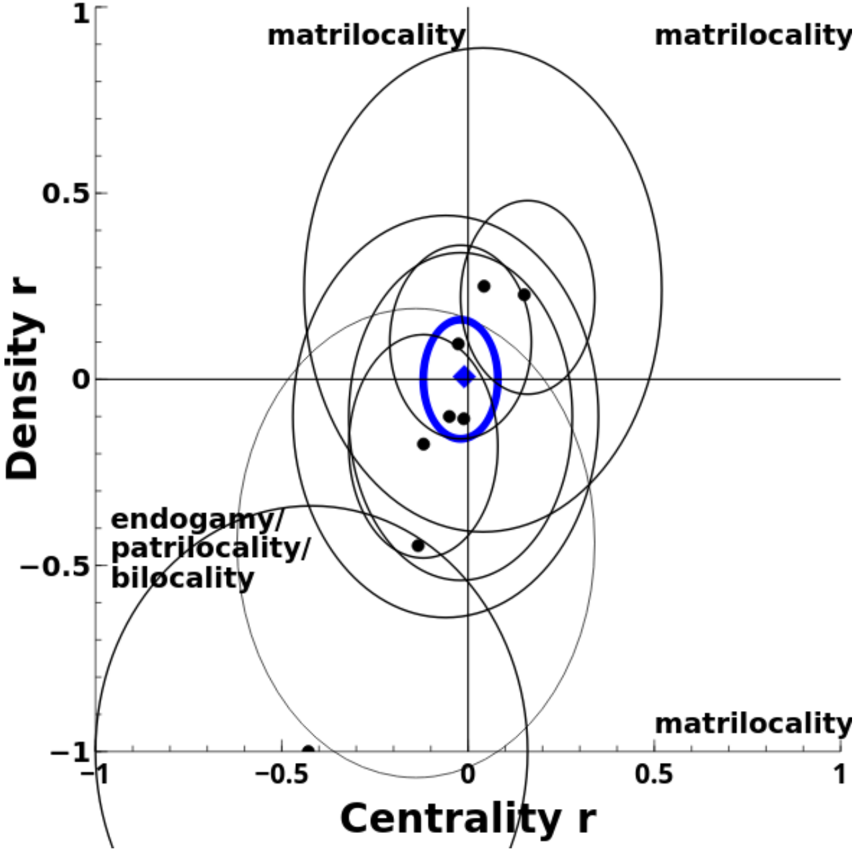
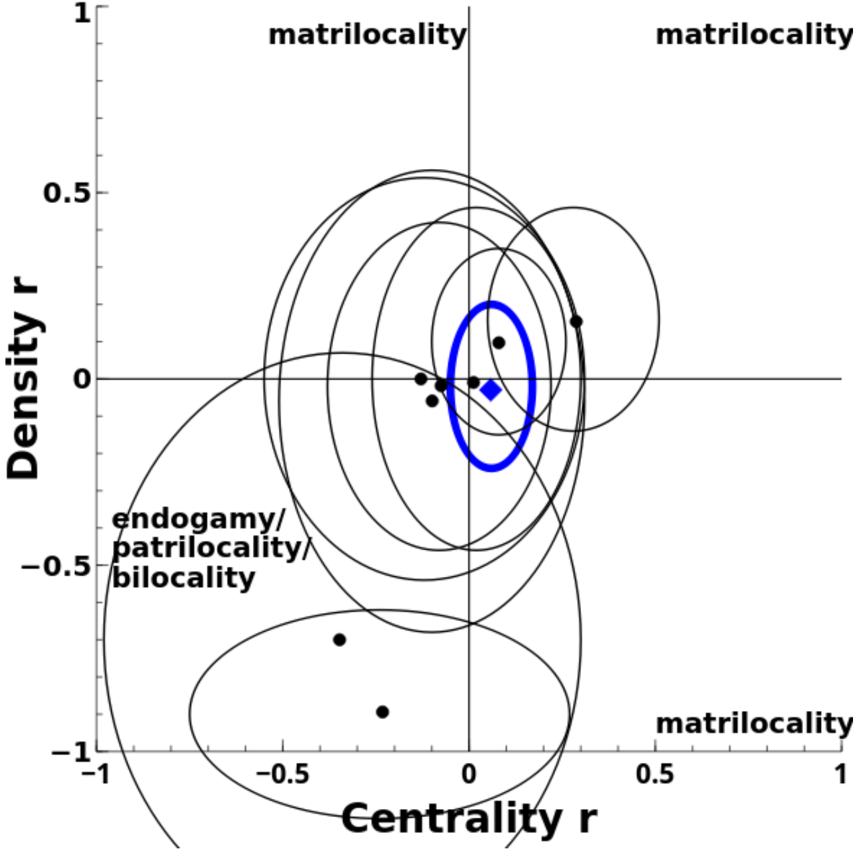
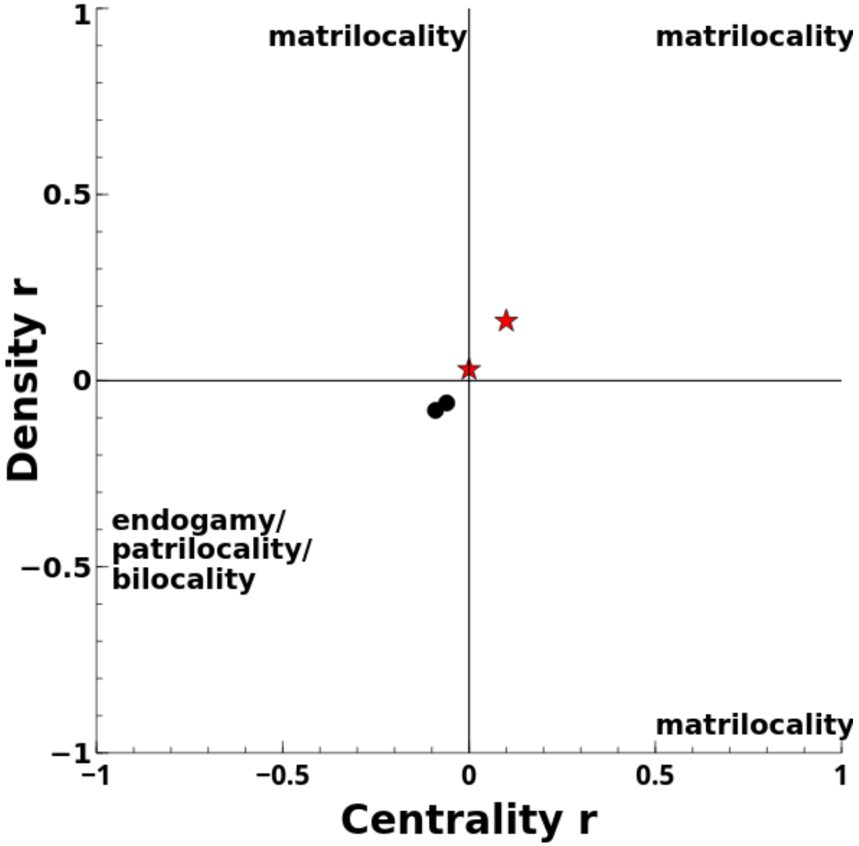
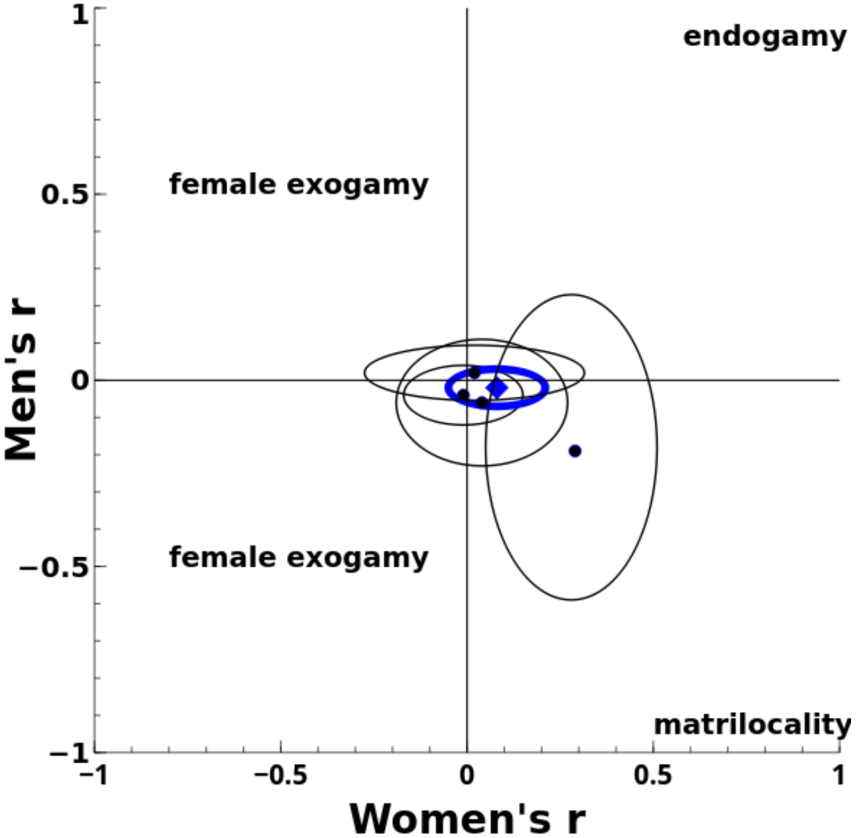
Background and Rationale Post-marital residence patterns refer to where a couple lives after marriage, such as near or with husband's kin (patrilocality) or wife's kin (matrilocality). These patterns influence other aspects of social organization and behavior, and potentially reveal key parts of human nature. Since the 1860s, anthropologists have sought to characterize prehistoric hunter-gatherers' post-marital residence patterns by extrapolating from modern hunter-gatherers' and chimpanzees' behavior. For many reasons, these extrapolations are invalid. I summarized direct evidence of residence patterns from prehistoric hunter-gatherers' remains. Methods I conducted a systematic review of strontium isotope and mitochondrial DNA (mtDNA) studies of prehistoric hunter-gatherers and extinct hominins. I also carried out a systematic review of the reliability of classifying prehistoric hunter-gatherer individuals by sex. To evaluate assumptions underlying my analyses of residence patterns, I reviewed the ethnographic literature on hunter-gatherers' mortuary practices as represented in the eHRAF World Cultures database. Results The archaeologic sites included in my review represent every inhabited continent except Australia, and their dates span almost the last 10,000 years. In the strontium isotope studies, most adults of both sexes were local, and women were slightly more likely to be local than men. Within sites, women and men had similar mtDNA distributions. Women in neighboring, contemporaneous communities had somewhat distinct mtDNA distributions from each other, while the mtDNA distributions of men in the different communities were less distinguishable. The statistical uncertainties for most summaries are fairly large. Taken together, the results indicate the burial communities were mostly endogamous and that exogamous marriages strained toward matrilocality. The very limited research on extinct hominins' residence patterns is consistent with these findings. In addition, there was only a moderate correspondence between morphologic and genetic estimates of sex in adult prehistoric hunter-gatherer individuals. When I corrected for this measurement error or relied on genetic estimates of sex only, the post-marital residence pattern results shifted in the direction of greater matrilocal tendencies. Modern hunter-gatherers' burial practices were consonant with the assumptions underlying my analyses. Conclusions Direct evidence from prehistoric hunter-gatherers' remains indicates very different post-marital residence patterns than those extrapolated from modern hunter-gatherers' and chimpanzees' behavior. In prehistoric hunter-gatherer settings, endogamy may be the outcome of humans' long-term mating preferences. Endogamy may have inhibited bacterial sexually transmitted diseases in prehistory and enabled the evolution of altruism in humans.
Overview
The claims and statistics of this paper haven’t been checked yet.
Run the check — free, no account needed. It reads the open-access text and checks the sources it cites.
Integrity signals
Registry
Cites
Statistics
Figures
Verification
Claims the paper makes
The claims and statistics of this paper haven’t been checked yet.
Run the check — free, no account needed. It reads the open-access text and checks the sources it cites.
Claims other papers make about this one
Each is checked against this paper’s own text: does it say what the citing paper says it does?
In the citing paper
“Finally, the study of isotopic ratios of ancient hunter-gatherer remains suggests a preferentially matrilocal residential pattern58.”
From Patrilineal segmentary systems provide a peaceful explanation for the post-Neolithic Y-chromosome bottleneck (2024) · cites this paper as [58]
Self-check
Percentages, sums and reported differences re-computed from the paper’s own numbers.
The self-check needs the paper’s full text.
Citations
Cites
Part of this paper’s reference list could not be split into single entries.
Ancient human genomes suggest three ancestral populations for present-day Europeans
Lazaridis, I., Patterson, N., Mittnik, A., Renaud, G., Mallick, S., Kirsanow, K., Sudmant, P. H., Schraiber, J. G., Castellano, S., Lipson, M., et al. (2014) · Nature · doi:10.1038/nature13673 · Cited by 1,357
Paleobiology and comparative morphology of a late Neandertal sample from El Sidrón, Asturias, Spain
Rosas, A., Martínez-Maza, C., Bastir, M., García-Tabernero, A., Lalueza-Fox, C., Huguet, R., Ortiz, J. E., Julià, R., Soler, V., de Torres, T., et al. (2006) · Proceedings of the National Academy of Sciences · doi:10.1073/pnas.0609662104 · Cited by 223
Estimates of Upper Palaeolithic meta-population size in Europe from archaeological data
Bocquet-Appel, J.-P., Demars, P.-Y., Noiret, L., & Dobrowsky, D. (2005) · Journal of Archaeological Science · doi:10.1016/j.jas.2005.05.006 · Cited by 200
Research works printed but not linked: 96
- Murdock GP. Social structure. Vol. XVII. Oxford, England: Macmillan; 1949.
- Divale W. Matrilocal residence in pre-literate society. Ann Arbor, MI: UMI Research Press; 1984.
- Knight C. Early human kinship was matrilineal. In: Allen NJ, Callan H, Dunbar R, James W, editors. Early human kinship: from sex to social reproduction. Oxford: John Wiley and Sons; 2009. Pp. 61-82.
- Alvarez HP. Residence groups among hunter-gatherers: a view of the claims and evidence for patrilocal bands. In: Chapais B, Berman CM, editors. Kinship and behavior in primates. Oxford: Oxford University Press; 2004. Pp. 420-42.
- Martin JF, Stewart DG. A demographic basis for patrilineal hordes. American Anthropologist. 1982;84(1):79-96.
- Ember CR. Residential variation among hunter-gatherers. Cross-Cultural Research. 1975;10(3):199-227.
- Marlowe F. Marital residence among foragers. Current Anthropology. 2004;45(2):277-84.
- Martin MK, Voorhies B. Female of the species. New York: Columbia University Press; 1975.
- Allen WL, Richardson JB. The reconstruction of kinship from archaeological data: the concepts, the methods, and the feasibility. American Antiquity. 1971;36(1):41-53.
- Scelza B, Bird RB. Group structure and female cooperative networks in Australia's Western Desert. Human Nature. 2008;19(3):231-48.
- Hrdy SB. Mothers and others. Cambridge, Massachusetts: Harvard University Press; 2011.
- Dick-Bissonnette LE. Gender and authority among the Yokoch, Mono, and Miwok of central California. Journal of Anthropological Research. 1998;54(1):49-72.
- Hill KR, Walker RS, Božičević M, Eder J, Headland T, Hewlett B, et al. Co-residence patterns in hunter-gatherer societies show unique human social structure. Science. 2011;331(6022):1286-9.
- Krech S. The influence of disease and the fur trade on Arctic drainage lowlands Dene, 1800- 1850. Journal of Anthropological Research. 1983;39(2):123-46.
- Headland TN, Reid LA, Bicchieri MG, Bishop CA, Blust R, Flanders NE, et al. Hunter- gatherers and their neighbors from prehistory to the present. Current Anthropology. 1989;30(1):43-66.
- Kelly RL. The lifeways of hunter-gatherers: the foraging spectrum. Cambridge: Cambridge University Press; 2013.
- Krech S. Disease, starvation, and Northern Athapaskan social organization. American Ethnologist. 1978;5(4):710-32.
- Hanson JR. Changes in Hidatsa residence patterns: a cross-cultural interpretation. Plains Anthropologist. 1983;28(99):69-75.
- Koenig A, Borries C. Hominoid dispersal patterns and human evolution. Evolutionary Anthropology. 2012;21(3):108-12.
- Nietlisbach P, Arora N, Nater A, Goossens B, Van Schaik CP, Krützen M. Heavily male-biased long-distance dispersal of orang-utans (genus: Pongo), as revealed by Y-chromosomal and mitochondrial genetic markers. Molecular Ecology. 2012;21(13):3173-86.
- Arandjelovic M, Head J, Boesch C, Robbins MM, Vigilant L. Genetic inference of group dynamics and female kin structure in a western lowland gorilla population (Gorilla gorilla gorilla). Primate Biology. 2014;1(1):29-38.
- Greenwood PJ. Mating systems, philopatry and dispersal in birds and mammals. Animal Behaviour. 1980;28(4):1140-62.
- Handley LJL, Perrin N. Advances in our understanding of mammalian sex-biased dispersal. Molecular Ecology. 2007;16(8):1559-78.
- Pietrusewsky M. Metric Analysis of skeletal remains: methods and applications. In: Katzenberg MA, Saunders SR, editors. Biological anthropology of the human skeleton. John Wiley & Sons, Inc.; 2008. Pp. 485-532. Available from: http://onlinelibrary.wiley.com/doi/10.1002/9780470245842.ch16/summary. · DOI
- Perez SI, Bernal V, Gonzalez PN. Evolutionary relationships among prehistoric human populations: an evaluation of relatedness patterns based on facial morphometric data using molecular data. Human Biology. 2007;79(1):25-50.
- Strauss A, Hubbe M. Craniometric similarities within and between human populations in comparison with neutral genetic data. Human Biology. 2010;82(3):315-30.
- Williams-Blangero S, Blangero J. Effects of population structure on within-group variation in the Jirels of Nepal. Human Biology. 1990;62(1):131-46.
- Williams SR, Chagnon NA, Spielman RS. Nuclear and mitochondrial genetic variation in the Yanomamö: a test case for ancient DNA studies of prehistoric populations. American Journal of Physical Anthropology. 2002;117(3):246-59.
- Bentley RA. Strontium isotopes from the earth to the archaeological skeleton: a review. Journal Archaeological Method and Theory. 2006;13(3):135-87.
- Reid DJ, Dean MC. Variation in modern human enamel formation times. Journal of Human Evolution. 2006;50(3):329-46.
- Borenstein M, Hedges LV, Higgins JPT, Rothstein HR. Introduction to meta-analysis. Chichester: John Wiley & Sons; 2009.
- Freeman MF, Tukey JW. Transformations related to the angular and the square root. Annals of Mathematical Statistics. 1950;21(4):607-11.
- Higgins JPT, Thompson SG, Deeks JJ, Altman DG. Measuring inconsistency in meta-analyses. BMJ. 2003;327(7414):557-60.
- Miller JJ. The inverse of the Freeman-Tukey double arcsine transformation. American Statistician. 1978;32(4):138-138.
- Jorgenson GA. Human ecology and social organization in the prehistoric California Delta: an examination of 87Sr/86Sr isotope ratios in the human burial population at CA-CCO-548. Doctoral dissertation, University of California, Davis; 2012. Available from: http://gradworks.umi.com/35/55/3555337.html
- Quinn RL, Tucker BD, Krigbaum J. Diet and mobility in Middle Archaic Florida: stable isotopic and faunal evidence from the Harris Creek archaeological site (8Vo24), Tick Island. Journal of Archaeological Science. 2008;35(8):2346-56.
- Bastos MQR, Souza SMFM de, Santos RV, Lima BAF, Santos RV, Rodrigues-Carvalho C. Human mobility on the Brazilian coast: an analysis of strontium isotopes in archaeological human remains from Forte Marechal Luz Sambaqui. Anais da Academia Brasileira de Ciências. 2011;83(2):731-43.
- Stojanowski CM, Knudson KJ. Biogeochemical inferences of mobility of early Holocene fisher- foragers from the southern Sahara Desert. American Journal of Physical Anthropology. 2011;146(1):49-61.
- Stojanowski CM, Knudson KJ. Changing patterns of mobility as a response to climatic deterioration and aridification in the middle Holocene southern Sahara. American Journal of Physical Anthropology. 2014;154(1):79-93.
- Kusaka S, Nakano T, Yumoto T, Nakatsukasa M. Strontium isotope evidence of migration and diet in relation to ritual tooth ablation: a case study from the Inariyama Jomon site, Japan. Journal of Archaeological Science. 2011;38(1):166-74.
- Kusaka S, Nakano T, Morita W, Nakatsukasa M. Strontium isotope analysis to reveal migration in relation to climate change and ritual tooth ablation of Jomon skeletal remains from western Japan. Journal of Anthropological Archaeology. 2012;31(4):551-63.
- Kusaka S, Ando A, Nakano T, Yumoto T, Ishimaru E, Yoneda M, et al. A strontium isotope analysis on the relationship between ritual tooth ablation and migration among the Jomon people in Japan. Journal of Archaeological Science. 2009;36(10):2289-97.
- Haverkort CM, Weber A, Katzenberg MA, Goriunova OI, Simonetti A, Creaser RA. Hunter- gatherer mobility strategies and resource use based on strontium isotope (87Sr/86Sr) analysis: a case study from Middle Holocene Lake Baikal, Siberia. Journal of Archaeological Science. 2008;35(5):1265-80.
- Haverkort CM, Bazaliiskii VI, Savel'ev NA. Identifying hunter-gatherer mobility patterns using strontium isotopes. In: Weber A, Katzenberg A, Schurr T, editors. Prehistoric hunter-gatherers of the Baikal region, Siberia: bioarchaeological studies of past life ways. Philadelphia: University of Pennsylvania Press; 2011. Pp. 217-38.
- Weber AW, Goriunova OI. Hunter-gatherer migrations, mobility and social relations: A case study from the Early Bronze Age Baikal region, Siberia. Journal of Anthropological Archaeology. 2013;32(3):330-46.
- Harald LB, Eerkens JW, Ralston C. Patrilocal post-marital residence and bride service in the Early Period: strontium isotope evidence from CA-SJO-112. In: Greenwald AM, Burns GR, editors. Reconstructing lifeways in ancient California: stable isotope evidence of foraging behavior, life history strategies, and kinship patterns. Davis, CA: Center for Archaeological Research at Davis, University of California, Davis; 2016. Pp. 33-44. (Center for Archaeological Research at Davis Publication Number 18).
- Ingram BL, Weber PK. Salmon origin in California's Sacramento-San Joaquin river system as determined by otolith strontium isotopic composition. Geology. 1999;27(9):851-4.
- Eerkens JW, Barfod GH, Leventhal A, Jorgenson GA, Cambra R. Matrilocality in the Middle Period in San Francisco Bay? new evidence from strontium isotopes at CA-SCL-287. Journal of California and Great Basin Anthropology. 2014;34(2):205-21.
- Copeland SR, Sponheimer M, de Ruiter DJ, Lee-Thorp JA, Codron D, le Roux PJ, et al. Strontium isotope evidence for landscape use by early hominins. Nature. 2011;474(7349):76-8.
- Plavcan JM. A re-analysis of sex differences in landscape use in early hominins: a comment on Copeland and colleagues. Journal of Human Evolution. 2012;63:764-9.
- Price TD, Burton JH, Bentley RA. The characterization of biologically available strontium isotope ratios for the study of prehistoric migration. Archaeometry. 2002;44(1):117-35.
- Copeland SR, Sponheimer M, Lee-Thorp JA, le Roux PJ, de Ruiter DJ, Richards MP. Strontium isotope ratios in fossil teeth from South Africa: assessing laser ablation MC-ICP-MS analysis and the extent of diagenesis. Journal of Archaeological Science. 2010;37(7):1437-46.
- du Toit JT. Home range-body mass relations: a field study on African browsing ruminants. Oecologia. 1990;85(2):301-3.
- Sillen A. Strontium-calcium ratios (Sr/Ca) of Australopithecus robustus and associated fauna from Swartkrans. Journal of Human Evolution. 1992;23(6):495-516.
- Sillen A, Hall G, Armstrong R. Strontium calcium ratios (Sr/Ca) and strontium isotopic ratios (87Sr/86Sr) of Australopithecus robustus and Homo sp. from Swartkrans. Journal of Human Evolution. 1995;28(3):277-85.
- Spearman C. The proof and measurement of association between two things. American Journal of Psychology. 1904;15(1):72-101.
- Schmidt F, Le H, Oh I-S. Correcting for the distorting effects of study artifacts in meta-analysis. In: Cooper H, Hedges LV, Valentine JC, editors. The handbook of research synthesis and meta- analysis. 2nd edition. New York City: Russell Sage Foundation; 2009. Pp. 317-33.
- Götherström A, Lidén K, Ahlström T, Källersjö M, Brown TA. Osteology, DNA and sex identification: morphological and molecular sex identifications of five Neolithic individuals from Ajvide, Gotland. International Journal of Osteoarchaeology. 1997;7(1):71-81.
- de la Fuente C, Galimany J, Kemp BM, Judd K, Reyes O, Moraga M. Ancient marine hunter- gatherers from Patagonia and Tierra Del Fuego: diversity and differentiation using uniparentally inherited genetic markers. American Journal of Physical Anthropology. 2015;158(4):719-29.
- Skoglund P, Storå J, Götherström A, Jakobsson M. Accurate sex identification of ancient human remains using DNA shotgun sequencing. Journal of Archaeological Science. 2013;40(12):4477- 82.
- Mooder K. mtDNA and prehistoric Siberian hunter-gatherers: characterising matrilineal population affinities in Neolithic and Bronze Age Cis-Baikal. Doctoral dissertation, University of Alberta; 2004. Available from: http://www.collectionscanada.gc.ca/obj/thesescanada/vol2/002/nq96308.pdf.
- Jelsma J. A bed of ochre: mortuary practices and social structure of a maritime Archaic Indian society at Port au Choix, Newfoundland. Doctoral dissertation, University of Groningen; 2006. Available from: http://www.academia.edu/1369254/A_bed_of_ochre_mortuary_practices_and_social_structure_ of_a_maritime_archaic_Indian_society_at_Port_au_Choix_Newfoundland.
- Heyer E, Zietkiewicz E, Rochowski A, Yotova V, Puymirat J, Labuda D. Phylogenetic and familial estimates of mitochondrial substitution rates: study of control region mutations in deep- rooting pedigrees. American Journal of Human Genetics. 2001;69(5):1113-26.
- Madrigal L, Castrì L, Melendez-Obando M, Villegas-Palma R, Barrantes R, Raventos H, et al. High mitochondrial mutation rates estimated from deep-rooting Costa Rican pedigrees. American Journal of Physical Anthropology. 2012;148(3):327-33.
- Pakendorf B, Stoneking M. Mitochondrial DNA and human evolution. Annual Review of Genomics and Human Genetics. 2005;6(1):165-83.
- Payne BAI, Wilson IJ, Yu-Wai-Man P, Coxhead J, Deehan D, Horvath R, et al. Universal heteroplasmy of human mitochondrial DNA. Human Molecular Genetics. 2013;22(2):384-90.
- Hubert LJ, Schultz J. Quadratic assignment as a general data analysis strategy. British Journal of Mathematical and Statistical Psychology. 1975;29:190-241.
- Aguiar GFS, Neves WA. Postmarital residence and within-sex genetic diversity among the Urubu-Ka'apor Indians, Brazilian Amazon. Human Biology. 1991;63(4):467-88.
- Malmström H, Linderholm A, Skoglund P, Storå J, Sjödin P, Gilbert MTP, et al. Ancient mitochondrial DNA from the northern fringe of the Neolithic farming expansion in Europe sheds light on the dispersion process. Philosophical Transactions of the Royal Society B. 2015;370(1660):20130373.
- Gejvall N-G. Description of the human skeletons from the graves and some associated animal bones. In: Janzon GO, editor. Gotlands mellanneolitiska gravar (The Middle Neolithic graves of Gotland). Stockholm: Almqvist and Wiskell; 1974. Pp. 141-75.
- Malmer MP. Neolithic of south Sweden: TRB, GRK, and STR. Stockholm: The Royal Swedish Academy of Letters History & Antiquities; 2002.
- Molnar P. Tracing prehistoric activities: musculoskeletal stress marker analysis of a Stone-Age population on the island of Gotland in the Baltic Sea. American Journal of Physical Anthropology. 2006;129(1):12-23.
- Sarkissian CD, Balanovsky O, Brandt G, Khartanovich V, Buzhilova A, Koshel S, et al. Ancient DNA reveals prehistoric gene-flow from Siberia in the complex human population history of north east Europe. PLoS Genetics. 2013;9(2):e1003296.
- Moiseyev VG, Khartanovich VI. Early metal age crania from Bolshoy Oleniy Island, Barents Sea. Archaeology, Ethnology and Anthropology of Eurasia. 2012;40(1):145-54.
- Eshleman J. Mitochondrial DNA and prehistoric population movements in western North America. Doctoral dissertation, University of California, Davis; 2002.
- Smith S. A new perspective on Aleut genetic history. Master's thesis, University of Utah; 2005.
- Smith SE, Hayes MG, Cabana GS, Huff C, Coltrain JB, O'Rourke DH. Inferring population continuity versus replacement with aDNA: a cautionary tale from the Aleutian Islands. Human Biology. 2009;81(4):407-26.
- Coltrain JB, Hayes MG, O'Rourke DH. Hrdlička's Aleutian population-replacement hypothesis: a radiometric evaluation. Current Anthropology. 2006;47(3):537-48.
- Adachi N, Shinoda K, Umetsu K, Matsumura H. Mitochondrial DNA analysis of Jomon skeletons from the Funadomari site, Hokkaido, and its implication for the origins of Native American. American Journal of Physical Anthropology. 2009;138(3):255-65.
- Adachi N, Shinoda K, Umetsu K, Kitano T, Matsumura H, Fujiyama R, et al. Mitochondrial DNA analysis of Hokkaido Jomon skeletons: remnants of archaic maternal lineages at the southwestern edge of former Beringia. American Journal of Physical Anthropology. 2011;146(3):346-60.
- Shook BAS. Ancient DNA and the biological history and prehistory of northeastern North America. Doctoral dissertation, University of California, Davis; 2005.
- Schultz Shook BA, Smith DG. Using ancient mtDNA to reconstruct the population history of northeastern North America. American Journal of Physical Anthropology. 2008;137(1):14-29.
- Johnson KL. Archaeological identification of the Valley Maidu in northern California. In: Johnson KL, Meighan CW, editors. Onward and upward! papers in honor of Clement W Meighan. Chico, California: Stansbury Publishing; 2005. Pp. 57-74.
- Furry JD. Gross paleopathology of selected individuals from archaeological sites in northern California. Master's thesis, California State University, Chico; 1980.
- Welden BR. The physical being and lifeway's of the Indians of the Llanco Seco site, CA-BUT- 233, Butte County, California. Master's thesis, California State University, Chico; 1990.
- Nelson JS. Interpersonal violence in prehistoric northern California: a bioarchaeological approach. Master's thesis, California State University, Chico; 1997.
- Mooder KP, Weber AW, Bamforth FJ, Lieverse AR, Schurr TG, Bazaliiski VI, et al. Matrilineal affinities and prehistoric Siberian mortuary practices: a case study from Neolithic Lake Baikal. Journal of Archaeological Science. 2005;32(4):619-34.
- Mooder KP, Schurr TG., Bamforth FJ, Bazaliiski VI, Savel'ev NA. Population affinities of Neolithic Siberians: a snapshot from prehistoric Lake Baikal. American Journal of Physical Anthropology. 2006;129(3):349-61.
- Mooder KP, Thomson TA, Weber AW, Bazaliiskii VI, Bamforth FJ. Uncovering the genetic landscape of prehistoric Cis-Baikal. In: Weber A, Katzenberg MA, Schurr TG, editors. Prehistoric hunter-gatherers of the Baikal region, Siberia: bioarchaeological studies of past life ways. Philadelphia: University of Pennsylvania Press; 2011. Pp. 107-19.
- Shinoda K, Kanai S. Intracemetery genetic analysis at the Nakazuma Jomon site in Japan by mitochondrial DNA sequencing. Anthropological Science. 1999;107(2):129-40.
- Shinoda K, Matsumura H, Nishimoto T. Genetical and morphological analysis on kinship of the Nakazuma Jomon people using mitochondrial DNA and tooth crown measurement. Zoo- archaeology. 1998;11:1-21.
- Potter AB. The genetic affinities of the prehistoric people of San Clemente Island, California: an analysis of ancient DNA. Doctoral dissertation, University of Oregon; 2004.
- Potter AB, White PS. The mitochondrial DNA affinities of the prehistoric people of San Clemente Island: an analysis of ancient DNA. Journal of California and Great Basin Anthropology. 2009;29(2):163-82.
- Kaestle FA, Smith DG. Ancient mitochondrial DNA evidence for prehistoric population movement: the numic expansion. American Journal of Physical Anthropology. 2001;115(1):1- 12.
- Johanson DC, Taieb M, Coppens Y. Pliocene hominids from the Hadar formation, Ethiopia (1973-1977): stratigraphic, chronologic, and paleoenvironmental contexts, with notes on hominid morphology and systematics. American Journal of Physical Anthropology. 1982;57(4):373-402. 128. Froment A. Evolutionary biology and health of hunter-gatherer populations. In: Panter-Brick C, Layton RH, Rowley-Conwy P, editors. Hunter-gatherers: an interdisciplinary perspective. Cambridge: Cambridge University Press; 2001. Pp. 239-66. 129. Trivers RL. Parental investment and sexual selection. In: Campbell B, editor. Sexual selection and the descent of man. Chicago: Aldine Publishing Company; 1972. Pp. 136-79. Available from: http://www.roberttrivers.com/Publications_files/Trivers%201972.pdf. 130. Buss DM. Sex differences in human mate preferences: evolutionary hypotheses tested in 37 cultures. Behavioral and Brain Sciences. 1989;12(1):1-14. 131. Apostolou M. Sexual selection under parental choice: the role of parents in the evolution of human mating. Evolution and Human Behavior. 2007;28(6):403-9. 132. Pashos A, McBurney DH. Kin Relationships and the caregiving biases of grandparents, aunts, and uncles. Human Nature. 2008;19(3):311-30. 133. Euler HA. Grandparents and extended kin. In: Salmon C, Shackelford TK, editors. The Oxford handbook of evolutionary family psychology. New York: Oxford University Press; 2011. Pp. 181-207. 134. Bachofen J. Myth, religion and mother-right: selected writings. Princeton, New Jersey: Princeton University Press; 1973. 135. Chagnon NA. Kin-selection theory, kinship, marriage and fitness among the Yanomamo Indians. In: Sociobiology: beyond nature/nurture? Boulder, Colorado: Westview Press, Inc.; 1980. Pp. 545-71. 136. Bittles AH, Grant JC, Sullivan SG, Hussain R. Does inbreeding lead to decreased human fertility? Annals of Human Biology. 2002;29(2):111-30. 137. Helgason A, Palsson S, Guöbjartsson DF, Kristjansson P, Stefansson K. An association between the kinship and fertility of human couples. Science. 2008;319(5864):813-6. 138. Bailey DH, Hill KR, Walker RS. Fitness consequences of spousal relatedness in 46 small-scale societies. Biology Letters. 2014;10(5):20140160. 139. Weller M, Santos S. A positive association between consanguinity and fertility in communities of Paraíba, Northeast Brazil. Annals of Human Biology. 2013;40(6):527-30. 140. Islam MM. Effects of consanguineous marriage on reproductive behaviour, adverse pregnancy outcomes and offspring mortality in Oman. Annals of Human Biology. 2013;40(3):243-55. 141. Villegas MJB, Fuster V. Reproductive pattern in consanguineous and non-consanguineous marriages in La Cabrera, Spain. Annals of Human Biology. 2006;33(3):330-41. 142. Bakoush O, Bredan A, Denic S. Kin and non-kin marriages and family structure in a rich tribal society. Journal of Biosocial Science. 2016 Jan;FirstView:1-9. 143.
- Fox R. Marry in or die out: optimal inbreeding and the meaning of mediogamy. In: Toward an evolutionary social science. Abingdon-on-Thames: Routledge; 2015. Pp. 350-82. 144. Wilkins JF, Marlowe FW. Sex-biased migration in humans: what should we expect from genetic data? Bioessays. 2006;28(3):290-300. 145. Smith EA. Agency and adaptation: new directions in evolutionary anthropology. Annual Review of Anthropology. 2013;42(1):103-20. 146. Rasteiro R, Chikhi L. Female and male perspectives on the Neolithic transition in Europe: Clues from ancient and modern genetic data. PLoS ONE. 2013;8(4):e60944. 147. Morgan LH. Houses and house-life of the American aborigines. Volume 4. Washington, DC: U.S. Government Printing Office; 1881. 148. Harper KN, Zuckerman MK, Harper ML, Kingston JD, Armelagos GJ. The origin and antiquity of syphilis revisited: an appraisal of Old World pre-Columbian evidence for treponemal infection. American Journal of Physical Anthropology. 2011;146(S53):99-133. 149. Baker BJ, Armelagos GJ, Becker MJ, Brothwell D, Drusini A, Geise MC, et al. The origin and antiquity of syphilis: paleopathological diagnosis and interpretation. Current Anthropology. 1988;29(5):703-37. 150. Meyer C, Jung C, Kohl T, Poenicke A, Poppe A, Alt KW. Syphilis 2001 a palaeopathological reappraisal. HOMO -Journal of Comparative Human Biology. 2002;53(1):39-58. 151. Cook DC, Powell ML. Piecing the puzzle together: North American treponematosis in overview. In: The myth of syphilis: the natural history of treponematosis in North America. Gainesville, FL: University Press of Florida; 2005. Pp. 442-79. 152. Mayes AT, Melmed A, Barber S. Stigmata of congenital syphilis on a high status juvenile at Yuguë, Oaxaca, Mexico. Dental Anthropology. 2009;22(3):73-84. 153. Prümers H, Trautmann M, Trautmann I, Lösch S, Pusch C. Syphilis in South America: a closer look at pre-contact Bolivia. RCC Perspectives. 2012;(3):41-60. 154. de Melo FL, de Mello JCM, Fraga AM, Nunes K, Eggers S. Syphilis at the crossroad of phylogenetics and paleopathology. PLoS Neglected Tropical Diseases. 2010;4(1):e575. 155. Oriel JD. The scars of venus: a history of venereology. London: Springer Science & Business Media; 2012. 156. Rothenberg RB, Sterk C, Toomey KE, Potterat JJ, Johnson D, Schrader M, et al. Using social network and ethnographic tools to evaluate syphilis transmission. Sexualy Transmitted Diseases. 1998;25(3):154-60. 157. Potterat JJ, Rothenberg RB, Muth SQ, Zimmerman-Rogers H, Green DL, Taylor JE, et al. Sexual network structure as an indicator of epidemic phase. Sexually Transmitted Infections. 2002;78(Supplement 1):i152-8. 158. Hamilton WD. The genetical evolution of social behaviour. I. Journal of Theoretical Biology. 1964;7(1):1-16. 159. Hamilton WD. The genetical evolution of social behaviour. II. Journal of Theoretical Biology. 1964;7(1):17-52. 160. Trivers RL. The evolution of reciprocal altruism. Quarterly Review of Biology. 1971;46(1):35- 57. 161. Romney AK, Weller SC, Batchelder WH. Culture as consensus: A theory of culture and informant accuracy. American Anthropologist. 1986;88(2):313-38.
Cited by
Guyon, L., Guez, J., Toupance, B., Heyer, E., & Chaix, R. (2024) · Nature Communications · doi:10.1038/s41467-024-47618-5 · Cited by 28
Metadata
- Authors
- Brewer, D. D.
- Publisher
- openRxiv
- Published
- 2016-06-06
- Cited by
- 4
- References
- 3
- Type
- Preprint
About these checks
Registry, retraction, Cites and statistics results are computed, not judged, with one exception: a printed reference that no index lists is read once by a model before it counts as a citation error. Claims are extracted by a model and kept only when their quote appears verbatim in the text; each cited source is then checked, with a model’s help, for whether it says what the claim relies on. Those verdicts can be wrong — read the claim’s quote and the cited source before relying on one.
Statistics and arithmetic are recomputed, not judged.
Confidence bands are shown only for fields calibrated on our annotated test set. None is calibrated yet, so no band is shown.
What counts as a claim ›How we measure confidence ›How we check this ›
Are you an author, or do you see a problem with this page? Request a review
