

Structural Basis for Allosteric Control of the SERCA-Phospholamban Membrane Complex by Ca 2+ and cAMP-dependent Phosphorylation
Open accessThe DOI matches its Crossref record; 128 of the 128 references it cites were found in a registry or an index; 3 of the 77 sources its claims cite were checked for support.
Abstract
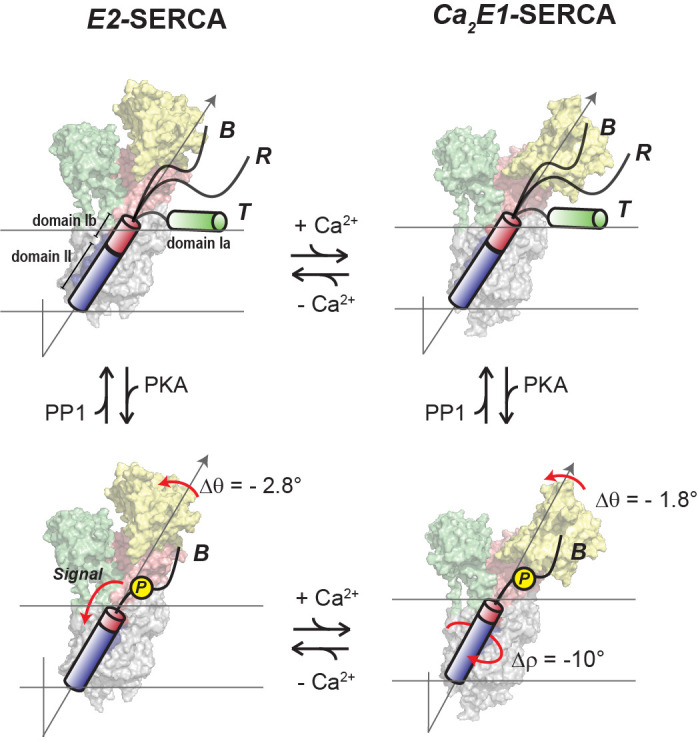
Phospholamban (PLN) is a mini-membrane protein that directly controls the cardiac Ca 2+ -transport response to β-adrenergic stimulation, thus modulating cardiac output during the fight- or-flight response. In the sarcoplasmic reticulum membrane, PLN binds to the sarco(endo)plasmic reticulum Ca 2+ -ATPase (SERCA), keeping this enzyme’s function within a narrow physiological window. PLN phosphorylation by cAMP-dependent protein kinase A or increase in Ca 2+ concentration reverses the inhibitory effects through an unknown mechanism. Using oriented-sample solid-state NMR spectroscopy and replica-averaged NMR-restrained structural refinement, we reveal that phosphorylation of PLN’s cytoplasmic regulatory domain signals the disruption of several inhibitory contacts at the transmembrane binding interface of the SERCA-PLN complex that are propagated to the enzyme’s active site, augmenting Ca 2+ transport. Our findings address long-standing questions about SERCA regulation, epitomizing a signal transduction mechanism operated by posttranslationally-modified bitopic membrane proteins.
Overview
CoChat Summary
TL;DR
Using oriented-sample solid-state NMR and replica-averaged restrained MD, this paper shows that PLN phosphorylation at Ser16 and Ca²⁺ binding allosterically remodel the SERCA–PLN transmembrane interface. Phosphorylation shifts PLN’s transmembrane topology and disrupts inhibitory domain Ib contacts, uncoupling PLN–SERCA motions and augmenting Ca²⁺ transport without complete complex dissociation.
Key findings
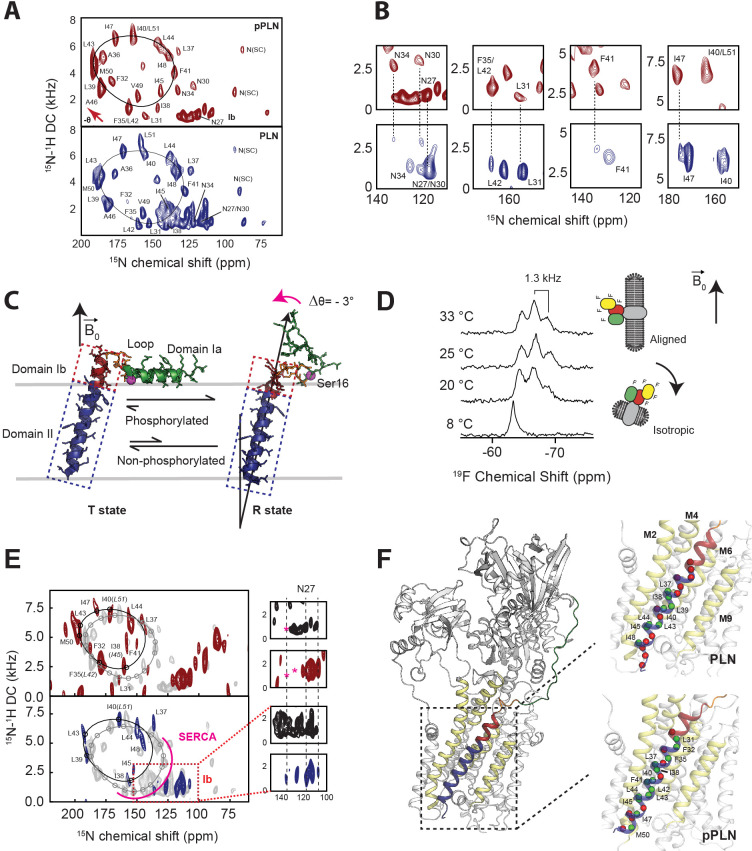
- PLN’s transmembrane domain exists in a topological two-state equilibrium; the minor state is ~30 ± 9% populated and overlaps with phosphorylated PLN. Free PLN fits θ = 37.5 ± 0.7° and ρL31 = 201 ± 4°, while pPLN fits θ = 34.8 ± 0.5° and ρL31 = 201 ± 4°.
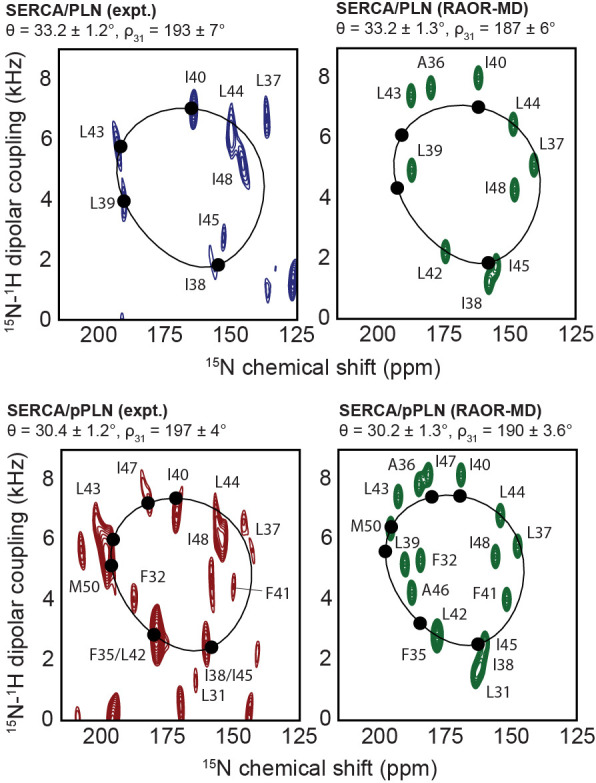
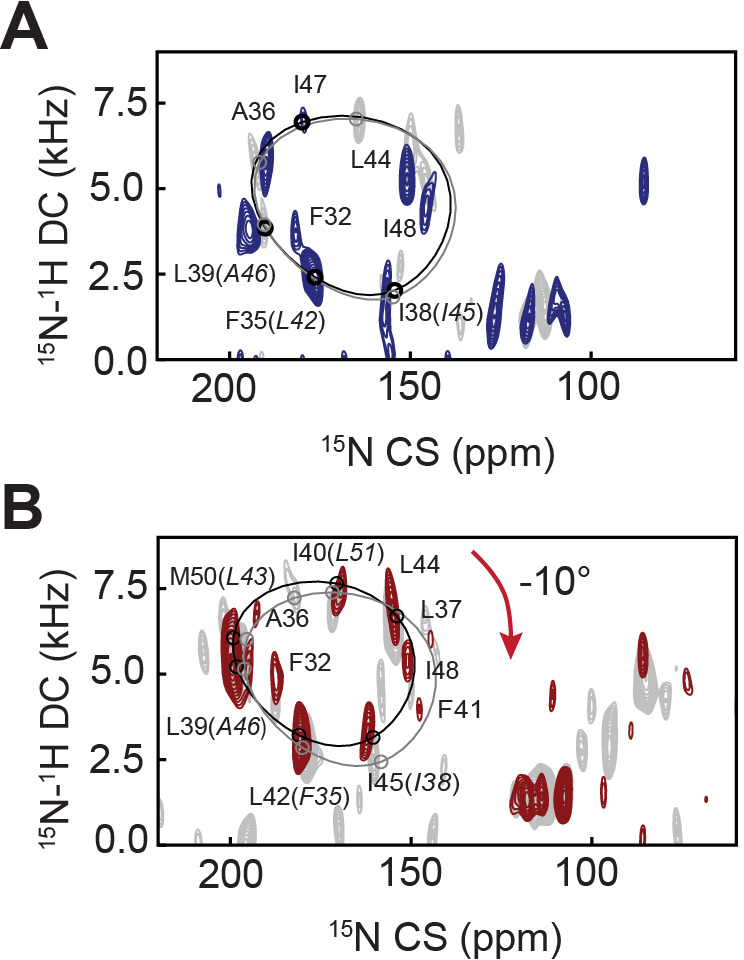
- Binding to SERCA in the E2 state changes PLN topology: PLN fits θ = 33.2 ± 1.2°, ρL31 = 193 ± 7° (tilt change −4.3 ± 1.4°, p = 4.3 × 10⁻¹⁵), and pPLN fits θ = 30.4 ± 1.1°, ρL31 = 197 ± 4° (tilt change −3.4 ± 1.2°, p = 2.9 × 10⁻¹⁴). Phosphorylation restores most resonance intensities except at upper binding-interface residues Asn30, Leu31, Asn34, and Phe41.
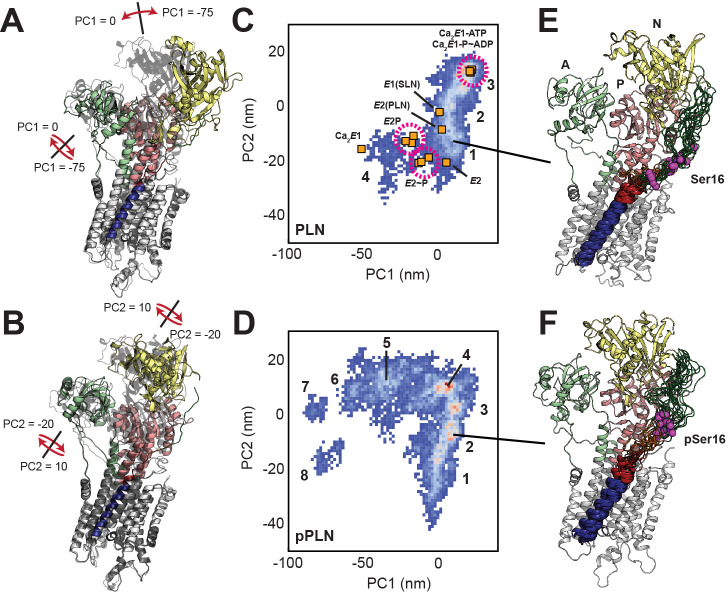
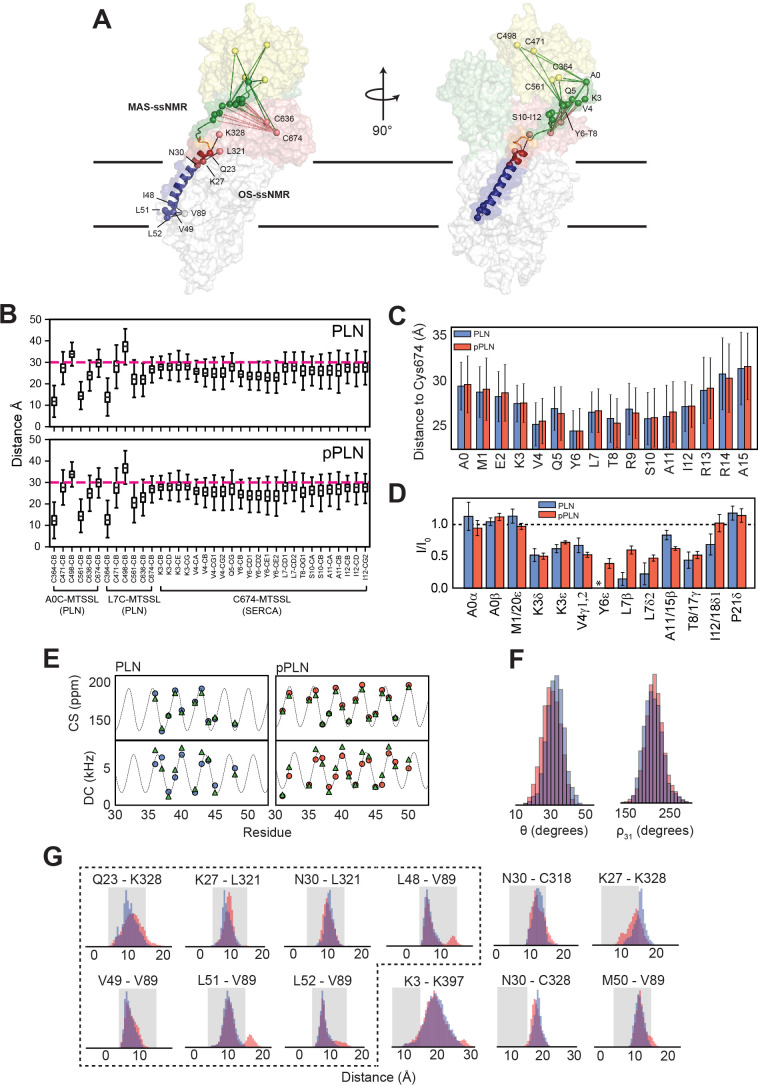
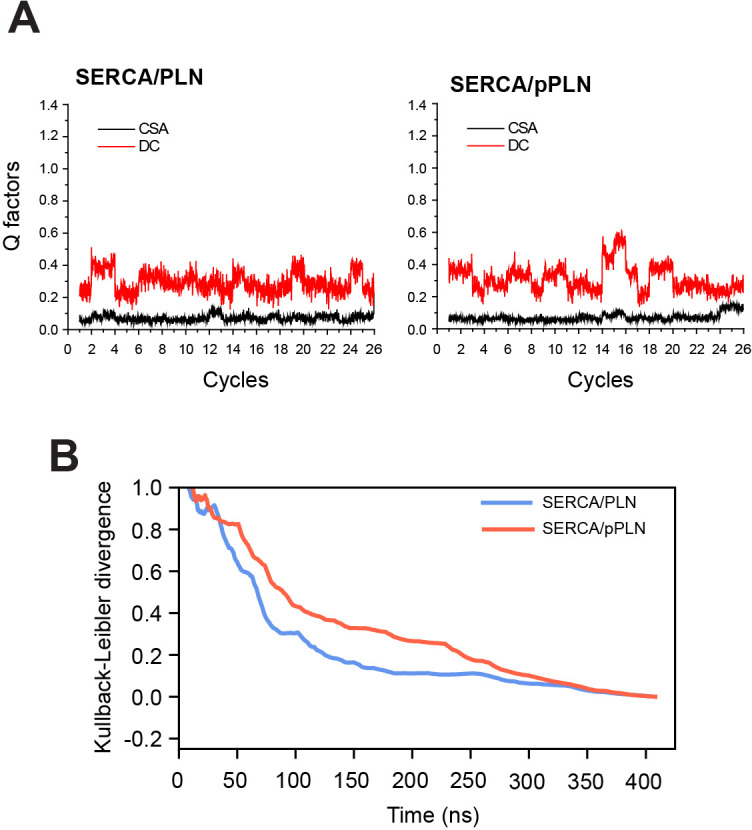
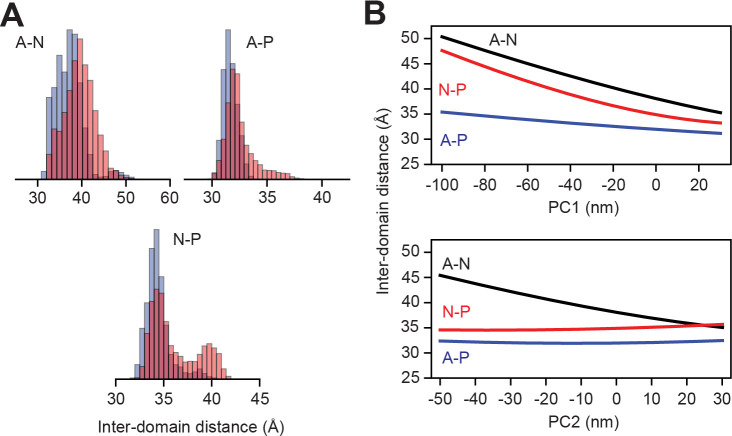
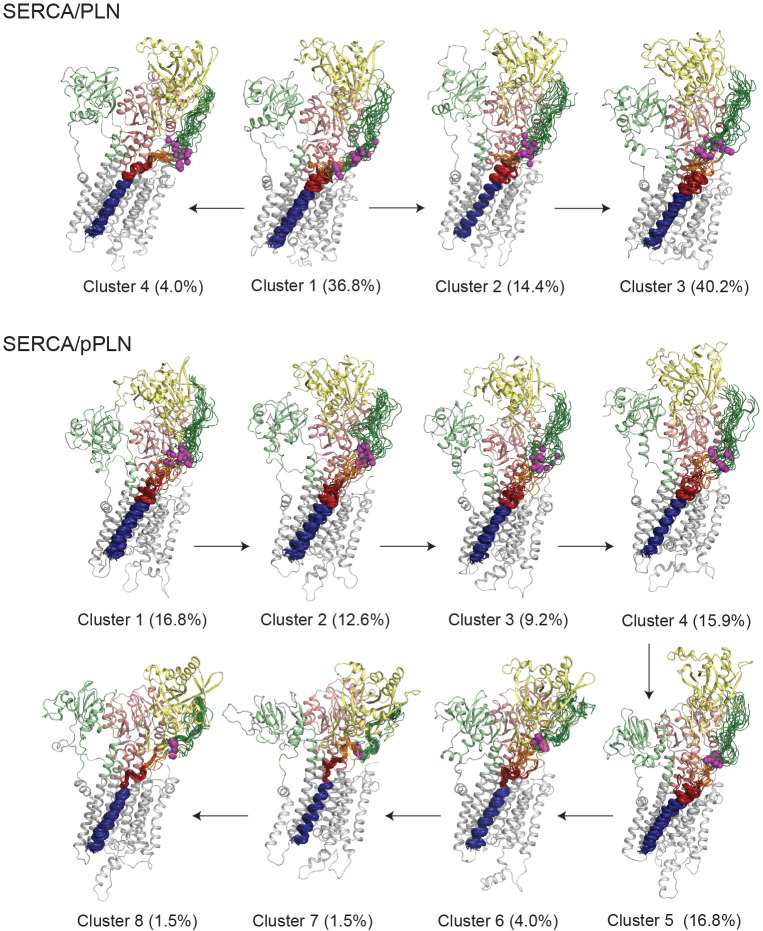
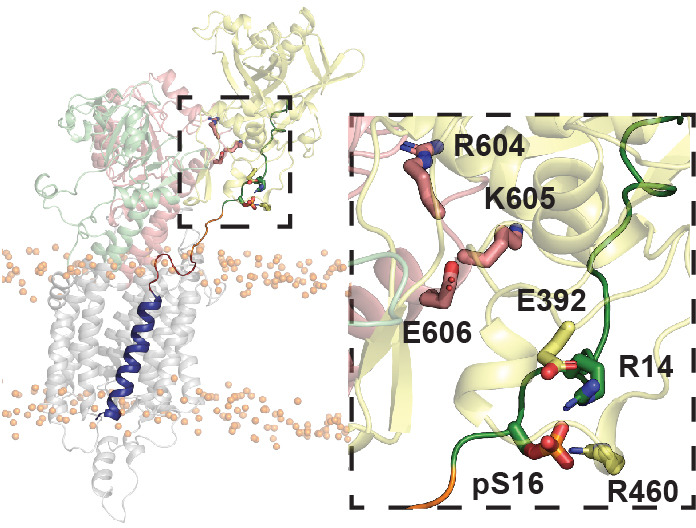
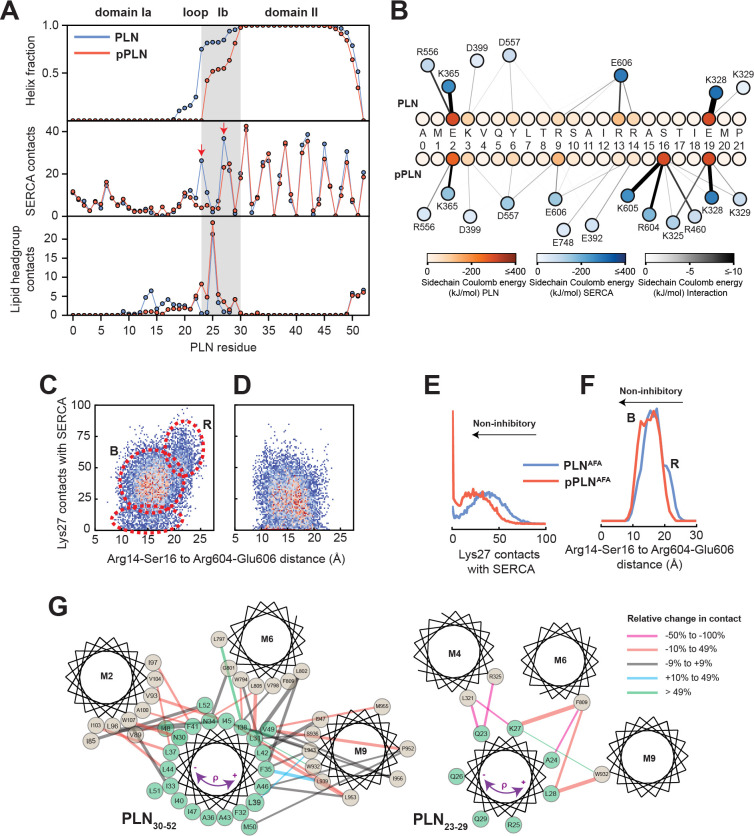
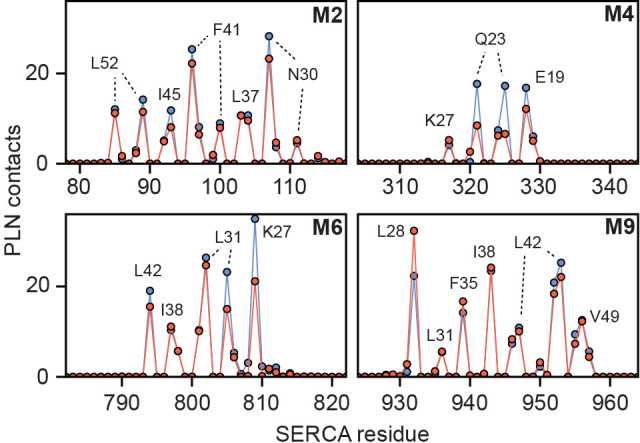
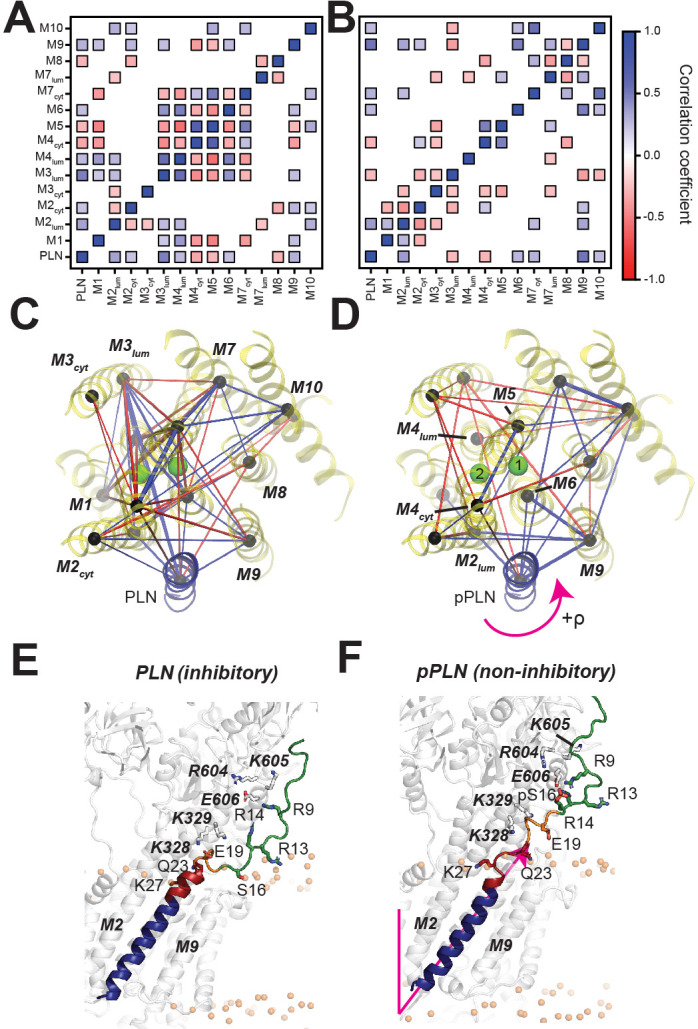
- RAOR-MD ensembles show phosphorylation causes pSer16 interactions with SERCA Arg604/Lys605 and intramolecular salt bridges with PLN Arg9/Arg13/Arg14, disrupting domain Ib inhibitory contacts (Gln23–Leu321/Arg325 in M4, Lys27–Phe809 in M6, Asn30–Trp107 in M2) while most domain II contacts are retained. SERCA/PLN spans four PCA clusters; SERCA/pPLN spans eight, with PC1 and PC2 accounting for 52% of overall motion.
- Ca²⁺ addition to SERCA/PLN did not significantly change PLN topology (θ = 32.9 ± 1.4°, ρL31 = 199 ± 4°; p = 0.29 and p = 0.0025 vs. E2), whereas SERCA/pPLN showed small decreases of 1.8 ± 1.3° in tilt and 10 ± 7° in rotation (θ = 28.6 ± 0.7°, ρL31 = 187 ± 6°; p = 1.9 × 10⁻⁶ and p = 4.2 × 10⁻⁷ vs. E2). PLN-bound SERCA shows dense correlated motions with TM2, TM6, and TM9 and a cluster involving TM3–TM7; pPLN shows only sparse correlations involving TM4, TM5, TM6, and TM8.
Methods
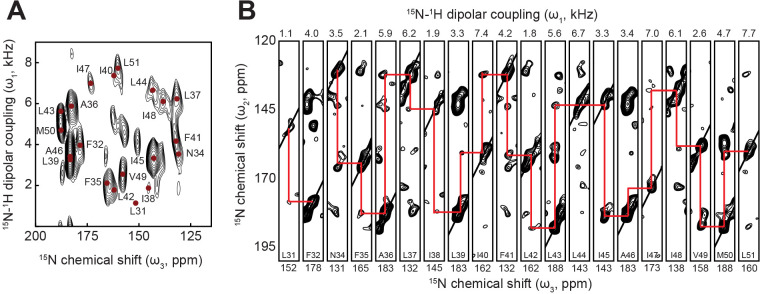
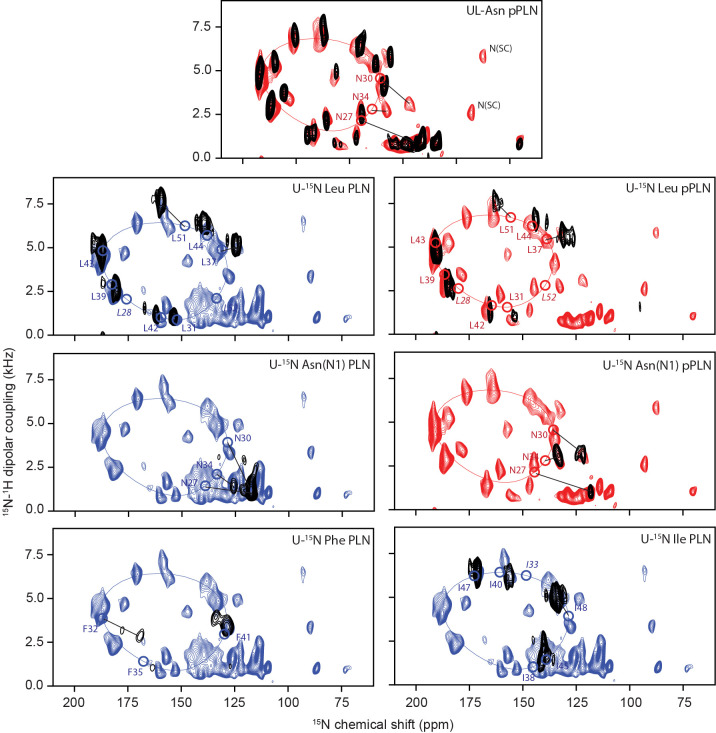
- OS-ssNMR on magnetically aligned lipid bicelles (DMPC/POPC/PE-DTPA, q = 4, Yb³⁺-doped) using a monomeric cysteine-null PLN mutant (Cys36Ala, Cys41Phe, Cys46Ala), unphosphorylated and PKA-phosphorylated at Ser16; SERCA1a was purified from rabbit skeletal muscle and studied in E2 (EGTA) or E1 (5 mM Ca²⁺) states. 2D SE-SAMPI4, 3D SE-SAMPI4-PDSD, and ¹⁹F NMR alignment measurements were analyzed with PISA fitting.
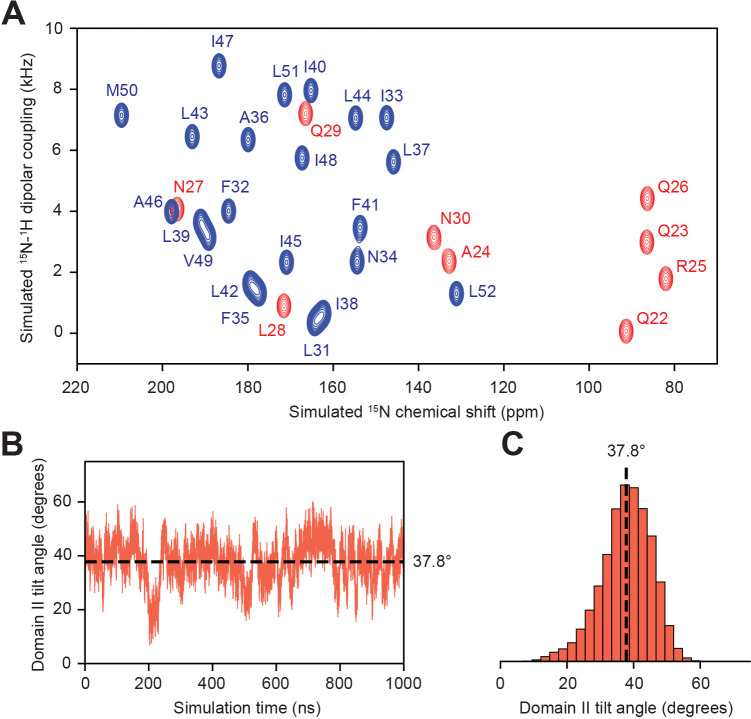
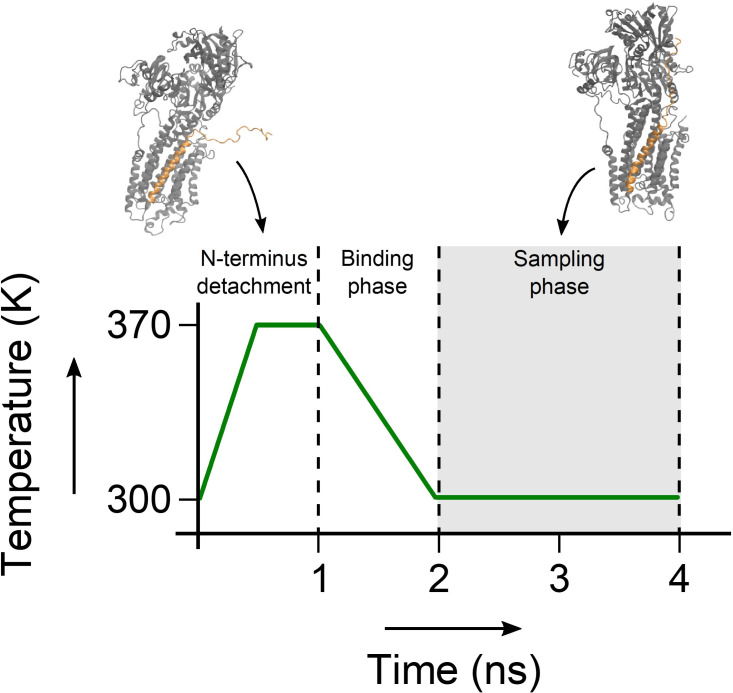
- RAOR-MD used the E2-SERCA/PLN X-ray structure (PDB 4Y3U), cross-linking-guided docking, PRE restraints for PLN domain Ia, and ensemble-averaged ¹⁵N CS/DC restraints across eight replicas. Simulations used annealing cycles (25 per replica; total 0.8 µs per ensemble), with 10,000 structures (400 ns) analyzed by PCA and Kullback–Leibler divergence.
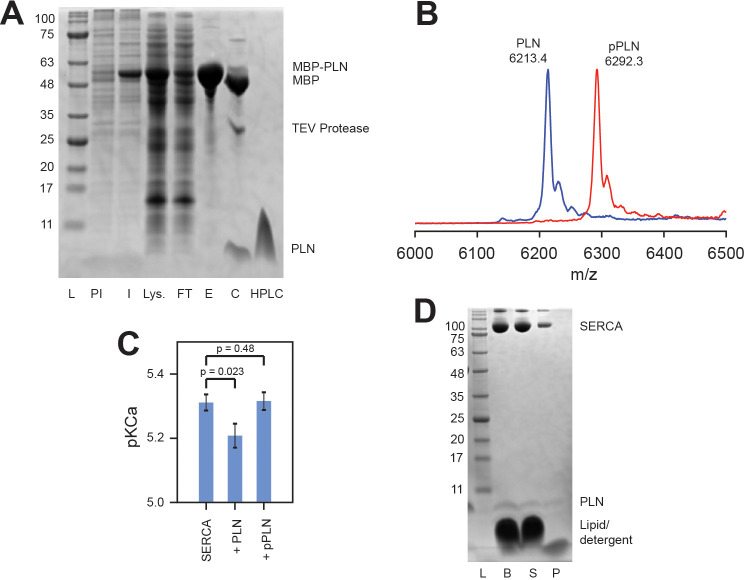
- PLN inhibitory activity and relief by phosphorylation were confirmed by a coupled-enzyme ATPase assay in DMPC/POPC (4:1) liposomes; phosphorylation was confirmed by MALDI-MS.
Limitations
- Stated: the experimental data cannot verify the SERCA conformational landscapes from the RAOR-MD ensembles; lack of X-ray structures prevented dynamic modeling of the E1-state complexes; oriented spectra of SERCA/PLN complexes had significantly reduced signal-to-noise; some PISA assignments were ambiguous; PRE restraints were implemented as 30 Å boundary conditions due to domain Ia dynamics and ambiguous ¹³C-MTC assignments; SERCA/pPLN convergence was slower due to additional conformational dynamics.
- Stated: SERCA was unrestrained in the simulations and displayed significant conformational heterogeneity over the sampled timescale.
- Evident from the text: the work is in vitro in lipid bicelles with a monomeric cysteine-null PLN mutant and SERCA1a purified from rabbit skeletal muscle, so the findings may not directly report on cardiac SERCA2a or cellular membranes.
Model-written summary. Check it against the paper before relying on it.
Integrity signals
Registry
Cites
Statistics
Figures
Verification
Claims the paper makes
1 Valid · 1 Not valid · 37 Not checked · 70 Own results and interpretations
Every source the paper cites for this claim was checked and supports it.
In the paper
“The interactions between the cytoplasmic regions are transient and highly dynamic, resembling the conformational ensembles of intrinsically disordered complexes (Olivieri et al., 2020).”
§ Structural basis for allosteric control of the SERCA-Phospholamban membrane complex by Ca2+ and phosphorylation > Results > Dynamic structural refinement of the SERCA-PLN complexes
What the sources say
- Supportedcites Olivieri et al., 2020 matched to “Multi-state recognition pathway of the intrinsically disordered protein kinase inhibitor by protein kinase A” (2020) source
The citation is attached to the clause comparing the interactions to conformational ensembles of intrinsically disordered complexes, and our copy of Olivieri et al. 2020 establishes exactly that for its ID system: the Results section 'Conformational landscape and kinetics of conformational transitions of PKIα' shows PKIα sampling multiple compact/extended conformational ensembles with a transiently helical NES motif, and the Discussion states that the disordered C-terminal tail undergoes large-amplitude motions with transient interactions with the kinase C-lobe. The preceding clause about 'cytoplasmic regions' is the citing authors' own system (the source studies PKIα bound to the PKA catalytic subunit, with the NES mediating PKA-C export from nucleus to cytoplasm), so it is not content attributed to this source. (LLM, conf=0.82)
plainstates an association- Asserted: passes — The authors put it forward as true.
- Checkable: passes — It can be checked against evidence.
- Load-bearing: unclear — It is unclear whether the paper’s conclusions depend on it.
- Based: passes — The paper gives a reason why it holds.
- Rests on an assumption not shown here.
- Supported
The cited sources that could be checked couldn’t confirm or dispute this claim.
In the paper
“Residual interactions observed for PLN residues Arg13, Arg14, Ser16, and Thr17 with lipid headgroups were abolished with pPLN (Figure 3A), consistent with the correlation between membrane-detachment of domain Ia and reduced inhibition (Gustavsson et al., 2012; Gustavsson et al., 2011).”
§ Structural basis for allosteric control of the SERCA-Phospholamban membrane complex by Ca2+ and phosphorylation > Results > Dynamic structural refinement of the SERCA-PLN complexes
What the sources say
- Could not verifycites Gustavsson et al., 2012 matched to “Probing ground and excited states of phospholamban in model and native lipid membranes by magic angle spinning NMR spectroscopy” (2012) sourceExperimental — accuracy not yet measured
Our copy of Gustavsson et al. (2012) reports only unphosphorylated AFA-PLN: the residue-level domain Ia observations concern V4, L7, A11, A15/I12, I18 methyl and CSI shifts in DPC, bicelles, DMPC/SR lipids (Results 3.2, 3.3, 3.6), and the charged residues noted are K3, R9, R13, R14 in the context of DMPG promoting the membrane-associated T state (Results 3.2). No passage reports phosphorylated PLN (pPLN) or residue-specific headgroup interactions for Arg13, Arg14, Ser16, Thr17 being abolished; Ser16 phosphorylation appears only as cited prior work (Refs 27, 56) without such data. Searches used: 'Arg13 Arg14 Ser16 Thr17 lipid headgroups abolished', 'pPLN / phosphorylated Ser16 domain Ia detachment', 'residual interactions with lipid headgroups', 'R13 R14 S16 T17 backbone chemical shifts'. (LLM, conf=0.70)
- Could not verifycites Gustavsson et al., 2011 matched to “Lipid-Mediated Folding/Unfolding of Phospholamban as a Regulatory Mechanism for the Sarcoplasmic Reticulum Ca2+-ATPase” (2011) sourceExperimental — accuracy not yet measured
Our copy of Gustavsson et al. 2011 (JMB) contains no residue-level measurement of contacts with lipid headgroups: searches for 'Arg13/Arg14/Thr17', 'lipid headgroup' and paramagnetic/headgroup-accessibility experiments returned nothing of the kind. The structural/dynamic evidence in this paper is EPR of TOAC at positions 11, 24 and 36 in DOPC:DOPE vesicles and NMR chemical-shift, CSI and SEA-CLEANEX solvent-exchange data in DPC micelles (Results, 'A four-state model of PLN conformational equilibrium'; Materials and Methods, 'NMR spectroscopy'), and residues 15–17 were explicitly excluded from the solvent-exchange analysis because of their proximity to Ser16 (Methods, 'Structure, dynamics, function relationship'). What the paper does state is the general phosphorylation-driven shift toward the partially unfolded, more readily membrane-detaching T′/R states and the correlation between membrane detachment/unfolding of domain Ia and reduced SERCA inhibition (Discussion, Fig. 9), which supports only the framing clause of the citing sentence, not the abolition of Arg13, Arg14, Ser16 and Thr17 headgroup interactions attributed here. No passage contradicts the claim, so this is unverifiable rather than disputed. (LLM, conf=0.72)
plain- Asserted: passes — The authors put it forward as true.
- Checkable: passes — It can be checked against evidence.
- Load-bearing: passes — The paper’s conclusions depend on it.
- Based: passes — The paper gives a reason why it holds.
- Rests on an assumption not shown here.
- Could not verify
A result the paper reports from its own data — it cites no other source for it, so there is none to check. The quote shows it is in the paper.
In the paper
“A small topological change, however, was observed for the SERCA/pPLN complex, for which Ca2+-binding induced a decrease of both tilt and rotational angles of 1.8 ± 1.3° and 10 ± 7°, respectively (θ = 28.6 ± 0.7° and ρL31 = 187 ± 6°, p=1.9 × 10⁻⁶ and p=4.2 × 10⁻⁷ compared to the E2 complex).”
§ Structural basis for allosteric control of the SERCA-Phospholamban membrane complex by Ca2+ and phosphorylation > Results > Effects of Ca2+ ion binding to SERCA on PLN’s topology
plainstates a cause- Asserted: passes — The authors put it forward as true.
- Checkable: passes — It can be checked against evidence.
- Load-bearing: passes — The paper’s conclusions depend on it.
- Based: passes — The paper gives a reason why it holds.
A result the paper reports from its own data — it cites no other source for it, so there is none to check. The quote shows it is in the paper.
In the paper
“Our new data show that, when bound to the E2-SERCA state, the TM region of PLN (domains Ib and II) remains locked into the ATPase’s binding groove.”
§ Structural basis for allosteric control of the SERCA-Phospholamban membrane complex by Ca2+ and phosphorylation > Discussion
plain- Asserted: passes — The authors put it forward as true.
- Checkable: passes — It can be checked against evidence.
- Load-bearing: passes — The paper’s conclusions depend on it.
- Based: passes — The paper gives a reason why it holds.
A result the paper reports from its own data — it cites no other source for it, so there is none to check. The quote shows it is in the paper.
In the paper
“PLN experiences significant changes in tilt angle (ranging from 28.6° to 37.5°), depending on both the conformational state of PLN and enzymatic state of SERCA.”
§ Structural basis for allosteric control of the SERCA-Phospholamban membrane complex by Ca2+ and phosphorylation > Discussion
plainstates an association- Asserted: passes — The authors put it forward as true.
- Checkable: passes — It can be checked against evidence.
- Load-bearing: passes — The paper’s conclusions depend on it.
- Based: passes — The paper gives a reason why it holds.
46 more claims
Create a free account to see all 109 claims and to verify the 72 references still open.
- It may state two separate claims as one. 44
- Probably not a substantial claim. 19
- The quote only partly states this claim. 1
Claims other papers make about this one
Each is checked against this paper’s own text: does it say what the citing paper says it does?
The source backs part of the claim, not all of it — or backs it for a different population, condition or comparison.
In the citing paper
“The phosphorylated forms of the DCM variants behave according to our working model [28], reversing the inhibitory activity to different extents.”
From Pathological mutations in the phospholamban cytoplasmic region affect its topology and dynamics modulating the extent of SERCA inhibition (2024) · cites this paper as [28]
Experimental — accuracy not yet measuredThe cited source says what the claim attributes to it.
In the citing paper
“In its unphosphorylated form, PLN binds SERCA within its transmembrane (TM) domains, approximately 20 Å away from the Ca2+ binding site”
From Pathological mutations in the phospholamban cytoplasmic region affect its topology and dynamics modulating the extent of SERCA inhibition (2024) · cites this paper as [33]
In the citing paper
“When the pentamers disassemble, the secondary structure of monomeric PLN does not change significantly; however, the loss of intramembrane interactions with the other protomers causes topological (orientational) rearrangement, with the TM domain adopting a tilt angle of approximately 23 and 37 degrees in mechanically [27] and magnetically aligned [28] lipid membranes, respectively.”
From Pathological mutations in the phospholamban cytoplasmic region affect its topology and dynamics modulating the extent of SERCA inhibition (2024) · cites this paper as [28]
In the citing paper
“Restrained molecular dynamics simulations show that S16 phosphorylation causes long-range (allosteric) changes to the TM domain that becomes more dynamic and adopts a non-inhibitory orientation [28].”
From Pathological mutations in the phospholamban cytoplasmic region affect its topology and dynamics modulating the extent of SERCA inhibition (2024) · cites this paper as [28]
In the citing paper
“When bound to SERCA, PLN’s cytoplasmic domain interconverts among T, R, and a B (bound) states, with the latter featuring an extended conformation of domain Ia with the two arginines (R13 and R14) interacting with an acidic patch of the ATPase’s headpiece [28].”
From Pathological mutations in the phospholamban cytoplasmic region affect its topology and dynamics modulating the extent of SERCA inhibition (2024) · cites this paper as [28]
2 more claims about this paper
Create a free account to see every claim other papers make about this one.
Citations
Cites
VMD: visual molecular dynamics
Humphrey, W., Dalke, A., & Schulten, K. (1996) · Journal of Molecular Graphics · doi:10.1016/0263-7855(96)00018-5 · Cited by 66,952
Comparison of simple potential functions for simulating liquid water
Jorgensen, W. L., Chandrasekhar, J., Madura, J. D., Impey, R. W., & Klein, M. L. (1983) · The Journal of Chemical Physics · doi:10.1063/1.445869 · Cited by 41,298
Molecular dynamics with coupling to an external bath
Berendsen, H. J. C., Postma, J. P. M., van Gunsteren, W. F., DiNola, A., & Haak, J. R. (1984) · The Journal of Chemical Physics · doi:10.1063/1.448118 · Cited by 30,700
Particle mesh Ewald: An N ⋅log( N ) method for Ewald sums in large systems
Darden, T., York, D., & Pedersen, L. (1993) · The Journal of Chemical Physics · doi:10.1063/1.464397 · Cited by 30,546
Abraham, M. J., Murtola, T., Schulz, R., Páll, S., Smith, J. C., Hess, B., & Lindahl, E. (2015) · SoftwareX · doi:10.1016/j.softx.2015.06.001 · Cited by 27,190
LINCS: A linear constraint solver for molecular simulations
Hess, B., Bekker, H., Berendsen, H. J. C., & Fraaije, J. G. E. M. (1997) · Journal of Computational Chemistry · doi:10.1002/(sici)1096-987x(199709)18:12<1463::aid-jcc4>3.0.co;2-h · Cited by 18,260
Canonical sampling through velocity rescaling
Bussi, G., Donadio, D., & Parrinello, M. (2007) · The Journal of Chemical Physics · doi:10.1063/1.2408420 · Cited by 18,089
NMRPipe: A multidimensional spectral processing system based on UNIX pipes
Delaglio, F., Grzesiek, S., Vuister, G., Zhu, G., Pfeifer, J., & Bax, A. (1995) · Journal of Biomolecular NMR · doi:10.1007/bf00197809 · Cited by 15,965
CHARMM‐GUI: A web‐based graphical user interface for CHARMM
Jo, S., Kim, T., Iyer, V. G., & Im, W. (2008) · Journal of Computational Chemistry · doi:10.1002/jcc.20945 · Cited by 9,284 · cited 1×
“, 2013) in 97 DMPC and 32 POPC, 150 mM KCl and 4927 waters was constructed using the CHARMM-GUI webserver (Wu et al., 2014; Jo et al., 2008) and CHARMM36 forcefield (Huang and MacKerell, 2013).”
GROMACS 4.5: a high-throughput and highly parallel open source molecular simulation toolkit
Pronk, S., Páll, S., Schulz, R., Larsson, P., Bjelkmar, P., Apostolov, R., Shirts, M. R., Smith, J. C., Kasson, P. M., van der Spoel, D., et al. (2013) · Bioinformatics · doi:10.1093/bioinformatics/btt055 · Cited by 7,473
Research works printed but not linked: 16
- Stokes DL Green NM 1990 Three-dimensional crystals of CaATPase from sarcoplasmic reticulum. symmetry and molecular packing Biophysical Journal 57 1 14 10.1016/S0006-3495(90)82501-7 2137017 PMC1280637 · DOI
- 10.1021/ja900096d · DOI · Paper page
- Mote KR Gopinath T Traaseth NJ Kitchen J Gor'kov PL Brey WW Veglia G 2011 Multidimensional oriented solid-state NMR experiments enable the sequential assignment of uniformly 15N labeled integral membrane proteins in magnetically aligned lipid bilayers Journal of Biomolecular NMR 51 339 346 10.1007/s10858-011-9571-8 21976256 · DOI · Paper page
- 10.1006/jmre.2001.2405 · DOI · Paper page
- 10.1021/bi400517b · DOI · Paper page
- 2019, A Theoretical Assessment of the Structure Determination of Multi-Span Membrane Proteins by Oriented Sample Solid-State NMR Spectroscopy, Aust. J. Chem., 73, 246
- 10.1074/jbc.M113.501585 · DOI · Paper page
- 10.1074/jbc.M601338200 · DOI · Paper page
- 10.1074/jbc.M309545200 · DOI · Paper page
- Toyoshima C Asahi M Sugita Y Khanna R Tsuda T MacLennan DH 2003 Modeling of the inhibitory interaction of phospholamban with the Ca2+ ATPase PNAS 100 467 472 10.1073/pnas.0237326100 12525698 PMC141018 · DOI · Paper page
- 10.1016/j.bpj.2014.03.026 · DOI · Paper page
- Sanz-Hernández M Vostrikov VV Veglia G De Simone A 2016 Accurate determination of conformational transitions in oligomeric membrane proteins Scientific Reports 6 23063 10.1038/srep23063 26975211 PMC4791661 · DOI · Paper page
- 10.1073/pnas.1303006110 · DOI · Paper page
- 10.1002/(SICI)1096-987X(199709)18:12<1463::AID-JCC4>3.3.CO;2-L · doi:10.1002/(sici)1096-987x(199709)18:12<1463::aid-jcc4>3.3.co;2-l
- 10.1074/jbc.M204085200 · DOI · Paper page
- 10.1038/342090a0 · DOI · Paper page
Cited by
Solid-State NMR: Methods for Biological Solids
Ahlawat, S., Mote, K. R., Lakomek, N., & Agarwal, V. (2022) · Chemical Reviews · doi:10.1021/acs.chemrev.1c00852 · Cited by 119
SERCA2 phosphorylation at serine 663 is a key regulator of Ca2+ homeostasis in heart diseases
Gonnot, F., Boulogne, L., Brun, C., Dia, M., Gouriou, Y., Bidaux, G., Chouabe, C., Silva, C. C. D., Ducreux, S., Pillot, B., et al. (2023) · Nature Communications · doi:10.1038/s41467-023-39027-x · Cited by 50
Shooshtarian, A. K., O’Gallagher, K., Shah, A. M., & Zhang, M. (2025) · Heart Failure Reviews · doi:10.1007/s10741-025-10487-1 · Cited by 34
Solid-State NMR of Membrane Proteins in Lipid Bilayers: To Spin or Not To Spin?
Gopinath, T., Weber, D., Wang, S., Larsen, E., & Veglia, G. (2021) · Accounts of Chemical Research · doi:10.1021/acs.accounts.0c00670 · Cited by 32
Self-citationZhang, L., Liu, Y., Xu, Y., Pei, M., Yao, M., Chen, X., Cui, Y., Han, F., Lu, Y., Zhang, C., et al. (2024) · Journal of Hazardous Materials · doi:10.1016/j.jhazmat.2024.135911 · Cited by 25
Metadata
- Authors
- Weber, D. K., Sanz-Hernández, M., Reddy, U. V., Wang, S., Larsen, E. K., Gopinath, T., Gustavsson, M., Cornea, R. L., Thomas, D. D., De Simone, A., & Veglia, G.
- Affiliations
- University of Minnesota (US)
- Corresponding author
- Veglia, Gianluigi
- ORCID
- Venue
- eLife
- Publisher
- openRxiv
- Published
- 2020-08-28
- Volume
- 10
- Pages
- e66226
- ISSN
- 2050-084X (ISSN-L)
- PMC
- PMC8184213
- OpenAlex
- W3163751224
- Cited by
- 51
- References
- 128
- Citations by year
- 2026: 10 · 2025: 19 · 2024: 7 · 2023: 3 · 2022: 11 · 2021: 1
- FWCI
- 1.37
- Type
- journal article
- Language
- en
- Open access
- gold
- doi.org
- Licence
- Locations
- eLife (publishedVersion, cc-by)
- bioRxiv (Cold Spring Harbor Laboratory) (submittedVersion)
- PubMed Central (publishedVersion, cc-by)
- PubMed (publishedVersion)
- DOAJ (DOAJ: Directory of Open Access Journals) (submittedVersion, cc-by-sa)
- Funders
- American Heart Association (19POST34420009, R01HL139065, R37AG026160)
- European Commission (BioDisOrder - 819644)
- National Institutes of Health (HL144100, AG026160)
- National Institute on Aging (R01AG026160, R37AG026160)
- National Heart, Lung, and Blood Institute (R01HL144130, R01HL139065)
- National Institute of General Medical Sciences (R01GM064742)
- Topics
- Life Sciences › Biochemistry, Genetics and Molecular Biology › Molecular Biology › Protein Structure and Dynamics
- Health Sciences › Medicine › Cardiology and Cardiovascular Medicine › Cardiac electrophysiology and arrhythmias
- Physical Sciences › Chemistry › Spectroscopy › Advanced NMR Techniques and Applications
- Keywords
- phospholamban, SERCA, sarcoplasmic reticulum Ca2+-ATPase, allosteric regulation, phosphorylation, calcium signaling, protein-protein interaction, protein kinase A, signal transduction
- MeSH terms
- Phospholamban, Allosteric Regulation, Animals, Calcium, Calcium-Binding Proteins, Escherichia coli, Membrane Proteins, Magnetic Resonance Spectroscopy, Phosphorylation, Protein Conformation, Rabbits, Sarcoplasmic Reticulum, Molecular Structure, Signal Transduction, Sarcoplasmic Reticulum Calcium-Transporting ATPases
About these checks
Registry, retraction, Cites and statistics results are computed, not judged, with one exception: a printed reference that no index lists is read once by a model before it counts as a citation error. Claims are extracted by a model and kept only when their quote appears verbatim in the text; each cited source is then checked, with a model’s help, for whether it says what the claim relies on. Those verdicts can be wrong — read the claim’s quote and the cited source before relying on one.
The claim verdicts this report counts are experimental: their accuracy is not yet measured.
A language model drew the claims from the paper on 2026-11-18, under version 3 of the claim definition (model deepseek-v4.1-flash, prompt extract-v3).
A second model labelled each claim on 2026-11-18 (model jev-1.13-20260917, definition revision gold-guideline-v0.2).
Cited sources are checked with a language model’s help (qwen3.8-omni-flash).
Statistics and arithmetic are recomputed, not judged.
Confidence bands are shown only for fields calibrated on our annotated test set. None is calibrated yet, so no band is shown.
What counts as a claim ›How we measure confidence ›How we check this ›
Are you an author, or do you see a problem with this page? Request a review
Data sources
Bibliographic data: Semantic Scholar, OpenAlex, Crossref.
Contains information from the Semantic Scholar Academic Graph Datasets, made available under the ODC Attribution License (ODC-BY 1.0).
Semantic Scholar’s data is described in: Kinney, R., et al. (2023). The Semantic Scholar Open Data Platform. arXiv:2301.10140.
