

Ultrarare missense and frameshift variants in the TECTA gene may involve tectorial membrane in familial Meniere disease
Open accessPreprint — published as 10.1002/ctm2.829
The DOI matches its Crossref record; 65 of the 65 references it cites were found in a registry or an index.
Abstract
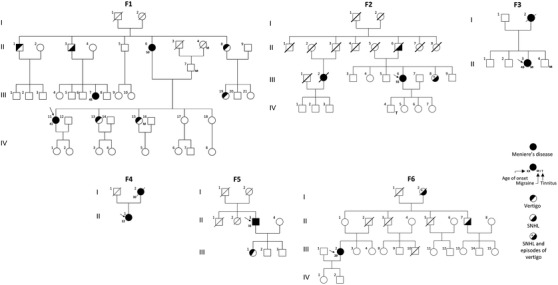
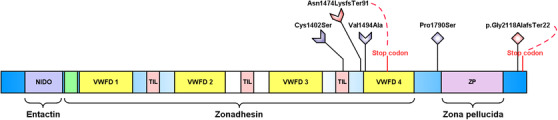
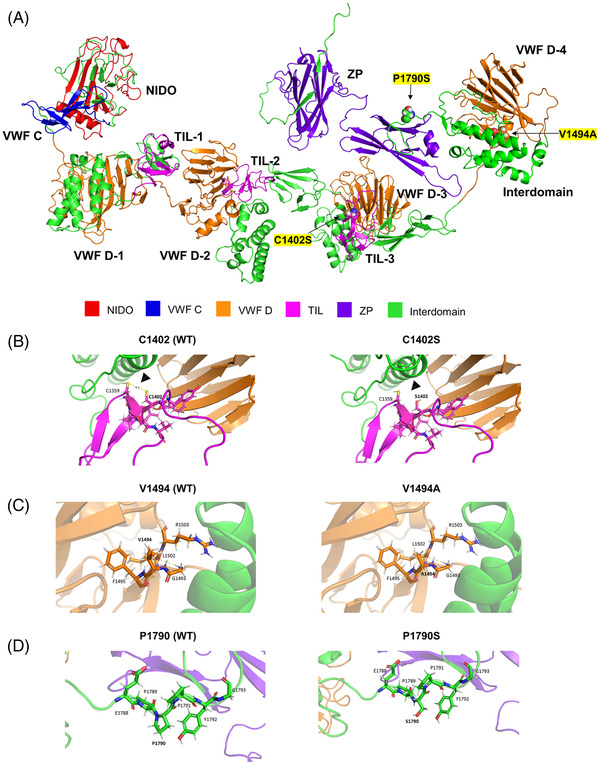
Background: Meniere’s disease (MD) is an inner ear disease defined by episodes of vertigo associated with sensorineural hearing loss initially affecting low- to medium frequencies, tinnitus, and aural fullness. Familial aggregation has been reported in 9-10% of MD patients showing, mostly, an autosomal dominant inheritance pattern with incomplete penetrance. However, familial MD is a genetically heterogeneous disorder and other inheritance patterns have been recently proposed, such as recessive and digenic inheritance involving rare variants in OTOG and MYO7A genes, respectively. In this study, a familial MD cohort was recruited to identify new candidate genes. Methods: Exome sequencing was performed in 99 individuals (from 77 families) diagnosed with MD according to the diagnostic criteria defined by the Barany Society. Candidate variants were classified based on the ACMG/AMP guidelines, and their effects were evaluated by protein modeling. Standard audiometric evaluations were retrieved, and a case report was made of each family to assess the genotype-phenotype correlations. Results: The TECTA gene, which encodes α-tectorin, was highlighted as a candidate for four multicase MD families carrying rare missense heterozygous variants and a short deletion in this gene. Variants in α-tectorin were also found in two additional families with one MD patient and relatives with partial syndromes carrying a missense heterozygous variant and a short deletion. According to the predicted protein model, these variants could affect the stability of α-tectorin. Conclusions: Several MD families were identified carrying rare variants and deletions in the TECTA gene, which encodes one of the main proteins of the tectorial membrane (TM). The TM is an extracellular matrix localized over the sensory epithelium mediating the mechanical stimulation of cochlear hair cells, a critical role in the process of hearing. Modifications on the TM stability and the micromechanics involved in the sound-evoked motion of stereocilia might be involved in familial MD.
Overview
The claims and statistics of this paper haven’t been checked yet.
Free: it reads the open-access text and checks the first 5 claims that cite a source we can check. Create a free account to check every claim.
Integrity signals
Registry
Cites
Statistics
Figures
Verification
Claims the paper makes
The claims and statistics of this paper haven’t been checked yet.
Free: it reads the open-access text and checks the first 5 claims that cite a source we can check. Create a free account to check every claim.
Self-check
Percentages, sums and reported differences re-computed from the paper’s own numbers.
The self-check needs the paper’s full text.
Citations
Cites
Highly accurate protein structure prediction with AlphaFold
Jumper, J., Evans, R., Pritzel, A., Green, T., Figurnov, M., Ronneberger, O., Tunyasuvunakool, K., Bates, R., Žídek, A., Potapenko, A., et al. (2021) · Nature · doi:10.1038/s41586-021-03819-2 · Cited by 43,764
Richards, S., Aziz, N., Bale, S., Bick, D., Das, S., Gastier-Foster, J., Grody, W. W., Hegde, M., Lyon, E., Spector, E., et al. (2015) · Genetics in Medicine · doi:10.1038/gim.2015.30 · Cited by 32,594
The Genome Analysis Toolkit: A MapReduce framework for analyzing next-generation DNA sequencing data
McKenna, A., Hanna, M., Banks, E., Sivachenko, A., Cibulskis, K., Kernytsky, A., Garimella, K., Altshuler, D., Gabriel, S., Daly, M., et al. (2010) · Genome Research · doi:10.1101/gr.107524.110 · Cited by 27,895
Wiederstein, M., & Sippl, M. J. (2007) · Nucleic Acids Research · doi:10.1093/nar/gkm290 · Cited by 5,909
MolProbity: More and better reference data for improved all‐atom structure validation
Williams, C. J., Headd, J. J., Moriarty, N. W., Prisant, M. G., Videau, L. L., Deis, L. N., Verma, V., Keedy, D. A., Hintze, B. J., Chen, V. B., et al. (2018) · Protein Science · doi:10.1002/pro.3330 · Cited by 4,599
Verification of protein structures: Patterns of nonbonded atomic interactions
Colovos, C., & Yeates, T. O. (1993) · Protein Science · doi:10.1002/pro.5560020916 · Cited by 4,498
[20] VERIFY3D: Assessment of protein models with three-dimensional profiles
Eisenberg, D., Lüthy, R., & Bowie, J. U. (1997) · Methods in Enzymology · doi:10.1016/s0076-6879(97)77022-8 · Cited by 2,192
Protein structure prediction and analysis using the Robetta server
Kim, D. E., Chivian, D., & Baker, D. (2004) · Nucleic Acids Research · doi:10.1093/nar/gkh468 · Cited by 2,111
Lopez-Escamez (2015) · doi:10.3233/ves-150549 · Cited by 1,486
mCSM: Predicting the effects of mutations in proteins using graph-based signatures
Pires, D. E. V., Ascher, D. B., & Blundell, T. L. (2014) · Bioinformatics · doi:10.1093/bioinformatics/btt691 · Cited by 1,066
Research works printed but not linked: 5
- Lopez‐Escamez JA, Carey J, Chung WH, et al. Diagnostic criteria for Menière's disease. J Vestib Res Equilib Orientat. 2015; 25(1): 1‐ 7. 25882471
- 1987, Composition and supramolecular organization of the tectorial membrane, The Laryngoscope, 97, 357
- Kim J, Xia A, Grillet N, Applegate BE, Oghalai JS. Osmotic stabilization prevents cochlear synaptopathy after blast trauma. Proc Natl Acad Sci. 2018; 115(21): E4853. 29735658 PMC6003510
- 2010, Two novel missense mutations in the TECTA gene in Korean families with autosomal dominant nonsyndromic hearing loss, Ann Clin Lab Sci, 40, 380
- 10.12688/f1000research.16665.2 · doi:10.12688/f1000research.16665.2 · Paper page
Metadata
- Authors
- Román-Naranjo, P., Parra-Perez, A. M., Escalera-Balsera, A., Soto-Varela, A., Gallego-Martinez, A., Aran, I., Perez-Fernandez, N., Bächinger, D., Eckhard, A. H., Gonzalez-Aguado, R., Frejo, L., & Lopez-Escamez, J. A.
- Affiliations
- Universidad de Granada (ES)
- Universidade de Santiago de Compostela (ES)
- University Hospital Zurich (CH)
- Corresponding author
- Román-Naranjo, Pablo
- Lopez-Escamez, Jose A.
- ORCID
- Venue
- Clinical and Translational Medicine
- Publisher
- openRxiv
- Published
- 2022-03-03
- Volume
- 12
- Issue
- 6
- Pages
- e829-e829
- ISSN
- 2001-1326 (ISSN-L)
- PMC
- PMC9162437
- OpenAlex
- W4281672956
- Semantic Scholar
- be7edd05102ea2b13b35d6de153c9b68adc1dc37
- Cited by
- 33
- References
- 65
- Citations by year
- 2026: 7 · 2025: 11 · 2024: 6 · 2023: 7 · 2022: 2
- FWCI
- 3.92
- Type
- journal article
- Language
- en
- Open access
- gold
- doi.org
- Licence
- cc-by
- Locations
- Clinical and Translational Medicine (publishedVersion, cc-by)
- medRxiv (acceptedVersion, cc-by-nc-nd)
- PubMed Central (publishedVersion, cc-by)
- PubMed (publishedVersion)
- Zurich Open Repository and Archive (University of Zurich) (acceptedVersion, other-oa)
- RISalud Institutional Health Repository of Andalucía (submittedVersion, cc-by)
- DOAJ (DOAJ: Directory of Open Access Journals) (submittedVersion, cc-by-sa)
- Zurich Open Repository and Archive (University of Zurich) (submittedVersion, cc-by)
- Zurich Open Repository and Archive (University of Zurich)
- Funders
- National Science Foundation
- Schweizerischer Nationalfonds zur Förderung der Wissenschaftlichen Forschung (183978, 323530)
- Universität Zürich
- Horizon 2020 Framework Programme (H2020-SC1, 848261)
- Topics
- Life Sciences › Neuroscience › Sensory Systems › Hearing, Cochlea, Tinnitus, Genetics
- Life Sciences › Neuroscience › Neurology › Vestibular and auditory disorders
- Health Sciences › Medicine › Genetics (clinical) › Congenital Ear and Nasal Anomalies
- Keywords
- alpha-tectorin, tectorial membrane, genetic mutations, inner ear
- MeSH terms
- Humans, Meniere Disease, Tectorial Membrane, Extracellular Matrix Proteins
About these checks
Registry, retraction, Cites and statistics results are computed, not judged, with one exception: a printed reference that no index lists is read once by a model before it counts as a citation error. Claims are extracted by a model and kept only when their quote appears verbatim in the text; each cited source is then checked, with a model’s help, for whether it says what the claim relies on. Those verdicts can be wrong — read the claim’s quote and the cited source before relying on one.
Statistics and arithmetic are recomputed, not judged.
Confidence bands are shown only for fields calibrated on our annotated test set. None is calibrated yet, so no band is shown.
What counts as a claim ›How we measure confidence ›How we check this ›
Are you an author, or do you see a problem with this page? Request a review
How to cite
Cite CoChat for the checks on this page, and the paper for its own findings.
- This page
- CoChat. (2026). Citation check: Ultrarare missense and frameshift variants in the TECTA gene may involve tectorial membrane in familial Meniere disease. https://app.cochat.ai/papers/10.1101/2022.02.18.22270926
- The paper
- Román-Naranjo, P., Parra-Perez, A. M., Escalera-Balsera, A., Soto-Varela, A., Gallego-Martinez, A., Aran, I., Perez-Fernandez, N., Bächinger, D., Eckhard, A. H., Gonzalez-Aguado, R., Frejo, L., & Lopez-Escamez, J. A. (2022). Ultrarare missense and frameshift variants in the TECTA gene may involve tectorial membrane in familial Meniere disease. Clinical and Translational Medicine. https://doi.org/10.1101/2022.02.18.22270926
Data sources
Bibliographic data: Semantic Scholar, OpenAlex, Crossref.
Contains information from the Semantic Scholar Academic Graph Datasets, made available under the ODC Attribution License (ODC-BY 1.0).
Semantic Scholar’s data is described in: Kinney, R., et al. (2023). The Semantic Scholar Open Data Platform. arXiv:2301.10140.
