

The DOI matches its Crossref record; 1 of the 1 references it cites were found in a registry or an index.
A chronopharmacology-friendly multi-target therapeutics based on AI: the example of therapeutic hypothermia
Open accessPreprint — published as 10.1093/bib/bbac365 · Paper page
Abstract
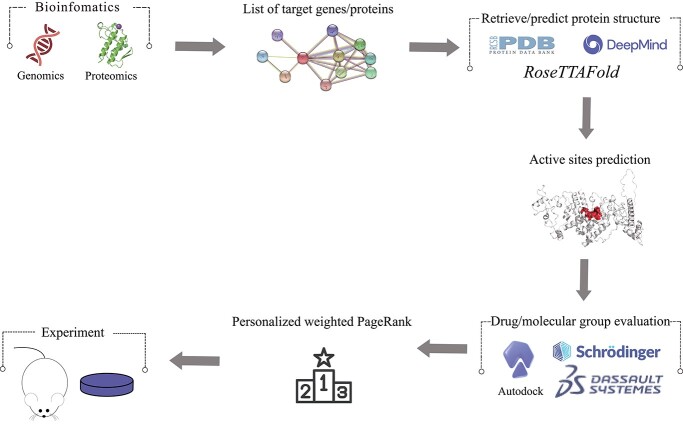
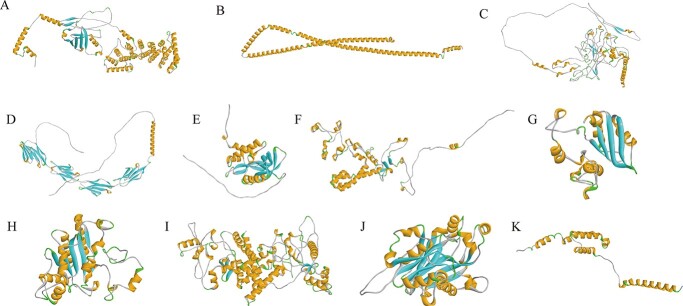
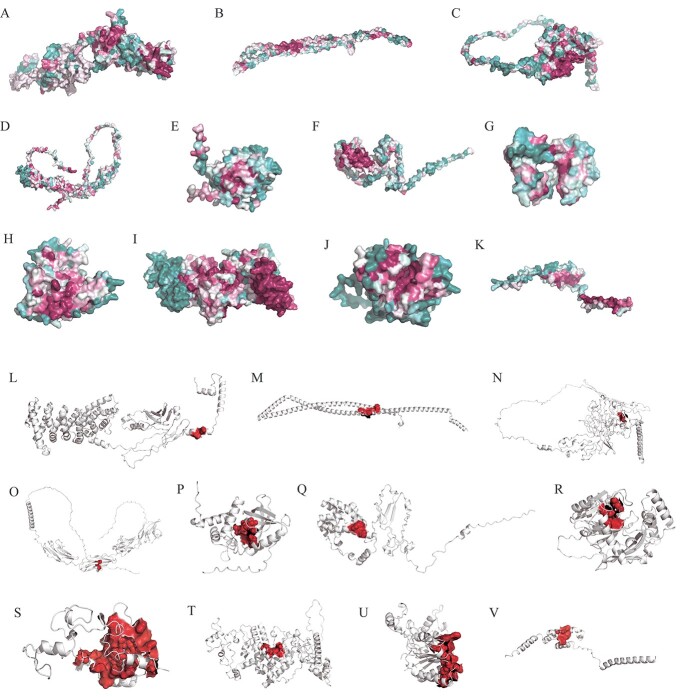
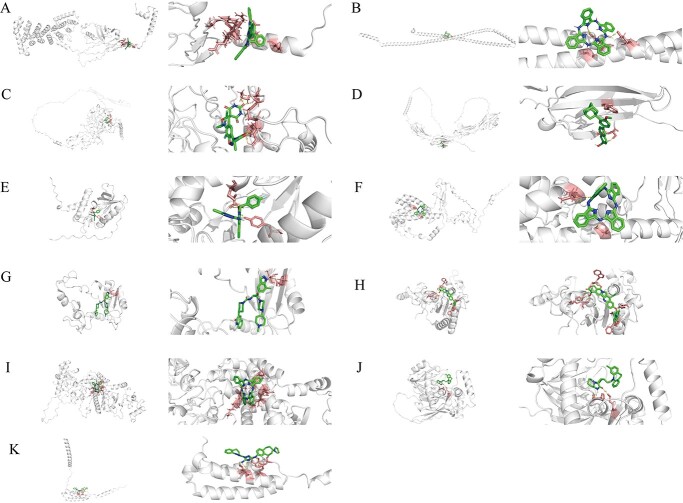
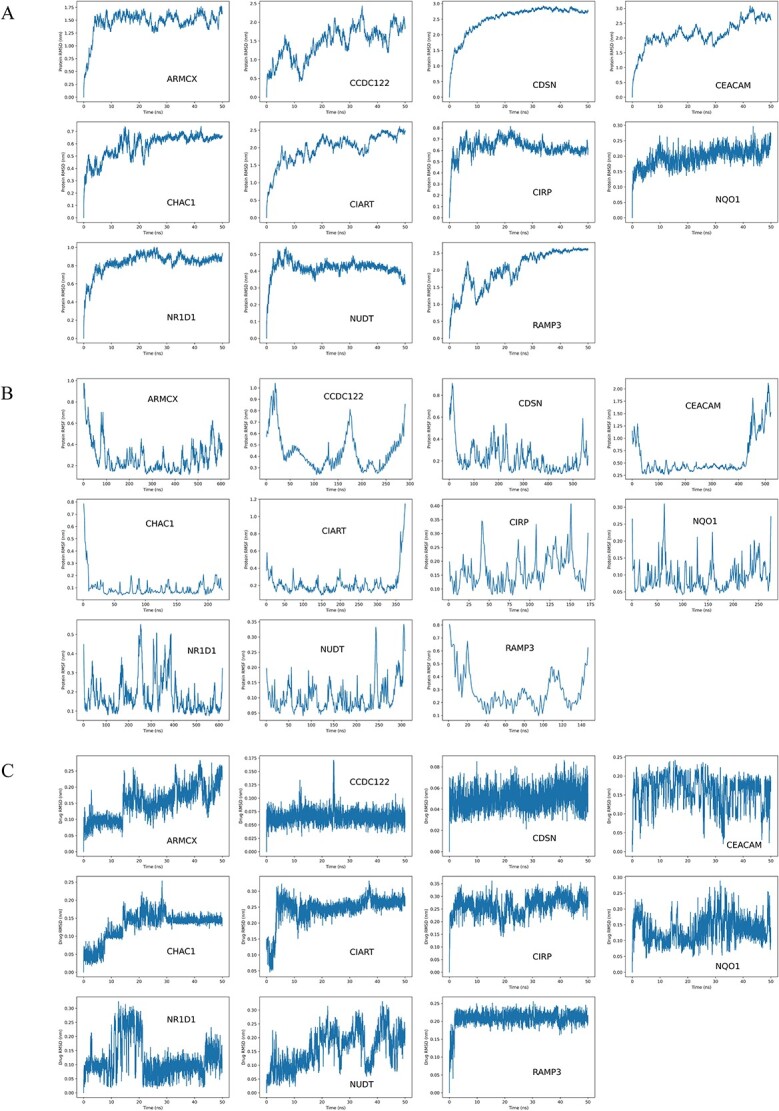
Nowadays, the complexity of disease mechanisms and inadequacy of single-target therapies in restoring the biological system has inevitably instigated the strategy of multi-target therapeutics with the application of hybrid and chimeric drugs. However, the related method is still unable to solve the conflicts between targets or between drugs. With the release of high-precision protein structure prediction artificial intelligence (AI), large-scale high-precision protein structure prediction and docking become possible. In this article, we propose a multi-target drug discovery method. Then we take an example of therapeutic hypothermia (TH). We performed protein structure prediction for all targets of each group by AlphaFold2 and RoseTTAFold. QuickVina 2 is then used for molecular docking of the proteins and drugs. After docking, we use PageRank to get the rank of drugs and drug combinations of each group. Given the differences in the scoring of different proteins, the method can effectively avoid inhibiting beneficial proteins. So it’s friendly to chronopharmacology. This method also have potential in precision medicine for its high compatibility with bioinformatics.
Overview
The claims and statistics of this paper haven’t been checked yet.
Run the check — free, no account needed. It reads the open-access text and checks the sources it cites.
Integrity signals
Registry
Cites
Statistics
Figures
Verification
Claims the paper makes
The claims and statistics of this paper haven’t been checked yet.
Run the check — free, no account needed. It reads the open-access text and checks the sources it cites.
Self-check
Percentages, sums and reported differences re-computed from the paper’s own numbers.
The self-check needs the paper’s full text.
Citations
Cites
Highly accurate protein structure prediction with AlphaFold
Jumper, J., Evans, R., Pritzel, A., Green, T., Figurnov, M., Ronneberger, O., Tunyasuvunakool, K., Bates, R., Žídek, A., Potapenko, A., et al. (2021) · Nature · doi:10.1038/s41586-021-03819-2 · Cited by 43,764
Research works printed but not linked: 45
- 2019, Multi-target-directed-ligands acting as enzyme inhibitors and receptor ligands, Eur J Med Chem, 180, 690, 10.1016/j.ejmech.2019.07.040 · DOI
- 2016, Multi-target therapeutics for neuropsychiatric and neurodegenerative disorders, Drug Discov Today, 21, 1886, 10.1016/j.drudis.2016.08.001 · DOI
- 2019, Targeted Temperature Management for Cardiac Arrest with Nonshockable Rhythm, N Engl J Med, 381, 2327, 10.1056/NEJMoa1906661 · DOI
- Kim JY , Kim JH , Park J , Beom JH , Chung SP , You JS , et al. Targeted Temperature Management at 36 °C Shows Therapeutic Effectiveness via Alteration of Microglial Activation and Polarization After Ischemic Stroke. Transl Stroke Res. 2021; · DOI
- 2020, Resuscitating the Globally Ischemic Brain: TTM and Beyond, Neurother J Am Soc Exp Neurother, 17, 539
- 10.1161/CIR.0000000000000270 · DOI
- 10.1007/s00134-013-3043-4 · DOI · Paper page
- 2019, RBM3 and CIRP expressions in targeted temperature management treated cardiac arrest patients-A prospective single center study, PloS One, 14, e0226005, 10.1371/journal.pone.0226005 · DOI
- 10.1093/nar/gku158 · DOI
- 10.1074/jbc.M109.013128 · DOI
- 10.1080/09553000903009548 · DOI
- 10.1093/nar/gkv1465 · DOI
- 2017, Recent progress in the research of cold-inducible RNA-binding protein, Future Sci OA, 3, FSO246, 10.4155/fsoa-2017-0077 · DOI
- 10.1158/0008-5472.CAN-14-0471 · DOI
- 2017, Stress Response Protein RBM3 Promotes the Development of Colitis-associated Cancer, Inflamm Bowel Dis, 23, 57, 10.1097/MIB.0000000000000968 · DOI
- 10.1126/science.abj8754 · DOI · Paper page
- 10.1126/science.278.5336.294 · DOI · Paper page
- 10.1038/s41592-020-0848-2 · DOI · Paper page
- Humphreys IR , Pei J , Baek M , Krishnakumar A , Anishchenko I , Ovchinnikov S , et al. Computed structures of core eukaryotic protein complexes. Science. 2021;eabm4805. · DOI · Paper page
- 10.1093/nar/gkw408 · DOI · Paper page
- 10.1073/pnas.0810767106 · DOI
- UniProt Consortium, 2015, UniRef clusters: a comprehensive and scalable alternative for improving sequence similarity searches, Bioinforma Oxf Engl, 31, 926, 10.1093/bioinformatics/btu739 · DOI · Paper page
- 10.1093/molbev/mst010 · DOI · Paper page
- 10.1093/nar/gky439 · DOI
- 10.1093/nar/gks372 · DOI · Paper page
- 10.1073/pnas.0707684105 · DOI · Paper page
- 2013, Protein-ligand binding site recognition using complementary binding-specific substructure comparison and sequence profile alignment, Bioinforma Oxf Engl, 29, 2588, 10.1093/bioinformatics/btt447 · DOI · Paper page
- 10.1093/nar/gks966 · DOI · Paper page
- 10.1093/nar/gkw1000 · DOI
- 2015, Fast, accurate, and reliable molecular docking with QuickVina 2, Bioinforma Oxf Engl, 31, 2214, 10.1093/bioinformatics/btv082 · DOI · Paper page
- 10.1002/jcc.20291 · DOI · Paper page
- 2018, PrimAlign: PageRank-inspired Markovian alignment for large biological networks, Bioinforma Oxf Engl, 34, i537, 10.1093/bioinformatics/bty288 · DOI
- 10.1093/bib/bby054 · DOI
- 2004, Weighted PageRank algorithm, Proc Second Annu Conf Commun Netw Serv Res, 2004, 305
- 2009, CHAC1/MGC4504 is a novel proapoptotic component of the unfolded protein response, downstream of the ATF4-ATF3-CHOP cascade, J Immunol Baltim Md, 182, 466
- 2018, Human NUDT22 Is a UDP-Glucose/Galactose Hydrolase Exhibiting a Unique Structural Fold, Struct Lond Engl 1993, 26, 295
- 2014, Cerebral glucose transporter: the possible therapeutic target for ischemic stroke, Neurochem Int, 70, 22, 10.1016/j.neuint.2014.03.007 · DOI
- 2020, Association of NOD2 and IFNG single nucleotide polymorphisms with leprosy in the Amazon ethnic admixed population, PLoS Negl Trop Dis, 14, e0008247, 10.1371/journal.pntd.0008247 · DOI
- 2019, C23, an oligopeptide derived from cold-inducible RNA-binding protein, suppresses inflammation and reduces lung injury in neonatal sepsis, J Pediatr Surg, 54, 2053, 10.1016/j.jpedsurg.2018.12.020 · DOI
- 2020, Up-regulation of microRNA-30b/30d cluster represses hepatocyte apoptosis in mice with fulminant hepatic failure by inhibiting CEACAM1, IUBMB Life, 72, 1349, 10.1002/iub.2256 · DOI
- 2019, Methane Alleviates Acetaminophen-Induced Liver Injury by Inhibiting Inflammation, Oxidative Stress, Endoplasmic Reticulum Stress, and Apoptosis through the Nrf2/HO-1/NQO1 Signaling Pathway, Oxid Med Cell Longev, 2019, 7067619
- 10.1186/1471-2105-9-559 · DOI · Paper page
- 2019, Algorithmic and Stochastic Representations of Gene Regulatory Networks and Protein-Protein Interactions, Curr Top Med Chem, 19, 413, 10.2174/1568026619666190311125256 · DOI
- 10.1124/pr.112.007336 · DOI
- 2020, QSAR without borders, Chem Soc Rev, 49, 3525, 10.1039/D0CS00098A · DOI · Paper page
Metadata
- Authors
- Liu, F., Jiang, X., & Zhang, M.
- Affiliations
- Second Affiliated Hospital of Zhejiang University (CN)
- Corresponding author
- Zhang, Mao
- ORCID
- Venue
- Briefings in Bioinformatics
- Publisher
- openRxiv
- Published
- 2022-03-10
- Volume
- 23
- Issue
- 5
- ISSN
- 1467-5463 (ISSN-L)
- PMC
- PMC9487598
- OpenAlex
- W4296394147
- Cited by
- 8
- References
- 1
- Citations by year
- 2026: 2 · 2025: 2 · 2024: 1 · 2023: 3
- FWCI
- 0.81
- Type
- journal article
- Language
- en
- Open access
- hybrid
- doi.org
- Licence
- cc-by-nc
- Locations
- Briefings in Bioinformatics (publishedVersion, cc-by-nc)
- medRxiv (acceptedVersion, cc-by-nc-nd)
- PubMed Central (publishedVersion, cc-by-nc)
- PubMed (publishedVersion)
- Funders
- Universität Hamburg
- Topics
- Life Sciences › Pharmacology, Toxicology and Pharmaceutics › Drug Discovery › Computational Drug Discovery Methods
- Life Sciences › Biochemistry, Genetics and Molecular Biology › Molecular Biology › Protein Degradation and Inhibitors
- Life Sciences › Biochemistry, Genetics and Molecular Biology › Molecular Biology › vaccines and immunoinformatics approaches
- Keywords
- multi-target drug discovery, therapeutic hypothermia, chronotherapy, protein structure prediction, AlphaFold2, RoseTTAFold, molecular docking, PageRank, side effect prediction, precision medicine, pharmacogenomics
- MeSH terms
- Artificial Intelligence, Hypothermia, Induced, Drug Discovery, Drug Chronotherapy, Molecular Docking Simulation
About these checks
Registry, retraction, Cites and statistics results are computed, not judged, with one exception: a printed reference that no index lists is read once by a model before it counts as a citation error. Claims are extracted by a model and kept only when their quote appears verbatim in the text; each cited source is then checked, with a model’s help, for whether it says what the claim relies on. Those verdicts can be wrong — read the claim’s quote and the cited source before relying on one.
Statistics and arithmetic are recomputed, not judged.
Confidence bands are shown only for fields calibrated on our annotated test set. None is calibrated yet, so no band is shown.
What counts as a claim ›How we measure confidence ›How we check this ›
Are you an author, or do you see a problem with this page? Request a review
Data sources
Bibliographic data: Semantic Scholar, OpenAlex, Crossref.
Contains information from the Semantic Scholar Academic Graph Datasets, made available under the ODC Attribution License (ODC-BY 1.0).
Semantic Scholar’s data is described in: Kinney, R., et al. (2023). The Semantic Scholar Open Data Platform. arXiv:2301.10140.
